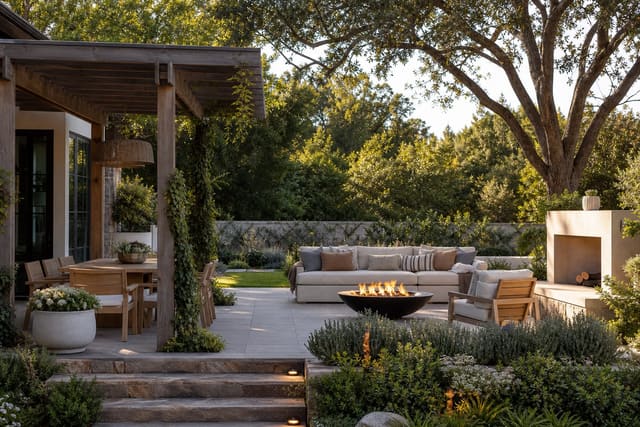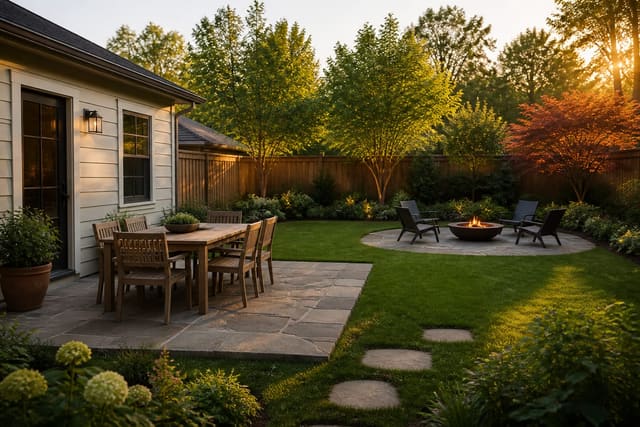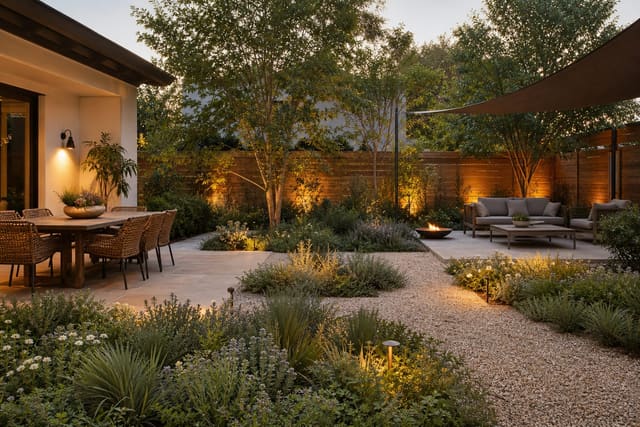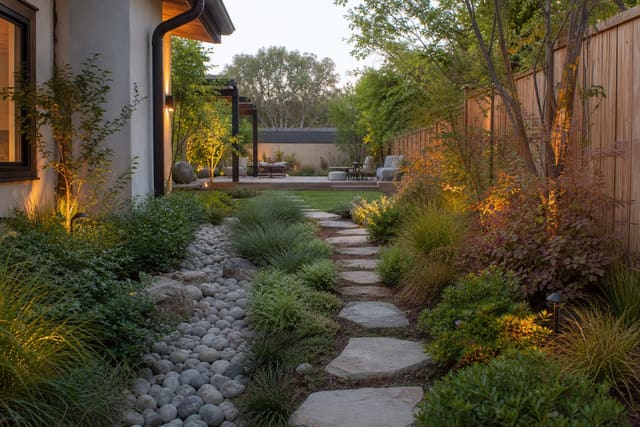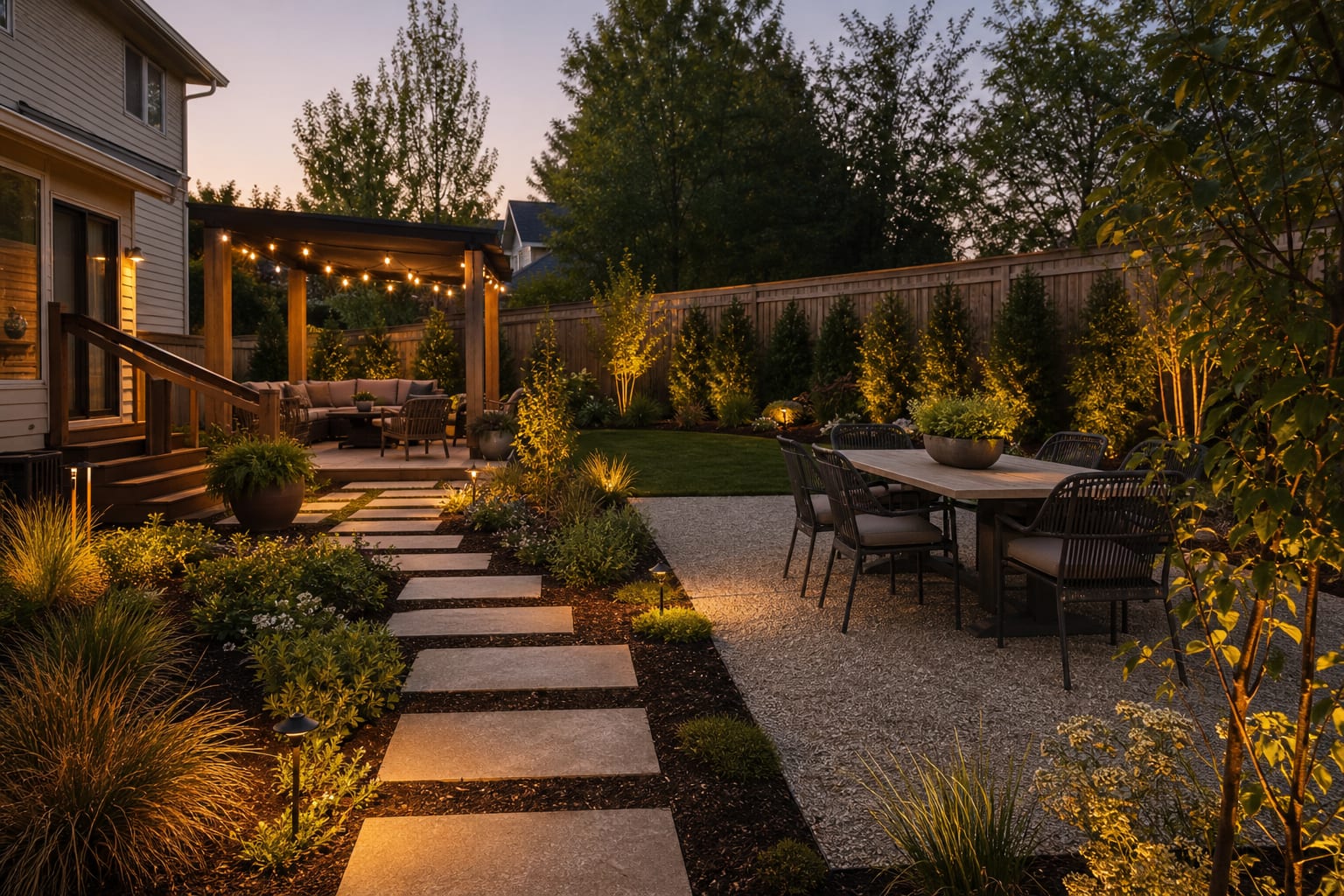
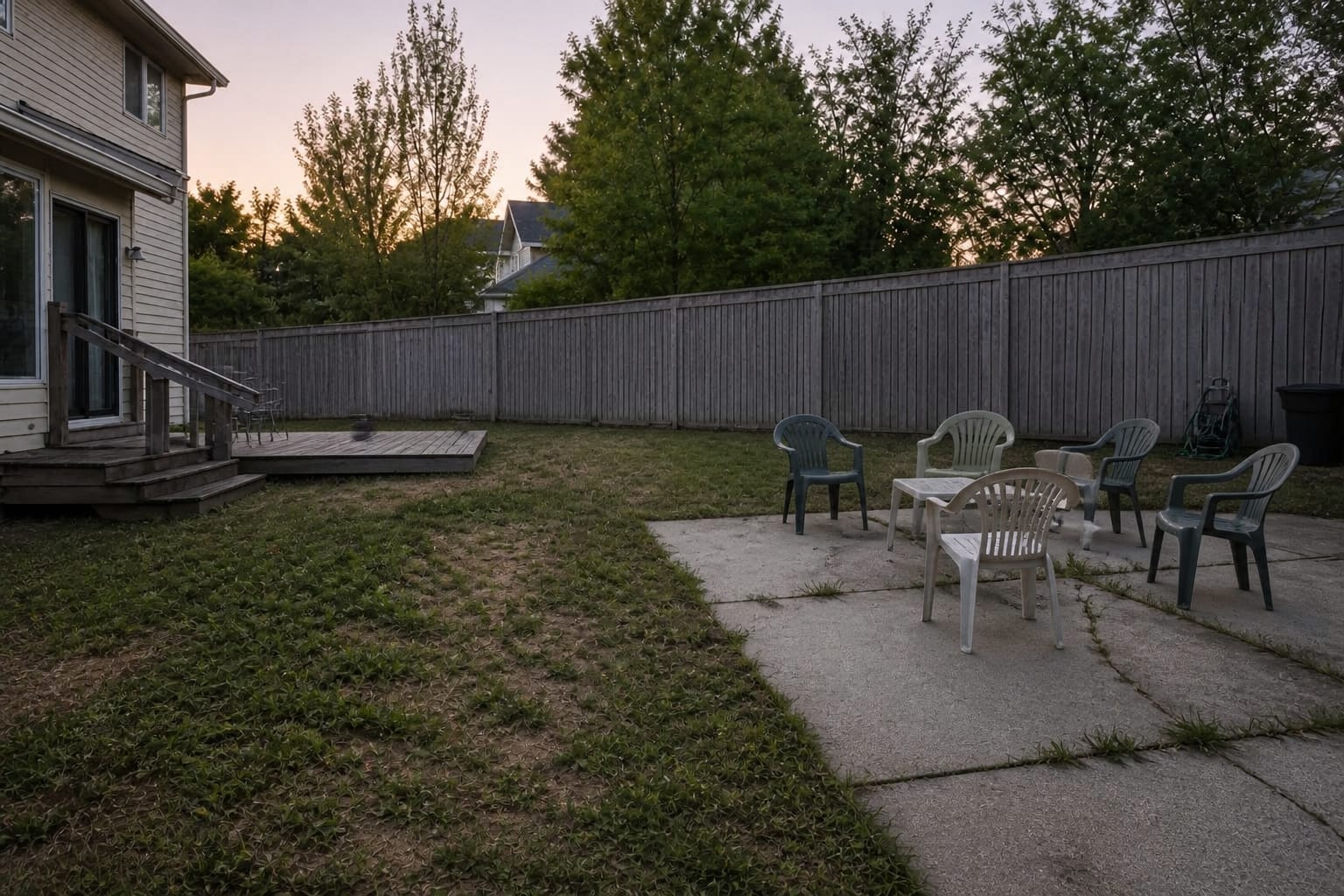
Divide a backyard into zones by mapping actual uses (dine, lounge, play, quiet), assigning each a distinct floor material, and linking them with a path so the yard reads as connected rooms instead of one flat rectangle. Purpose, boundary, and path are what separate a designed yard from a leftover one.
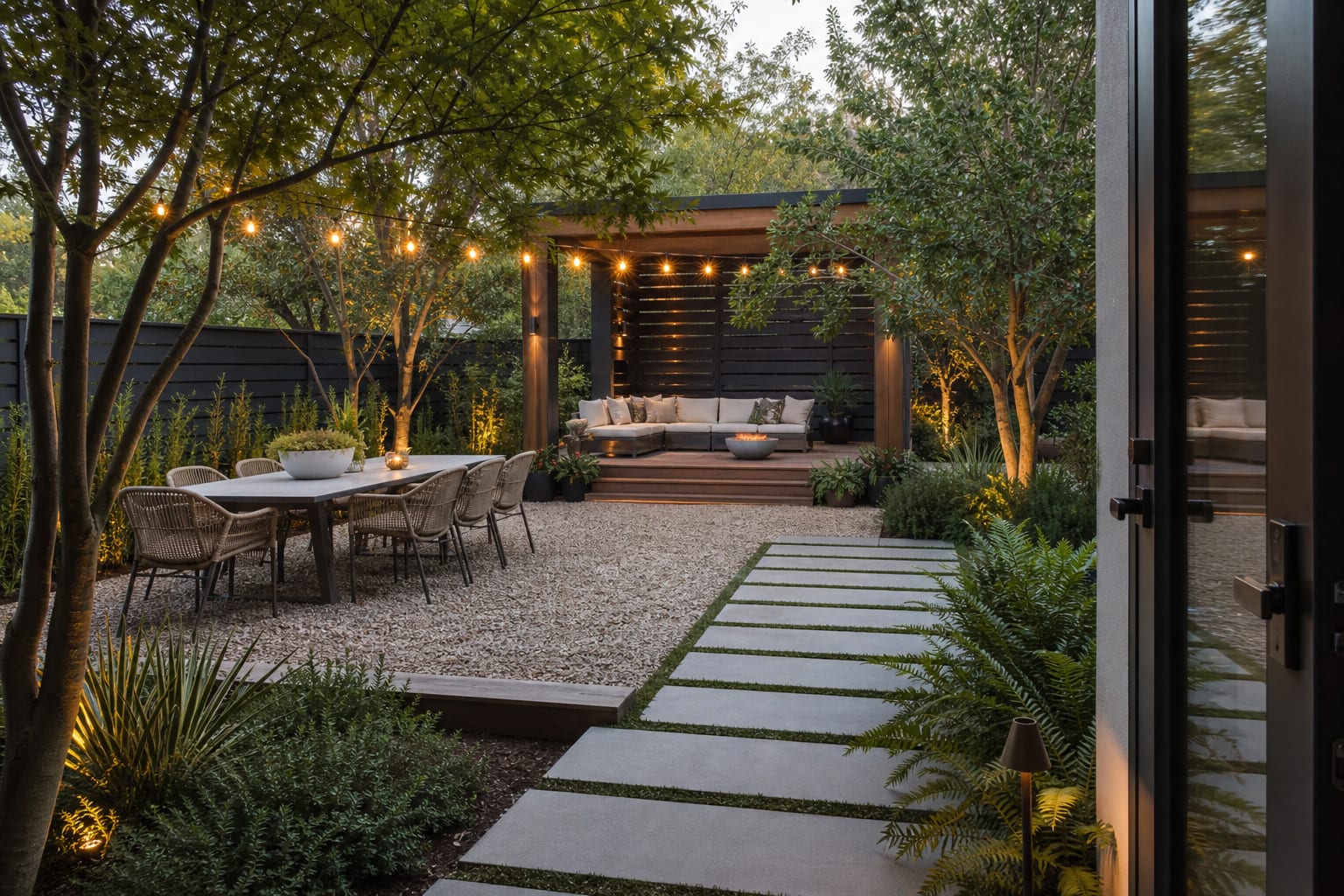
How do I divide my backyard into zones?
Assign each outdoor room a purpose, connect rooms with clear paths, and mark edges with paving, planting, shade, or lighting. Start at the back door — it's the daily route that exposes weak decisions first. A muddy or crowded entry undercuts everything behind it.
A simple framework works for most yards:
- Dining zone: within 8-12 feet of the kitchen door. A 10' x 12' pad fits a six-person table; an 8' x 8' surface works for a compact round table.
- Lounge zone: wherever people naturally linger, not just where furniture fits. Leave 30" to 36" between seating and a coffee table or fire feature.
- Quiet zone: the farthest or softest edge — hammock, reading chair, or play lawn. This keeps noise near the house and gives deep yards a destination.
- Circulation: a 42" to 48" primary path from the house to the main zone; secondary paths can narrow to about 30".
Solve drainage before decorating — standing water near a future patio needs grading fixed first. See backyard drainage solutions before ordering pavers.
Test this on your own photo with ReDesign, keeping the house edge, horizon, hardscape, and main path visible so the preview solves your actual space.
Which boundaries make outdoor rooms feel real?
Strong zones use two boundary types: one underfoot, one at the edge. A patio alone reads as a landing pad; add a planting border, overhead shade, or a low retaining edge and it becomes a room.
| Boundary type | Use it when | Spec that keeps it believable |
|---|---|---|
| Paving change | Dining or grill zone needs to feel stable | Pave at least 24" wider than the furniture footprint on active sides |
| Planting edge | You want separation without blocking views | Use a 2'-3' deep bed so it reads as mass, not a thin garnish |
| Overhead shade | Zone disappears in full sun | Size the shade sail or pergola to cover the seating, not just the table |
| Low structure | Yard slopes or needs a stronger edge | An 18" seat wall holds grade and adds overflow seating |
Small yards need fewer zones with sharper edges — a bistro pad, a two-chair lounge, and a planting wall beat a fence-to-fence slab. Large yards need distance solved; see large backyard design ideas for giving the far end a reason to visit. Privacy is a boundary too: a bamboo screen or slatted panel works best when it shields the seating angle rather than boxing the whole property. Review bamboo privacy screen ideas for fast screening options.
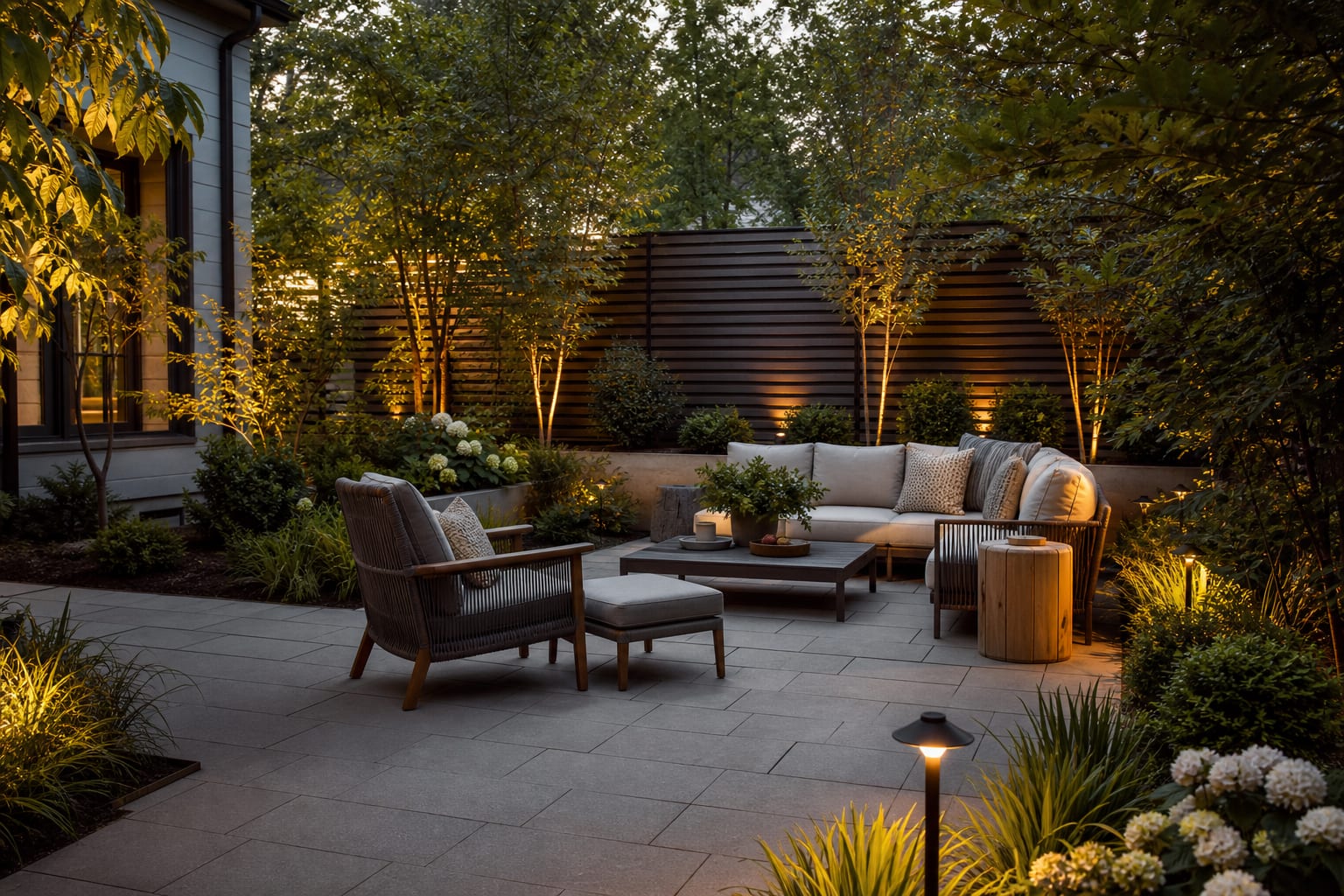
Common backyard zone planning mistakes
- Treating the lawn as the main room. Keep grass for kids or pets, but frame it with a path or border so it's a deliberate green room, not leftover turf.
- Buying furniture before mapping circulation. Tape out the table, sofa, grill, and path first, then protect 36" of movement at dining chairs and 42" where two people pass.
- Putting the grill in the best-looking corner. It only needs ventilation and a 24"-36" prep surface — save the good view for seating.
- Lighting the whole yard the same way. Layer 12"-18" path lights, warm string lights over the lounge, and a task light at the grill so each zone keeps its own mood.
- Skipping maintenance planning. Gravel pads need edging, container zones need hose access, and beds near seating should skip thorny or messy plants.
Should I use AI design to preview backyard zones first?
Yes — zoning is hard to judge from a plan view. Upload a straight-on photo from the back door and test a gravel dining pad, pergola lounge, curved path, or planted privacy edge before digging. The goal isn't letting software design the yard; it's confirming the zones balance from the angle you actually live with.
Photograph the yard at chest height with the house wall, fence line, and trees visible. Run one version with dining near the door, one with the lounge closest to the house, and one treating the far edge as a destination. If a preview makes the yard feel smaller, the zones are too chopped up; if it still reads as one blank space, the boundaries are too weak.
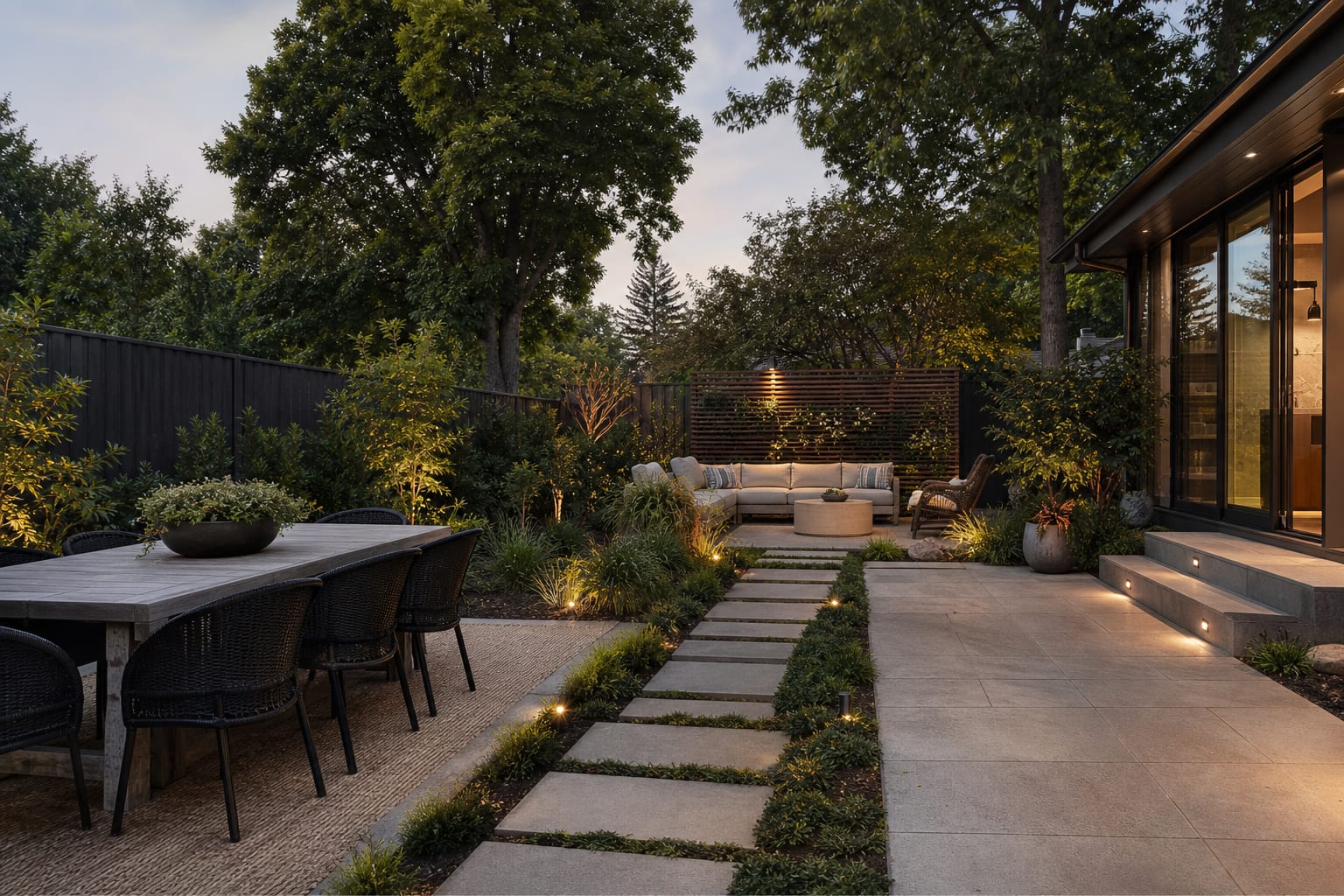
The final test: can someone name each part of the yard in one phrase — dining terrace, shaded lounge, play lawn, garden walk, fire corner? If every part has a name, the yard has a plan.
Frequently Asked Questions
How many backyard zones should I plan?
Most yards work with two to four zones — dining, lounge or fire, and one destination or quiet zone. Yards over 4,000 sqft can add a fifth play or work zone without feeling fragmented.
What are the most common backyard zones?
The standard set is dining (near the kitchen door), lounge or fire (highest use), play (kids or pets), garden or working (compost, shed, vegetables), and a quiet destination zone.
How do I separate zones without fencing them off?
Change the floor material at each boundary — paver to gravel to lawn — and reinforce it with a planted band or low hedge. Avoid hard fencing inside the yard since it fragments the space.
Where should the dining zone go?
Keep it within 15-20 feet of the kitchen door; carrying plates and ice farther means the zone gets used less. In hot climates, orient it to catch late-afternoon shade.
Can I plan zones around an existing tree or slope?
Yes. A mature tree, slope, or shed makes a natural anchor — lay zones around that existing geometry rather than working against it.
> Try this: Ready to see this on your own outdoor space? Open ReDesign and run the preview before you buy materials, plant, drill, or move furniture.
Three transformations to try
1. Backyard with dining, lounge, and quiet zones