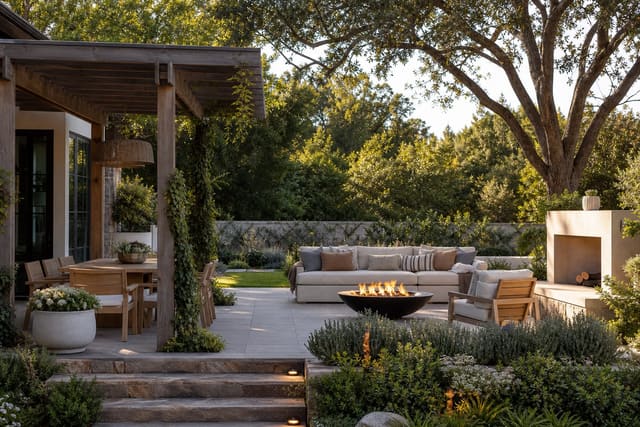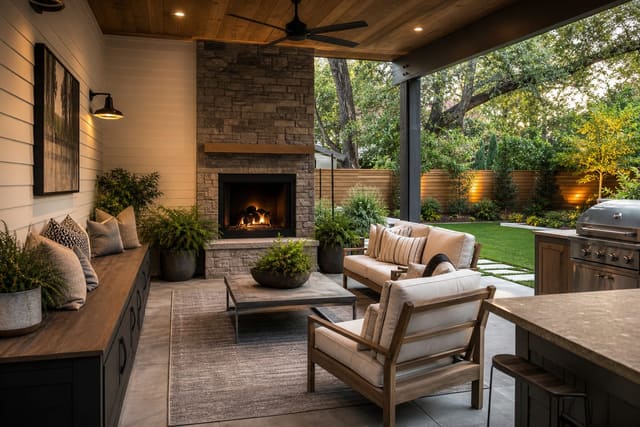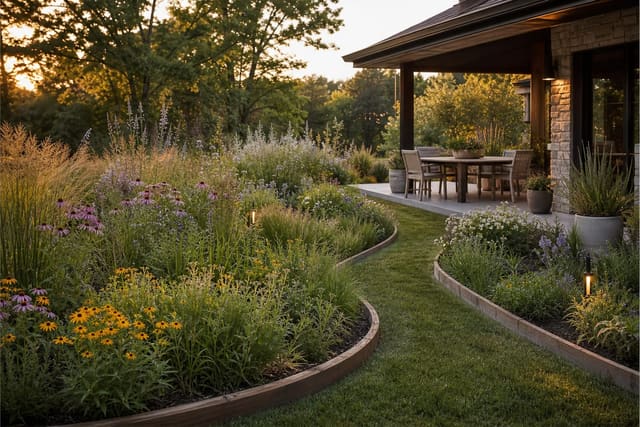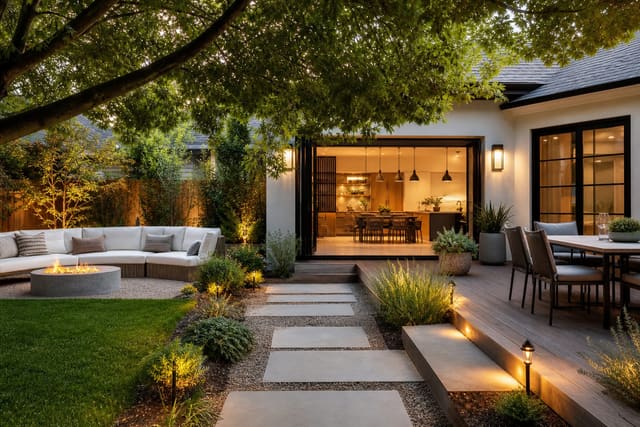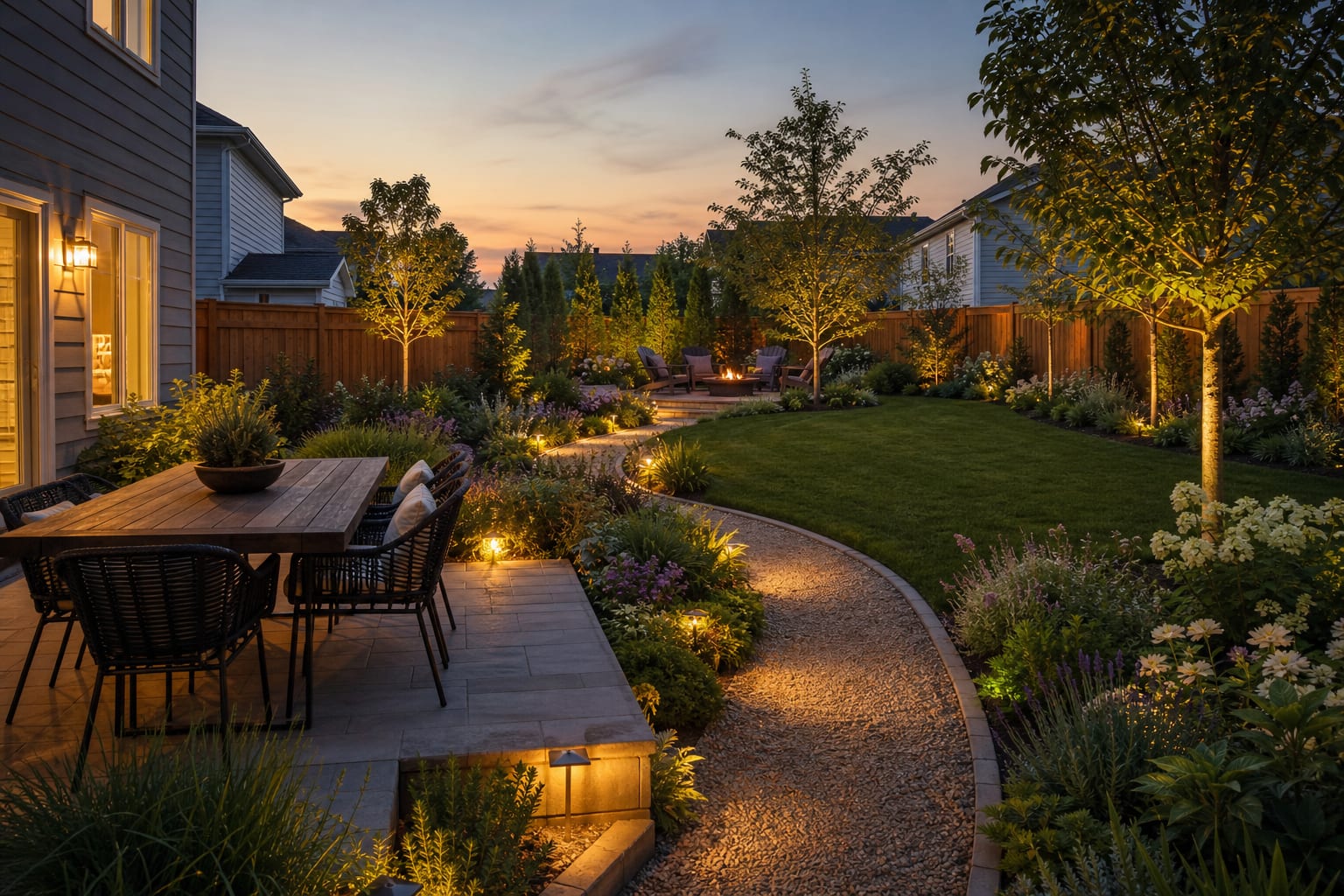
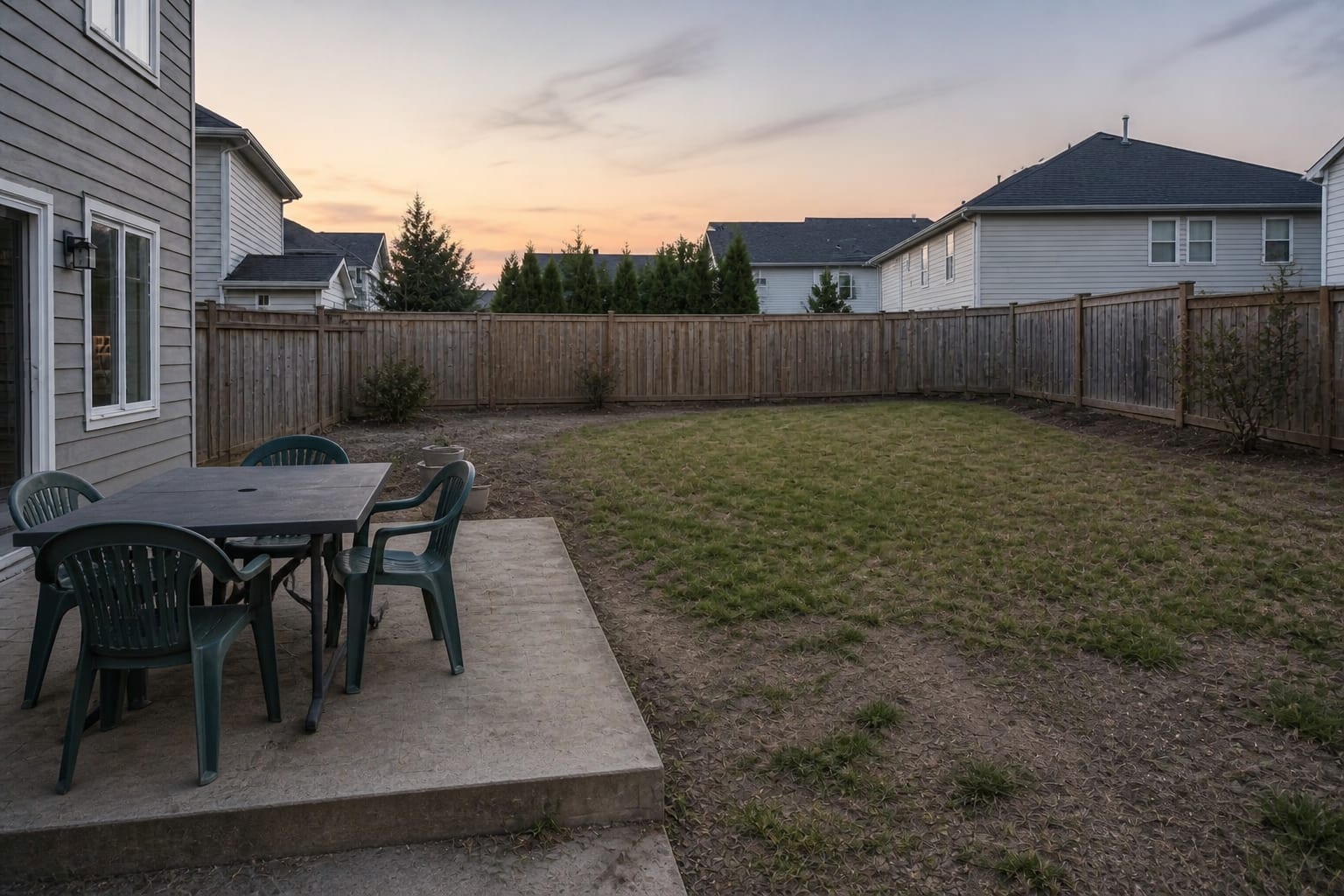
A large backyard works when you break it into three or four zones (dining, lounge, lawn, garden), connect them with a continuous path or planted spine, and leave one quiet corner unprogrammed. The best large backyard design ideas favor hierarchy over furniture volume, so the space feels generous and easy to use rather than scattered.
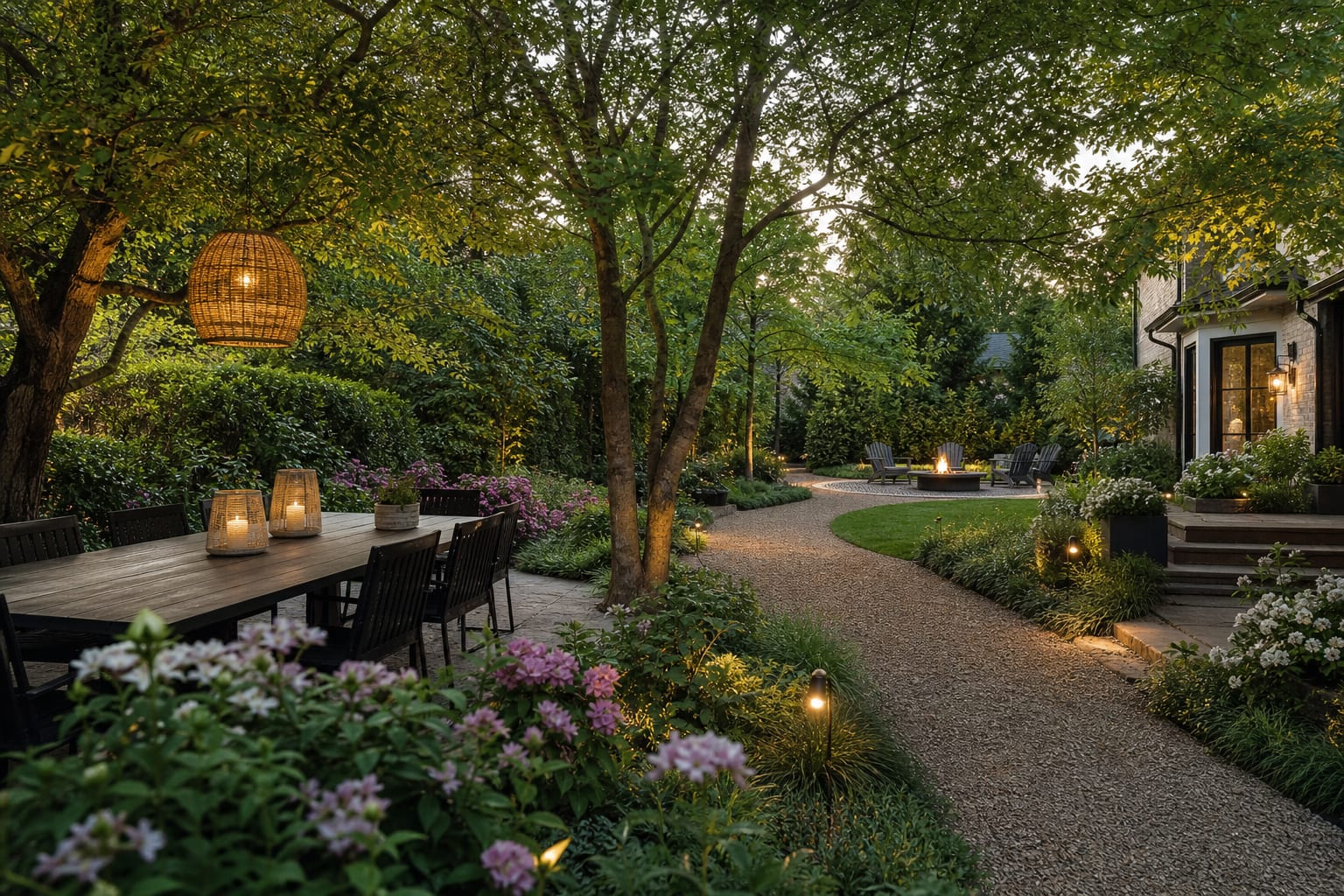
What makes a large backyard feel purposeful instead of empty?
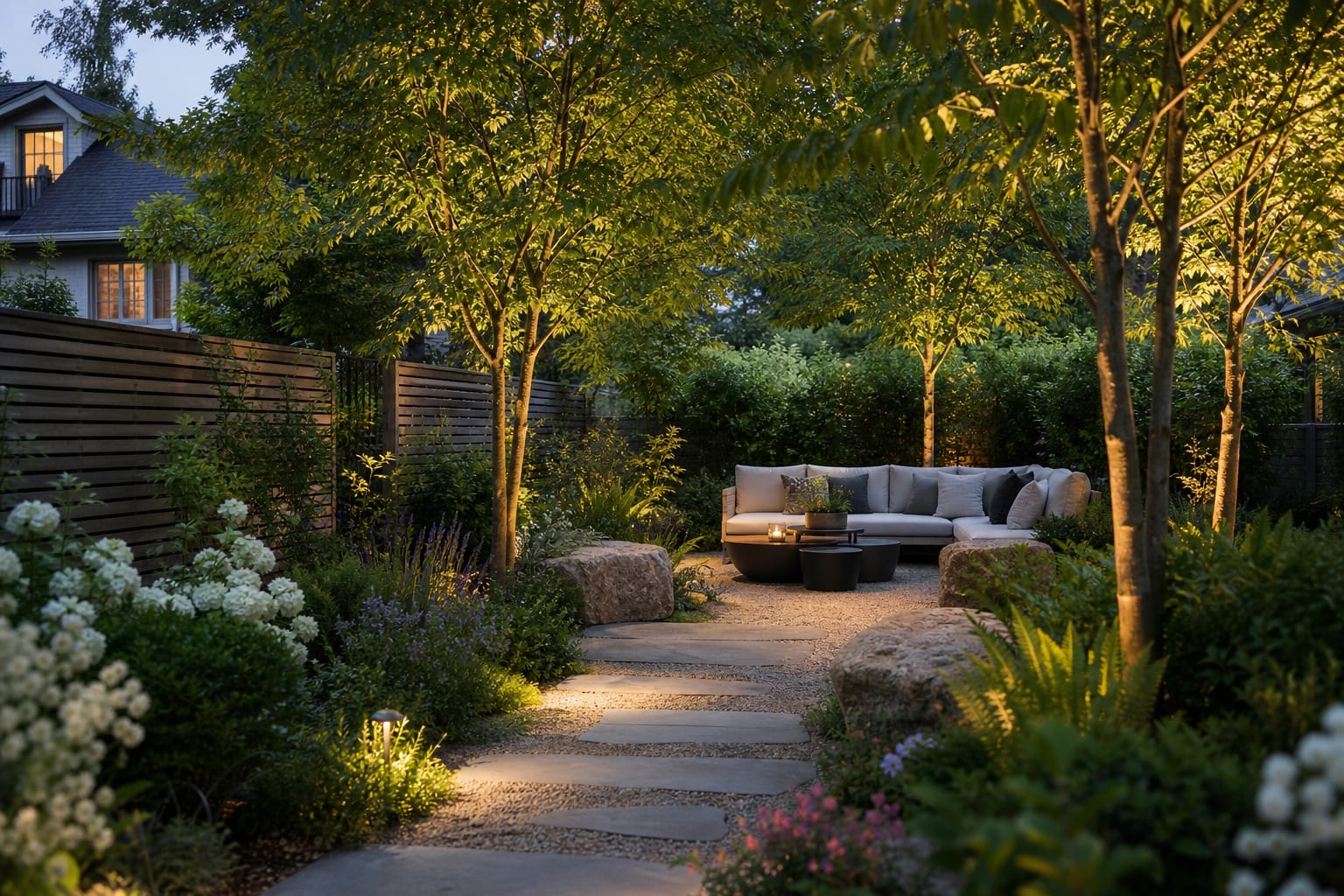
Design a large backyard by dividing it into outdoor rooms, linking them with clear paths, and giving each zone a job before buying furniture or plants. Start with a main gathering zone within 12-20 feet of the back door, then place quieter destinations farther out so the yard pulls people through it.
Layer hardscape near the house, planting along the edges, shade where people pause, and one or two strong focal points beyond the patio. A 14 by 18 foot dining terrace reads more useful than a shapeless 40-foot slab. Make main paths 4 feet wide for two people walking side by side; 30 inches is the minimum for a secondary garden path.
Privacy matters more in a big yard than expected, since open lawn can feel exposed from every neighboring window. Plan edges early with fencing, layered shrubs, or screens — compare bamboo privacy screen ideas with mixed planting before committing to one green wall.
Test this on your own photo with ReDesign before choosing a final direction; keep the house edge, horizon line, hardscape, planting beds, and main path visible so the preview solves the space you actually have.
What's the zoning decision that shapes the whole yard?
The first real decision isn't patio material or furniture style — it's what the yard should do on an ordinary Tuesday. Most large yards need a near zone (dining, grilling), a middle zone (play, lawn, raised beds, pool), and a far zone that gives people a reason to walk: fire pit, hammock grove, pergola, or framed view.
| Yard element | Best use | Starting spec |
|---|---|---|
| Dining terrace | Meals, grilling, hosting | 12x14 ft for a 6-person table; 14x18 ft with chair clearance |
| Fire pit area | Evening destination | 12 ft diameter minimum for 4 chairs; 30-36 in. clearance behind seats |
| Main path | Connects outdoor rooms | 4 ft wide; 5 ft if wheelbarrows or side-by-side walking matter |
| Open lawn | Play, pets, flexible space | Clear rectangle or oval, not leftover turf |
| Planting border | Screens and softens edges | 6-10 ft deep so shrubs, perennials, and small trees can layer |
A backyard zone planning guide is more useful than another mood board here. Draw the yard as a series of rooms, then ask what each one does, how you reach it, and what blocks the view from neighbors. If a zone can't answer those three questions, it's a feature you like in theory but will ignore in practice.
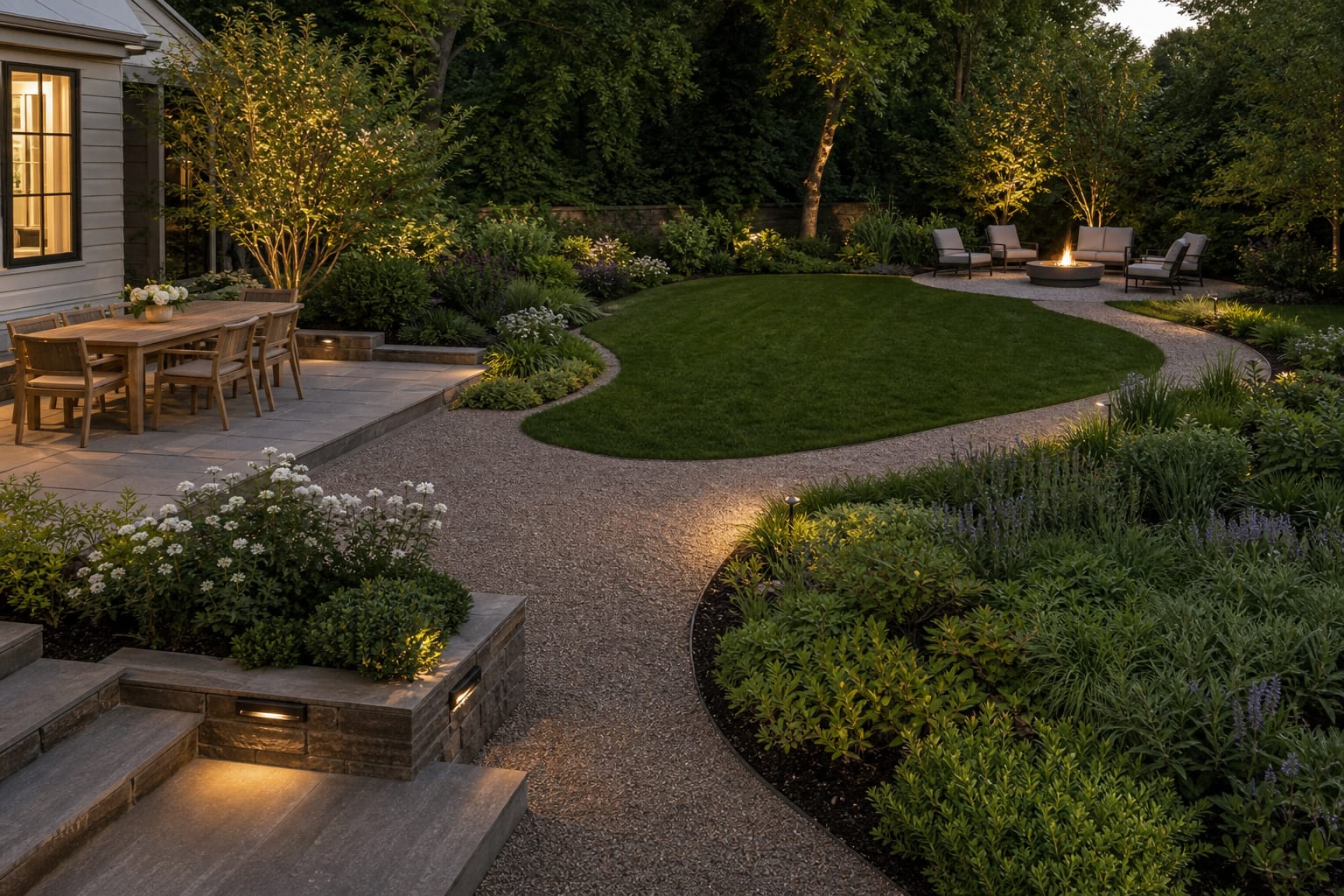
Which large backyard design ideas actually give acreage a job?
- Build the first patio as a real room, not a strip against the house. Give dining at least 3 feet of chair clearance on all sides and add an umbrella or pergola so the zone works at noon, not just golden hour.
- Turn a far corner into a destination. A 14-16 foot gravel circle with four lounge chairs and a low fire bowl, or a bench under two shade trees where flames aren't welcome.
- Use planting beds to shrink the lawn. Beds 8 feet deep along the fence hold small trees, evergreens, grasses, and perennials; a 2-foot flower strip is too thin to create enclosure.
- Add one strong vertical element. A cedar arbor 7-8 feet tall or a pair of columnar trees gives the eye a stop point. For exposed boundaries, cedar fence design ideas can look architectural rather than defensive.
- Shape the lawn into a deliberate panel. A 20 by 40 foot area supports kids, dogs, or seating, but needs clean edges against planting or paving to read as designed.
- Light the route, not every inch of grass. Space low-voltage path lights 6-8 feet apart, keep color around 2200K-2700K, and aim fixtures downward.
Build water, storage, and maintenance into the plan from the start: a hose bib near vegetable beds, a 4x6 foot shed tucked behind planting, and a gate wide enough for mower access. Beautiful acreage landscaping falls apart when practical pieces are treated as afterthoughts.
What mistakes make a big backyard feel blank?
- Pushing every feature to the fence line leaves the center empty and forces people to cross open field to reach anything — bring at least one destination into the middle third with a path or tree canopy.
- Building a patio too small for the house. A 10x10 slab looks timid on a large lot; size the entertaining area to the furniture plan, not the builder's default pad.
- Choosing tiny plants for a huge boundary. One-gallon shrubs disappear across a 100-foot fence; combine fewer, larger anchors with smaller infill.
- Adding features without circulation. A pool, fire pit, and garden can all be good separately, but muddy or unclear routes between them make the yard feel like storage for wishes.
- Ignoring shade until summer proves the point. At least one sitting zone should stay comfortable during the hottest usable hours.
How can AI design help preview a large backyard before you build?
Big moves are hard to judge from a flat plan, so upload a straight-on photo from the back door and test a larger dining terrace, curved path, deeper planting beds, a fire pit destination, or a rear privacy screen. Keep the camera angle consistent so you're comparing design, not perspective.
Use the preview to test proportion and mood, not to replace measurement — confirm real pergola height, post locations, and drainage before building, and check mature plant widths before finalizing borders. For a large yard, run three versions: one with a strong lawn panel, one with more planting and less turf, and one with a destination zone farther from the house. Seeing those on your actual yard makes tradeoffs in maintenance, privacy, shade, and walking distance obvious fast.
Frequently Asked Questions
How do I zone a large backyard?
Use changes in surface (lawn to patio to gravel), changes in level (one step up or down), or planted dividers like low hedges and ornamental grasses. Three to four zones is the sweet spot for a quarter to half-acre yard.
Should a big backyard be all-lawn or mostly planted?
Cap lawn at roughly 40-50 percent of the yard area. The rest goes to hardscape zones, planted beds, and a quiet corner; all-lawn reads as undesigned and adds maintenance hours.
What is the biggest mistake on large backyards?
Treating it like a small yard scaled up. Undersized furniture, narrow paths, and small plantings disappear in big yards, so scale everything up or the design feels like an empty arena.
Do large backyards need a pool?
No. Pools eat 20-30 percent of usable yard footprint, typically require a 6-foot fence around the perimeter, and shape the rest of the layout around them. Consider a smaller plunge pool or none before committing.
How do I keep maintenance manageable on a big yard?
Pick three intensive zones — the dining patio, one garden bed, and one feature — and let the rest run on lower-maintenance plantings like native grasses, ground covers, and shrub massings that don't need weekly tending.
> Try this: Ready to see this on your own outdoor space? Open ReDesign and run the preview before you buy materials, plant, drill, or move furniture.
Three transformations to try
1. Large yard with three connected zones