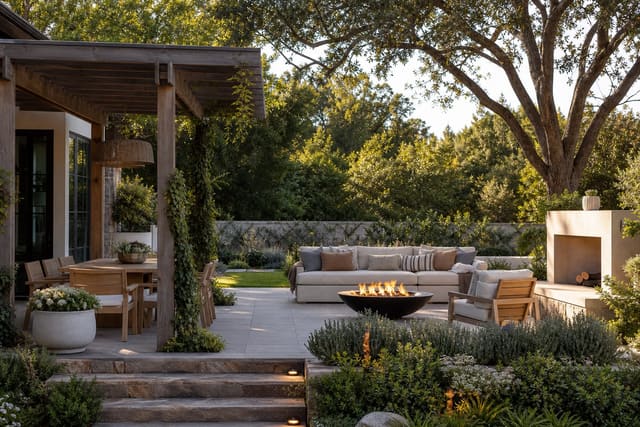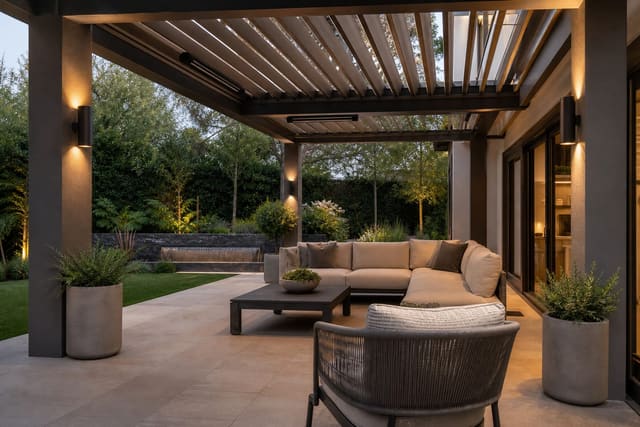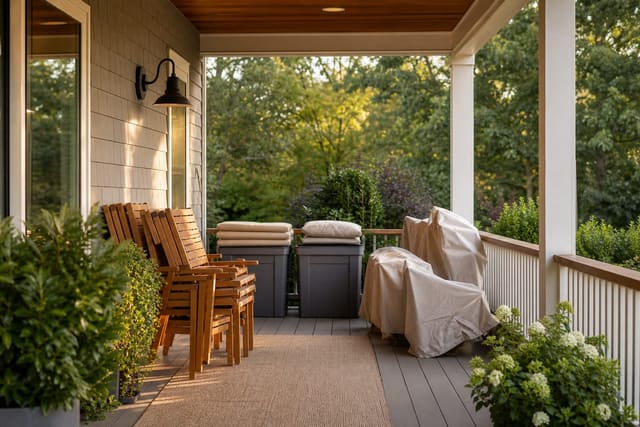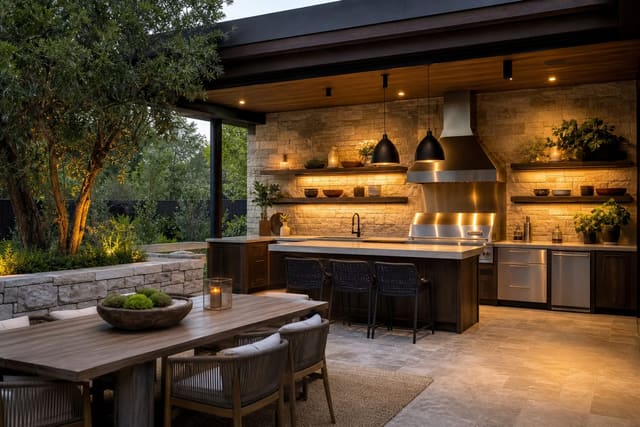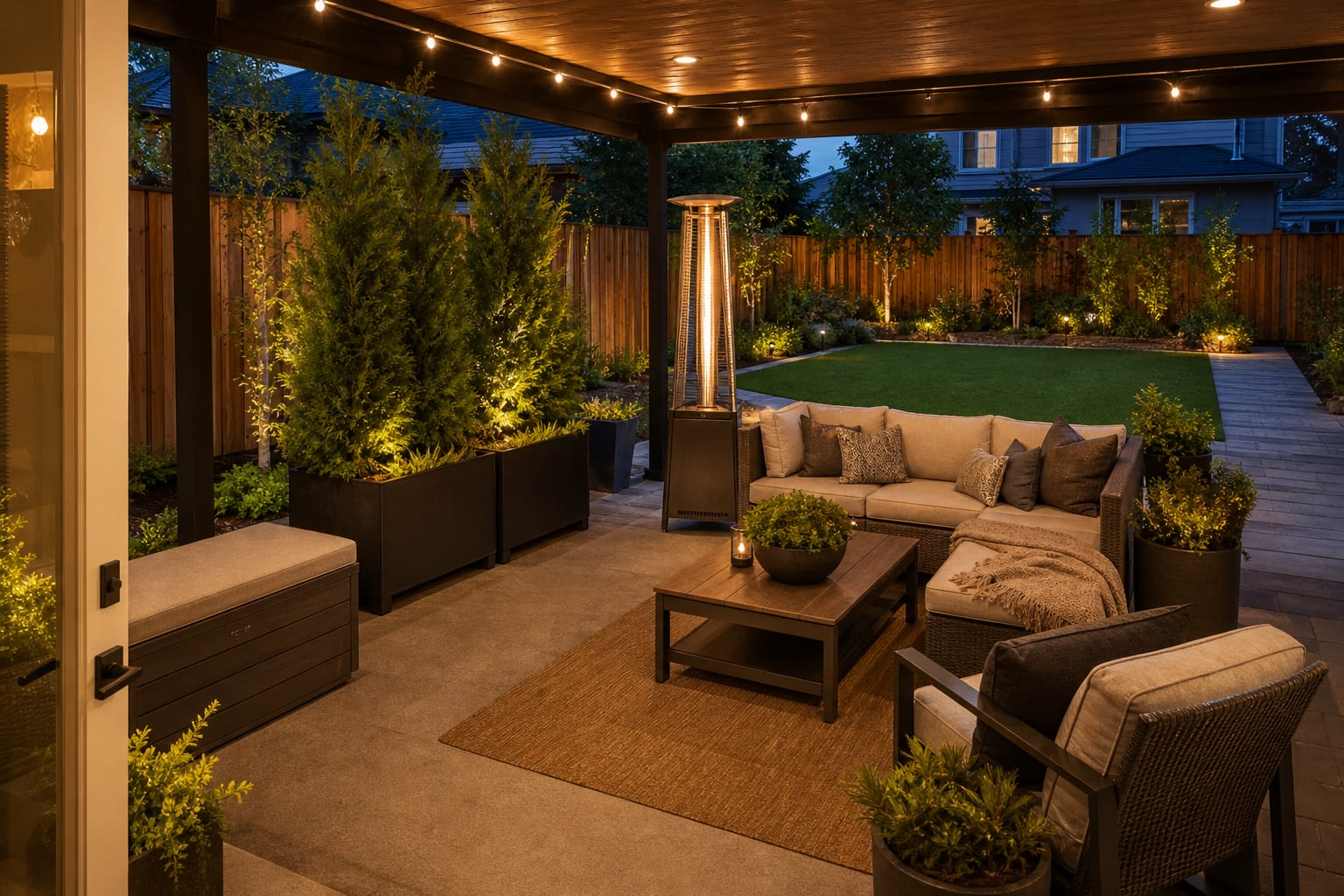
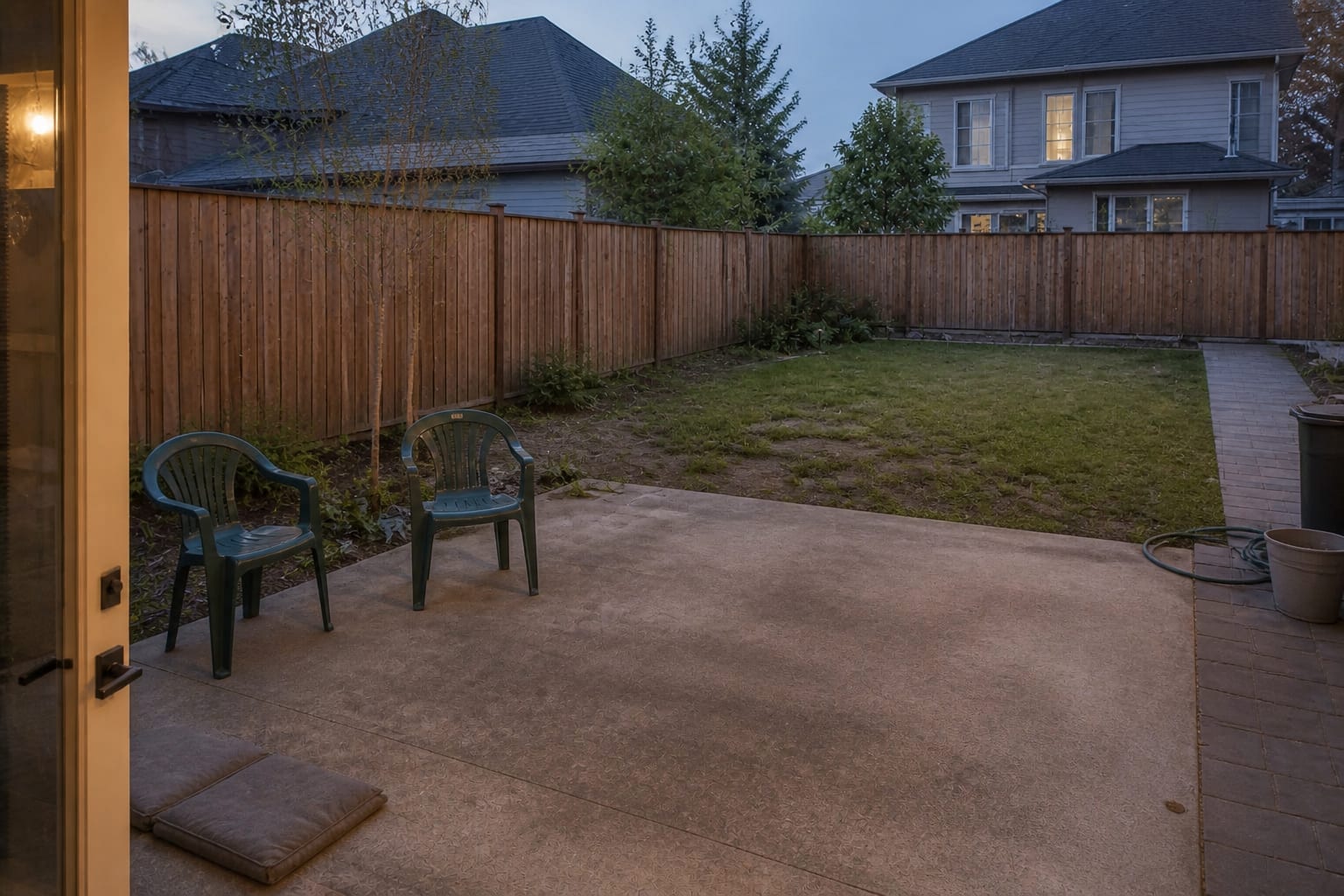
A four-season outdoor space works when overhead shelter blocks rain and snow, a heat source extends shoulder seasons, a fan or screen handles summer heat, and lighting and planting shift with each season. A patio that only works from May to September is under-designed, not unlucky. Four-season living starts with shelter and circulation before you buy furniture.
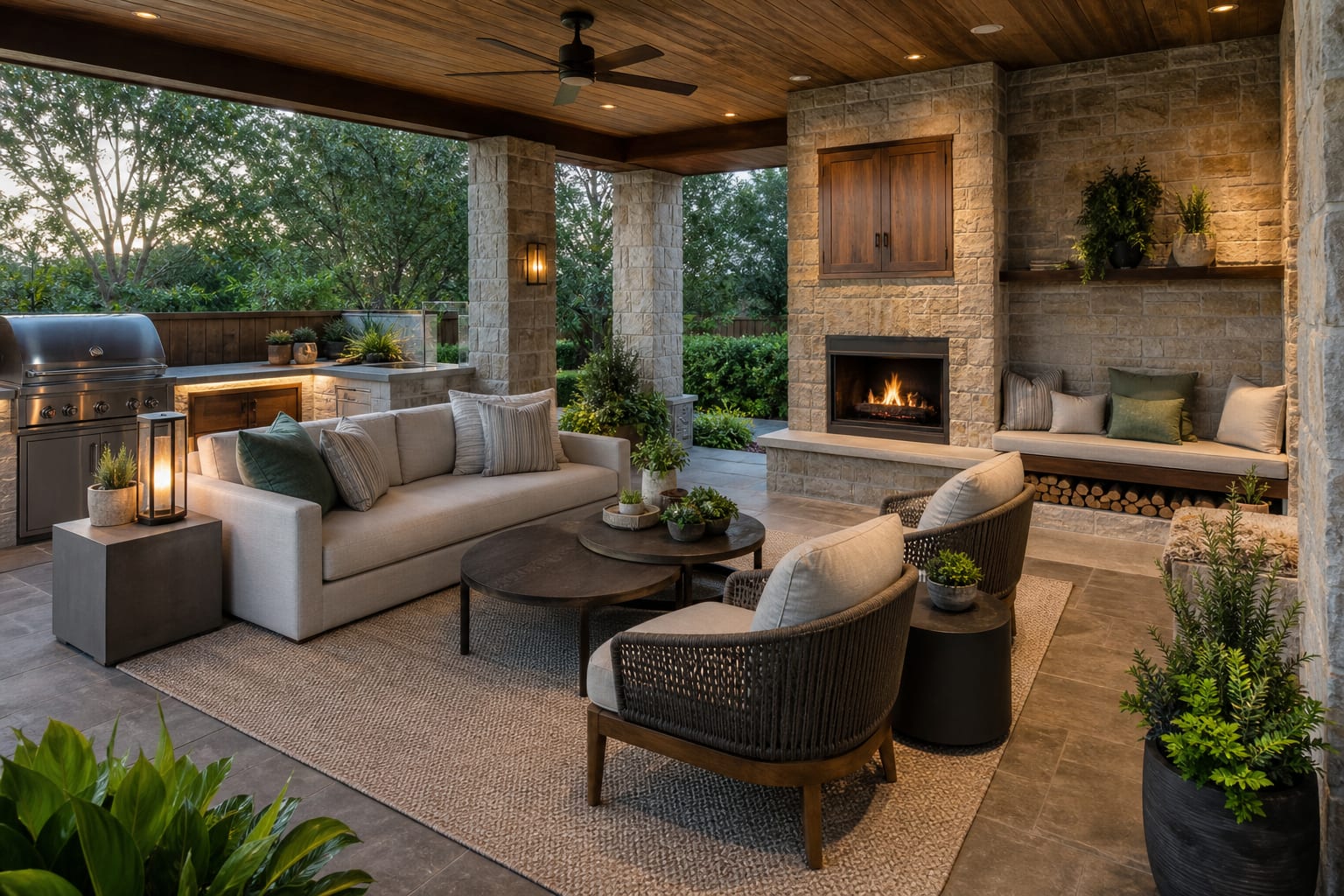
What makes a patio work in all four seasons?
A year-round patio isn't one big purchase; it's layered decisions: overhead shelter, wind control, zone-specific heat, durable furniture, drainage, lighting, and storage that changes with the weather. Decide first which part of the patio deserves the most protection. In most homes that's the first 8 to 12 feet outside the door, since it's close enough for coffee, meals, muddy boots, and pets.
Cover that landing zone with a pergola roof, awning, polycarbonate panel, or a large cantilever umbrella rated for wind. Leave at least 36 inches of clear circulation from door to yard. Heat belongs where people actually pause: a standing electric heater near a lounge chair beats a decorative fire bowl 14 feet away.
Most portable heaters need about 3 feet of clearance from combustible materials, but always follow the manual over any general rule. Plan a 30-inch to 36-inch path around the main seating group and keep chair backs out of the door swing. Solving these boring details first is what makes an outdoor space feel usable in any weather.
Which outdoor zones should change by season?
Don't try to make the whole backyard equally usable in January. Make one protected core excellent, then let the deck, lawn edge, and garden paths support it.
- Coffee zone: Two chairs, a 16-inch to 20-inch side table, and a weatherproof outlet near the kitchen door make this the fastest, easiest zone to use and light.
- Dining zone: Leave at least 42 inches behind chairs for pass-through traffic, and keep smoke, heat, and door traffic from fighting each other. If an outdoor kitchen is involved, borrow clearances from these outdoor kitchen layout ideas.
- Planted edge: Rows of 24-inch to 30-inch deep planters with evergreen shrubs, rosemary, bay, or tough grasses cut exposure without blocking the whole garden view.
- Heat point: Place it where people sit longest, not where it photographs best. Wall-mounted electric heaters suit covered areas; propane units need open, stable placement, never under low ceilings or fabric canopies.
- Patio-to-garden threshold: A gravel strip, stepping pads, or a firm paver landing keeps winter mud from ruining the first step outside. See patio to lawn transition ideas if this edge feels awkward.
Lighting needs seasonal thinking too. Summer wants soft table light and path markers; winter needs orientation by 5 p.m. Use three levels: low path lighting at 18 to 24 inches, warm overhead string or pendant light, and a task light near the grill. Keep bulbs in the 2200K to 2700K range, since cool white light makes a cold patio feel colder.
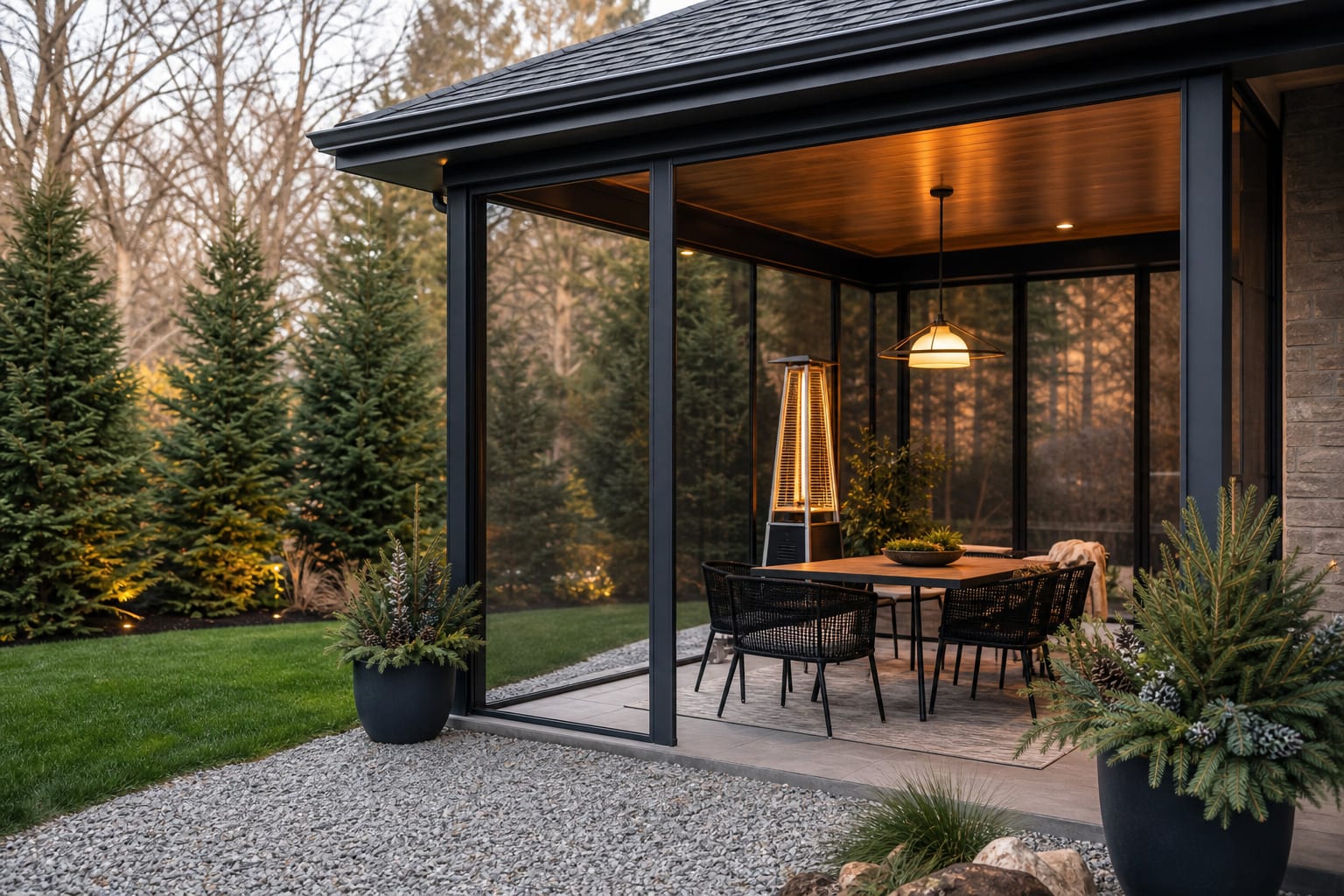
Storage is the difference between a patio you use and one you constantly rescue. A deck box near the door holds throws and seat pads, but cushions need breathable dry storage in wet climates. Add hooks for grill tools, a lidded bin for kindling, and a shelf for lanterns. Plan winter patio storage ideas before the first freeze, not after furniture has already spent two storms outside.
Design-check shorthand: Depth before decoration. Repetition before variety. Maintenance before novelty.
What mistakes keep outdoor rooms from working all year?
- Buying the dining set first locks in every clearance and heater location before you know what fits. Tape the footprint on the patio, chairs pulled out 24 inches, before choosing furniture.
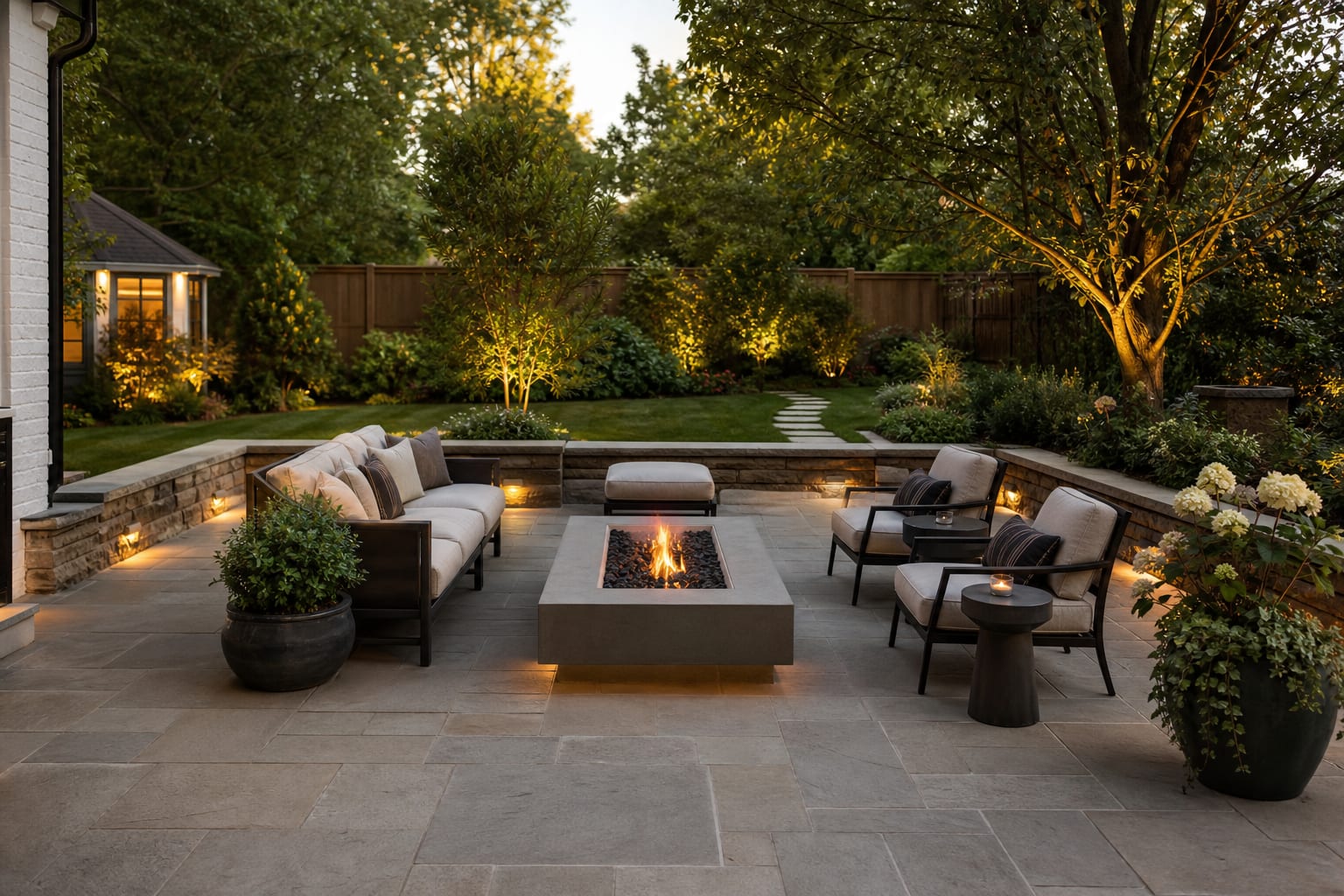
- Treating a fire pit as the whole strategy disappoints because wind still cuts across chair backs. Pair fire with a wind buffer and seating placed 30 to 42 inches from the flame edge.
- Ignoring drainage ruins spring and fall. Fix slope, gaps, or sunken pavers before adding rugs; a rug should never cover a drainage problem.
- Choosing pale, delicate cushions for a messy yard creates constant upkeep. Look for removable covers, mid-tone fabrics, and cushions that stand upright to dry.
- Lighting only the table leaves the rest of the yard dark. Add low markers at steps and gates; even a 3-inch step needs visibility at night.
The deeper issue is designing for the fantasy season. If the patio only looks good during one golden hour in June, it isn't a four-season space. Design for the annoying day: wet shoes, early darkness, wind, and a guest looking for the step.
How can AI design help you preview a four-season patio?
Use AI design to test shelter, heater placement, furniture scale, planting screens, and lighting on a photo of your own patio before buying permanent pieces. Test this on your own photo with ReDesign and compare practical versions of the same space from the angle you use every day.
Upload a straight-on photo from the back door or kitchen window, then test three versions: a covered lounge zone, a dining-first layout, and a garden-edge seating plan. Specify constraints: a 36-inch path to the lawn, a covered 8-foot seating zone, warm 2700K lighting, and evergreen planters as a wind break. Renters can preview removable choices like weighted planters and clip-on lights; owners can test permanent moves like pergola posts and drainage changes.
Frequently Asked Questions
What makes an outdoor room usable year-round?
A covered roof, a heat source, and a wind screen together keep a space usable in every season. Without any one of the three, the space drops out of rotation for at least part of the year.
Do I need an enclosed structure for year-round use?
No. An open louvered pergola with overhead infrared heat and retractable side screens works down to about 25 degF. Full enclosure becomes worthwhile below 20 degF or in heavy snow zones.
What plants give year-round interest outdoors?
Use boxwood and hellebore for evergreen structure, ornamental grasses for late-summer-through-winter form, hydrangeas for summer blooms that dry well, and one flowering tree for spring color.
How much does it cost to make a patio year-round?
A solid roof over an existing patio plus overhead heaters and side screens runs $15,000 to $35,000 for a typical 200-square-foot zone. A louvered roof system costs roughly double that.
What's the cheapest year-round patio upgrade?
Overhead infrared heat, two retractable wind screens on open sides, and a fan for summer cost $2,500 to $4,500 total and can extend usable months from about 4 to 9 per year.
> Try this: Ready to see this on your own outdoor space? Open ReDesign and run the preview before you buy materials, plant, drill, or move furniture.
Three transformations to try
1. Four-season patio with louvered roof 2. Four-season porch with stone fireplace 3. Four-season deck with retractable screens