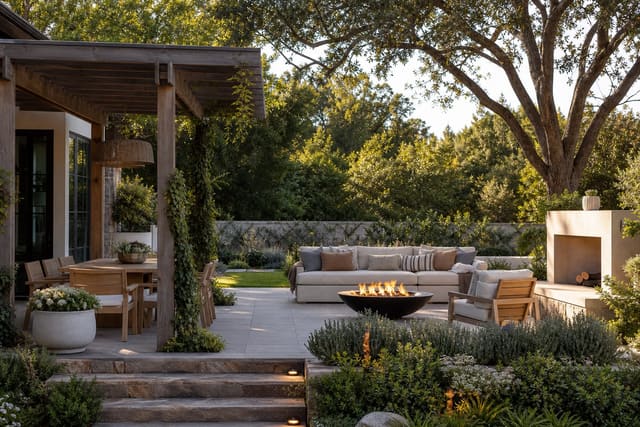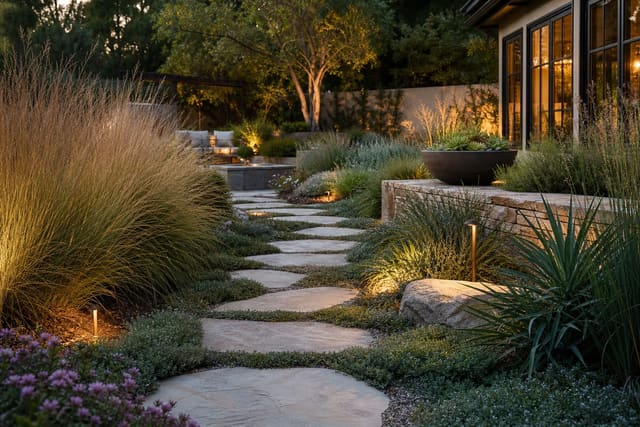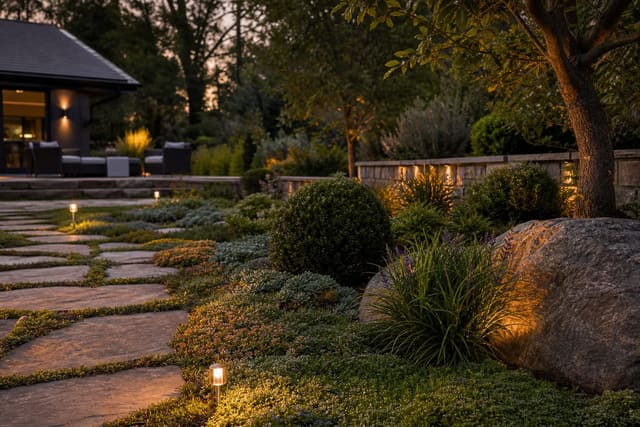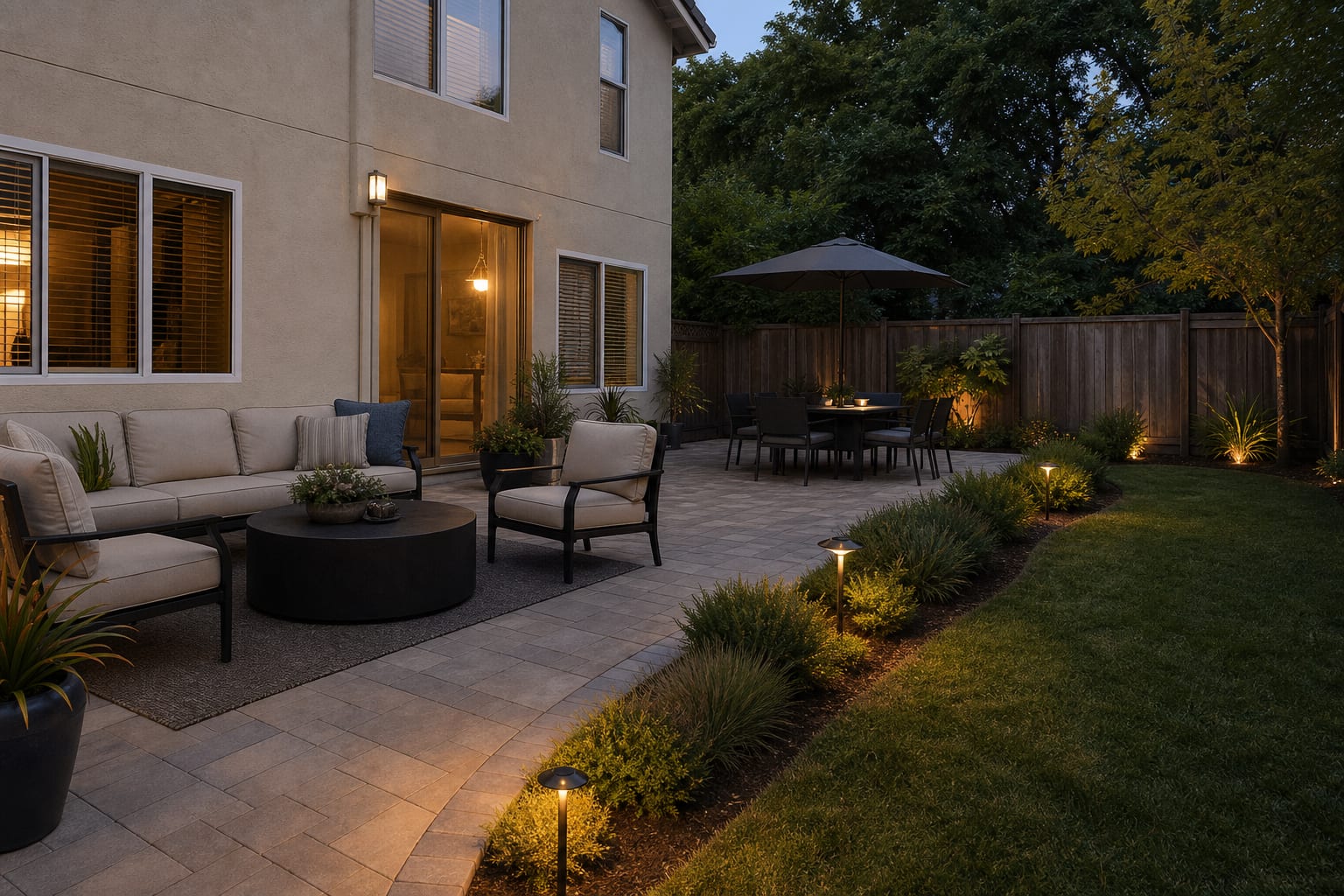
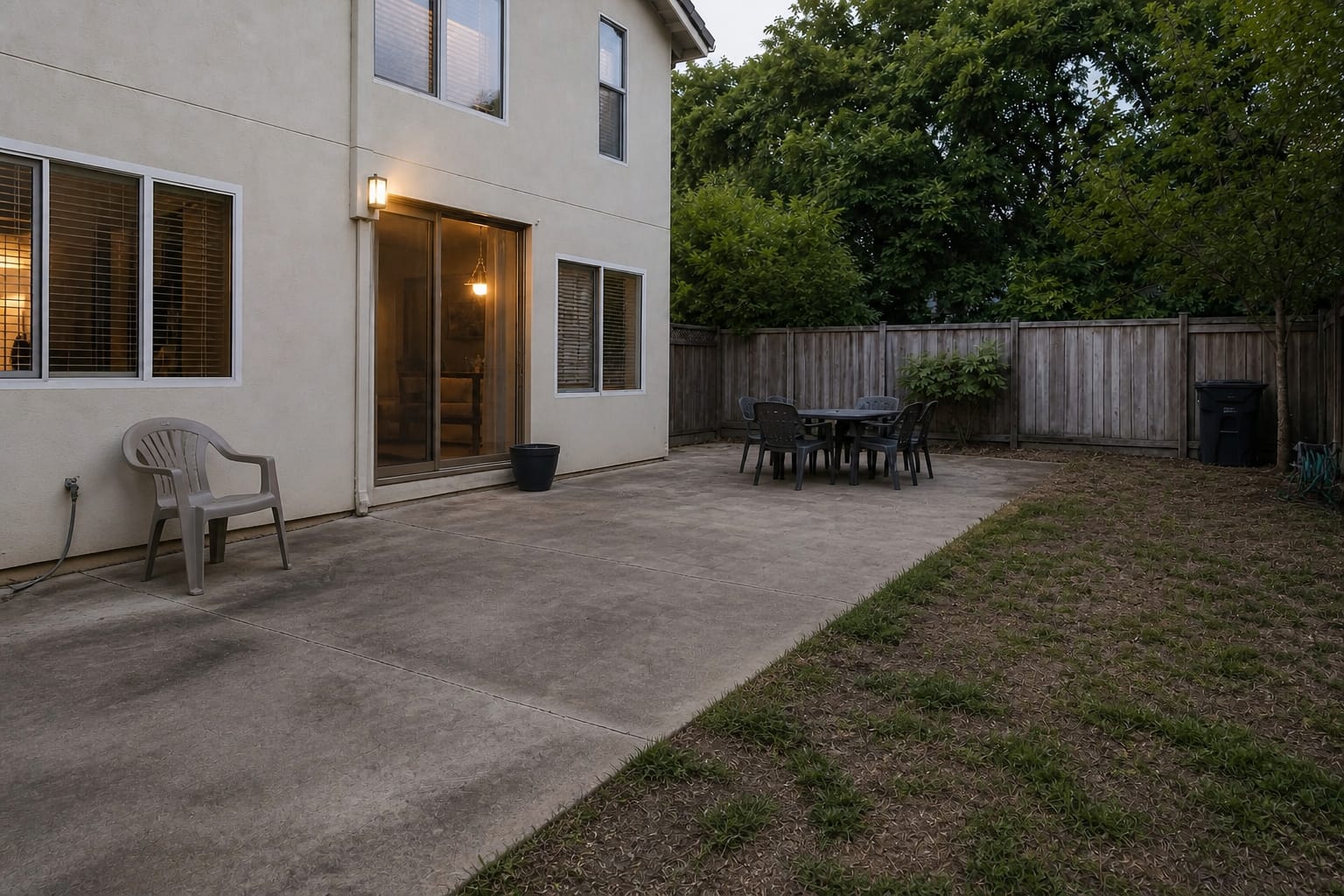
Transition from a patio to a lawn by setting the patio edge flush with the turf, adding a steel or stone mow strip sized for a wheel mower, and planting a 6-18 inch low edger along the patio side. The best patio to lawn transition ideas fix grade, drainage, and mowing at the same time instead of masking a bad seam with decoration.
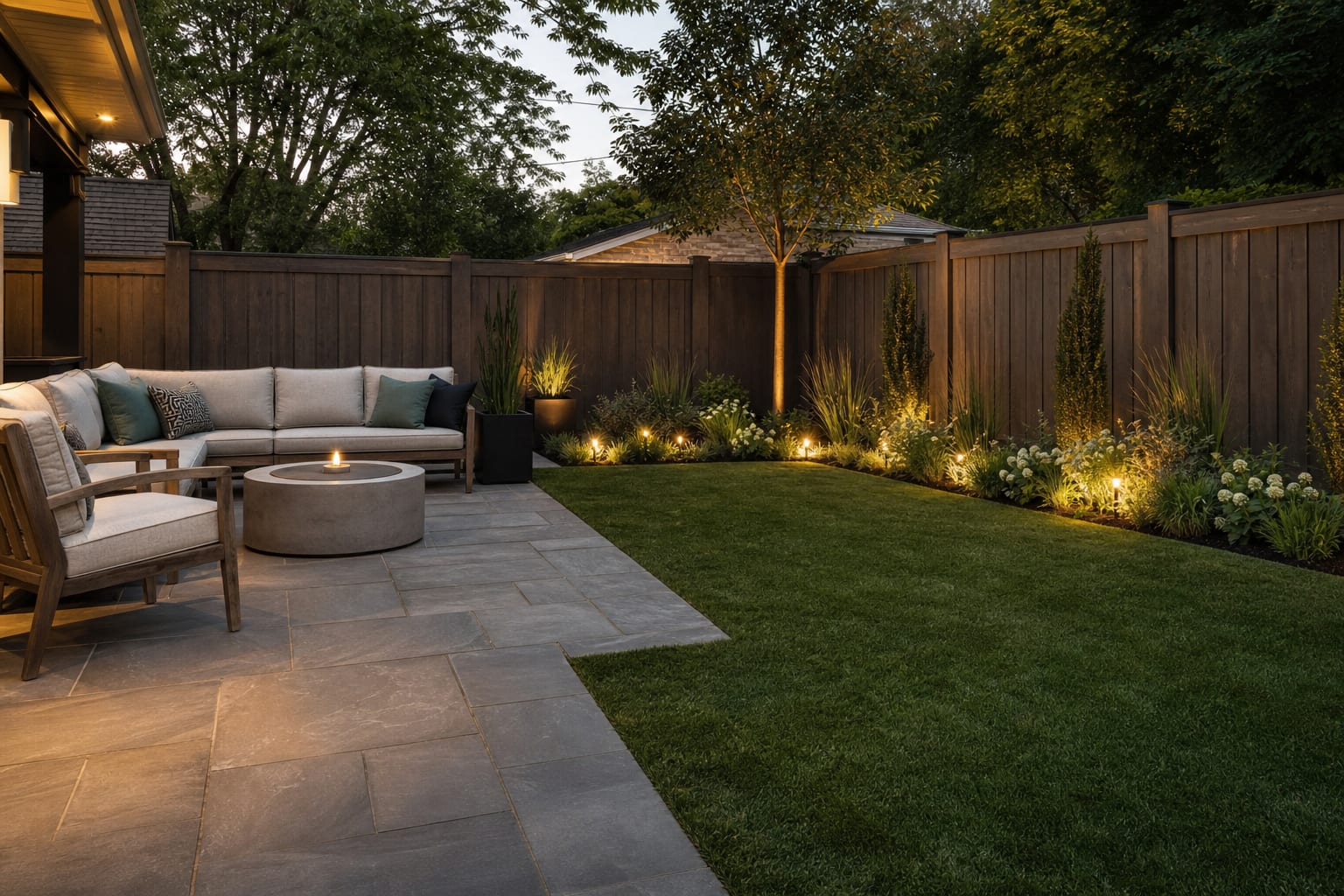
How do I transition from a patio to a lawn?
Make the patio edge level, add a durable border or planted buffer, and correct any height change with a shallow step, gravel strip, or sloped lawn panel. For a flush crossing, the finished patio surface should meet the lawn within about 1/2 inch. Anything higher becomes a toe-catcher; anything lower invites soil and wet clippings onto the paving.
Set the lawn slightly below the compacted patio surface, not piled up on loose topsoil. Grass crowns can sit proud by roughly 1/4 inch, but soil shouldn't smear over the paver or stone. If the patio already sits 2-6 inches above the lawn, use one broad step, a small retaining edge, or a planted band instead of pretending the gap will disappear.
Respect how the patio gets used. Keep the walking path at least 36 inches wide and skip loose gravel under the main stride. If the seam sits beside a dining zone, borrow circulation thinking from outdoor kitchen layout ideas: people carrying trays need predictable footing, not decorative wobble.
Test this on your own photo with ReDesign before choosing a direction; keep the house edge, horizon line, hardscape, planting beds, and main path visible so the preview solves the space you actually have.
Which patio edge design makes the lawn feel connected?
The right edge depends on whether you want one continuous surface or two distinct rooms. A flush paver course says walk through here. A planted border says pause at the edge. A shallow step says the grade changes, on purpose.
| Transition type | Best use | Useful spec | What can go wrong |
|---|---|---|---|
| Flush paver border | Busy routes between patio and grass | 4-8 inch border set level with paving | Looks thin if the patio is large and border too narrow |
| Steel or aluminum edging | Modern patios, tight lawns | 3/16-1/4 inch metal, stakes below mower height | Harsh-looking without planting or gravel beside it |
| Gravel mowing strip | Casual patios, fire pits, cottage gardens | 6-12 inch band of 3/8 inch angular gravel | Pea gravel rolls into turf and tracks onto the patio |
| Planted buffer | Patios needing softness or privacy | 18-36 inch bed with low edging plants | Overplanting hides the edge, narrows circulation |
| Shallow step or landing | Patio sits above the lawn | 5-6 inch riser, 14-18 inch tread | A 2 inch lip is harder to see than a full step |
A paver border is the most forgiving choice for concrete or large-format porcelain patios that need a crisp stop. Set it on a compacted base and don't let sand or soil crown above the top plane. If the patio is natural stone, a rigid brick outline may feel too suburban unless the house already has brick trim.
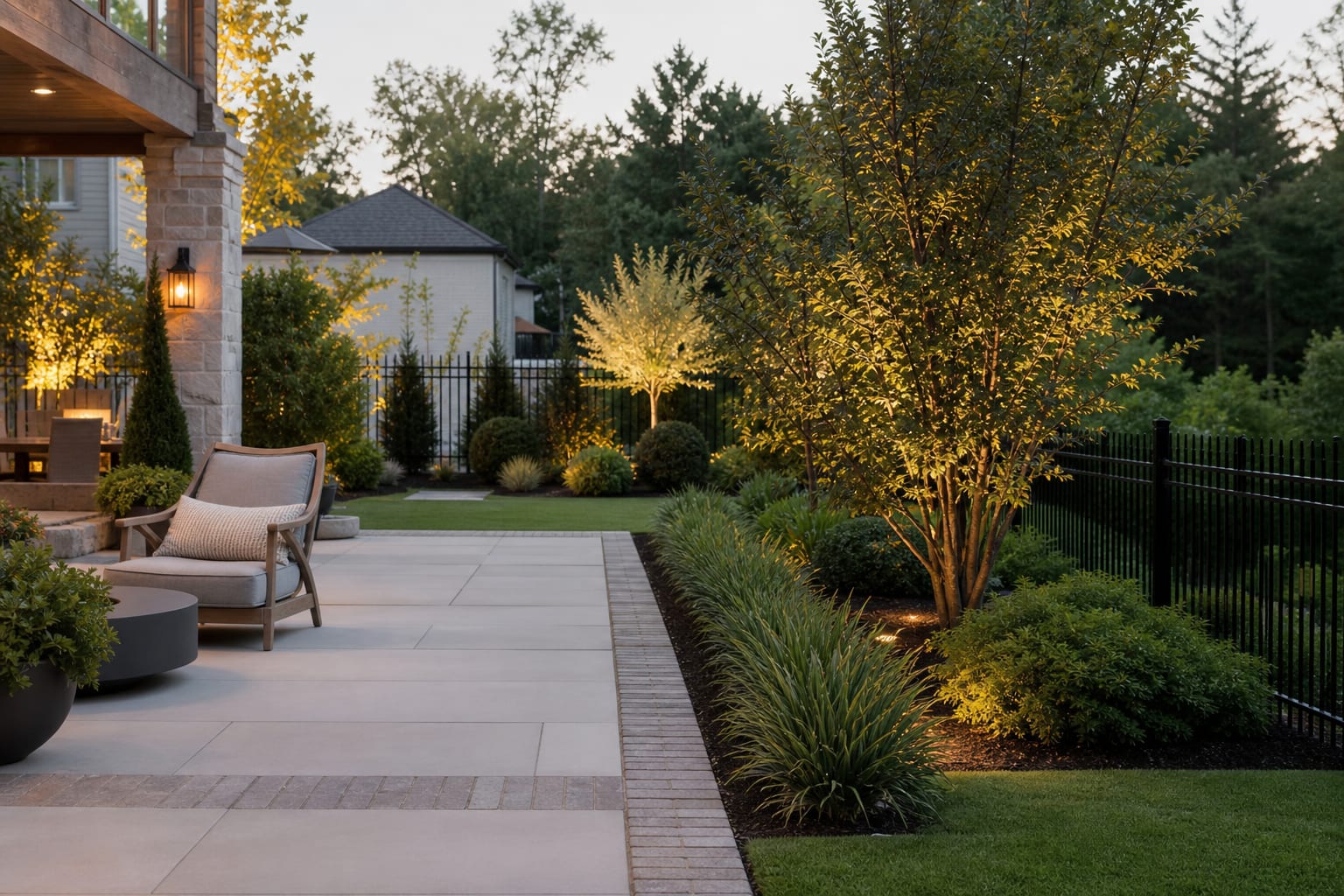
A planted band works better when the patio needs to feel less exposed — try liriope, dwarf fountain grass, carex, creeping thyme, sedum, or compact lavender depending on sun and water. Keep the front row under 12 inches near the crossing point; save taller planting for corners. Gravel works too, but only as a designed strip, not spilled filler: choose angular gravel over rounded pea gravel and contain it with metal, stone, or paver edging.
What if the patio and lawn are different heights?
Make the height change visible, comfortable, and wide. The worst condition is the sneaky 1-3 inch lip right where someone steps from chair to grass — too small to read as a step, too large to ignore.
For a patio sitting 4-7 inches above the lawn, use one proper step or landing instead of a sloped strip of turf. A comfortable outdoor riser is 5-6 inches, with a tread at least 14 inches deep; stretch it to 18-24 inches if people carry food or tools across. For a smaller difference, feather the lawn away from the patio over several feet instead of burying the edge in topsoil, which causes staining, rot, and a muddy line after rain.
Drainage decides whether the edge stays finished. Pitch hard surfaces away from the house, keep soil below weep holes and siding, and avoid raised beds that trap water against the slab. If water already collects at the seam, consider a narrow drain, gravel reservoir, or regraded swale before adding decorative edging. If the patio holds off-season gear, pair the edge plan with winter patio storage ideas so the lawn transition doesn't turn into the dumping zone.
Common patio-to-lawn transition mistakes
- Choosing an edge before checking the grade. A handsome border still fails if the patio sits 3 inches proud of the lawn; measure the height difference at several points first.
- Making the border too skinny. A 2 inch strip beside a 16-foot patio looks accidental; 6-10 inches has enough weight to read as part of the hardscape.
- Letting mulch touch the patio. Mulch migrates and blows onto paving; use stone, low planting, or a paver edge for the first 6-12 inches of heavy traffic.
- Planting tall grasses at the crossing point. Save grasses for corners and keep the passage open at 36 inches minimum.
- Using loose round gravel where people step daily. Choose compactable angular material, contain it with edging, and route daily foot traffic over stone or firm turf instead.
How does AI design help you see the edge before you commit?
AI previewing works well here because a patio-to-lawn seam is hard to imagine from a pile of edging samples. Upload a straight-on photo with at least 6 feet of lawn visible, then test a flush paver strip, a planted border, a gravel mowing band, and a shallow step from the same angle. Ask for the specs that matter: a 6 inch paver border, an 18 inch planted buffer, path lighting around 2700K-3000K, and grass kept level with the hardscape.
Let the image decide the look, not drainage, structural support, or local code. If a preview only looks good because it hides the seam behind excess plants, push the prompt toward a clearer walking route and a visible lawn line.
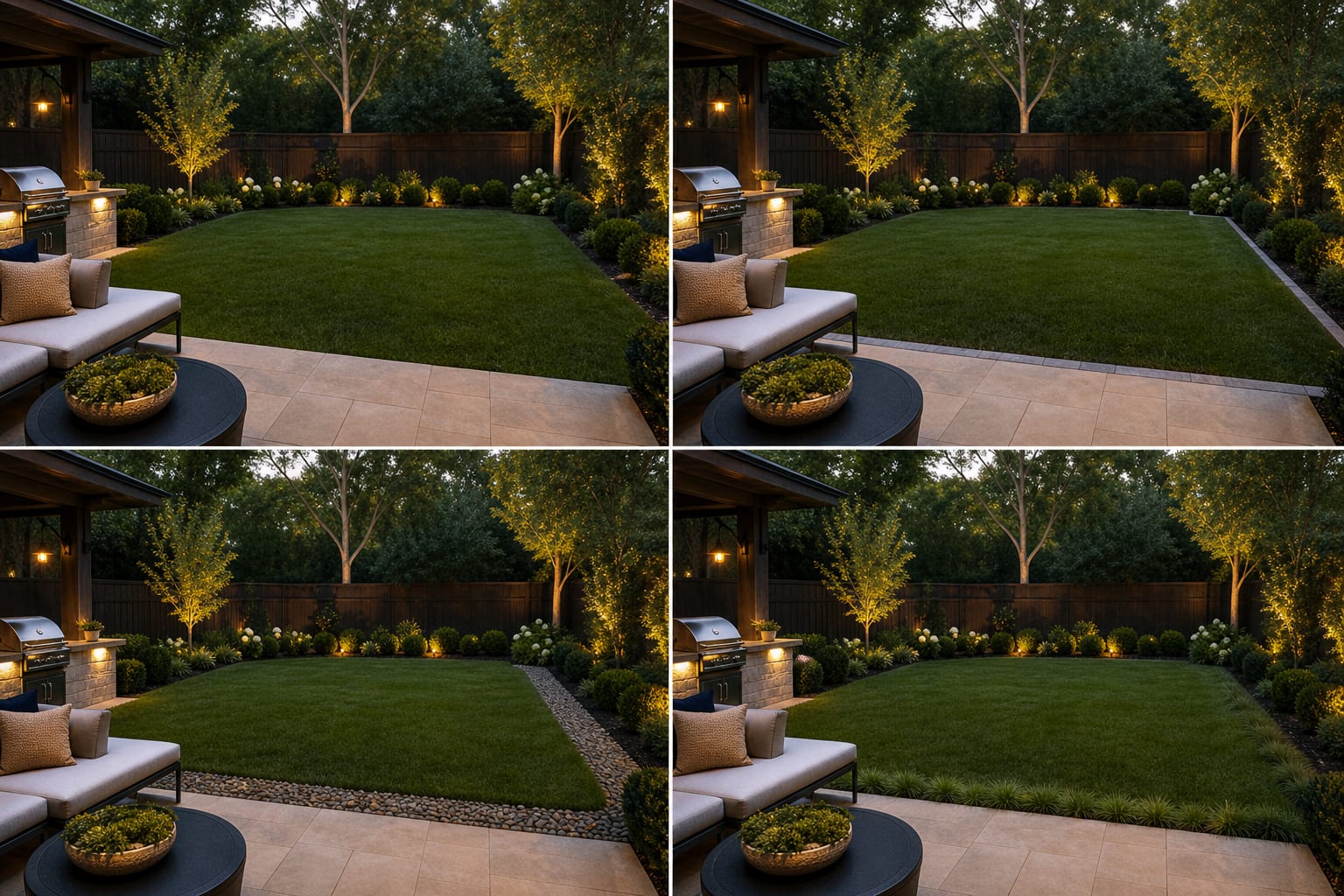
The best result isn't the most decorated edge — it's the one where patio, lawn, planting, and path feel planned together from the start.
Frequently Asked Questions
Should a patio sit above or flush with the lawn?
Flush. A patio raised above the lawn creates a trip edge and a perpetual mowing scalp, while a flush patio is mowable and reads as part of the yard rather than something stacked on top of it.
What is a mow strip and do I need one?
A mow strip is a 4-6 inch flat hardscape band, usually concrete or stone, set between bed and lawn where the mower wheel can run. It eliminates hand-edging along that line.
What plants work at a patio-lawn edge?
Low-spreading perennials and grasses under 12 inches tall work best: sedum, hakonechloa, dwarf mondo, and creeping thyme. They soften the line without shedding onto the patio or jumping the mow strip.
How wide should the edge planting be?
6-18 inches is the sweet spot. It's wide enough to soften the hardscape but narrow enough that it doesn't compete with the patio as a sitting zone.
Can I skip the mow strip?
Yes, if edger plants are tall enough to read as a bed (18 inches or more) or you commit to hand-edging every cut. Otherwise the lawn will creep into the patio within a season.
> Try this: Ready to see this on your own outdoor space? Open ReDesign and run the preview before you buy materials, plant, drill, or move furniture.
Three transformations to try
1. Patio with stone mow strip and edge planting 2. Bluestone patio flush with lawn 3. Patio edge with hakonechloa and steel