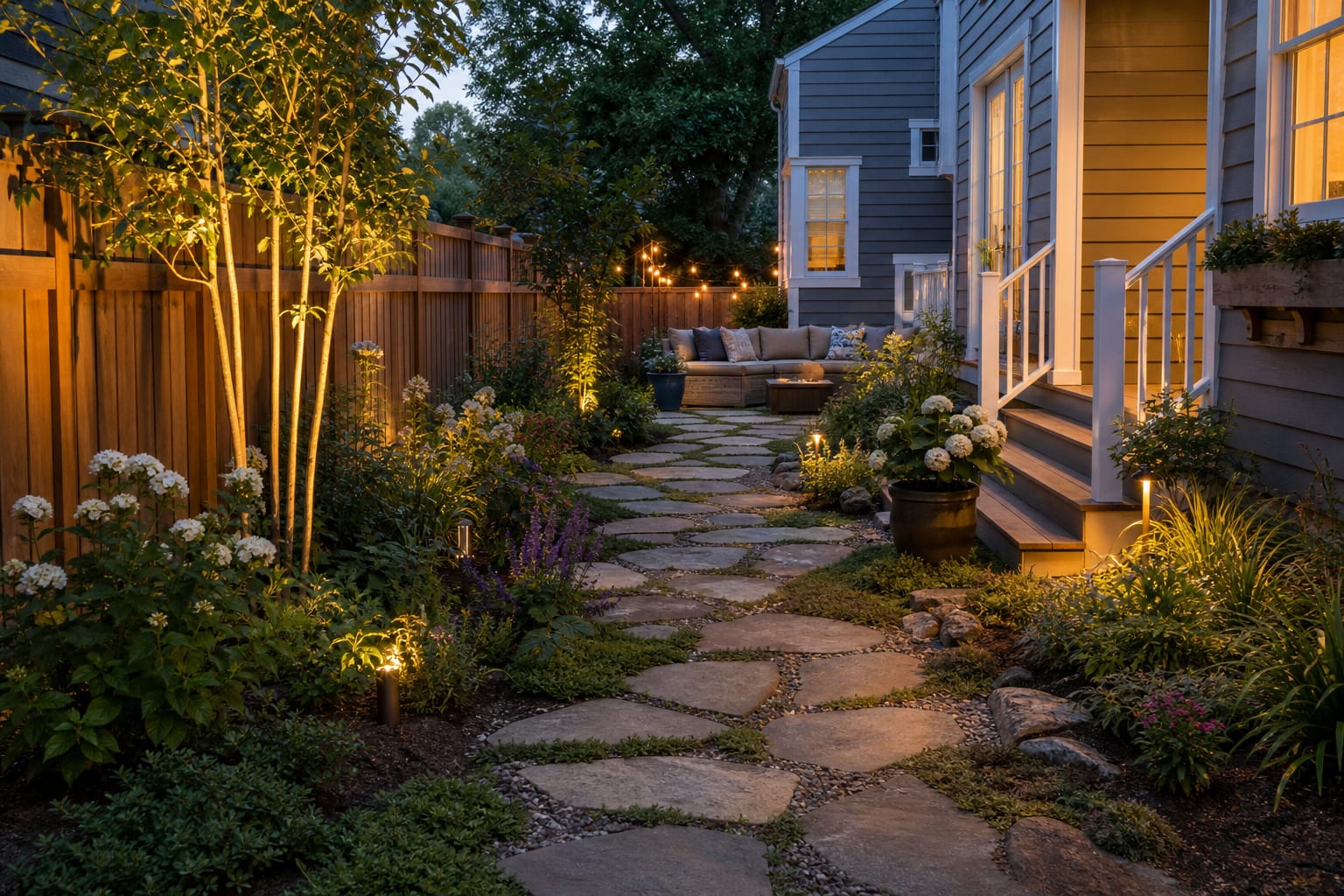
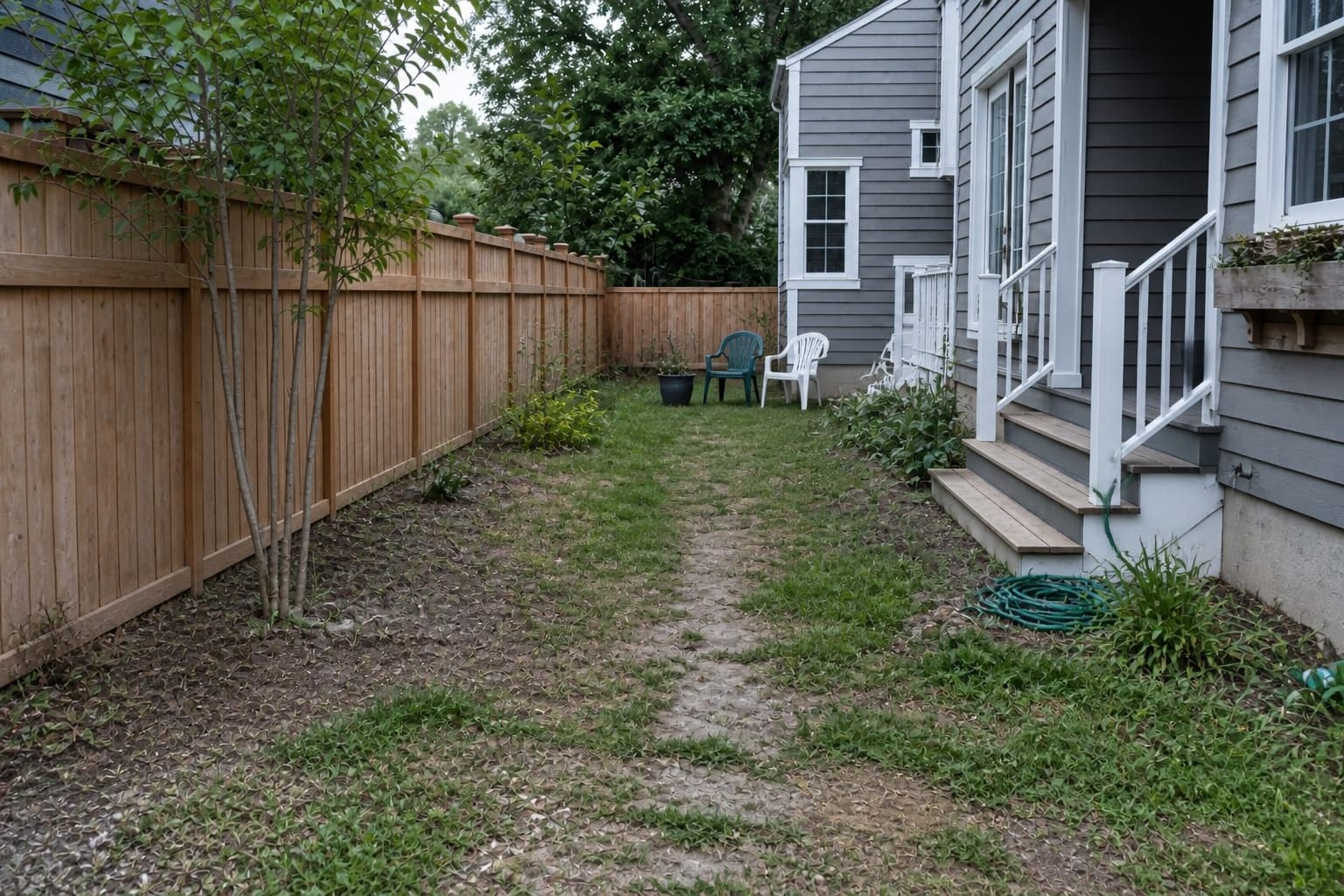
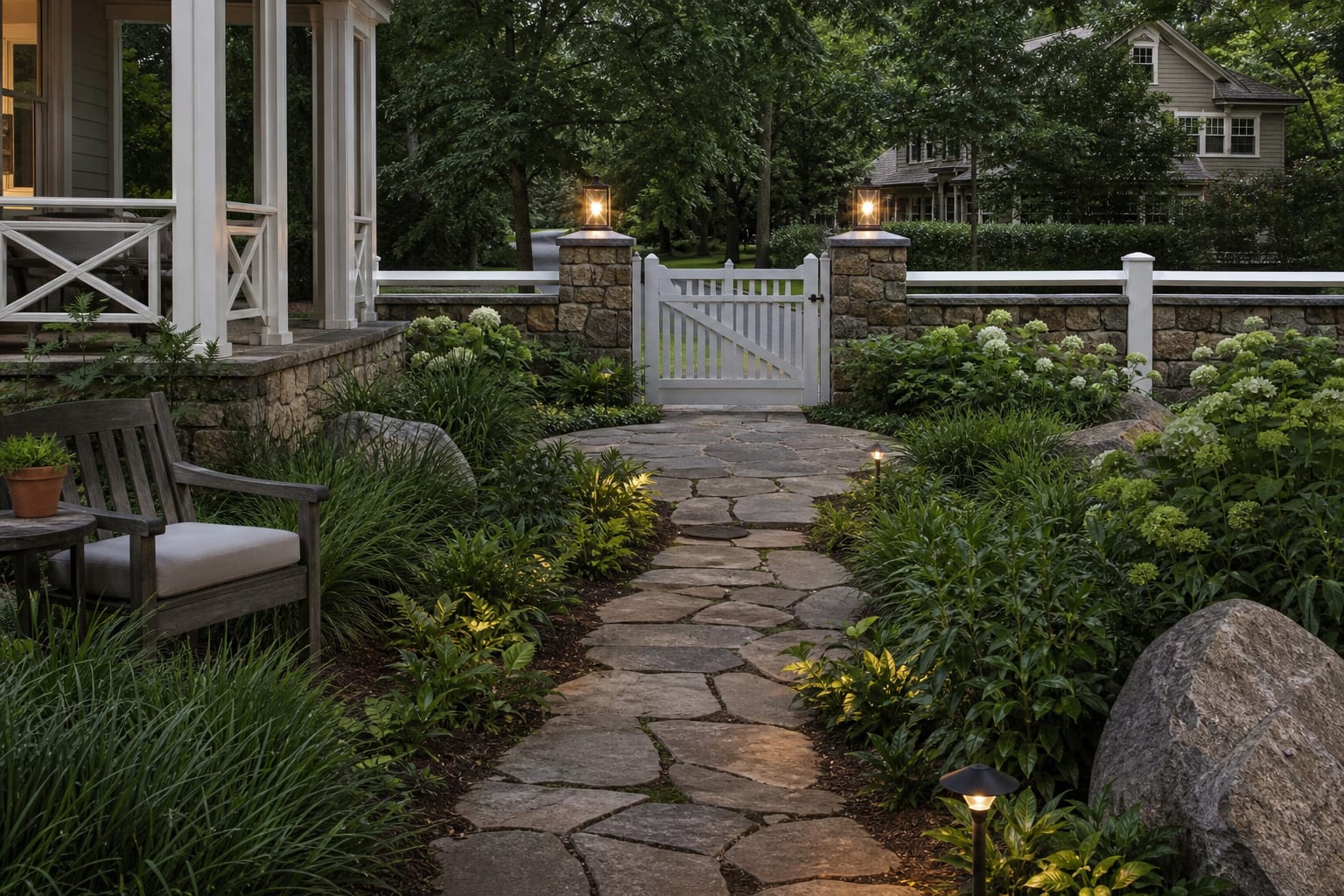
A flagstone path looks natural when stones run 16-24 inches across, sit on a 4-inch compacted base with 1 inch of sand bedding, are gapped 2-4 inches for planted joints, and curve along the route you actually walk. Skip that structure and it reads as tile, not garden. This guide covers layout, stone choice, joints, and lighting for a path that looks like it has always been there.
How do you lay a flagstone garden path?
Excavate the route, compact 4-6 inches of crushed stone base, add 1-2 inches of bedding sand, set 1.5-2 inch thick flagstone, then fill 2-3 inch joints with gravel, soil, or low groundcover. Flagstone is heavy but irregular, so it needs a firm plane underneath rather than mortar patching every wobble.
Lay out the curve with a hose first, then walk it carrying a watering can or trash bin. A main garden path should run 36-48 inches wide; a secondary path can be 24-30 inches for one person. If your hip clips a shrub or your foot cuts a corner, the curve is too theatrical.
Dig 7-10 inches below finished grade for stone plus bedding plus base. Use compacted 3/4-inch minus crushed stone, not round pea gravel, since angular material locks together. Add a slight crown or 1/8 inch per foot pitch so water leaves the joints instead of pooling in them.
Test this on your own photo with ReDesign before you commit to a direction; keep the house edge, horizon line, hardscape, planting beds, and main path visible so the preview matches your actual space.
What makes a natural stone path feel like it has always been there?
The most convincing path pairs imperfect stones with a very deliberate structure. The surface should feel loose and garden-made; the route, grade, and joints should be controlled.
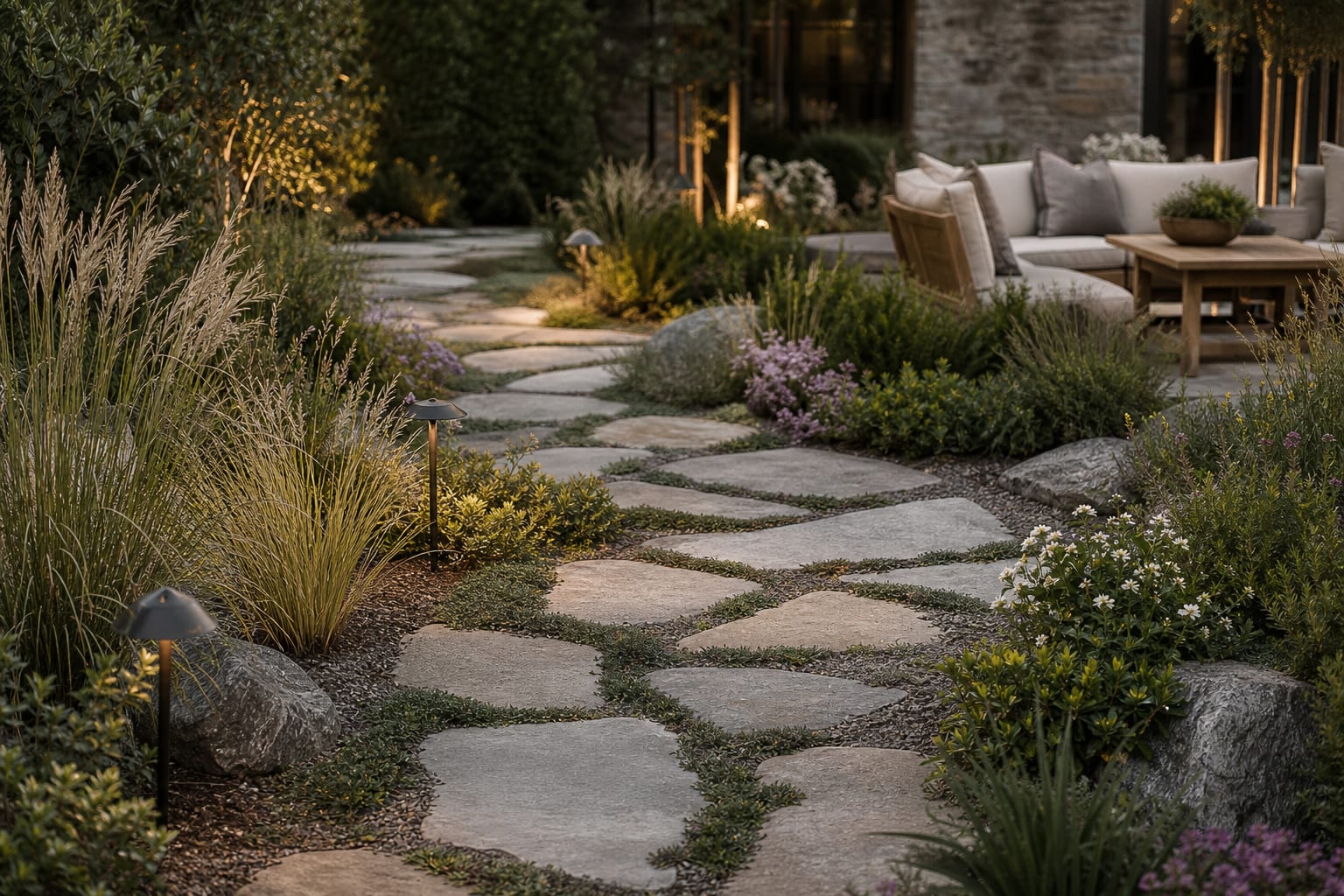
Choose flagstone with mixed shapes from one stone family. Bluestone, sandstone, limestone, and slate can all work, but don't mix three colors unless the house already has that variation. A range of gray-blue, buff, or warm tan adds depth without turning the garden into a sample board.
Set larger stones where the foot lands. A useful stepping rhythm runs about 24 inches center to center, but keep main walking stones at least 18 inches across on curves so the path doesn't force a careful little dance.
Avoid a hard soldier edge unless the garden is formal. Let stones stagger into the bed and tuck low plants into the gaps: creeping thyme, mazus, dwarf mondo grass, or Irish moss, but only where traffic is moderate and irrigation is realistic. In hot, dry gardens, decomposed granite or 3/8-inch crushed gravel is often the lower-maintenance choice.
Lighting should feel like part of the path, not a runway. Read garden path lighting ideas that avoid glare before placing fixtures; staggered low lights every 8-10 feet usually beat paired fixtures marching down both sides.
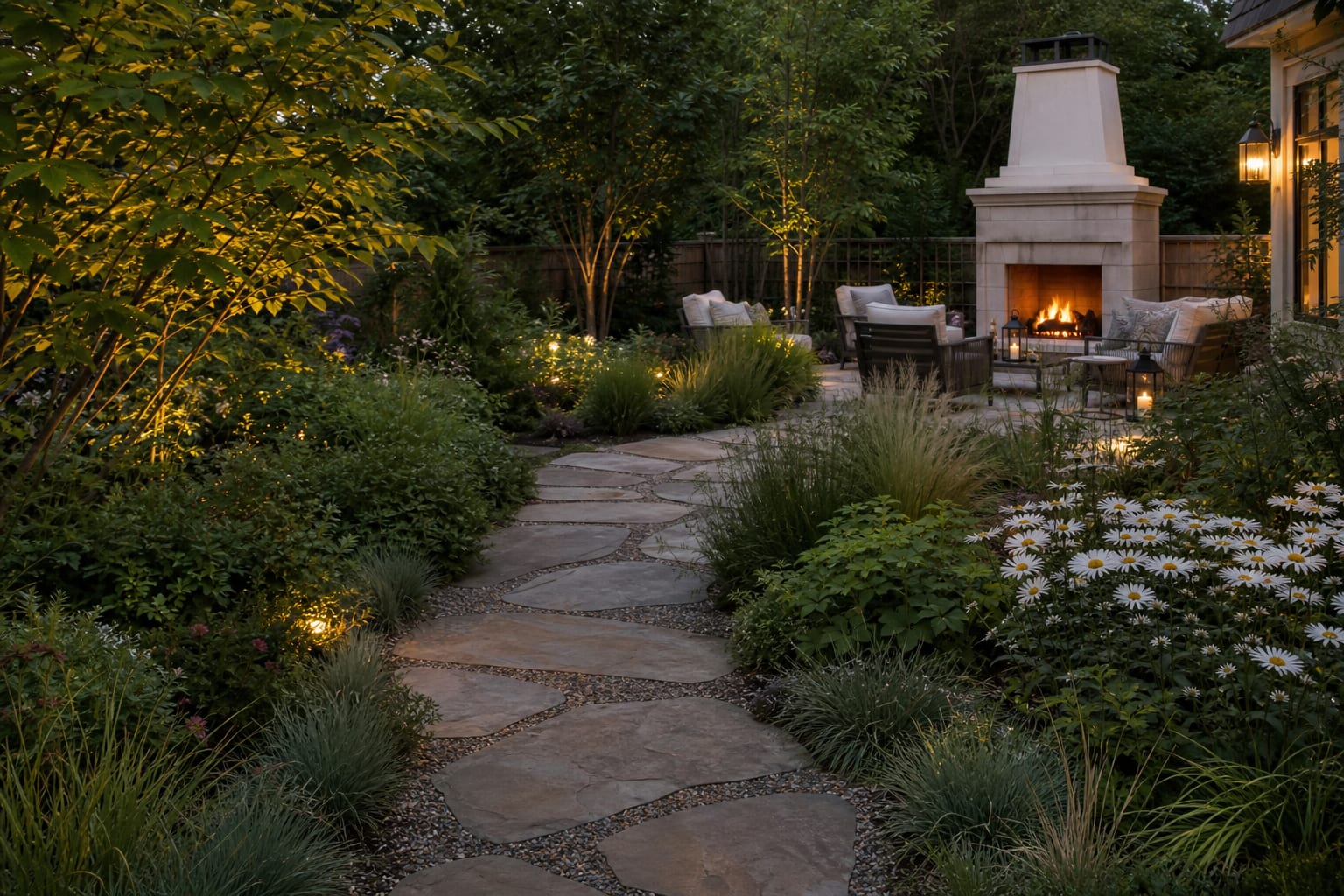
Which flagstone walkway design fits your garden?
The right design depends on how often the path is used, how formal the house feels, and how much maintenance you'll tolerate.
| Path type | Best use | Joint choice | Design caution |
|---|---|---|---|
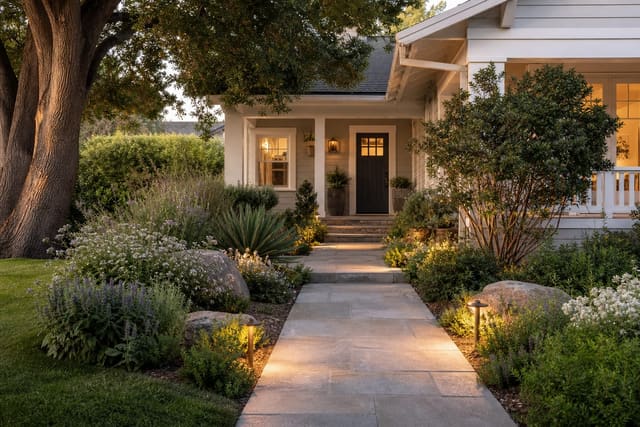
| Tight-joint dry-laid flagstone | Front walks, frequent routes | 1/2-1 inch polymeric sand or stone dust | Needs careful stone fitting or it looks jagged |
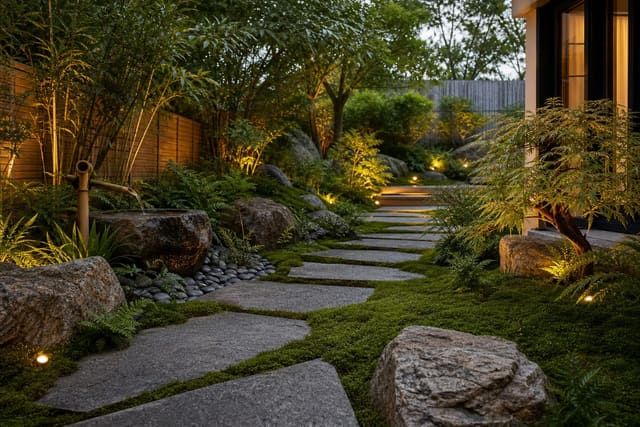
| Wide-joint garden flagstone | Borders, cottage gardens | 2-3 inch gravel, soil, or groundcover | Gaps over 4 inches become ankle traps |
| Oversized stepping stones | Lawn crossings, light use | Grass, mulch, or gravel | Centers must match a natural stride |
| Mortared flagstone | Porches, entries, terraces | Mortar over concrete slab | Cracking likely if slab or drainage is wrong |
A tight-joint path suits a front door or narrow side yard where a reliable surface matters. Keep stone thickness consistent, use a string line for finished height, and leave at least 1/4 inch of fall per 2 feet away from the house.
A wide-joint path suits a garden that wants softness; repeat the joint material elsewhere (gravel around pots, mulch in beds) so the path feels integrated. Stepping stones are the most forgiving choice since they need less excavation; bed each on compacted screenings, slightly proud of mulch but nearly flush with lawn. Coordinate lighting with landscape uplighting ideas for garden structure for depth beyond the stones.
What mistakes should you avoid?
- Stones too small. Tiny pieces create too many joints, making the path busy and unstable; save the largest, flattest pieces for the walking line.
- Skipping excavation. Flagstone set on bare soil rocks, sinks, and pools water after freeze-thaw cycles; clay soil needs more base depth than sandy soil.
- Curves without a reason. A path should bend for a tree, bed, gate, or grade change; a wiggle across open lawn reads fake. Use one or two long arcs instead.
- Ignoring level changes. A single unexpected 3 inch lip is worse than a full step. Study outdoor step lighting that marks each level change before setting stone near stairs.
- Letting plants swallow the walk. Keep shrubs 12-18 inches back from the walking line and choose low joint plants that tolerate clipping.
Should you preview the path with AI before you build?
Yes: upload a straight-on photo of the route and test a tight-joint walk, a wide-joint cottage path, and a stepping-stone layout from the same angle before any excavation. Software won't set your base depth, but it will show which route, stone color, and planting edge actually suit the house.
Photograph the area at standing height with the gate or destination visible, and include enough lawn on both sides to show width and edge planting. If the path will be used at night, generate one version with warm 2700K-3000K lighting and one without to see whether you need it for safety, atmosphere, or both.
Be specific in the prompt: irregular natural flagstone, 2-3 inch gravel joints, low thyme at the edges, 36-42 inch walking width. If the result looks too polished, push it toward fewer perfect rectangles and more varied slab sizes.
Frequently Asked Questions
What size flagstones work best for a path?
Use 16-24 inches across for stepping stones and 24-36 inches for a continuous-feel path. Smaller than 16 inches reads as garden art, and larger than 36 inches is hard to move and can crack over a soft base.
How do I install a flagstone path?
Excavate 6 inches, lay 4 inches of compacted crushed stone, top with 1 inch of leveling sand, place each stone with a slight 1/4 inch slope for drainage, and tap it level with a rubber mallet.
What goes in the joints between flagstones?
Use polymeric sand for low maintenance, decomposed granite for a desert look, creeping thyme or Irish moss for planted joints, or pea gravel for a rustic feel. Pick one material and use it consistently.
How far apart should stepping stones be?
Space them 20-24 inches center to center for a comfortable stride. Closer than 18 inches feels cramped; wider than 26 inches forces a stretch step for most adults.
Will a flagstone path get slippery?
Sandstone and limestone with a natural cleft finish stay grippy when wet. Polished granite and slate get slick, so specify a flamed or thermal finish if you're using either stone.
> Try this: Ready to see this on your own outdoor space? Open ReDesign and run the preview before you buy materials, plant, drill, or move furniture.
Three transformations to try
1. Flagstone path with planted joints