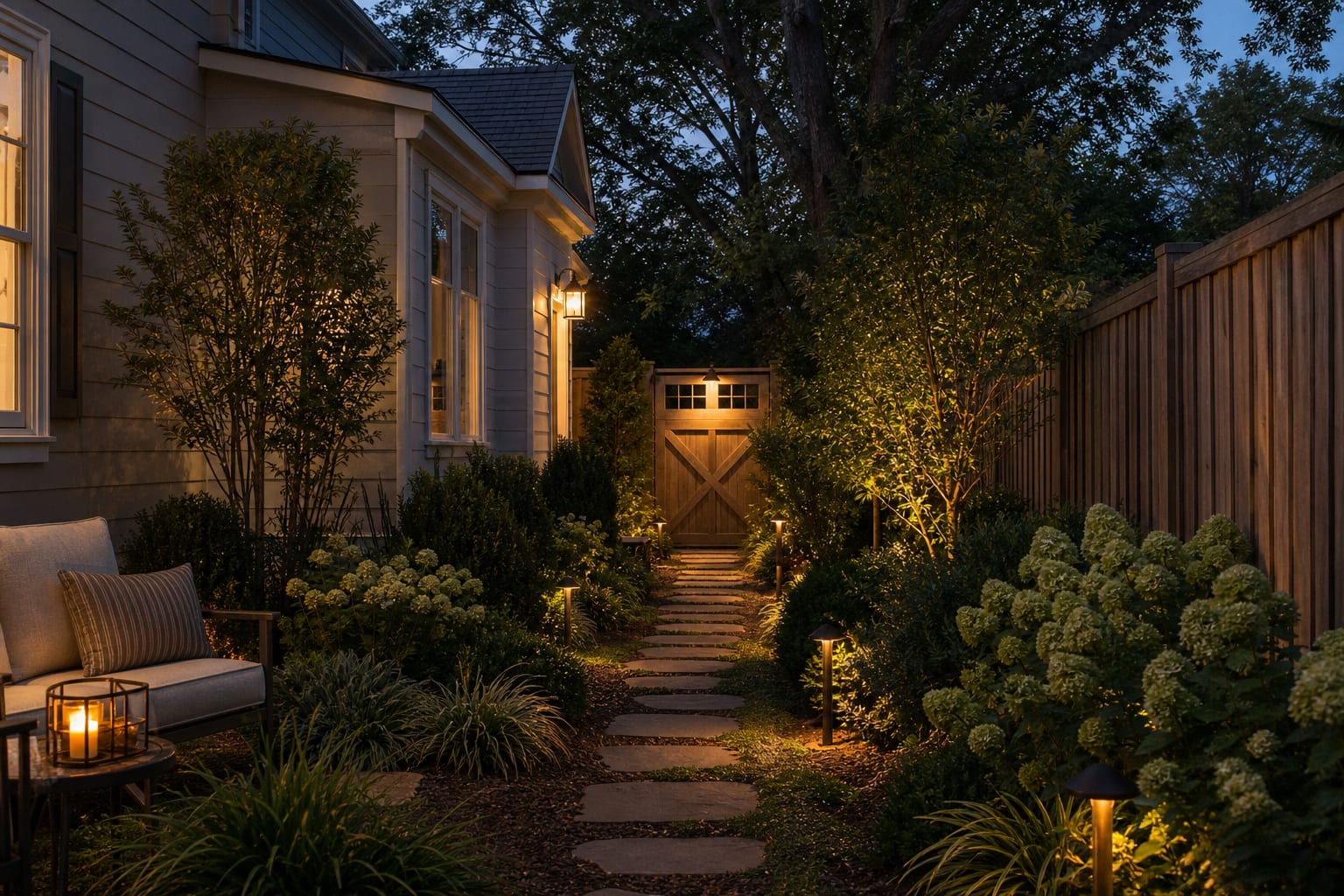
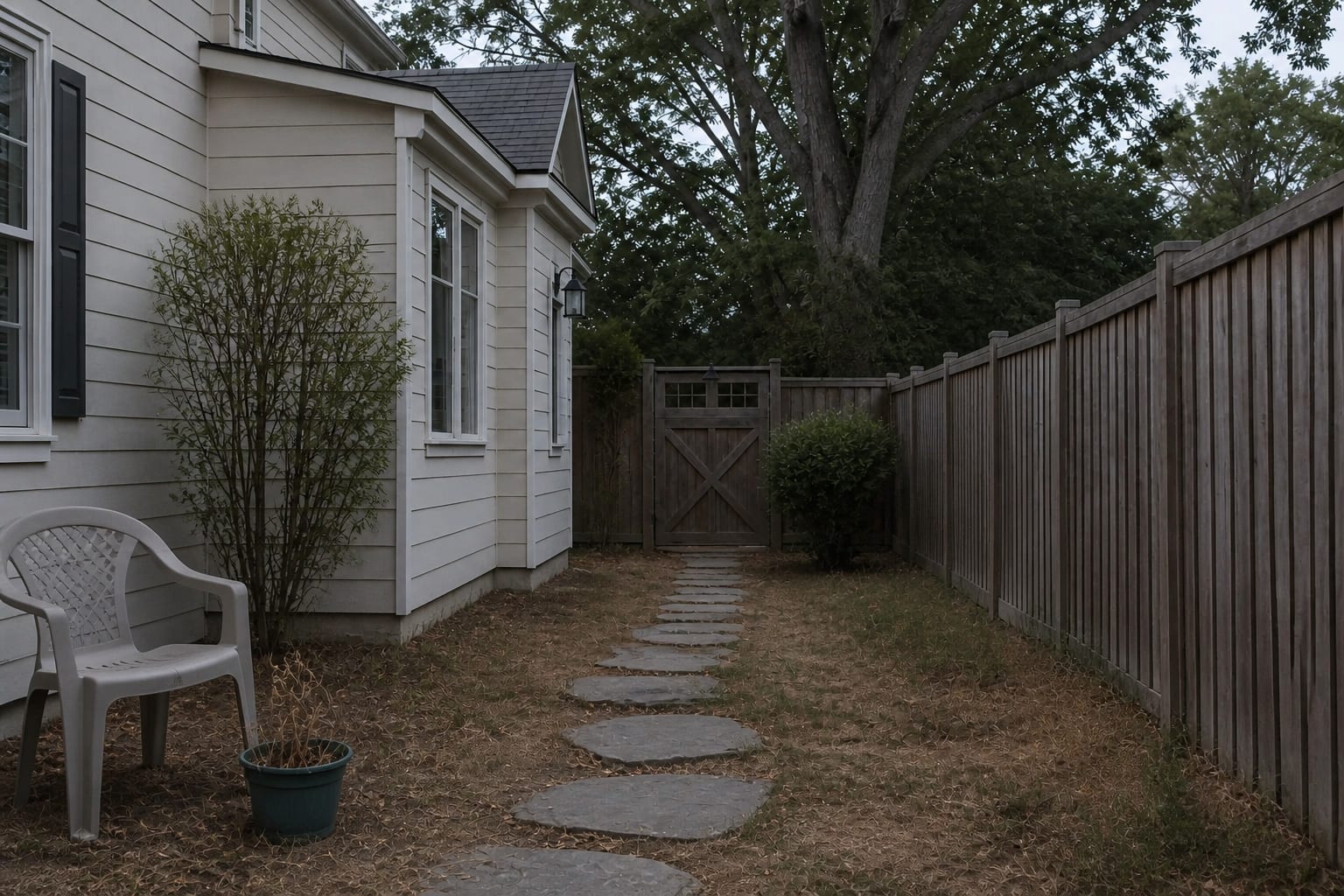
The best path lighting ideas use shielded warm 2700K fixtures spaced 6-8 feet apart on alternating sides, mounted 12-18 inches tall so light pools on the walking surface instead of glaring into eyes, controlled by a dimmer paired with a photocell for consistent nightly use.
What makes path lighting safe without overlighting the garden?
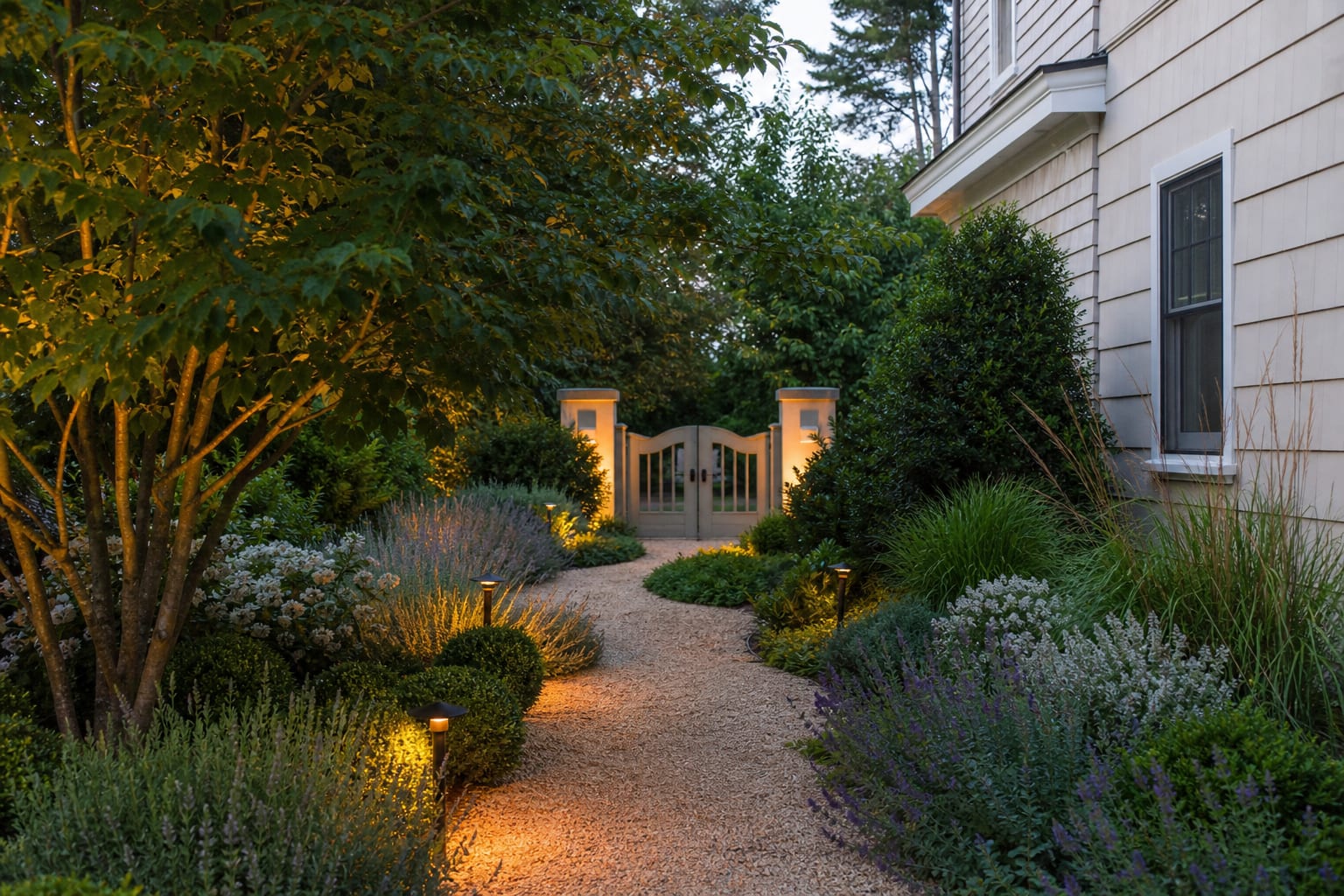
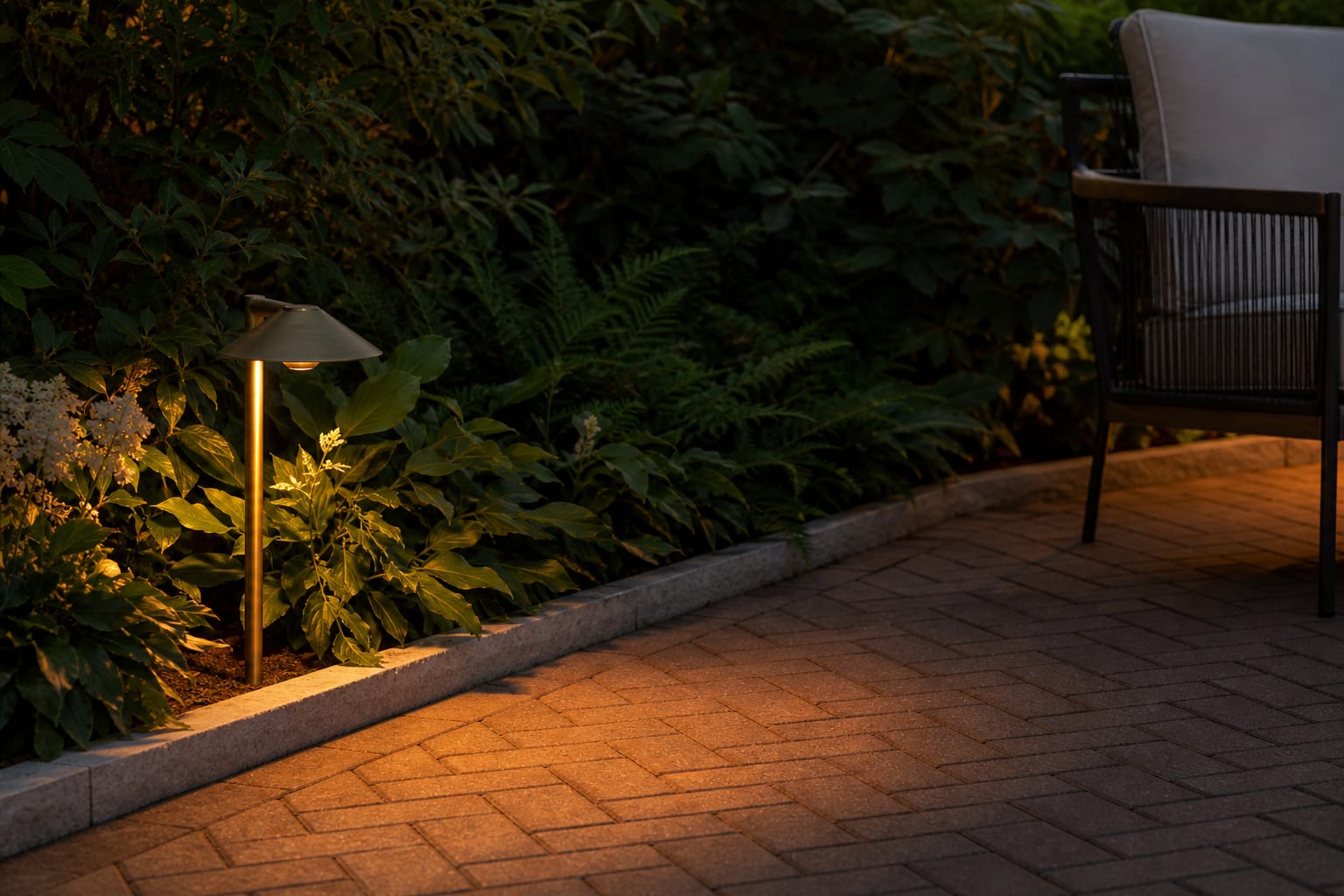
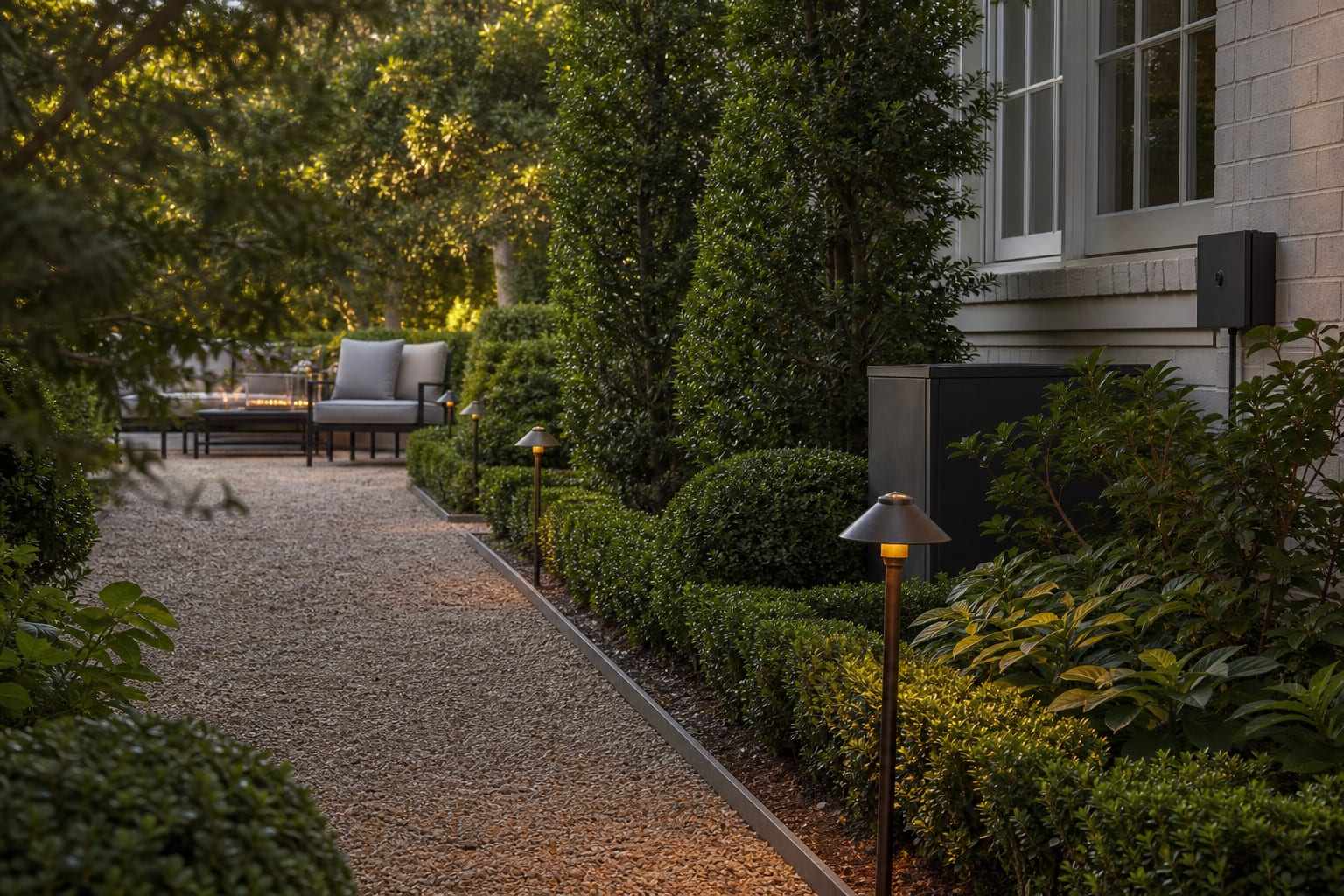
Safety comes from contrast at the walking surface, not brightness everywhere. A good fixture shields the lamp so you see the path edge, stone joint, gravel transition, or stair tread before you see the bulb. If a fixture is visible from a patio or window, pick a louvered cap, frosted lens, or down-facing mushroom head instead of a bare lantern.
Think in overlapping pools of light rather than continuous brightness; bright spots beside black gaps confuse the eye. On a 36-inch front walk, one-sided lighting is usually enough if the beam spans the full width. On a wider garden path, stagger fixtures side to side so it feels guided instead of lined.
Material matters after dark. Pale concrete needs less light than dark flagstone, gravel needs edge definition, and glossy pavers can kick glare back at the viewer. If your path meets stairs, handle them separately with outdoor step lighting that marks each tread rather than expecting path stakes to solve a hazard from the side.
How should path lights be spaced along a walkway?
Don't buy a dozen identical fixtures before deciding where darkness is a problem. Walk the route at night and mark where your foot hesitates; those spots matter more than a catalog diagram.
- Light the destination first. A path feels safer when the eye can find the door, gate, shed, or terrace; use one stronger light at the endpoint before adding small fixtures along the route.
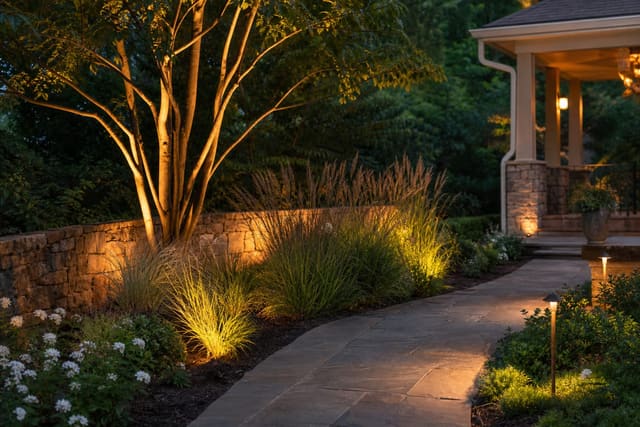
- Mark direction changes. Curves are where guests lose the path; place fixtures within about 2 feet of the bend, catching the inside edge.
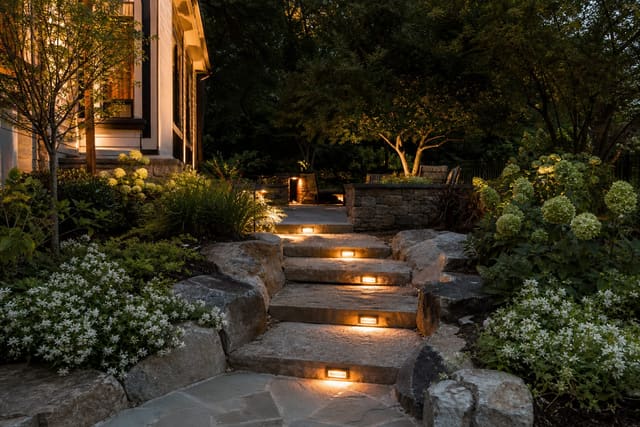
- Give steps their own layer. A 6-inch riser can vanish in shadow; use recessed tread lights or side-mounted fixtures at every tread, not one path light at the bottom.
- Keep lights out of mower and shovel paths. Set stakes 6-12 inches outside the walking edge, with more room near snow piles or edging tools.
- Use planting as a screen. Low grasses, lavender, or boxwood can hide the fixture body while the beam crosses the walk; keep foliage trimmed below the lens.
For long straight runs, resist the runway effect. Alternating fixtures at 8-foot intervals is calmer than pairs directly across from each other. A front yard with a strong tree or blank facade may also need one layer of subtle landscape uplighting near the path so the route has depth beyond ankle-height pools.
Test this on your own photo with ReDesign before choosing a final direction; keep the house edge, horizon, hardscape, planting beds, and main path visible so the preview solves the space you actually have.
Low voltage or solar: which path lights should you buy?
Solar lights suit a secondary herb path or seasonal rental patio, but low voltage wins for the walkway people use every night: front entry, side gate, trash route, pool path, or guest parking.
| Decision | Low voltage path lights | Solar path lights |
|---|---|---|
| Reliability | Steady power on cloudy weeks and winter evenings; best for main walkways. | Dim output after gray days; fine for casual garden accents. |
| Control | Works with timers, photocells, dimmers, and zones. | Controlled fixture by fixture, harder to tune as a scene. |
| Installation | Cable buried about 6 inches deep, transformer sized with room to spare. | No trenching, but needs sun exposure and a battery that weakens over time. |
| Appearance | More fixture options in brass, bronze, black aluminum. | Often bulkier since the solar panel sits atop the head. |
Choose LED fixtures between 2 and 5 watts each, then dim or zone the circuit if it feels too bright. A 60-watt transformer handles many small LED path lights, but leave capacity for a future gate light or tree accent. Use direct-burial cable rated for landscape lighting, protect it at bed edges, and photograph the cable route before mulch goes back down.
What path lighting mistakes should you avoid?
- Exposed bulbs. Charming in daylight, but the lamp becomes the brightest object at night; choose a cap or lens that hides the source and throws light down.
- Lighting both sides of a narrow walk. This reads like a hotel entrance; use one side, stagger fixtures, or save paired lights for a gate, stair, or landing.
- Cold white lamps. These flatten planting and make stone look cheap; stay near 2700K, using 3000K only for very crisp, modern exteriors.
- Ignoring plant growth. Shrubs can swallow fixtures within a season; leave 12-18 inches of clearance around grasses that arch outward.
- Treating path lights as the only layer. Add one soft wall wash, tree accent, or trellis glow where the route needs a destination. If the walk runs beside an exposed fence, planting a privacy trellis along the route makes the lighting feel intentional instead of lonely.
How can you preview walkway lighting before buying fixtures?
Path lighting is hard to judge from product photos because the real question is the whole route: paving color, shrub height, porch light, gate location, and the view from inside the house. Upload a dusk photo of the walkway and test two or three plans before ordering. Ask for warm shielded fixtures, a visible pool of light on the walking surface, realistic 6-to-10-foot spacing, and no landscaping that would not fit your bed depth.
The preview helps most when choosing between black, bronze, and brass. Black disappears beside dark mulch, bronze suits mixed gardens, and brass looks best near brick, limestone, cedar, or traditional entries. Compare the result with your actual porch light temperature and check whether fixture heads would shine into a bedroom or neighbor's window.
Once a preview reads clearly from the curb and the back door, order one sample fixture before buying the full run. Test the beam on the real paving at night and adjust height or spacing before trenching cable. That one evening of testing usually prevents the two expensive errors: too many fixtures and the wrong light temperature.
Frequently Asked Questions
How far apart should path lights be spaced?
6-8 feet apart on alternating sides works for fixtures 12-18 inches tall; closer spacing reads as an airport runway, and wider spacing leaves dark gaps between pools of light.
What height should path lights be?
12-18 inches for most fixtures; mushroom-cap lights should sit low and shielded so the bulb stays invisible from a standing viewer's eye line.
Are solar path lights worth it?
Solar fixtures suit gravel beds and remote runs without trenching but dim after a couple hours; hard-wired low-voltage fixtures hold consistent brightness all night and last 15-20 years.
How many lumens does a path light need?
60-120 lumens per fixture is enough for a residential path; higher lumens wash out planting beds and ruin night-sky views.
Where should path lights be avoided?
Avoid placement directly under tree canopies, where leaves block the light pattern, at the foot of stairs, where they create shadow trip hazards, and in straight rows that turn the path into a runway.
> Try this: Ready to see this on your own outdoor space? Open ReDesign and run the preview before you buy materials, plant, drill, or move furniture.
Three transformations to try
1. Curved path with shielded mushroom-cap lights