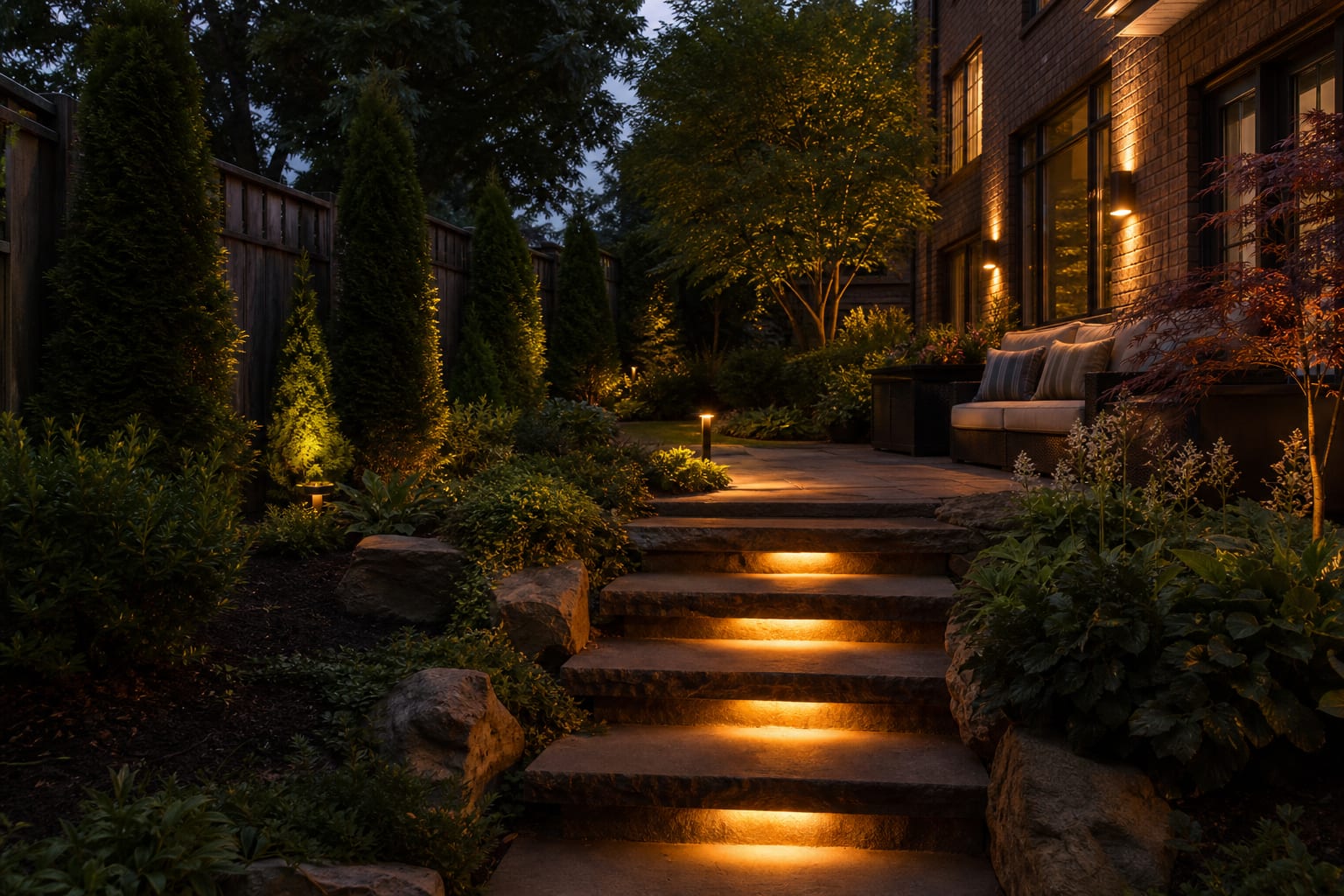
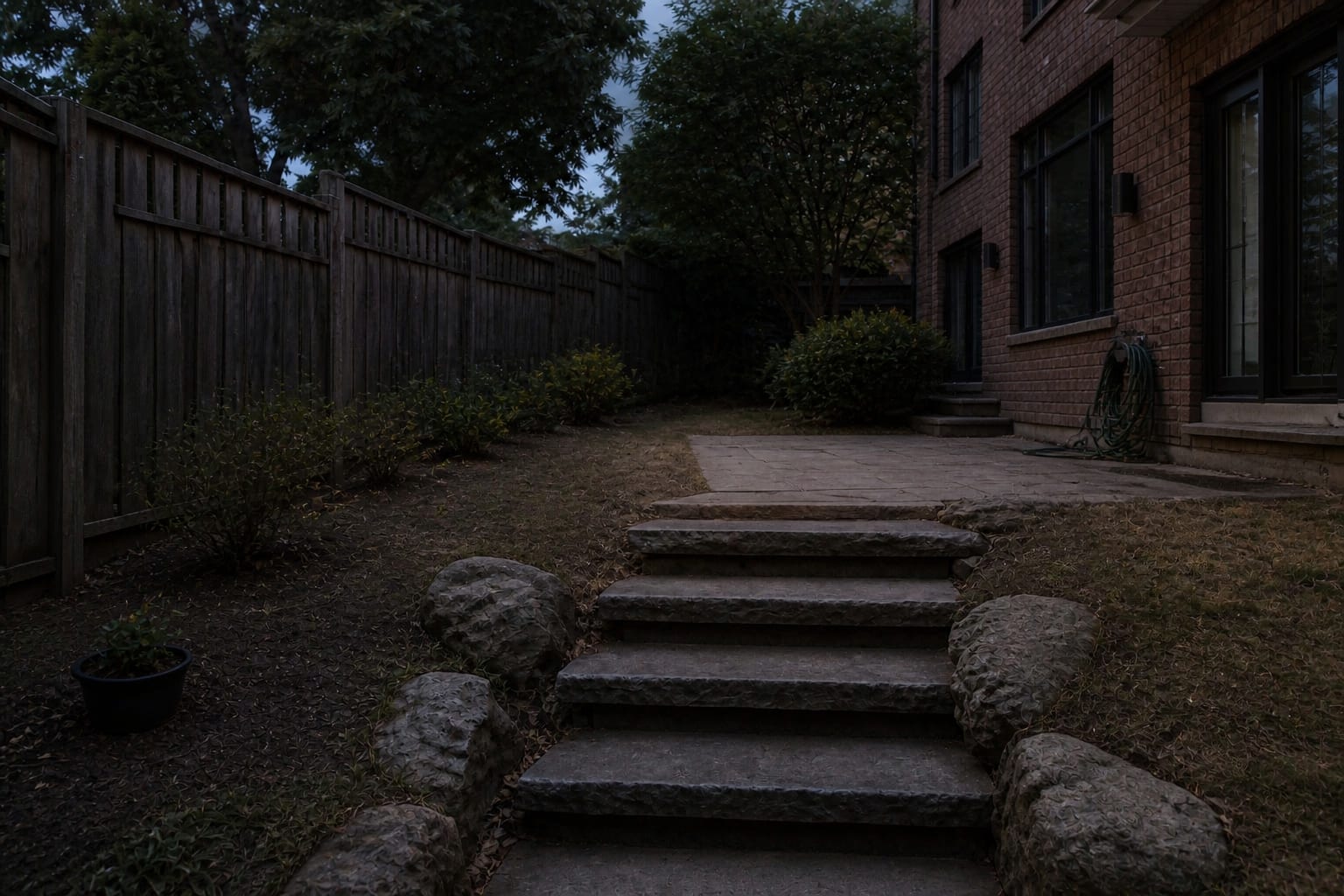
Outdoor step lighting works when you place a shielded fixture at every other riser (every riser on long runs), recess it into the riser or tread overhang, use 2700K warm light at 30-80 lumens, and run everything on a low-voltage circuit with photocell control. Light the level change before the landscaping.
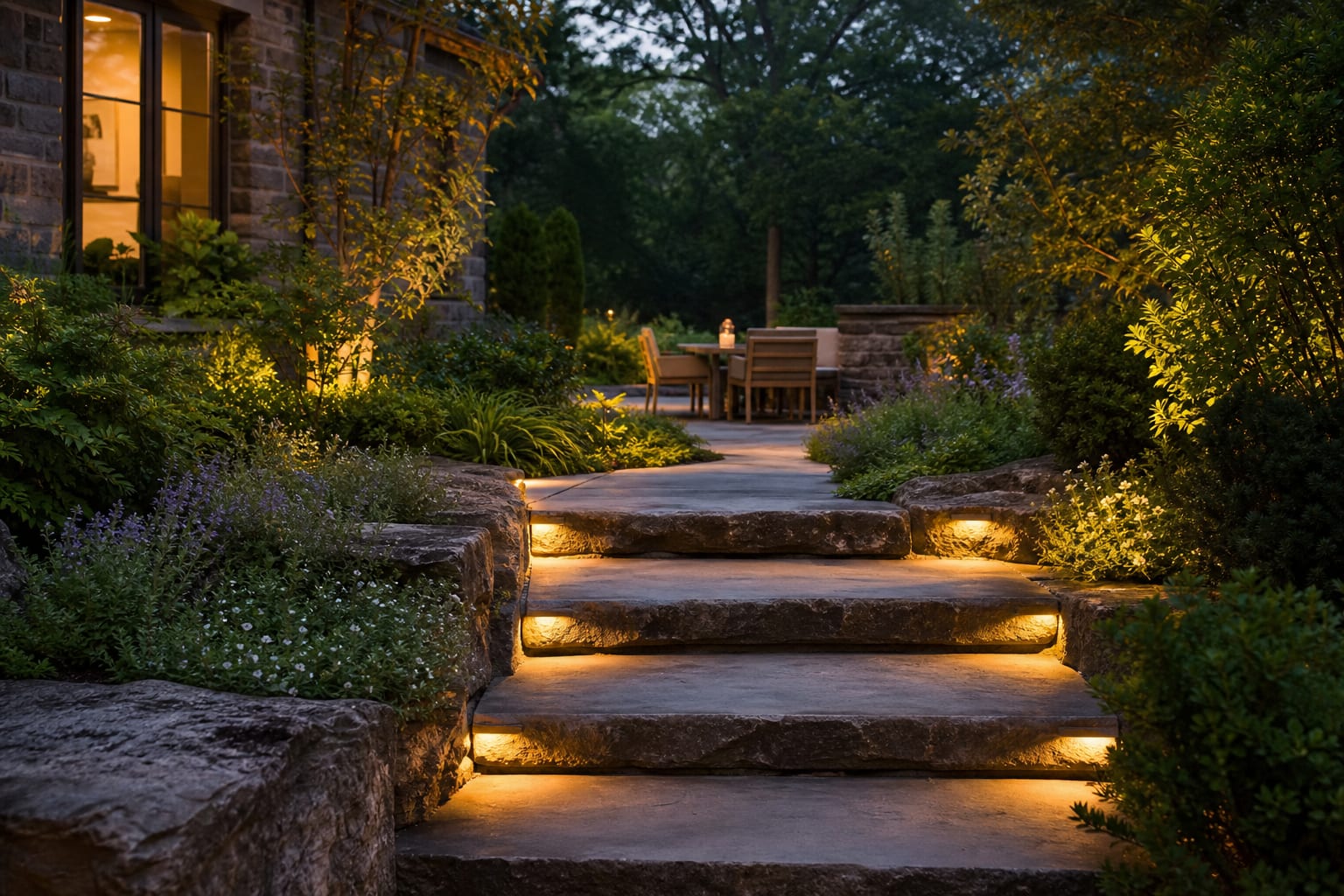
How do I add lighting to outdoor steps?
Count the hazard, not the fixtures. A three-step garden transition may need only two shielded lights, while a long deck stair run needs repeated light every 3 to 4 steps. Keep the beam aimed across the walking surface rather than toward faces, since glare makes people look away from where their foot actually lands.
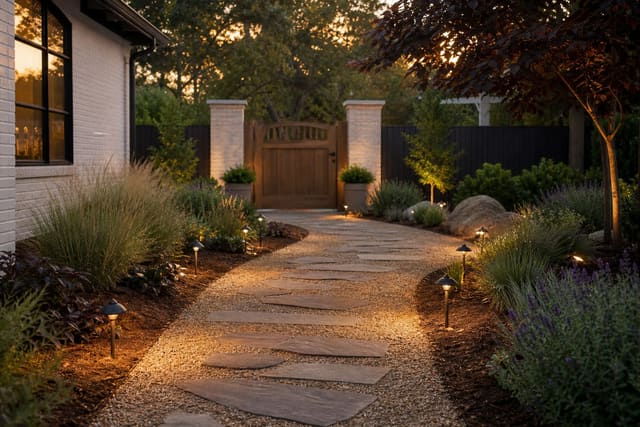
Use overlapping cues: a riser light shows the next tread, a wall light reveals the stair width, and a nearby path fixture marks where to go after the last step. Coordinate the stair with low path lights along the approach so the first and last step never disappear into darkness.
| Step condition | Best fixture move | Spec to copy |
|---|---|---|
| Masonry garden stairs | recessed or surface riser lights | mount 4-7 inches above the tread below |
| Deck stairs | small louvered deck stair lights | repeat every 2-4 treads on long runs |
| Wide stone steps | side-mounted wall or cheek lights | aim across the step, not straight outward |
| Planting beside stairs | shielded mini path or bollard lights | keep lenses below knee height, 18-24 inches |
Use 2700K to 3000K lamps unless the architecture is intentionally cooler and modern. Choose wet-location fixtures for open weather, and pick low-voltage systems for a flexible plan without heavy line-voltage work at every stair.
What makes garden stairs feel safe without looking overlit?
Safe stairs feel calm because the light is low, shielded, and placed where the eye already wants information. A bright fixture at face height near dark treads creates contrast in the wrong direction; a source tucked into the stair, wall, post, or planting edge keeps the tread nosing brighter than the surrounding soil.
Check the stair from both directions. A riser light that looks fine walking up may glare walking down, especially on steep steps, so test with a clamp light at night from the patio, lawn, and back door before final install.
Stair width matters: a 36-inch stair often reads with one centered or side-mounted light, while a 6-foot stone step may need paired fixtures or side grazing. Keep planting drama separate — uplighting nearby trees should add depth, not double as stair safety.
Test this on your own photo with ReDesign before choosing a direction; keep the house edge, hardscape, planting beds, and main path visible so the preview solves the space you actually have.
Which outdoor step lighting ideas are worth copying?
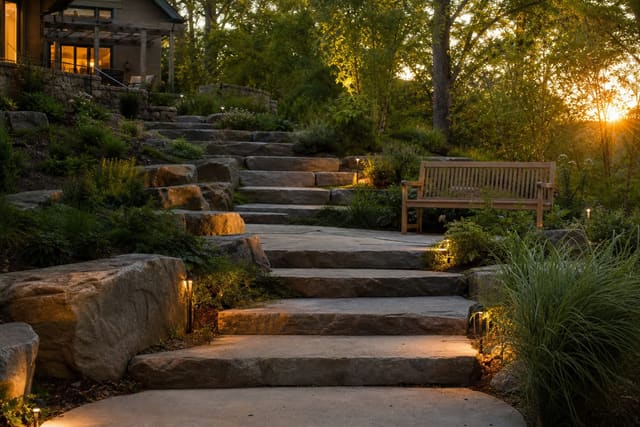
- Recessed riser lights on masonry stairs, mounted 4-7 inches above the tread below, skim the walking surface without hitting eyes.
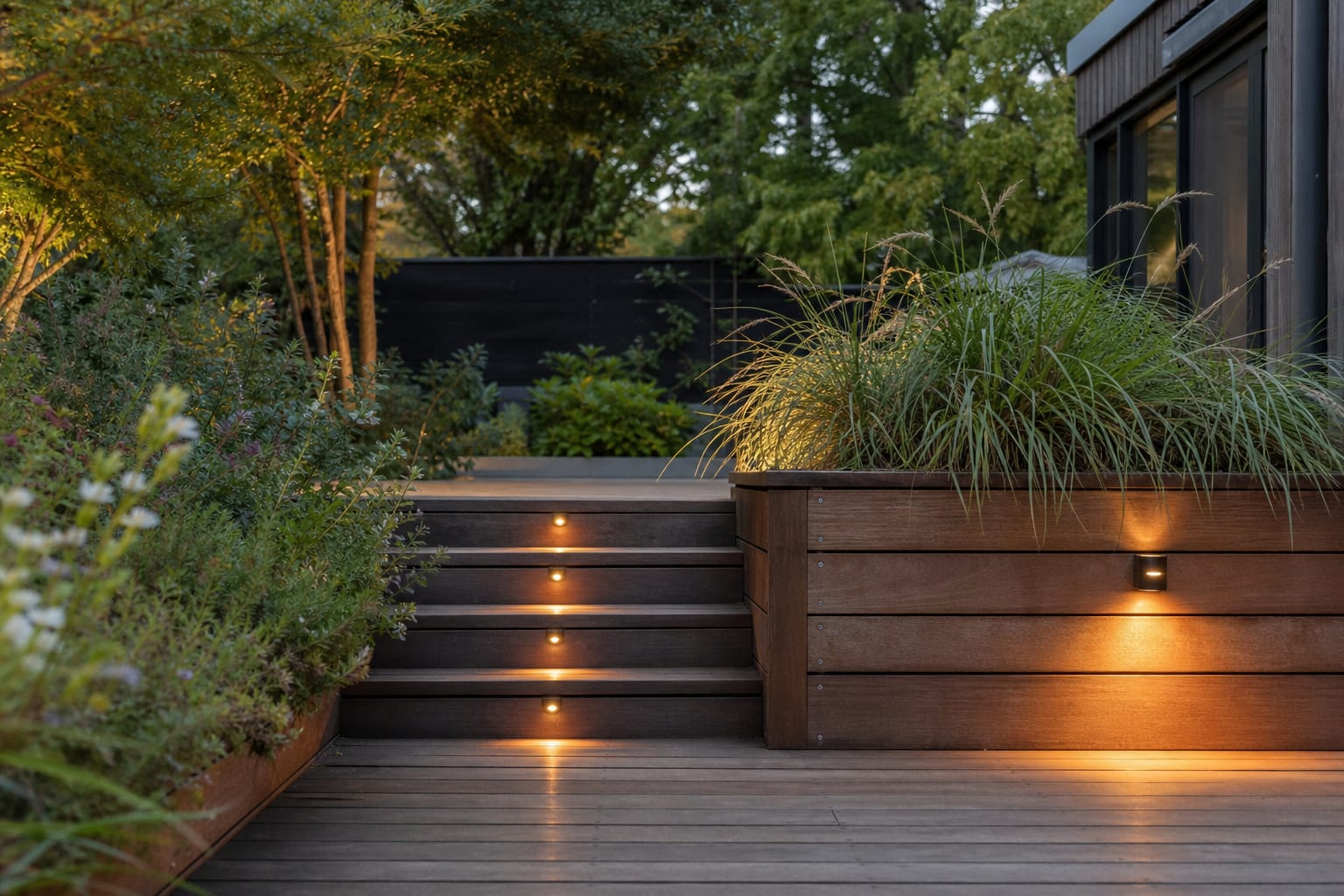
- Louvered deck stair lights on timber stairs, one every third tread on straight runs, plus extra light at turns and landings.
- Side-wall lights on retaining walls, aimed across the stair at ankle to shin height, to reveal tread width without a dotted center line.
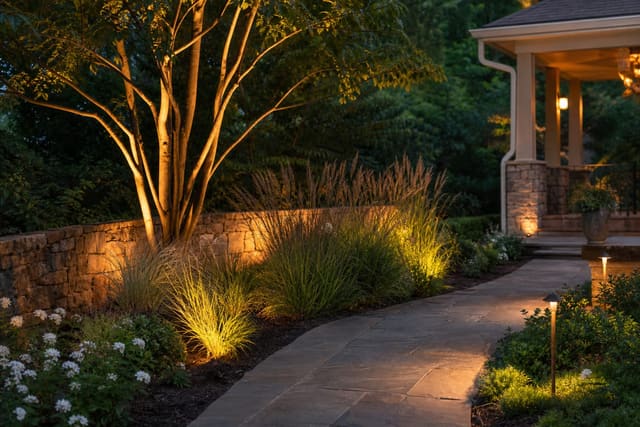
- A low bollard or path light at the landing, 18-24 inches tall with a cap or shield, to mark the destination without staring into seated guests.
- Shielded lights hidden in planting beds, 8-18 inches from the tread edge, kept clear of leaf growth after a season.
- Post-mounted lights on deck rails or pergola supports, 18-30 inches above the deck, below seated eye level.
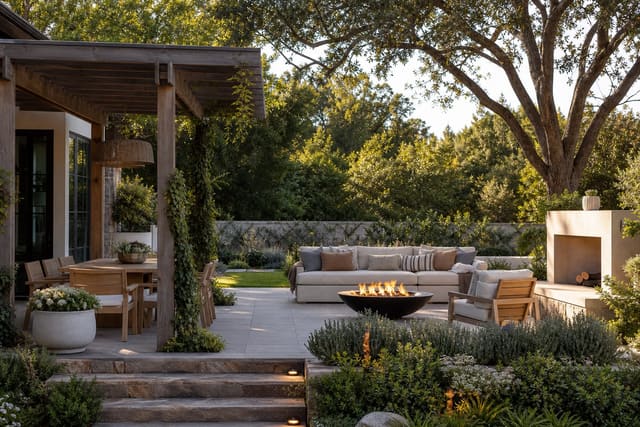
If privacy screening sits beside the stair, make it part of the composition: a planted trellis beside the stair can catch spill light, as long as vines stay trimmed away from the lenses.
Common outdoor step lighting mistakes to avoid
- Aiming fixtures outward lights the stair but blinds the walker — use louvered faceplates so the tread edge is the brightest surface.
- Solar dots on every tread create a cheap runway effect; use fewer fixtures at the top, bottom, and direction changes instead.
- Cool white lamps make stone, cedar, and planting look harsh; stick to 2700K to 3000K.
- Skipping drainage shortens fixture life; recessed lights near soil need sealed housings and a path for water away from the lens.
- Letting plants grow over the light defeats the plan; check clearance after spring growth.
Use AI design to preview garden step lighting before wiring
A lighting plan that looks sensible on a product page can feel too bright, too dotted, or too cold in your own garden. Upload a dusk photo from the angle guests actually use — the back door, patio, driveway gate, or lower lawn — and preview riser lights, side-wall lights, landing fixtures, and darker planting around the route before drilling stone or pulling cable.
Frequently Asked Questions
How many step lights does a stair run need?
One fixture every other riser on short runs (3-6 steps), every riser on longer runs (7+) or where steps curve. Never skip the top and bottom risers, since those are the most common trip points.
Should step lights be recessed or surface-mounted?
Recessed into the riser or under the tread nosing is best, since the bulb stays hidden and the light washes the next tread. Surface-mounted button lights leave visible glare and look retrofit.
How bright should outdoor step lights be?
30-80 lumens per fixture is enough to read the tread edge while preserving night vision. Over 100 lumens per step tends to blow out the tread and create a runway effect.
Can step lights be solar?
Solar step lights work for low-stakes decorative use but rarely last beyond 18-24 months and dim in cloudy weeks. Hardwired low-voltage outperforms solar on every dimension except install effort.
How do I keep step lights from getting wet?
Specify wet-rated fixtures with stainless or marine-bronze housings, flash the rough opening when recessing into wood or composite, and angle weep holes downward so condensation drains instead of pooling.
> Try this: Ready to see this on your own outdoor space? Open ReDesign and run the preview before you buy materials, plant, drill, or move furniture.
Three transformations to try
1. Wood deck stairs with recessed step lights 2. Stone garden steps with under-tread lighting 3. Front entry steps with paired step lights