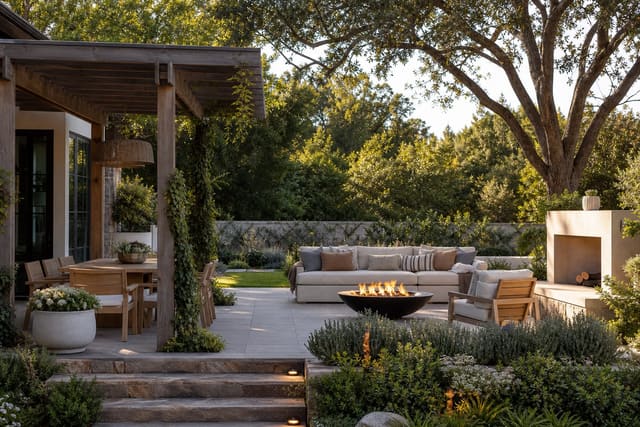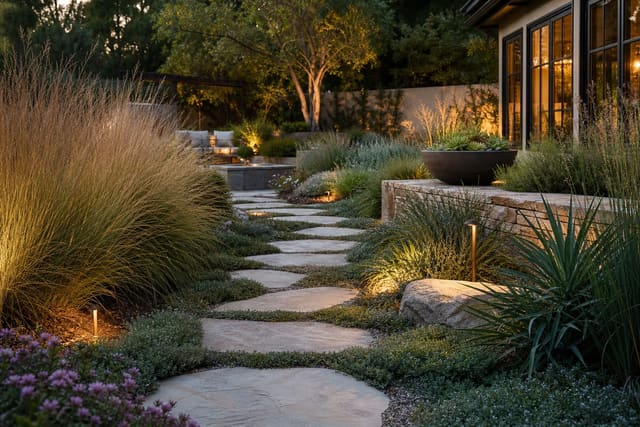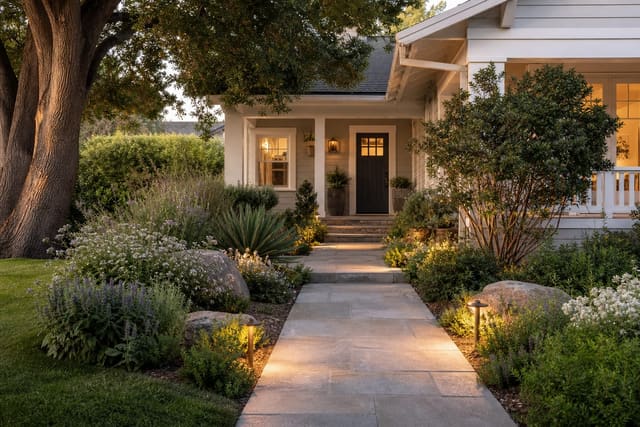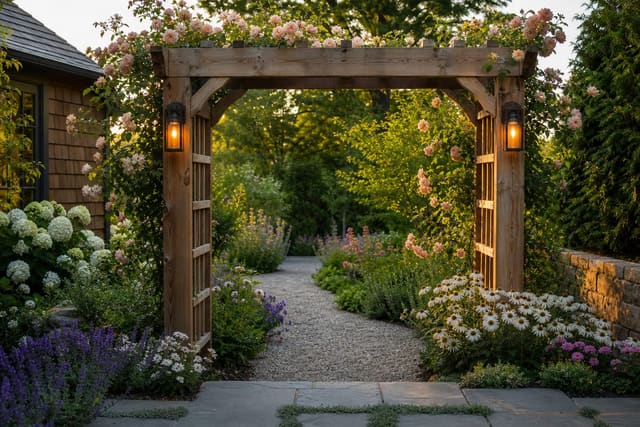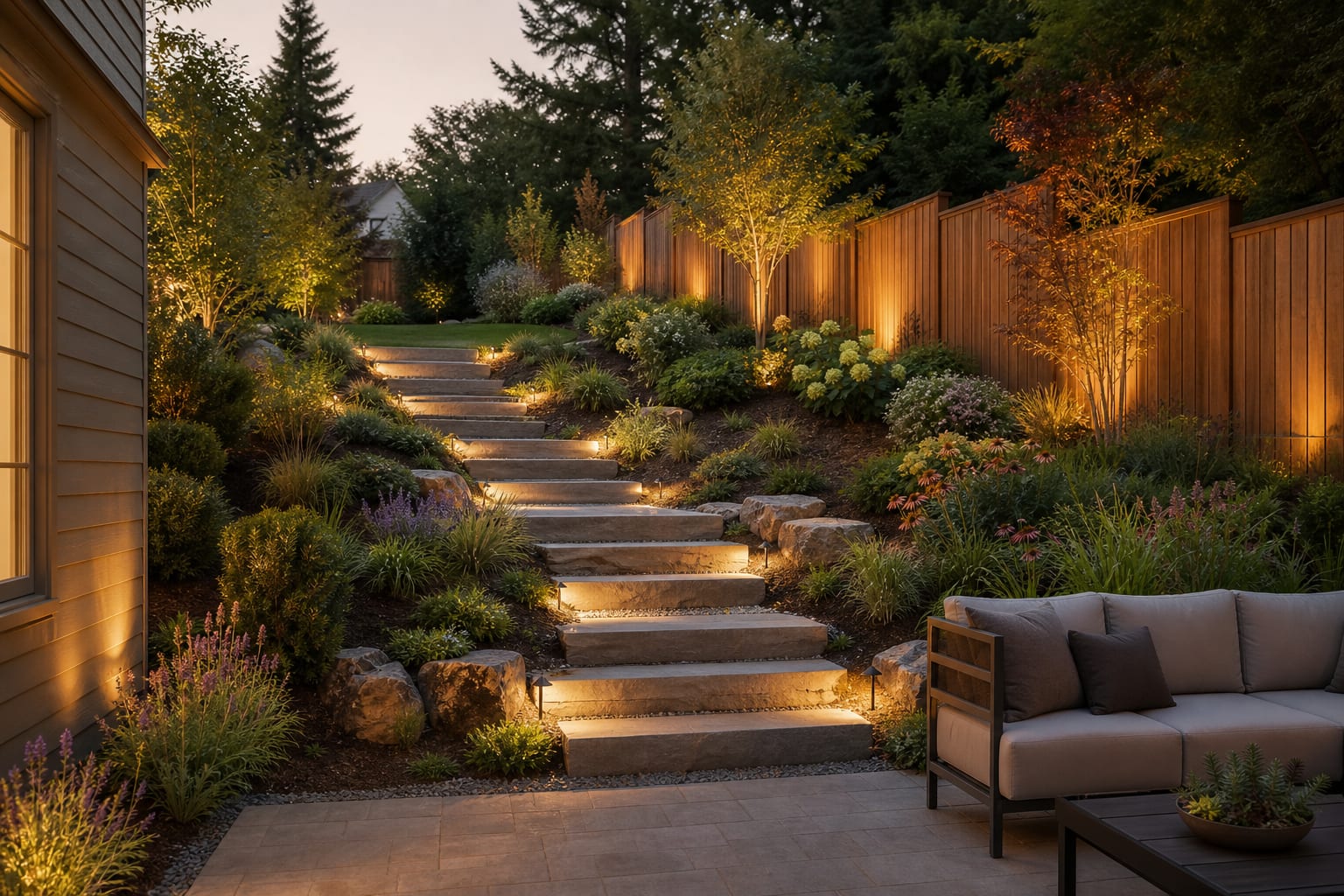
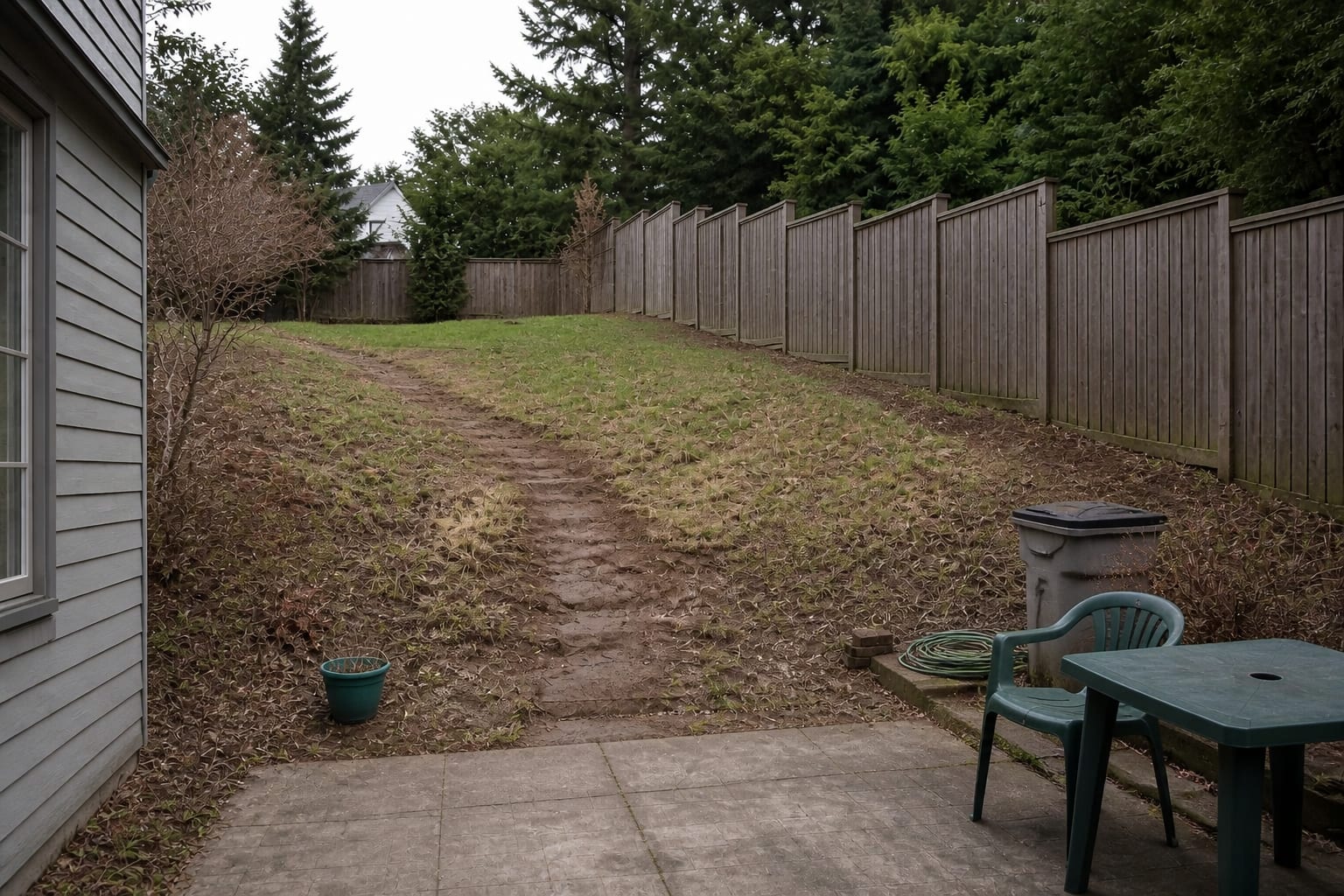
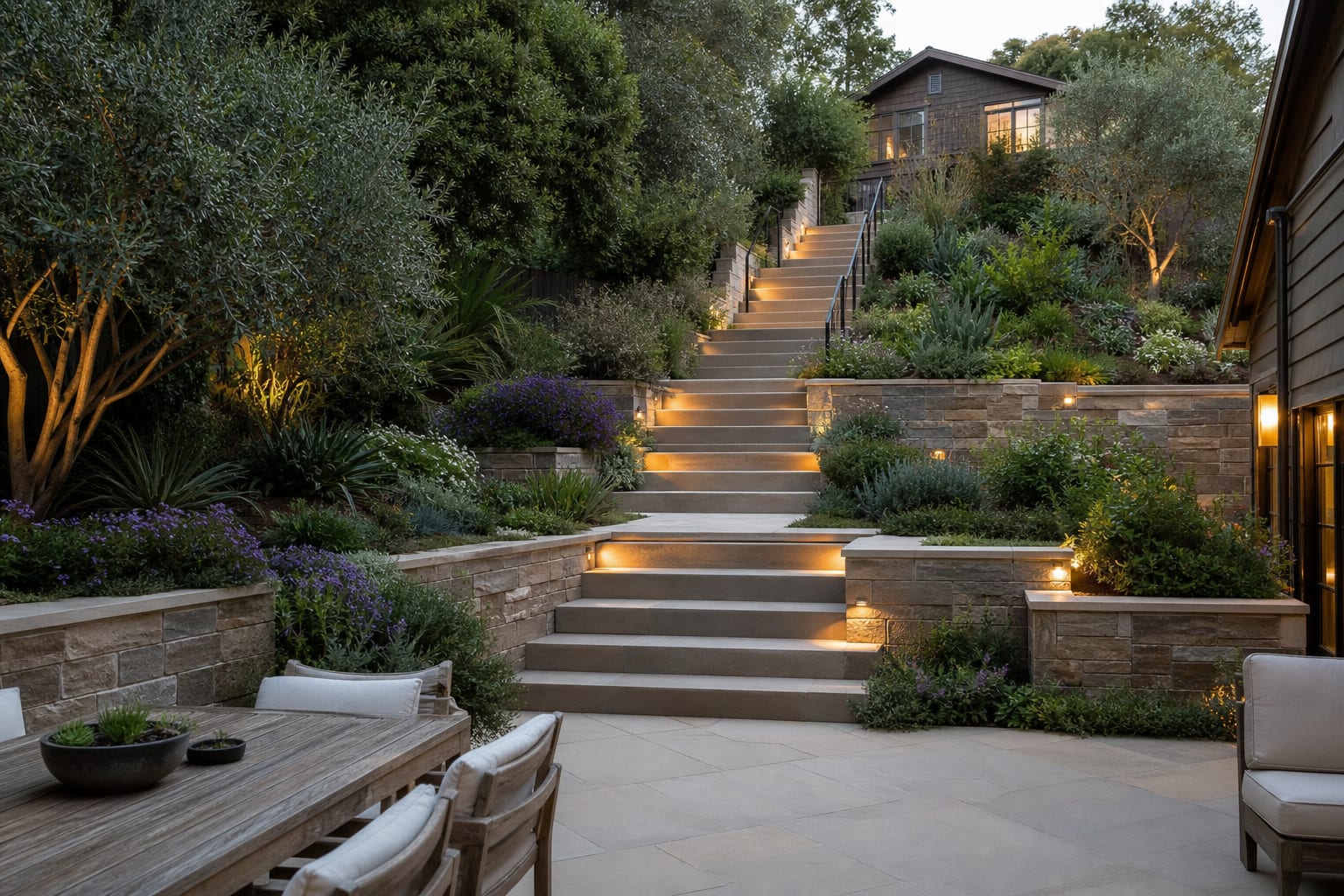
Garden steps ideas work when risers hold to 5-7 inches, treads run 12-18 inches deep, the material matches the surrounding hardscape, and the climb breaks into a landing every 6-10 steps. Treat steps as landscape design, not leftover contractor stairs, and safe movement, believable materials, and edge planting all do their job together.
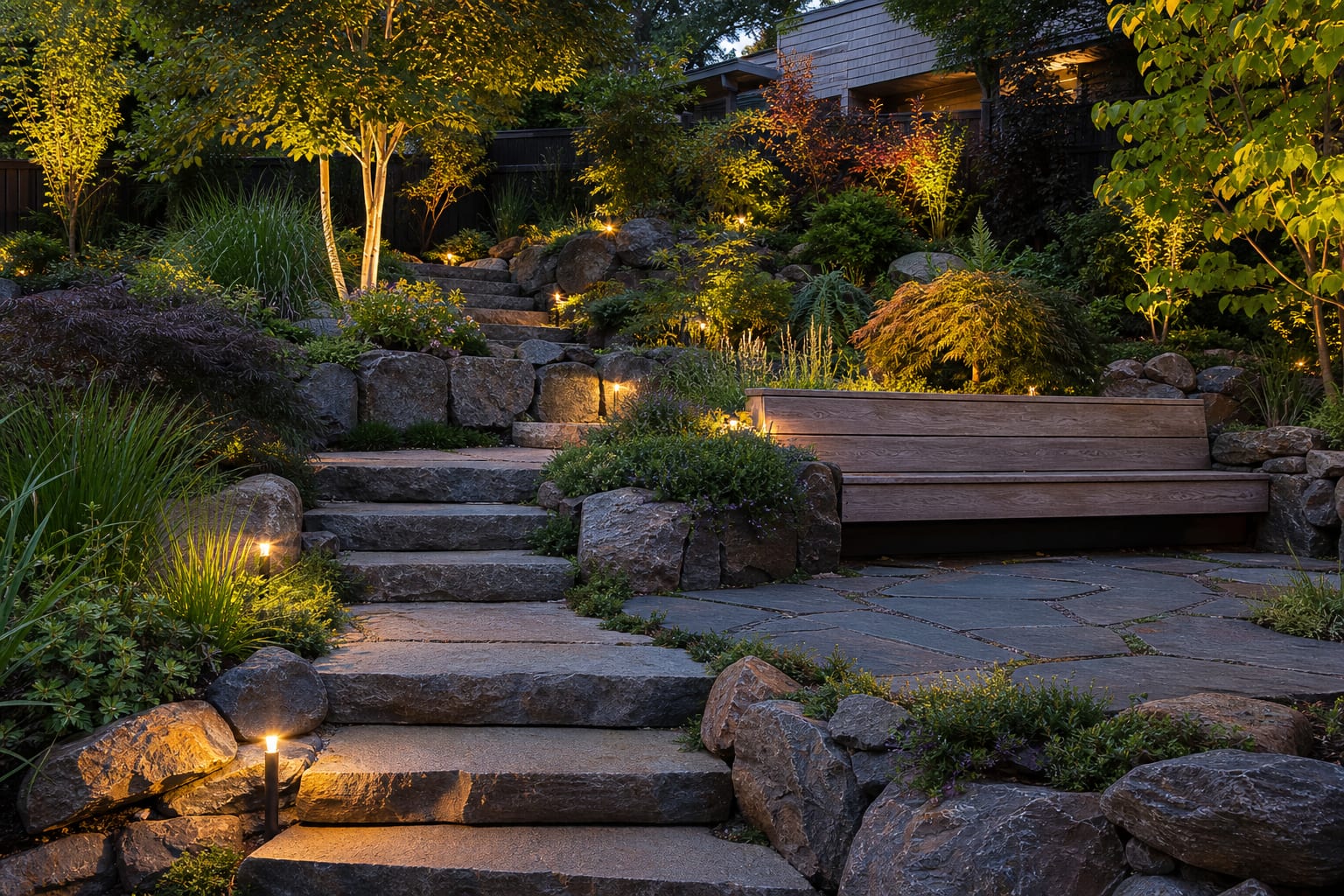
How do I design garden steps that feel safe and designed?
Set a consistent riser height, pick a tread depth suited to outdoor walking, add landings at turns or long runs, and match materials to the house and garden. A comfortable formula is a 5–6 inch riser with a 14–18 inch tread; relaxed landscape steps can stretch treads to 24–30 inches when they behave more like terraces than stairs.
Consistency matters most. A run of five 5.5 inch risers feels calm; a run that shifts from 4 inches to 7 inches keeps eyes locked on the ground. If the grade forces a change, hide it at a landing rather than mid-run.
Width matters too. A private side-garden stair can work at 30–36 inches, but a main route from patio to lawn usually needs 42–48 inches so two people can pass or carry a tray.
Keep the main walking line through the garden at about 36 inches clear before layering in decorative planting, and repeat spacing of roughly 24 inches between accent plants so the run reads connected rather than scattered.
Test this on your own photo with ReDesign before choosing a final direction; keep the house edge, horizon line, hardscape, planting beds, and main path visible so the preview solves the space you actually have.
Which material makes the right outdoor staircase design?
Choose material by house style first, then slope, then maintenance. Stone garden steps suit planted landscapes because irregular edges soften with gravel, thyme, or low perennials. Concrete feels cleaner near stucco, modern siding, or a pool terrace. Timber is budget friendly but needs drainage gaps and rot-resistant hardware.
| Material | Best use | Useful spec | Watch out for |
|---|---|---|---|
| Natural stone slabs | Cottage, woodland, layered gardens | 2–3 inch thick slabs for stable treads | Thin veneer can rock if poorly bedded |
| Poured concrete | Modern yards, high-traffic routes | Broom finish for wet grip | Smooth sealed concrete gets slick after rain |
| Brick or pavers | Traditional houses, compact slopes | 4–8 inch module with crisp risers | Too many small units can look busy |
| Timber sleepers | Rustic gardens, budget terraces | 6x6 or 8x8 with gravel drainage behind | Ground contact shortens life without rated timber |
| Steel edging with gravel | Contemporary cuts, informal steps | 3/8 inch angular gravel compacts best | Loose gravel migrates without firm edges |
Repeat a color already present nearby: foundation stone, patio paving, roof tone, or gravel. If the garden has an arbor or gate, coordinate the stair material with vertical structures; a timber stair near garden arbor ideas reads connected when wood tone and hardware finish repeat.
Which plants soften a garden step slope?
Planting should root the edge, not cover the tread.
- Low spillers at tread edges — creeping thyme, blue star creeper, or trailing rosemary, clipped below the walking surface so it blurs the joint without grabbing shoes.
- Structural grasses on the downhill side, spaced 18–30 inches apart, add movement and rhythm without fussy flowers.
- Planting pockets in landings at least 42 inches deep — one clipped shrub or a pot reads intentional; overloading a narrow landing reads like an obstacle course.
- Evergreen edges for winter — dwarf conifers, carex, or mondo grass keep the stair from looking bare when deciduous perennials die back.
- Thorny or floppy plants stay 24 inches back — lavender and roses are lovely off the path but irritating when wet stems brush legs.
If the stair climbs along a fence line, pair it with lattice fence privacy ideas so the climb feels protected rather than exposed.
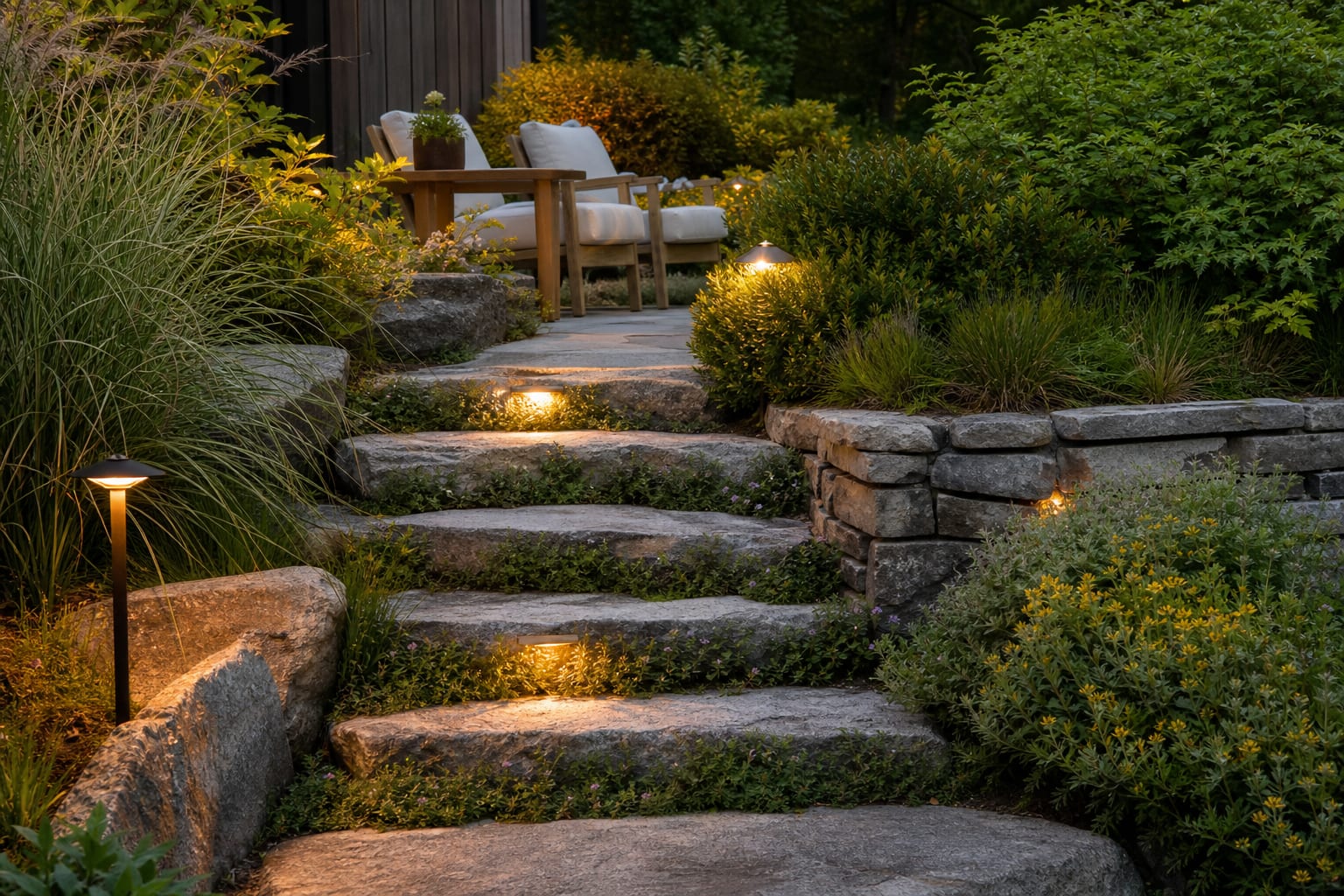
What garden step mistakes should I avoid?
- Copying indoor stair proportions. Taller risers and shorter treads feel rushed outdoors, especially carrying tools or a toddler.
- Skipping landings. A long straight run up a slope feels punishing even at safe dimensions; break the climb every 6–8 risers.
- Choosing pretty over grippy. Polished stone or sealed concrete photographs well dry but turns hazardous when wet; look for flamed, honed-textured, or broom-finished surfaces.
- Hiding level changes in planting. Keep the first and last riser visually clear, and add lighting where the stair meets a patio, deck, or seating area.
- Ignoring drainage behind the steps. Trapped water stains timber and stone and causes frost heave; use free-draining aggregate behind risers and pitch treads forward about 1/8 inch per foot.
Can I preview garden steps with AI before building them?
Yes. Since excavation, stone, drainage, and labor are the expensive part, upload a photo taken straight toward the slope with both destinations visible, then test stone treads, timber sleepers, concrete landings, and planted gravel joints from the same angle.
Ask for specifics: 5–6 inch risers, 16 inch treads, a 48 inch wide main stair, low edge planting, and warm step lighting around 2700K–3000K. If the preview looks too grand for the garden, narrow the width, add a turn, or shift to wider terrace-like steps.
A quiet sitting garden may need fewer lights and deeper landings; an entertaining garden needs broader circulation. Compare a calm layout against outdoor meditation space ideas before finalizing. The preview won't decide footing depth, code requirements, or handrails — confirm those separately before ordering stone.
Frequently Asked Questions
What is the right size for garden steps?
Treads 12-18in deep with 5-7in risers work best outdoors, since garden steps run shallower than indoor ones to suit a natural stride on uneven terrain. The rule of thumb is 2x rise + run = 26-28in.
What materials work for garden steps?
Bluestone, granite, local fieldstone, poured concrete with an integral edge, and pressure-treated timber risers with gravel treads all work well. Match the material to the surrounding hardscape rather than choosing it in isolation.
Do garden steps need a handrail?
Three or fewer risers usually don't require a handrail. Four or more risers, or any drop over 30 inches, typically requires a code-compliant handrail, so check local code before building.
How do I light garden steps?
Use recessed step lights at every other riser downlit at 2700K, or low bollards spaced 6-8ft along the run. Never uplight directly into the path of foot traffic.
How do I keep garden steps from getting slippery?
Specify a sandblasted, flamed, or thermal finish on stone, broom-finish concrete, or grooved timber treads. Smooth honed stone and painted wood become hazardous once wet.
> Try this: Ready to see this on your own outdoor space? Open ReDesign and run the preview before you buy materials, plant, drill, or move furniture.
Three transformations to try
1. Bluestone garden steps with landing 2. Timber and gravel garden steps 3. Curved fieldstone steps through planting