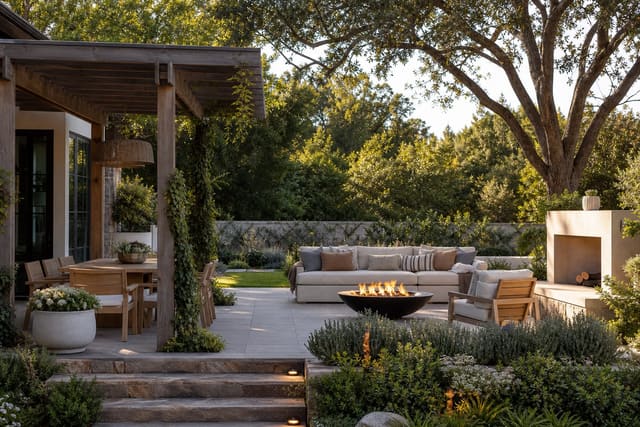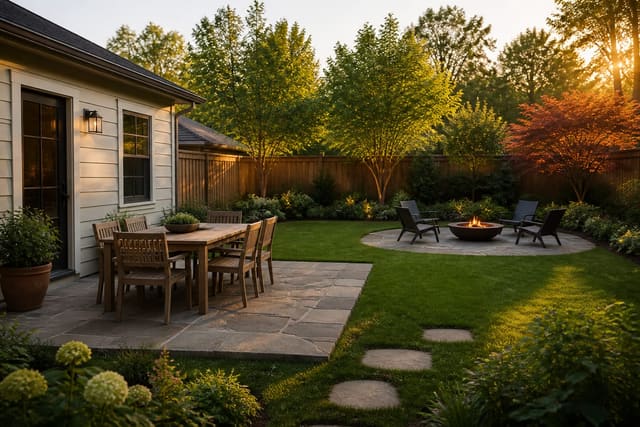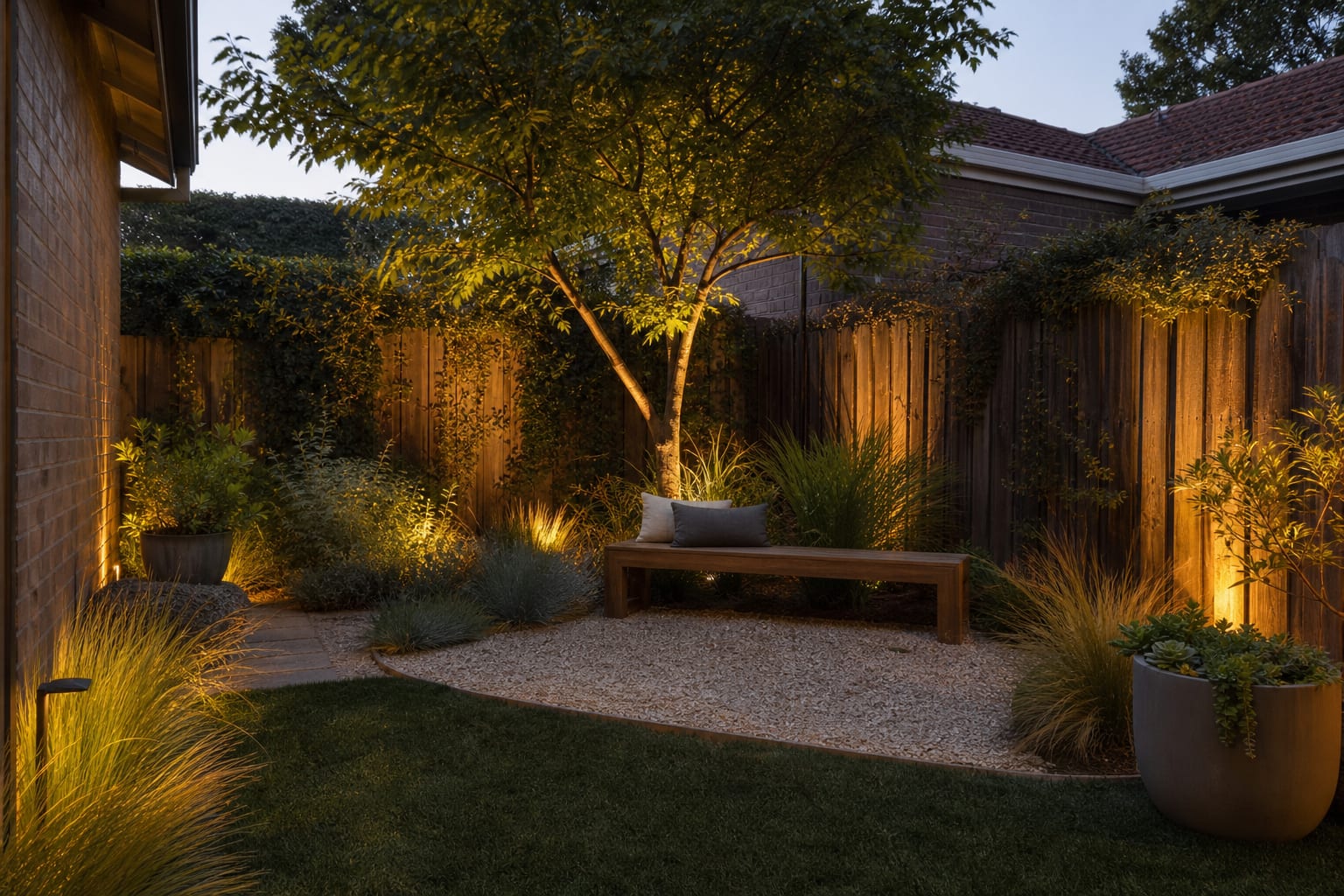
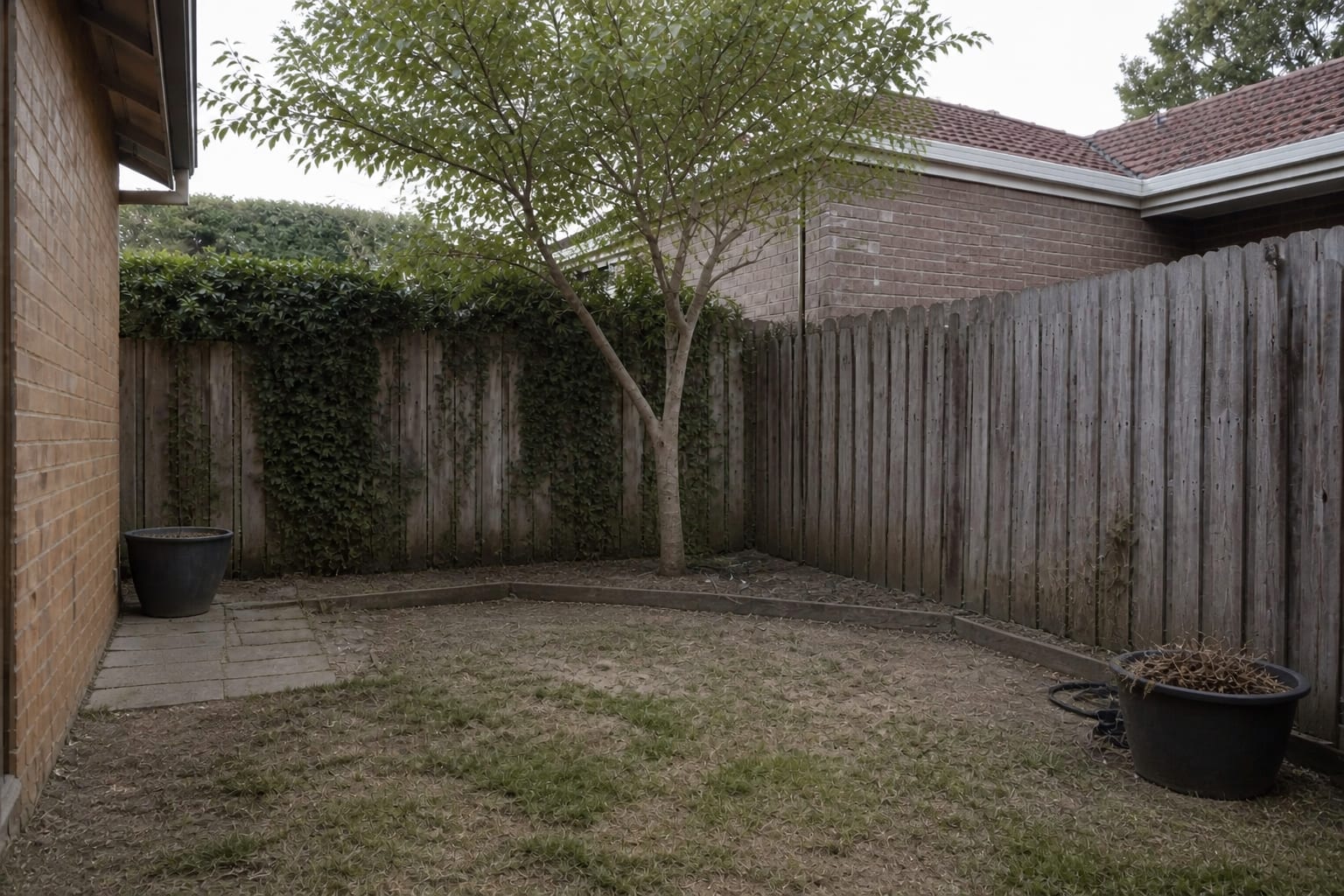
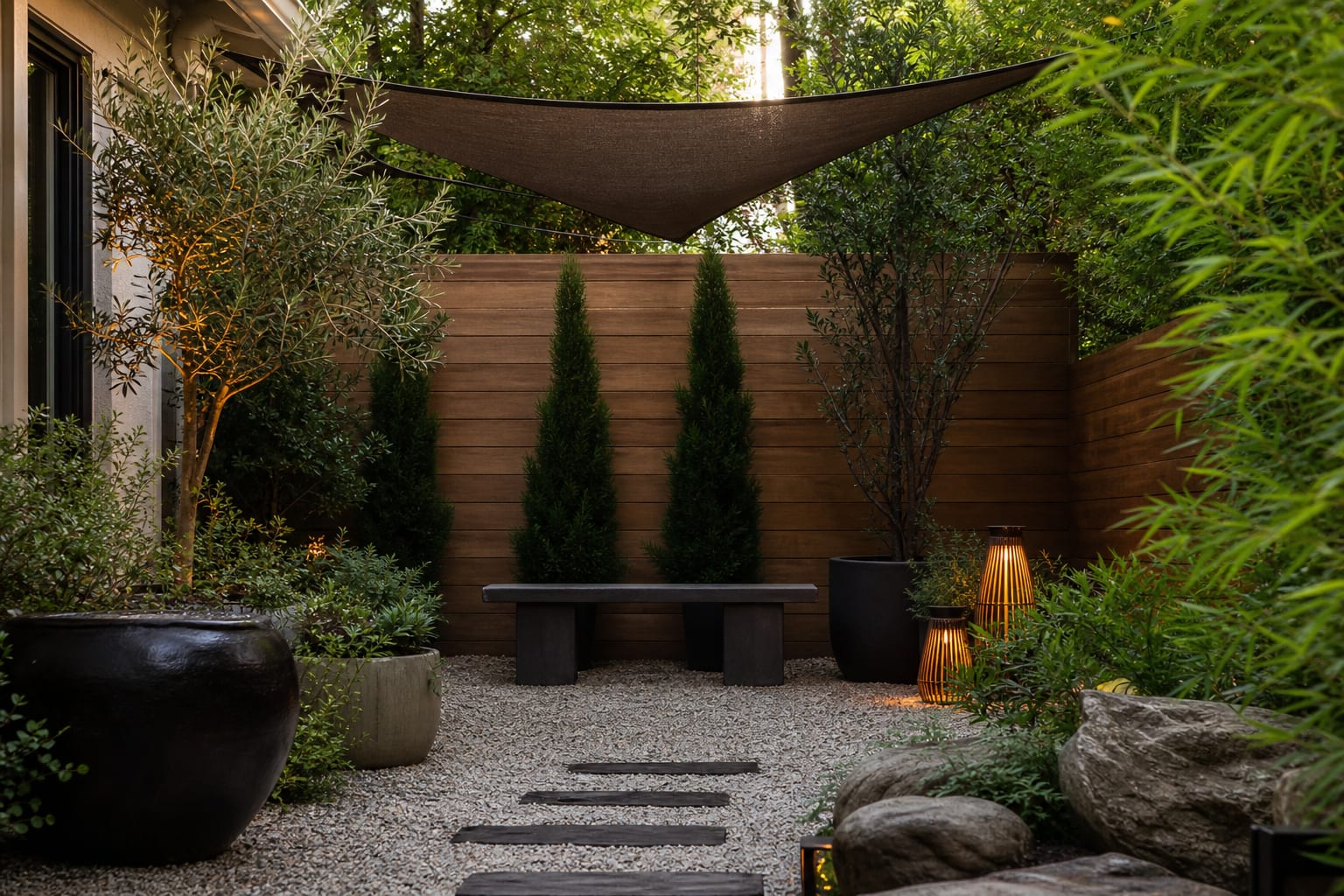
An outdoor meditation space works when it sits in a sheltered corner away from main patio sight lines, with a 5-7ft gravel or stone pad for one bench or cushion, soft screening from planting or a slatted panel, and a warm 2700K path light for dawn and dusk. The best corners are edited, not decorated: one seat, one boundary, one focal cue.
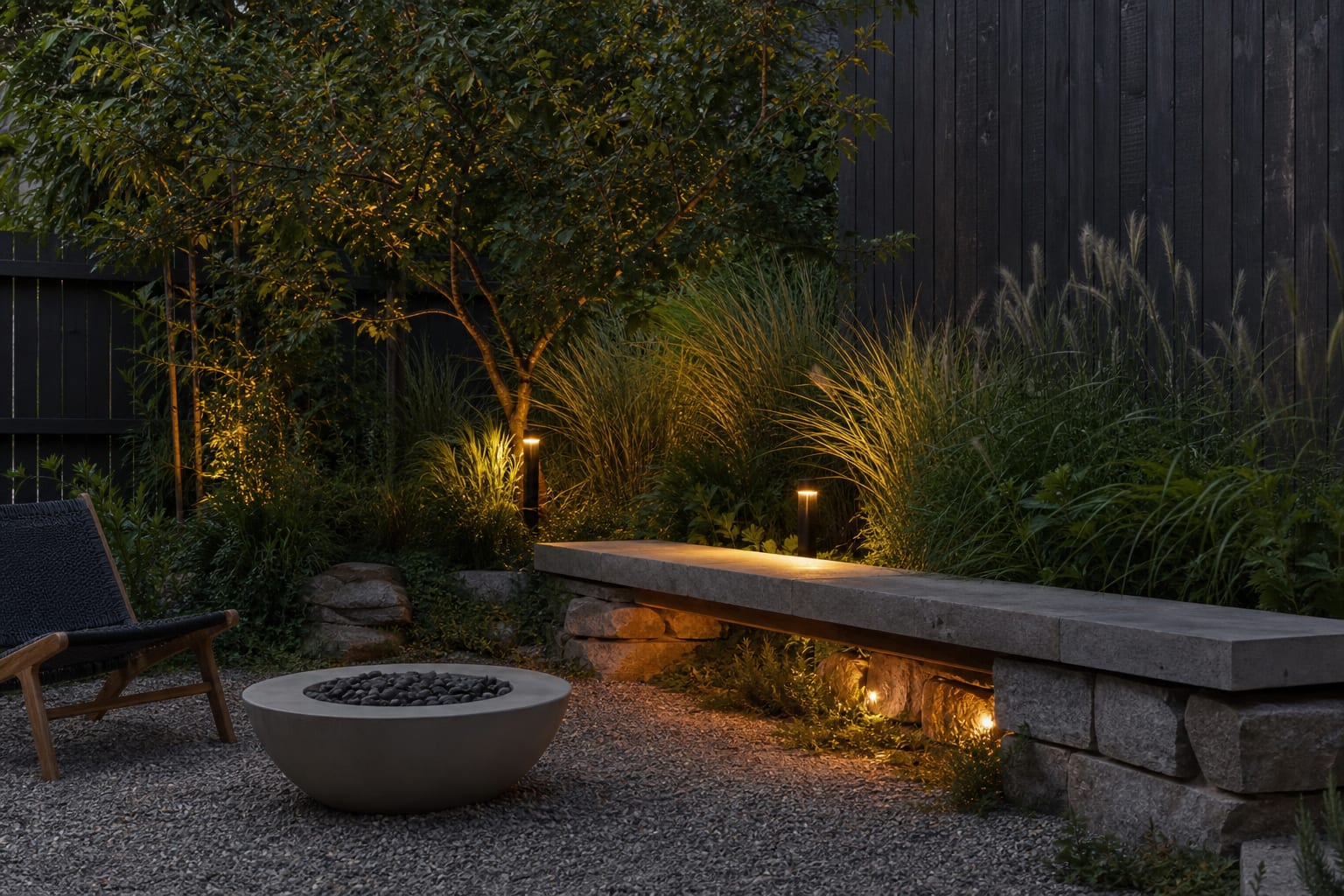
What Makes a Garden Corner Feel Quiet?
Stand at the back door and look for the spot the house, fence, hedge, or tree already shields on one side. A meditation nook needs less room than expected: 5 by 7 feet holds one chair or cushion, and 8 by 10 feet fits a chair, side table, and planted edge.
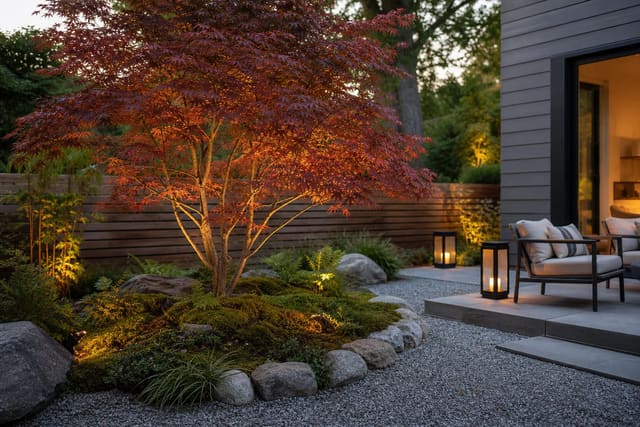
Face the seat toward layered planting, a small tree, or open sky, not toward bins or an AC unit. If the only option faces a bare fence, stain that panel charcoal, olive, or warm brown and let foliage break the flat plane. For a Japanese-influenced corner, asymmetry and one memorable small tree do the work; see Japanese maple design ideas for options that add seasonal color without crowding the seat.
Sound matters too. A small recirculating basin within 3-5 feet of the seat masks traffic better than a large fountain further away; choose a soft trickle over a splashy jet. If water upkeep isn't for you, use rustling planting instead: potted bamboo, ornamental grasses, or loose-canopy shrubs that don't drop fruit on the floor.
How Do You Choose the Seat, Surface, and Boundary?
Choose posture before style. A floor cushion only works on a surface that stays dry; otherwise use a low chair at 16-18 inches or a built-in bench 18 inches high and 20-24 inches deep. A 14-18 inch side table is enough for tea, beads, or a candle.
The floor should be stable and low-maintenance. Pea gravel feels soft but scatters under chair legs; decomposed granite is firmer once compacted; large pavers give the cleanest support. Avoid a cushion directly on mulch in wet climates, since it holds dampness and stains fabric.
| Surface choice | Best use | Spec to copy |
|---|---|---|
| Compacted decomposed granite | Firm, calm walking surface | 2-3 inches over a prepared base with metal edging |
| Large concrete or stone pavers | Chairs, benches, accessible footing | 24 by 24 inch or larger units, tight even joints |
| Pea gravel | Soft sound, low budget | 2 inches deep, contained by edging, pavers under chair legs |
| Timber deck tile pad | Renters or temporary corners | Outdoor-rated tiles on a level, drained surface |
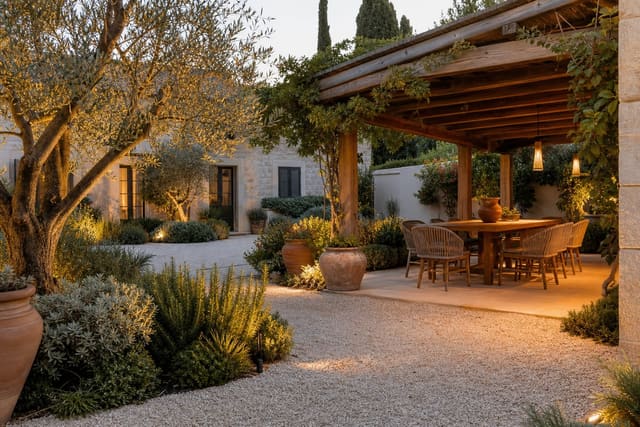
Boundaries should feel protective, not sealed. A 6 foot fence gives privacy, but add a lower inner edge too: a 36 inch planting bed, two tall pots, a curved bench back, or a freestanding screen. For a warm, relaxed palette, borrow from Mediterranean garden ideas: gravel, terracotta, rosemary, and dappled shade instead of glossy décor.
Test this on your own photo with ReDesign before choosing a final direction. Keep the house edge, horizon line, hardscape, planting beds, and main path visible so the preview matches the space you actually have.
What Are Some Outdoor Meditation Space Ideas With Specs?
- One-person gravel retreat under a small tree. Mark a 6 by 8 foot pad, edge it, add compacted gravel, and angle one weatherproof chair toward the trunk so the canopy becomes the ceiling.
- Cushion platform for seated practice. Build a 4 by 6 foot low timber platform, raised 4-8 inches for airflow, with washable cushions added only when in use; best where morning sun dries the surface.
- Planted alcove in a fence corner. Flank a bench with two 18-24 inch containers, repeating one plant three times — rosemary, lavender, or dwarf grasses — so the corner reads as intentional.
- A slow path before the seat. Three to five stepping stones spaced 24 inches on center through thyme or gravel turn the approach into part of the ritual.
- Shade as a boundary. A 9 foot umbrella, small pergola, or tree canopy defines the zone from above; keep it away from high-maintenance climbing plants.
- Meditation plus movement, without gym clutter. Keep a flat 6 by 6 foot area beside the seat and store the mat out of weather; see outdoor yoga space ideas for clearance and footing tips.
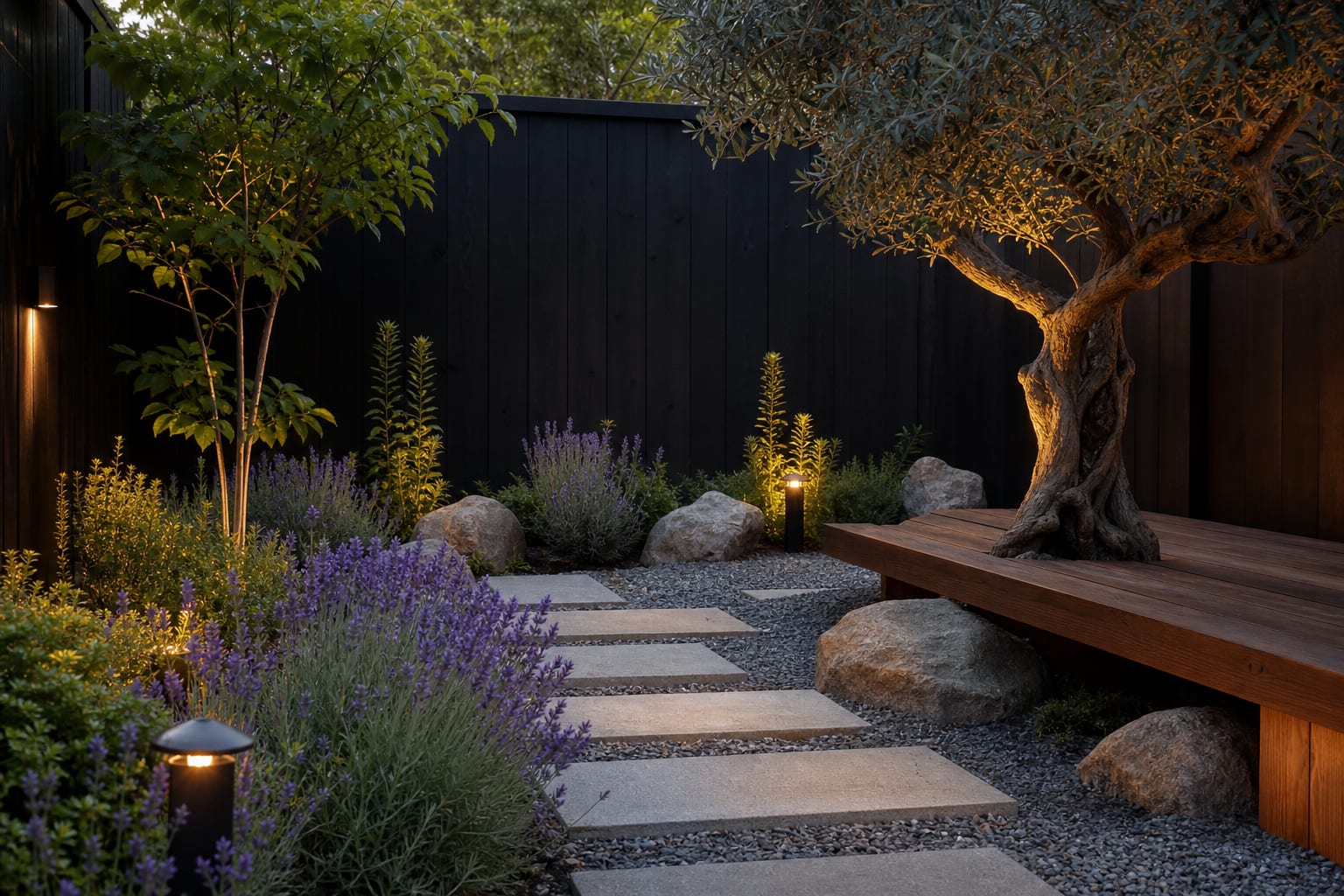
What Mistakes Should You Avoid in a Meditation Garden?
- Choosing the most exposed lawn spot because it photographs well. Start with shade and privacy; the camera angle comes second.
- Over-theming with lanterns, statues, and symbols. One meaningful object creates focus; six competing objects create clutter.
- Ignoring the neighbor's sightline. Shift the chair 30-45 degrees, add a tall container, or place a 5-6 foot screen behind one side rather than enclosing the whole yard.
- Using bright security-style light. Stick to warm, shielded fixtures: 2700K path lights or a dimmable lantern aimed at paving, not at eye level.
- Planting for peak bloom only. Mix evergreen structure, fine texture, and scent so the corner holds up on ordinary days, not just during a two-week bloom.
How Can AI Design Help You Preview a Meditation Space?
Upload a straight photo of the corner from standing height, including the fence line and ground surface, then test a gravel pad, low bench, planted boundary, shade, and one focal element. The goal is checking whether the seat looks protected and the planting scale fits your actual fence and house, not generating a fantasy garden.
Clear loose toys, hoses, and temporary chairs before shooting. Take one photo from the house looking toward the corner and one from the corner looking back, since a good nook should feel right both approaching and sitting in it. If a design only works by hiding the gate or covering a drainage problem, reject it and keep the practical bones visible.
Frequently Asked Questions
How big should an outdoor meditation space be?
Plan for 5-7 feet across for one person plus a small side table. Larger pads dilute the contained, sheltered feeling that makes a meditation space work.
Where should an outdoor meditation space be placed?
Put it in a corner away from main patio sight lines, screened from the house and neighbors, oriented so morning sun reaches the seat — usually east or southeast.
What plants suit a meditation garden?
Use evergreens for year-round structure, soft grasses for movement, and one or two slow-flowering perennials like Russian sage or anemone. Avoid scent-heavy plants that compete with breath work.
Do I need a roof or shelter over the space?
It's optional. A partial pergola or a single tree canopy gives the sheltered feeling without enclosing the space; a full roof makes the corner feel like an outbuilding.
How loud can the space be and still work?
Aim for under 50 dB at the seat, about the level of quiet conversation. A small recirculating water feature or wind-rustled grasses can mask traffic and HVAC noise up to that level.
> Try this: Ready to see this on your own outdoor space? Open ReDesign and run the preview before you buy materials, plant, drill, or move furniture.
Three transformations to try
1. Sheltered meditation corner with grasses 2. Stone meditation pad with bench 3. Meditation space under tree canopy