Backyards & Gardens10 min readMay 25, 2026

Outdoor Yoga Space Ideas: Calm, Grounded Areas for Practice in the Garden

Outdoor yoga space ideas start with level ground, shade, privacy, and a simple focal point so your garden supports real practice, not just pretty photos.

The transformation · 10-minute read

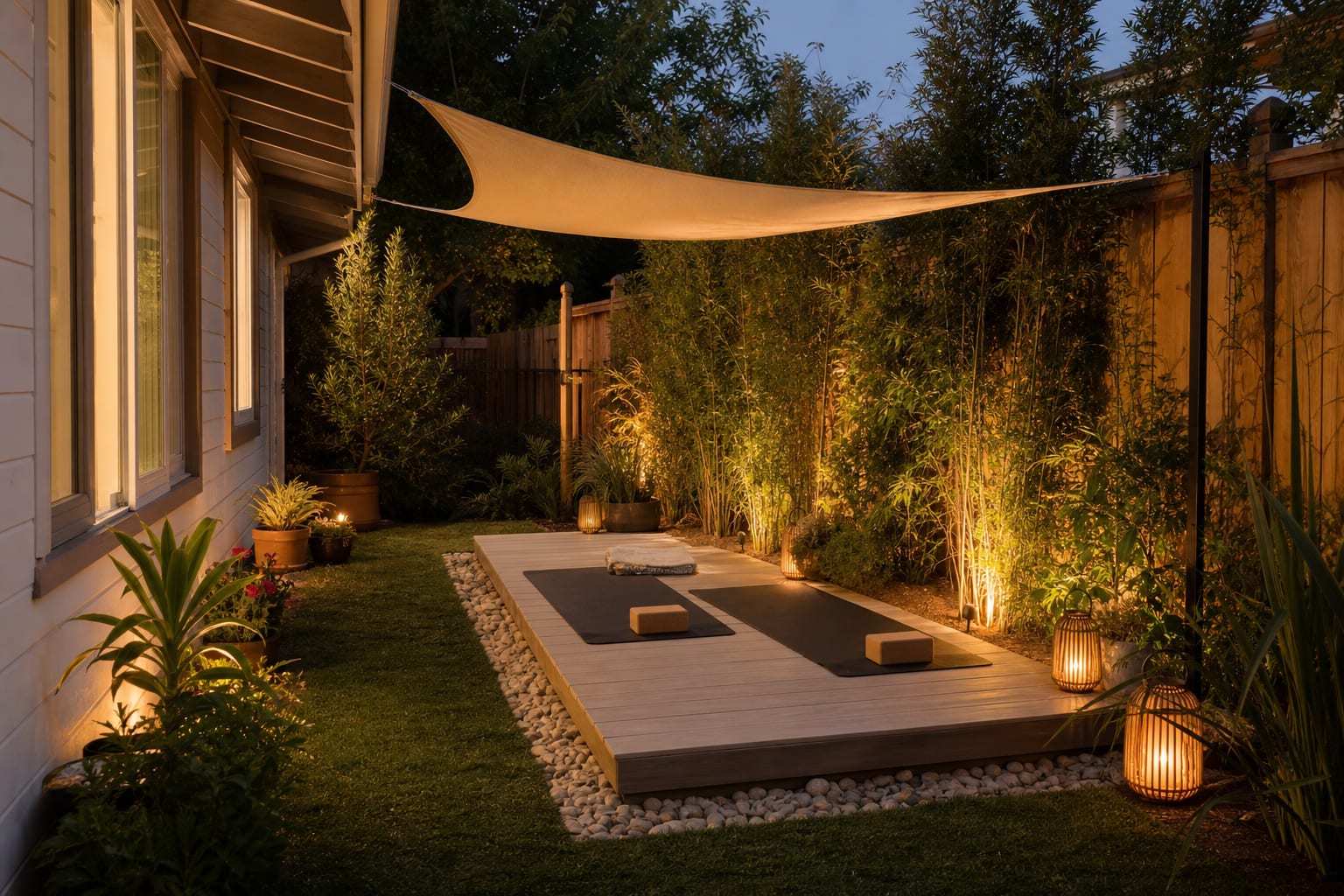
Same garden angle redesigned with a low yoga platform, layered privacy planting, gravel edge, shade sail, and soft lantern lighting.
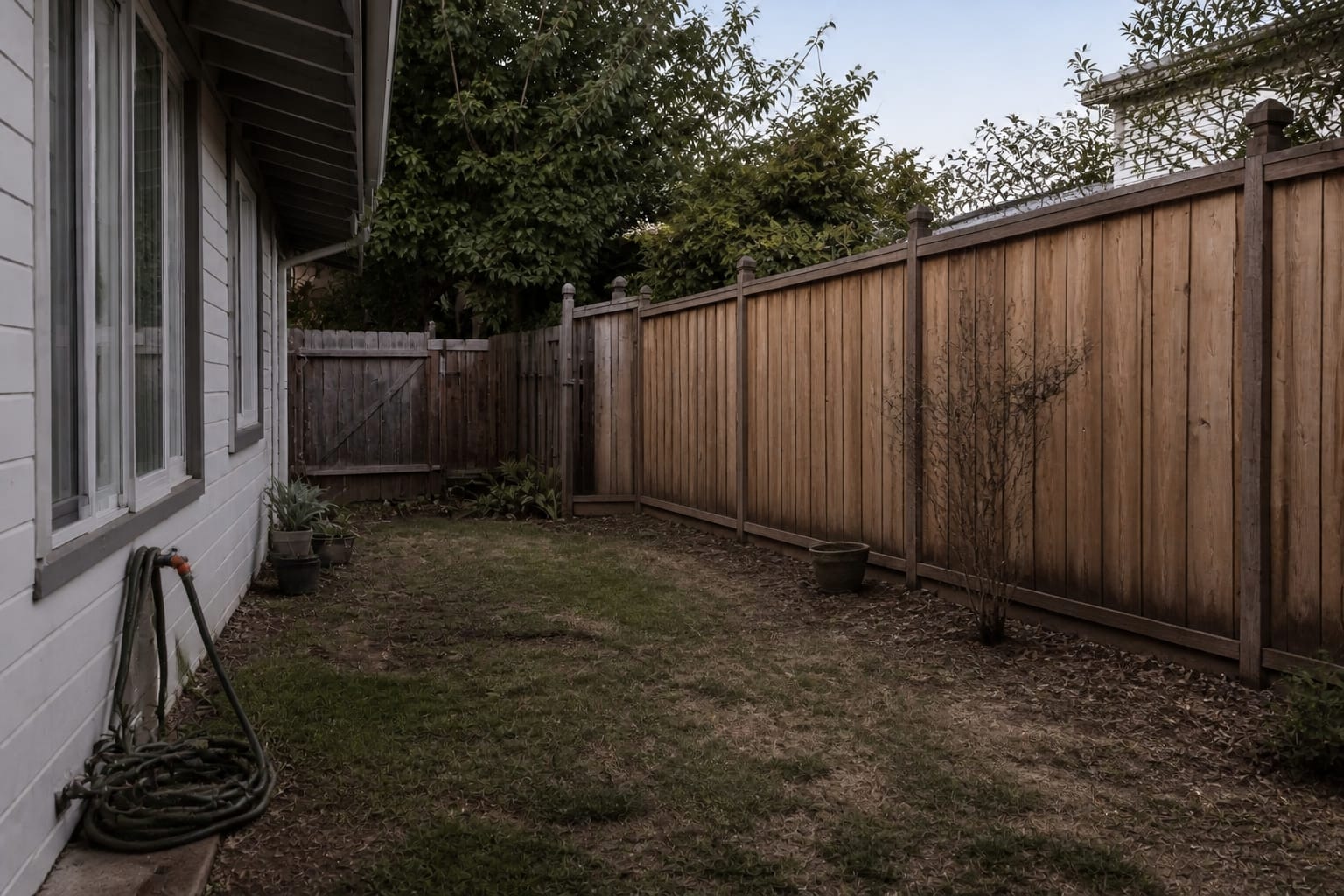
Patchy side yard with uneven grass, exposed fence, scattered pots, and no defined surface for outdoor yoga practice.
Before
After

A patchy side yard becomes a calm garden yoga area with a level platform, privacy planting, warm path lighting, and a simple stone focal point.

An outdoor yoga space needs a 6×8ft level surface, one privacy edge, soft natural light, and the ability to roll out a mat in under a minute — applied to a corner of any patio, deck, or backyard. My firm opinion: a garden yoga area should feel more like a small outdoor room than a mat tossed onto the lawn. Grass is charming until your wrist sinks, your heel slides, or the sprinkler head lands under your knee. The right setup makes a standard yard feel quieter, safer, and more usable for daily stretching, breathwork, or a full morning flow.

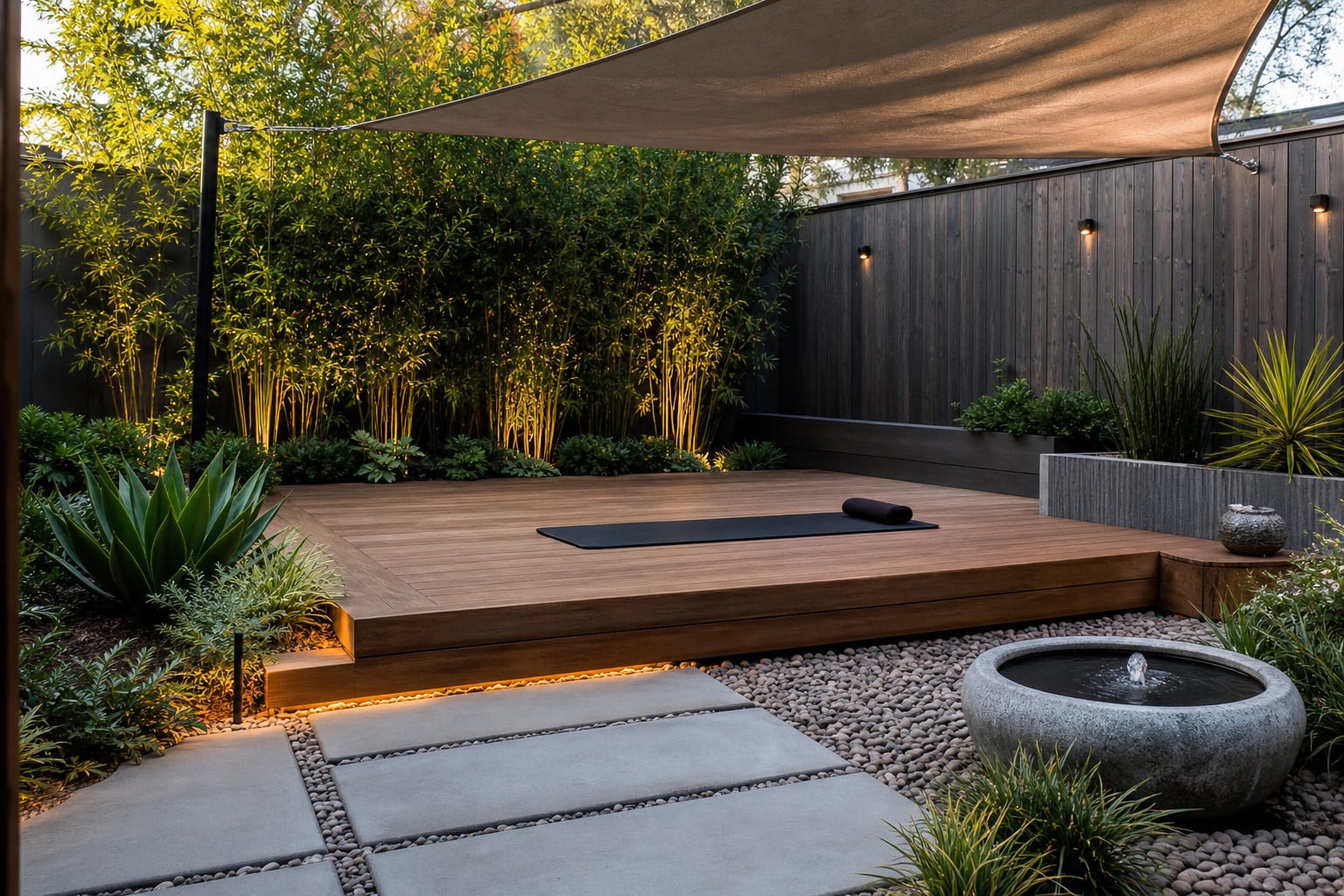
quiet backyard yoga platform with planting, shade sail, gravel border, and a single stone water bowl
  • Plan a minimum clear practice zone of 6 by 8 feet for one person, and 10 by 12 feet if two mats will sit side by side. That gives room for a 24 by 72 inch mat, arm extension, a block, and a small path around the edge.
  • Shade matters more than decoration in an outdoor wellness space. A 9 foot umbrella, a small pergola, or a 10 by 10 foot shade sail can make the difference between a corner you use three days a week and one you avoid after breakfast.
  • Keep the planting calm and structural near the mat. Three to five larger plants in 18 to 30 inch containers feel more grounded than a busy row of tiny pots that snag straps, attract clutter, and make the space harder to sweep.
  • Use low, warm lighting if you practice at dusk. Path lights, shielded sconces, or rechargeable lanterns around 2700K help you see the edge of the platform without turning the garden into a gym lobby.

What makes a garden yoga area feel calm instead of improvised?

A calm garden yoga area has a defined floor, a protected edge, and one visual anchor that tells your body where to settle. The floor can be a small deck, large pavers, compacted gravel with a mat-ready platform, or a flat patch of artificial turf; the point is that it reads as intentional. If the mat sits in the middle of leftover lawn, the yard still feels like a yard with an activity happening in it.

  • Set the outdoor Yoga Space Ideas: Calm, Grounded Areas for Practice in the Garden work zone so the main route stays about 36 inches wide and does not cross the sharpest cooking, water, planting, or seating edge.
  • Keep the first material palette to 3 dominant finishes for outdoor Yoga Space Ideas: Calm, Grounded Areas for Practice in the Garden; one floor, one vertical edge, and one repeated accent usually reads calmer than five small ideas.
  • Test the layout from 2 normal viewpoints before buying: the house door and the main seat, because those angles decide whether outdoor Yoga Space Ideas: Calm, Grounded Areas for Practice in the Garden feels planned or leftover.

The most serene outdoor yoga space ideas borrow from meditation gardens, but they need a little more floor discipline. If you want the practice corner to feel quieter between sessions, the same restraint used in outdoor meditation space ideas works well: fewer objects, better placement, and one clear place for the eye to rest.

Same garden angle redesigned with a low yoga platform, layered privacy planting, gravel edge, shade sail, and soft lantern lighting.
Patchy side yard with uneven grass, exposed fence, scattered pots, and no defined surface for outdoor yoga practice.
Before
After

A patchy side yard becomes a calm garden yoga area with a level platform, privacy planting, warm path lighting, and a simple stone focal point.

The ground decision that decides whether you will actually use it

The surface under the mat is the decision that decides comfort, safety, and maintenance. A backyard yoga platform does not have to be large, but it has to be level, drain well, and stay clean enough for bare feet. For one person, 8 by 8 feet is a strong minimum platform size; it leaves a little room for a bolster, blocks, and stepping off the mat without landing in mulch. If the garden already has a patio, carve out one 6 by 8 foot zone rather than dragging the mat between dining chairs and planters every time.

| Surface choice | Best use | Practical spec | |---|---|---| | Composite or hardwood deck tiles | Renters or small paved yards | Use interlocking tiles over an existing flat slab, and add edge trim so bare feet do not catch a lifted corner. | | Fixed timber platform | Homeowners with lawn or slope | Build at least 8 by 8 feet, keep the finished height low, and include drainage gaps between boards. | | Large concrete or porcelain pavers | Modern gardens with clean lines | Use 24 by 24 inch or larger pavers on a compacted base so the mat is not interrupted by too many joints. | | Compacted gravel plus a roll-out mat | Informal gardens with good drainage | Choose fine gravel, contain it with metal edging, and keep a solid practice mat on top for wrist comfort. |

Avoid pea gravel directly under a yoga mat; it shifts too much. Avoid loose bark mulch in the practice zone; it sticks to the mat, holds moisture, and invites insects exactly where you want to place your hands. If you love a softer, immersive garden feeling, keep gravel, mulch, and planting around the platform as the border, not under the body.

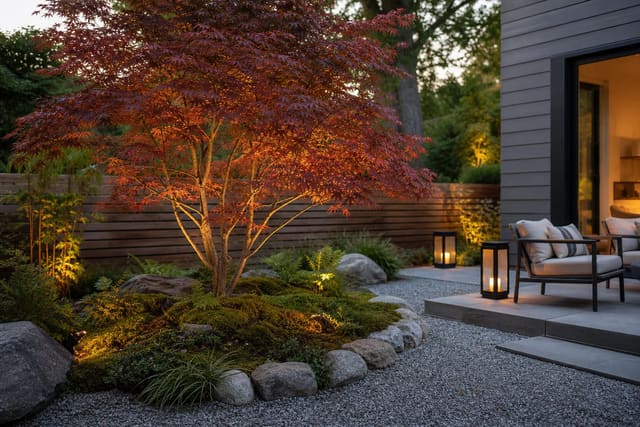
A small tree can do more for atmosphere than a stack of wellness accessories. A laceleaf maple, olive, serviceberry, crepe myrtle, or multi-stem birch gives the practice corner height and a seasonal rhythm. For a more sculptural focal point near the mat, the planting logic in Japanese maple design ideas is especially useful because it treats the tree as a living anchor, not just another plant.

Five outdoor yoga space ideas that make a standard yard feel grounded

  • Build a low platform beside planting instead of in the center of the lawn. An 8 by 10 foot deck pad set 12 to 18 inches away from a planting bed feels tucked in, while still giving enough clearance to sweep leaves and move around the mat.
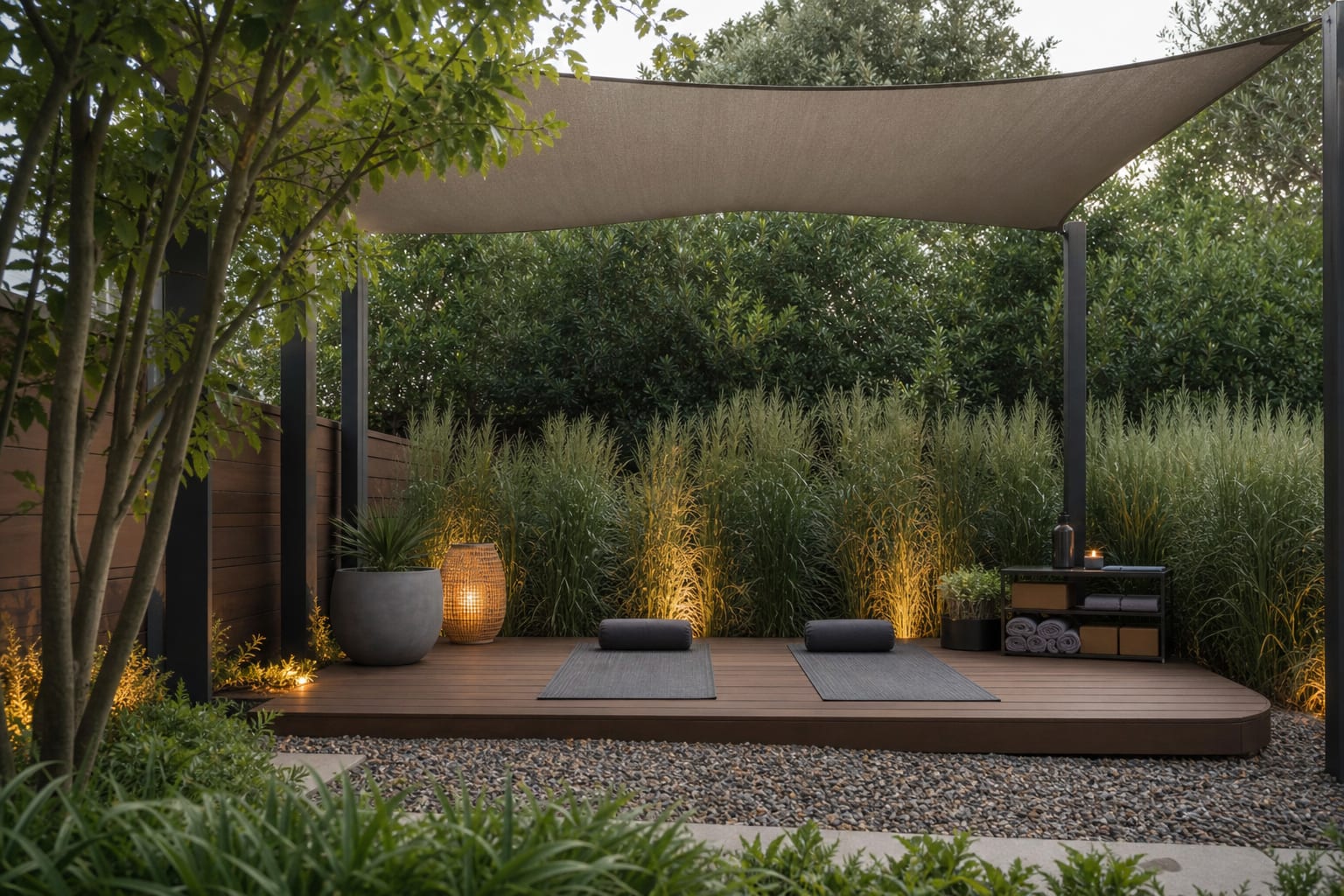
  • Add privacy with layered green screening, not a single hard wall. Combine a 6 foot slatted screen with 24 inch planters and tall grasses, bamboo, dwarf olive, or star jasmine so the view is softened at sitting height and standing height.
  • Use one grounded focal point at the front of the mat. A 20 to 30 inch stone bowl, a low ceramic urn, a clipped shrub, or a simple water basin gives the gaze somewhere to land during balance work without making the garden feel theatrical.
  • Create a shade plan that matches the time you practice. Morning yoga may only need a tree canopy or 7 foot trellis, while afternoon practice often needs a 9 foot umbrella, pergola slats, or a shade sail angled away from the hottest exposure.
  • Keep storage within 10 steps of the mat. A weatherproof bench, deck box, or slim outdoor cabinet can hold blocks, a strap, towel clips, mosquito wipes, and a rolled mat so the habit does not depend on carrying half a studio outside.
  • Design the edge so the yoga area still looks good when empty. A 12 inch gravel border, clipped thyme between pavers, or a line of low liriope keeps the platform from looking dropped into the yard, especially in winter when cushions and props are stored.

If your garden leans dry, pale, and sun-baked, a yoga corner can borrow from Mediterranean garden ideas without becoming a theme. Gravel, terracotta, rosemary, olive, lavender, and limestone tones all support a calm practice area because they look good with heat, dust, and simple maintenance.

small garden yoga platform with shade sail, privacy grasses, gravel edging, and neatly stored props

Common garden yoga area mistakes to avoid

The first mistake is choosing the most hidden corner when the ground is terrible. Privacy is useful, but a sloped, root-filled, mosquito-heavy spot will not become peaceful because you added a Buddha statue. Fix the surface first, then screen the view.

The second mistake is making the platform too small. A 4 by 6 foot pad may fit a mat, but it does not fit movement. Sun salutations, side bends, lunges, and standing balances need extra room beyond the mat rectangle, especially if a wall, planter, or fence sits nearby.

The third mistake is using glossy tile or sealed stone that becomes slick. Outdoor yoga involves bare feet, dew, sunscreen, and sweat; choose textured pavers, matte porcelain, timber, composite boards, or a dedicated outdoor mat with grip. If the surface feels slippery when damp, it is wrong for practice.

The fourth mistake is treating sound as an afterthought. A yoga platform beside an air-conditioning condenser, dog run, or basketball hoop will always fight the practice. If you cannot move the equipment, use planting, a small fountain, or a solid screen to interrupt noise and redirect attention.

The fifth mistake is overdecorating the wellness corner. Wind chimes, lantern clusters, statues, incense trays, cushions, and tiny signs can turn a calm outdoor wellness space into visual static. Pick one focal object, one storage piece, and one lighting layer; let the plants do the rest.

Use AI design to preview the garden yoga space before you build

Use AI design to test an outdoor yoga space on a photo of your actual garden before ordering a platform, pavers, screening, or shade. One preview can show whether the 8 by 8 foot pad blocks the side gate, whether a trellis feels too tall near the fence, or whether pale gravel makes the corner look cooler than the rest of the yard.

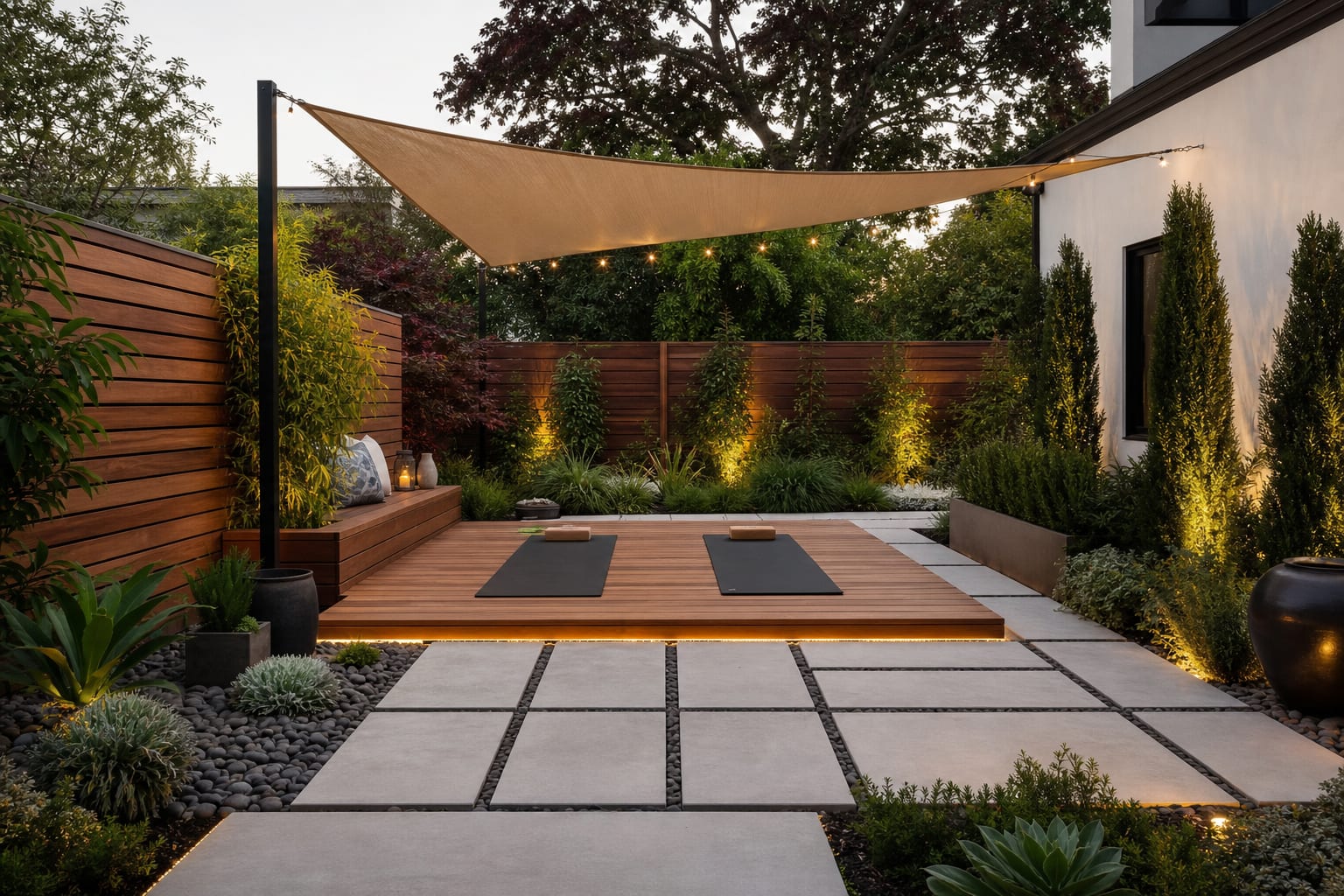
Take the photo from the place you normally enter the garden, and keep the camera level enough to show the ground plane. Leave fixed constraints in view: hose bibs, steps, fence posts, drains, trees, windows, and the awkward patch of lawn you are trying to solve. Then ask for specific versions, such as a cedar yoga platform with privacy grasses, a gravel meditation border, a 10 by 10 foot shade sail, warm 2700K path lights, or large terracotta planters around a stone focal point.

The best preview is not the prettiest fantasy image. It is the version that shows a usable path, a stable surface, enough shade, and a garden corner you can maintain after the first month.

AI preview of a backyard yoga platform comparing cedar decking, large pavers, shade sail, and privacy planting options

Frequently Asked Questions

How much space do I need for outdoor yoga?

A 6×8ft level area handles most postures including arm-balance and inversion work; a 7×9ft area is the comfortable minimum if you practice with a partner. Use this as a fit check by measuring real clearances, sunlight, and access, then compare a restrained version against a stronger version from the same viewpoint.

Which surface is best for outdoor yoga?

A composite or cedar deck with sealed joints gives the most consistent mat grip; gravel patios need a yoga platform or a thick mat with a non-slip pad underneath. If this choice meets your access and maintenance limits in one ordinary week, it is usually the one worth scaling.

Do I need a shaded outdoor yoga space?

Partial morning sun with afternoon shade is ideal; a 10×10ft shade sail or a pergola with one open side gives the right light without trapping heat. Treat the decision as staged: confirm constraints, test one conservative layout, and then test one stronger layout before committing.

How do I keep the yoga space private?

Use a 5–6ft cedar privacy panel on the open side, a row of clumping bamboo or columnar boxwood, or a stand of tall ornamental grasses; line of sight matters more than full enclosure. Run a two-pass practical check from the main viewpoint and one alternate route so the option still works once use begins.

Can I practice yoga on a balcony?

Yes — a 6×8ft balcony corner with a foldable mat, one privacy screen, and a single low planter creates a usable practice space without rearranging the rest of the balcony. Keep the evaluation concrete: if the option still reads well after watering, evening use, or weather swing, it usually survives purchase.

Three transformations to try

  1. Backyard yoga deck with bamboo screen
  2. Patio yoga corner with shade sail
  3. Balcony yoga zone with privacy panel
outdoor yoga space ideasgarden yoga area designbackyard yoga platformoutdoor wellness spacegardengeneral

Ready to see your space transformed?

Transform your space in seconds. No design experience needed.

Try Re-Design Free

Related Articles

Back to all articles