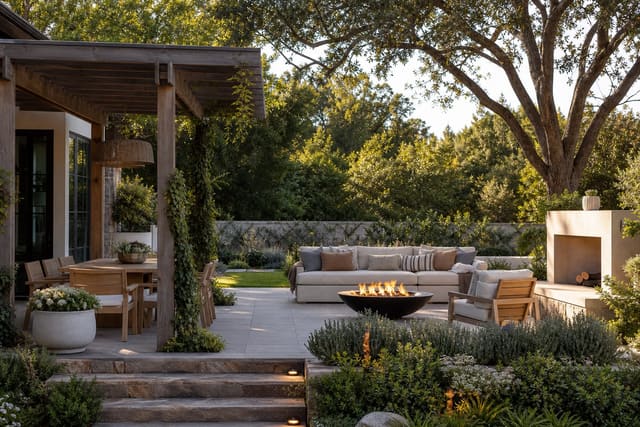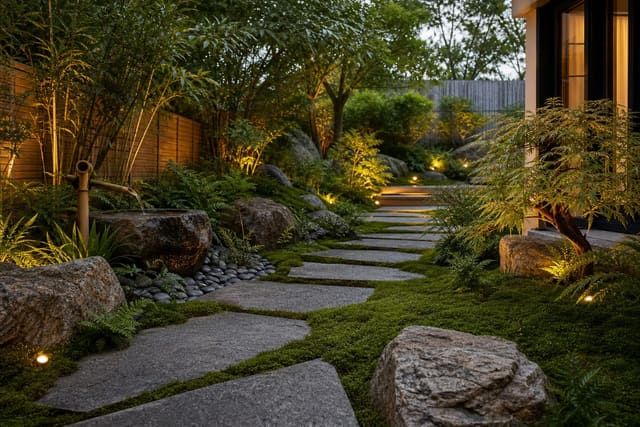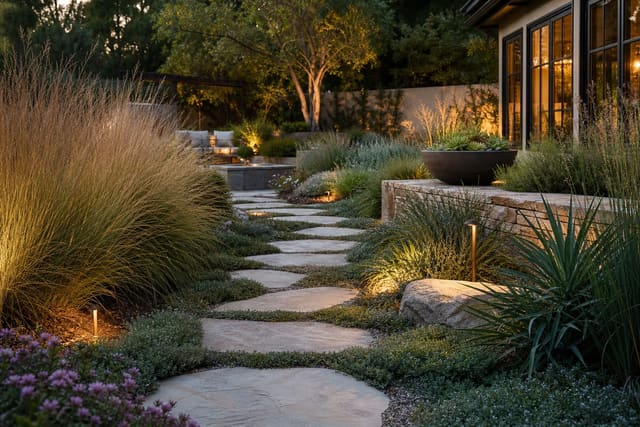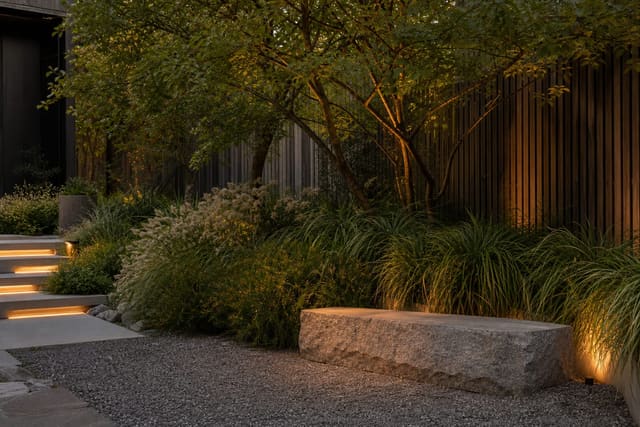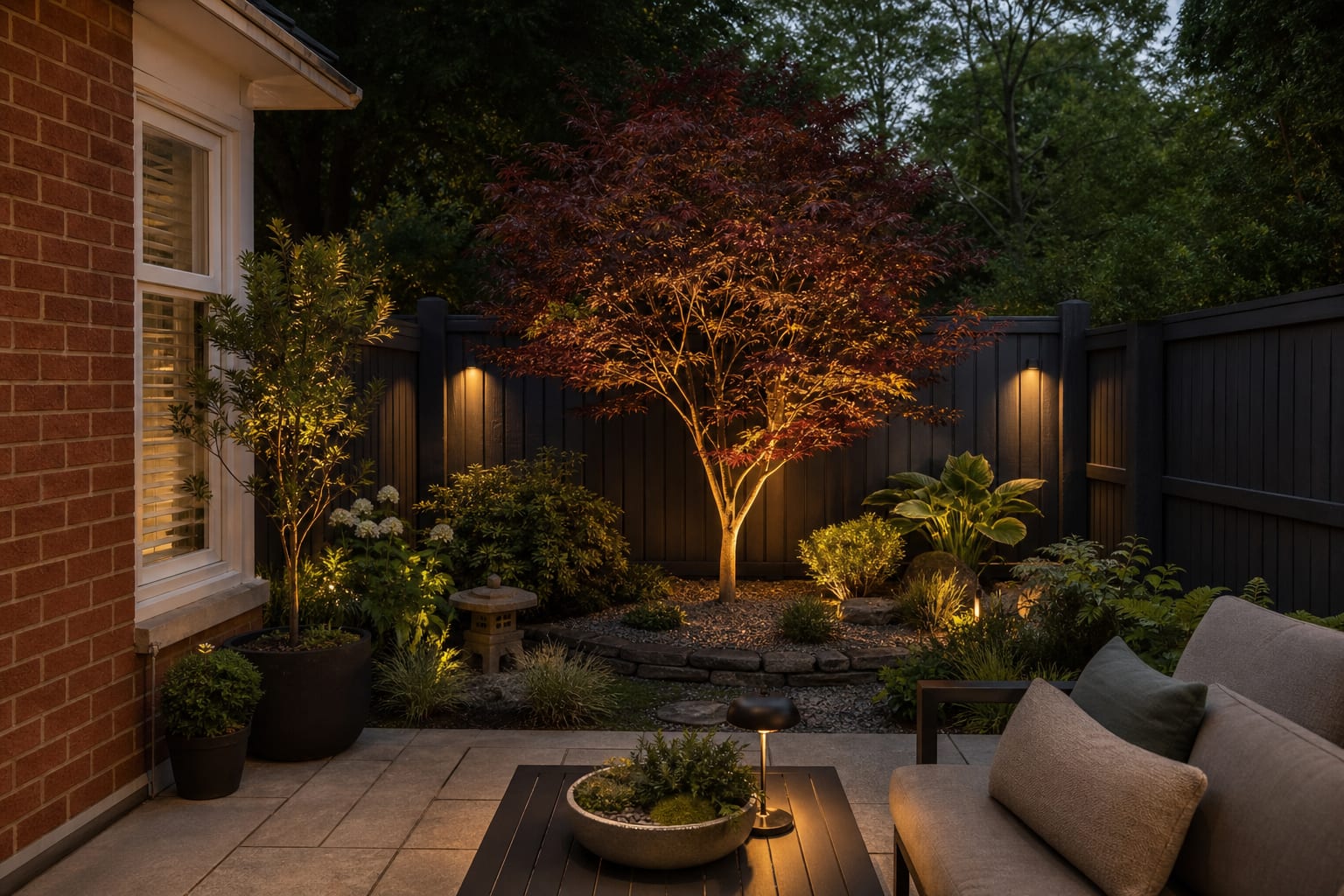
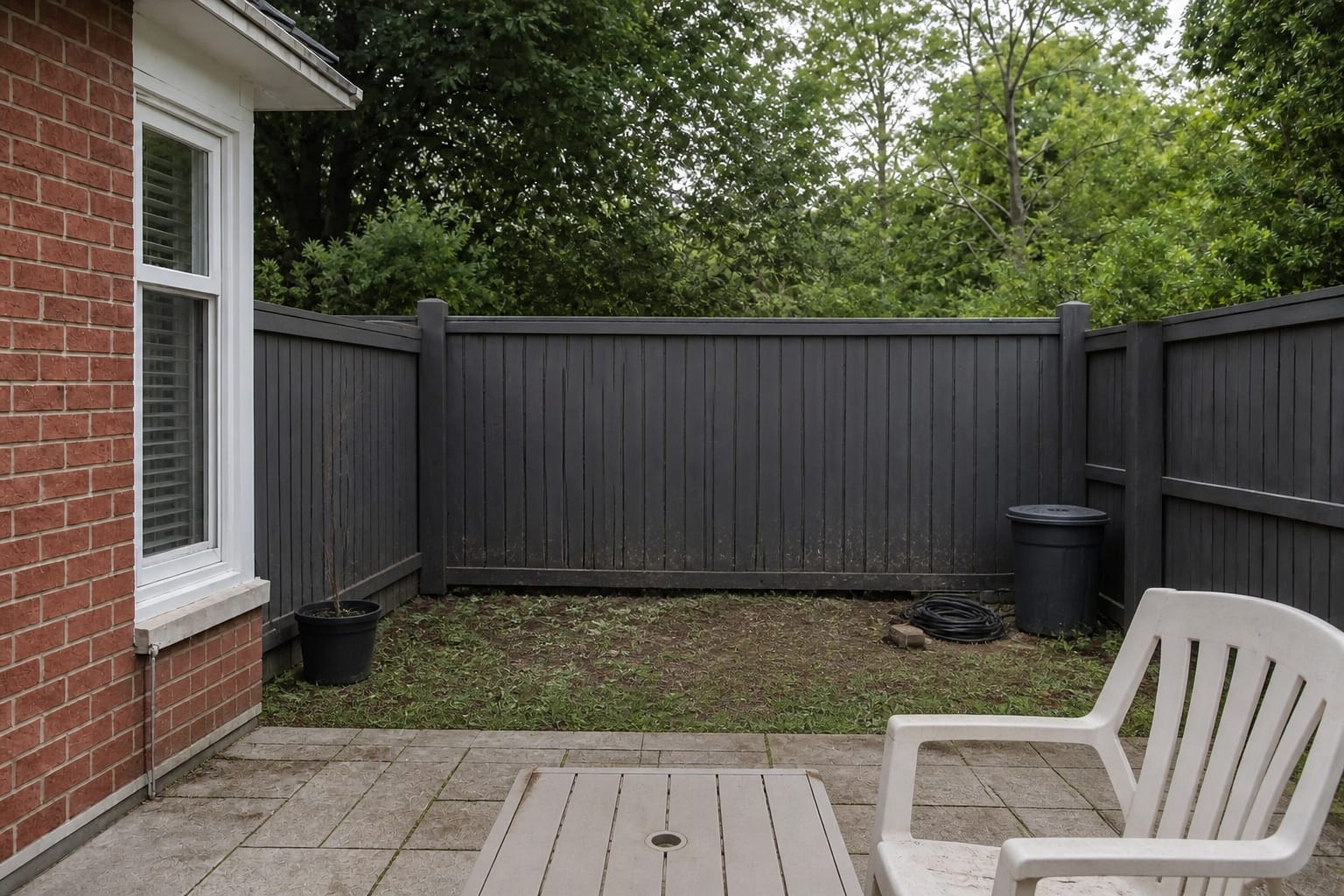
A Japanese maple anchors a garden as a focal specimen with morning sun and afternoon shade, a low evergreen underplanting of moss, hakonechloa, or mondo grass, and a darker backdrop like a fence or hedge. Decide what the tree should frame, shade, hide, or announce before choosing the cultivar, since Acer palmatum reads as architecture with leaves, not decoration squeezed into a gap.
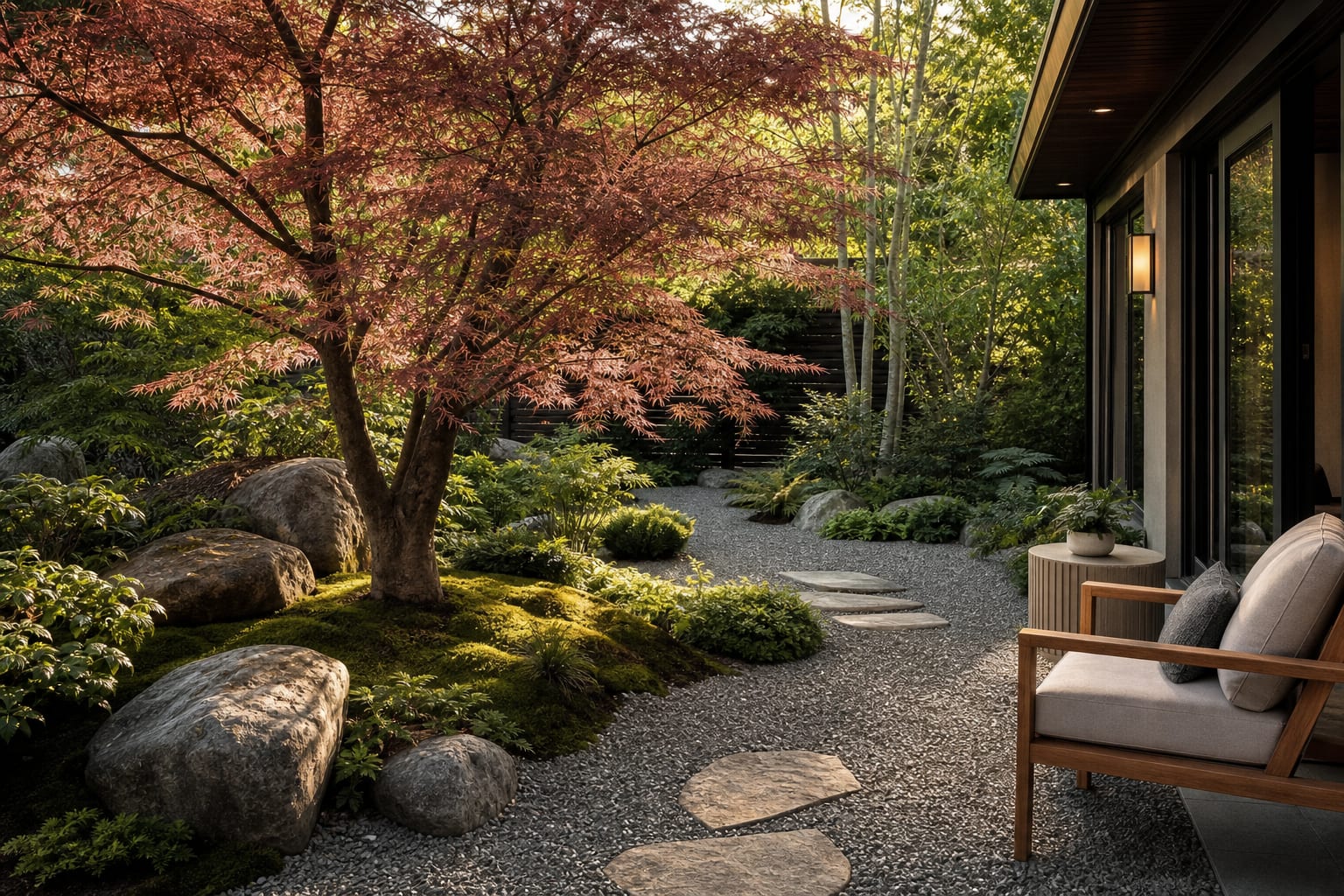
What makes a Japanese maple read as a specimen, not just a plant?
A Japanese maple works when it has room around the canopy, a calm ground plane beneath it, and a clear viewing angle from the house, path, or seating area. Most bad Japanese maple landscaping fails because the tree gets planted like a shrub. Think of the canopy as a living parasol: a weeping dissectum needs empty space to let its layered branches read, so leave at least 600mm between the lowest branches and neighboring perennials while young, then edit as it widens. Upright forms can sit closer to other planting, but the trunk should stay visible.
The base matters as much as the tree. A ring of competing annuals looks fussy; a simple floor looks intentional. Use 40-60mm of fine bark mulch, compacted gravel, low ferns, black mondo grass, moss, or small shade-tolerant perennials, keeping mulch a few centimeters off the trunk.
| Garden role | Best maple form | Useful design spec |
|---|---|---|
| Courtyard focal point | Weeping or low dome | Allow a clear 1.2m-1.8m visual circle |
| Entry marker | Upright vase shape | Keep branches clear of a 900mm path |
| Pond edge | Cascading laceleaf | Set the trunk back 600mm from the water edge |
| Patio shade accent | Small upright canopy | Keep seating outside the root zone |
Where should a Japanese maple sit in a real garden?
The best spot is usually bright shade, morning sun, or dappled light, sheltered from rough wind. Red-leaf cultivars often need more light to hold color; green and variegated forms can scorch in late-day heat. Don't make the tree earn its keep in the harshest part of the yard unless the cultivar and climate suit it.
Start with the view from indoors: if a window or patio door looks at a dull fence, a maple can turn it into a composed scene. Place the trunk slightly off center rather than dead center, since asymmetry suits the branching. In a courtyard, 1.5m-2.5m from the main seating wall often creates depth without blocking movement.
Keep a main path at least 900mm clear once the tree matures, not just on planting day. If you're drawn to contemplative outdoor spaces, the sightline logic in outdoor meditation garden ideas pairs well: one tree, one quiet surface, one deliberate place to pause.
Containers work if sized properly: use a pot at least 450-600mm wide for a young compact maple, with drainage and a stable base. Terracotta dries fast in hot wind, so glazed ceramic, timber, or fiberstone often perform better on exposed patios.
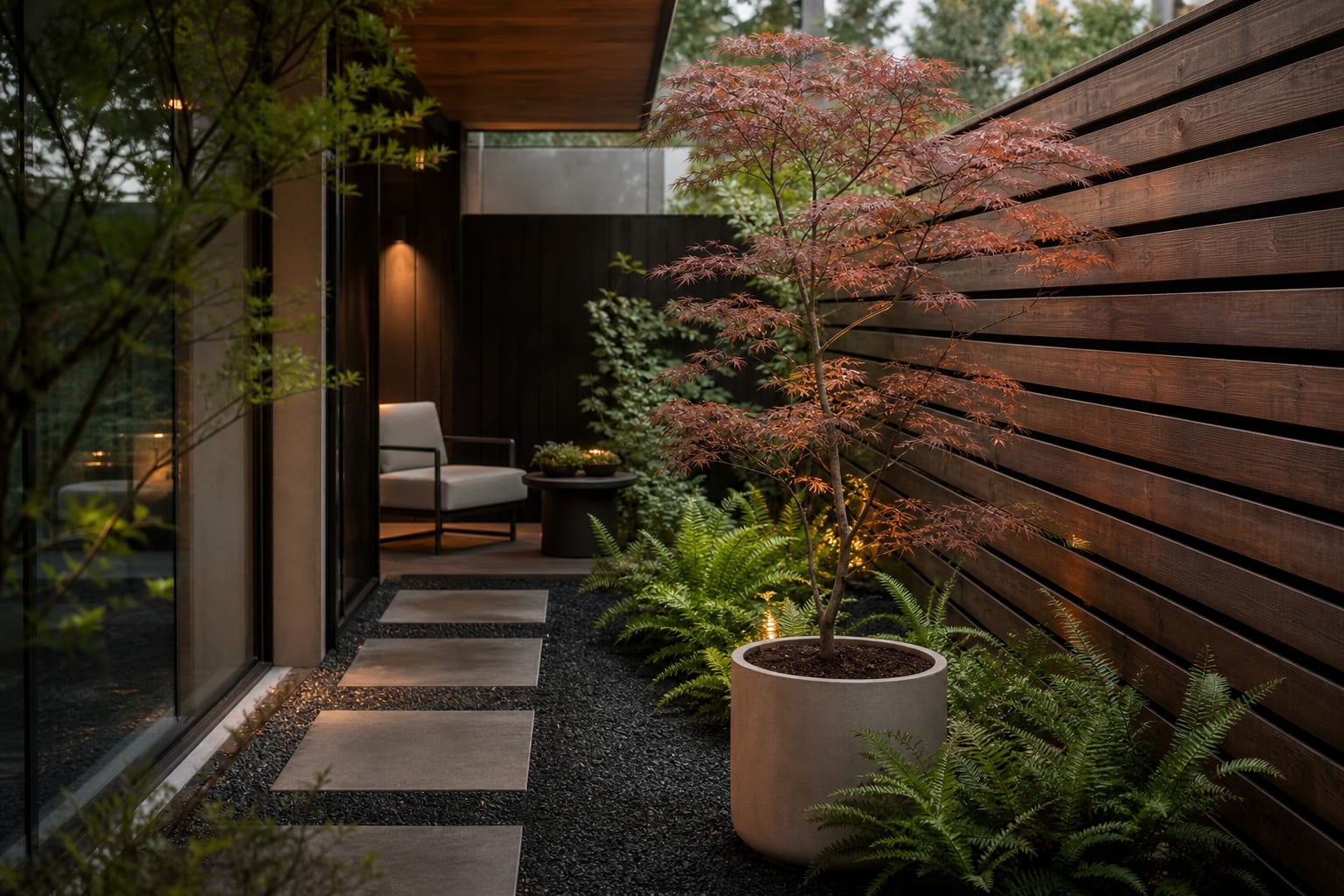
Test this on your own photo with ReDesign before you finalize the layout, keeping the house edge, horizon, hardscape, planting beds, and main path visible so the preview solves your actual space.
What are the best Japanese maple design ideas for small and large gardens?
- Frame a courtyard door with one compact maple against a dark backdrop, charcoal fence, hedge, or dark brick, set 300-600mm forward for airflow.
- Build a gravel island around a weeping maple: 40mm gravel over a firm base, steel or stone edging, and only low companions under 300mm within the viewing circle.
- Pair red maples with Mediterranean restraint rather than hot colors; borrow the cleaner hardscape approach from Mediterranean garden design ideas and let the maple be the one dramatic note.
- Use green maples in shade where red leaves would disappear; pair with pale gravel, variegated hosta, hakonechloa, or ferns in groups roughly 450mm apart.
- Place upright maples near movement — a path turn, step landing, patio edge — rather than the center of open lawn, where a lone specimen looks marooned.
- Group containers: one 600mm maple pot, two 300-400mm companion pots, and a 1.8m rug or gravel pad can make a rental patio feel designed without digging.
- Light the trunk, not the canopy, with a shielded warm 2700K spike light aimed across the lower trunk from the side, fitting hidden behind planting or stone.
Design-check shorthand: depth before decoration, repetition before variety, maintenance before novelty.
What are common Japanese maple landscaping mistakes?
The most common mistake is buying the prettiest leaf and ignoring mature habit. A laceleaf that wants to spread 2m won't stay charming beside a 700mm path; choose a narrower upright cultivar or move the path first.
Planting too deep is another quiet failure. The root flare should sit at or just above finished soil level; a trunk rising like a telephone pole means soil is piled too high.
Don't surround the tree with thirsty lawn to the trunk. Turf competition, mower damage, and irrigation swings all hurt the delicate root zone, so cut a generous bed and mark it with mulch or low shade planting.
Avoid color chaos near red or orange leaves: purple heuchera, red barberry, and burgundy pots can turn a maple into noise. Pick one supporting color and repeat it lightly, or let green foliage and stone do the work.
Wind exposure is the mistake people notice too late. Fine leaves shred and scorch on exposed balconies and open corners, so use a slatted screen, hedge, wall, or cluster of larger pots to cut wind first.
How can AI design help preview a Japanese maple before planting?
Placement is the expensive decision, so upload a straight-on photo of the garden corner, patio, or lawn edge and test a weeping maple, an upright maple, a gravel base, a darker fence, or layered shade planting. The preview won't pick the perfect cultivar for your soil, but it shows whether the tree belongs at the path bend, the fence, or near seating.
Use specific prompts tied to the real site: a small shaded courtyard with one Japanese maple specimen, pale gravel, low ferns, stone edging, and warm 2700K lighting. Compare a red canopy against a green one; in many compact gardens, the calmer green version reads more expensive because it works with the shade instead of fighting it.
If the garden also needs open space for stretching, preview the maple with an uncluttered surface nearby using spacing cues from outdoor yoga space ideas. A 1.8m by 1.8m clear pad beside a maple can feel generous in a small yard, provided branches don't drip onto the surface.
Renters can compare container layouts before buying heavy pots; owners should preview permanent moves first: tree position, bed shape, path width, lighting angle, and backdrop color. A Japanese maple is slow design, so the digital preview helps you avoid planting it where its best shape will never be seen.
Frequently Asked Questions
Where should I plant a Japanese maple?
On the east or northeast side of the yard with morning sun and afternoon shade, protected from harsh afternoon wind, and at least 8-10ft from the house and any taller competing trees.
Are Japanese maples hard to grow?
No, Japanese maples are forgiving once established but need consistent moisture for the first two years and protection from afternoon sun-scorch in zones 7 and warmer.
How big do Japanese maples get?
Laceleaf cultivars stay 6-8ft for decades; upright cultivars like Bloodgood or Emperor reach 15-25ft at maturity, so pick the cultivar to fit the spot, not the reverse.
What underplanting works under a Japanese maple?
Low evergreens that don't compete with the foliage, moss, hakonechloa, mondo grass, and dwarf hosta, work well. Keep underplanting under 12in tall so the maple silhouette stays visible.
Can a Japanese maple grow in a container?
Yes, dwarf laceleaf cultivars handle a 24in oak whiskey barrel or large ceramic pot for 5-7 years before needing root pruning or transplant; full-size uprights will outgrow containers.
> Try this: Ready to see this on your own outdoor space? Open ReDesign and run the preview before you buy materials, plant, drill, or move furniture.
Three transformations to try
1. Japanese maple with moss underplanting 2. Laceleaf maple in entry courtyard 3. Japanese maple along stone path