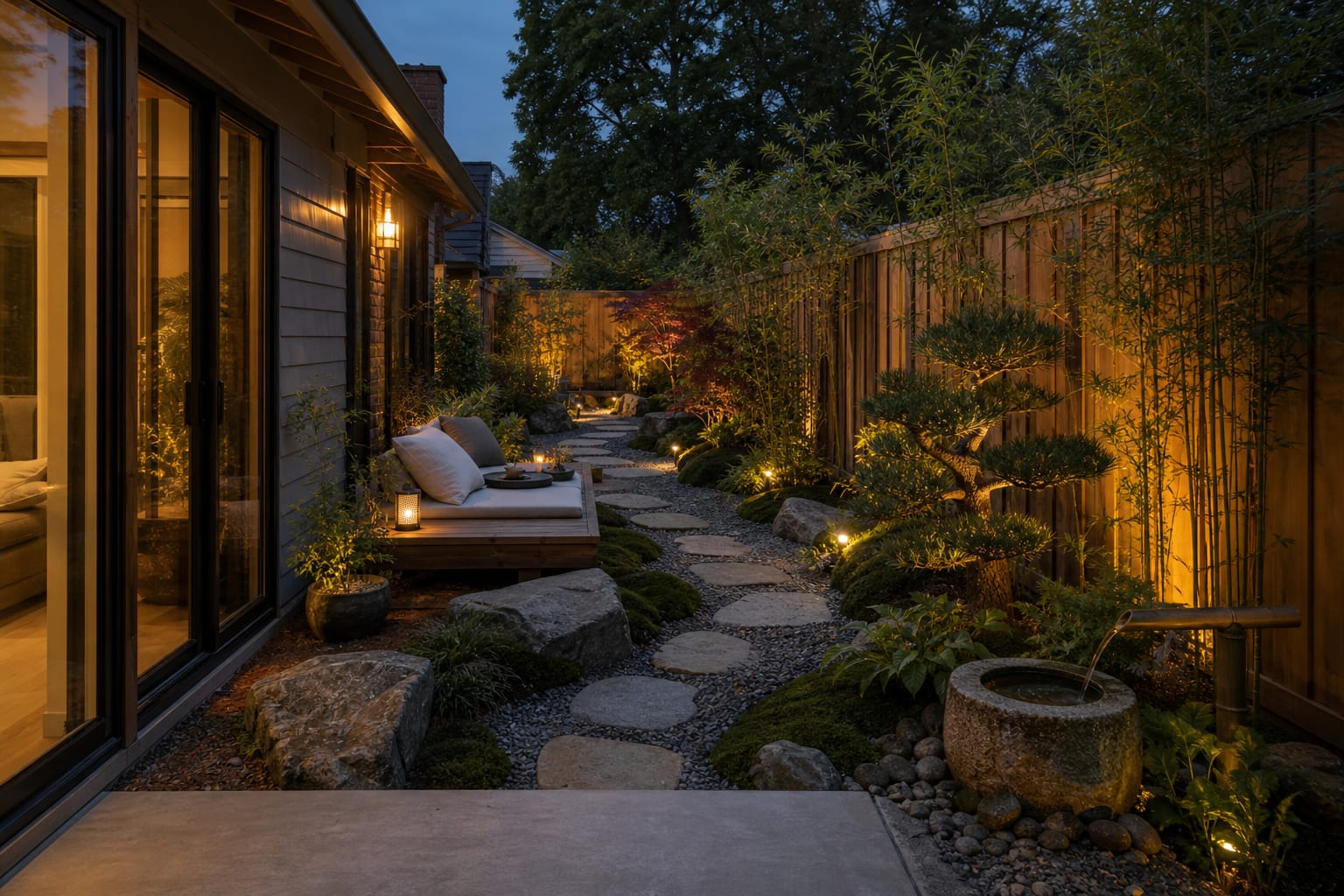
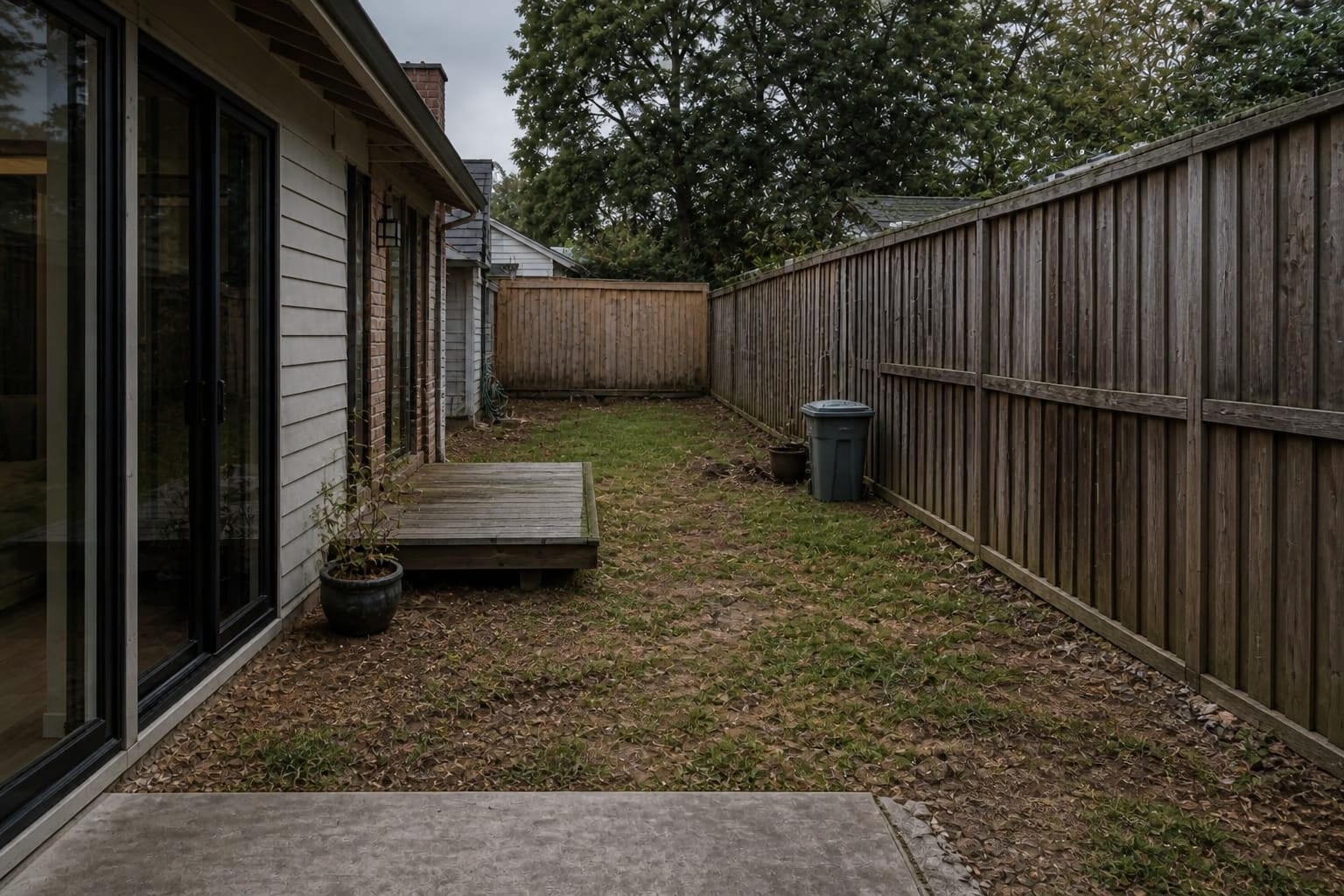
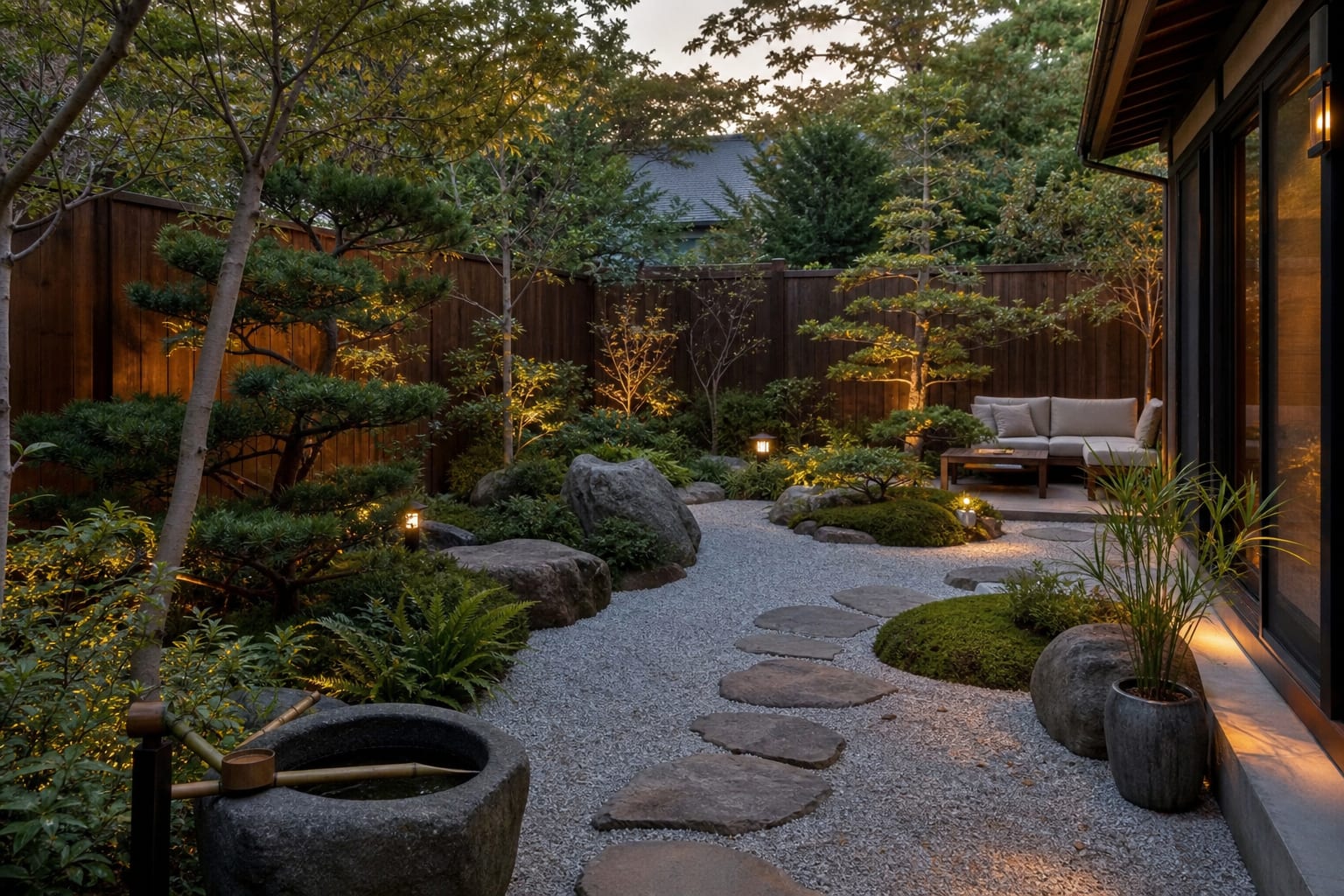
Japanese garden design ideas work by anchoring a space with one stone or evergreen, defining the ground with gravel or stepping stones, layering three depth bands, and avoiding symmetry. Restraint is the design, not the absence of it — this structure applies to a courtyard or a quarter acre and gives an exposed or busy yard real calm.
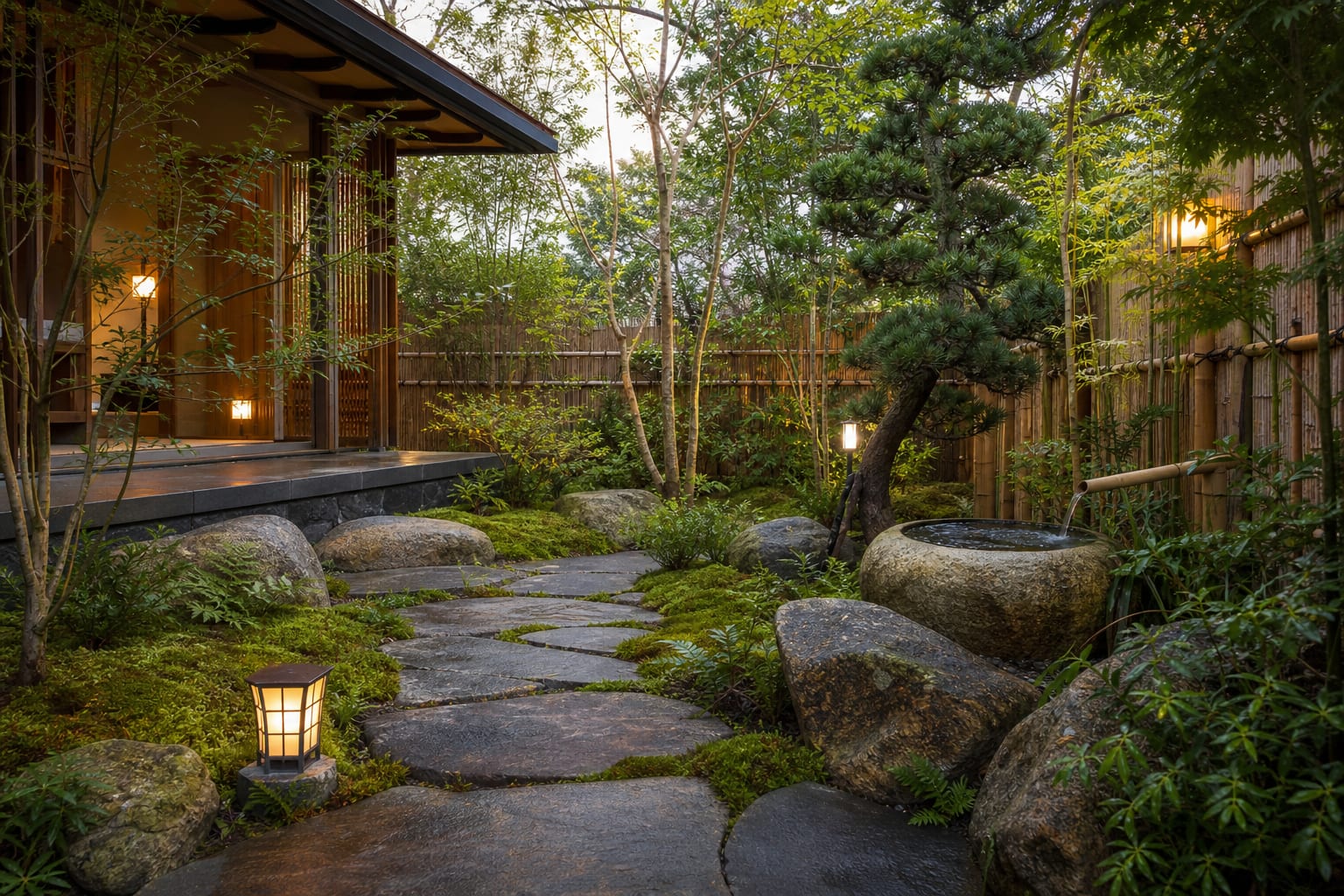
What makes a garden feel Japanese instead of just minimalist?
A garden reads as Japanese when it choreographs movement, view, and pause rather than simply removing plants. Minimalism alone can feel sterile outdoors; Japanese design keeps enough living irregularity to make restraint feel human.
- Keep the main route about 36 inches wide, and route it so it doesn't cut across your sharpest planting or seating edge.
- Limit the first material palette to three finishes — one floor, one vertical edge, one repeated accent — rather than five small ideas.
- Test the layout from two normal viewpoints, the house door and the main seat, before buying anything; those angles decide whether the garden feels planned or leftover.
Start with the borrowed view: stand at the kitchen window or main chair and decide what the garden should frame. Keep the foreground quiet if the best view is a maple or stone basin. If the fence is ugly, screen it with bamboo, evergreen shrubs, or a dark stained panel before adding anything precious.
| Element | Use it for | Avoid this version |
|---|---|---|
| Gravel | Dry stream beds, kare-sansui areas, pale contrast around boulders | Loose gravel spilling into beds without edging |
| Stone | Steps, basins, bridge slabs, anchored focal points | Shiny decorative pebbles in many colors |
| Water | A basin, low bowl, rill, or small pond edge | A loud fountain dominating the yard |
| Planting | Moss, ferns, cloud-pruned shrubs, maples, bamboo, grasses | One of every plant from the nursery sale |
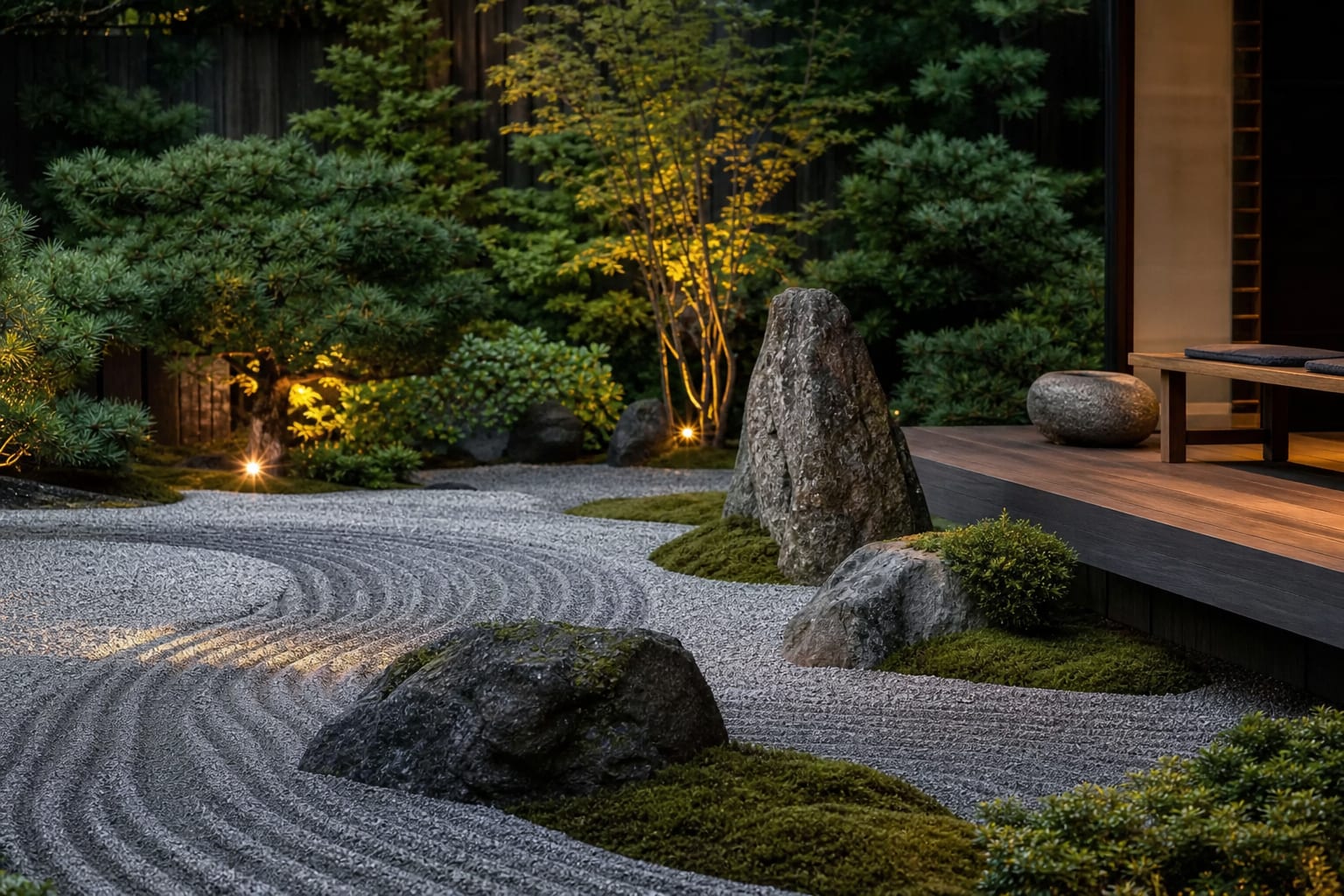
For a kare-sansui rock garden, treat gravel as a surface, not filler. Use a compacted base, a 1-2 inch top layer of fine gravel, and edging tight enough that raked lines stay legible after rain. Leave at least 12 inches between a feature stone and the nearest edge so the pattern can turn around it.
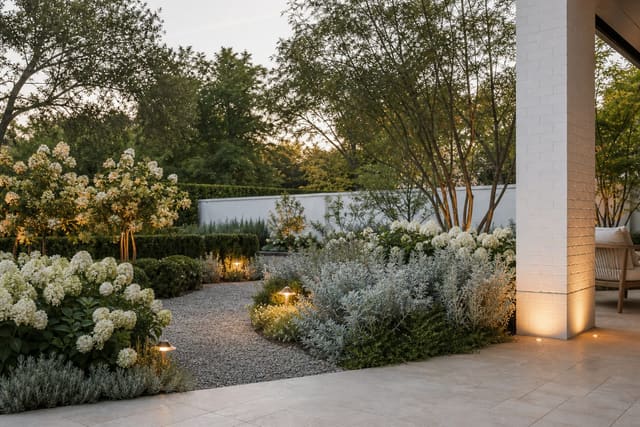
For moon-viewing and night atmosphere, the low-contrast planting in moon garden ideas for evening landscapes pairs well with a Japanese path, especially when pale gravel catches 2700K lighting without glare.
Which Japanese garden design ideas should you copy first?
Copy the moves that change proportion and mood before buying ornaments. A lantern can't fix a path that's too narrow or planting with no hierarchy.
- Build an entry sequence with stepping stones. Set stones 24-30 inches apart center to center, vary the angle slightly, and sink each so the top sits near finished grade.
- Use one anchor stone group to organize the garden. Place a taller stone, a lower companion, and a flatter resting stone in an uneven triangle; bury roughly one-third of each so it looks settled.
- Scale water to the space, not your ambition. A 24-36 inch stone basin creates enough sound and reflection for a small Japanese water garden; a full pond needs safe edges, circulation, and planting shelves first.
- Let moss, ferns, and sedges soften hardscape where climate allows. If moss struggles in heat or foot traffic, use dwarf mondo grass or fine gravel instead.
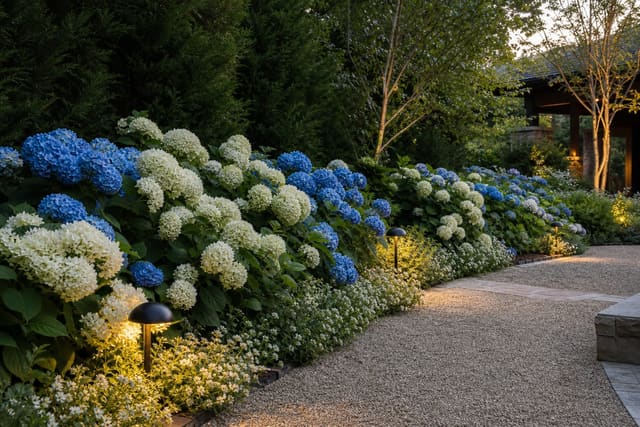
- Choose one restrained flowering moment. Hydrangeas work near a shaded fence or basin — see spacing in hydrangea garden design ideas for bloom without losing structure.
- Prune for shape, shadow, and negative space. Keep at least 18 inches between sculptural shrubs and adjacent stones so each form reads clearly.
What Japanese garden mistakes should you avoid?
- Treating it like a souvenir checklist. A red bridge, pagoda lantern, and bamboo fountain together can fight each other; pick one cultural reference to lead and keep the rest quieter.
- Setting stones on top of the ground like decorations. Dig a shallow pocket, tilt the stone toward the main view, and pack soil or gravel firmly around the base.
- Forcing symmetry. Answer a large boulder with a lower shrub or dark planting mass on the opposite side, not an identical boulder.
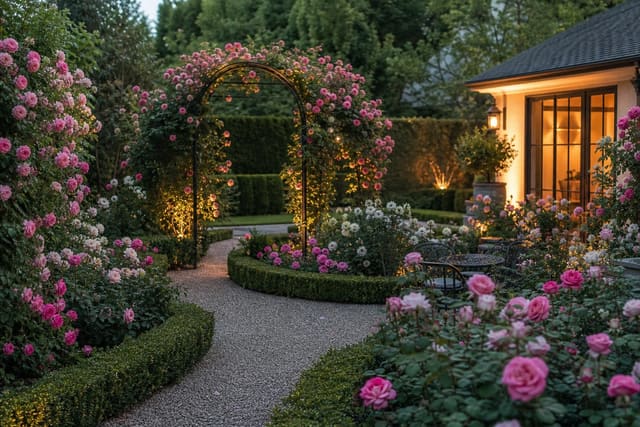
- Using bright mulch, glossy river rock, or too many flower colors. These pull attention from shadow and form; keep rose-style romance in a separate zone (see rose garden design ideas) rather than mixing palettes.
- Forgetting maintenance access. Leave a 24 inch working edge behind clipped shrubs and near water equipment, even if planting hides it from the main view.
How can AI previewing help before you commit?
AI previewing is useful here because the expensive decisions are spatial: stone size, gravel area, path curve, water placement, and how much empty space the garden can tolerate. Upload a photo from the main viewing point and test broad composition before pricing boulders or ordering screening.
Try one preview with a dry kare-sansui field, one with a small water basin, and one with a mossy shaded path, then compare which feels calmer. If the design only works when every corner is filled, it isn't restrained enough yet. Use the result as a proportion check — real plant choices still depend on sun, drainage, and winter lows — then mark path widths with string and check the view from inside before anything permanent arrives.
Frequently Asked Questions
How small can a Japanese garden be?
A 4x6 ft courtyard can qualify if it has one anchor element, one clear path, and a calm planting edge. Size matters less than structure: one stone, a few stepping points, and controlled negative space still create depth at small scale. Keep the first layout sparse and add features only after the path and seating angle feel intentional.
Do I need real Japanese plants for a Japanese garden?
No. Local conifers, sedges, and evergreen shrubs work well if pruned with asymmetry and paired with gravel, stone, and a disciplined planting rhythm. The real test is whether the species survive your climate and maintenance schedule without looking temporary after one season, not whether they're native to Japan.
What rocks belong in a Japanese garden?
Use one feature stone as a grounded anchor, then add a smaller group on lower visual planes for direction. Angular or partially buried stone reads more intentional than uniform rounded stones, which often look generic. Start with a simple dryscape layout and adjust spacing after a week of observation.
Should a Japanese garden have water?
Water is optional. A stone basin or rill is more durable than a full pond on tight budgets, since ponds require circulation, safety planning, and winter management. Start with one basin near the seated edge for sound and rhythm, then expand only if the layout stays functional through normal use.
How do I maintain a Japanese garden without daily work?
Prioritize evergreen structure and low-weed ground treatment so the garden stays tidy without daily care. Choose plants with predictable forms, add a thin layer of gravel or moss where soil gets chaotic, and accept minor seasonal volunteer growth. One weekly inspection plus a short bimonthly pruning pass usually keeps the composition calm.
Three transformations to try
- Japanese courtyard with raked gravel
- Japanese garden with moss and maple
- Japanese garden with tsukubai basin