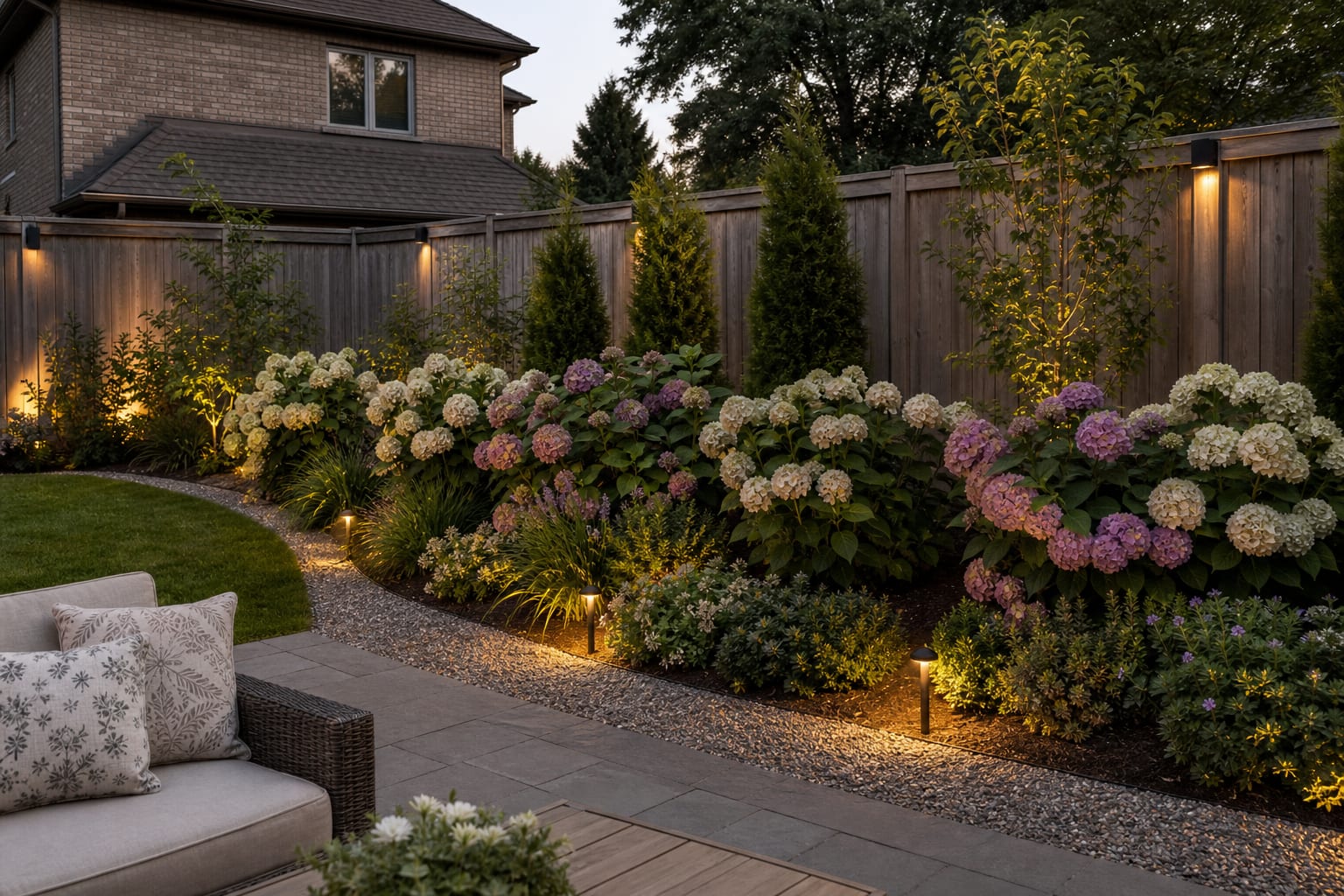
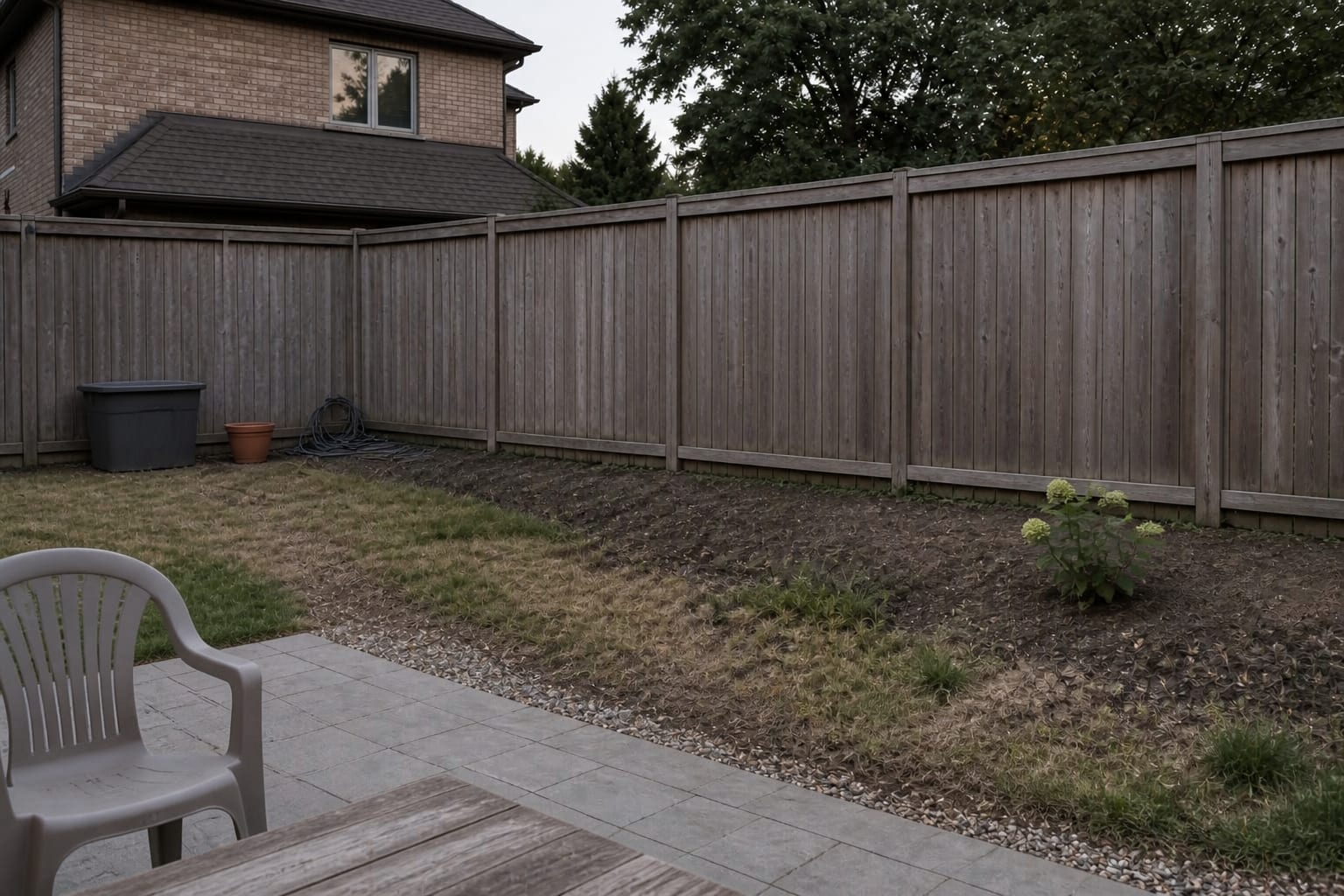
Hydrangea garden design ideas work best when you mass at least three of the same cultivar together, choose the type by season and light (bigleaf for June shade, panicle for July-to-frost sun, oakleaf for fall structure), and underplant with hostas, ferns, or grasses instead of mixing more shrubs. Give hydrangeas a job — hedge, border, or focal mass — rather than dropping one shrub beside a downpipe, and the payoff is months of deliberate color instead of one good weekend.
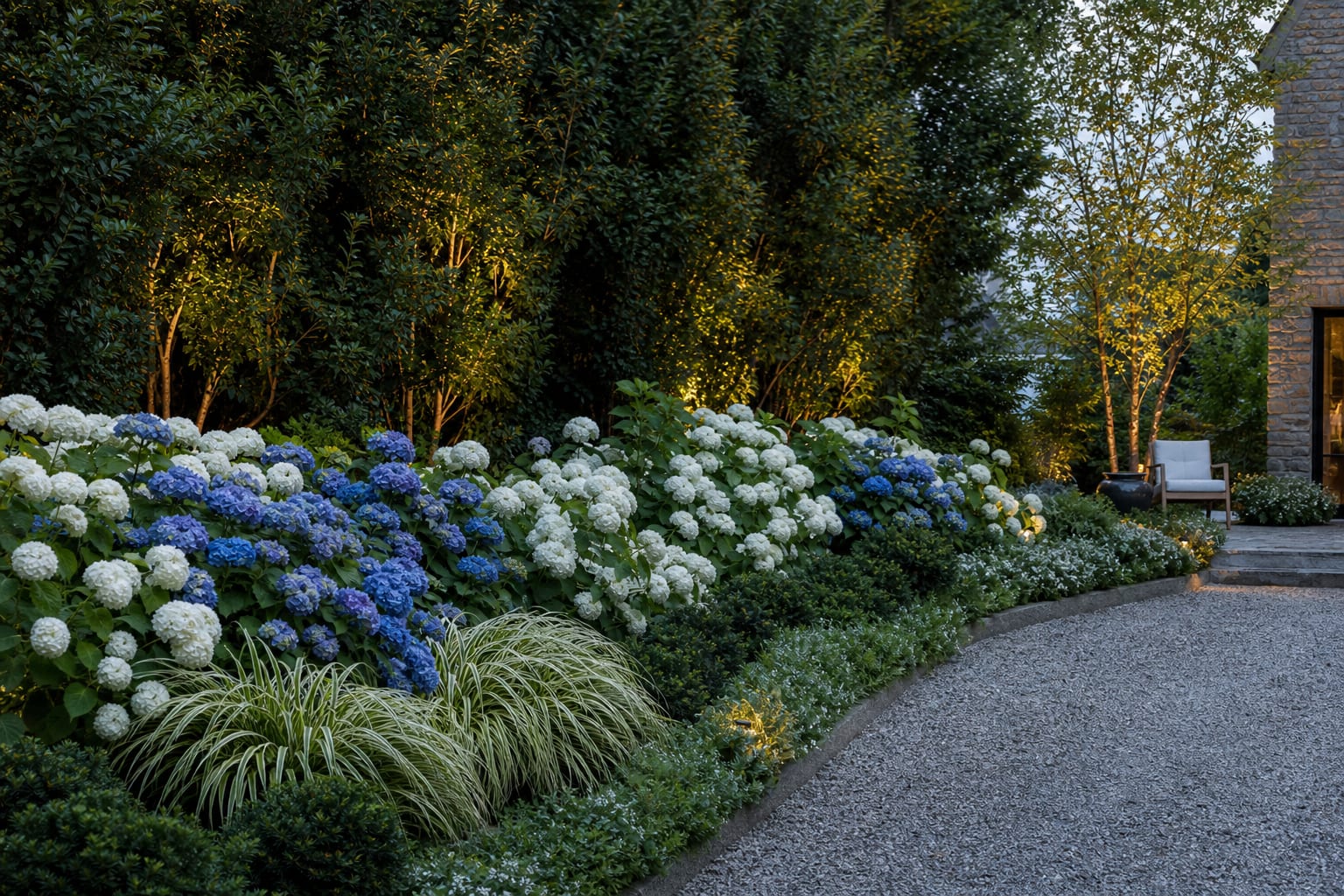
What makes hydrangea mass planting feel romantic instead of heavy?
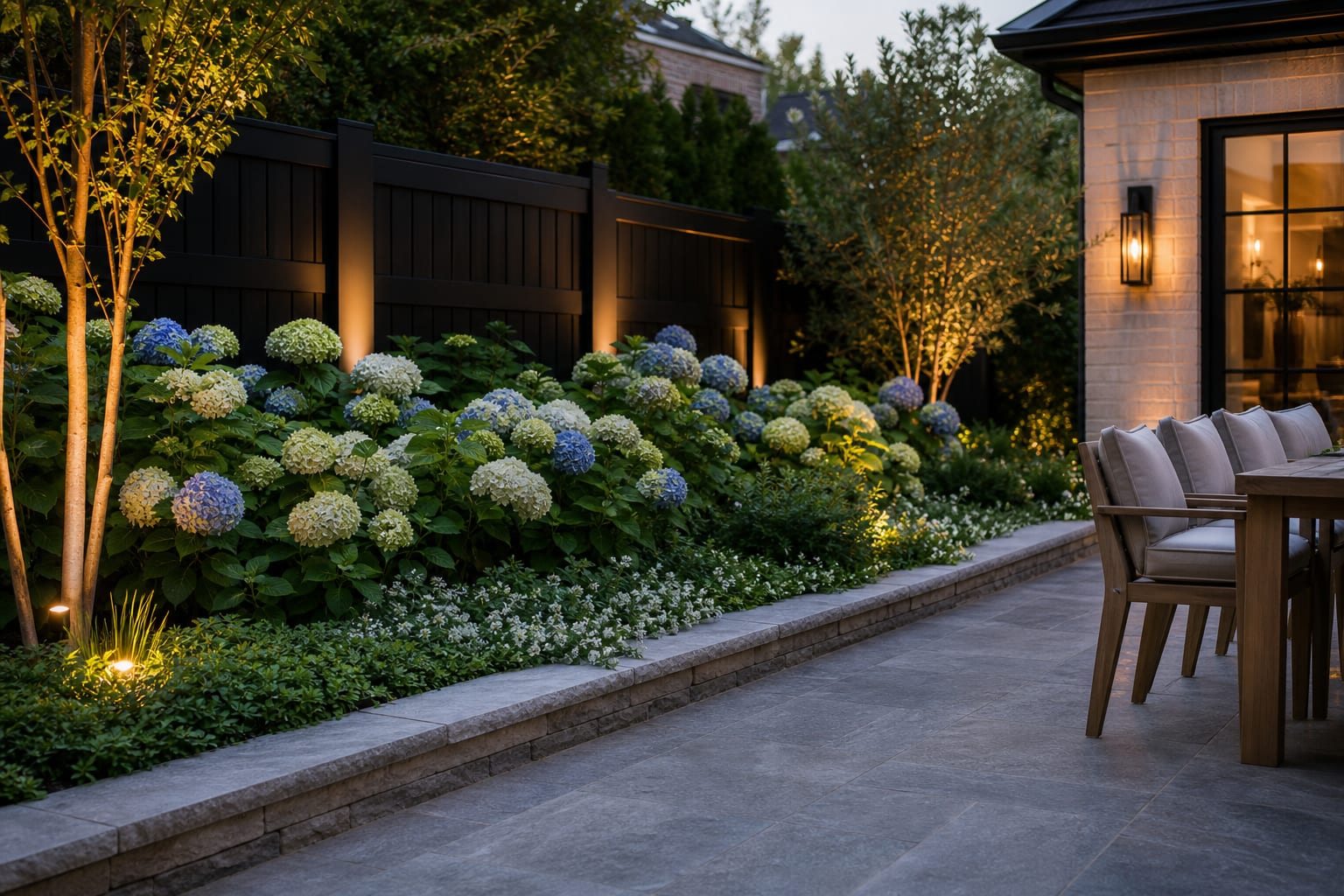
Mass planting works when the shrubs form a broad, repeated shape with clear edges, not a crowded row of oversized blooms. Keep the front 300mm to 450mm of the bed for low plants like carex, hakonechloa, geranium, heuchera, or compact ferns to hide bare stems below the flower heads.
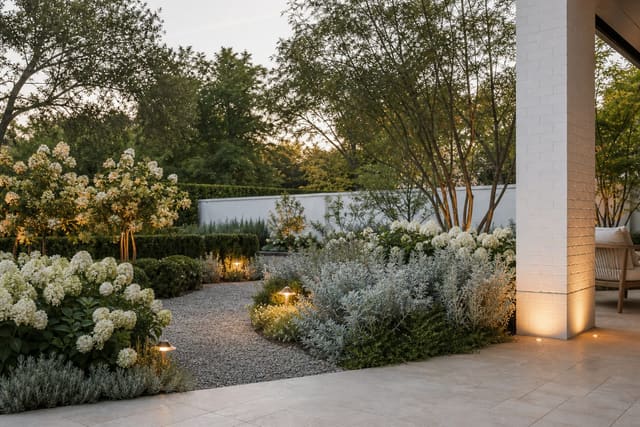
A larger garden can take a looser drift: pick one hydrangea variety for the main mass and repeat a second foliage texture beside it. Mixing five colors in one bed usually looks less romantic than one strong variety repeated with confidence. For an evening scheme, white panicle hydrangeas with silver foliage can borrow ideas from moon garden planting for evening glow without turning the whole border white.
| Hydrangea design role | Best placement | Useful spec |
|---|---|---|
| Flowering hedge | Along a path, fence, or drive | Keep finished width off the walking line by 300-450mm |
| Border anchor | Middle or back of a mixed bed | Bed depth of 1.2-1.8m for layered planting |
| Courtyard focal shrub | Large pot or corner bed | Container at least 450-600mm wide for compact types |
| Woodland edge | Bright shade under high canopy | Leaf mold mulch ~50mm deep, kept off stems |
Which hydrangea types belong in which part of the garden?
Bigleaf hydrangeas (Hydrangea macrophylla), the classic mophead and lacecap types, suit shaded patios and entries but often flower on old wood, so hard winter pruning can remove next year's blooms. Panicle hydrangeas (H. paniculata) flower on new wood, tolerate more sun, and bring cone-shaped blooms that read clean against dark fencing or gravel.
Oakleaf hydrangeas (H. quercifolia) earn their space with leaf shape, fall color, and peeling bark, making them natural fits for dappled shade and informal edges. Smooth hydrangeas, including Annabelle types, look great in groups but their heavy heads can flop after rain — pair them with sturdy perennials or low twiggy shrubs to disguise the moment.
Soil pH shifts blue and pink color in many bigleaf hydrangeas, but don't build the whole design around it. Blue, pink, and white blooms all still need scale, contrast, and a strong bed shape to look intentional rather than flat.
Test this on your own photo with ReDesign — keep the house edge, horizon line, hardscape, planting beds, and main path visible so the preview solves the space you actually have.
Five hydrangea border design ideas worth copying
- Hydrangea walk: repeat one cultivar along a path; keep clear width at 900mm and set shrubs back so wet flower heads don't brush legs.
- Behind roses, not beside them: let roses sit forward and hydrangeas form the softer back mass, borrowing from rose garden companion planting ideas.
- Patio corner frame: two matching hydrangeas plus one evergreen anchor, with at least 600mm between chair backs and the mature shrub edge.
- Shaded fence line: oakleaf hydrangeas, ferns, and variegated hosta repeated every 450-600mm for a knitted woodland floor.
- Widen a bare lawn edge: a 300mm strip can't hold these shrubs; widen to 1.5m and test the curve with a hose before cutting turf.
Add late-season companions — grasses, asters, sedum, evergreen mounds — so the border doesn't rely on summer bloom alone; see fall garden design with structure for timing ideas.
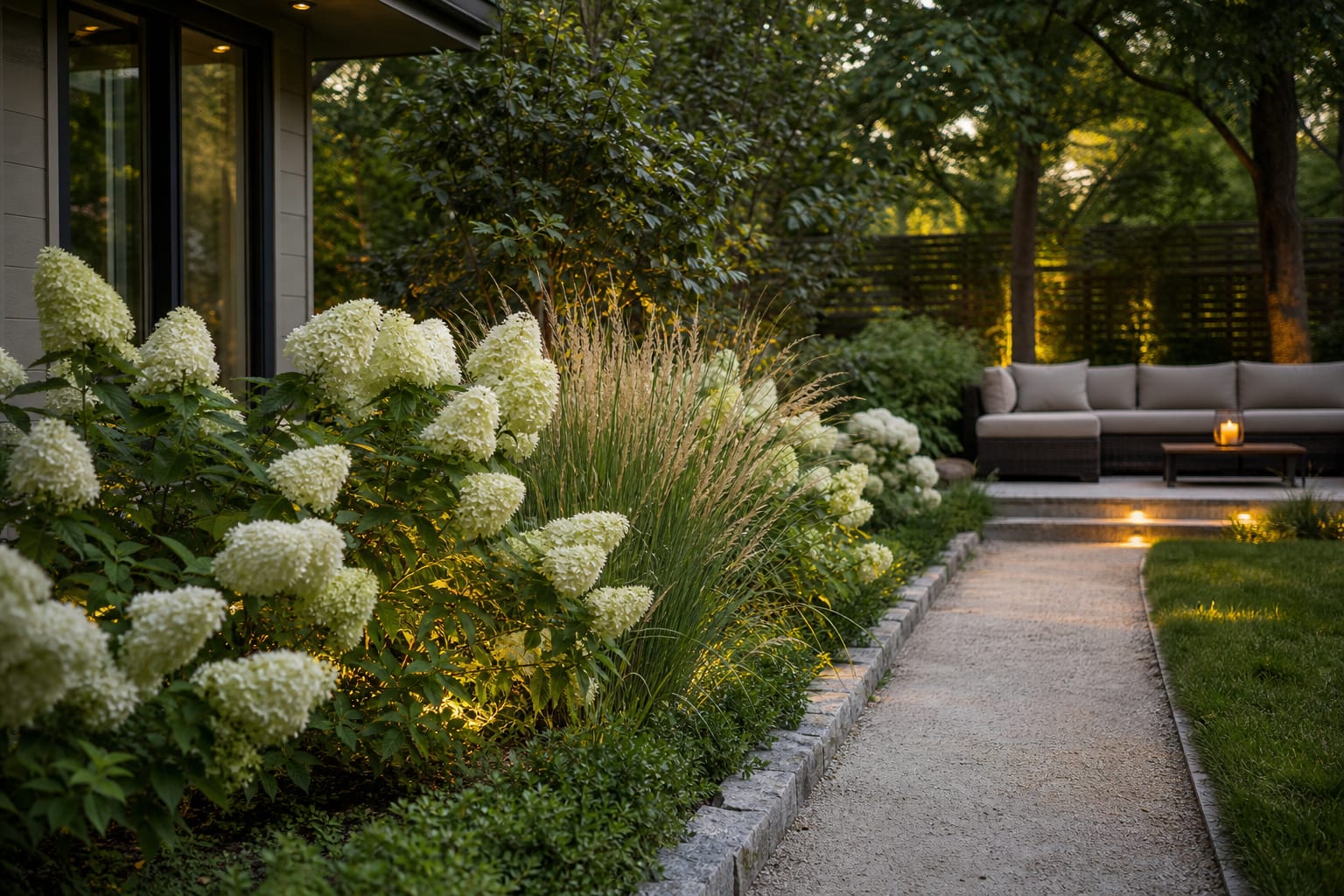
Design-check shorthand: depth before decoration, repetition before variety, maintenance before novelty.
Common hydrangea garden mistakes to avoid
Planting too close to the house is the most common error — a mature hydrangea can cover a window or trap damp air against cladding, so keep mature spread in mind and leave access around taps, vents, and downpipes. Pruning the wrong wood type removes next year's flowers; know whether your cultivar blooms on old wood, new wood, or both before cutting.
A shallow bed makes hydrangeas look bulky — widen to at least 900mm or choose compact cultivars and containers instead. Ignoring water matters too: hydrangeas want consistent moisture without soggy roots, so improve heavy soil with organic matter and keep a 50mm mulch layer clear of the stems. Finally, mixing every color available reads as a nursery display; pick one bloom tone, one foliage contrast, and one repeating low plant.
Use AI design to preview your hydrangea border before you dig
The expensive decision is rarely the shrub itself — it's the bed shape, massing, and placement. Upload a straight-on photo of the fence line, walk, patio edge, or lawn border, then preview a wider bed, repeated hydrangeas, a darker backdrop, or a curved path from the same angle.
Use the preview as a composition test, not a horticultural guarantee — it can show whether three hydrangeas beat one or whether white blooms need a darker fence, but it can't confirm soil pH, drainage, winter lows, or deer pressure. Try a specific prompt like "front garden hydrangea border with five repeated white panicle hydrangeas, 1.5m deep bed, low carex edging, dark evergreen backdrop, stone mowing strip," then test blue bigleaf, oakleaf, and container-only versions.
Frequently Asked Questions
Which hydrangeas bloom the longest?
Panicle hydrangeas (Limelight, Bobo, Quick Fire) bloom from July through frost and shift green-to-pink-to-burgundy as they fade, giving the longest seasonal interest in the genus.
How do I get blue hydrangeas?
Bigleaf hydrangeas turn blue in acidic soil below pH 6.0. Add aluminum sulfate annually, or skip the maintenance and choose a cultivar bred for blue color in your existing soil.
Why are my hydrangeas not blooming?
Bigleaf and oakleaf hydrangeas bloom on old wood, so spring pruning removes the buds. Switch to dormant fall pruning, or plant a panicle variety that blooms on new wood instead.
How much sun do hydrangeas need?
Bigleaf and oakleaf prefer morning sun with afternoon shade. Panicle hydrangeas handle full sun in northern climates but need afternoon shade south of zone 7.
What plants pair well with hydrangeas?
Hostas, ferns, astilbe, and Japanese forest grass suit shade pairings; boxwood and ornamental grasses suit sun. Limit underplanting to two or three species so the hydrangeas stay the focus.
> Try this: Ready to see this on your own outdoor space? Open ReDesign and run the preview before you buy materials, plant, drill, or move furniture.
Three transformations to try
1. Panicle hydrangea border in full sun 2. Oakleaf hydrangea fall foliage bed 3. Hydrangea border under tree canopy