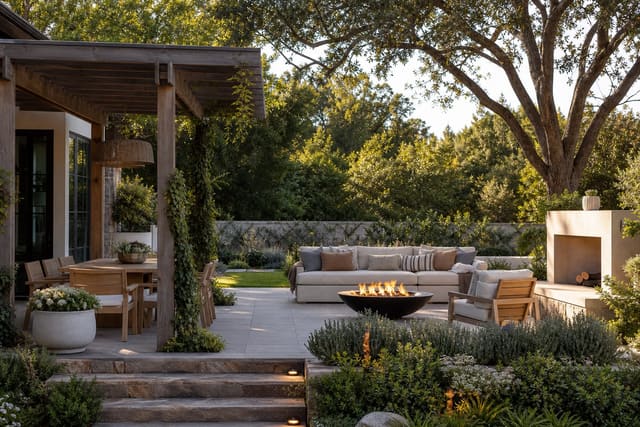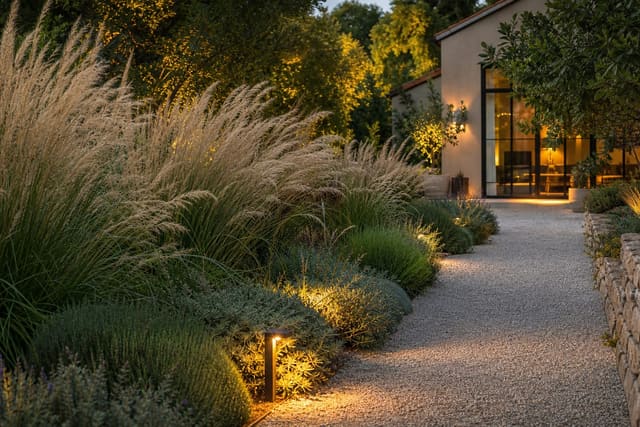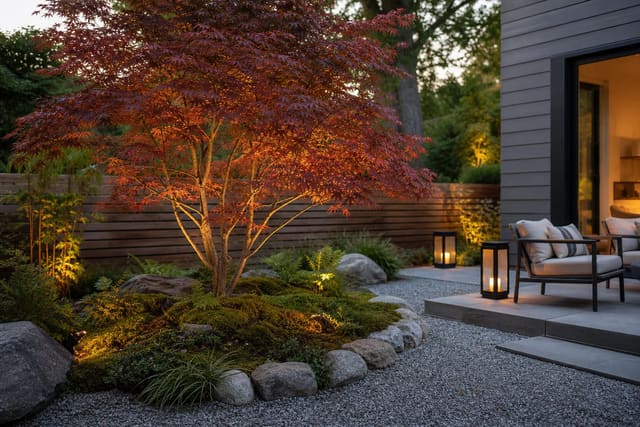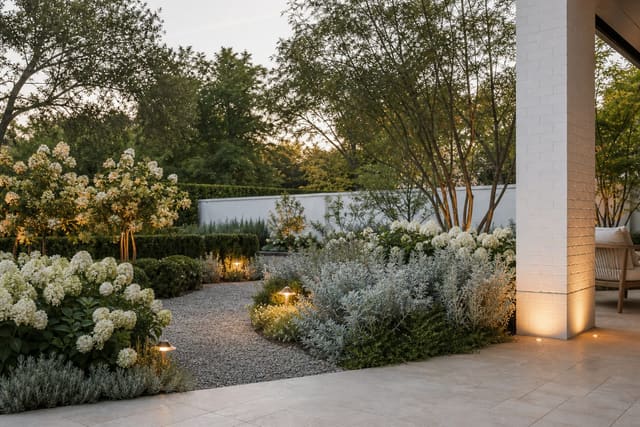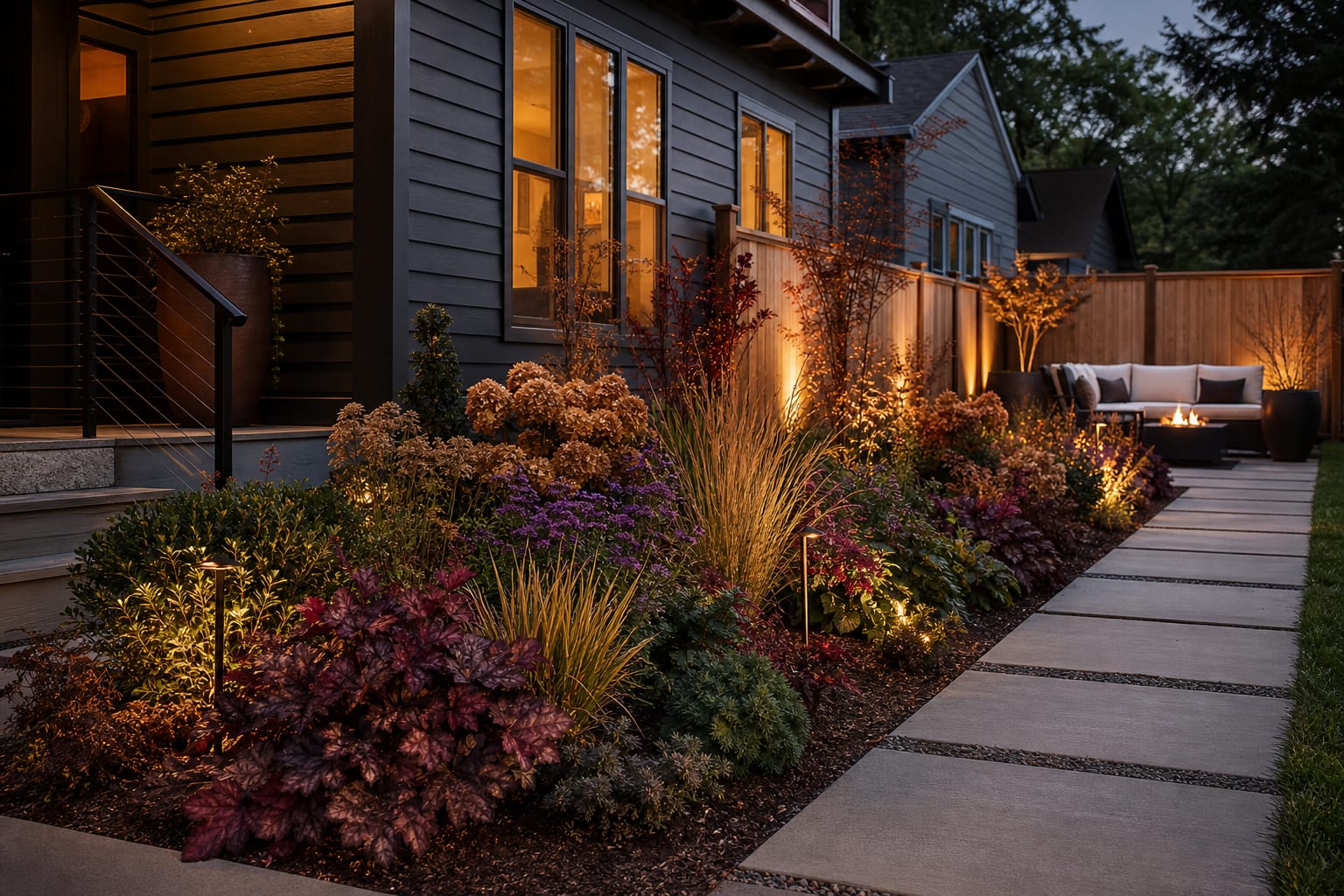
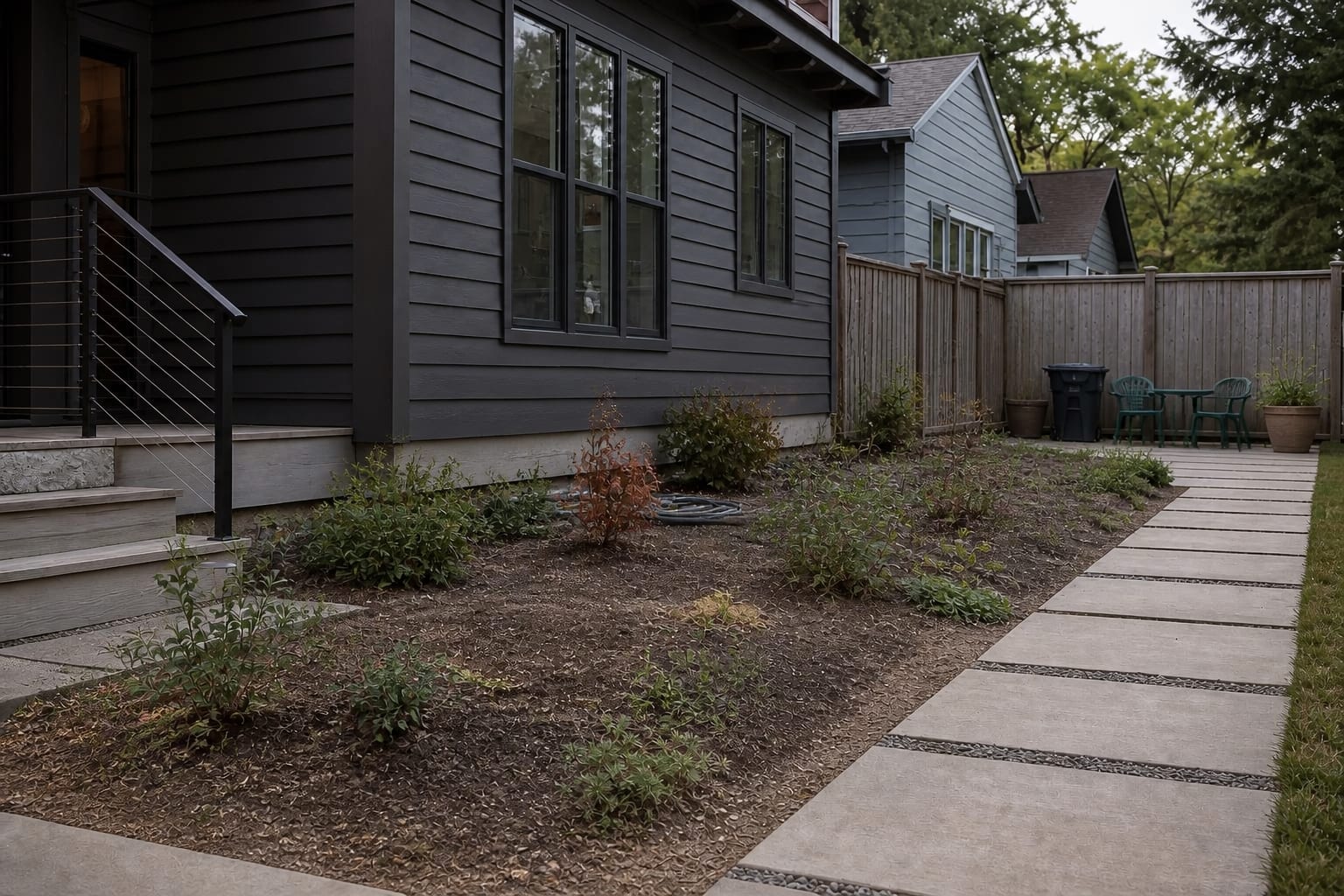
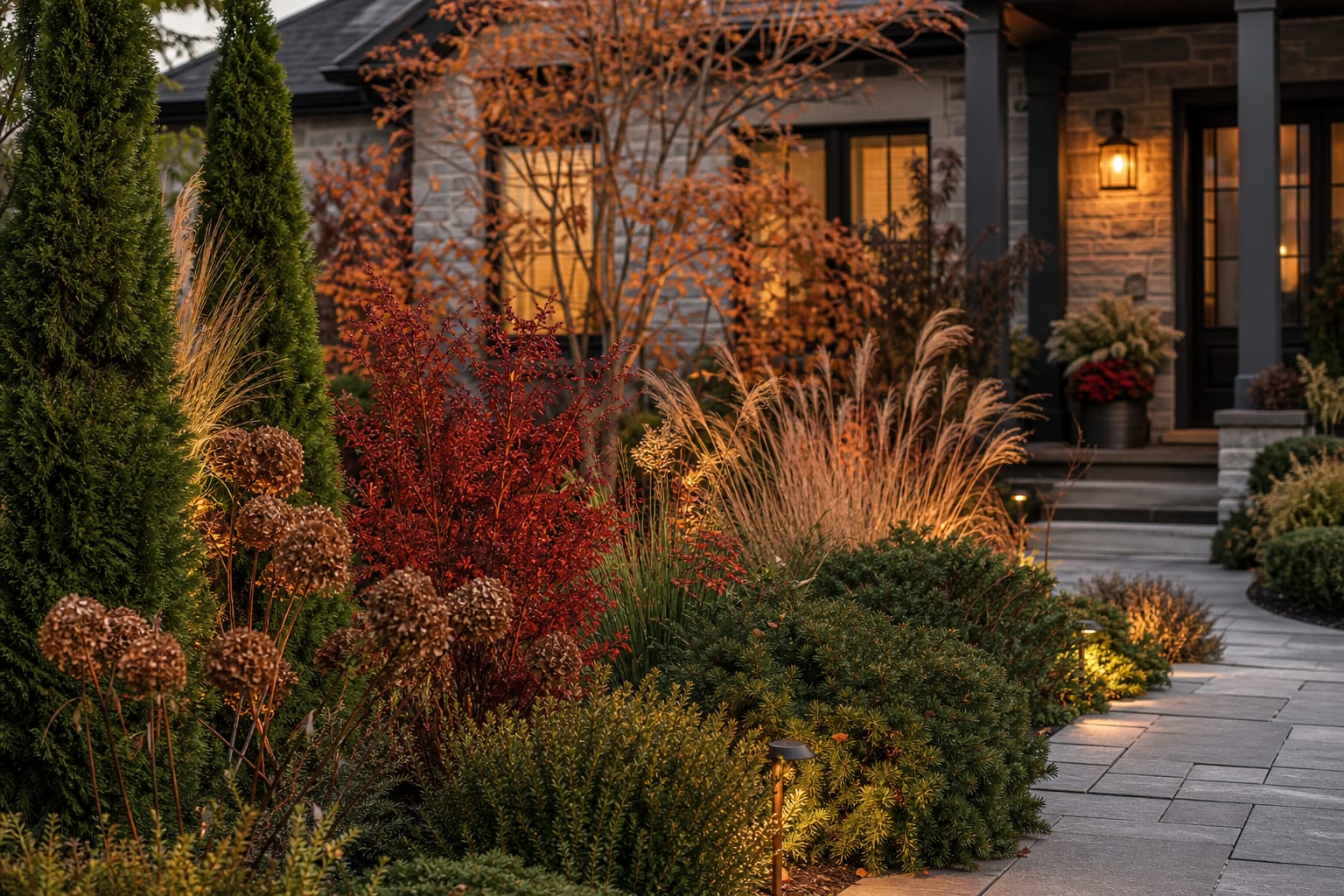
The best fall garden design ideas layer ornamental grasses, late perennials like sedum and aster, warm foliage, and at least one evergreen anchor so the yard stays structured after summer fades. Autumn exposes weak design fast: skip mums-only planting and build depth with foliage, seedheads, and repeated shrubs instead.
What should you plant for fall garden interest?
Plant asters, sedum, ornamental grasses, hydrangeas, late roses, evergreens, berries, seedheads, and shrubs with red, copper, gold, or burgundy foliage. Flowers are the sparkle; foliage and structure keep the bed looking designed once weather turns.
Give the garden three layers: low color under 18 inches, mid-season mass at 18 to 36 inches, and taller grasses, shrubs, or small trees above 36 inches. In small yards, keep the tallest plants toward the fence or back border; in deeper beds, repeat one late-flowering plant every 4 to 6 feet for rhythm.
A bed with 4 to 6 hours of sun supports asters, sedum, most grasses, roses, and panicle hydrangea. Shadier gardens need foliage contrast: oakleaf hydrangea, ferns, heuchera, evergreens, pale seedheads. Evening gardens can borrow the pale-flower logic from moon garden planting ideas: white asters, silver foliage, and light gravel keep the border visible after dark.
The structure decision that keeps autumn from looking bare
The most important decision is where permanent bones sit before seasonal color arrives. By September, annuals tire and perennials pass peak, so shrubs, paths, evergreen forms, walls, and repeated containers keep the yard from looking like leftovers.
Anchor shrubs at corners and path turns: panicle hydrangea, oakleaf hydrangea, viburnum, smoke bush, or red-twig dogwood hold a bed once softer planting collapses. See hydrangea garden design ideas for designing around changing flower heads rather than deadheading the whole bed into blankness.
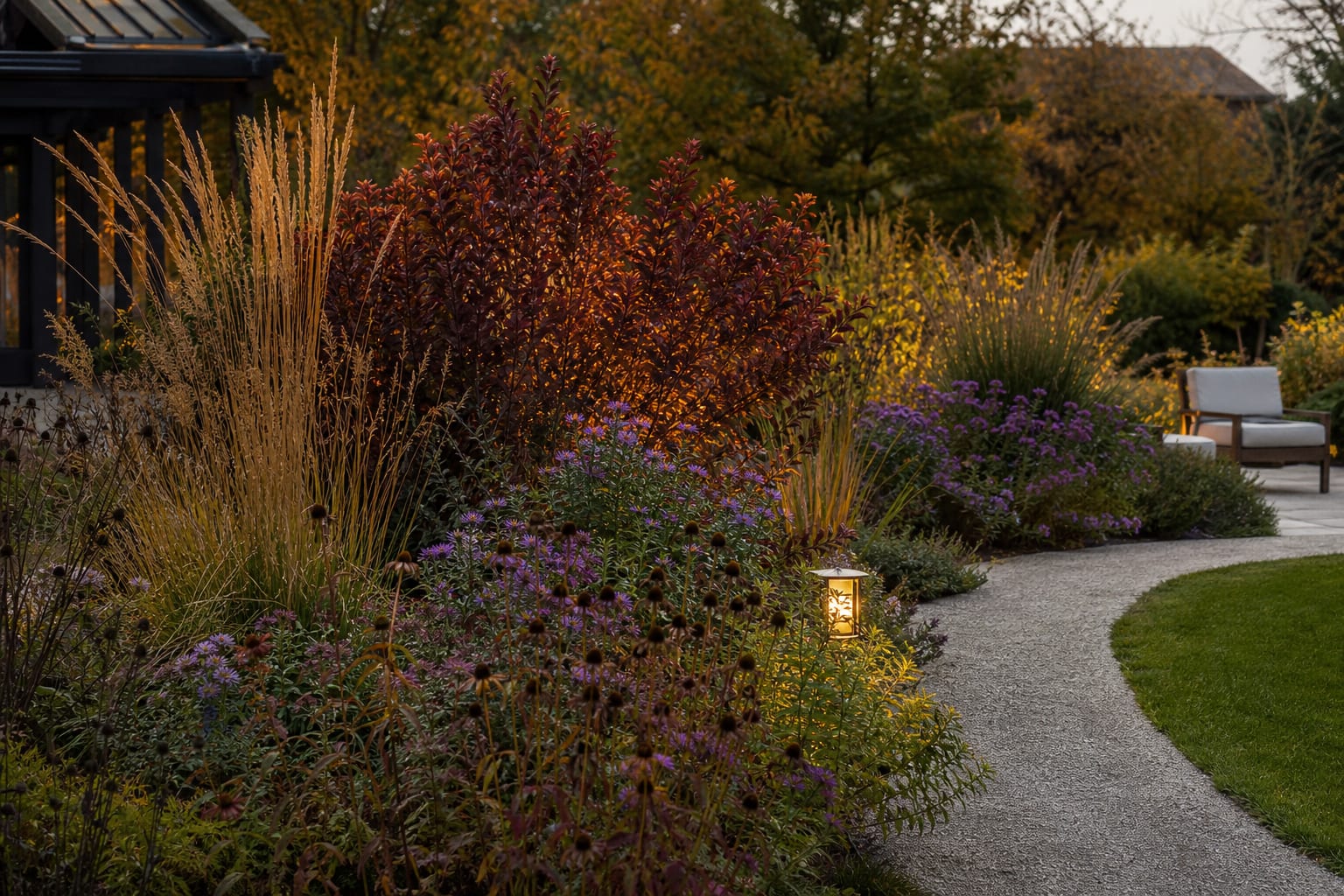
Grasses move when everything else stiffens. Plant fountain grass, switchgrass, little bluestem, or feather reed grass in groups of 3 to 5, not single tufts, and give medium grasses 24 to 36 inches of width away from narrow paths.
Limit the palette to 2 or 3 dominant fall colors, such as copper, plum, wine, or ochre, and let brown seedheads and evergreen foliage act as neutrals. Too many bright hues in one small bed reads like a porch display that exploded into the border.
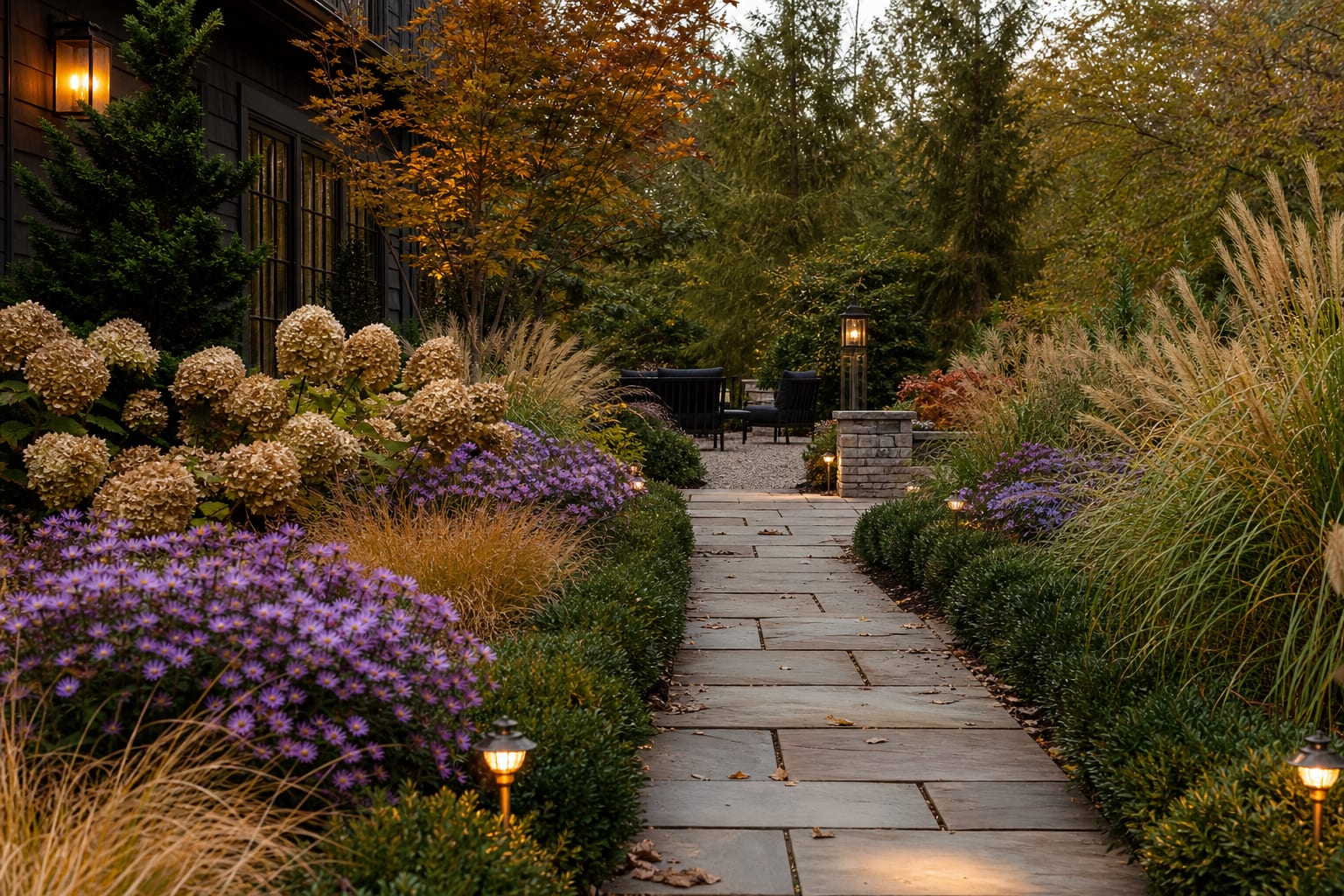
Test this on your own photo with ReDesign before choosing a direction; keep the house edge, horizon, hardscape, beds, and main path visible so the preview solves the space you actually have.
Fall planting ideas that earn their space
Use these as design moves, not decoration:
- Late-flower ribbon. Plant asters, sedum, or hardy mums in groups at least 18 inches wide along the front third of a sunny border.
- Grass backdrop. Place golden or copper grasses 30 to 48 inches tall behind early-collapsing perennials for October height and texture.
- Focal shrub. Add one dramatic-foliage shrub, such as oakleaf hydrangea, serviceberry, fothergilla, or viburnum, on the main sightline from the house.
- Container patches. Use 16 to 20 inch pots with carex, heuchera, pansies, and ivy near doors and steps instead of lined-up mums.
- Standing seedheads. Leave coneflower, rudbeckia, allium, sedum, and grass plumes through early frosts, with clean path edges so they read as texture, not neglect.
- Roses into fall. Extend rose beds with late blooms, hips, lavender, salvia, and grasses rather than isolating roses in bare soil; see rose garden design ideas.
Warm lighting around 2200K to 2700K, aimed downward on seedheads, steps, and path turns, does more for a fall garden than one bright floodlight. Design-check shorthand: depth before decoration, repetition before variety, maintenance before novelty.
Common fall garden mistakes
Planting only mums makes the display feel temporary. Mix them with evergreen foliage, grasses, sedum, or asters for depth.
Cutting everything down early leaves the garden sterile. Remove diseased or collapsed stems, but leave sturdy seedheads and grasses, clearing just the front 12 inches along paths.
Skipping scale checks makes plantings look skimpy or wild. Match plant height to viewing distance and keep 18 to 24 inches beside paths for overhang.
Ignoring evergreen structure shows up in winter once color fades and perennials flatten. Add a few evergreen shrubs or durable ground covers for December shape.
Buying only for peak color creates maintenance traps, since some grasses self-seed and some late perennials flop without support. Check mature widths before planting.
Use AI design to preview autumn layers before you plant
Preview fall foliage, grass height, late flowers, path edges, and container placement on a photo of your own garden before buying plants. Upload a straight shot from the kitchen window, front walk, patio door, or driveway, then test three schemes: a purple-and-gold perennial border, a shrub-heavy foliage garden, and a container-led rental-friendly version.
Build real constraints into the prompt: keep a 36 inch path clear, plants under 30 inches near the walkway, one burgundy shrub at the back corner, warm 2700K path lights, and tall grasses away from the gate swing.
Renters can test pots, troughs, and removable edging without cutting permanent beds. Owners should test structural pieces too, such as shrub placement, gravel strips, low hedges, stepping stones, and small trees. If a preview looks busy, cut the plant count; if it looks empty after frost, add evergreen mass and standing texture before another flower color.
Frequently Asked Questions
What plants give a garden the most fall color?
Sugar maples, burning bush, oakleaf hydrangea, and switchgrass deliver the highest-impact fall foliage. Layer one of each rather than massing a single species for the fullest seasonal display.
When do I plant for a fall garden display?
Plant fall bloomers such as sedum, aster, mum, and anemone in spring or early summer so they establish roots before their fall flush. September plantings rarely bloom that same year.
Do mums belong in a designed fall garden?
Hardy garden mums planted in spring read better than supermarket mums dropped in pots. Treat grocery mums as a one-season accent near a door, not part of the permanent bed.
How do I keep a fall garden interesting into winter?
Leave seedheads on grasses and coneflowers, plant one or two columnar evergreens for vertical structure, and add a metal or stone element that stays visible after frost.
What's the easiest fall garden upgrade?
Add three ornamental grasses, such as panicum, miscanthus, or pennisetum, to an existing summer border. Grasses peak in September and October and require no replanting year to year.
> Try this: Ready to see this on your own outdoor space? Open ReDesign and run the preview before you buy materials, plant, drill, or move furniture.
Three transformations to try
1. Fall border with grasses and sedum