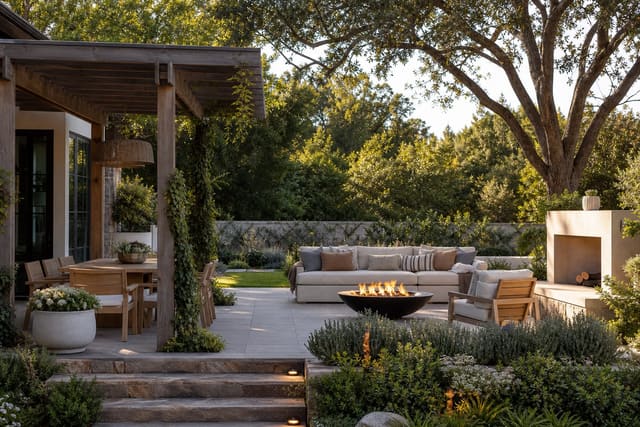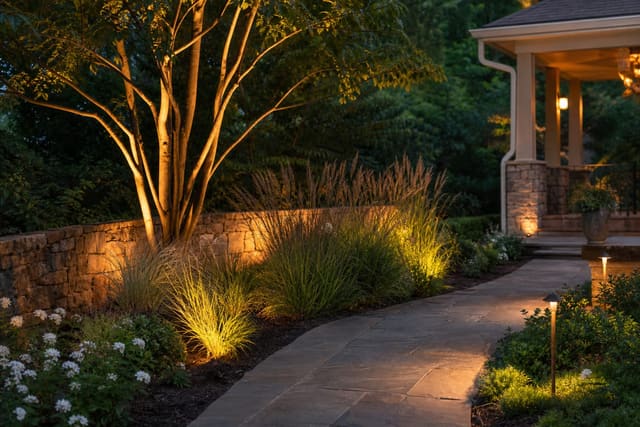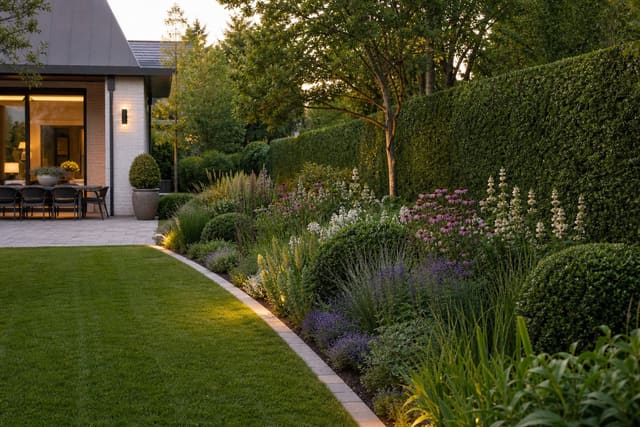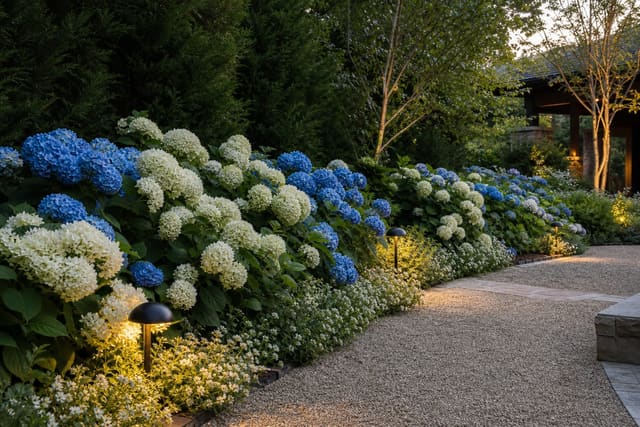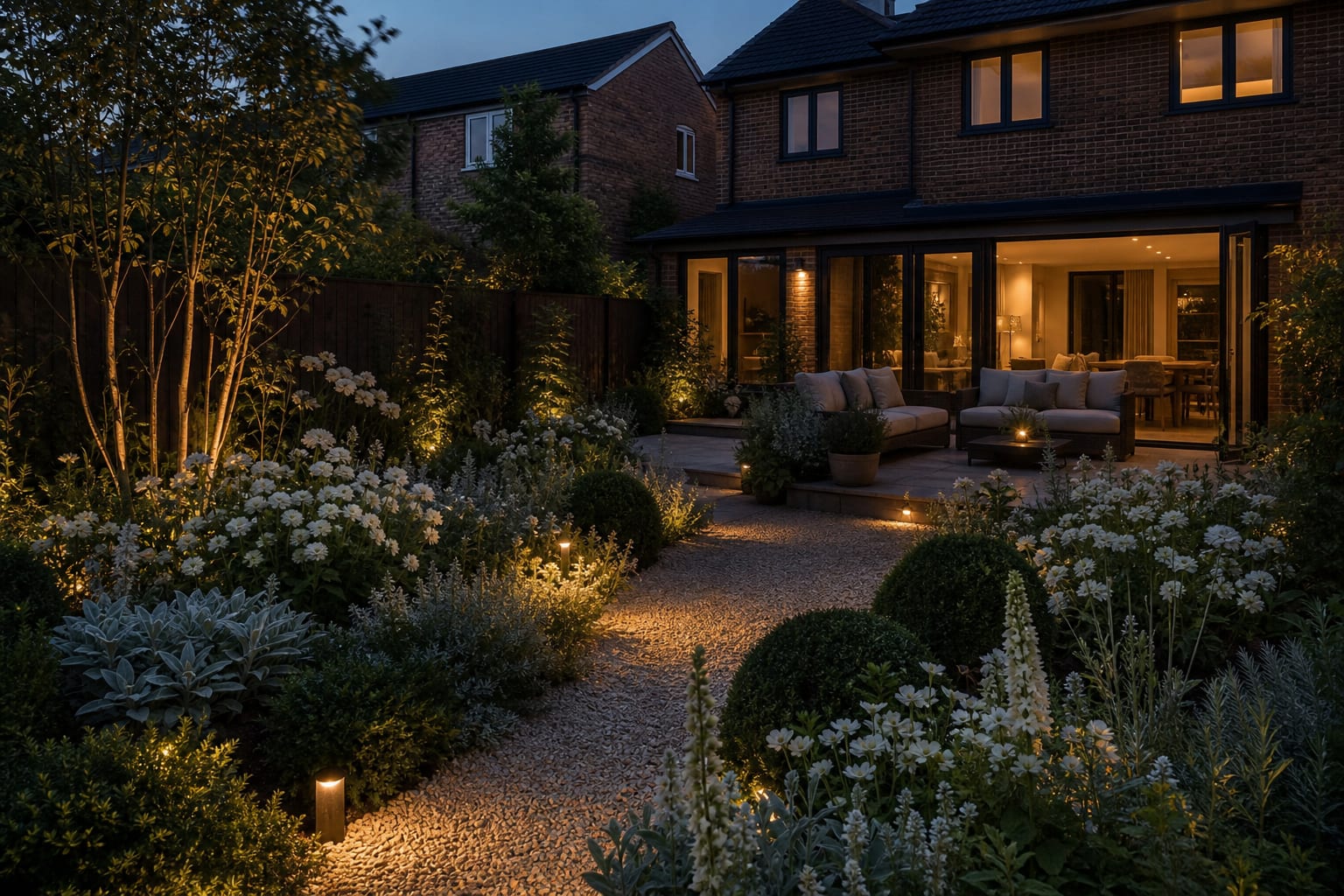
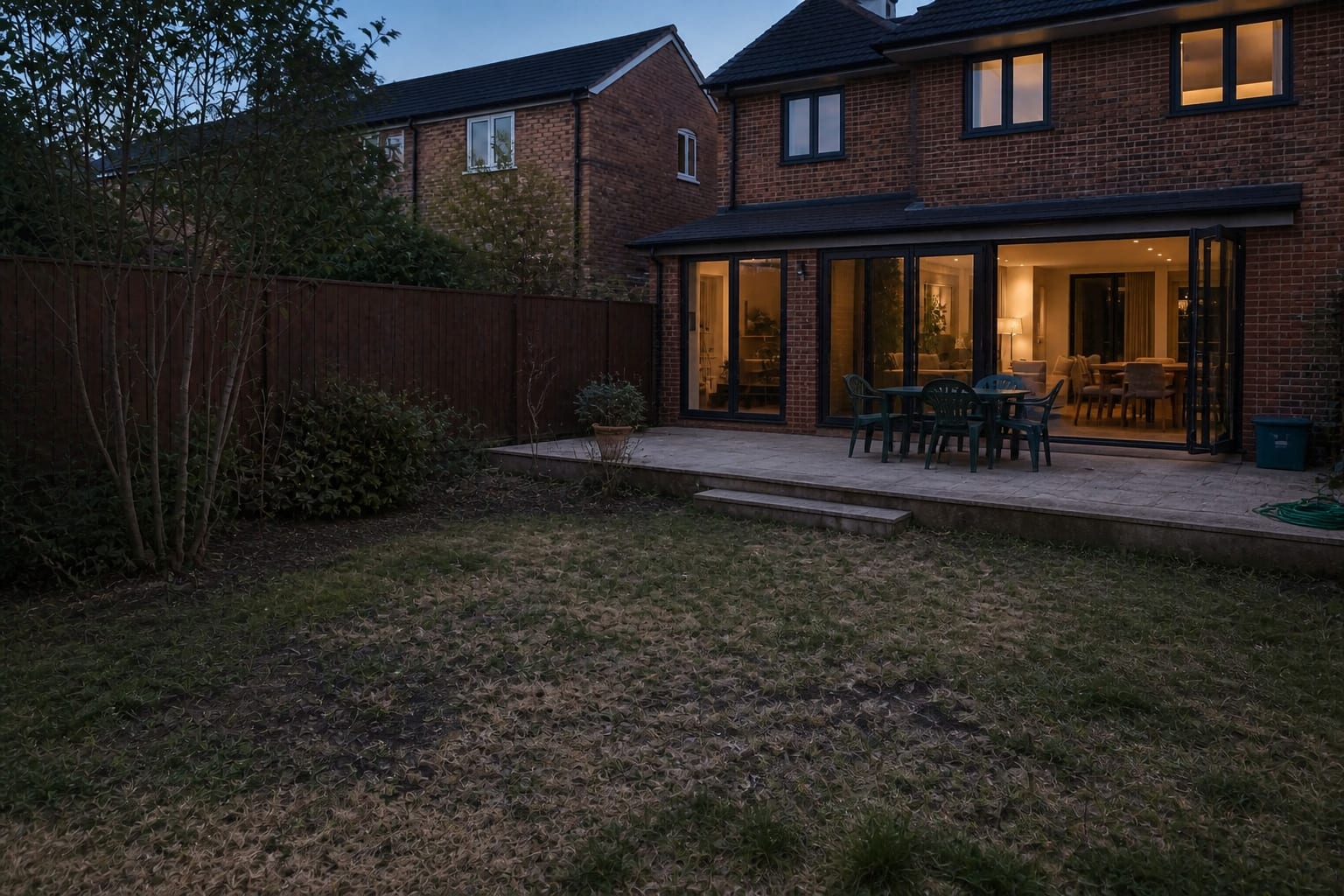
A moon garden works when white-flowering plants like nicotiana, moonflower, and phlox carry the bloom, silver foliage such as lamb's ear and artemisia catches low light, night-scented plants sit near seating, and warm path lighting stays under 2700K. The goal isn't an all-white border — it's pale surfaces, reflective leaves, and restrained light that make the garden visible without erasing the dark.
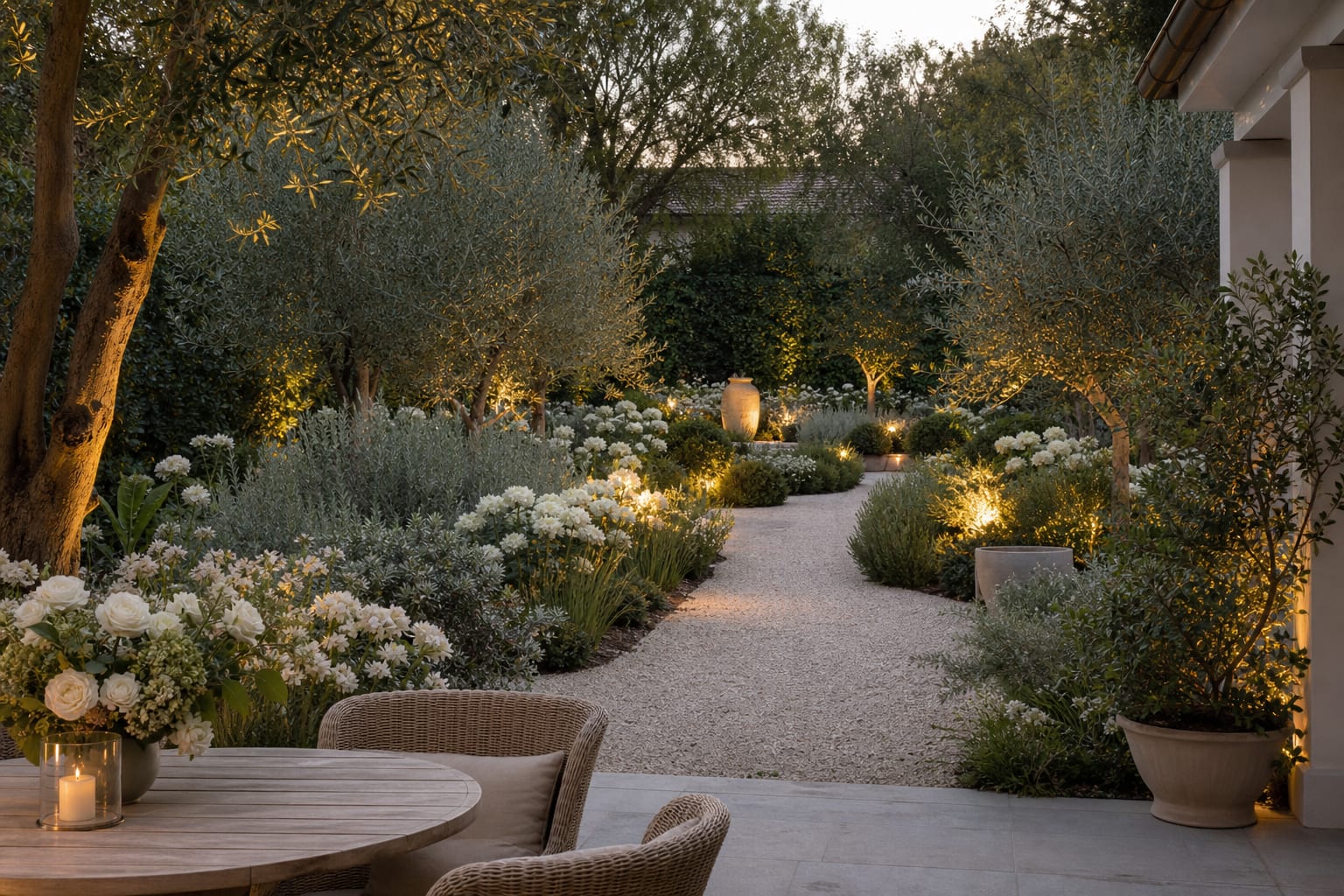
What makes a garden feel alive after dark?
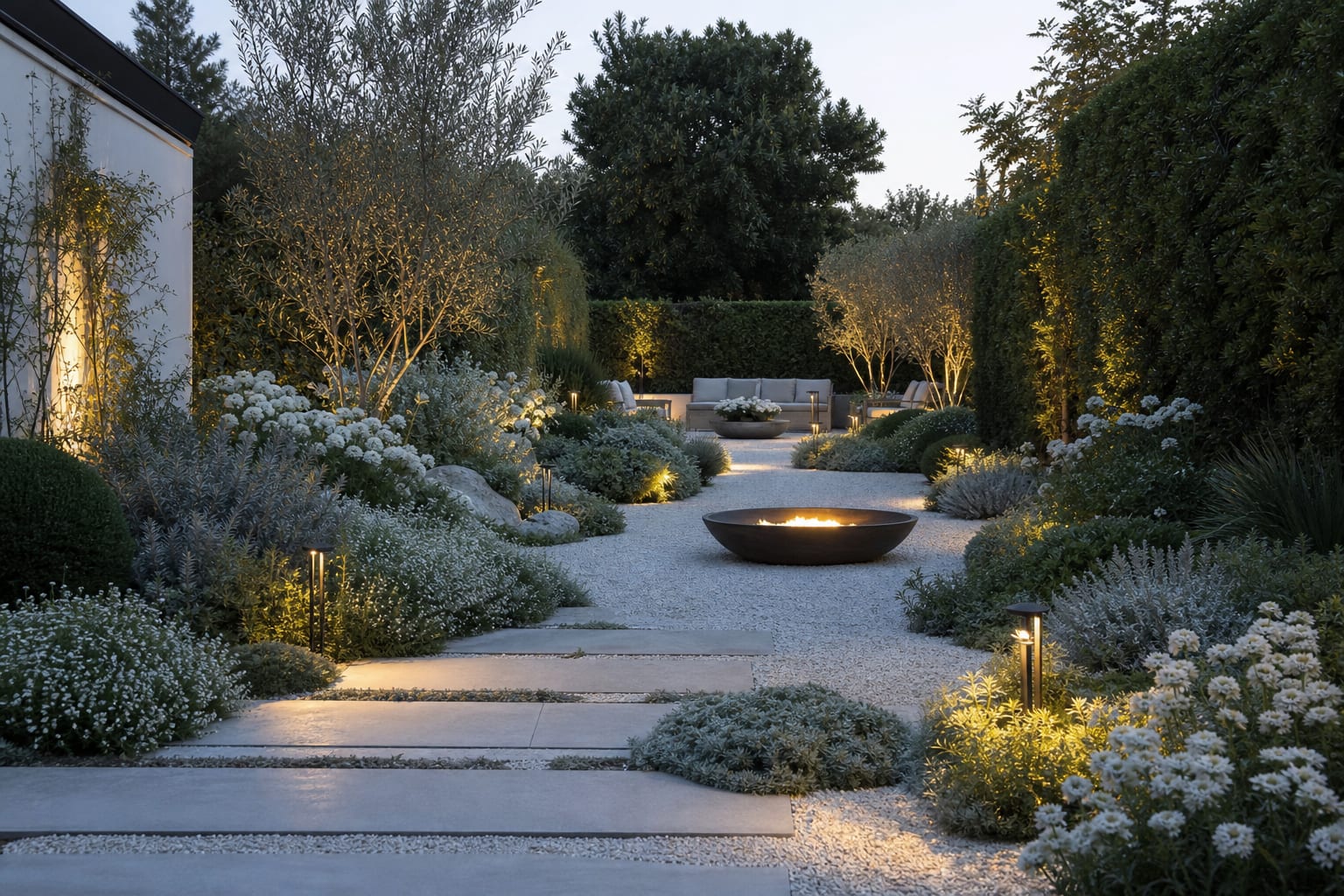
A moon garden feels alive after dark when the eye can still read contrast: pale flower heads, matte silver foliage, light gravel, and a few deliberate shadows. Don't rely on moonlight alone — unless you have an open site with little tree cover, reflective planting and low artificial light need to work together.
Start by picking one main viewing line, usually from a patio door, kitchen window, or the chair where someone actually sits. Place the palest plant groups along that line rather than scattering them evenly. A white hydrangea against a dark yew, fence, or brick wall glows for hours; the same plant tucked behind a shrub disappears. If hydrangeas are part of your plan, see hydrangea garden design ideas for real yards for scale guidance so big flower heads don't overwhelm a narrow evening border.
Background matters as much as the flower itself. White blooms against a cream fence look flat; the same blooms against charcoal stain, evergreen hedging, or old brick look intentional. For paths, use pale gravel, limestone, or buff brick — at least 900mm wide for a main connecting path, 600mm for a secondary one-person path.
| Evening element | Best use | Practical spec |
|---|---|---|
| White flowers | Marks focal points and path turns | Repeat in groups of 3, 5, or 7 |
| Silver foliage | Holds the glow between bloom cycles | Plant near path edges or dark evergreens |
| Pale hardscape | Reflects ambient light underfoot | Keep gravel depth near 40mm |
| Low lighting | Reveals stems and steps safely | Warm 2700K fittings aimed across planting |
Which white flowers and night-blooming plants deserve the space?
Choose plants for timing, scent, and leaf contrast, not just white petals on a nursery bench. The strongest palette layers spring bulbs, early summer roses, midsummer hydrangeas, late summer phlox, and autumn seed heads that still catch light.
Build a shrub backbone first: white hydrangea, viburnum, mock orange, star jasmine in mild climates, white shrub roses, and pale clematis. Give most shrub roses 900mm to 1.2m of space and keep thorny stems clear of tight seating corners — the spacing logic in romantic rose garden design ideas applies directly here.
Night-blooming plants need judgment. Moonflower vine, evening primrose, nicotiana, night phlox, and some jasmines are beautiful but can be vigorous or climate-specific, so check hardiness and mature spread before planting near a boundary. Renters can use night-scented nicotiana, white cosmos, and pale pelargoniums in 300-450mm pots that move with them. In shade, skip sun-loving white lavender and use white astrantia, foxglove, hydrangea, variegated hosta, or pale hellebores instead.
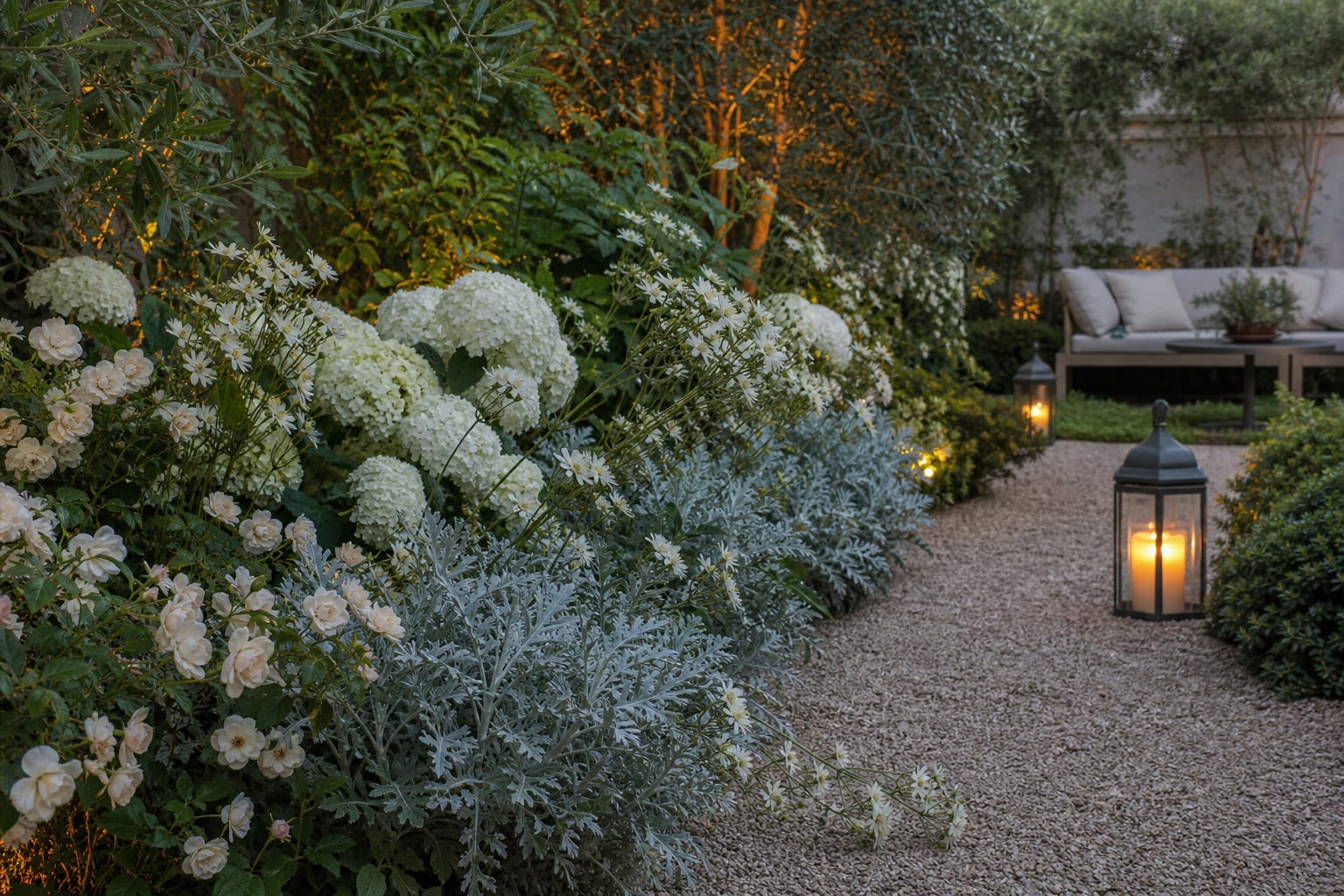
Test this on your own photo with ReDesign before committing to a direction — keep the house edge, horizon line, hardscape, and main path visible so the preview solves the space you actually have.
Five evening garden ideas worth trying
- Run a pale gravel ribbon beside dark planting at roughly 40mm depth over a compacted base so it stays firm underfoot.
- Place one white-flowering shrub at the end of a view — a compact hydrangea under 1.2m works for a small patio border.
- Edge the first 300mm of a path with silver foliage, repeating the same plant every 600-900mm rather than mixing varieties.
- Back pale planting with a dark surface — charcoal-stained timber, yew, or dark brick — so white flowers have contrast to glow against.
- Add scent at nose and knee height by planting jasmine, nicotiana, lavender, or night phlox within arm's reach of a bench, clear of foot traffic.
A moon garden that peaks in June but fades by September is too fragile. Add autumn interest with white anemones, pale grasses, and late hydrangea flowers — see fall garden design ideas with late-season structure for timing that carries the garden past summer.
Common moon garden mistakes to avoid
- All-white planting looks harsh in daylight. Mix in silver foliage and one dark evergreen for contrast.
- Cool white lighting kills the mood. Use warm 2700K fittings hidden behind foliage or stones.
- Skipping the indoor view wastes the concept. Stand at the kitchen window at dusk and mark where your eye lands before buying plants.
- Scent without placement becomes clutter. Keep strong fragrance near seating but allow airflow so damp corners don't trap mildew.
- Ignoring upkeep dulls pale gardens fast. Deadhead weekly in peak season, mulch with 50mm of bark or gravel, and clean algae off paving.
Watch symmetry too — two matching white planters by a door look crisp, but four identical shrubs marching down a fence feel stiff. Let the same pale tone repeat at different heights and distances instead.
How can AI design help preview a moon garden?
AI design helps because the hardest part is judging glow and sightlines before plants mature. Upload a dusk or late-afternoon photo of the patio or path, then generate a version with pale gravel, white flowering shrubs, silver edging, and a darker backdrop from the same angle.
Use the preview for composition, not final horticultural decisions — it can show whether pale planting belongs at the path bend or the far fence, but it won't know your frost pocket, soil pH, or local plant restrictions. Try a prompt like: "small moon garden viewed from patio door, pale gravel path, white hydrangea, silver artemisia, dark evergreen backdrop, warm 2700K path lights." Compare it against a no-lighting version and an all-annual version to see where depth actually comes from.
Renters can preview container groupings instead: three pots between 450-600mm wide, one climber on a movable trellis, and a pale rug under the seating area. Owners should preview permanent moves first — path color, bed width, hedge backing, and cable routes — before a spade touches the lawn.
Frequently Asked Questions
What plants belong in a moon garden?
White-flowering nicotiana, moonflower vine, white phlox, casa blanca lily, silver lamb's ear, and dusty miller are enough — six plants, densely massed, outperform a botanical-garden mix every time.
Does a moon garden need shade?
No. Most moon garden plants need 4-6 hours of sun to bloom, so site the bed where evening light still reaches it before dusk, not in deep shade.
What fragrant plants work best for evening gardens?
Nicotiana sylvestris, moonflower vine, jasmine, four o'clocks, and angel's trumpet release their strongest scent after sunset and define a fragrant moon garden.
How do I light a moon garden?
Skip overhead fixtures. Use 2200-2700K downlit path bollards plus one or two uplights on a focal tree, since bright fixtures wash out the moonlit reading of white blooms.
Where should a moon garden go?
Place it beside where you actually sit in the evening — patio, deck, or porch — within 15-25ft of an interior window facing the bed, so it reads from indoors as well as outside.
> Try this: Ready to see this on your own outdoor space? Open ReDesign and run the preview before you buy materials, plant, drill, or move furniture.
Three transformations to try
1. Moon garden border at dusk 2. White and silver border with path lighting 3. Patio-edge moon garden with fragrant climbers