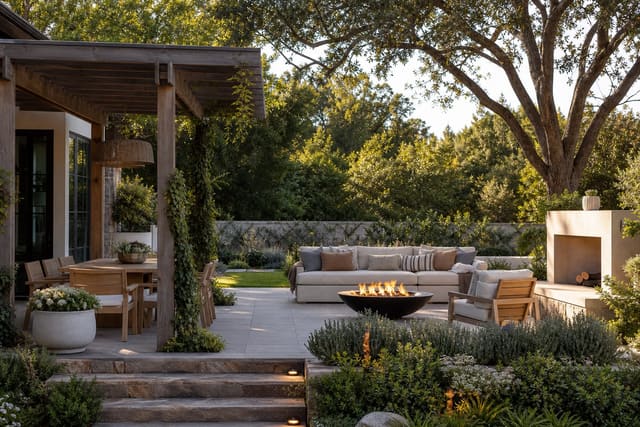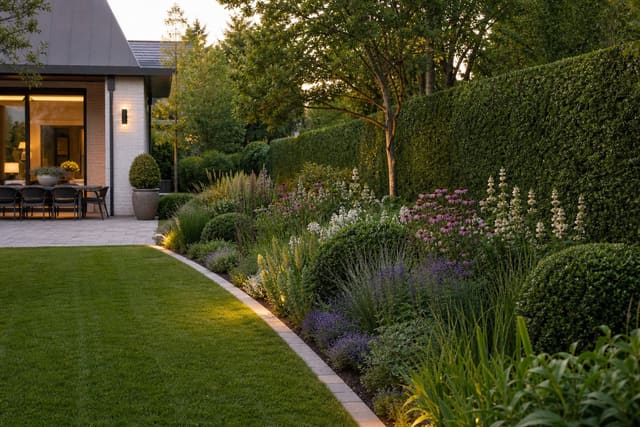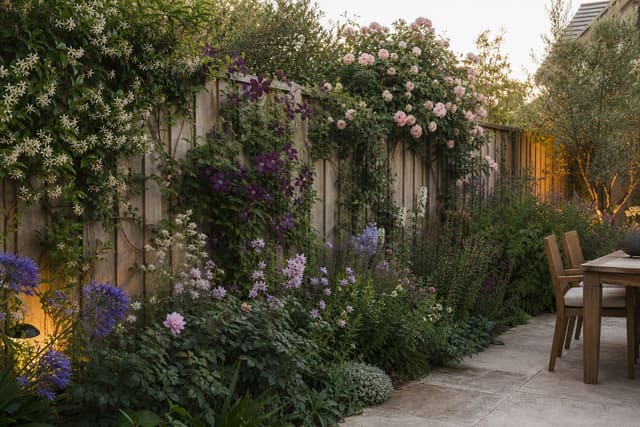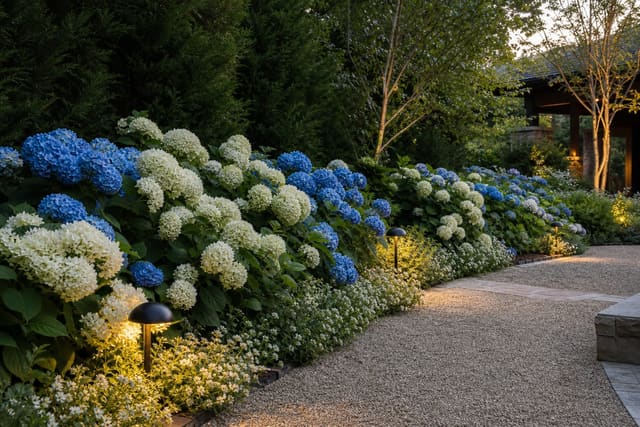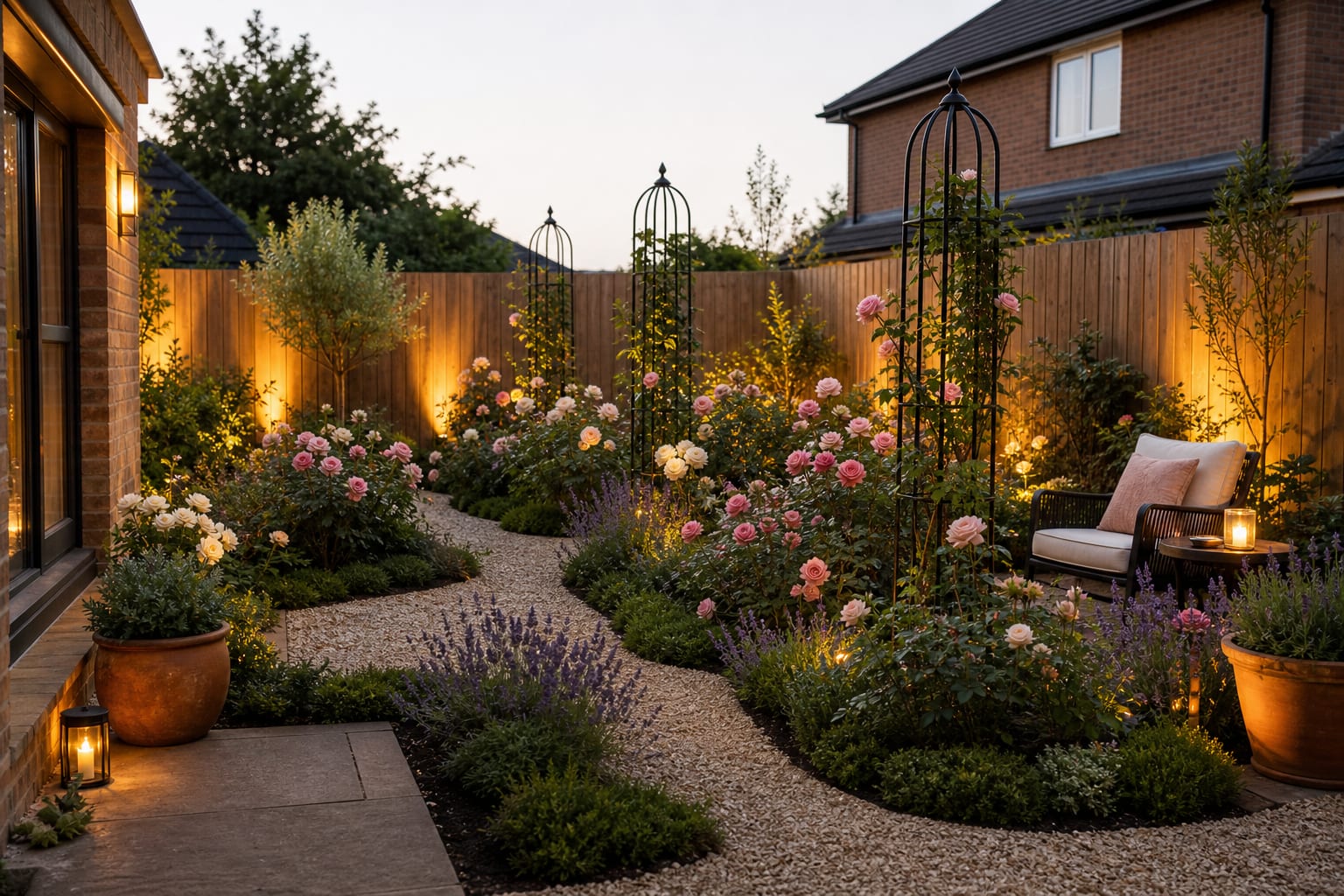
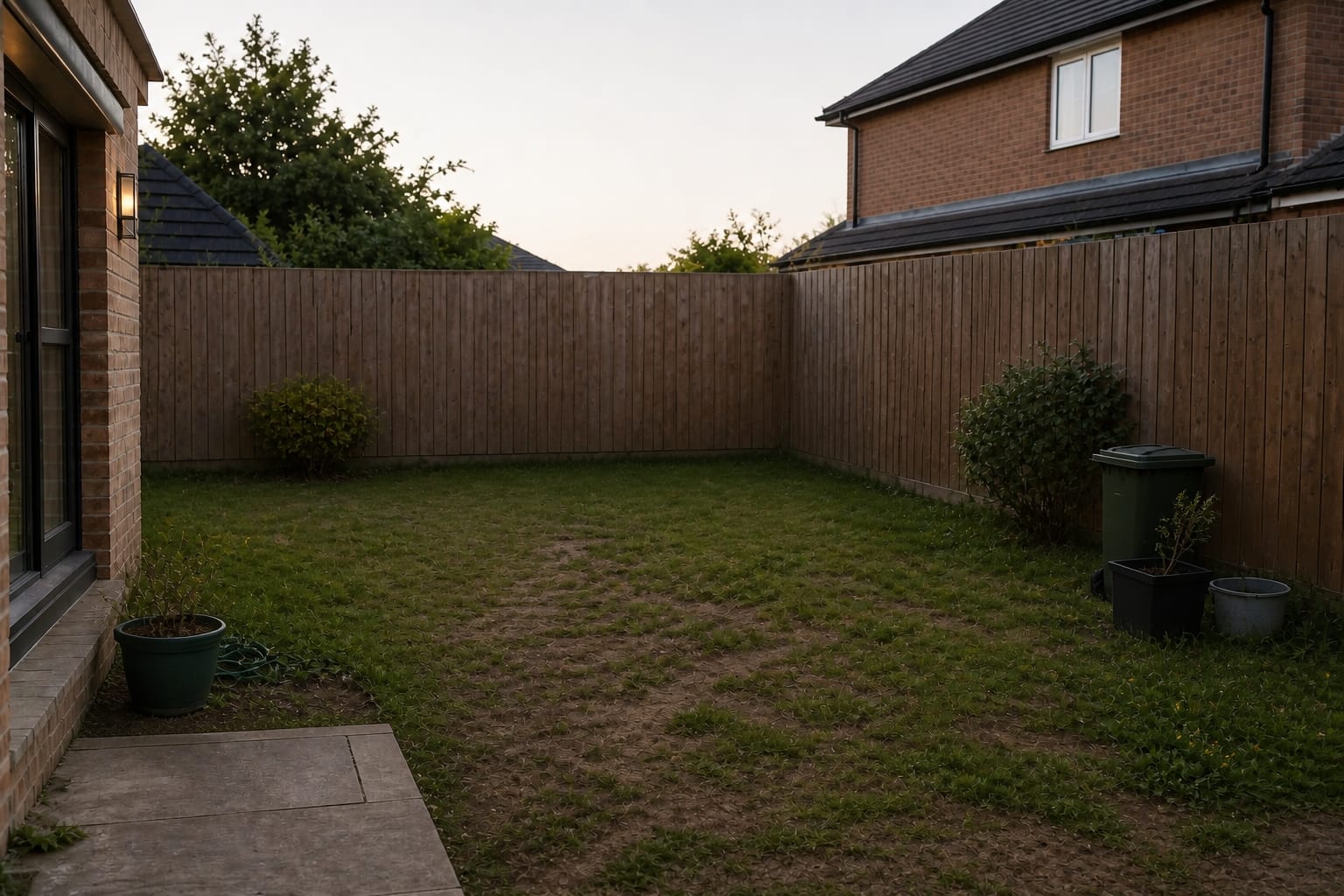
Rose garden design ideas work best when structure comes first: anchor beds with a clear layout, choose three to five rose varieties by mature size, add companion plants like lavender or catmint for coverage, and prune for airflow each spring. Treat roses as architecture, not a shopping list of blooms, and the garden reads as designed year-round.
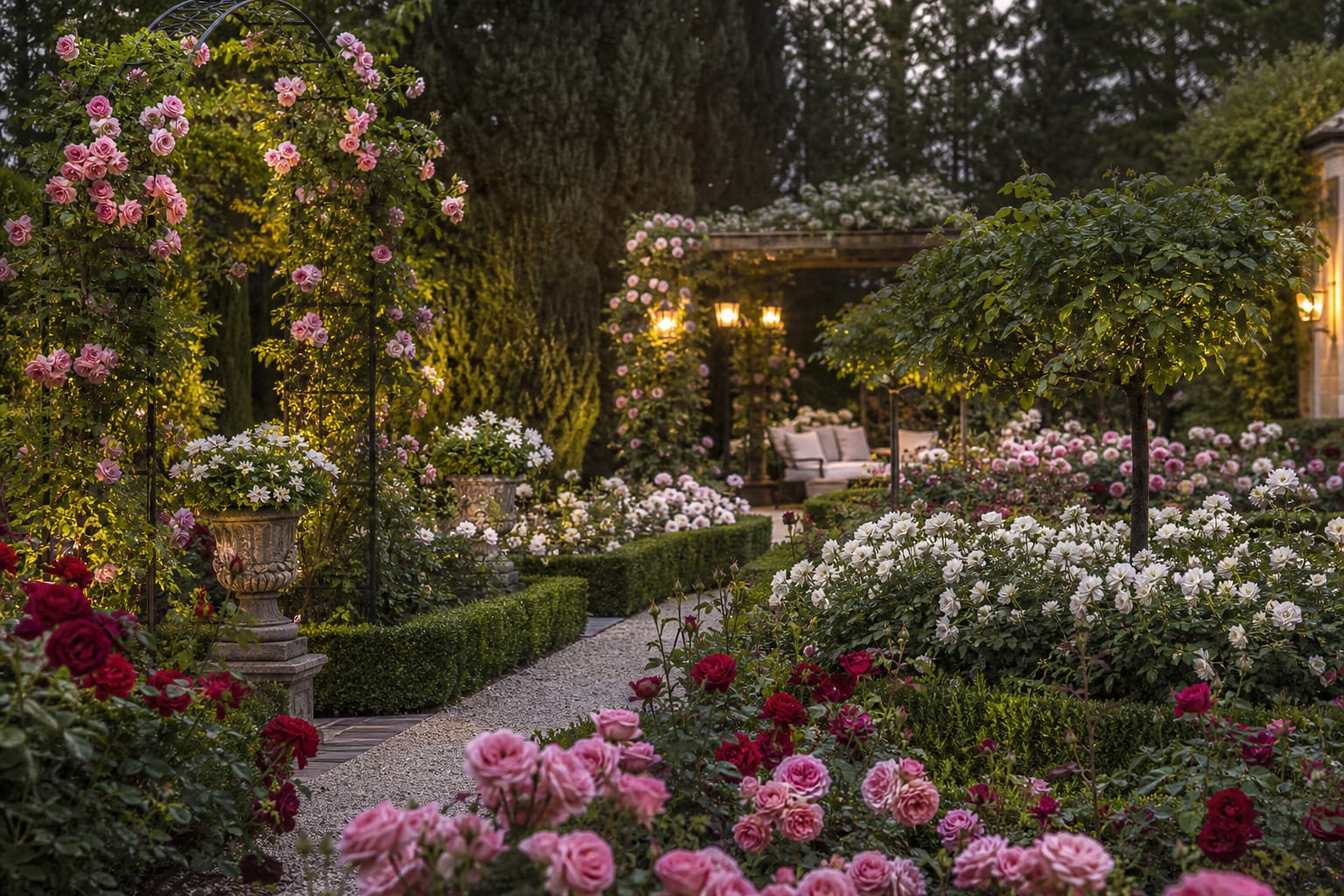
How do I design a rose garden that feels intentional?
Start with the path, not the plant catalog. A main garden path should be at least 900mm wide if two people or tools need to pass, while a secondary picking path can be closer to 600mm. Keep beds deep enough for the roses you want: a small shrub border works around 1.2m deep, but a layered rose-and-perennial bed needs 1.5m to 1.8m.
If your available strip is only 450mm deep, use climbers on wires, compact patio roses, or containers instead of forcing a full shrub border. A formal rose garden usually works because the geometry is simple: four beds around a cross path, a central urn, or a pair of matching arches. Modern planting softens that structure with grasses, salvias, catmint, and low evergreen mounds, so the discipline lives in the layout while the looseness lives in the planting.
Which rose garden layout suits your yard?
The best layout matches how you move through the yard, since roses are unforgiving when planted where people brush past daily. Keep thorny canes at least 300mm back from a path edge, and give climbers room to be tied in horizontally rather than forced up a single vertical cane.
A small courtyard can take one strong move, such as a gravel square with four repeated shrub roses in the corners. A suburban garden can handle a longer border with climbers on the fence and low perennials at the front, while a front garden often looks better with a restrained rose hedge or paired standards than a chaotic color mix.
Five layouts worth trying:
- Cross-path rose garden: keep each path at least 900mm wide with brick or gravel edging so mulch stays off the walking line.
- Entry arch with climbers: use an arch around 1.2m wide and 2.1m to 2.4m high so the plant matures without scraping shoulders.
- Single-color shrub border along a fence: set roses forward for airflow and place companions in the first 300mm to 450mm of the bed.
- Roses paired with hydrangeas, but only in a generous bed; borrow the scale logic from hydrangea garden design ideas and let one plant family lead.
- A moonlit rose corner near evening seating, using pale roses and silver foliage; the restraint in moon garden ideas for outdoor rooms suits white and blush rose schemes especially well.
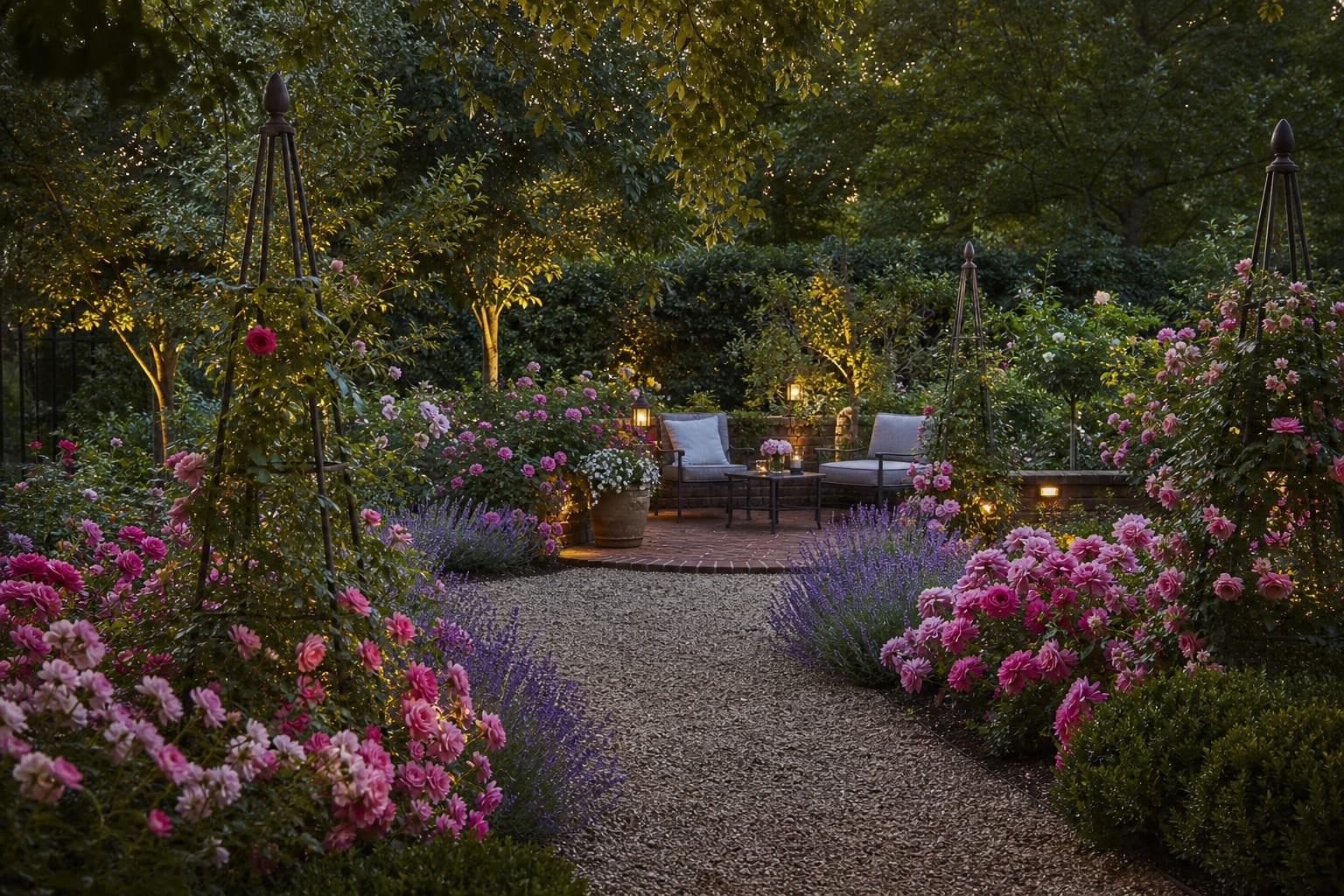
Test this on your own photo with ReDesign before choosing a final direction; keep the house edge, horizon line, hardscape, and main path visible so the preview solves the space you actually have.
What should you plant with roses so the design lasts?
Companion planting is what turns a rose display into a garden. Roses bloom in cycles and often have bare lower stems, so a tight companion palette works best: one low edging plant, one airy perennial, one evergreen shape, and one seasonal accent.
Low plants like nepeta, hardy geranium, thyme, alchemilla, or compact lavender can sit near the front if they don't smother the rose crown. Keep mulch around 50mm deep but away from woody stems, and don't crowd companions so tightly that air can't move through the foliage — that's what invites black spot.
For permanent structure, add dwarf evergreens, rosemary, small grasses, or repeated metal obelisks. A modern rose garden often reads cleaner with rusted steel edging and black metal supports, while a traditional space suits brick paths and timber arches.
Edit your color palette. One main rose color family, shifted by companions, beats a restless mix of five hues: blue-purple salvias cool pink roses, silver foliage sharpens white roses, and apricot roses look richer beside bronze fennel or warm brick. Add asters, sedum, grasses, or seed heads so the bed doesn't collapse after the first flush; the timing ideas in fall garden design with late-season structure translate well around roses.
Design-check shorthand: - Depth before decoration. - Repetition before variety. - Maintenance before novelty.
Common rose garden mistakes to avoid
Most rose garden mistakes come from underestimating mature size and the access roses need. A young rose in a 4-liter pot looks innocent but can become a maintenance problem within two seasons if the layout is too tight.
Planting roses too close to paths is the most irritating error — wet canes and thorns catch clothing and skin, and people start avoiding the garden. Move the rose back or widen the path instead. Mixing too many varieties also weakens the design; one each of nine roses loses rhythm, so repeat the best performers in groups of three or five and let companions carry the variation.
Installing supports late is a false economy. Put wires, arches, or obelisks in place before the climber needs them, and leave a small gap between trellis and wall for airflow, since horizontal training produces more flowering shoots than a single vertical cane. Finally, don't forget the winter view: roses get pruned hard, so evergreen edging, gravel, or a clipped feature needs to carry the dormant months, and too many arches or ornaments can tip a romantic bed into theatrical.
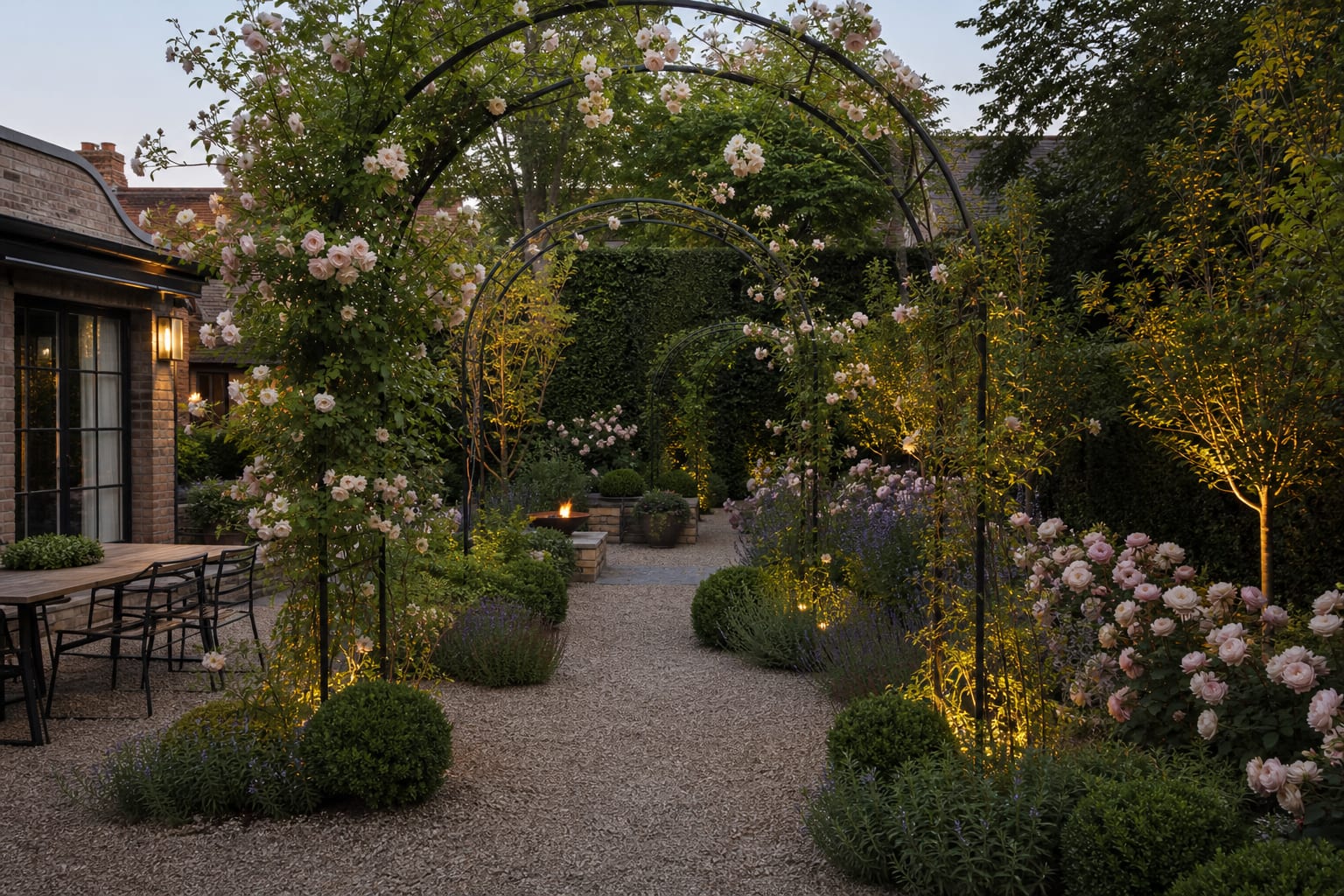
Use AI design to test the rose garden before you dig
AI design is useful here because the costly choices are layout, supports, bed shape, and color balance. Upload a straight-on photo of the fence line, lawn corner, or patio edge, then preview the same view with a formal cross path, climbing roses on arches, or a softer cottage border.
Treat the image as a composition test, not a plant guarantee: it can show whether an arch belongs at the gate or whether blush roses disappear against pale paving, but it can't confirm disease resistance, hardiness, or bloom timing. Give the prompt real constraints — small rose garden beside patio, 1.5m deep beds, gravel path 900mm wide, three repeated pink shrub roses, black metal obelisks, low nepeta edging, warm 2700K path lighting — then compare a white rose version, a red rose version, and a container layout if you rent.
Frequently Asked Questions
How much sun do roses need?
Six hours of direct sun is the floor for repeat-blooming garden roses. Less than that and bloom drops sharply while disease pressure rises, so choose the sunniest available spot before finalizing the layout.
Which roses are easiest to grow?
Shrub roses bred for disease resistance — Knock Out, Drift, At Last, and the David Austin English roses — handle most climates with minimal spray. Hybrid teas look showier but need more consistent care to stay healthy.
How far apart should roses be planted?
Space shrub roses 3-4ft on center, floribundas 2-3ft apart, and climbers 4-6ft apart. Air movement between plants is the biggest predictor of disease pressure, so err on the wider side in humid climates.
What plants pair with roses?
Lavender, catmint, salvia, and alliums work well as a middle layer, with boxwood for a structured edge. Avoid crowding the rose base with thirsty annuals that compete for water and reduce airflow.
When should I prune roses?
Prune in late winter to early spring, roughly when forsythia blooms in your region. Cut back to outward-facing buds, remove crossing branches, and aim for an open vase shape that lets light reach the center of the plant.
> Try this: Ready to see this on your own outdoor space? Open ReDesign and run the preview before you buy materials, plant, drill, or move furniture.
Three transformations to try
1. Formal rose garden with boxwood frame