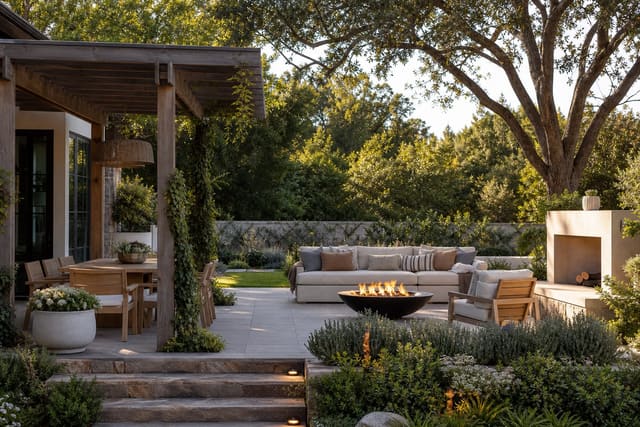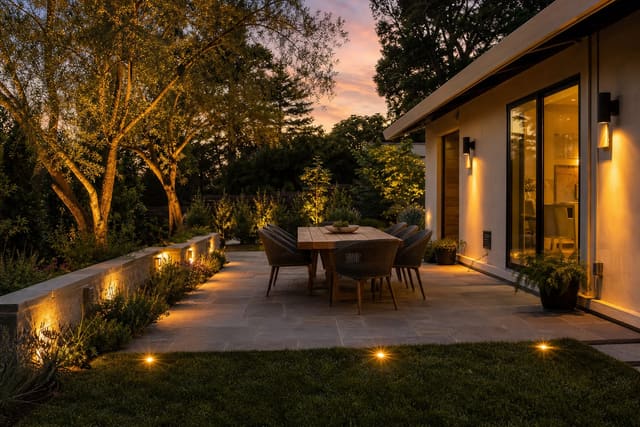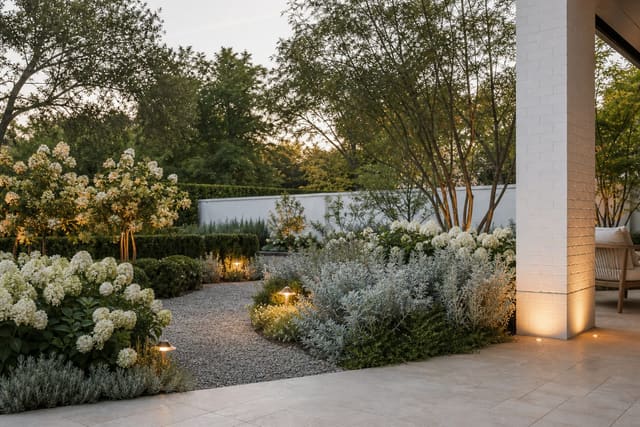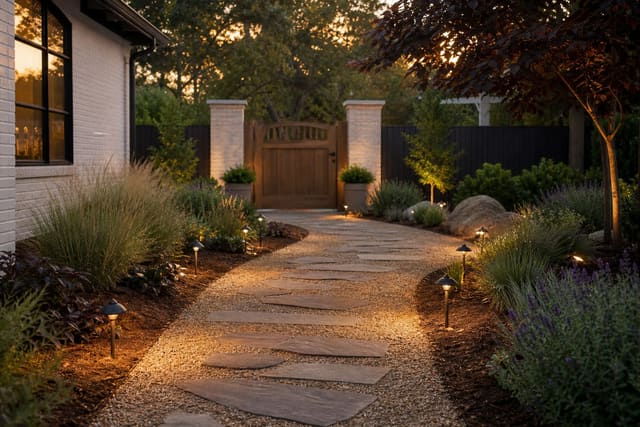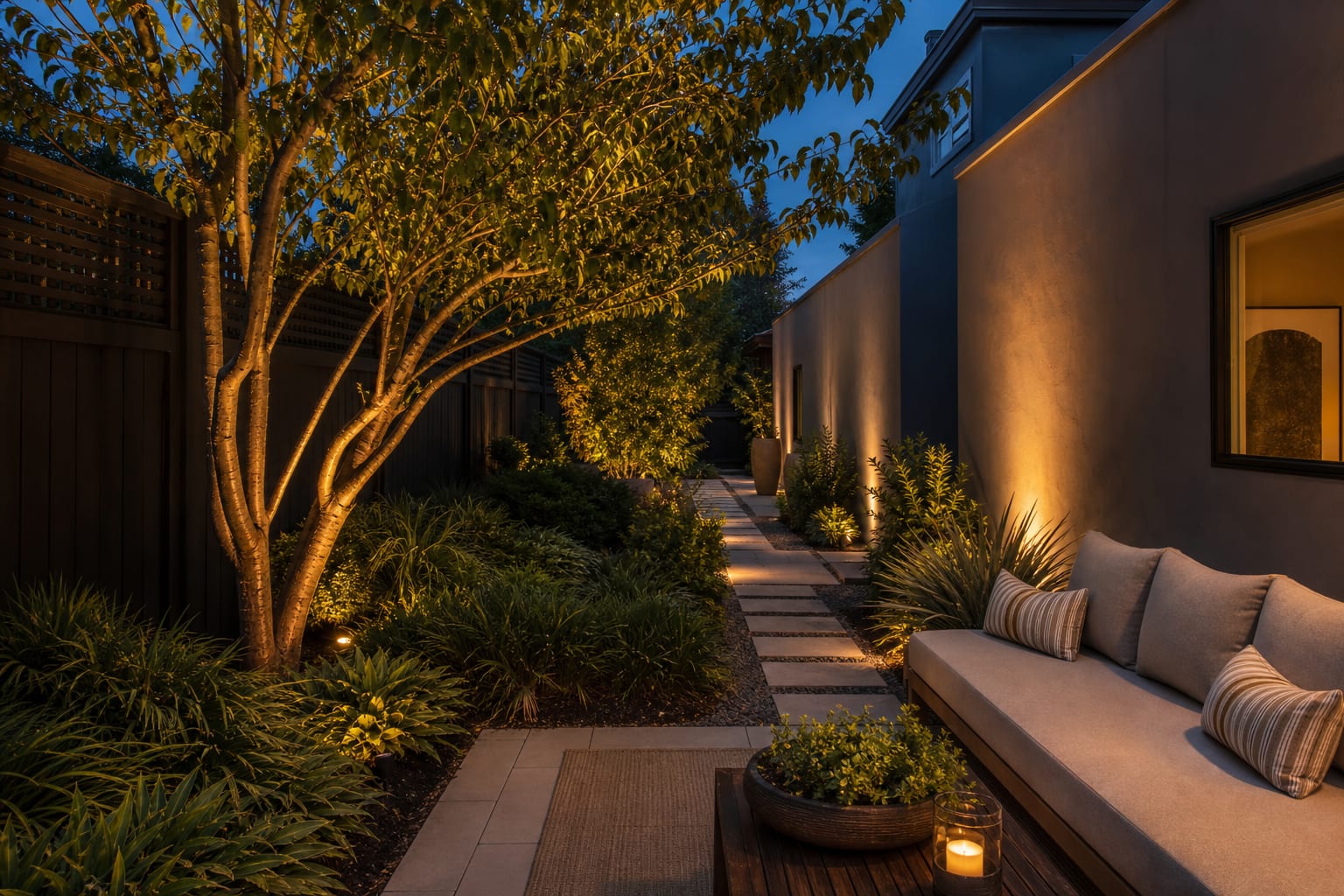
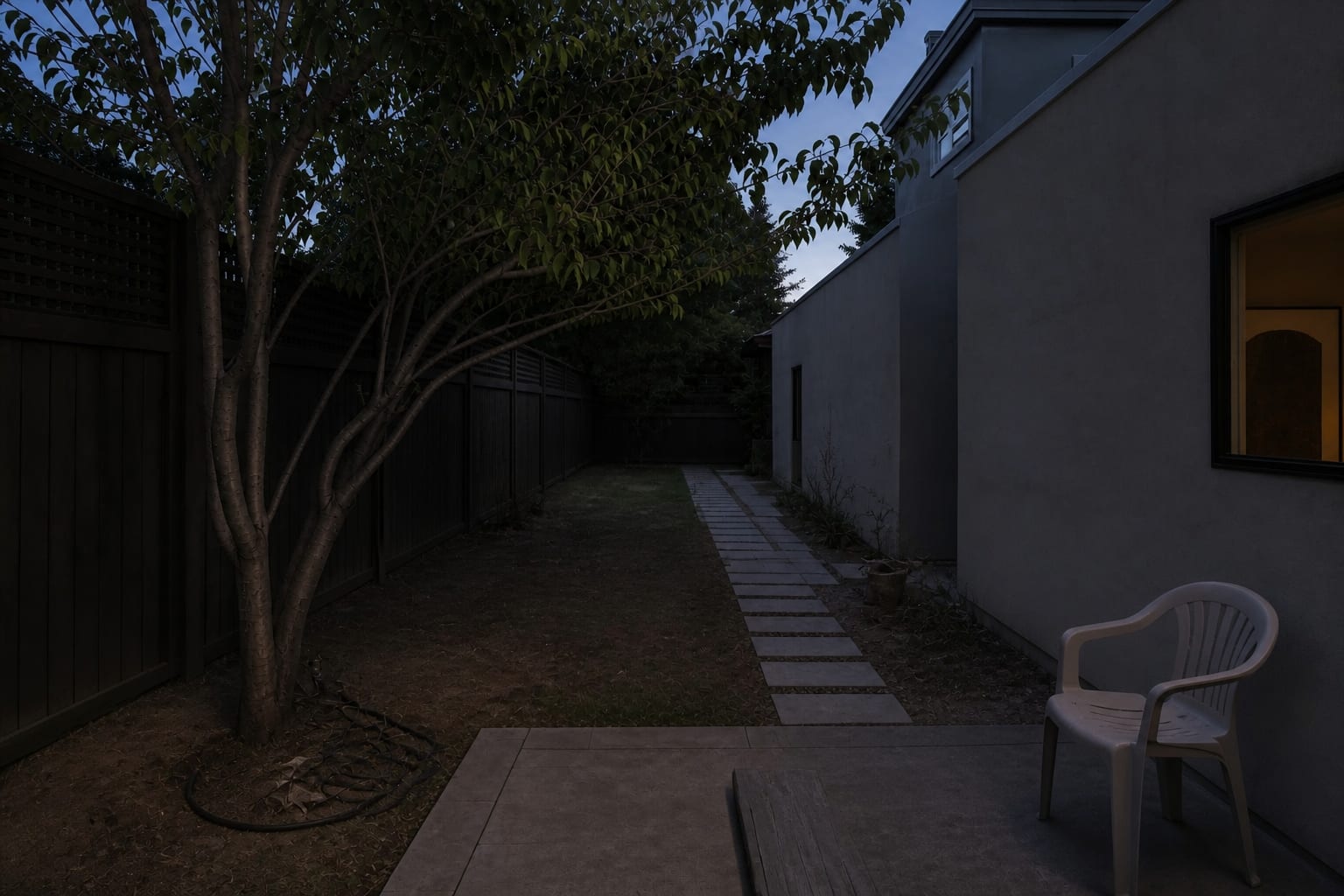
Landscape uplighting works best when you pick three to five features, use warm 2700K fixtures with shielded glare control, and set lumens at 200-500 for trees and 50-150 for shrubs. Place each fixture 12-24 inches off the base with the beam aimed away from the viewer, run everything off a low-voltage transformer, and leave darkness between beams so a few lit trunks and walls do more work than a dozen bright ones.
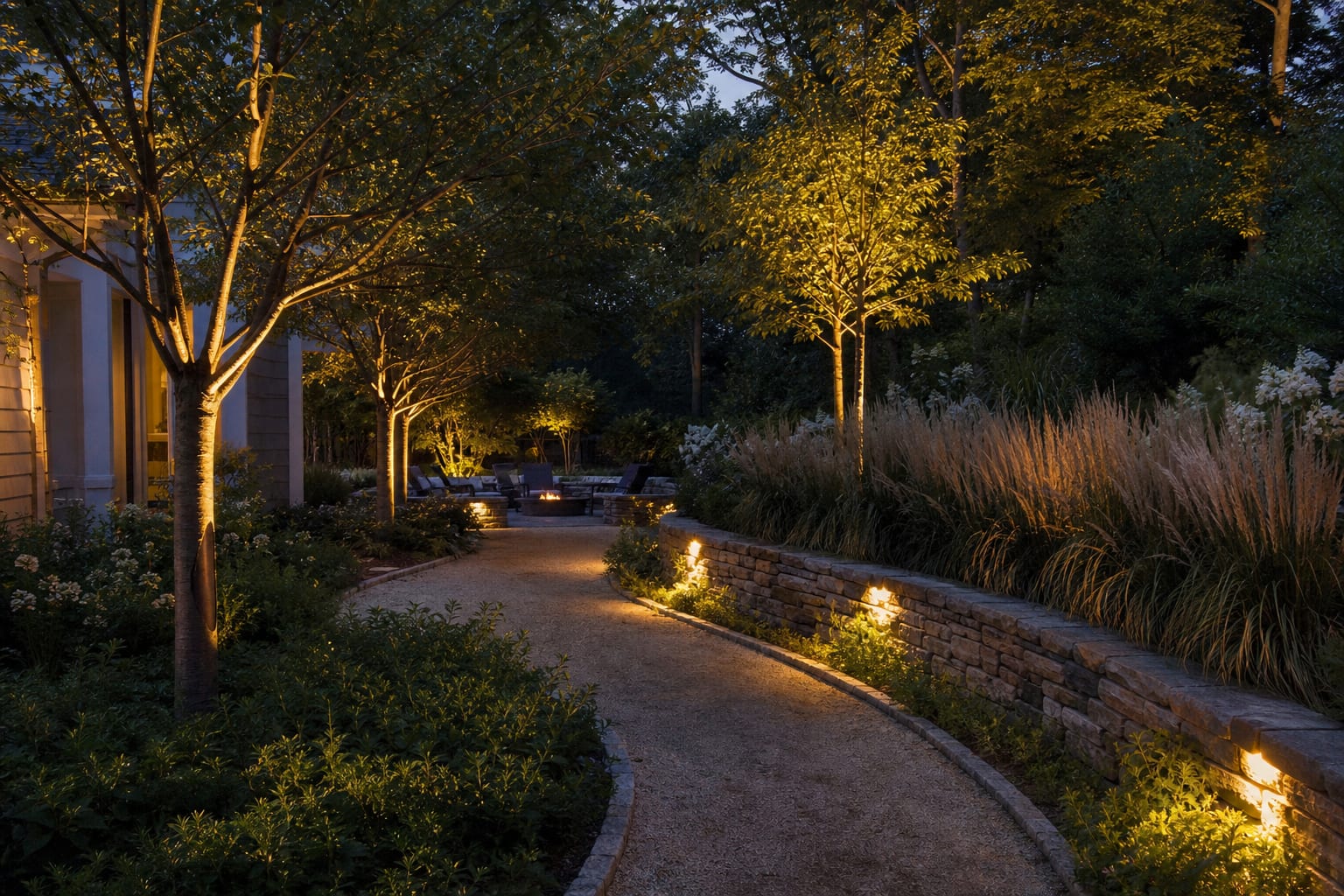
What makes garden uplighting look intentional instead of spooky?
Intentional uplighting lights the object that deserves attention, not the mulch around it. Keep 6 to 10 feet of visual rest between major accents in a small yard; lighting every shrub kills hierarchy and turns a house into a commercial entrance.
Use uplights for vertical drama, path lights for walking comfort, and step lights only where a level change is risky. Pair uplights with low path lights that create softer pools instead of asking tree fixtures to handle circulation.
| Lighting move | Best use | Spec to copy |
|---|---|---|
| Narrow accent beam | Tall tree trunks or columns | 10° to 20° beam spread |
| Medium uplight | Small trees and large shrubs | 25° to 40° beam spread |
| Wall graze | Stone, brick, board-formed concrete | Fixture 6 to 12 inches from surface |
| Soft wash | Broad hedge or fence backdrop | Fixture 18 to 36 inches away |
Leave lawn panels, gravel, and low groundcovers mostly unlit unless they guide movement. That negative space silhouettes the lit trees and structures instead of flattening the yard into one bright sheet.
Where should tree uplighting outdoor fixtures go?
For a single young tree, start with one adjustable spot 12 to 18 inches from the trunk, aimed off-center so bark gets texture instead of a flat stripe. For a mature tree with a 20-foot canopy, use two lower-output fixtures on opposite sides rather than one fixture blasting the middle.
Deciduous trees like lacebark elm, crape myrtle, or Japanese maple reward a tighter beam since bark and branching matter. Dense evergreens and clipped hedges look better with a wider 30° to 40° beam placed 18 to 30 inches out, since the solid surface absorbs light fast.
In-ground uplights near paving look quiet but need drainage, a gravel base, and a cleanable lens, or leaves and irrigation overspray muddy the beam. In lawn areas, a slightly raised, shielded fixture is safer unless the mowing crew is careful.
Shrubs need fewer uplights than people think: one multi-stem shrub at a patio corner reads well, six identical lit shrubs look nervous and repetitive. For night privacy, combine one or two uplights with a privacy trellis with climbing plants so the light catches something better than bare fence.
Test this on your own photo with ReDesign before finalizing placement; keep the house edge, horizon, hardscape, beds, and main path visible so the preview solves your actual space.
The five landscape uplighting ideas worth copying
Each idea below has a clear subject, a beam strategy, and a reason to exist after sunset.
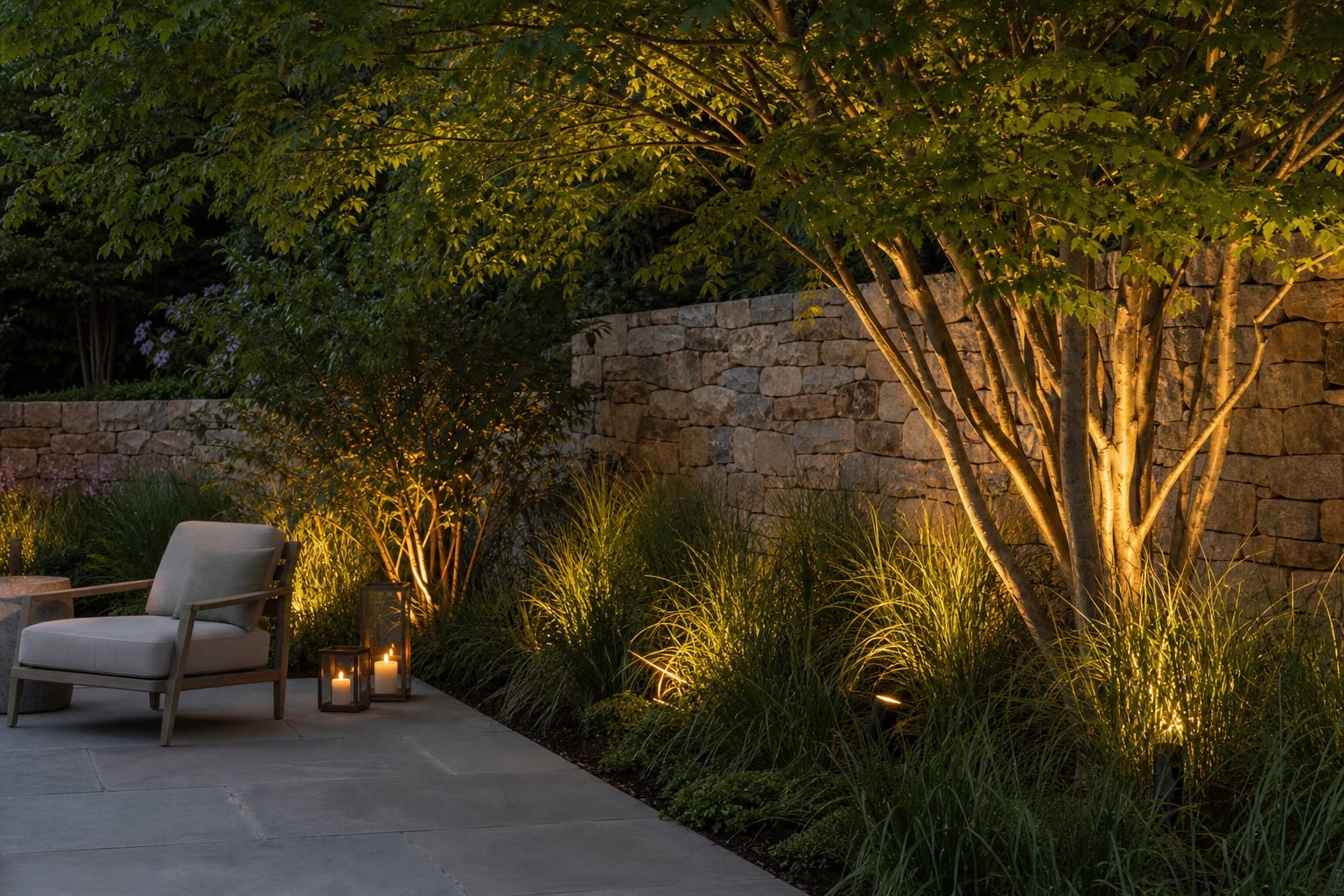
- Uplight one sculptural tree at a path's end. A 2700K narrow-beam fixture 12-24 inches from the trunk, aimed through the branching, makes the tree a destination without lighting the whole path.
- Graze a stone or brick wall from close range. Fixtures 6-10 inches off the surface with shields facing the viewer catch mortar joints and relief far better than a floodlight across the bed.
- Backlight ornamental grasses instead of front-lighting them. Put the beam behind or beside miscanthus, fountain grass, or muhly, low enough that seed heads glow while the fixture stays hidden.
- Pair uplights on a pergola post or column. A 20°-30° beam on each side defines the structure without lighting the whole patio ceiling.
- Highlight one large shrub where house meets garden. Keep the fixture 18-30 inches out, angled across the face, to soften a blank corner at night.
- 
Don't make every idea compete in the same sightline. Edit each view separately (kitchen window, patio sofa) and let the full yard connect as you move through it.
Common uplighting mistakes to avoid
- Aiming too vertically. A straight-up beam creates a hard column and misses bark or texture; tilt 5-15 degrees toward the subject and check from house, patio, and sidewalk.
- Using lamps too cool or bright. Start at 2700K-3000K and low output; reserve stronger lamps for tall trees or deep canopies where light has somewhere to go.
- Ignoring steps near the lit view. Use dedicated outdoor step lighting with controlled glare and keep uplights focused on vertical form.
- Matching every trunk with identical fixtures. Vary distance, beam width, and brightness so mixed plant sizes don't all shout at once.
- Ignoring irrigation and maintenance. Keep fixtures out of sprinkler spray, leave cable slack for growth, and don't bury adjustable heads under mulch.
Use AI design to preview garden lighting before you trench
Upload a dusk photo and test scenarios: one lit tree, a grazed wall, a darker path, a brighter pergola post. The preview won't replace a lighting professional's beam calculations, but it reveals composition errors before you cut sod, run 12-volt cable, or core-drill a paver.
Shoot from where you actually notice the yard: patio chair, kitchen window, front walk, or bedroom balcony. Keep the camera level, include the full canopy, and shoot before the garden goes completely black. Compare versions where the brightest point is the tree, the wall, or the seating area; the right version usually has fewer lit objects than expected.
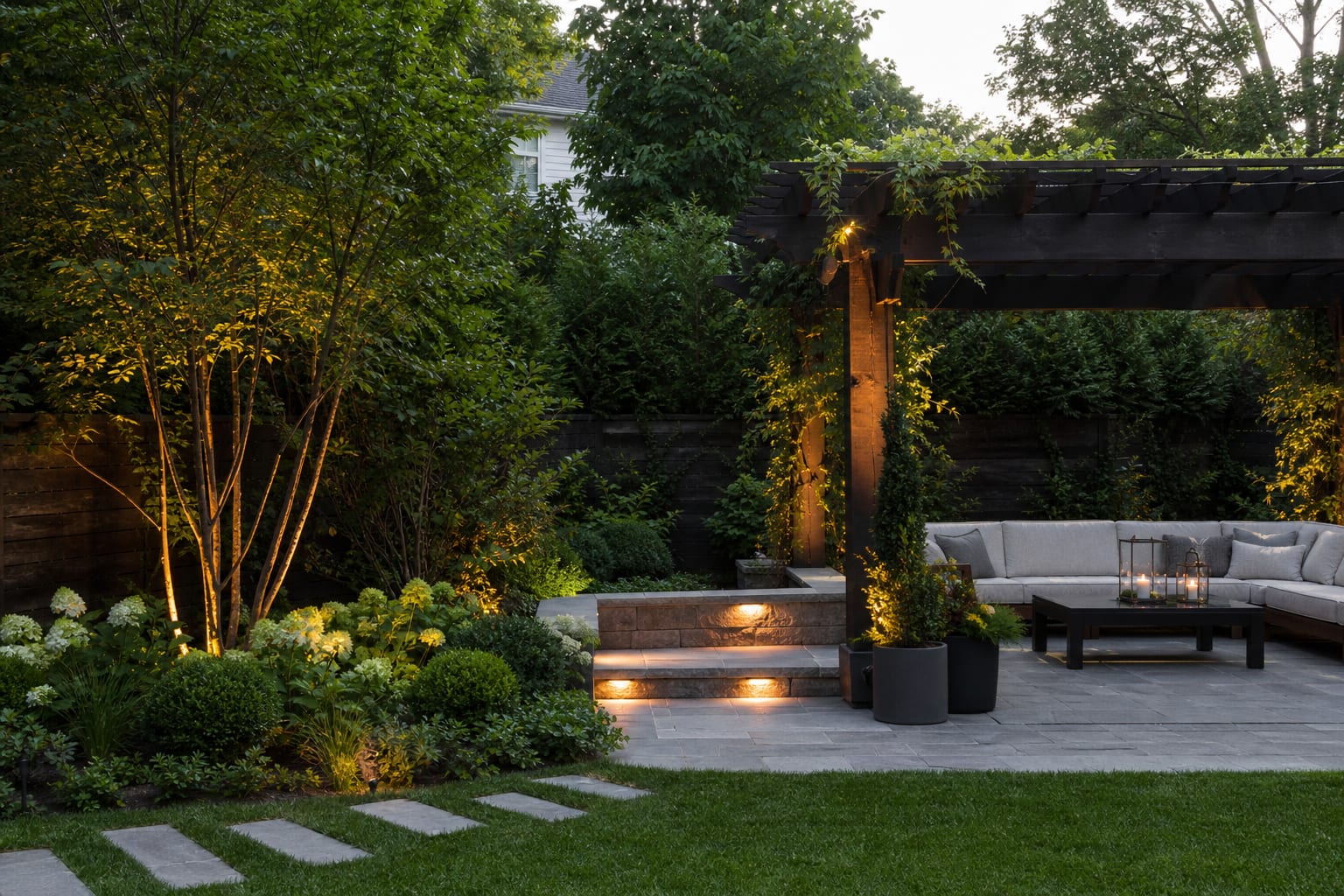
Once the layout feels right, mark approximate locations with stakes, test clamp lights or battery spots for beam direction, and walk the garden after dark before buying recessed cans. An extra night of testing is cheaper than moving conduit later.
Frequently Asked Questions
What features should I uplight in a yard?
Light three to five high-impact features, such as a specimen tree, an architectural detail, a textured wall, or a sculpture, not every plant. Saturation lighting reads as a commercial property rather than a residential yard.
What color temperature works best for landscape uplighting?
Warm 2700K works best for residential settings since it reads inviting and matches interior light spilling outside. 3000K is acceptable, but anything above 3500K reads as commercial parking-lot light.
How bright should uplights be?
Use 200-500 lumens for trees over 15ft, 100-300 lumens for shrubs and accents, and 50-150 lumens for low plantings. Too bright and the feature blows out into a hot spot instead of showing texture.
Can I install landscape uplighting myself?
Yes, for low-voltage 12V kits, which don't require a licensed electrician beyond the transformer connection. Line-voltage 120V landscape lights need professional installation in most jurisdictions.
Will landscape uplighting bother my neighbors?
Yes, if fixtures are unshielded or aimed toward property lines. Use full-cutoff or shrouded fixtures aimed downward or onto your own architecture; light spilling into a bedroom window will end the neighborly relationship.
> Try this: Ready to see this on your own outdoor space? Open ReDesign and run the preview before you buy materials, plant, drill, or move furniture.
Three transformations to try
1. Front yard with three-tree uplighting