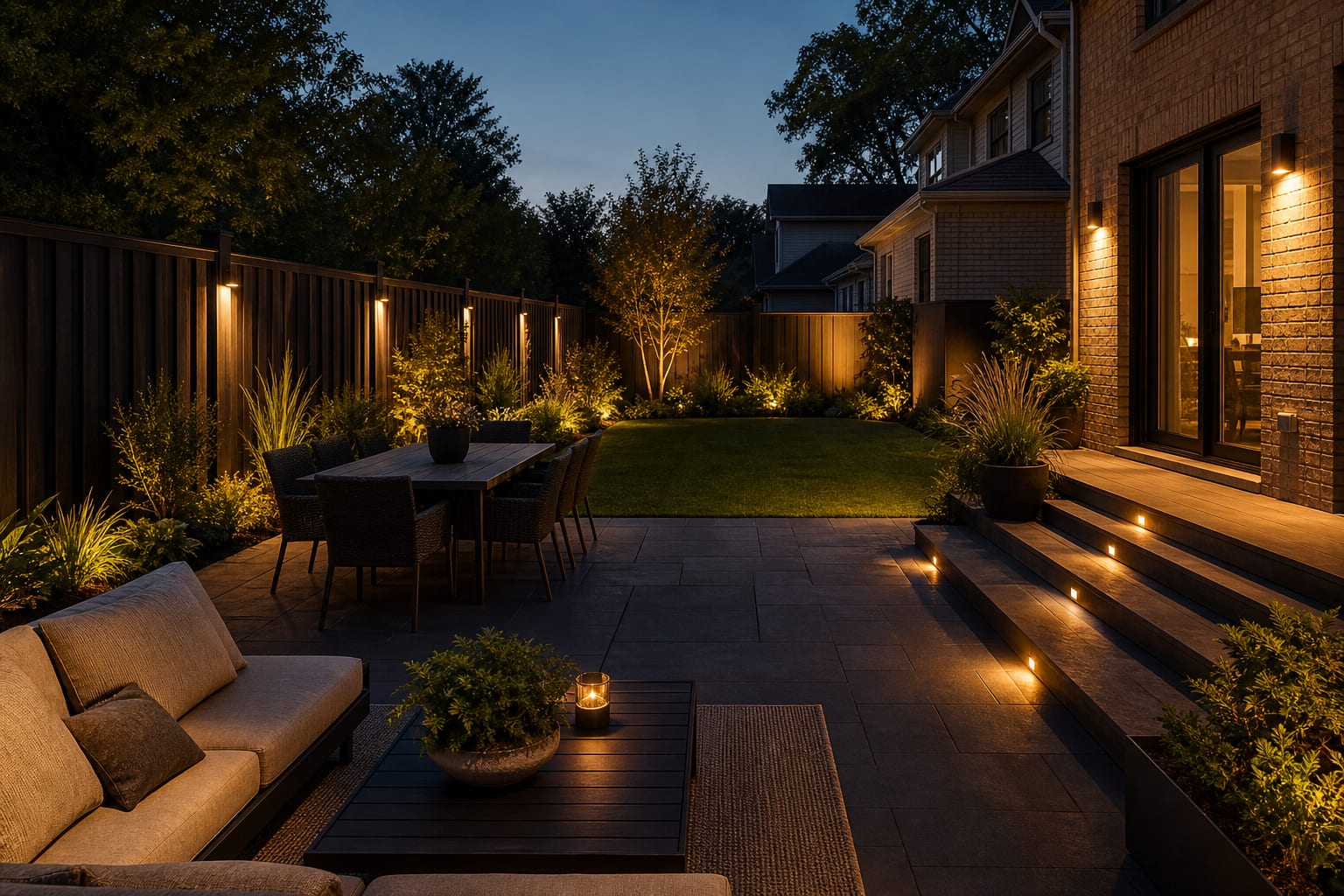
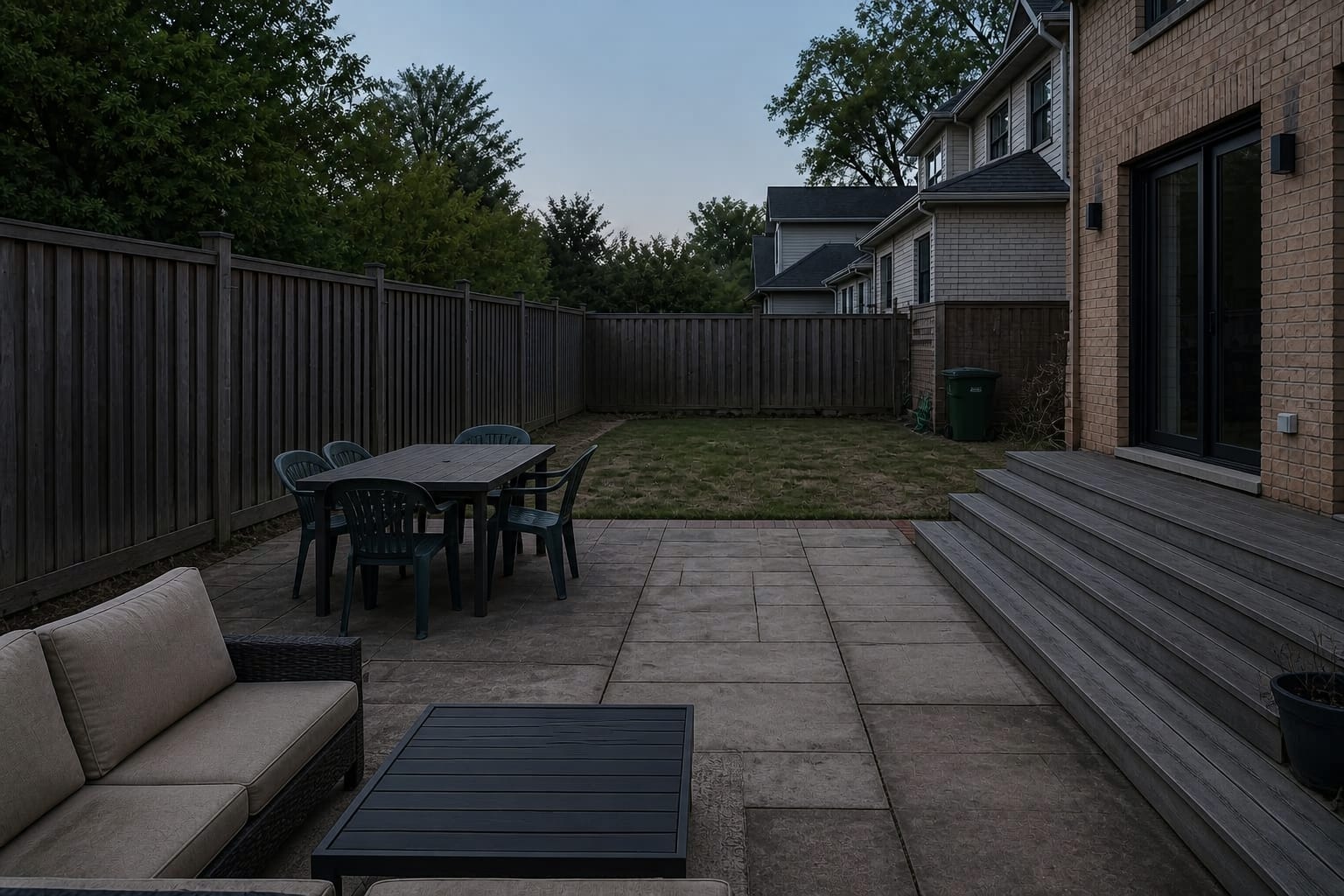
The smartest outdoor lighting system is a low-voltage, zoned plan with warm dimmable fixtures, motion sensors only where they solve safety, and controls simple enough that guests don't need instructions. Smart outdoor lighting ideas should make the backyard easier to use after dark while keeping glare, wasted energy, and neighbor annoyance under control. This guide compares system choices and shows where app-controlled outdoor lights actually earn their keep.
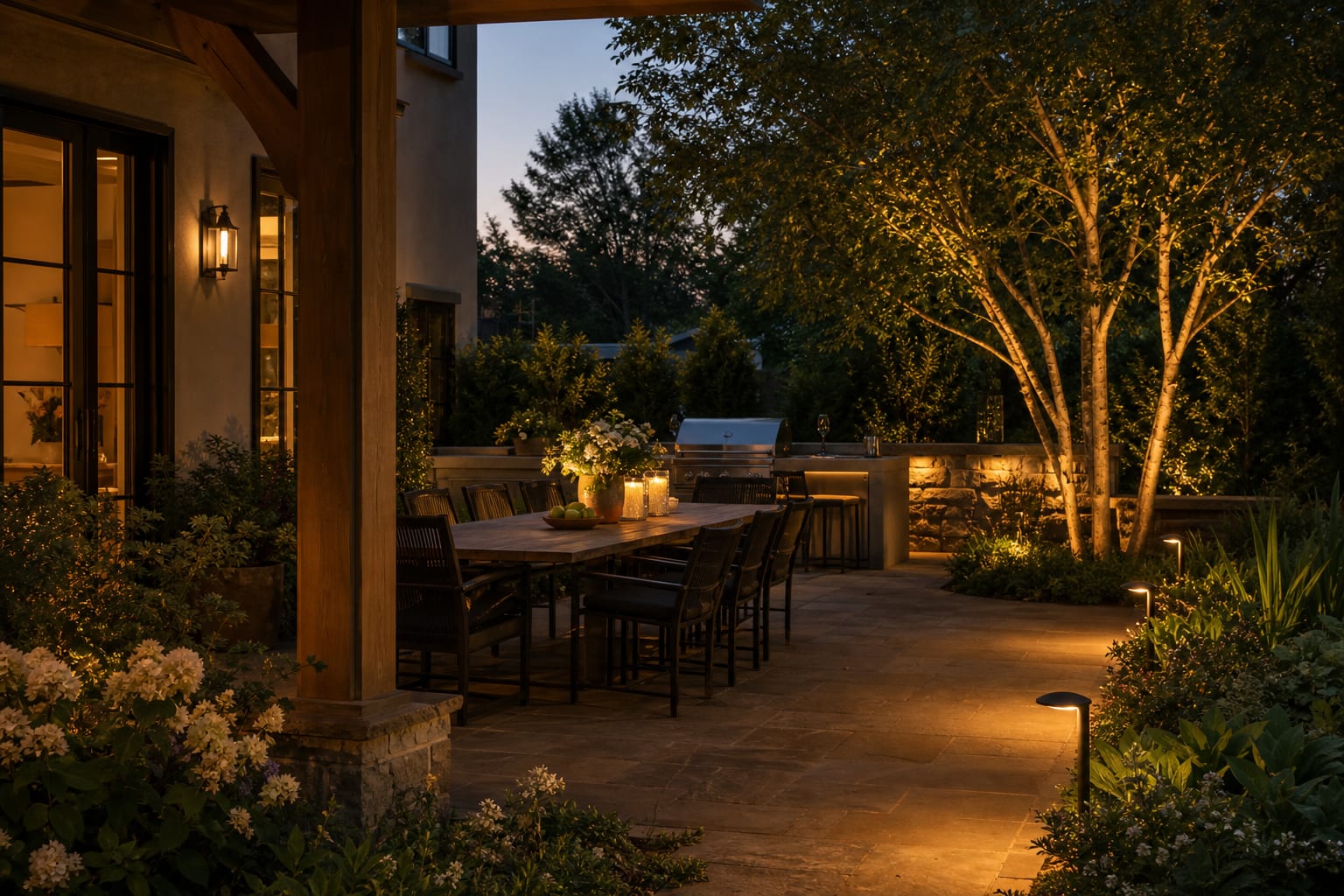
What makes smart outdoor lighting feel designed instead of gadgety?
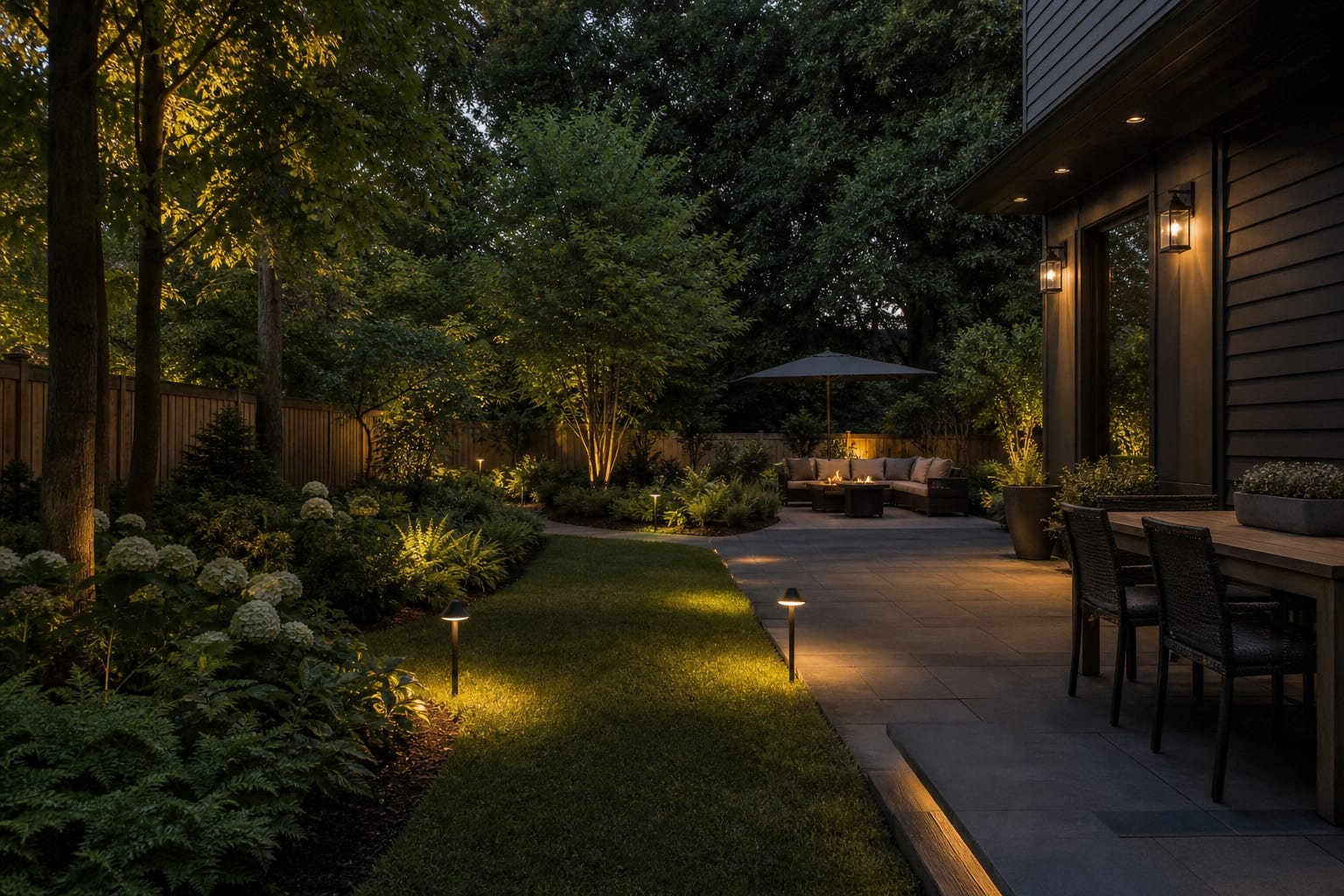
Smart outdoor lighting feels designed when technology follows the yard's layout rather than becoming the main event. The best approach is usually hybrid: low-voltage smart landscape lighting for permanent paths and planting, hardwired or smart-bulb sconces at doors, and app-controlled plugs for flexible layers like string lights.
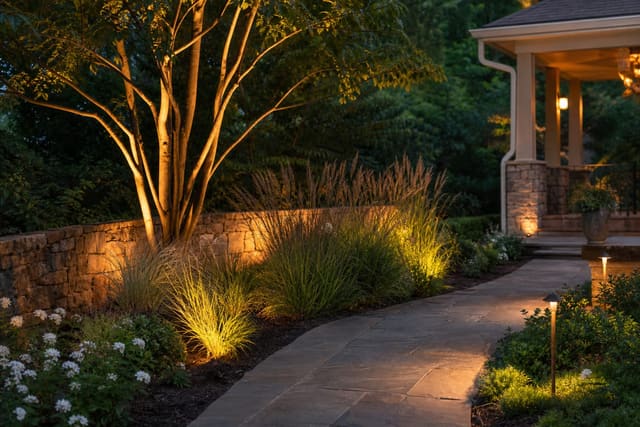
Start with the places bodies move through the yard: a path, a patio opening, a step transition. These need calmer, more reliable light than a decorative tree. After the safety route is readable, add mood where people sit. For a budget project, spend on the permanent layer first and let plug-in fixtures handle flexible moments — see backyard ideas that stay affordable.
| System choice | Best use | Spec to copy |
|---|---|---|
| Smart low-voltage transformer | Paths, beds, step runs, trees | 12V fixtures grouped into 2-4 zones |
| Smart outdoor bulbs | Existing porch sconces or covered pendants | 2700K warm white, dimmable, wet/damp rating as required |
| Smart outdoor plugs | String lights, lanterns, seasonal layers | Outdoor-rated plug with GFCI-protected outlet |
| Motion sensor fixture | Side gate, driveway walk, trash route | Aim below face height and away from neighbors |
The comparison that matters isn't app versus switch — it's permanent versus flexible. Permanent wiring should solve the nightly layout of the yard; flexible plugs and bulbs should let you change scenes without rebuilding the whole plan.
Which system should you choose for a real backyard?
Choose the system by asking how permanent the yard is, how many lighting jobs it has, and how much wiring you can tolerate. A Hue outdoor system suits homeowners who want polished app control and scenes without a professional controller, but it's less ideal for yards needing many long cable runs or mixed fixture types.
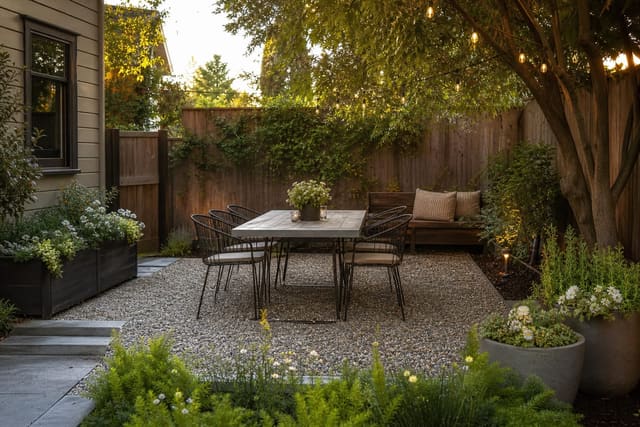
For a small patio or rental balcony, smart bulbs in existing sconces plus one outdoor smart plug may be enough. Put a warm dimmable bulb in the porch fixture, run string lights from a rated plug, and set two scenes: a 60% dinner scene and a 20% late-night scene. If privacy matters more than darkness, pair lighting with a physical screen like bamboo privacy screening.
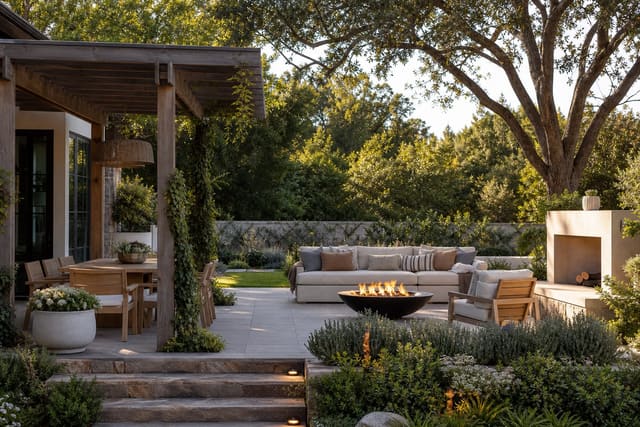
For a larger backyard, a smart low-voltage transformer controlling conventional landscape fixtures works better — path lights, shielded step lights, narrow tree accents, and wall washers from any landscape-lighting line. Set separate zones: circulation at 50-70%, seating at 30-60%, and planting accents at 20-40%.
Motion should be selective — driveway gate, trash enclosure, side door, stair landing. Avoid connecting mood fixtures to motion; sudden brightness bursts make a patio feel jumpy and can bother neighbors through windows.
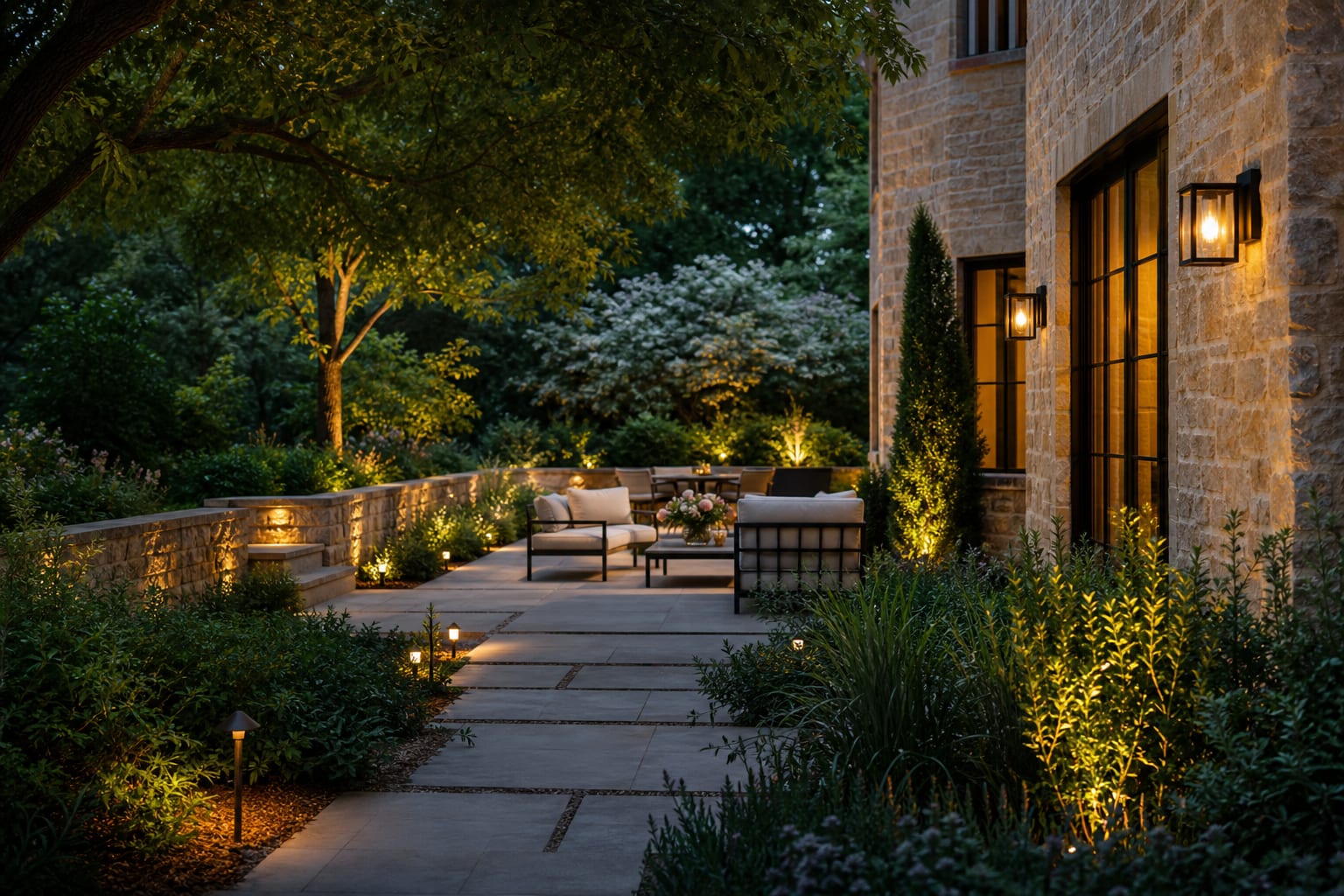
Test this on your own photo with ReDesign before choosing a final direction; keep the house edge, horizon, hardscape, planting beds, and main path visible.
Smart outdoor lighting ideas worth copying
These work because each gives the app a specific job instead of treating automation as decoration.
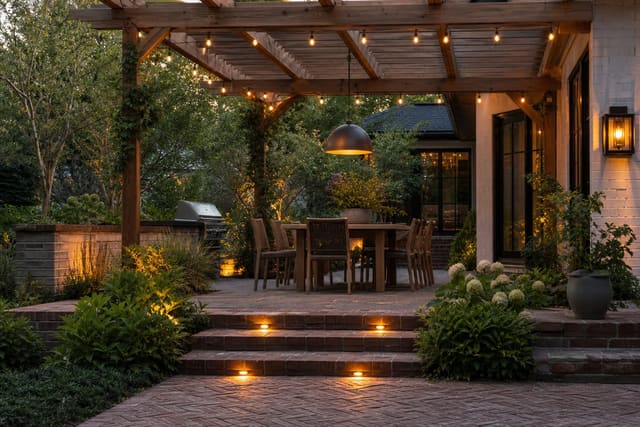
- Dusk-to-dinner scene: wall sconces at 40-60%, string lights lower, path lights just bright enough to read the route.
- Motion with a short timer on the side yard: 2-5 minutes is enough to carry bins without leaving the elevation bright for an hour.
- One warm accent on the best tree or fence bay. Coordinate the beam with board rhythm using cedar fence design ideas.
- Separate grilling light from lounging light. The grill landing needs clearer task light; the lounge zone can stay lower and warmer.
- Geofence arrivals, not the whole garden. Trigger the front walk or driveway sconce on arrival; leave backyard accents on manual scenes.
- Save color effects for occasions. Keep everyday scenes warm white; reserve saturated color for a pool edge or holiday display.
Common smart outdoor lighting mistakes to avoid
The most common mistake is buying smart fixtures before deciding which parts of the yard deserve attention. Sketch the route from door to chair to grill to gate, then assign fixtures to that route before touching decorative accents.
Another mistake is ignoring fixture ratings. A damp-rated fixture works under a covered porch, but an exposed wall, open pergola, or fence-mounted sconce needs wet-rated construction. Low-voltage connections belong in proper outdoor-rated splice kits, not tape hidden under mulch.
Don't let the app replace physical switching — a backyard still needs a wall switch or reliable schedule for the basic arrival scene. Glare is another giveaway: bare smart bulbs in clear string lights look harsh at seated eye level, so choose frosted bulbs or dimmers near dining chairs (42-48 inches above the patio surface).
Finally, avoid mixing too many color temperatures. One 5000K security fixture beside 2700K landscape lights makes the yard look patched together; choose a warmer security fixture if the architecture allows it.
Use AI design to preview your backyard lighting before you wire it
AI design helps because the hard part is judging composition before cables and fixtures are locked in. Upload a dusk photo from where you actually notice the yard — kitchen door, patio chair, gate — then preview a brighter path, darker planting, a lit fence backdrop, and a separate dining glow.
A preview won't calculate voltage drop or beam spread, but it answers the visual question first: where should the brightest area be, and what should stay darker? Take the photo before the yard turns fully black, keep the camera level, and leave real furniture, grills, and planters in place — that's exactly what a lighting plan needs to solve for.
Frequently Asked Questions
Which smart lighting system works best outside?
Lutron Caseta and RA3 suit whole-home control with weather-rated dimmer modules; Philips Hue offers plug-and-play landscape kits with bulb-level color; Matter is an emerging standard for cross-brand interoperability. Choose based on how much of your home is already on one ecosystem.
Should outdoor lights change color?
Rarely. Color-changing landscape lights date quickly and read as theme-park. Reserve color for one feature, like a sculpture or pool edge, and keep everything else warm at 2700K for a natural, lasting look.
Do smart outdoor lights need Wi-Fi?
Most modern systems use Zigbee or Thread mesh rather than direct Wi-Fi per fixture. Fixtures connect to a hub, and the hub connects to Wi-Fi, which keeps your network cleaner and improves reliability outdoors.
Can I automate outdoor lights by sunset?
Yes. Every major platform supports astronomical-clock automations that turn lights on at civil sunset and off at a set time or sunrise. Pair this schedule with motion sensors on security-focused circuits for added coverage.
What about smart landscape uplighting?
Specify a smart 12V landscape transformer with a connected control module, such as Hubbell or FX Luminaire ZDC. This dims an entire zone at once without requiring smart bulbs in each individual fixture.
> Try this: Ready to see this on your own outdoor space? Open ReDesign and run the preview before you buy materials, plant, drill, or move furniture.
Three transformations to try
1. Yard with smart landscape and patio scenes 2. Pergola with smart string and downlight zones 3. Entry with smart sconce and path lighting