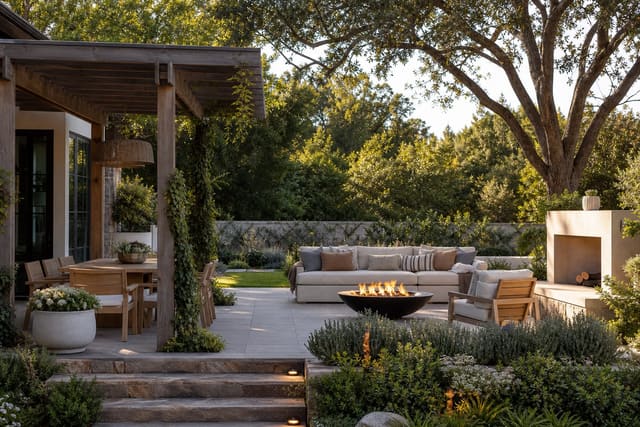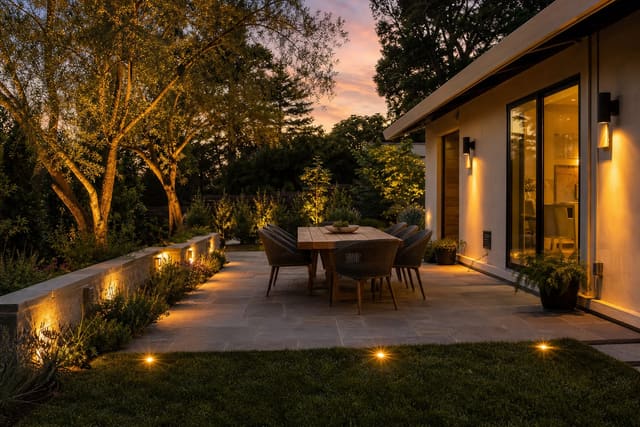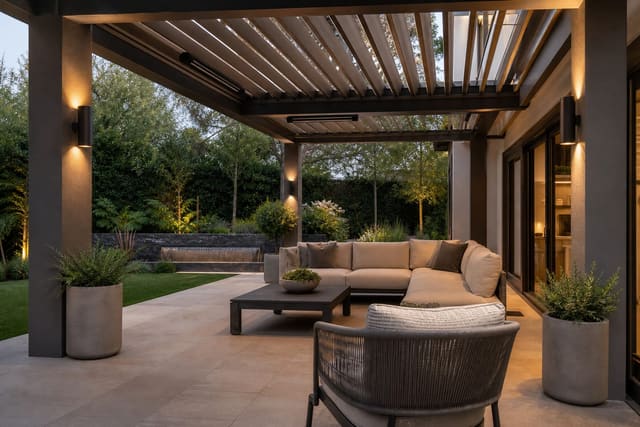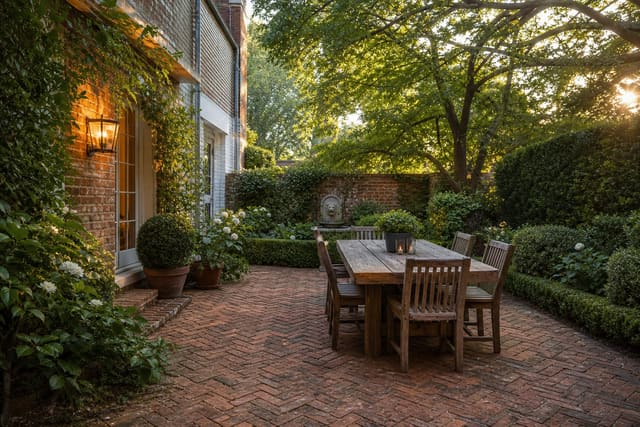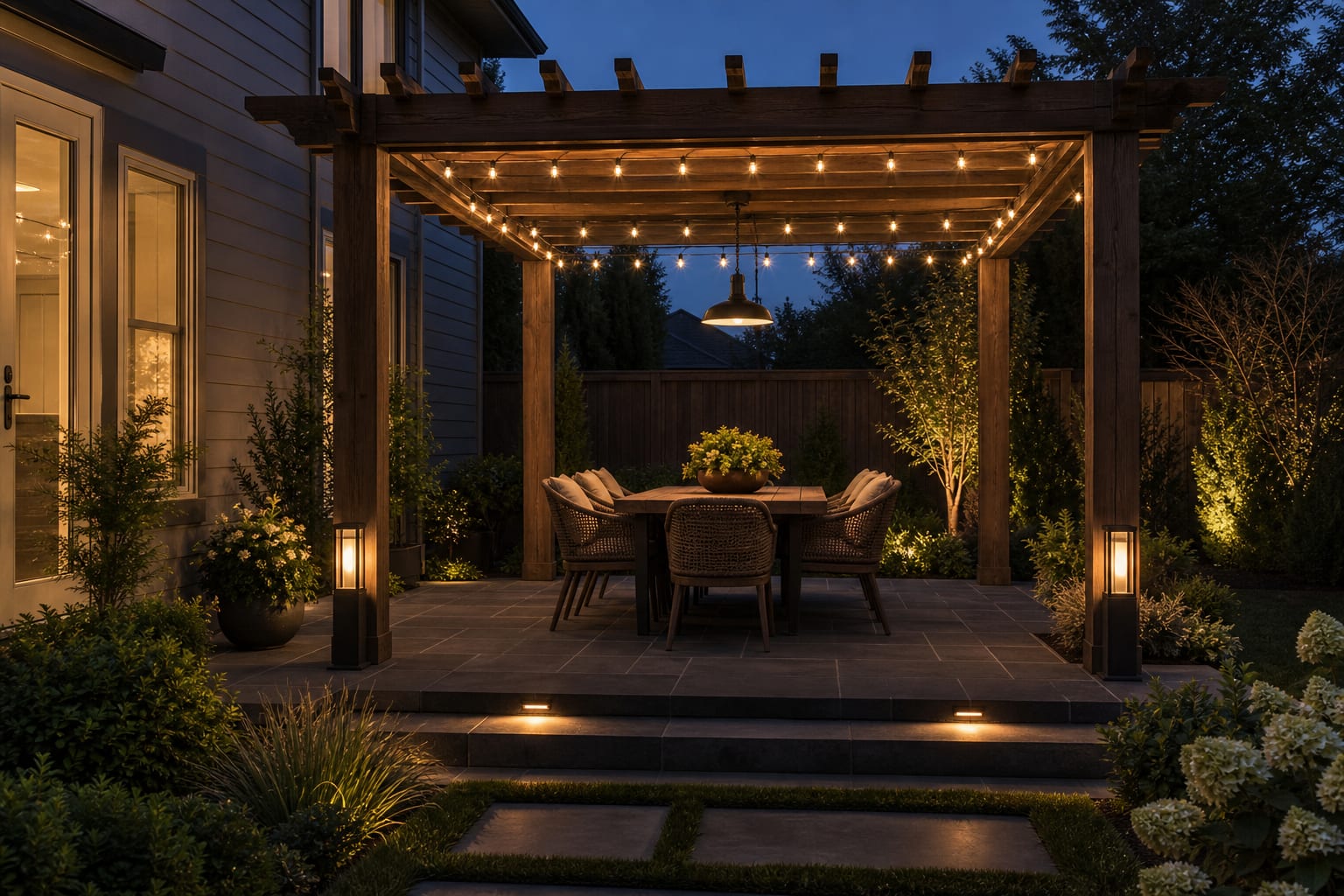
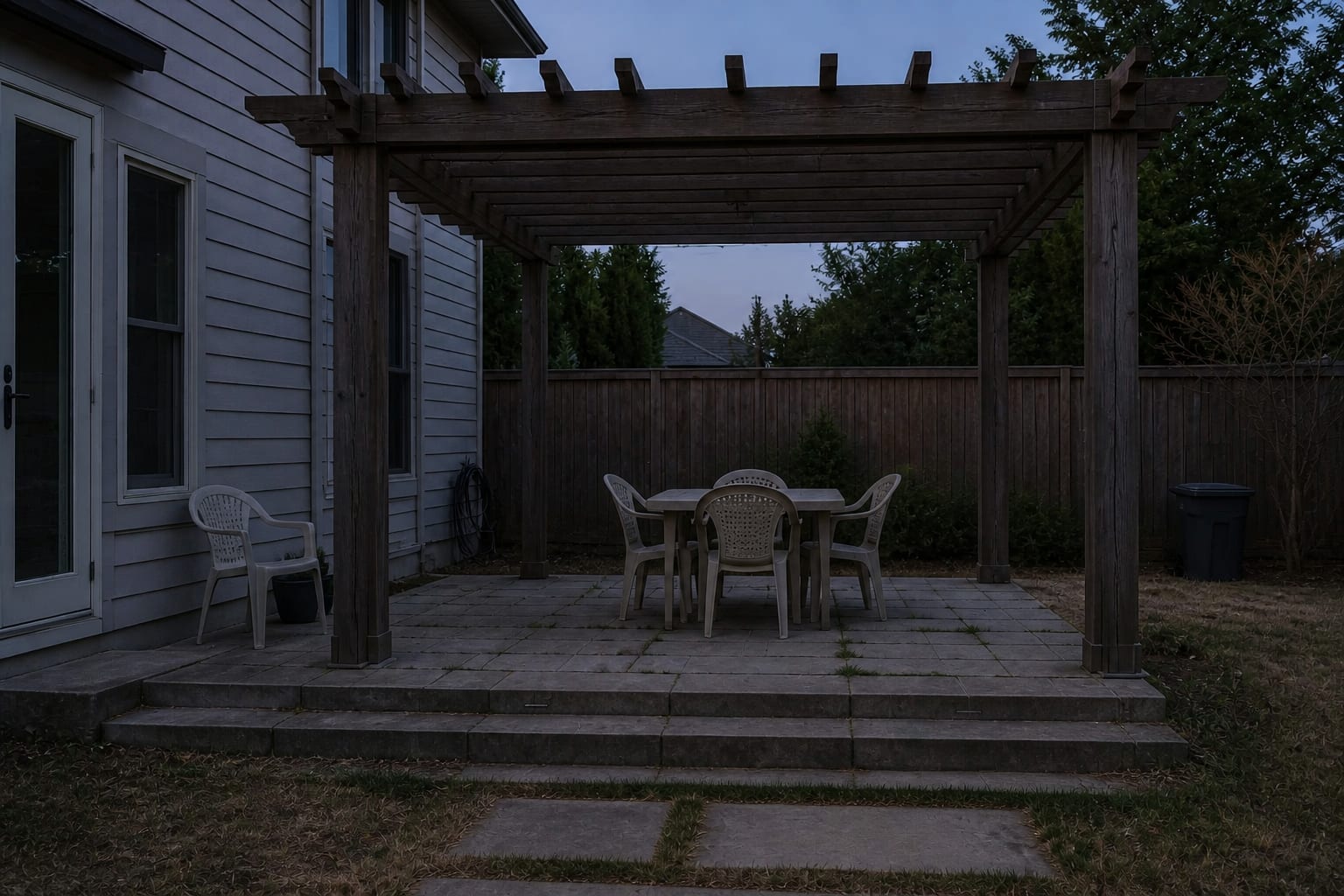
The best pergola lighting ideas layer three sources: overhead string lights or pendants for ambient glow, downlit or rail fixtures for task light at the table, and one warm accent like a lantern or post light for character. Keep bulbs at 2200-2700K so the space reads warm, not commercial, and skip relying on string lights alone once dinner is part of the plan.
What makes pergola lighting feel intentional after dark?
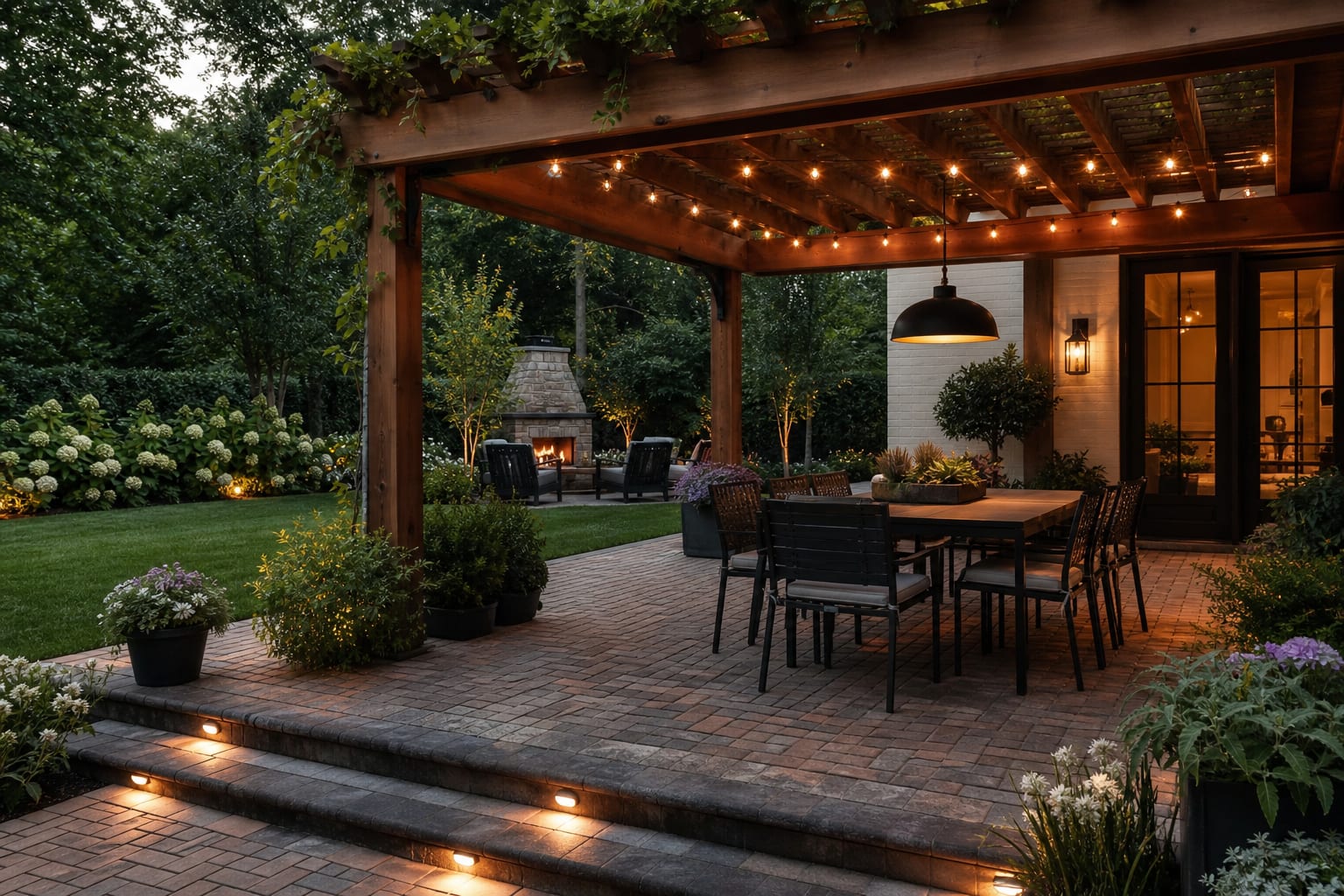
Start by deciding what the patio does at night, then give each light a job. A lounge zone can survive on softer overhead light, but a dining table needs clear light where plates and faces meet. On brick hardscape, watch for glare bouncing off the ground; the best brick patio lighting and layout choices treat the ground plane as part of the design.
Ambient light marks where the outdoor room begins and ends. Task light lets someone read a menu or see grilled food without a phone flashlight. Accent light makes the posts, a nearby wall, or planting read as a designed edge.
| Lighting layer | Best pergola use | Spec to copy |
|---|---|---|
| Ambient overhead | General glow for lounge or dining | 2700K bulbs, dimmed whenever possible |
| Task fixture | Dining table, prep counter, grill zone | Shade bottom 30-36in above tabletop |
| Post or step light | Level changes and pergola edges | Shielded beam below seated eye height |
| Recessed downlight | Modern pergola with solid beams | Space 4-6ft apart, then dim |
Don't light every inch equally. Keep the brightest point where the activity happens and let surrounding beams and planting fall softer; that contrast makes the patio feel like a room, not a lit object.
Test this on your own photo with ReDesign before choosing a final direction; keep the house edge, horizon, hardscape, planting, and main path visible so the preview solves the space you actually have.
Which pergola lighting ideas are worth copying?
Each idea below solves a real nighttime problem. Pick two or three, not all of them, unless the pergola has separate lounge, cooking, and dining zones.
- Run string lights in parallel lines on a rectangular pergola, 18-24 inches apart on screw eyes or cable guides, sagging only a few inches.
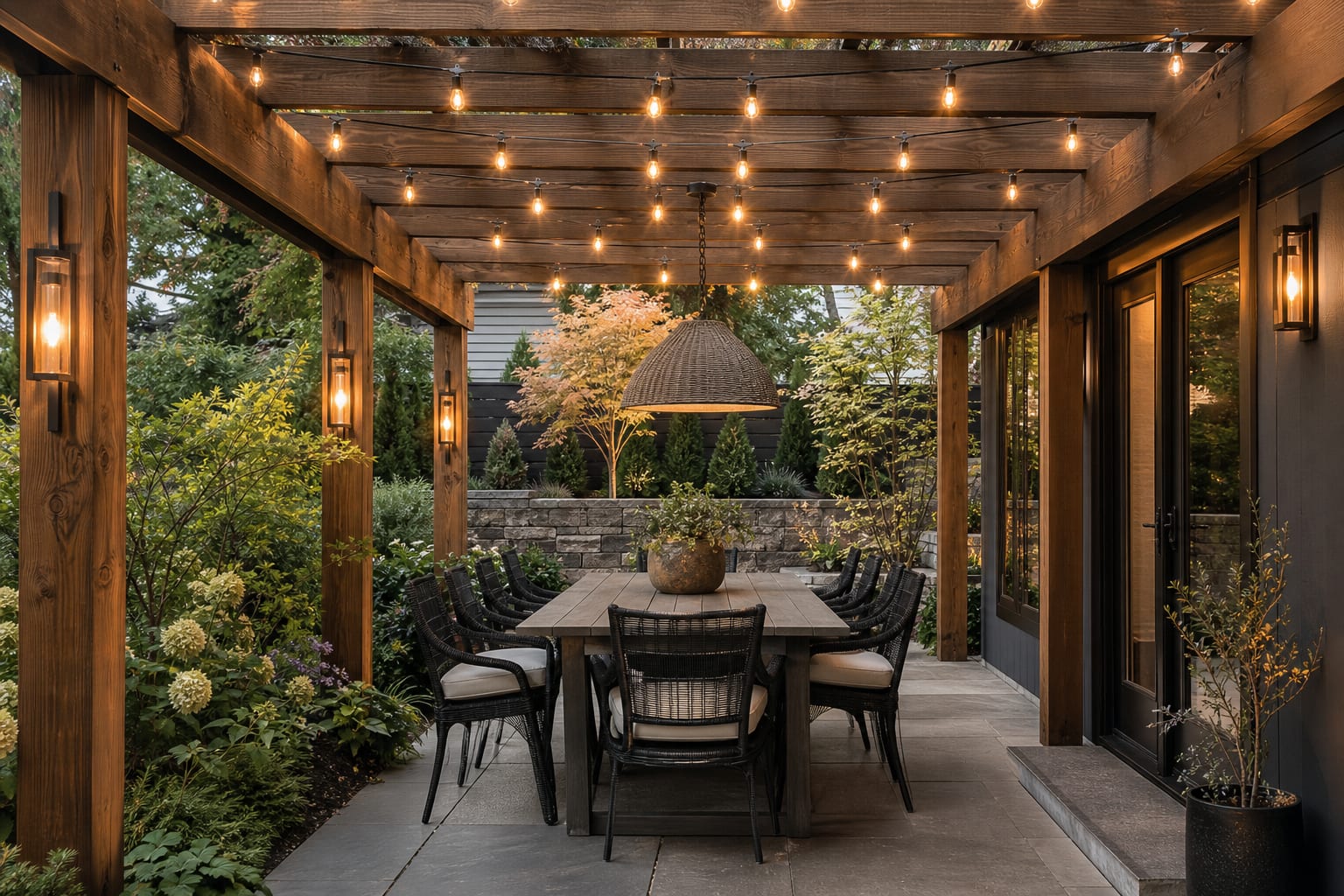
- Center one outdoor-rated pendant over the dining table with at least 7ft of walking clearance, or hang the shade 30-36in above the tabletop.
- Use recessed downlights when the roof has slats or a ceiling plane to hide wiring; space them 4-6ft apart and aim beams away from neighboring windows.
- Add post lights on the inside faces of supports, mounted 18-30in high, to skim the walking surface without shining into faces.
- Wash a nearby wall or planting bed instead of loading all the drama onto the pergola itself.
- Add a small task sconce near a bar or grill; if the pergola connects to a cooking area, borrow from outdoor kitchen pergola planning: brighter at prep surfaces, lower where people sit.
String lights should behave like the room's ceiling glow. If they're the only light handling dinner, stairs, and serving, the patio will be too dim to function or too bright to feel comfortable.
Which fixture decision changes how the patio works?
The biggest decision is whether pergola light hangs, mounts, recesses, or wraps. Hanging fixtures anchor a dining area but need stable structure and clearance for tall guests. Mounted sconces and post lights suit lounges since they keep the center open and avoid a swinging shade in wind.
For coastal patios, prioritize corrosion-resistant finishes over shape. Powder-coated aluminum, marine-grade stainless, and sealed brass age better than cheap black fixtures that chalk near salt air, a restraint that also belongs in coastal outdoor living designs, where lighting should flatter pale decking and teak rather than fight them with a cold beam.
Solar fixtures work for accent edges but shouldn't be the only dining light, since output drops in the shade most pergolas cast. Low-voltage landscape wiring is often the better middle ground: less invasive than line-voltage work, with more predictable brightness and switching.
Common pergola lighting mistakes
- Hanging a pendant too low makes seated guests unable to see each other; check the chain length from the house view first.
- Bare filament bulbs above seating create sparkle in photos and glare in real life; use frosted bulbs or dimmers instead.
- One switch for every fixture flattens the evening; put string lights, task fixtures, and step lights on separate controls or smart plugs.
- Recessed lights under a ceiling fan strobe as blades pass; keep fixtures out of the sweep or rely on perimeter lights instead.
Use AI design to preview pergola lighting before you wire it
Upload a dusk photo from the kitchen door, dining chair, or garden path, then test versions with string lights only, a pendant plus post lights, and recessed downlights with a darker perimeter. The preview won't calculate beam spread or electrical load, but it shows whether the brightest point belongs over the table, on the posts, or at the patio edge.
Shoot before the yard goes fully black and include the full pergola frame so the tool reads beam spacing and table position. Leave rugs, grills, and furniture in the shot, then walk the patio at night with clamp lights or lanterns in those spots before hiring an electrician or drilling into cedar.
Frequently Asked Questions
How many string lights does a pergola need?
Two parallel runs along the long axis, or a single zigzag across the beams, using roughly 30-50ft of string for a 12x14ft pergola. Under-lit pergolas feel sparse and over-lit ones feel like a restaurant patio.
Can I hardwire pergola lights?
Yes. Junction boxes mounted to the beams can feed sconces, pendants, downlights, and switched string-light circuits, and hardwired setups pair well with smart controls for evening scenes.
What color temperature works best for pergola string lights?
Use 2200K for romantic dining and 2700K for general use. Anything above 3000K reads commercial and cold under a pergola.
Do I need downlights under a pergola?
Yes if you read or work under it. String lights alone rarely give enough task light, so add small downlights or rail-mounted strips focused on the table.
How do I keep pergola lights from looking cheap?
Use commercial-grade string lights with thicker cable and edison or globe bulbs, run them tight without sag, and skip color-changing party lights that date quickly.
> Try this: Ready to see this on your own outdoor space? Open ReDesign and run the preview before you buy materials, plant, drill, or move furniture.
Three transformations to try
1. Pergola with overhead string light grid