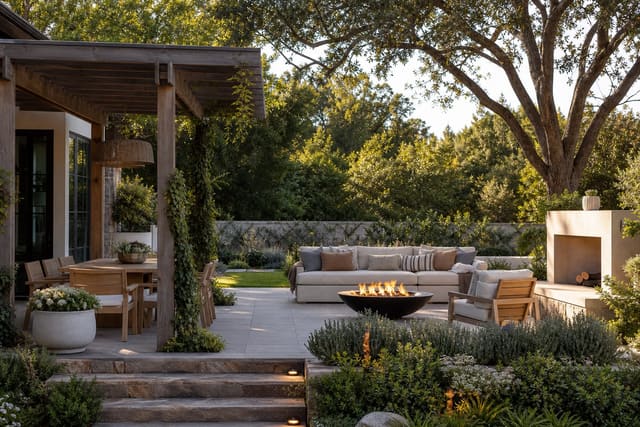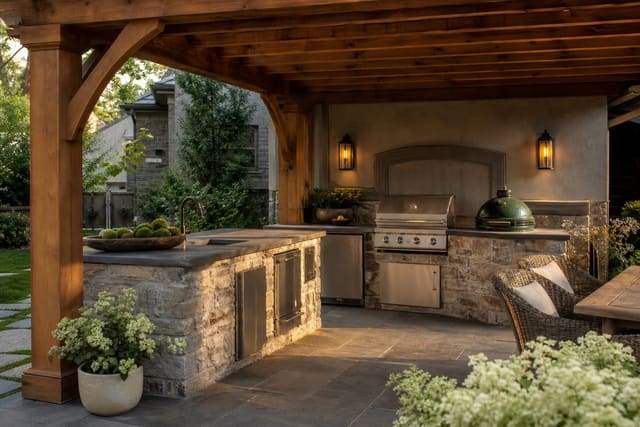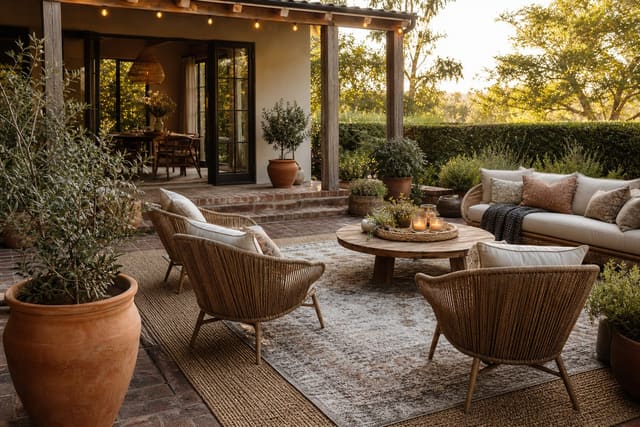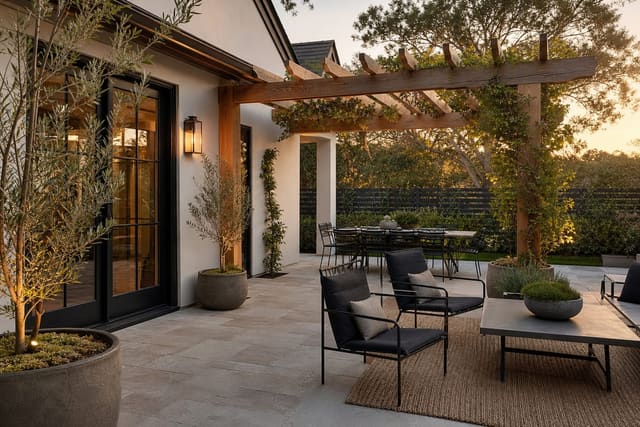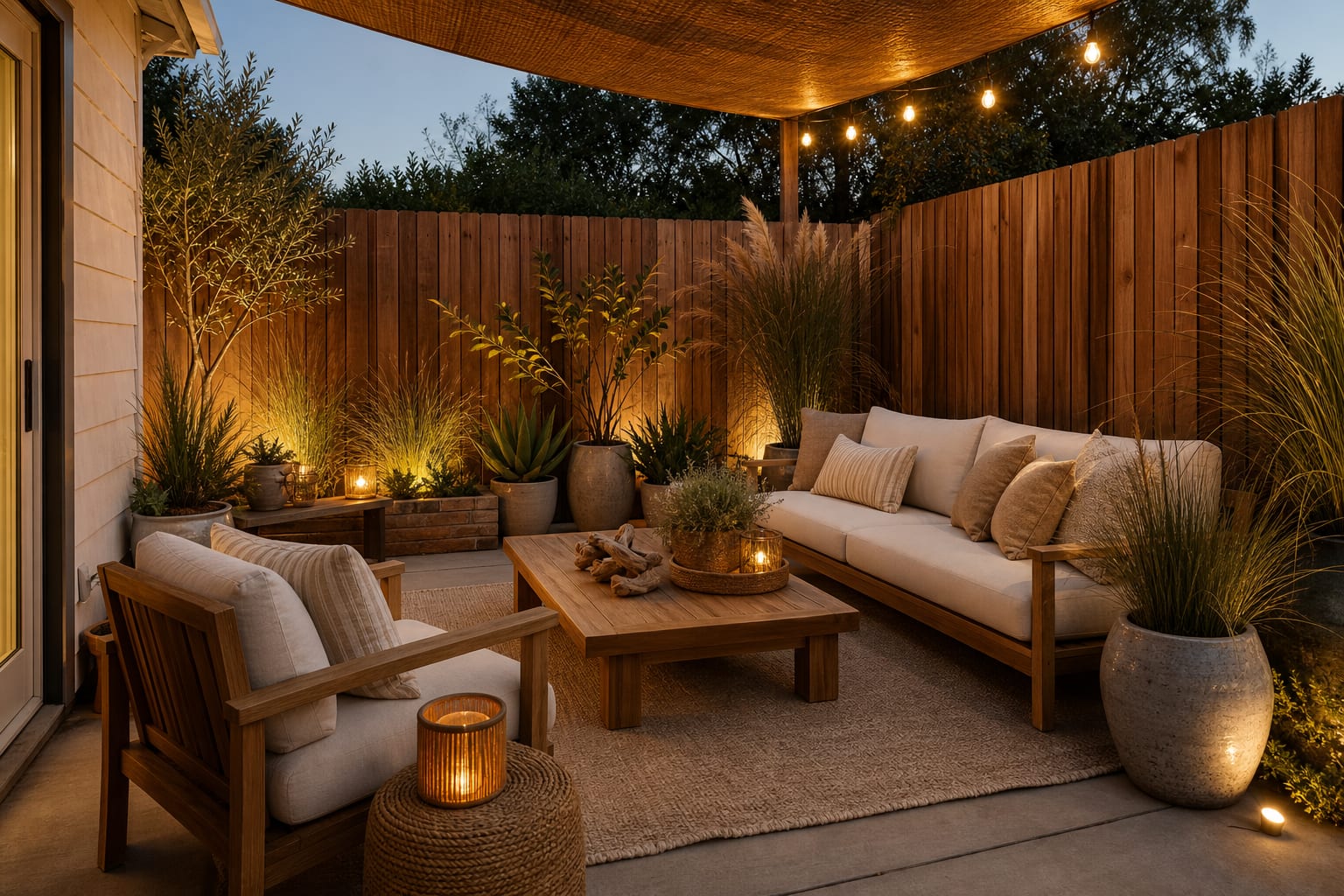
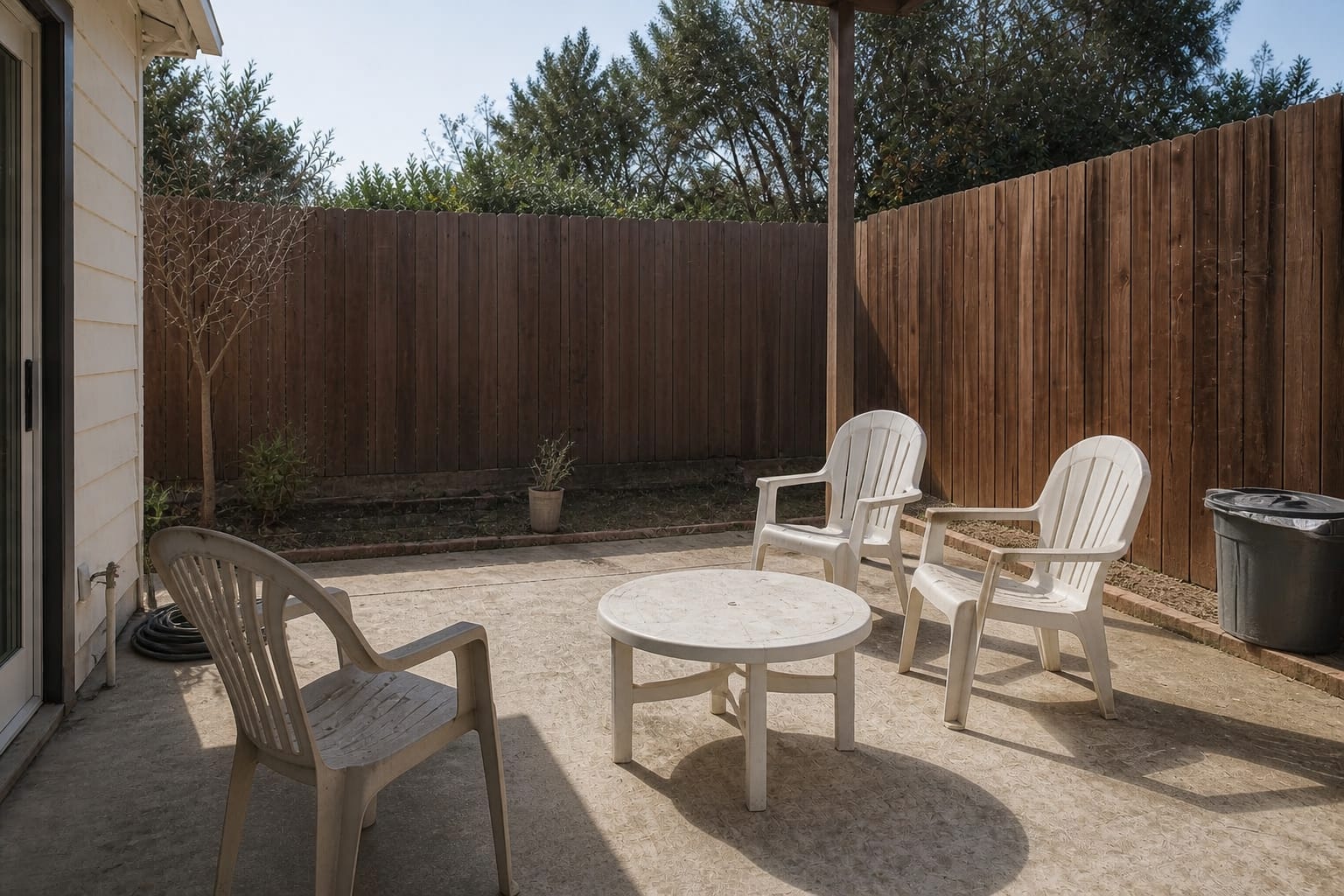
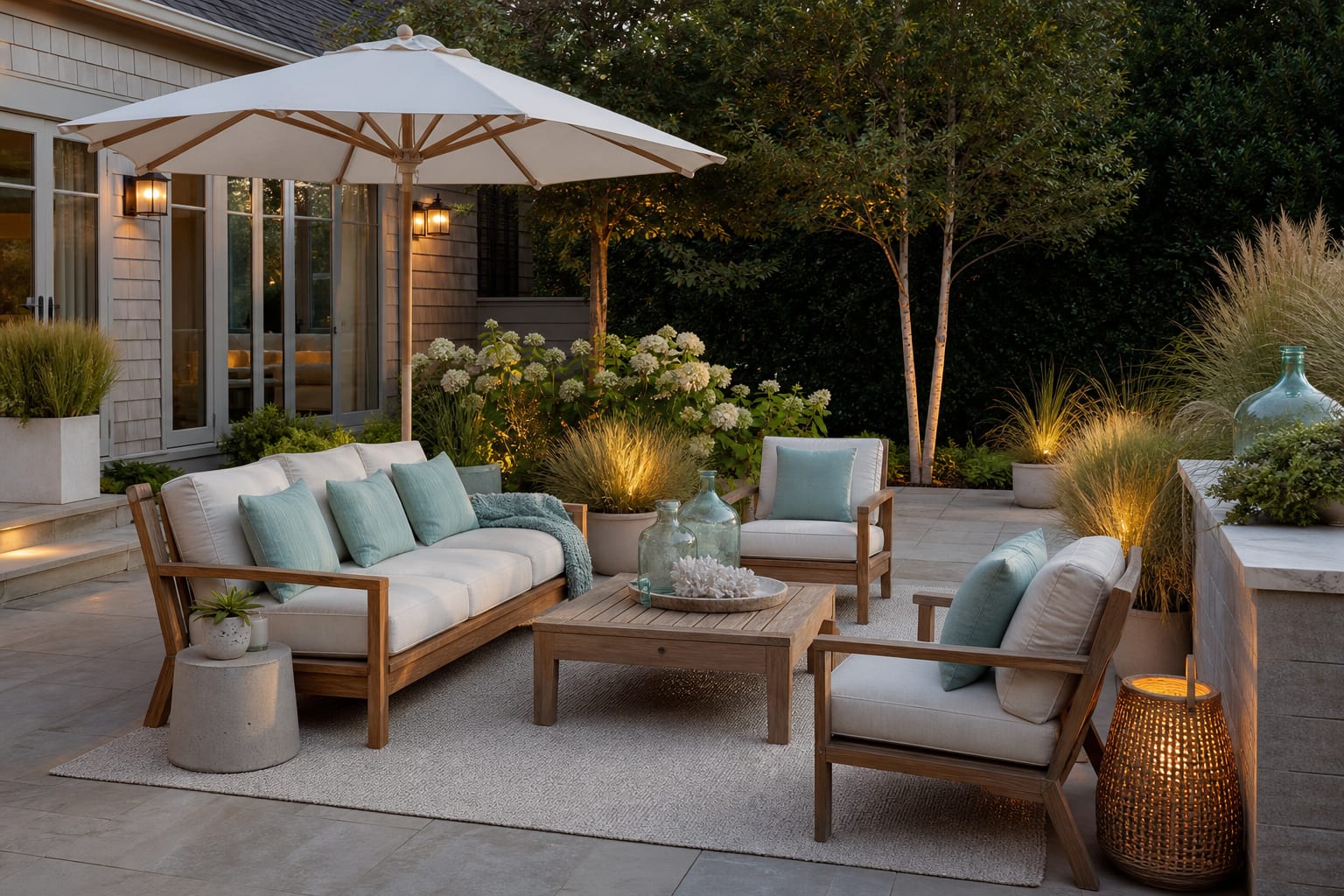
Coastal outdoor living ideas center on sandy neutrals, weathered wood, woven texture, and layered shade rather than nautical props. Pair sun-bleached cedar or limewashed walls with blue-gray cushions, a sea-grass rug, and one driftwood or planted anchor. The result reads coastal on any patio, porch, or deck — no ocean view required.
What makes a patio feel coastal instead of themed?
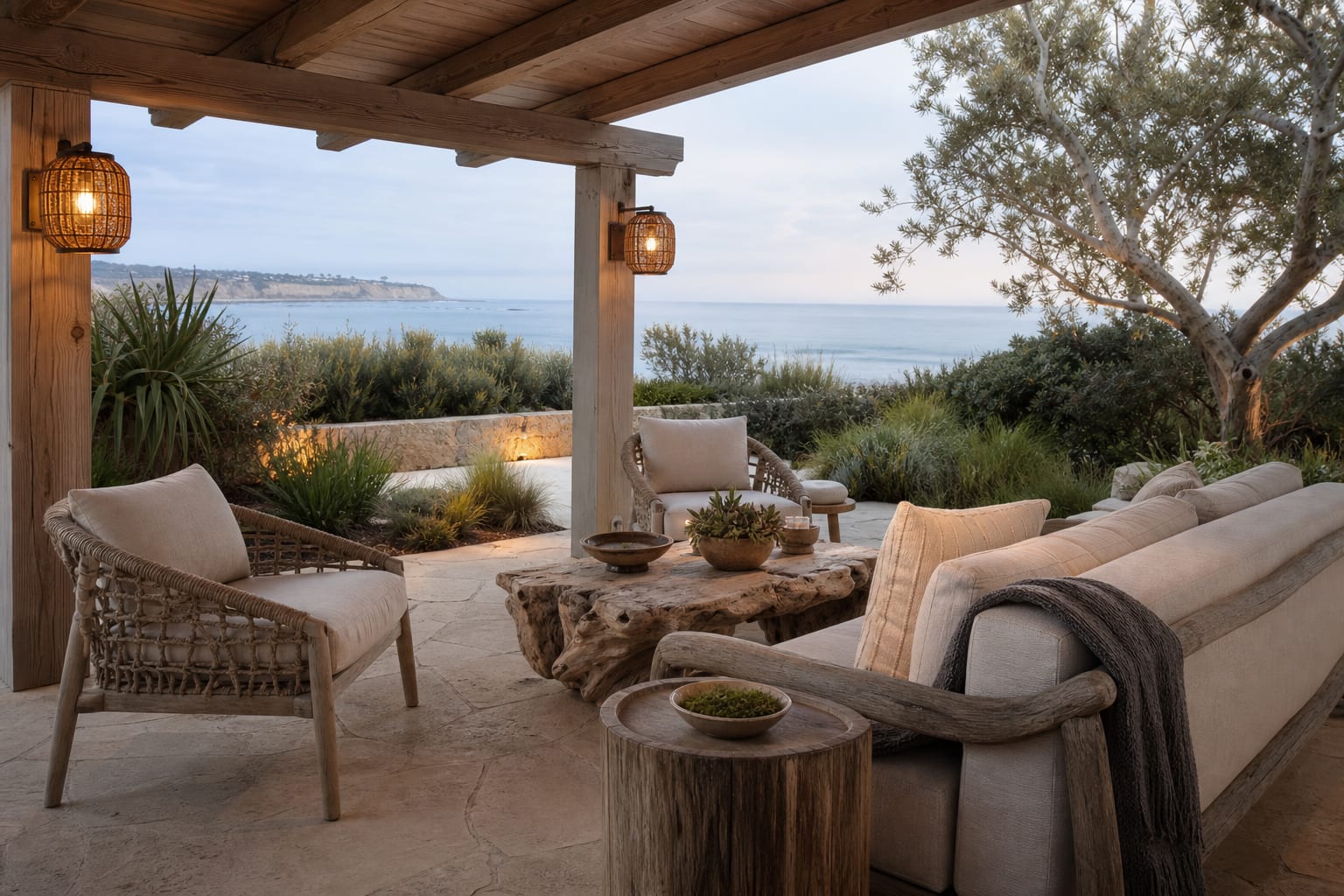
A patio feels coastal when color, texture, airflow, and seating rhythm suggest a relaxed shoreline without turning the space into a souvenir shop. Driftwood, canvas, rope, pale stone, and dune grasses share a natural logic; a wall of beach signs usually looks like a rental cottage trying too hard.
- Keep the main walkway about 36 inches wide and clear of cooking, water, planting, or seating edges.
- Limit the first material palette to 3 dominant finishes — one floor, one vertical surface, one repeated accent — for a calmer look than five small ideas.
- Test the layout from two normal viewpoints, the house door and the main seat, before buying anything else.
Think in layers from the ground up. A pale concrete slab, porcelain paver, shell-toned gravel, or faded rug sets a sun-bleached base. Furniture should sit low and broad — seat heights of 16 to 18 inches, cushion depth 22 to 26 inches for lounging — and a dining table needs 42 inches of clearance from any wall, rail, planter, or grill so chairs can pull out freely.
The fastest way to make coastal patio design look grown-up is to separate coastal from nautical:
| Coastal move | Nautical move to use carefully |
|---|---|
| Sand, oat, shell white, fog gray, and muted sea-glass blue | Navy-and-white stripes on every cushion |
| Weathered teak, rope, cane, rattan, and matte ceramic | Glossy boat hardware as decoration |
| Grasses, rosemary, pittosporum, hydrangea, or palms where climate allows | Shell garlands, oars, and anchor motifs |
If you already have a dark fence or brick wall, don't fight it with pure white everything. Bridge the contrast with taupe cushions, tan umbrellas, teak arms, or clay planters so the patio reads warm rather than stark. For covered patios or outdoor kitchens, the shade structure matters as much as the furniture; pergola ideas for outdoor kitchens are worth studying since coastal spaces need filtered light, not a blazing rectangle of sun.
Which coastal outdoor living ideas should you copy first?
Choose the ideas that change scale, comfort, and atmosphere before buying decorative pieces. Beach house outdoor decor works when the bones are right; otherwise shells and stripes only point at what the patio is missing.
- Build one real seating group. A 7-foot sofa with two chairs across from it creates a living-room shape; pair it with a 30-by-48-inch coffee table for drinks and books without blocking knees.
- Size the rug like an indoor rug. An 8-by-10-foot rug is the smallest size that lets front furniture legs sit on the same plane — a 5-by-7 under a full seating group looks like a bath mat.
- Bring in driftwood tone through furniture, not clutter. Teak, acacia, gray-washed eucalyptus, or composite lumber deliver the weathered look; keep actual driftwood to one sculptural bowl or side table.
- Add wind-tolerant planting. Use 18-to-24-inch pots for dwarf grasses, rosemary, coastal daisy, lantana, or climate-suited herbs, and repeat the same pot color at least three times.
- Pick one soft pattern. A single cabana stripe on two pillows is enough when the sofa has nubby cushions, the chairs have rope backs, and the planter has matte texture; for a looser, layered version, borrow color discipline from boho outdoor decor ideas.
- Plan the after-dark view. Use neatly tensioned 2700K string lights, shielded sconces near doors, and one lantern or rechargeable lamp at 18-24 inches tall so faces glow instead of a lit parking lot.
Common coastal patio mistakes to avoid
- Too much blue. Navy cushions, blue planters, blue glasses, and blue art flatten the patio into a catalog page — pick one blue family (sea glass, faded denim, or gray-blue) and repeat it in two or three moments only.
- Furniture too delicate for outdoor life. Thin rattan legs, pale cotton cushions, and untreated wood buckle under rain, pets, and sunscreen; look for removable cushion covers, exterior-rated frames, and cushions at least 4 inches thick.
- Ignoring wind. Lightweight umbrellas, tiny side tables, and tall empty planters get dangerous on exposed patios — use a weighted umbrella base matched to canopy size and fill large pots with real soil, not foam inserts.
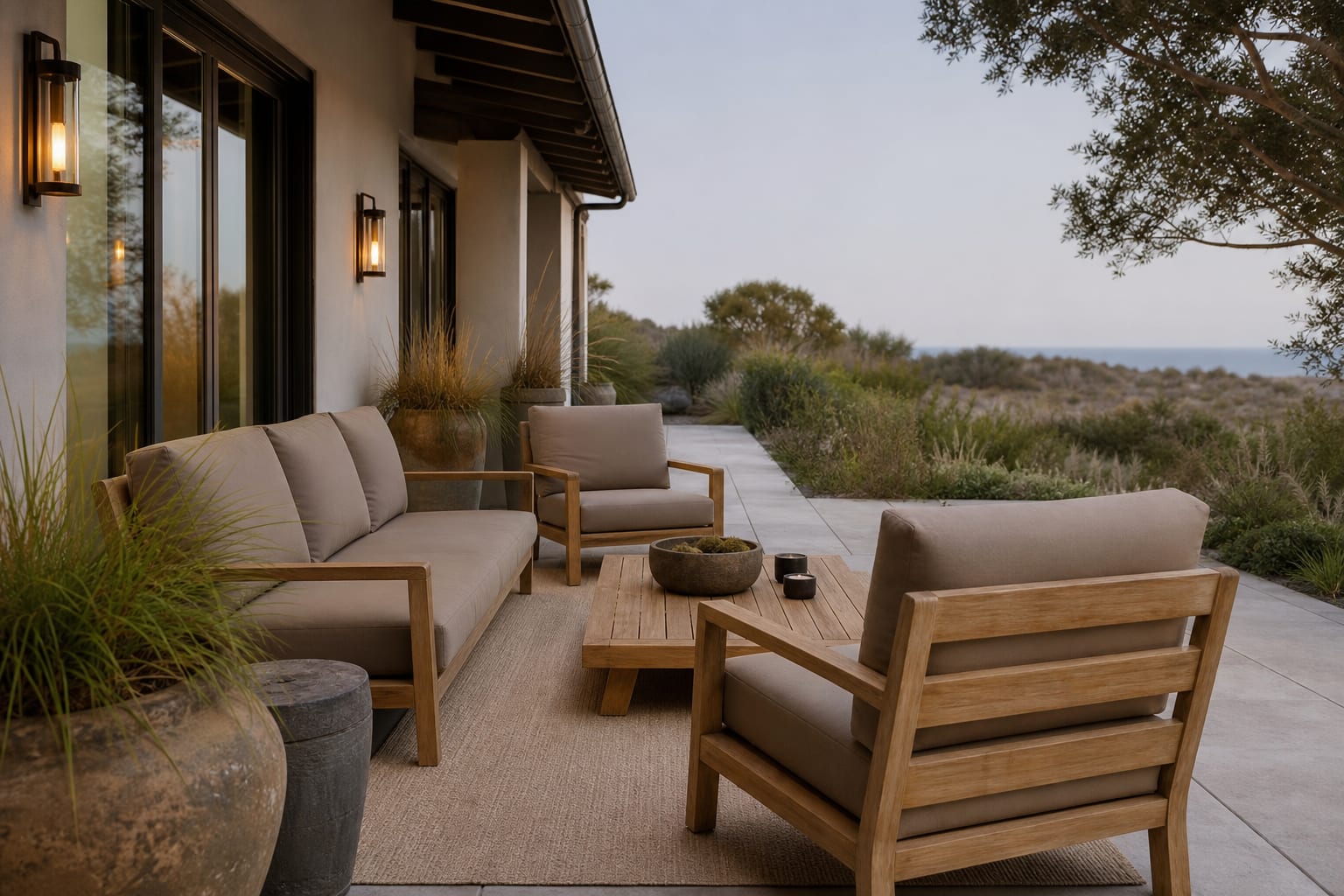
- Copying a pure-white beach palette onto a dark or rustic exterior. A hybrid works better: sand cushions, natural wood, gray-blue ceramics, and matte black lanterns. If your exterior leans rural, modern farmhouse outdoor ideas can keep the contrast grounded while coastal materials soften it.
- Styling only from the house door. Check three sightlines — the main indoor view, the seat itself, and the yard looking back — before buying a second coffee table or another planter.
Use AI design to preview your coastal patio before you commit
AI previewing works well for coastal spaces because the style rises or falls on proportion. Upload a straight, well-lit photo and test the big decisions first: pale rug or no rug, teak versus white metal, umbrella versus pergola, grasses along the fence, and a quieter cushion palette.
Don't treat the preview as permission to buy every pretty coastal object. Use it to compare how sandy neutrals sit against your actual siding, how much shade the seating needs, and whether driftwood tones look warm or gray beside your pavers. If the preview feels calmer once you remove three accessories, believe it.
A strong final image shows a clear sitting zone, one dominant wood or woven texture, one restrained accent color, plants with movement, and lighting that keeps the patio usable after dinner. Once that version works on screen, measure the real patio, confirm clearances, and pick materials suited to your climate.
Frequently Asked Questions
Does coastal outdoor design only work near the ocean?
No. Coastal cues — limewashed wood, blue-gray textiles, woven materials, salt-tolerant plants — read coastal anywhere, as long as the rest of the yard doesn't fight the palette.
What plants suit a coastal outdoor space?
Sea grass, lavender, blue fescue, hydrangea, and a low boxwood for structure work well. Skip tropical or high-saturation flowers, which conflict with the bleached, sun-washed palette coastal style relies on.
Which materials hold up to salt air?
Marine-grade stainless or powder-coated aluminum, teak, ipe, and PVC composite decking handle salt exposure well. Avoid raw steel railings and untreated softwoods, especially within a mile of saltwater.
What lighting suits coastal outdoors?
Use galvanized or stainless lanterns at 2700K, downward-cast bollards along paths, and a single string-light run over the seating area. Skip novelty seashell-shaped fixtures, which tip the look toward themed rather than coastal.
How do I add coastal feel without going themed?
Pick three: a limewashed wall finish, a blue-gray rug, a sea-grass throw, a driftwood side table, or a salt-tolerant planter. Limiting yourself to three of these keeps the look sophisticated instead of costume-like.
Three transformations to try
- Coastal patio with limewashed walls
- Coastal porch with sea-grass rug
- Coastal deck with hydrangea border