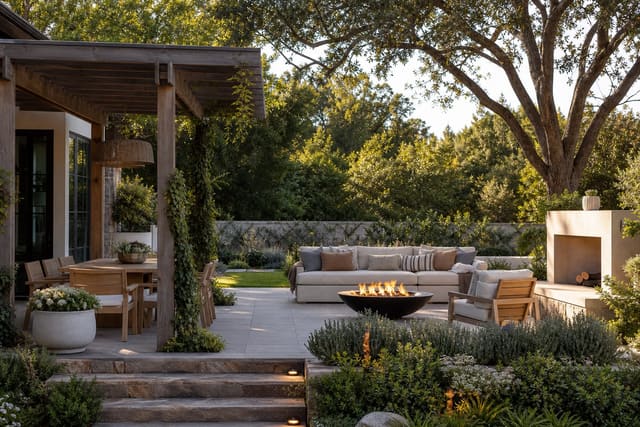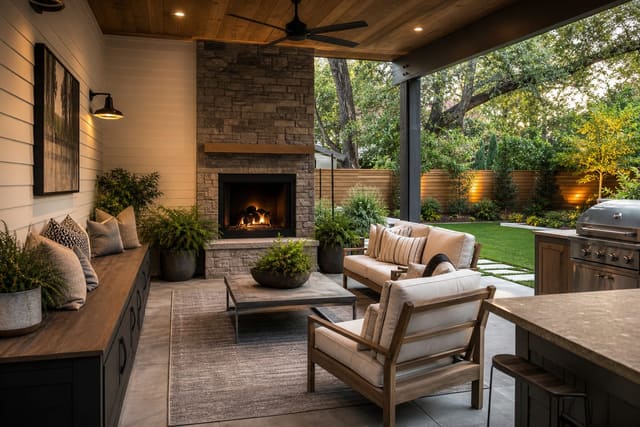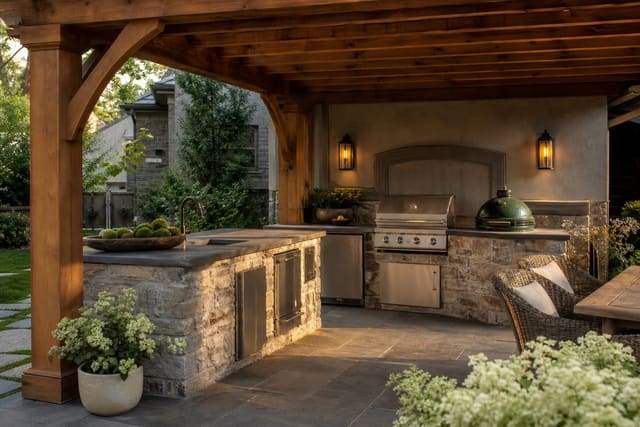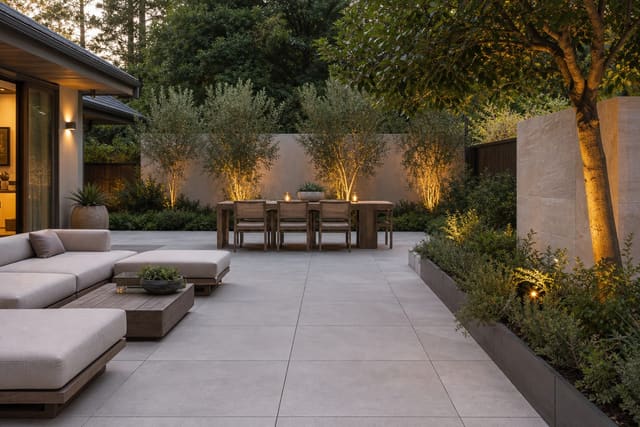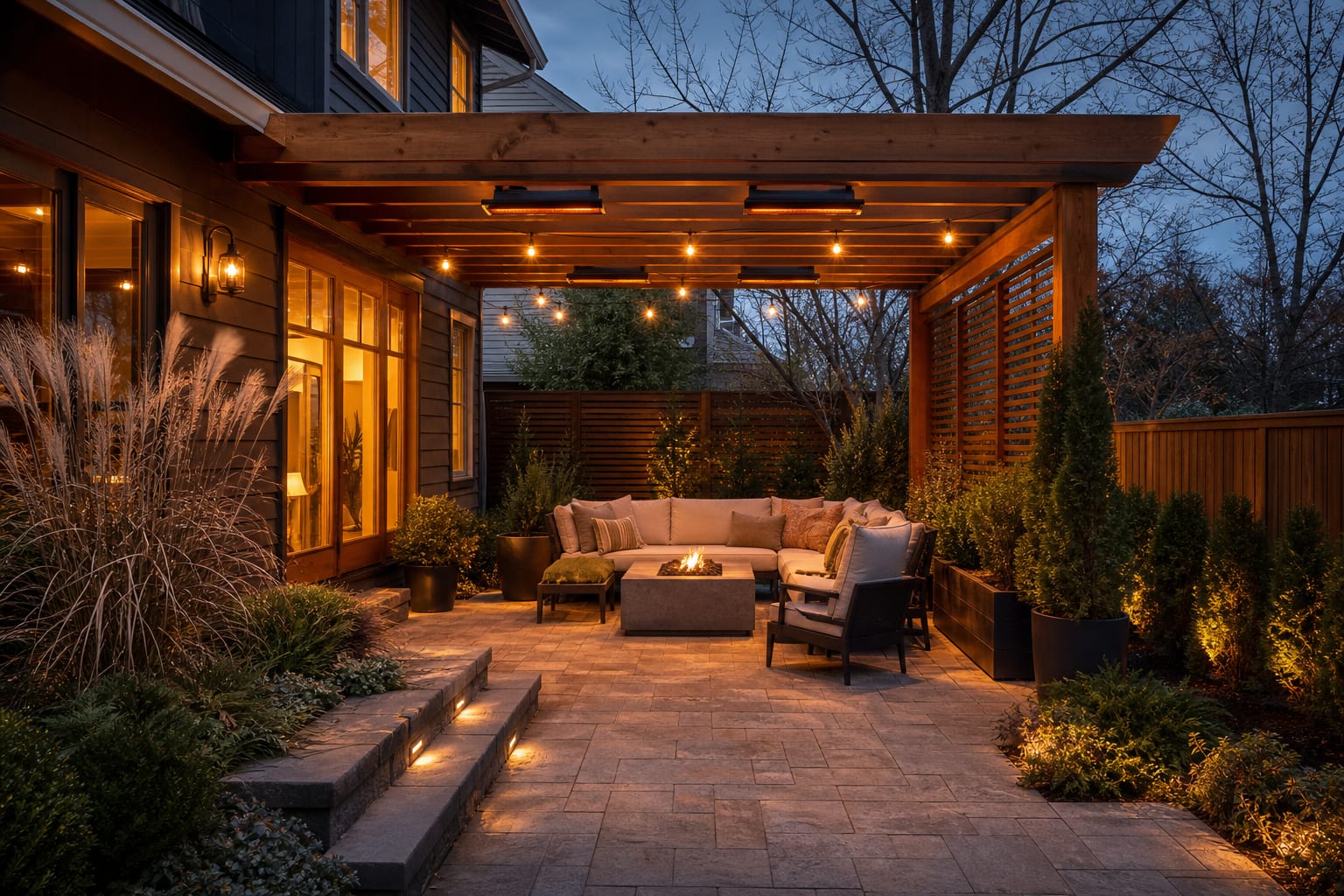
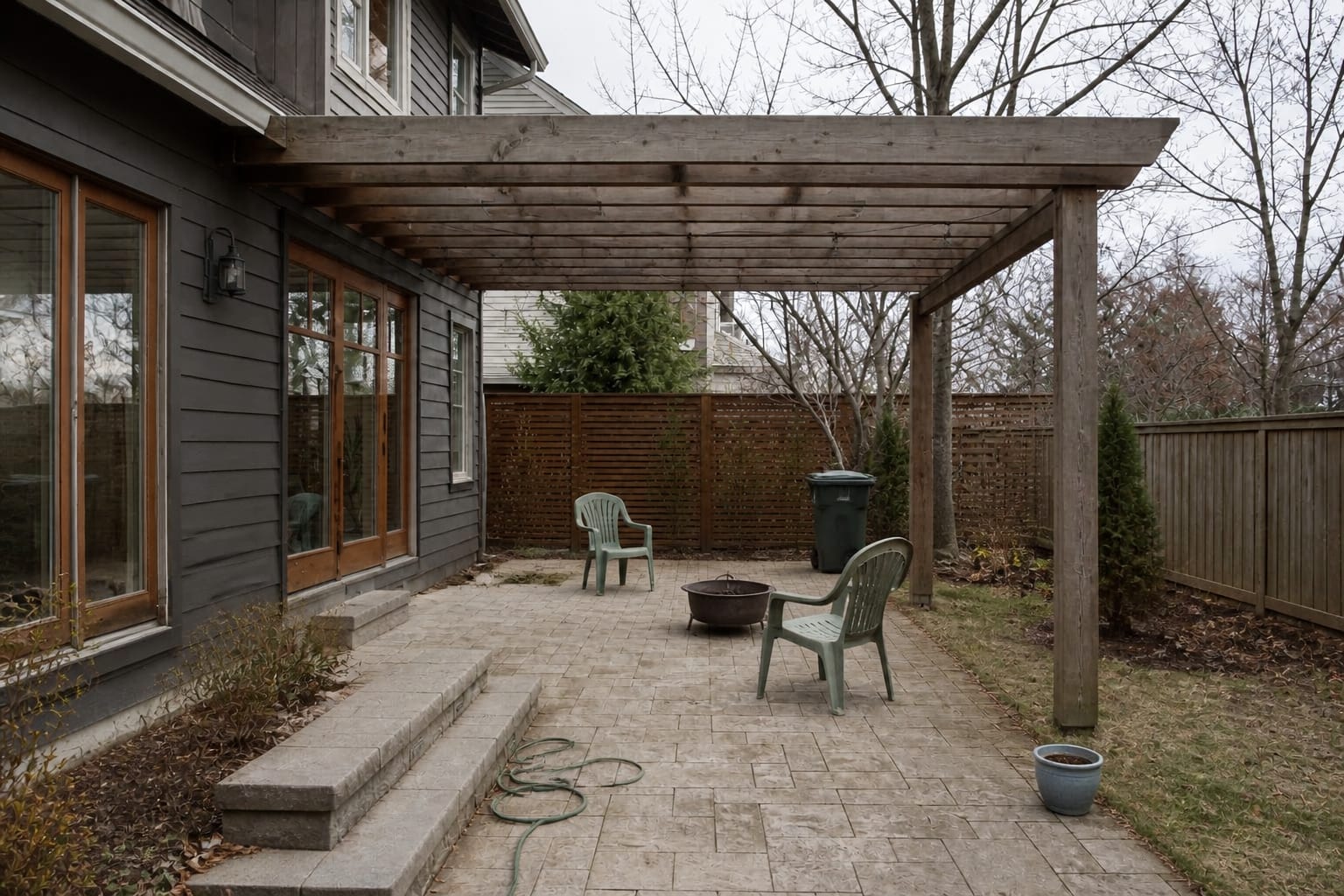
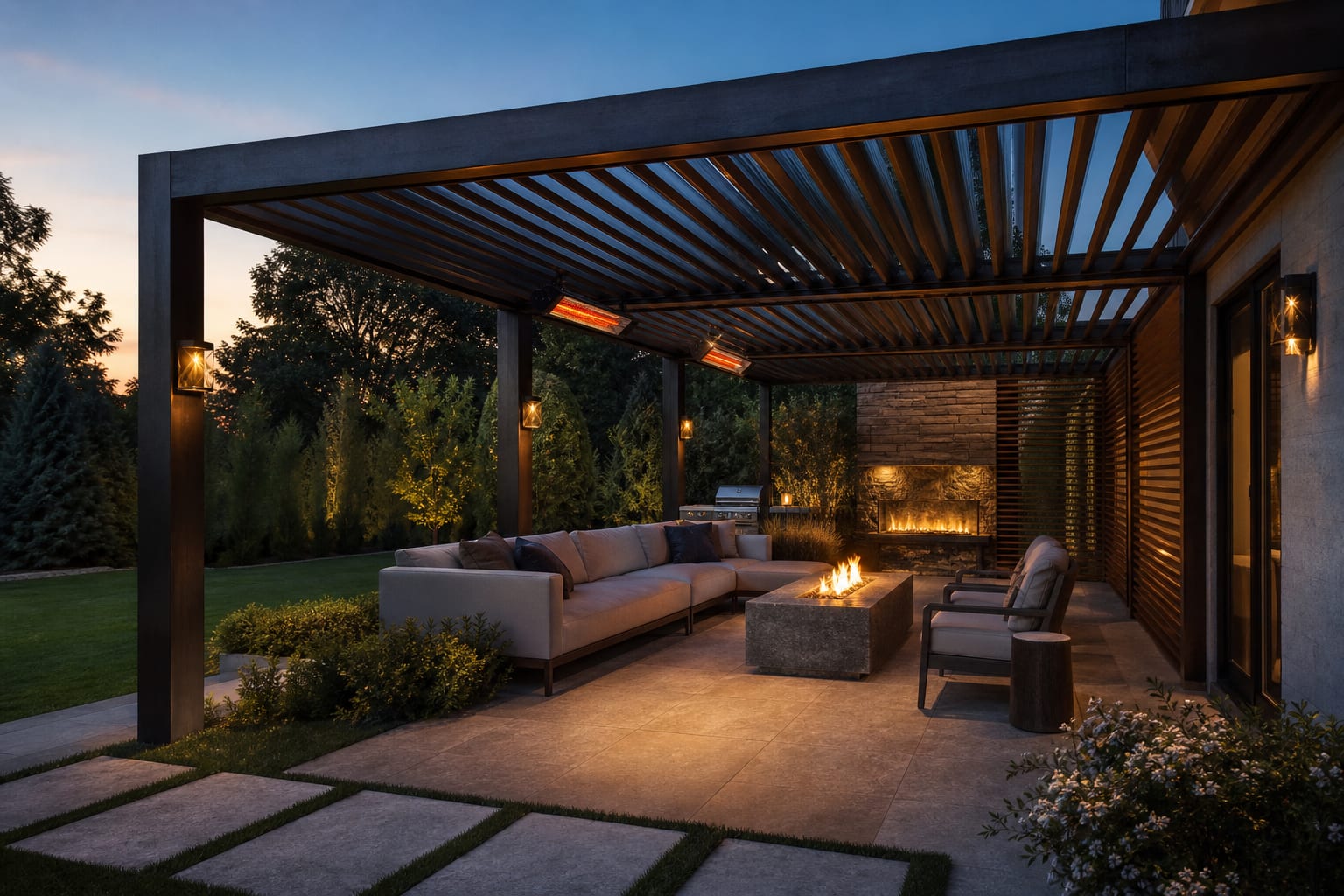
A heated pergola works when overhead infrared heaters cover the seating zone at 4,000-6,000 BTU per 50 sqft, a louvered or retractable canopy traps heat against a 12 degF colder exterior, and the windward side is screened. Heat should be built into the structure, not bolted on later as a mushroom heater beside the sofa. Get the clearances, wind control, and seating layout right and the patio stays usable from October through April.
How do you heat an outdoor pergola without making it feel temporary?
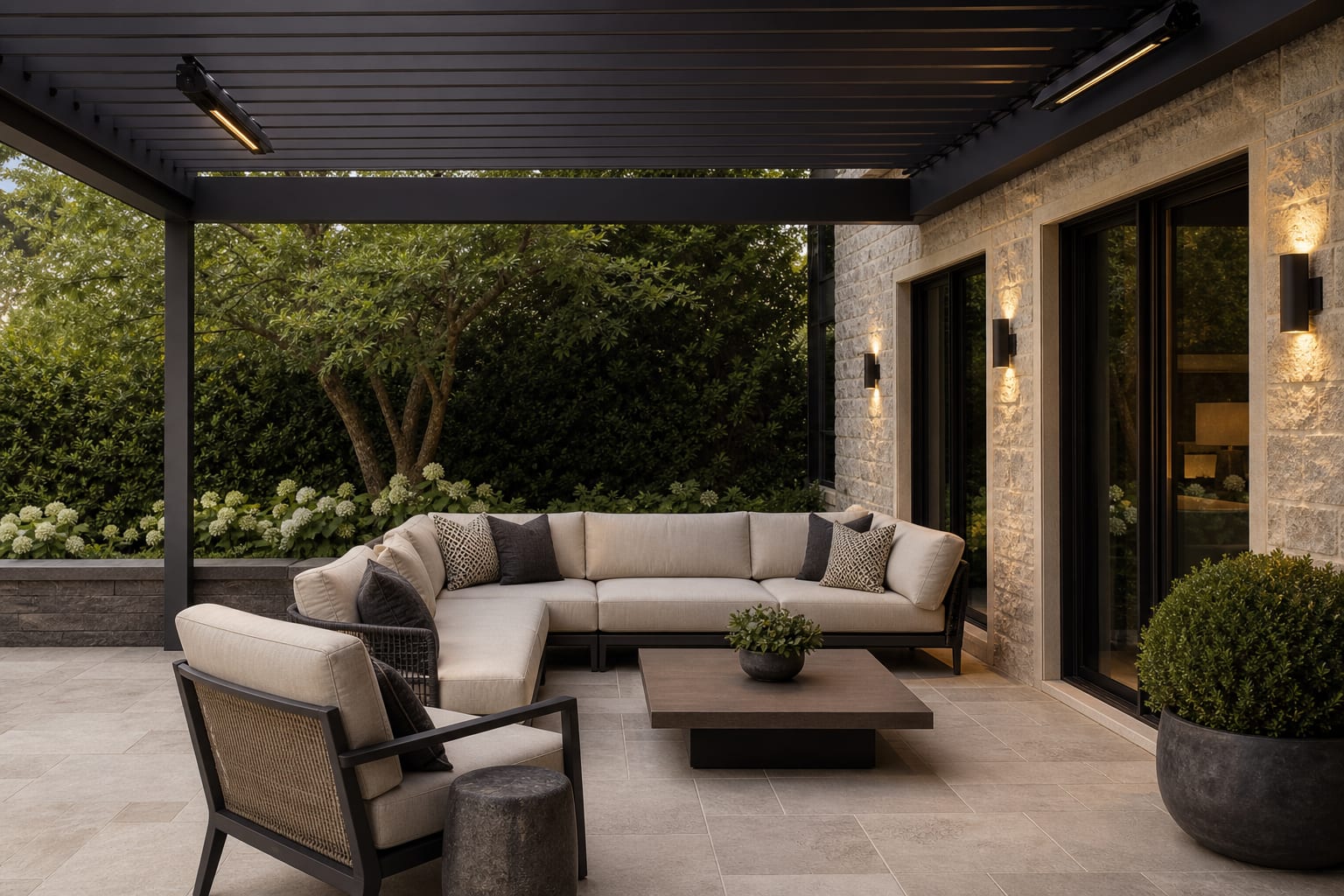
Pair an outdoor-rated infrared or gas heater with wind control and a furniture layout that keeps warmth over people, not open paving. For most patios, a beam- or wall-mounted electric infrared heater beats a freestanding propane tower because it warms bodies and surfaces directly rather than heating open air. A plug-in unit runs around 1,500 watts; hardwired models go higher depending on the circuit and the pergola's coverage.
Start with the seating zone, not the product page. Mark the sofa, dining chairs, and walkway, then aim heat where people actually sit for 20 minutes or more. Keep circulation paths at least 36 inches wide so no one ducks around a hot fixture. If you're redesigning the floor too, lighter porcelain tile patio flooring reads cleaner and less cold underfoot than a dark slab.
Every heater has its own listed clearance to combustibles, and the manual beats any design rule. Plan real distance from curtains, wood rafters, shade cloth, vines, and ceiling fans before buying. Heat belongs above shoulders or along the side of the lounge, never directly in the path where someone reaches for a plate.
Test this on your own photo with ReDesign before choosing a final direction, keeping the house edge, horizon, hardscape, and main path visible so the preview solves the space you actually have.
Which heated pergola setup fits your patio?
Exposure, ceiling height, fuel access, and how polished you want the patio to look all shape the right choice. A rented townhouse patio, a freestanding backyard pergola, and a covered outdoor kitchen don't need the same hardware.
| Heated pergola option | Best fit | Design rule | Watch out |
|---|---|---|---|
| Beam-mounted electric infrared heater | Covered or semi-covered pergolas near the house | Align heat parallel to the sofa or dining bench so it reaches torsos and legs | Confirm outdoor rating, circuit capacity, and clearances before mounting to wood |
| Wall-mounted infrared heater | Small patios with one solid exterior wall | Mount high, out of reach, aimed across the seating zone | Pointing it at open lawn wastes comfort and looks random |
| Gas fire table | Conversation seating facing each other | Leave about 18 inches between seat edge and table edge | Wind can steal comfort without side protection |
| Freestanding propane heater | Temporary or flexible patios | Set on level, stable ground outside the main traffic path | Tall units can look commercial and need storage off-season |
| Louvered pergola with integrated heat | Permanent all-season design | Coordinate heat, drainage, lighting, and wiring before posts are set | Retrofitting wiring later rarely looks clean |
Heated pergola ideas that work in real backyards combine one main heat source with supporting moves:
- Run a pair of slim electric heaters along the long beam above a sectional, centered on an 8-10 foot ceiling with a fixture finish that matches the beam.
- Add a wind screen only on the side that gets the coldest gusts. A 5- to 6-foot screen stops the draft that makes heaters feel weak without closing off the view.
- Use a gas fire table only for a truly conversational group; four lounge chairs around a 42-inch table feels deliberate, while one stranded 6 feet from the sofa becomes decoration.
- Put warm, dimmable light near the heater at around 2700K so the zone reads as one designed space instead of bright security lighting.
- Treat the ground as part of the plan. A compacted decomposed granite path connects pergola to house without becoming a muddy winter shortcut.
- Anchor visible heaters with masonry. A fireplace wall or outdoor stone veneer ties black brackets to the architecture instead of looking clipped on.
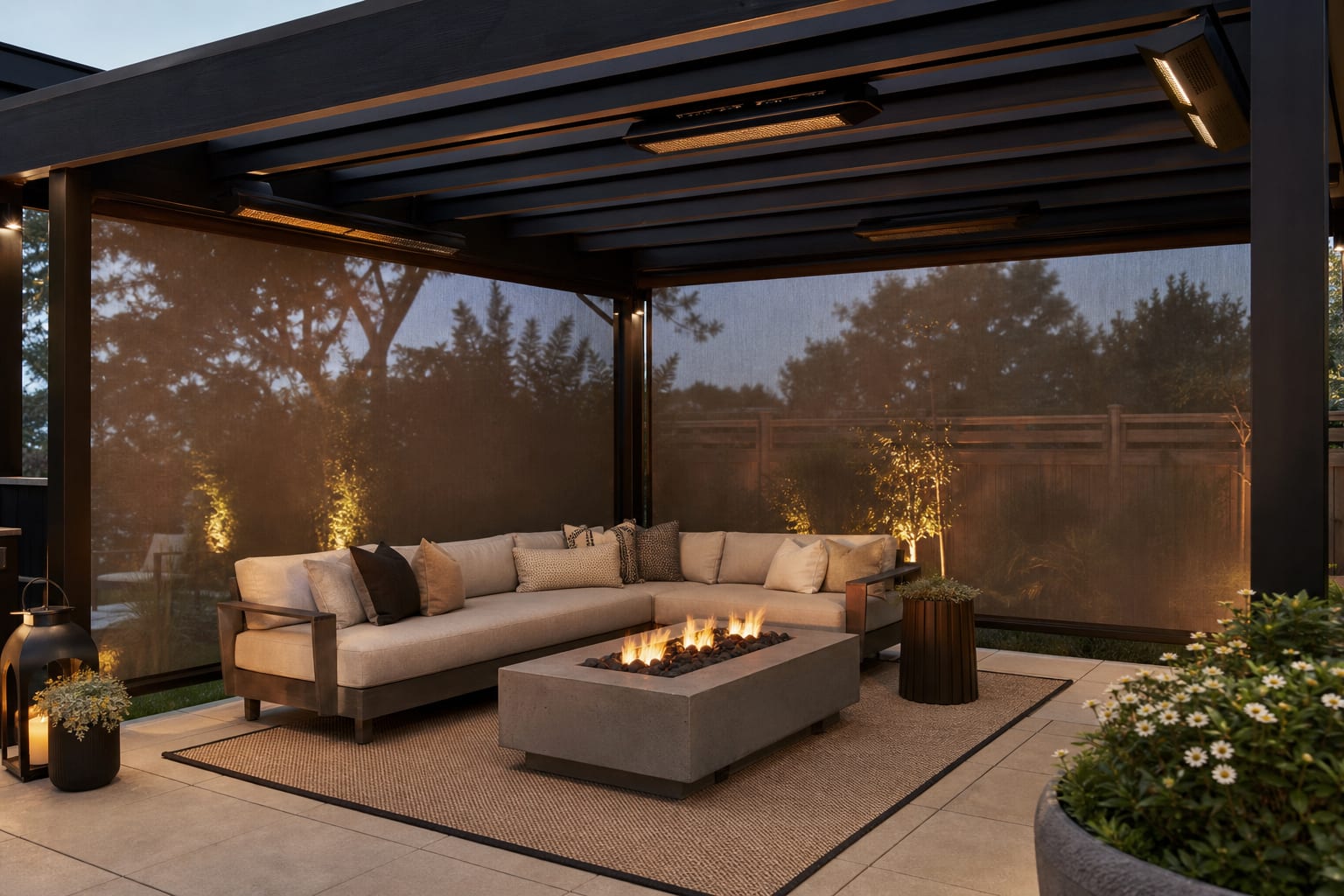
Design-check shorthand: depth before decoration, repetition before variety, maintenance before novelty.
What mistakes keep a heated pergola from working?
Buying a heater before deciding where people sit is the first mistake. Heat falls off fast past 8 feet, so pull furniture into a tighter zone first, then place the heater to serve it.
Ignoring combustibles above the fixture is the second. Pergolas collect exactly what heaters dislike: wood slats, canvas shades, vines, and rope lights. Read the clearance diagram before buying a heater that can't legally fit under the beam.
Heating an open wind tunnel is the third. Add a screen, hedge, or partial wall before increasing output; even a 24-inch planter with upright grasses softens airflow at ankle height.
Glossy, slippery finishes are the fourth mistake for a cool-season patio. Choose textured pavers, drainage-rated rugs, and rust-resistant furniture feet instead of polished stone.
Letting the heater dominate the view is the fifth. Match the heater body to the beam, hide conduit on the least visible side, and route cords with outdoor-rated electrical planning.
Should you preview the design with AI before committing?
Yes, because the expensive mistakes here are visual and spatial before they're technical. Upload a straight-on photo of the patio and preview beam heaters, a fire table, a side wind screen, and warmer lighting from the house-facing angle. Ask for 36-inch paths, heaters aligned with the main seating zone, 2700K lighting, and darker weatherproof cushions.
The preview won't replace the electrician, gas fitter, or manufacturer's clearance chart, but it will show whether the layout feels calm or crowded before anyone drills into a beam. If overhead heaters make the ceiling busy, try wall-mounted instead. If a fire table sprawls the chairs too wide, tighten the group or switch to overhead heat.
Frequently Asked Questions
What kind of heater works best for a pergola?
Hardwired overhead infrared at 1,500-3,000W per fixture gives the highest output for the smallest visual footprint. Gas patio heaters work too but lose efficiency above 8 feet of ceiling clearance.
Can a pergola be heated without a roof?
Open-slat pergolas lose roughly half their heat output to open sky. Add a retractable canopy, fixed louvered roof, or solid roof panel to make heating economical below 40 degF.
How many heaters does a 12x16 pergola need?
Two overhead infrared units at 3,000W each, spaced 6-7 feet apart and centered on the seating zone, cover a 12x16 pergola down to roughly 25 degF outside.
Is a heated pergola code-compliant?
Hardwired electric heat on a code-rated outdoor circuit with GFCI protection is generally compliant. Gas heat usually needs a dedicated supply and inspection, so check local code first.
What's the cheapest way to heat an existing pergola?
Two plug-in 1,500W overhead infrared units on dedicated GFCI circuits cost under $1,200 installed and effectively warm a 10x12 seating zone to about 35 degF outside.
> Try this: Ready to see this on your own outdoor space? Open ReDesign and run the preview before you buy materials, plant, drill, or move furniture.
Three transformations to try
1. Heated pergola with louvered roof 2. Heated pergola with side screens 3. Heated pergola with fireplace wall