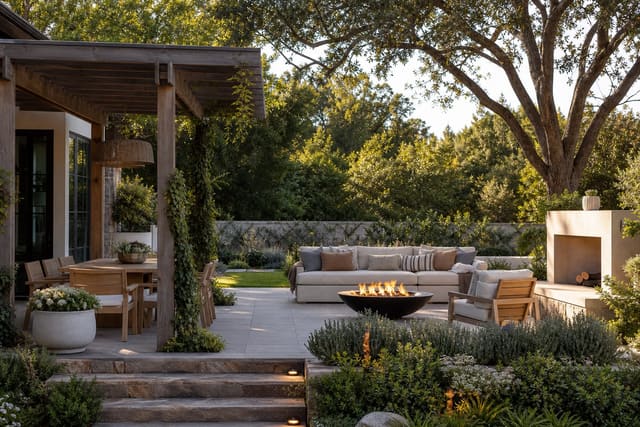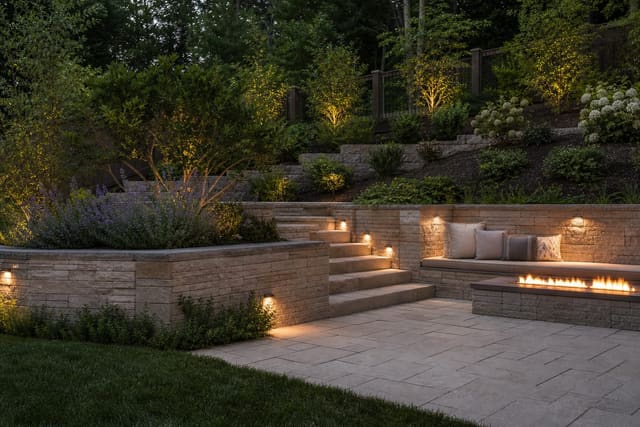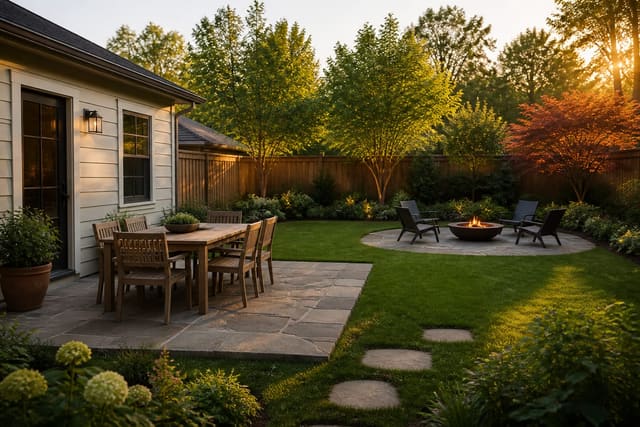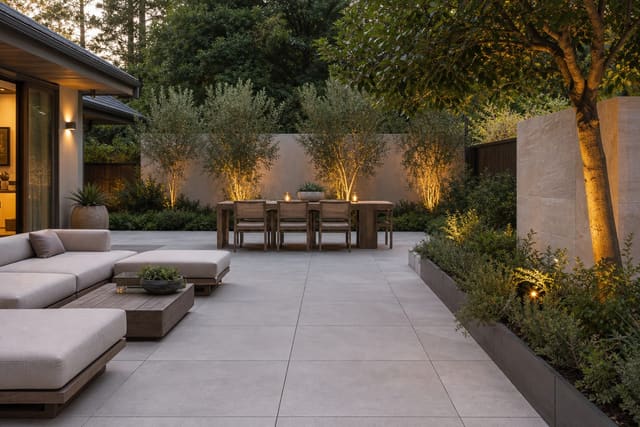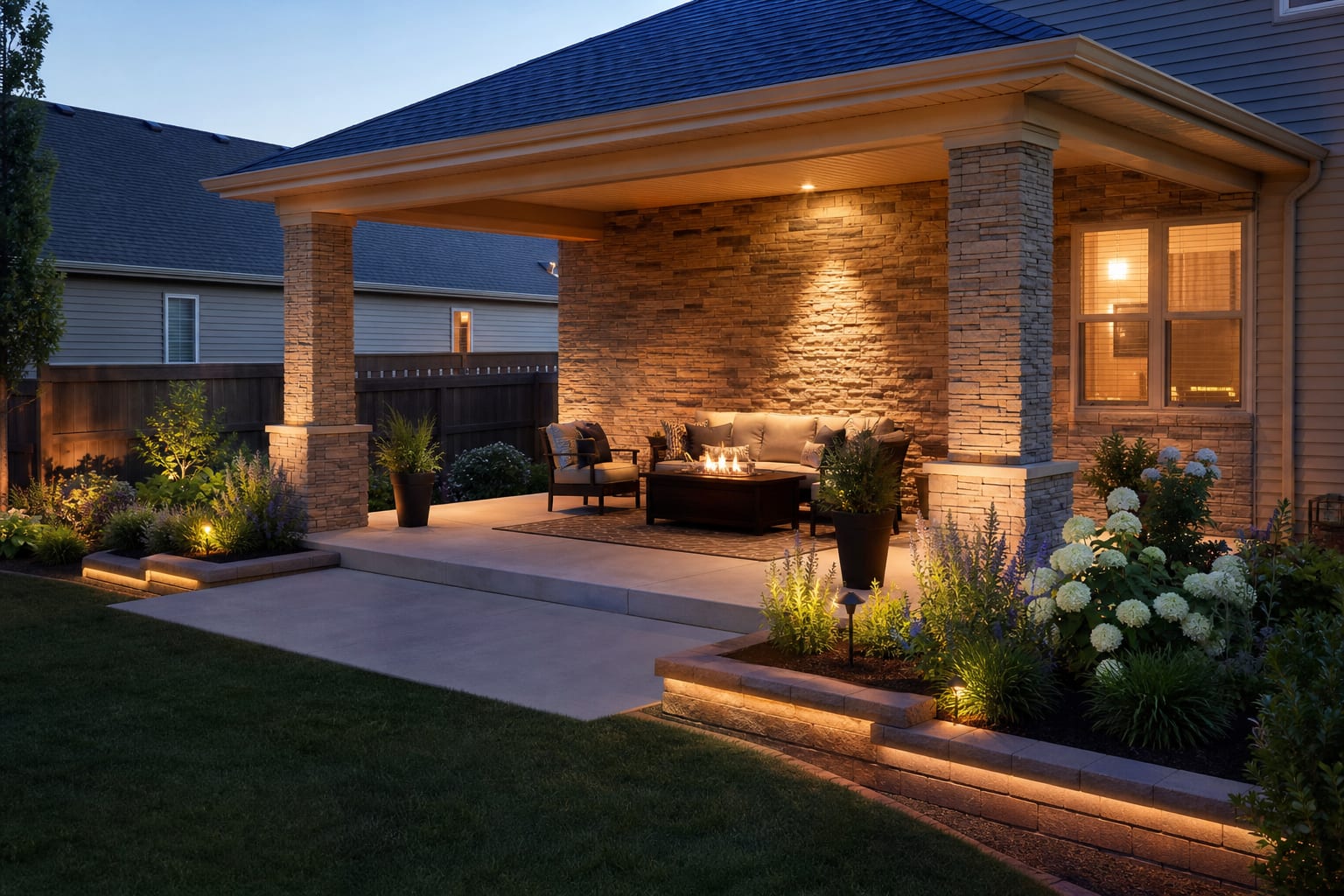
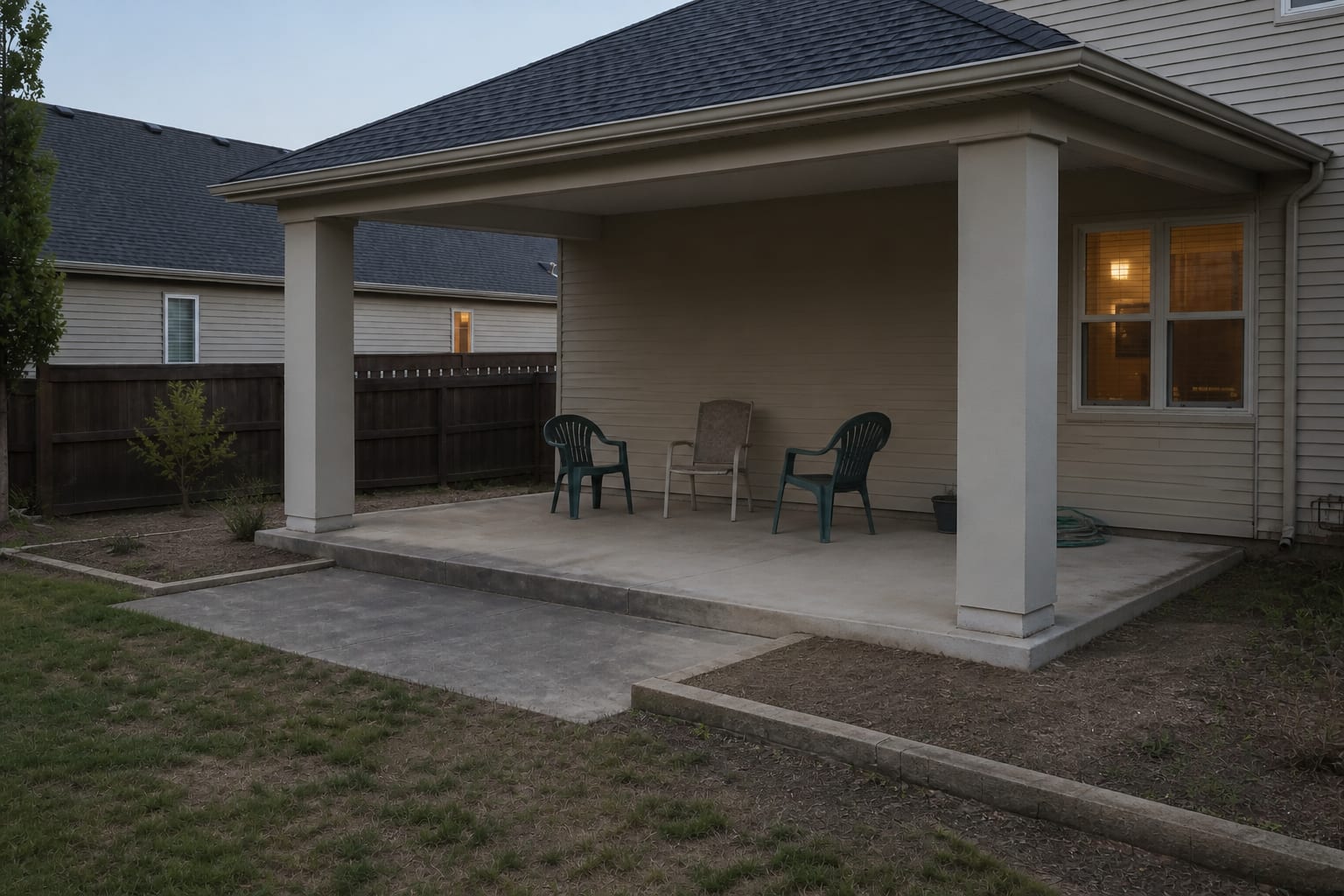
Outdoor stone veneer looks built in, not pasted on, when full-bed or thin-veneer stone runs in horizontal courses, wraps outside corners with true return stones, and gets a 2in capstone overhanging 1in at every top edge. The difference between convincing and faux almost always comes down to caps, corners, drainage, and how much surface you actually cover.
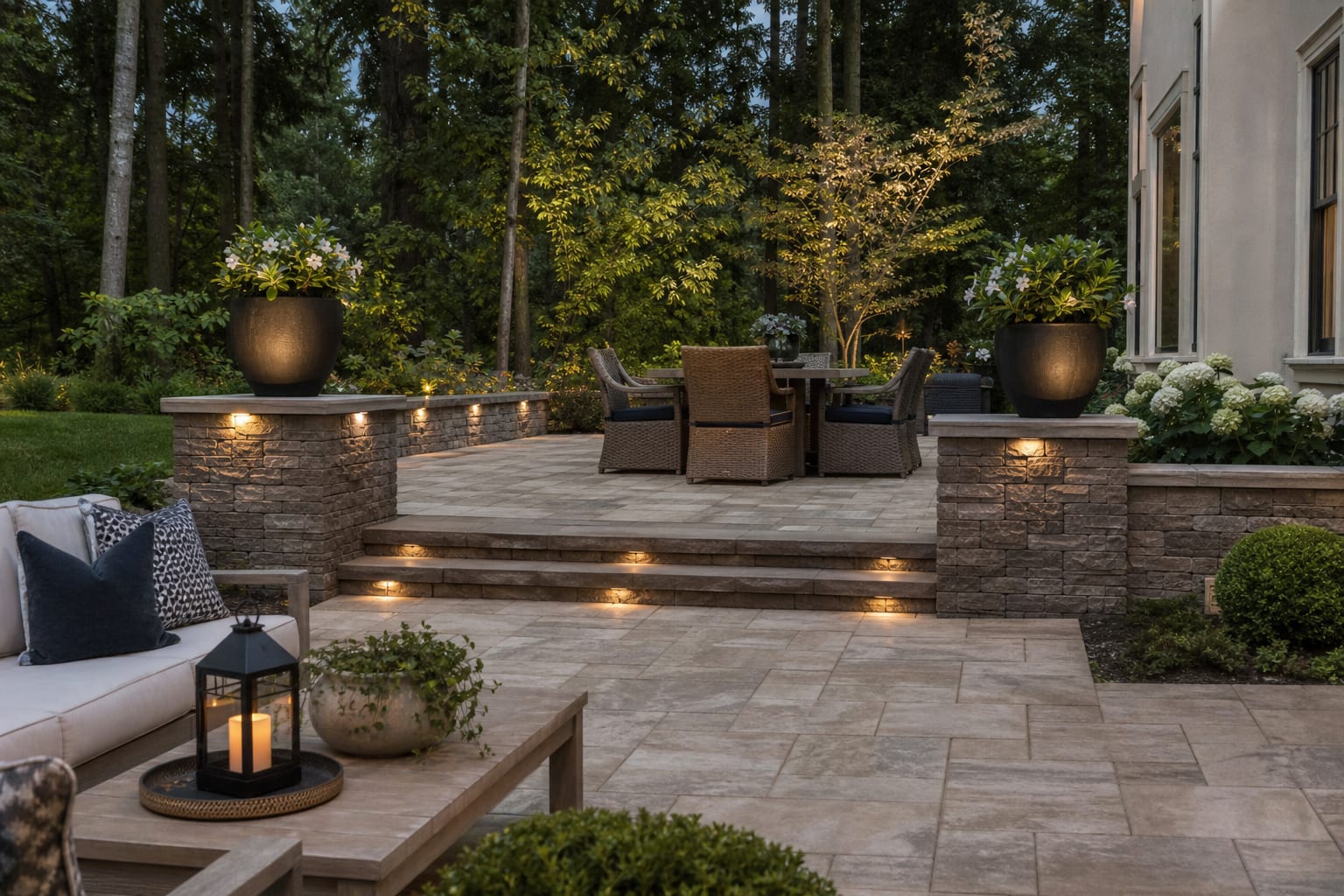
What makes outdoor stone veneer look built in?
Treat veneer as a cladding system over a properly prepared substrate, with drainage, caps, corners, and scale planned before the first panel goes up. Choose one or two vertical surfaces and let the house, patio floor, planting, and lighting do the rest.
On a plain concrete wall, veneer looks most convincing running full height between two hard stopping points, such as patio surface to coping or grade to a wood screen. Stopping randomly at 42 inches on a tall blank wall reads like the material ran out.
Pillars need discipline too. A 12in square post can look chunky once veneer and mortar are added; 16 to 24 inches usually carries stone better. Confirm the finished thickness does not crowd a gate swing, stair landing, or dining chair path.
Drainage decides whether the veneer ages well. Exterior cladding needs the right substrate, water-resistive layers, flashing, weep paths, and mortar or panel system for the product, and any horizontal surface above veneer needs a cap with a drip edge. A 1in to 1.5in overhang on stone, concrete, or metal keeps runoff from streaking the face.
Accent or architecture: the decision that shapes every project
Most patios only need one strong stone gesture: a fireplace wall, a pair of pillars, a low seat wall, or an outdoor kitchen face. Covering every vertical surface can make a small yard feel heavy, especially if the patio floor is already brick, concrete, or dark pavers.
| Veneer move | Best use | Watch the detail |
|---|---|---|
| Full feature wall | Blank concrete or CMU wall behind a sofa, dining area, or fountain | Add a cap or coping; don't stop short of corners. |
| Wrapped pillars | Pergolas, patio entries, gate posts, porch columns | Keep finished posts around 16in wide or more. |
| Low seat wall face | Fire pits, dining edges, raised planting beds | Seat height feels comfortable around 18-20in before cushions. |
| Outdoor kitchen base | Grill islands and prep counters | Use noncombustible assemblies and manufacturer clearances. |
Natural stone veneer has more variation, deeper shadow, and less repetition than manufactured panels, but needs a structure built for the system. Faux stone panels work on lighter-duty projects when seams are hidden and caps are real enough to cast a shadow.
The patio floor matters as much as the wall. A calm surface like porcelain tile patio ideas pairs well with rougher veneer because the pavers stay quiet while the vertical stone carries the texture.
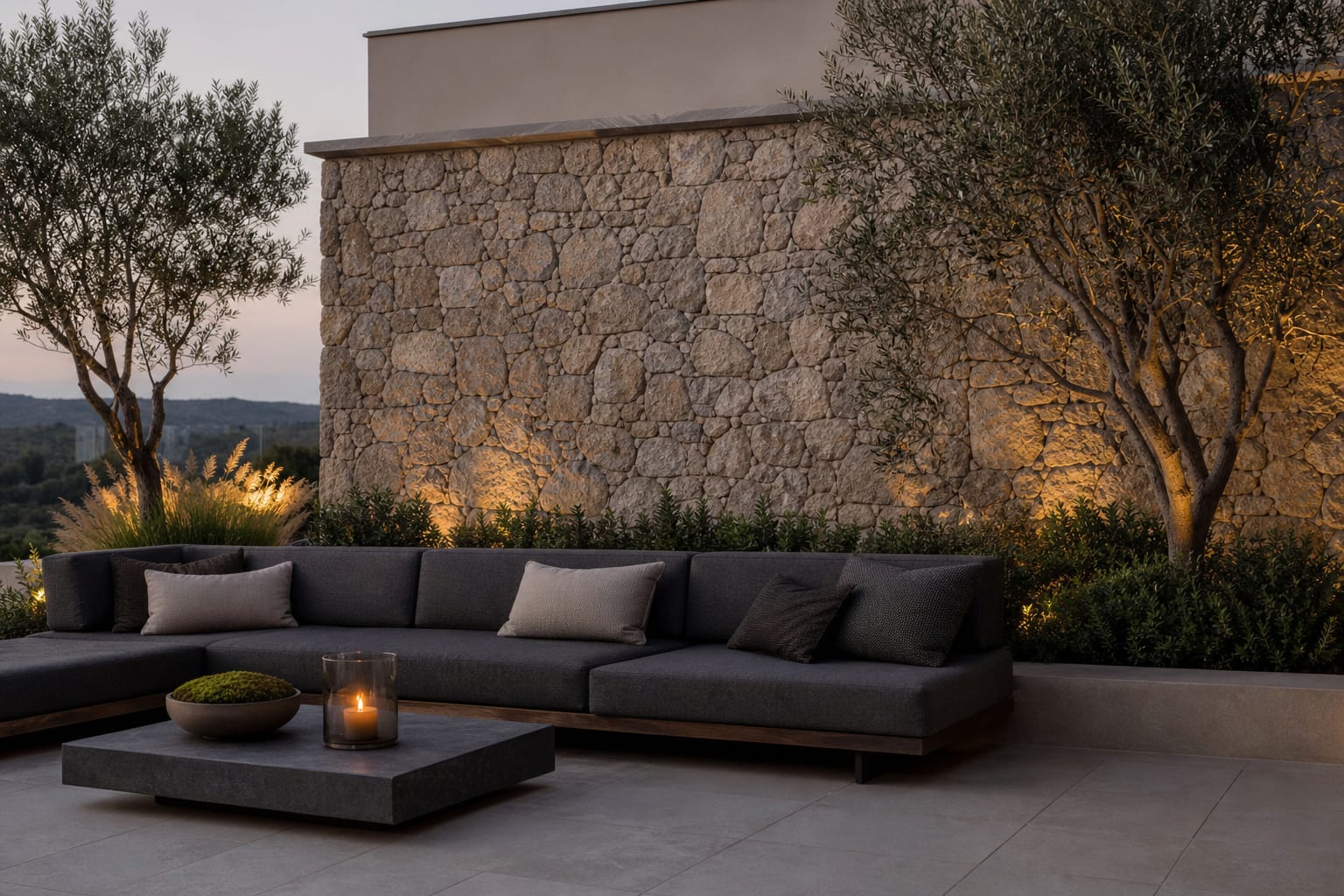
Test this on your own photo with ReDesign before choosing a direction; keep the house edge, horizon line, hardscape, planting beds, and main path visible so the preview solves the space you actually have.
Which stone veneer ideas make walls and pillars look intentional?
- Wrap the lower 30-42in of chunky pergola pillars, finished with a crisp trim band, so the upper post still looks deliberate.
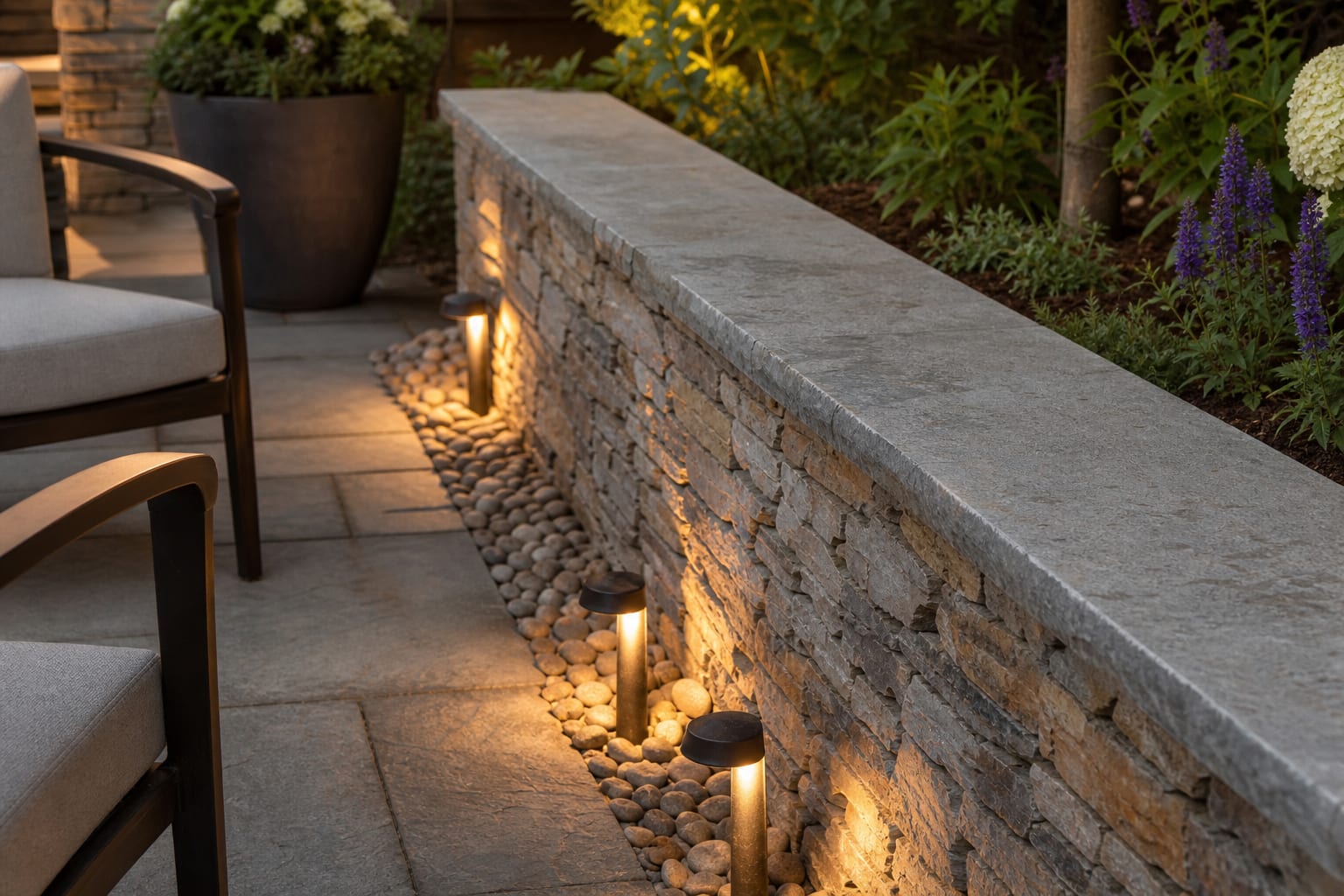
- Veneer a blank retaining wall full-face and add a 2in-3in cap to make it read as landscape architecture, not exposed concrete.
- Face a fire pit or fireplace wall in stone, keeping at least 36in of walking space behind chairs so the heavier wall doesn't squeeze circulation.
- Repeat the same veneer on a raised planter or seat wall near pillars, 8-15 feet apart, so it reads as designed rather than a lonely accent.
- Pair a stone wall with decomposed granite patio zones when a yard needs both a polished dining pad and a relaxed fire pit area.
- Add a 6in-12in gravel reveal at the base of a wall prone to splashback; gravel patio ideas can help tune that edge.
Plan lighting while the layout is still flexible. Use warm 2700K-3000K fixtures aimed to graze the wall from sconces, step lights, or shielded path lights rather than bright uplights inches from the face. Deep ledgestone throws dramatic shadows; flatter ashlar or limestone needs gentler light to avoid a striped look.
Common outdoor stone veneer mistakes
- Hiding bad proportions. A narrow, tall post doesn't become handsome with stone; build out the base or choose paint and planting instead.
- Skipping the cap. Use a capstone, coping, or metal cap with a drip edge and slight slope so water moves away from the wall.
- Mixing too many stone personalities. Pick one dominant mineral family and let brick, paving, and gravel support it quietly.
- Trusting a tiny sample board. Dry-lay a few square feet, include corner pieces, and view it in morning, shade, and evening light.
- Forgetting the bottom edge. Leave a clean reveal or gravel strip so veneer doesn't wick dirt from mulch and look buried.
Use AI design to preview your stone veneer before you commit
AI previewing helps because scale and undertone are hard to judge from a sample, especially on pillars and long walls. Upload a straight photo of the wall, column, grill island, or retaining wall, then test prompts like warm limestone veneer with capstones, charcoal stacked stone on square pillars, or natural stone veneer with planting at the base.
Include the siding, patio surface, fence color, steps, doors, roof overhangs, and furniture you plan to keep so the preview shows whether the stone feels grounded or crowded, and whether one accent wall is enough.
Once the look is right, confirm substrate, flashing, drainage plane, freeze-thaw suitability, product weight, and grill clearances with a qualified installer. The visual decision and the technical assembly need to agree.
Frequently Asked Questions
Thin veneer or full-bed stone outdoors?
Thin veneer (under 1.5in) handles non-structural cladding over CMU or framed walls with a weather barrier. Full-bed stone (3-5in) suits structural and freestanding garden walls that need to stand on their own.
How do you avoid the fake-stone look?
Avoid identical L-shaped corners by using real-thickness return stones, and vary stone size so no two adjacent pieces share a top edge. This breaks the repeating pattern that reads as manufactured.
Does stone veneer need a moisture barrier?
Yes, outdoors over framing or CMU it needs two layers of weather-resistive barrier, lath, scratch coat, and bond coat. Without the barrier, water trapped behind the veneer rots the substrate over time.
Should mortar joints be flush or recessed?
Flush or slightly raked joints with sand-finished mortar read like dry-stack and avoid a chunky grout-line look. Deep raked joints suit basement-style retaining walls, not patio-facing veneer.
How do I light stone veneer at night?
Mount a shielded warm-white wall grazer at the top or bottom pointing along the face. Light hitting the wall obliquely reveals texture, while flat front-lighting flattens it.
> Try this: Ready to see this on your own outdoor space? Open ReDesign and run the preview before you buy materials, plant, drill, or move furniture.
Three transformations to try
1. Stone veneer outdoor fireplace wall 2. Stone veneer pillars with capstones 3. Stone veneer garden wall with planted top