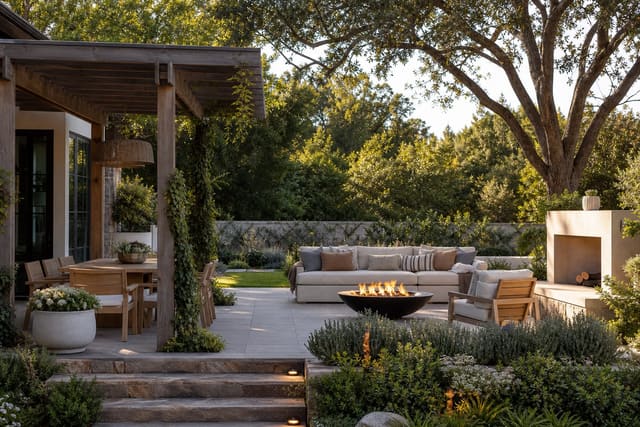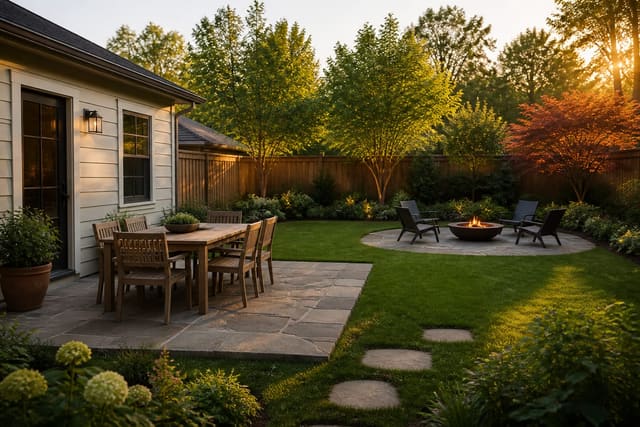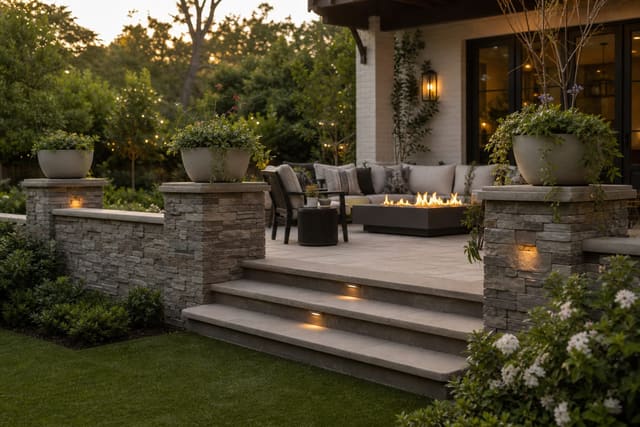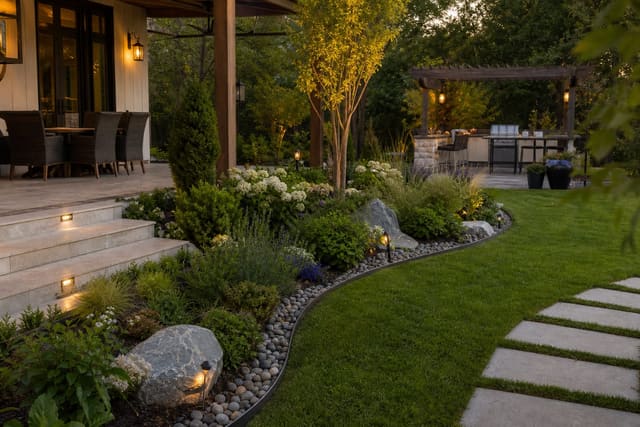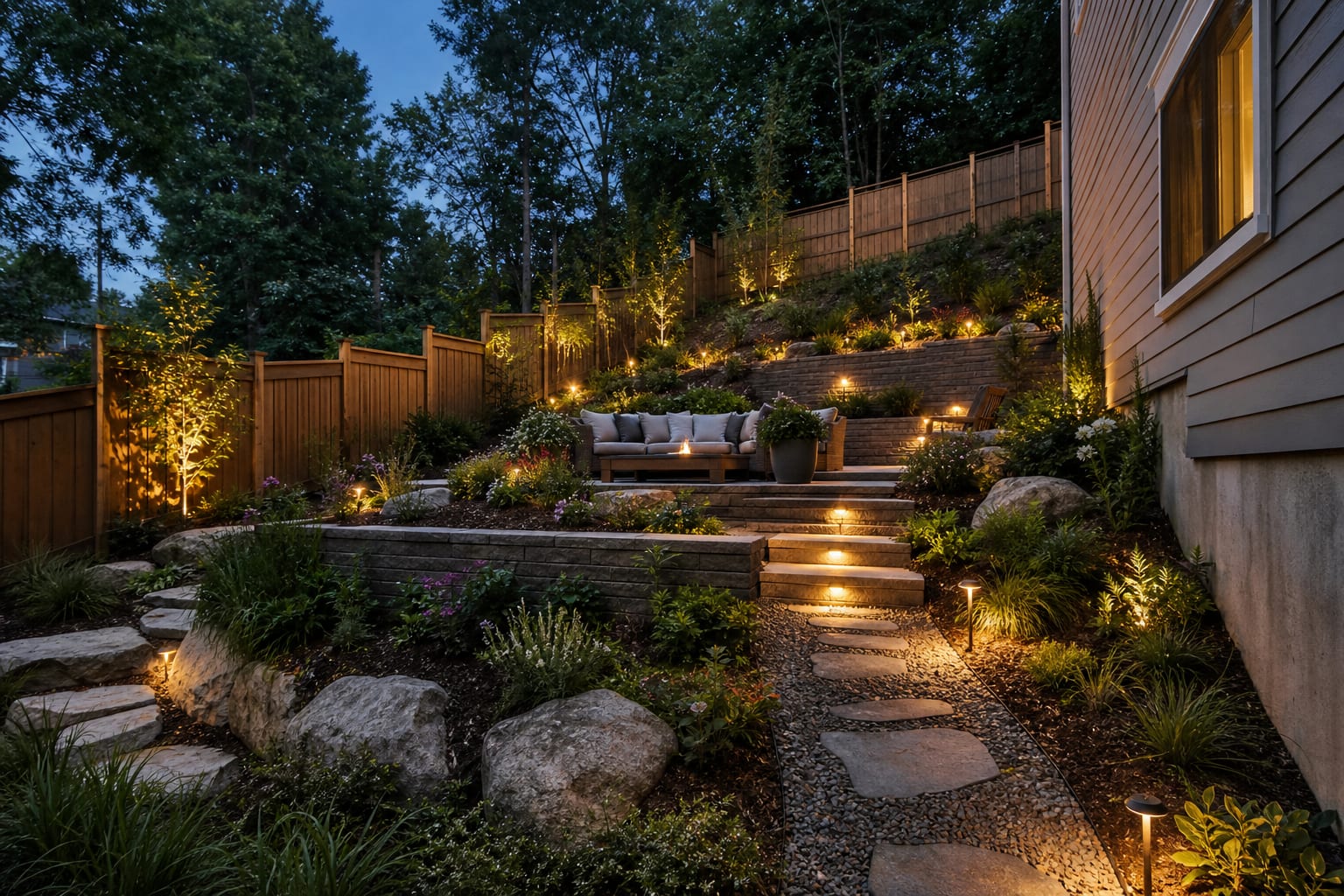
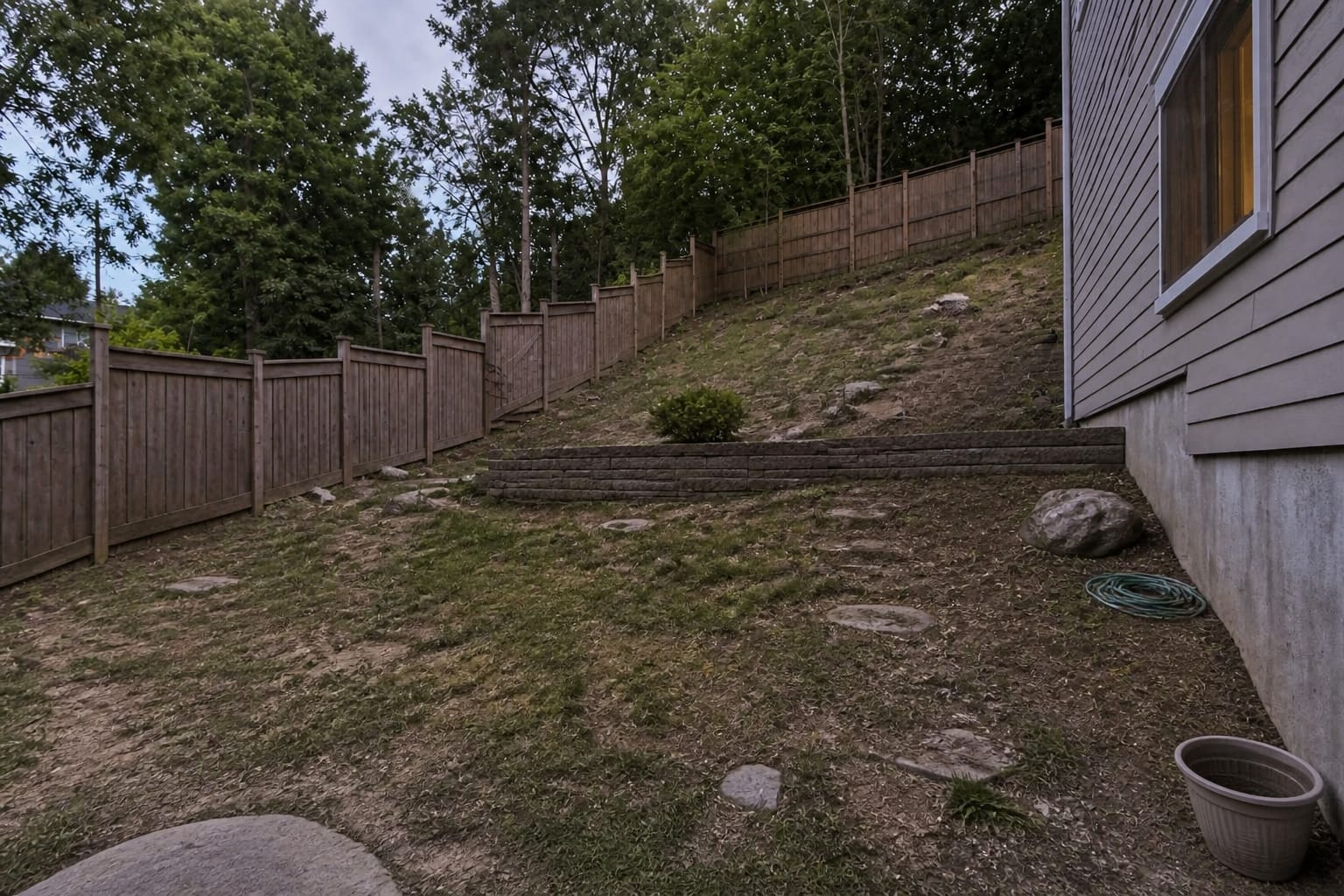
Engineered concrete block is the best retaining wall design choice for most sloped yards because it delivers structural predictability, modular installation, and reliable drainage. Natural stone wins when the wall stays under 30 inches and character matters more than speed. Either way, the wall should shape terraces and planting, not just hold back dirt.
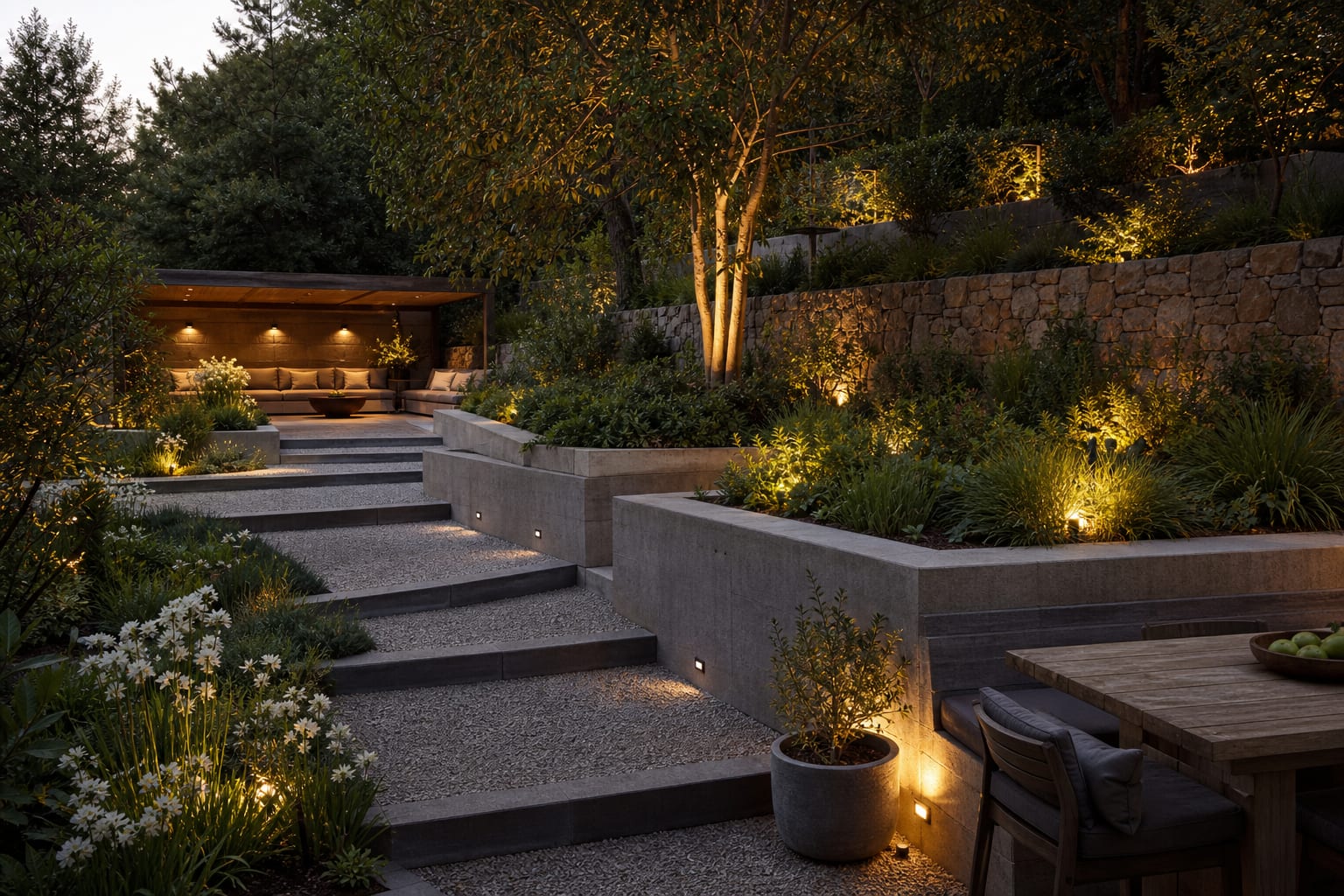
Which retaining wall material is best for a sloped garden?
Engineered concrete block suits most sloped gardens: it's structurally predictable, modular, drains cleanly, and fits many house styles. Natural stone is better when the wall stays modest in height and the garden wants an older, softer character.
| wall material | best use | spec to copy | watch out |
|---|---|---|---|
| segmental concrete block | terraces, drive edges, modern gardens | 6-8 inch compacted gravel base, manufacturer setback | cheap blocks can look commercial |
| natural fieldstone | cottage, woodland, historic gardens | batter the wall back into the hill | skilled labor matters more than stone price |
| poured concrete | contemporary yards, tight lines | reinforced footing and drainage mat | bare concrete can feel harsh without planting |
| timber | informal low garden walls | ground-contact lumber, deadmen anchors | shorter lifespan in wet soil |
| gabion baskets | rustic or industrial slopes | angular stone fill, level base, tied baskets | bulky profile needs space |
A wall has two jobs: resist the slope and look like it belongs. Segmental block handles the first reliably but can look stiff if the color fights the paving. Stone handles the second beautifully, but a loose stone wall asked to hold a tall wet slope is a bad bargain.
How should a tiered garden retaining wall shape the yard?
A tiered wall should create usable shelves, not slice the hill into stripes. Start with the destination — dining pad, fire pit, vegetable bed, shed path, or bench — then let the walls hold those places at the right height.
For steps, aim for a 6-7 inch riser and 11-14 inch tread, subject to local code. Keep primary paths around 36 inches wide, widening to 42-48 inches where two people pass. Leave at least 24 inches of soil between low tiers for grasses and perennials, or 36-48 inches for shrubs.
If the wall meets lawn, borrow discipline from clean garden bed edging ideas so mulch, turf, gravel, and wall caps don't blur together.
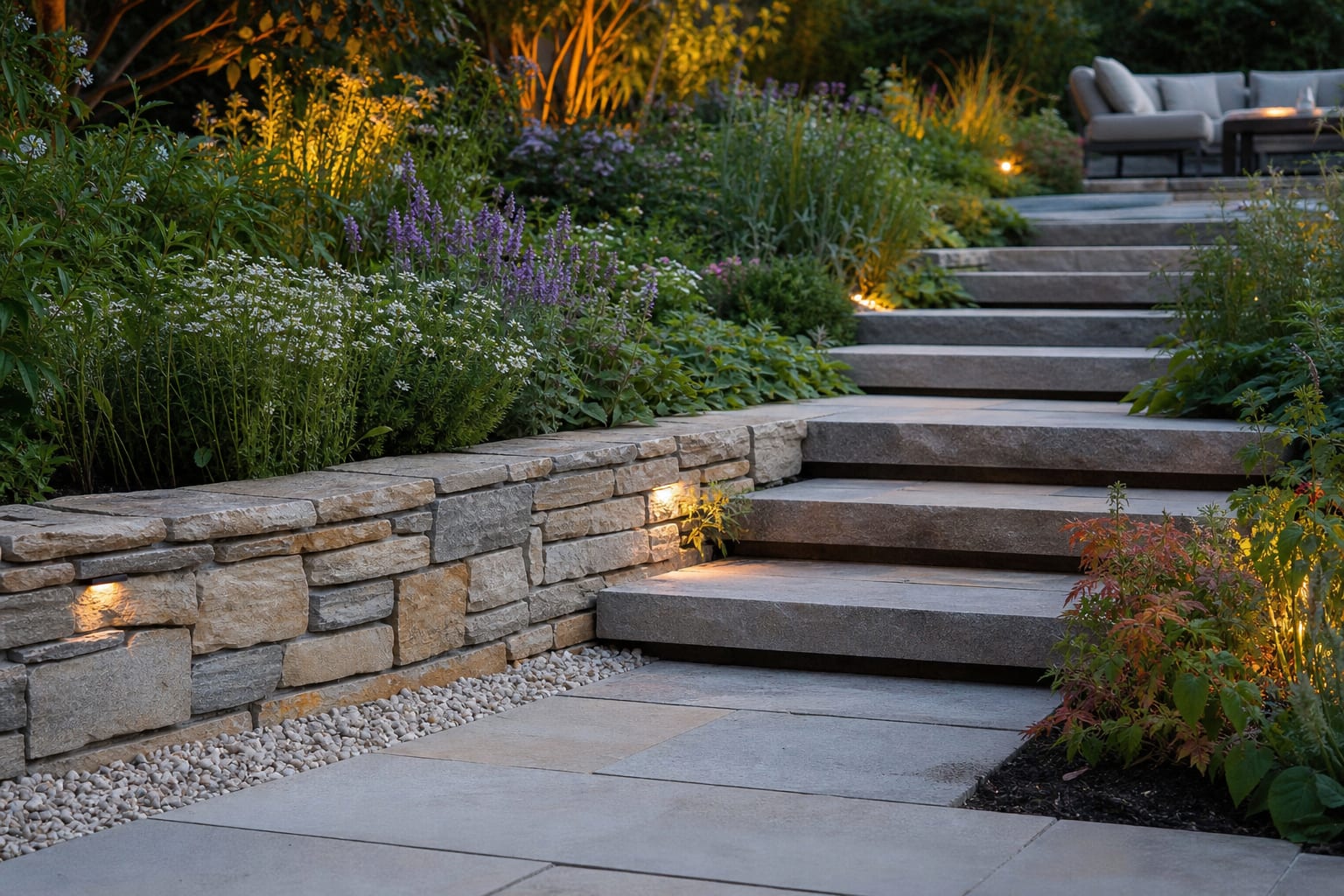
Test this on your own photo with ReDesign before choosing a final direction; keep the house edge, horizon line, hardscape, planting beds, and main path visible so the preview solves the space you actually have.
Five retaining wall design ideas that make the slope look intentional
- Build two lower walls instead of one tall wall when the slope allows it. A pair of 24-30 inch walls with planting between them adds shadow and depth without the fortress effect of a single 5-foot face.
- Use stone near older brick, cottage siding, or informal planting. Repeat the same stone in a step riser, path edge, or garden seat so the wall connects to the rest of the yard.
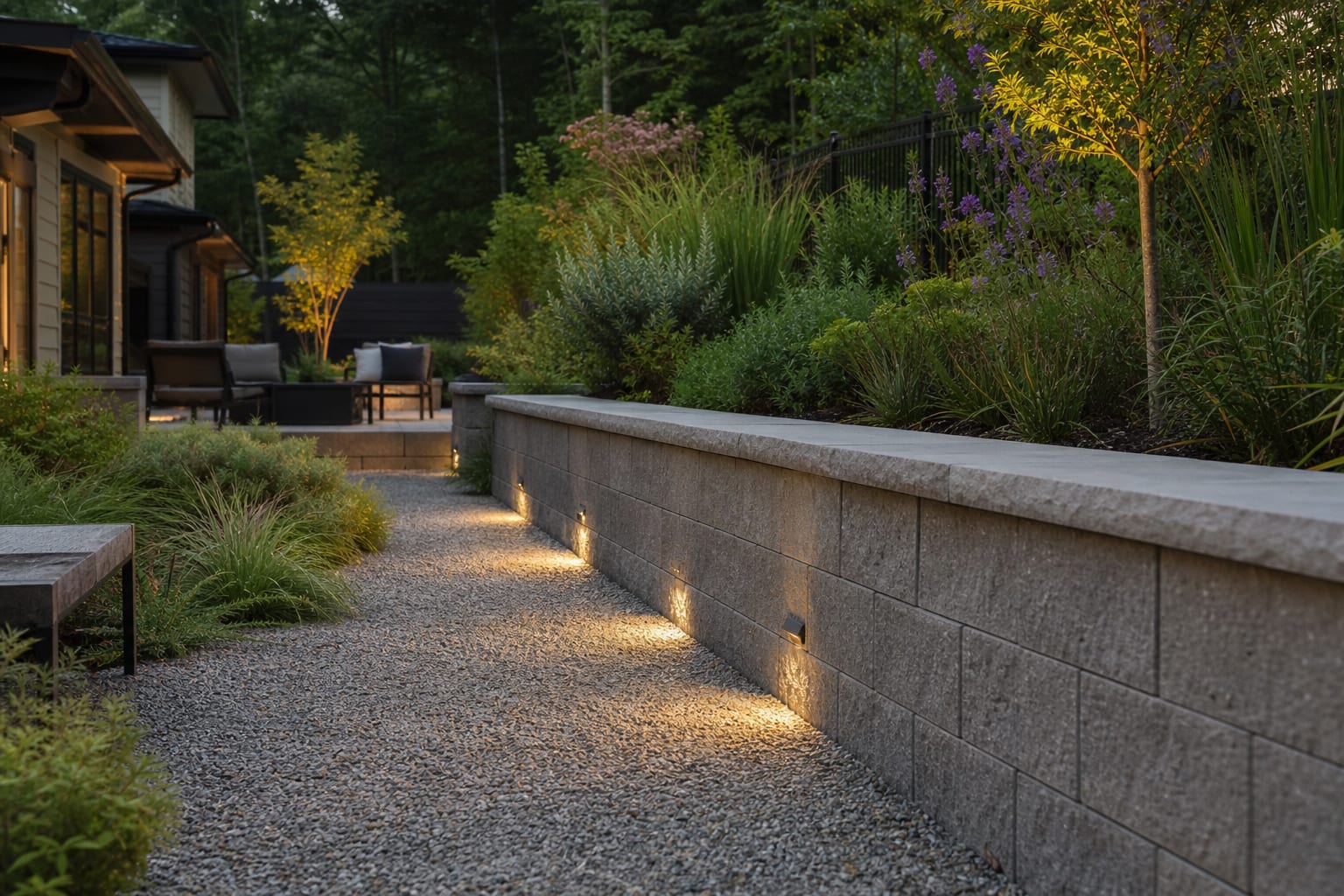
- Choose concrete block for crisp terraces beside patios, driveways, and contemporary homes. Keep the cap simple and let grasses, lavender, rosemary, or trailing thyme soften the face.
- Turn a low wall's top into seating where the terrace already gathers people. An 18-22 inch wall can double as a perch if the cap is smooth, wide, and away from drop-offs.
- Make the wall frame a destination instead of stopping halfway across the slope. If a studio or workspace sits at the upper level, connect the geometry with backyard office shed ideas.
- Replace unusable steep grass with planted terraces. If the slope is too awkward for turf but too short for major walls, compare the plan with lawn alternative ideas for difficult yards before overbuilding.
Common retaining wall mistakes that make a yard fail
- Choosing the prettiest face before understanding water. Every serious wall needs drainage behind it: clean angular gravel, filter fabric where appropriate, and an outlet through weep holes or daylighted pipe.
- Building perfectly vertical because it looks tidy on paper. Many gravity and segmental walls need batter — a slight lean back into the slope — to resist soil pressure.
- Ignoring what sits above the wall. A driveway, hot tub, pool deck, large tree, or filled planter adds load; anything beyond a garden bed needs professional design.
- Mixing too many materials. Contrast is fine, but pick one primary wall material, one paving material, and one accent, or the yard looks repaired in episodes.
- Forgetting maintenance access. A 12-inch planting shelf is too narrow to weed or mulch; give yourself real footing and a route for tools without stepping on the cap.
Use AI to preview the wall, terrace, and planting before excavation
The expensive decision with any retaining wall is proportion: how tall it feels from the patio, how much planting softens it, and whether the terrace actually creates usable space. Upload a straight-on photo from the back door or main path, then preview a stone wall, a concrete block wall, two lower tiers, wider steps, and planted slopes before excavation starts.
Keep the preview honest against measurements — if the yard drops 5 feet, don't approve an image showing one knee-high wall solving the whole grade. Use it to compare direction, then bring the chosen layout to a contractor, mason, or engineer for drainage, base, geogrid, footing, and permit details.
Frequently Asked Questions
How tall can a retaining wall be without a permit?
Most jurisdictions allow up to 30-36 inches unreinforced without engineering. Above that height, geogrid reinforcement, structural engineering, and permits are typically required, especially near driveways, patios, or foundations.
One tall wall or several short tiers?
Multiple shorter tiers, each under 30 inches, with planted terraces between them read more designed and shed water more safely than a single tall wall. Tall walls demand engineering and structural drainage that add cost and complexity.
What goes behind a retaining wall?
A drainage layer: 12 inches of clean gravel against the wall's back, a perforated pipe at the base wrapped in filter fabric, and graded backfill above. Without drainage, hydrostatic pressure can push the wall over within a few years.
What materials work best for retaining walls?
Dry-stacked natural stone works under 24 inches, concrete block with geogrid handles 30 inches to 6 feet, and poured concrete or full-mortar stone suits taller engineered walls. Pressure-treated timber walls often fail at the connections within 10-15 years.
Should the wall be lit?
Yes. A shielded, warm 2700K wall grazer or cap light highlights the wall's texture, marks the level change at night for safety, and turns the wall into a featured element rather than a plain barrier.
> Try this: Ready to see this on your own outdoor space? Open ReDesign and run the preview before you buy materials, plant, drill, or move furniture.
Three transformations to try
1. Tiered stone retaining walls with planted terraces