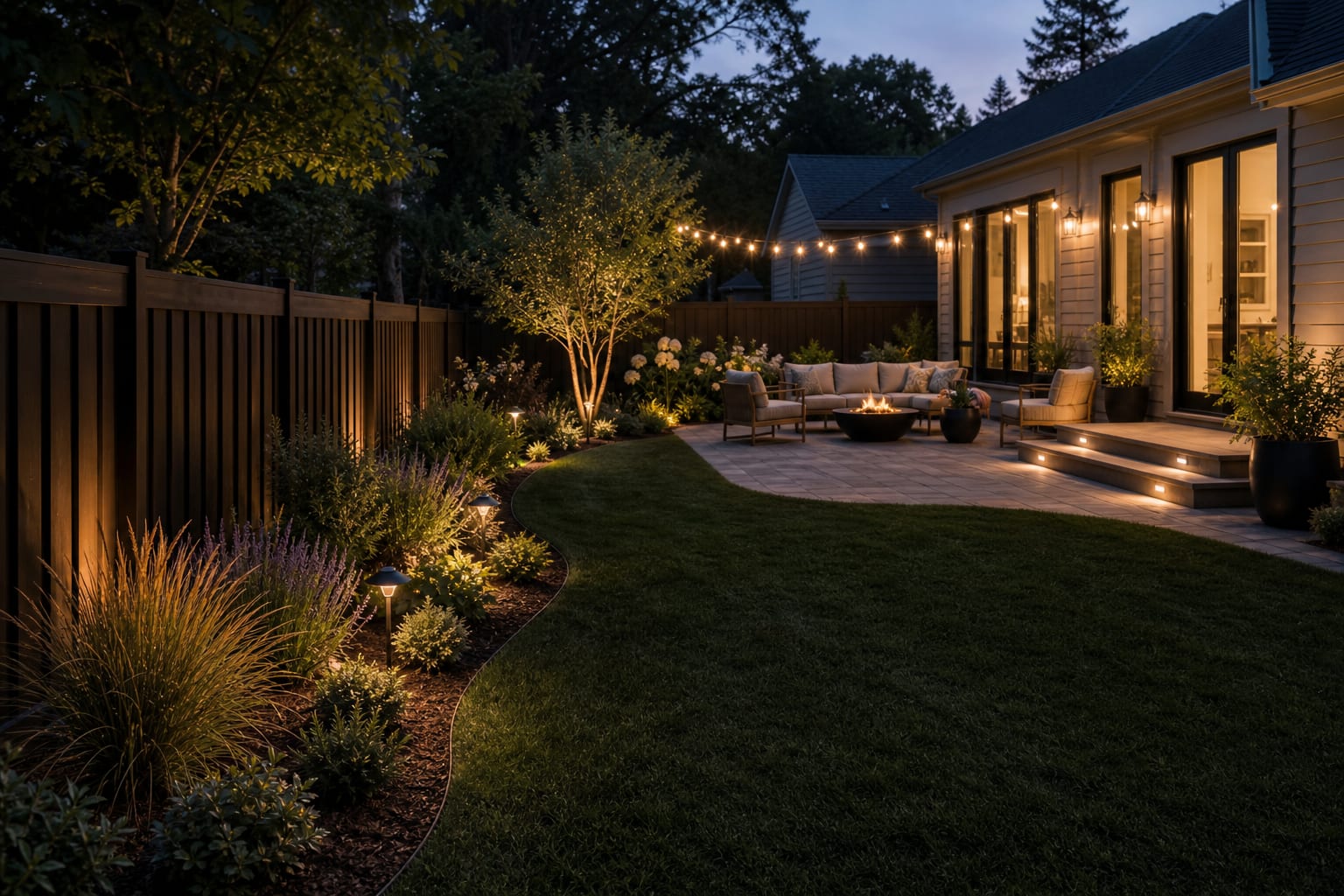
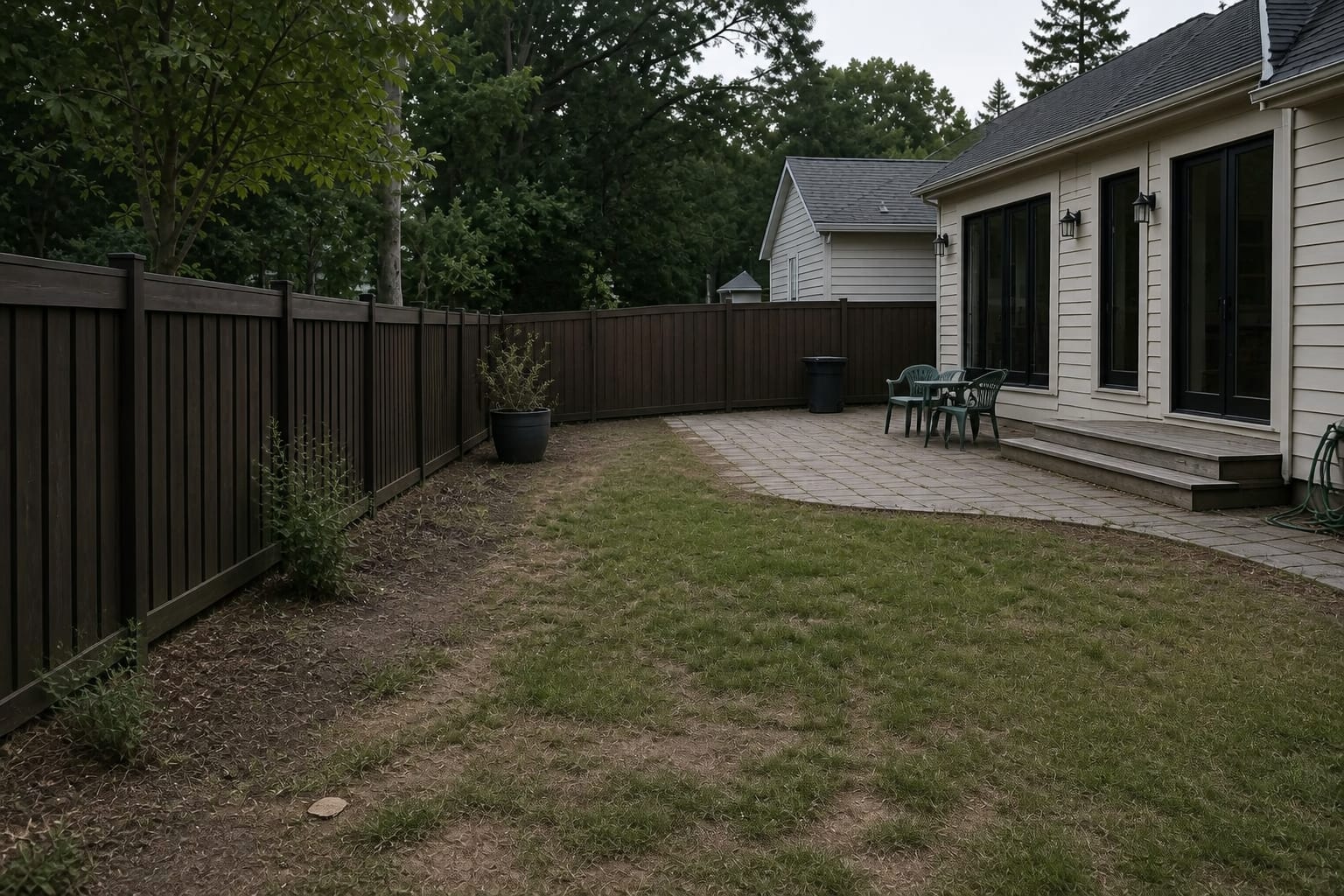
The best lawn edging material is powder-coated or galvanized steel: a 4–5 inch vertical edge, spade-cut or backed by steel, stone, or brick, keeps the mower wheel on lawn, holds the bed shape, and stops mulch from spilling onto grass. Edging isn't decoration — it's the line telling lawn, mulch, gravel, and planting where to stop.
What is the best lawn edging material?
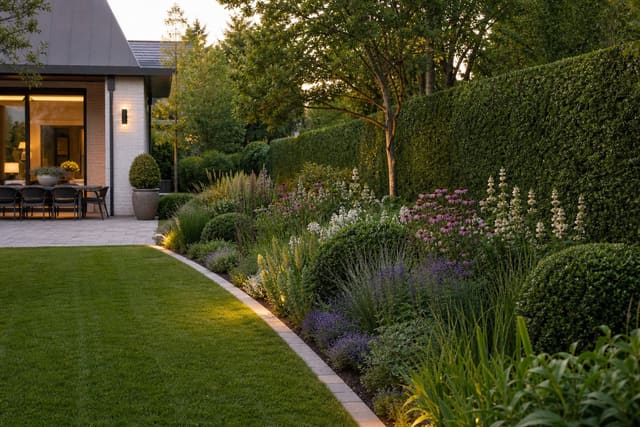
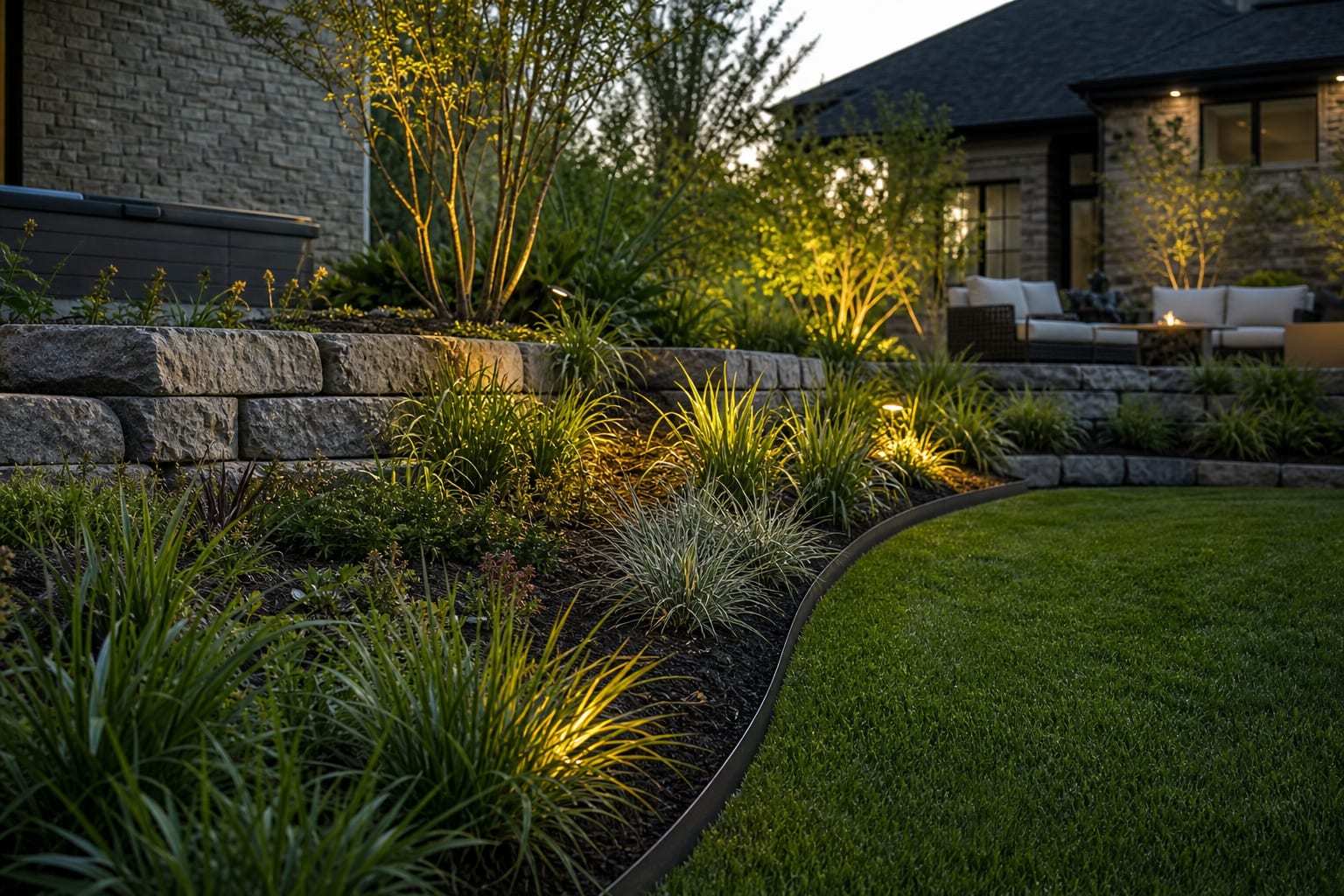
Powder-coated or galvanized steel wins for most crisp garden beds because it's thin, strong, flexible, and visually quiet. It defines mulch against turf without building a little wall around every plant. Use steel around 1/8 inch thick, staked every 24–36 inches, with only 1/2–1 inch exposed above the lawn near mower paths.
| Edging material | Best use | Spec to copy | Watch-out |
|---|---|---|---|
| Powder-coated steel | Clean curves and modern beds | 4–6 inch depth, 1/8 inch thickness | Scratched coating can rust if ignored |
| Galvanized steel | Utility edges and long runs | Stakes every 24–36 inches | Brighter finish may stand out at first |
| Aluminum | Light-duty curves near paths | 4 inch depth minimum | Can kink on tight bends |
| Brick or paver | Traditional borders near paths | Set on 2–3 inches compacted base | Frost heave can make lines uneven |
| Natural stone | Cottage and woodland beds | Bury 1/3 of each stone | Harder to mow beside irregular faces |
| Spade-cut trench | Informal natural border edging | Recut 2–3 times per season | Needs maintenance discipline |
Steel garden edging works best when the planting is already busy: salvia, grasses, hydrangeas, hostas, coneflowers, and mulch all compete for attention, so the edge should be the quiet outline. If your yard is shifting away from turf, pair it with lawn alternative ideas that reduce mowing so gravel, clover, groundcover, and beds meet cleanly.
Where should the edge line actually go?
The right line usually sits farther out than homeowners first draw it. Skinny 8–12 inch beds along a fence or foundation look like afterthoughts; aim for 24–36 inches deep minimum, 48 inches or more where shrubs need room. Around trees, keep mulch 3–6 inches from the trunk and skip the volcano-mulch ring.
A good design respects maintenance: mower wheels need a predictable path, so avoid scalloped borders that force tight turns. A long radius curve is easier to cut, easier to irrigate, and more elegant from the house. Where a bed meets a walkway, align the edge with an existing joint, step, or corner, since random stopping points make even good edging look improvised.
Grade matters too. A flush steel edge can disappear beautifully on flat ground, but on a slope it may need to step gradually or it will reveal gaps beneath the strip. Where soil drops more than 6–8 inches across a short run, edging is the wrong tool — check retaining wall design ideas for sloped beds instead.
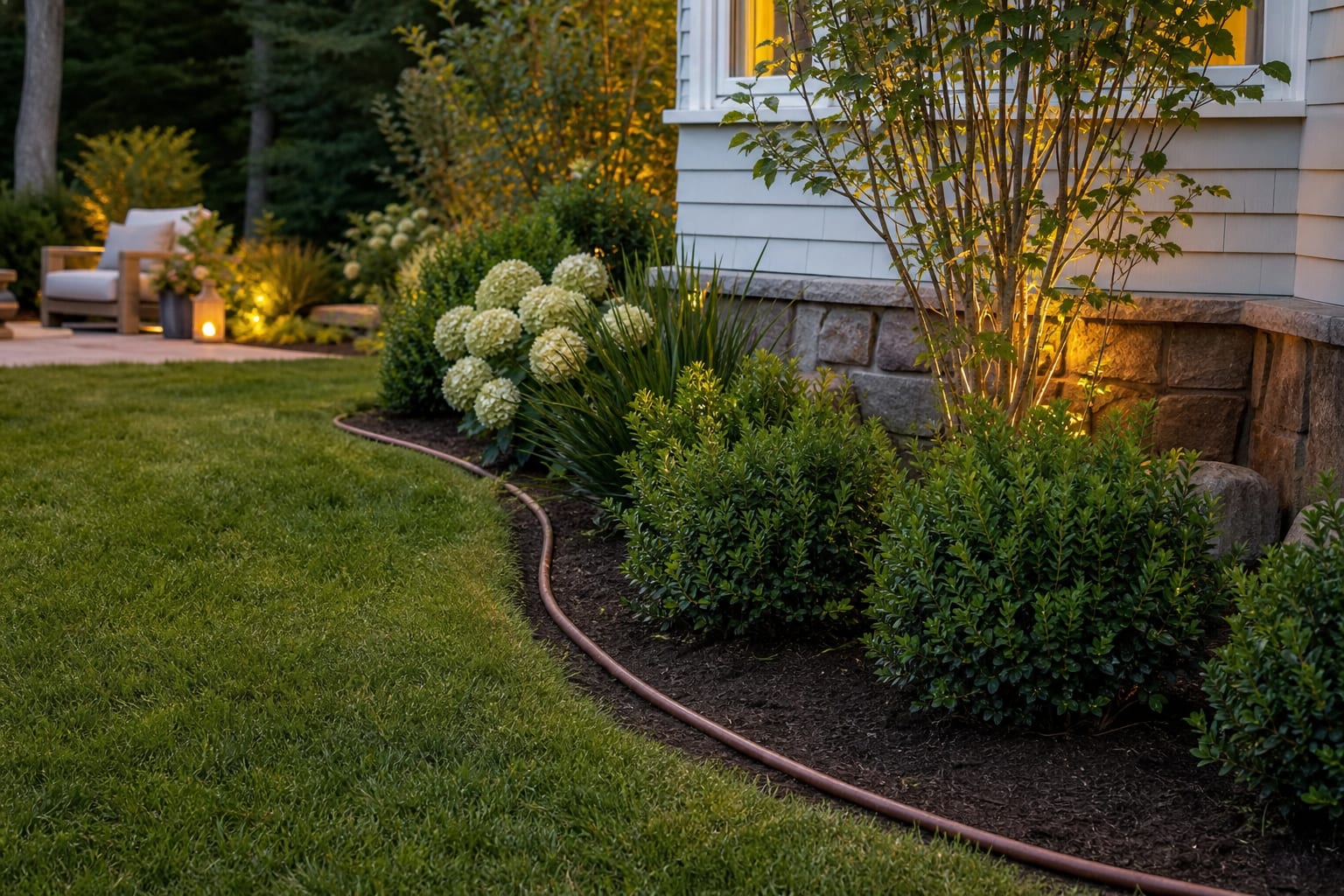
Test this on your own photo with ReDesign before you commit; keep the house edge, horizon line, hardscape, planting beds, and main path visible so the preview solves the space you actually have.
Which garden bed edging ideas fit the house?
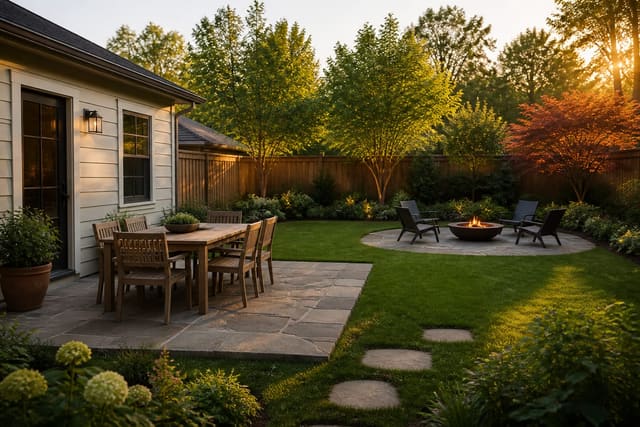
The best ideas borrow from the house, hardscape, and existing planting style. A farmhouse with brick steps can handle a brick soldier course; a stucco modern home often wants black steel; a wooded lot may suit a cut trench and fieldstone better than anything glossy. Match character before color.
- Black steel for contemporary beds where plants should be the feature. Keep the exposed line under 1 inch, buried 4–6 inches.
- Brick edging when the home already has brick, clay pavers, or warm stone. Set on a compacted base with a mowing strip; loose bricks on soil tilt after freeze-thaw.
- Spade-cut natural border edging for native, shade, or cottage beds where rigid metal feels too architectural. Cut 4–6 inches deep with a clean vertical lawn side, refreshed as grass creeps in.
- Stone cobbles near gravel paths or informal patios. Bury roughly one-third of each stone so it looks seated, not sprinkled on top.
- Low concrete or paver curbing only where the yard already has strong hardscape lines; keep the face low so beds don't read as parking-lot islands.
- Buried metal or aluminum restraint under dense groundcover like thyme, sedge, or creeping phlox, letting the planting hide the hardware.
Don't ignore the view from outdoor rooms. A crisp border can ground a shed or seating zone; the same logic applies when planning backyard office shed ideas with planting around them — the bed line should guide the eye toward the structure, not wobble around it.
Common lawn edging mistakes
- Using plastic where you need a clean line. Thin strips ripple, lift, and telegraph every stake in sun-baked lawns; use steel or aluminum instead, and save plastic for hidden utility separation.
- Exposing too much material. A 3-inch black band can look like eyeliner drawn with a marker. Keep most edging close to grade with just enough reveal to stop mulch spilling.
- Drawing tiny scallops. Scalloped edges create mowing headaches and shrink the garden visually. One confident curve across 12–20 feet beats five nervous wiggles.
- Expecting edging to solve weeds alone. It slows grass migration but doesn't replace mulch depth or hand weeding. Keep mulch 2–3 inches deep after settling, away from stems and trunks.
- Mixing too many border materials. Steel in front, brick around one tree, plastic by the fence, and stone by the patio makes a yard feel patched together. Pick one primary material and one secondary at most.
Use AI to preview your garden edging before you trench
Edging is hard to judge from a product sample in your hand. Upload a straight-on photo of the bed and test a black steel line, a natural stone edge, a wider mulch shape, or a softer trench border before cutting soil. The preview won't replace measuring or checking drainage, but it can reveal a curve that's too tight, a material that's too loud, or a bed that needs 12–18 inches more width.
Use a photo from where you actually see the garden most — driveway, kitchen window, patio chair, or back door. A border that looks perfect from two feet away may vanish from the deck. Once the preview feels right, mark the proposed edge with a hose or marking paint and live with it for a day before digging.
Frequently Asked Questions
What's the best garden bed edging?
Slim steel edging delivers a near-invisible crisp line and lasts 20+ years. Brick or stone edging reads more traditional but installs slower. Spade-cut edges work well but need recutting roughly twice a season to stay sharp.
How deep should garden bed edging be?
Steel edging buried 4-5 inches deep with about 1 inch exposed at the top stops grass rhizomes from crossing into beds. Deeper installations, closer to 6-8 inches, are needed to block tree roots at the bed boundary.
Plastic, metal, or stone edging?
Steel and aluminum win on longevity and crispness. Stone or brick read more traditional but are slower to install and cost more upfront. Plastic edging warps in heat and typically frost-heaves out of the ground within 2-3 winters.
Do garden beds need a mowing strip?
A mowing strip — a 4-6 inch flat band of pavers or compacted gravel between lawn and bed — eliminates string-trimming maintenance entirely. It's the cleanest solution for high-traffic gardens where trimmers are used weekly.
Curved or straight bed edges?
Sweeping curves with a consistent radius read as more designed than tight zigzag curves. Straight edges suit modern and formal gardens best. Mix only one curve style across the whole yard to keep the layout coherent.
> Try this: Ready to see this on your own outdoor space? Open ReDesign and run the preview before you buy materials, plant, drill, or move furniture.
Three transformations to try
1. Steel-edged garden beds with crisp lawn line