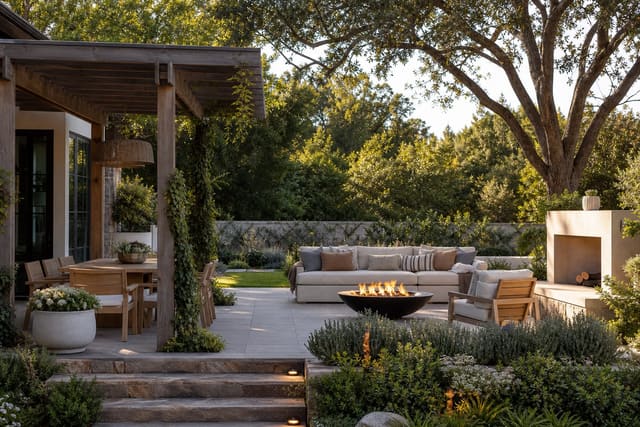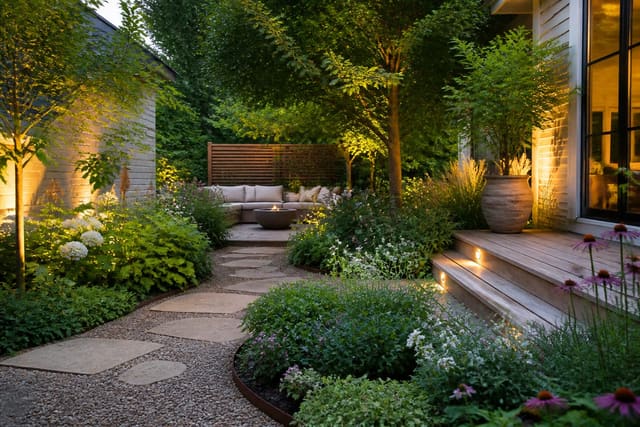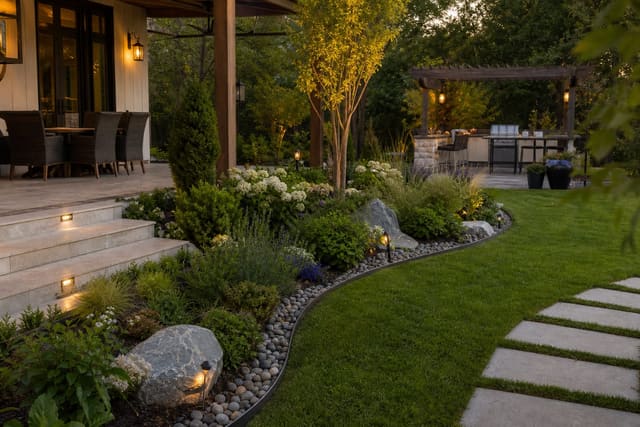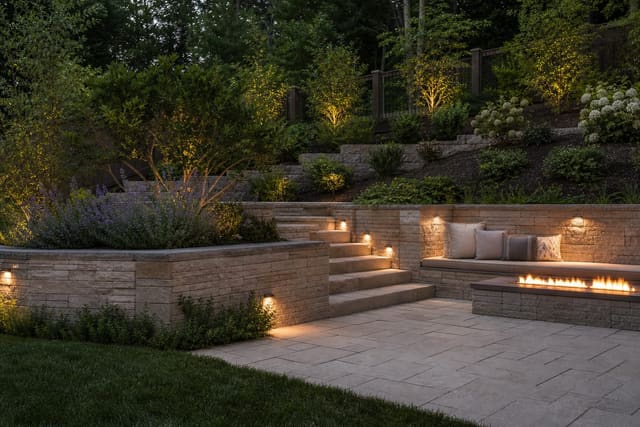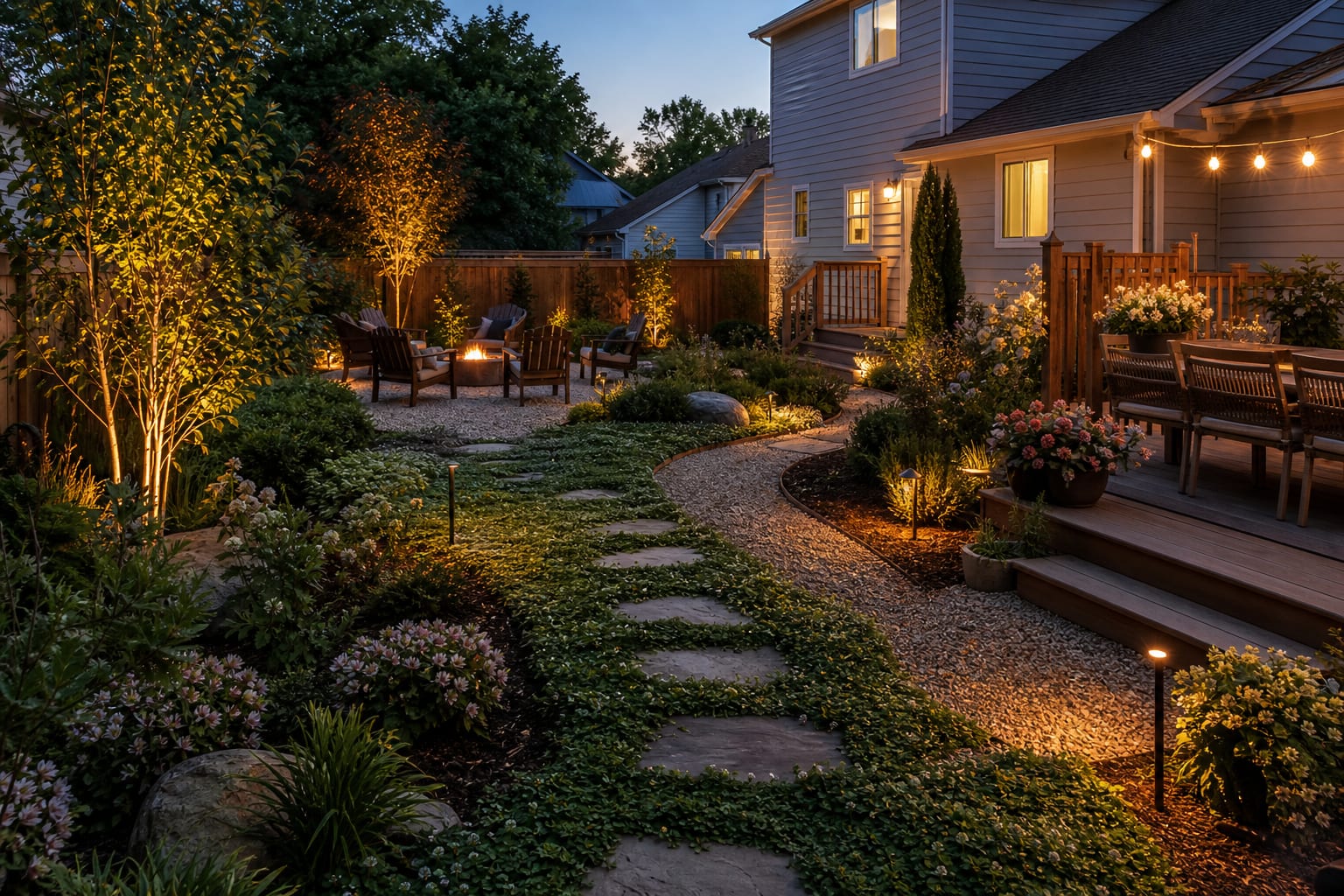
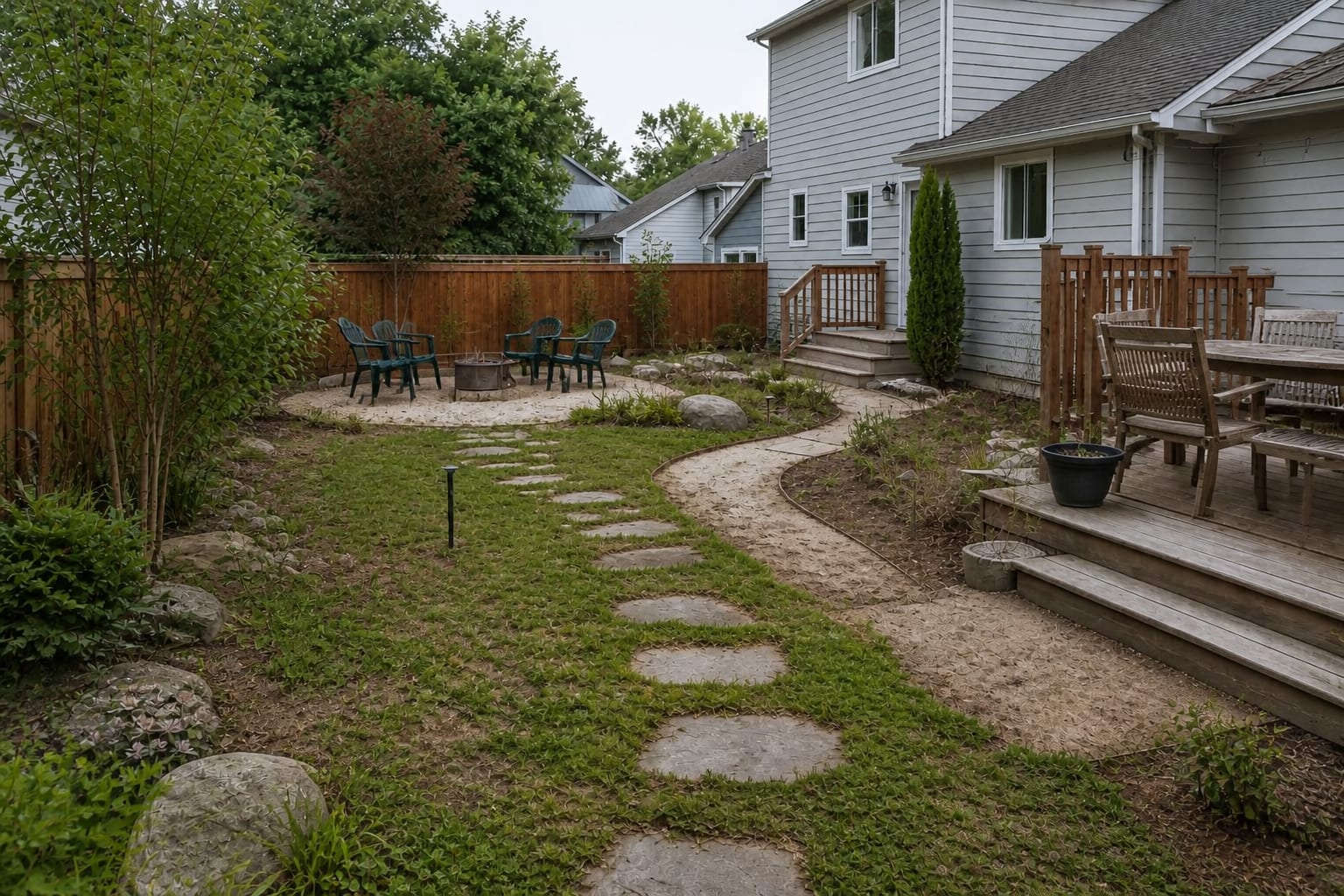
For low water and shade, plant moss; for low water and sun, plant clover or creeping thyme; for HOA-strict suburbs, lay a micro-clover blend that reads as a manicured lawn on a fraction of the water. Every option below cuts watering 40% to 90% versus turf.
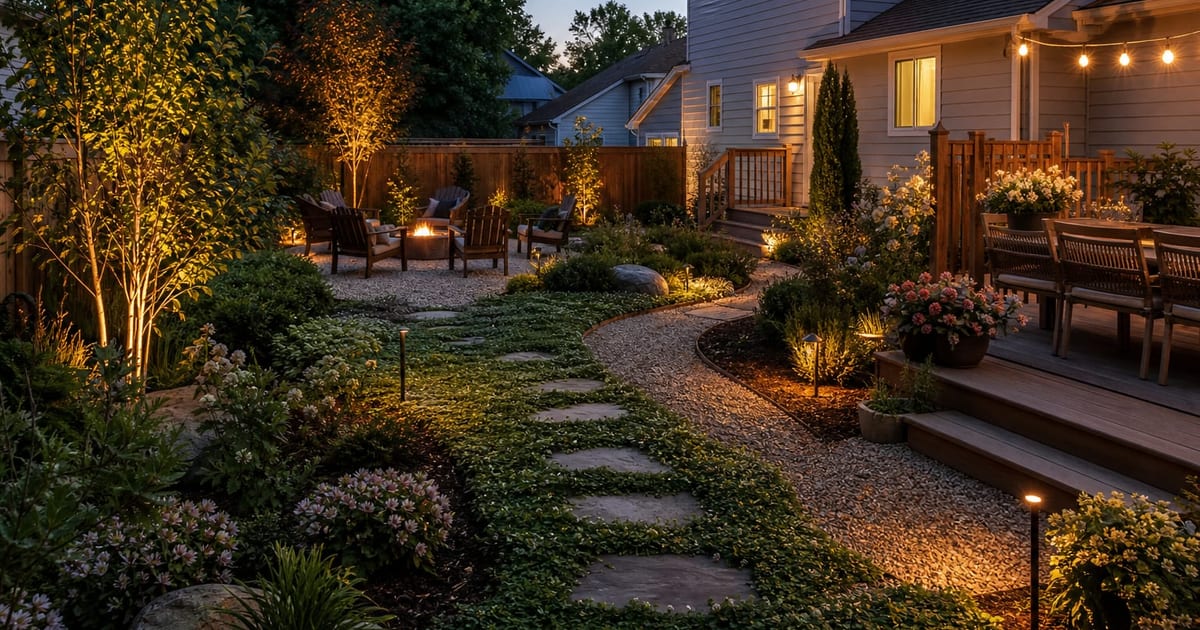
What is the best alternative to a grass lawn?
The right pick depends on sun exposure, foot traffic, and whether an HOA will accept anything but uniform green. Micro-clover wins for most suburban front yards: it fixes its own nitrogen and reads as turf from the street. Moss wins under mature trees where grass already gives up, and creeping thyme wins on sunny paths where you want fragrance plus light traffic.
For back yards used by dogs or kids, default to a 60/40 micro-clover and fine fescue blend — pure clover gets slick when wet, and the fescue adds structure. In HOA neighborhoods, the same blend with a 12 in. mowed border reads as maintained at the next compliance review. Before redesigning the front, check the retaining wall design ideas so grade changes get planned alongside the planting swap.
Xeriscape is the answer in dry climates where the goal is to stop irrigating. A real xeriscape uses 3 in. of mulch, drought shrubs at 36 in. spacing, and one shaped decomposed-granite path — not just gravel and yuccas. Skip rubber mulch; it heats the soil and ages poorly.
Compare the top lawn alternatives on water, traffic, and cost
Costs assume DIY seed or plug install; a contractor bid typically doubles them.
| Lawn alternative | Water vs turf | Foot traffic | Sun | Cost per sq ft |
|---|---|---|---|---|
| Micro-clover blend | 60% less | Medium | Full to part sun | $0.50 to $1.20 |
| White clover (Dutch) | 65% less | Medium-high | Full to part sun | $0.30 to $0.80 |
| Creeping thyme | 80% less | Light | Full sun | $2.50 to $4 |
| Moss (sheet or fragment) | 70% less | None | Deep shade | $1 to $3 |
| Corsican mint | 60% less | Light | Part sun | $3 to $5 |
| Xeriscape (mulch + plants) | 90% less | None on planted areas | Full sun | $8 to $20 |
| Artificial turf | 100% less | High | Any | $8 to $14 |
Three calls to make before buying seed:
- Map the shade. Photograph the yard at 9 a.m., 1 p.m., and 5 p.m.; anything shaded past 1 p.m. needs moss or fine fescue, not clover.
- Factor pets honestly. A 50 lb dog wears creeping thyme to dirt in 8 weeks — reserve thyme for stepping-stones and use micro-clover on dog runs.
- Price the irrigation removal. Capping two or three sprinkler heads can pay back a $1.50/sq ft micro-clover install within 2 years on a 1,500 sq ft yard.
Preview a clover or xeriscape front yard on your own photo before pulling a sprinkler head — a wrong call costs a season of dead ground cover, not a few clicks.
Common lawn alternative mistakes to avoid
The costliest mistake is treating ground cover like turf. Clover, thyme, and moss need different mowing and irrigation than fescue, and a weekly-mow lawn contract will kill them in a season — write a no-mow or 2-month scope instead. A related error is planting one species across the whole yard; sun, slope, and traffic vary, so use clover on the sunny stretch, moss under the canopy, and thyme along the path.
Don't skip soil prep. Turf compacts the top 4 in., and new ground covers want loose, weed-free contact. Scalp the lawn to 1 in., dethatch, and top-dress with 0.5 in. of compost before overseeding clover; for moss, solarize with cardboard, then transplant fragments onto damp shaded soil.
Don't ignore HOA paperwork. Boards reject what looks unmaintained, not anything that isn't grass. A plan with a 12 in. mowed perimeter, a defined edge (garden bed edging ideas cover clean options), and a planting list with mature heights clears most boards on the first pass.
Use AI design to preview your lawn alternative before you commit
The risk in any lawn swap is that the ground cover looks wrong against your house — too rough, too tall, the wrong green. Upload a midday photo with house, driveway, and street edge in frame, and use an AI garden design tool to render clover, creeping thyme, a micro-meadow, and xeriscape on the same angle.
Be specific: ask for a 1,500 sq ft micro-clover lawn with a 12 in. fescue mowed border, a 36 in. decomposed-granite path, and a drought bed at 24 in. spacing. If it looks weedy, adjust the border or add a feature shrub before you commit.
Frequently Asked Questions
What is the cheapest lawn alternative?
White Dutch clover is cheapest at $0.30 to $0.80 per sq ft installed from seed, with a 5 lb bag covering 4,000 sq ft and germinating in 7 to 14 days. Sheet mulching with cardboard and 3 in. of wood chips is cheaper still if you tolerate a bare-mulch look for 6 months.
Which lawn alternative tolerates dogs?
A 60/40 micro-clover and fine fescue blend tolerates dog traffic and urine better than turf, since clover doesn't yellow from urine and fescue adds structure for running paths. Creeping thyme tears under repeated dog traffic, so keep it to stepping-stones or borders.
Will my HOA approve a clover lawn?
Most HOAs approve a clover lawn if you submit a plan with a 12 in. mowed perimeter, defined edges, and a planting list with mature heights, since boards care about maintained appearance, not species. Micro-clover blends pass most often because they read as a manicured lawn.
How long does clover take to fill in?
Clover germinates in 7 to 14 days and reaches continuous cover in 6 to 10 weeks with regular moisture. Seed in fall or early spring so the stand establishes before summer heat, watering lightly twice a day for 2 weeks, then twice a week.
Is artificial turf cooler than I think?
Artificial turf is hotter than expected, reaching up to 150 F on a summer afternoon versus 80 F to 90 F for a watered lawn. Use it only in shaded backyards or under play structures, not as a front-yard replacement, and factor in its 8 to 15 year lifespan and disposal cost.