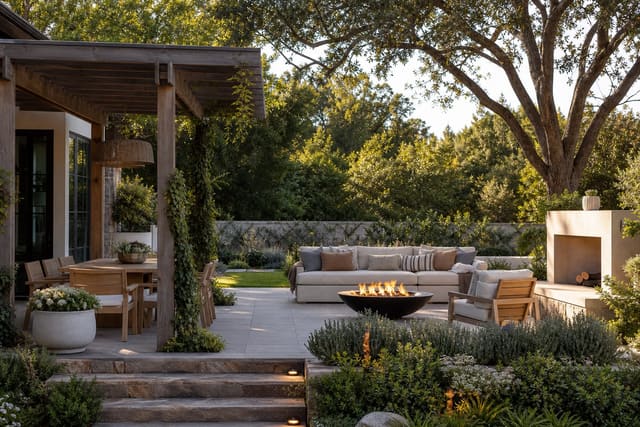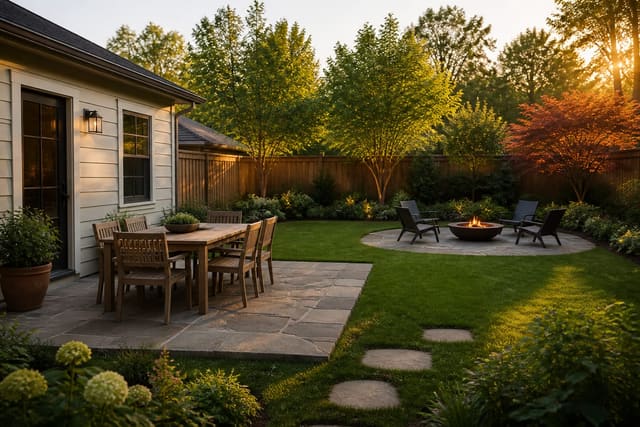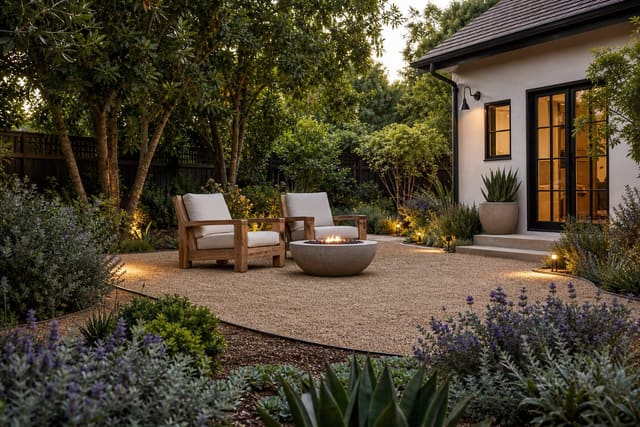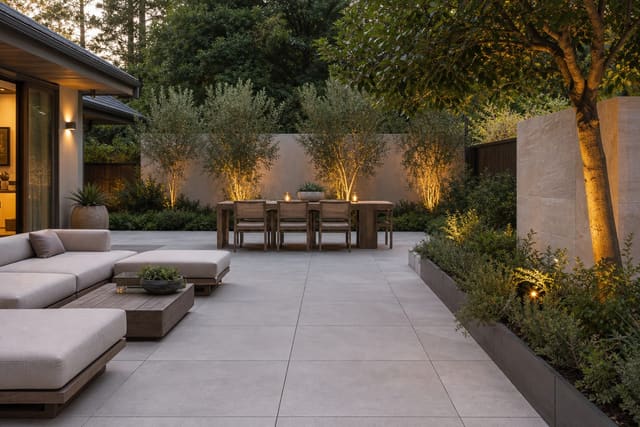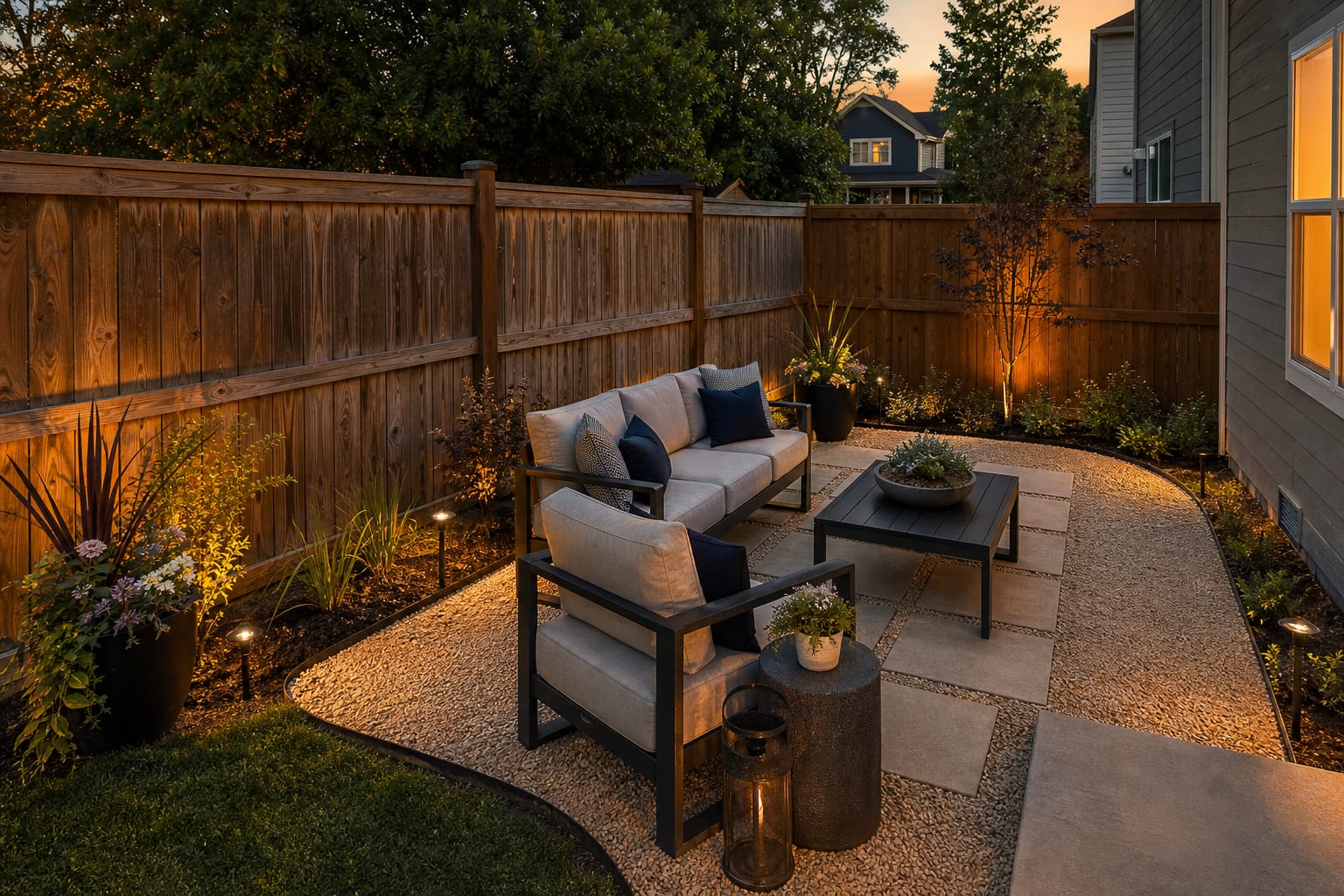
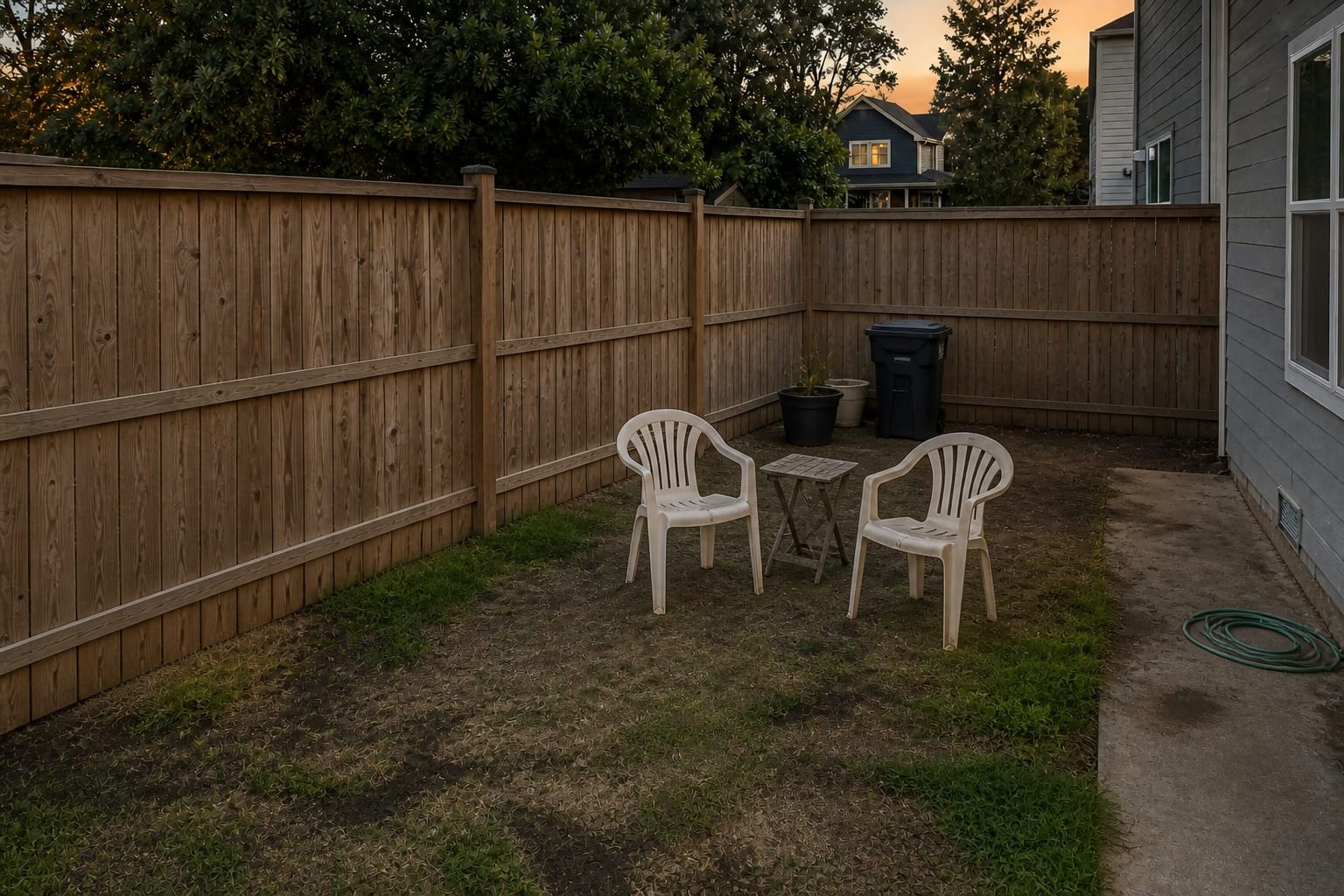
A gravel patio works when it sits inside a steel or stone edge, runs 2-3in of angular gravel over a 4in compacted base, includes paver footing under chairs, and measures at least 10ft x 10ft. Get the base, edge, and stone size right and gravel becomes a durable, relaxed outdoor room instead of loose rock dumped on dirt.
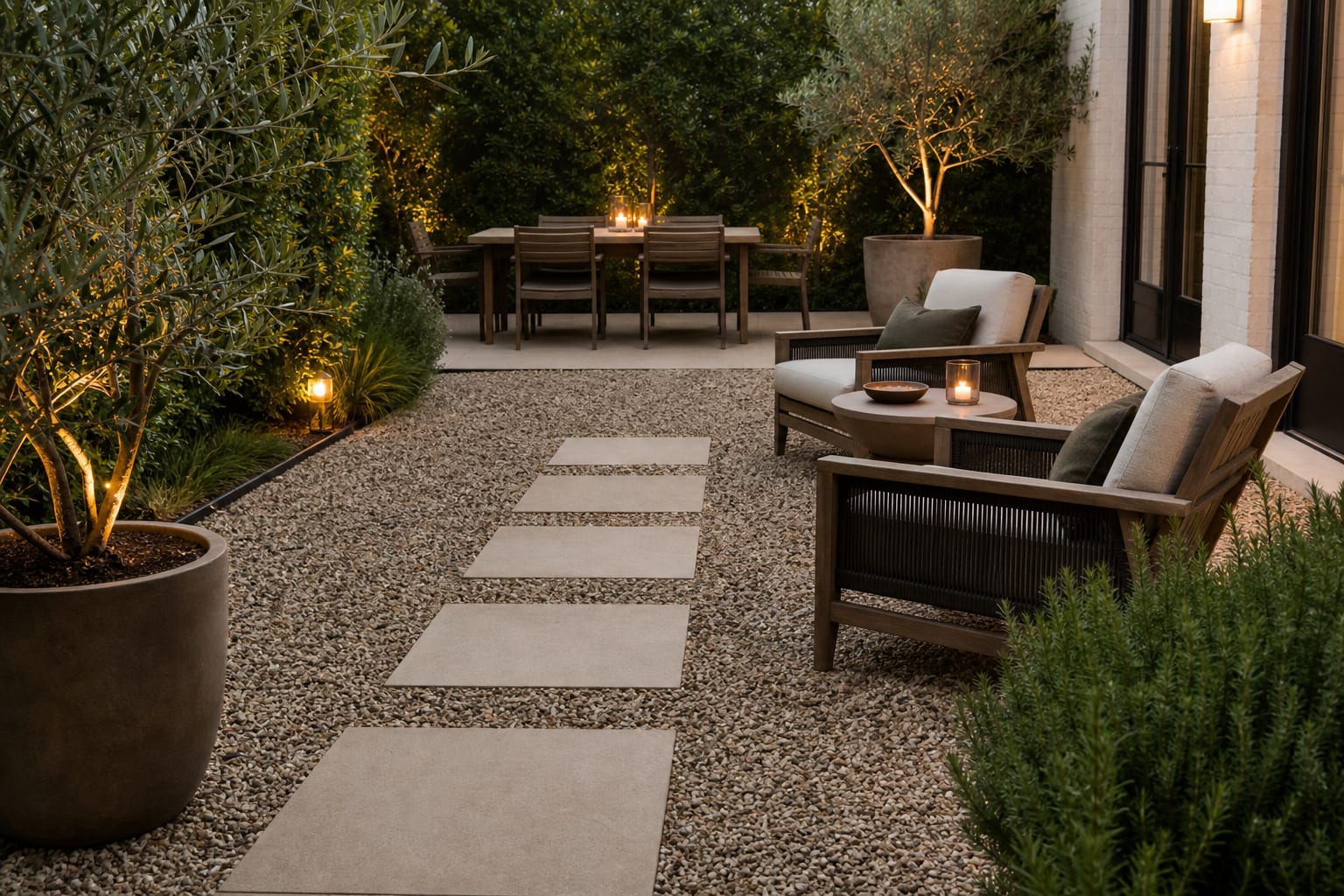
How do I create a gravel patio that drains well?
Excavate the area, compact a stable base, add landscape fabric, install firm edging, spread 2 to 3 inches of gravel, and slope the surface away from the house. Skip a step and even a pretty pea gravel design over soft soil will rut under chairs, trap leaves at the edges, and migrate into the lawn.
Mark the footprint before digging and test furniture fit: a two-chair nook works around 8ft x 10ft, a six-seat dining table wants 12ft x 14ft, and paths behind chairs need 36in of clearance. Slope the finished surface 1/8 to 1/4in per foot away from the house, and compact aggregate underneath whenever the soil is soft. Pea gravel, around 3/8in, feels soft underfoot; crushed gravel locks together for a firmer patio, and a gravel patio with pavers gives shoes and chair legs a steadier landing.
Test this on your own photo with ReDesign before you choose a final direction; keep the house edge, horizon line, hardscape, planting beds, and main path visible so the preview solves the space you actually have.
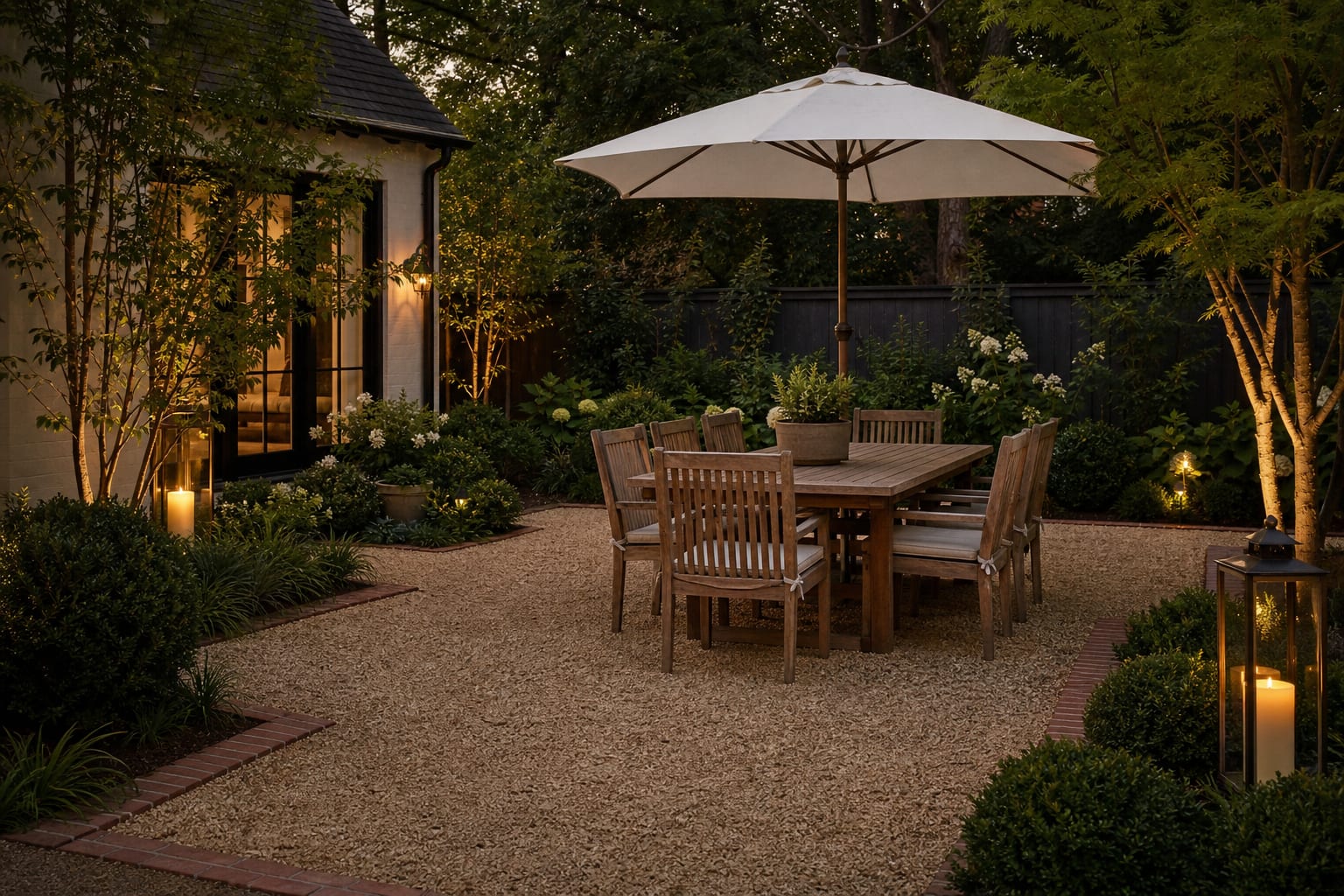
The decision that shapes every gravel patio project
The main call is pea gravel versus crushed gravel, decided by how the patio gets used, not by the prettiest sample bag. Pea gravel is rounded and casual, great around lounge chairs and planted borders, but less cooperative under narrow metal legs and rolling grills. Crushed gravel is sharper and more compactable, steadier under a dining set or fire bowl, though it can look flat without a clean edge or warmer planting nearby. If you want a smoother, more courtyard-like feel, decomposed granite patios behave more like a firm floor than loose stone.
| Gravel choice | Best use | Detail to get right |
|---|---|---|
| Pea gravel | Lounging patios, garden seating, informal fire pit areas | Control the depth so chairs do not swim in the surface. |
| Crushed gravel | Dining pads, side yards, utility paths, modern patios | Compact the base and use a restrained edge to keep it tidy. |
| Gravel with pavers | Main walking routes, grill zones, patios used by kids or older guests | Set 24x24in pavers flush with the gravel so no one catches a toe. |
| Mixed gravel and hard paving | Larger yards with separate dining and lounge zones | Let hard paving handle tight chair movement; use gravel for the soft zone. |
Ways to give a gravel patio more structure:
- Frame a pea gravel lounge patio with a 6 to 8 inch steel or brick border so the soft stone gets a finished edge instead of dissolving into the lawn.
- Set 24 by 24 inch pavers through the highest-traffic route so guests can cross the patio without wobbling.
- Use crushed gravel near a grill or dining table, since angular stone handles scraping chair feet better than rounded pea gravel.
- Add a 12 to 18 inch planting band of grasses, lavender, boxwood, ferns, or drought-tolerant perennials to soften the mineral surface.
- Split a large yard into zones; a gravel lounge next to a porcelain tile patio gives the kitchen door a cleaner, rollable surface.
One vertical element helps too. A painted fence, trellis, low wall, or planter row gives the eye somewhere to land, and outdoor stone veneer can add weight near a retaining wall while the gravel keeps the ground plane relaxed.
Common gravel patio mistakes
- Spreading gravel directly over dirt lets soil move, weeds push through, and chair legs dig holes; remove organic material and compact a sub-base first.
- Piling gravel too deep feels luxurious for five minutes, then every step becomes work; keep the top layer at 2 to 3 inches and build stability below it.
- Skipping edging lets gravel creep into grass and path joints; install metal edging, mortared brick, stone setts, concrete curbing, or timber before spreading the final layer.
- Choosing tiny chair feet is a problem with pea gravel especially; use sled-base chairs, wider glides, or paver pads under dining sets.
- Placing pale gravel under messy trees turns it into a compost tray unless you plan to rake or refresh it seasonally.
Color matters too. White gravel can glare and show every leaf; black gravel can look severe and hold heat. Warm tan, buff, or gray-beige tones usually age better because they connect to soil, bark, and masonry, so test wetted samples against the house siding before ordering a full delivery.
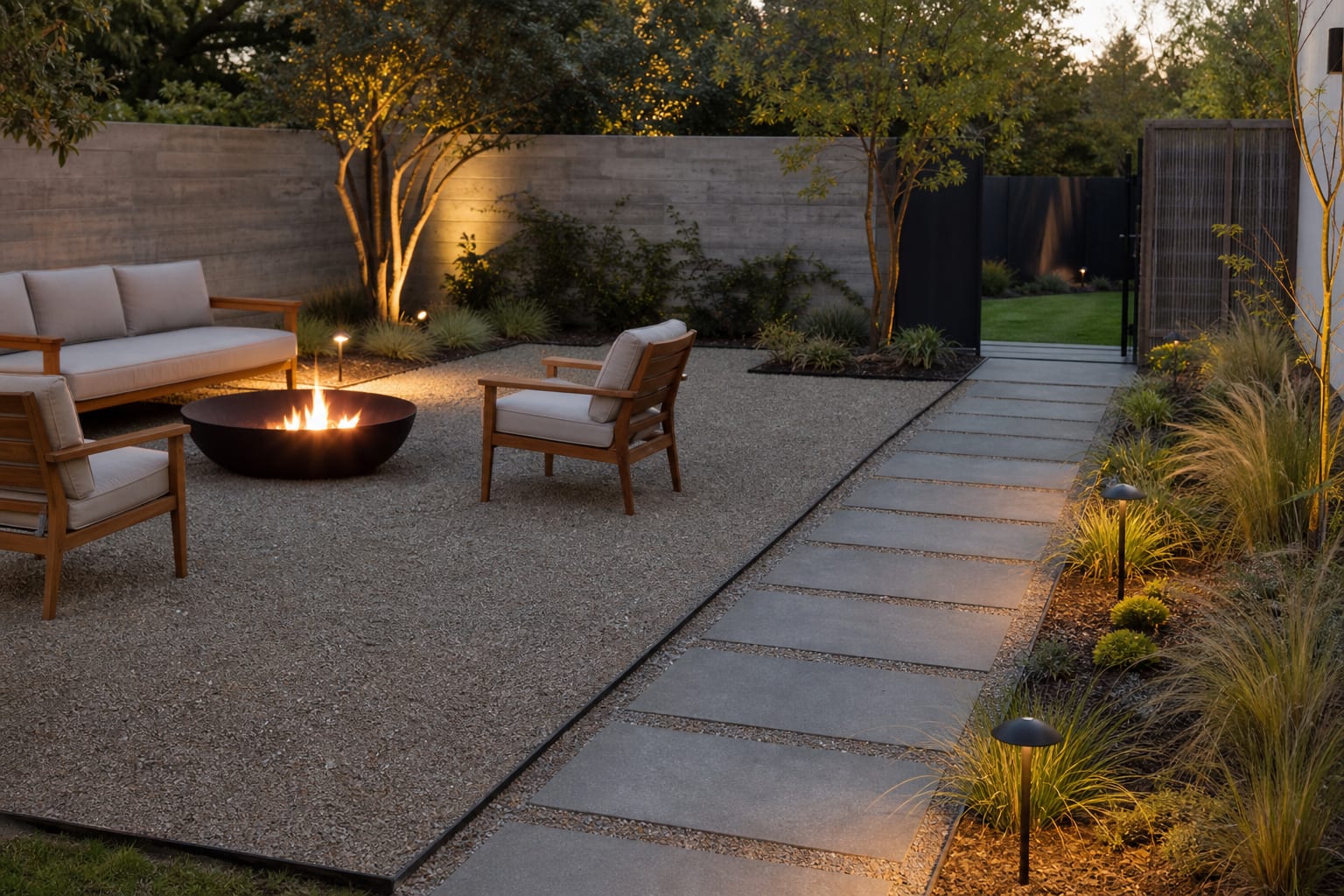
Use AI design to preview your gravel patio before you commit
Upload a straight photo of the yard corner, side yard, or bare patch, then test specific prompts: pea gravel patio with steel edging, crushed gravel dining area with paver walkway, or gravel fire pit patio with planted borders. Keep the fence, threshold, slope, trees, downspouts, and furniture you're keeping in frame so the preview judges real scale and color against the house.
Once the visual direction feels right, confirm excavation depth, drainage, edging, base material, and local stormwater rules with your installer or supplier before ordering stone.
Frequently Asked Questions
What size gravel works best for a patio?
Angular 3/8in crushed gravel packs tighter than rounded pea gravel and holds furniture flat without rolling underfoot. Reserve pea gravel for paths, decorative borders, or lounge areas where comfort matters more than firmness, and pair either with paver footing under heavy chairs and tables.
Does a gravel patio need a base?
Yes, a 4in compacted base of road base or crusher run under the decorative top layer prevents settling, weed growth, and edges spreading into the lawn. Skipping this step is the single biggest reason gravel patios fail within a year or two of daily use.
How thick should the gravel layer be?
Keep 2 to 3 inches of decorative gravel over the compacted base. Thicker layers make chairs and feet sink, while thinner layers wear through and expose the base material after just one season of regular foot traffic and weather.
Will weeds grow through a gravel patio?
Not if a non-woven geotextile fabric sits between the compacted base and the decorative layer and the edges stay fully restrained. Landscape plastic sheets are a poor substitute since they trap moisture and typically fail within two years of installation.
Are gravel patios comfortable to walk on?
Yes, once angular gravel has been compacted properly it feels stable underfoot. Place one or two flat 24in pavers under the dining table and lounge chair anchor points for extra stability where furniture sees the most daily use.
> Try this: Ready to see this on your own outdoor space? Open ReDesign and run the preview before you buy materials, plant, drill, or move furniture.
Three transformations to try
1. Gravel patio with steel edging and pavers