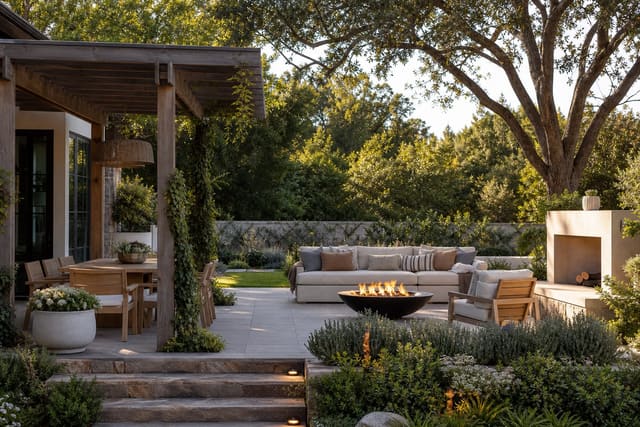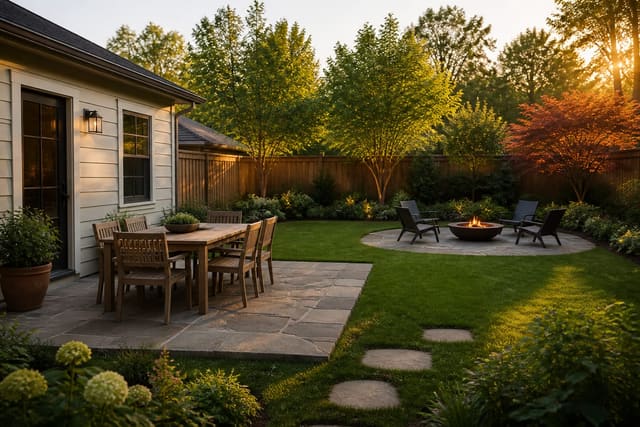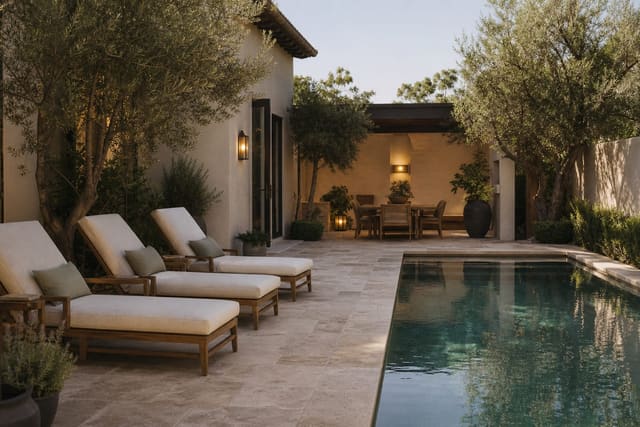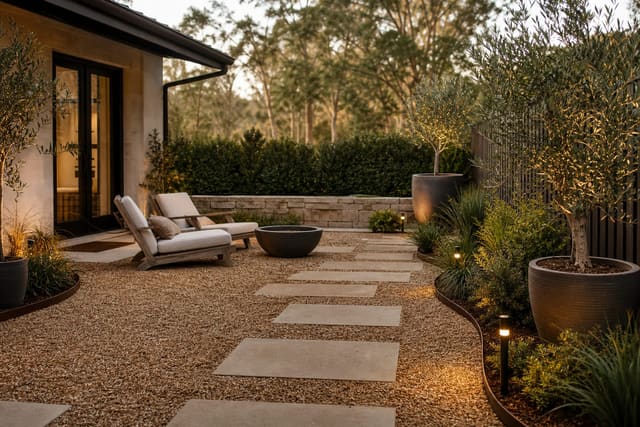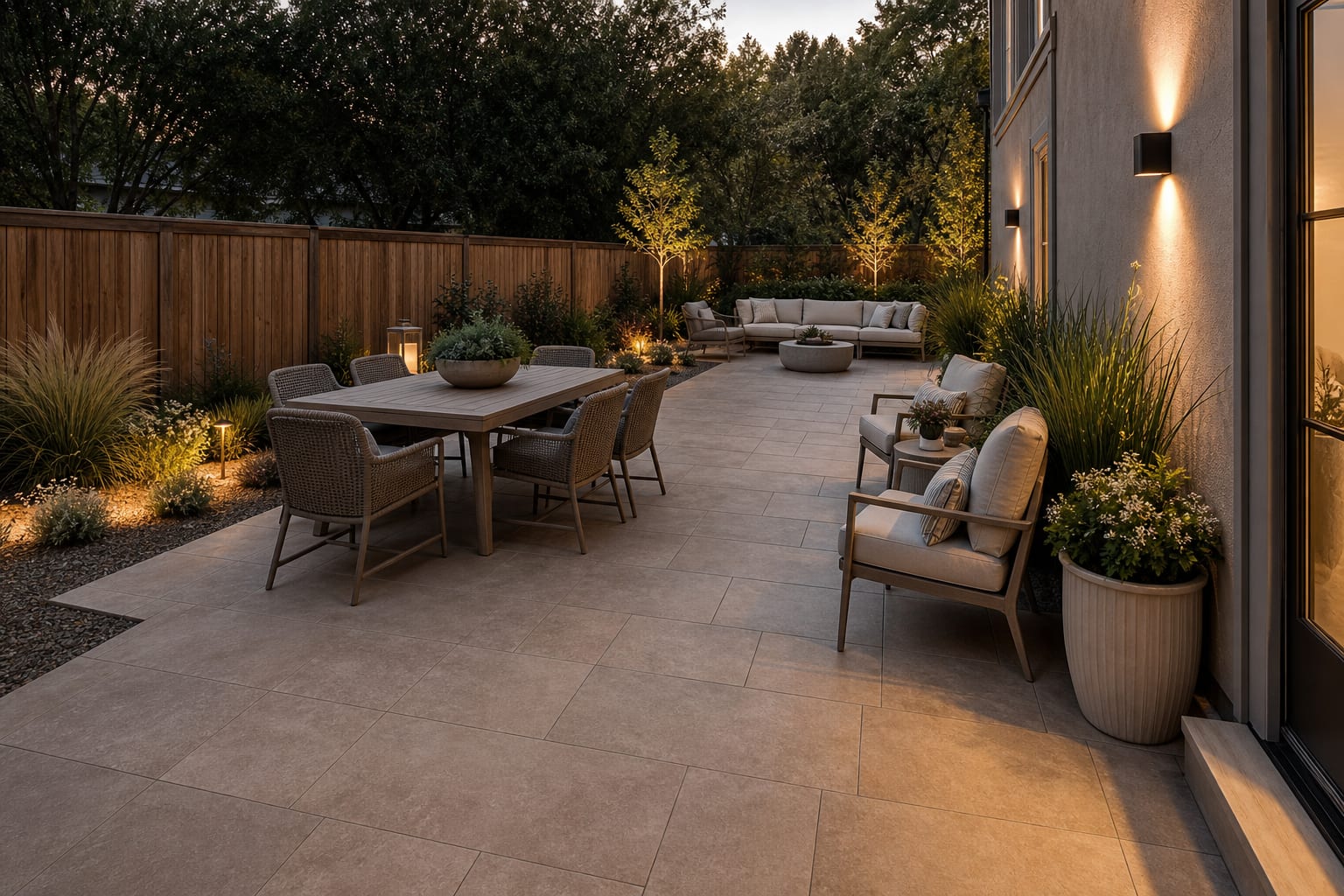
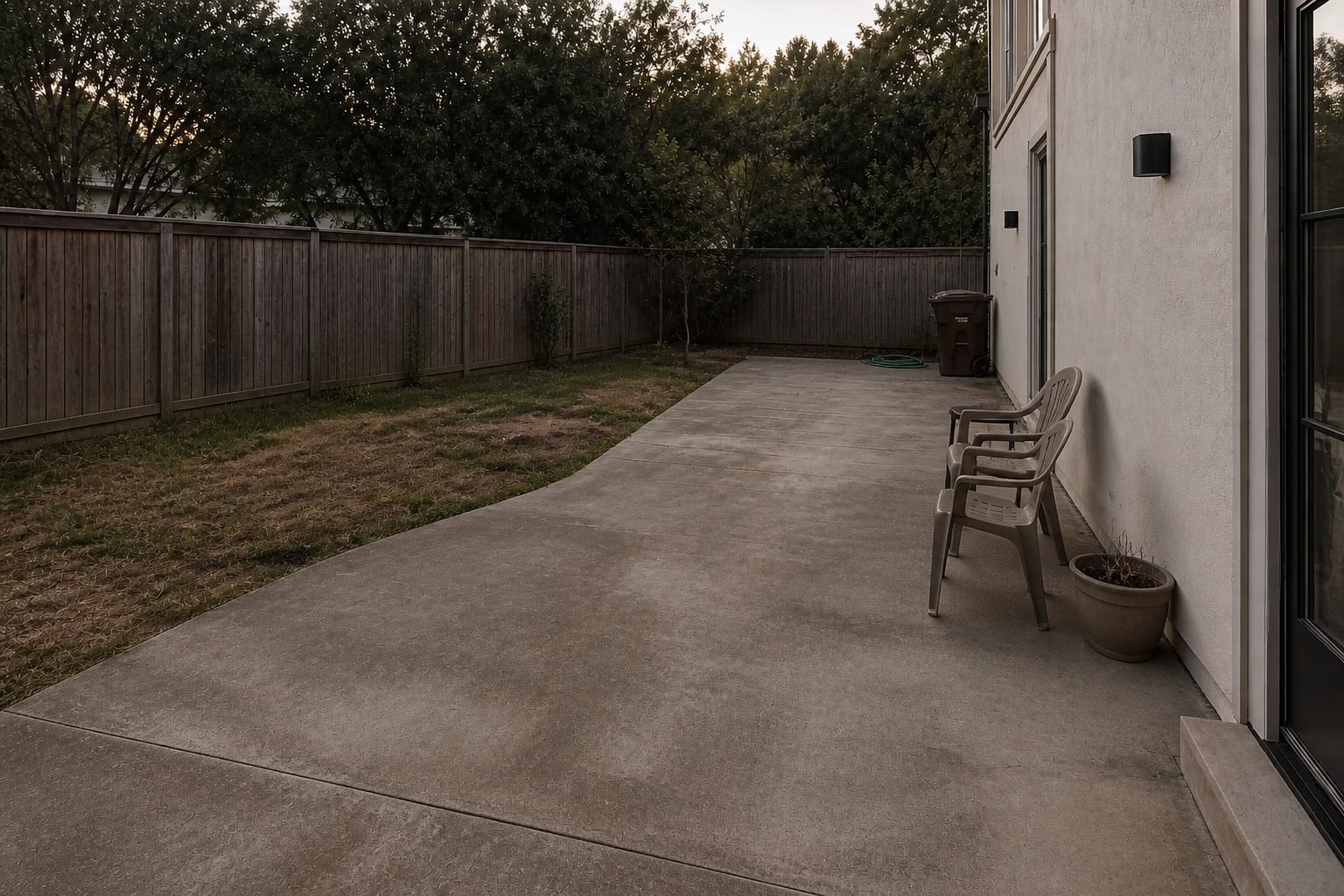
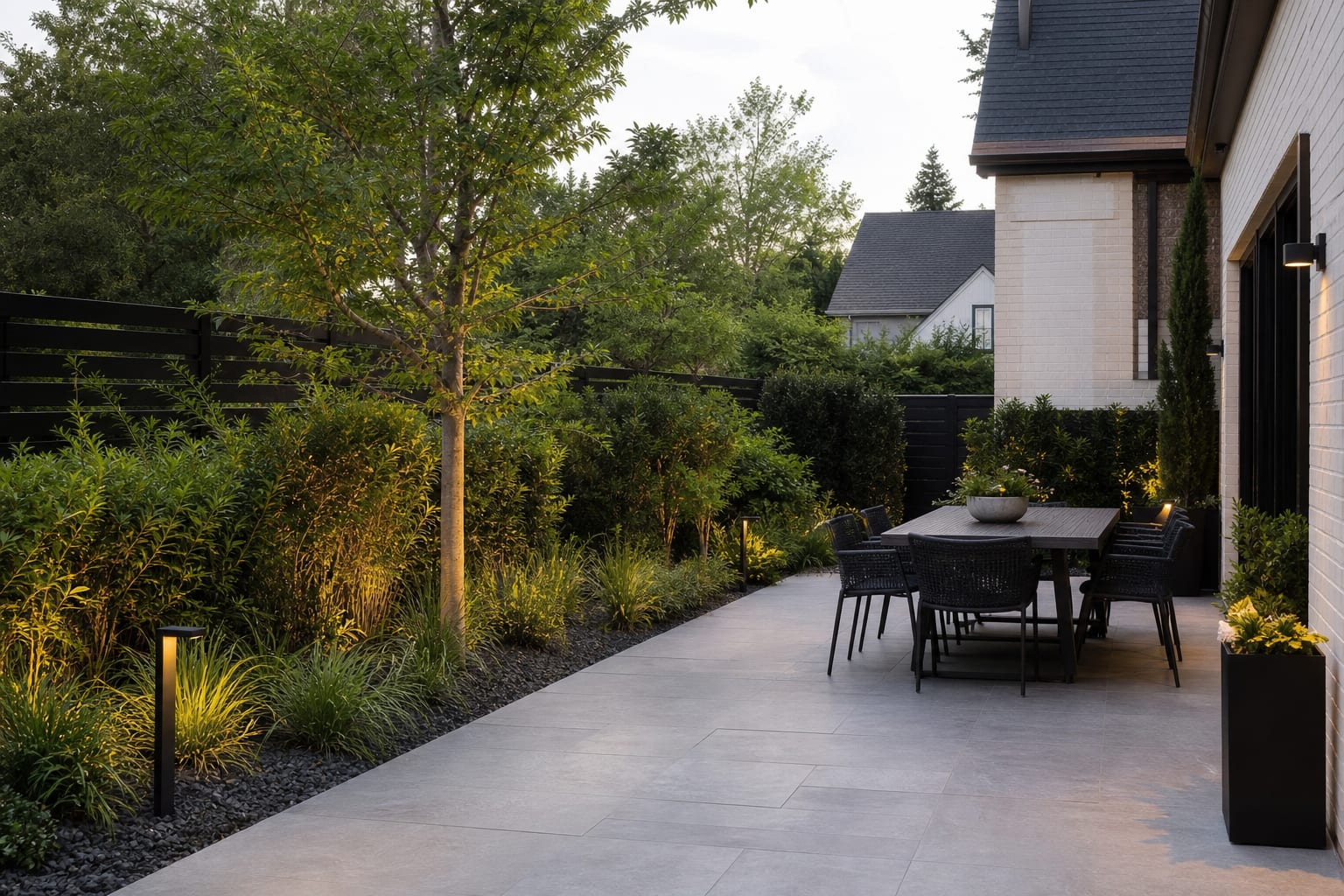
The best porcelain tile patio ideas use 20mm (3/4in) outdoor-rated pavers in 24x24in or 24x48in formats, set on a gravel base or drainage pedestals with slim 4-6mm joints and an R11 slip rating. Porcelain gives you the look of limestone or slate with far less sealing and staining upkeep than natural stone, provided the base, slope, and joints are installed correctly.
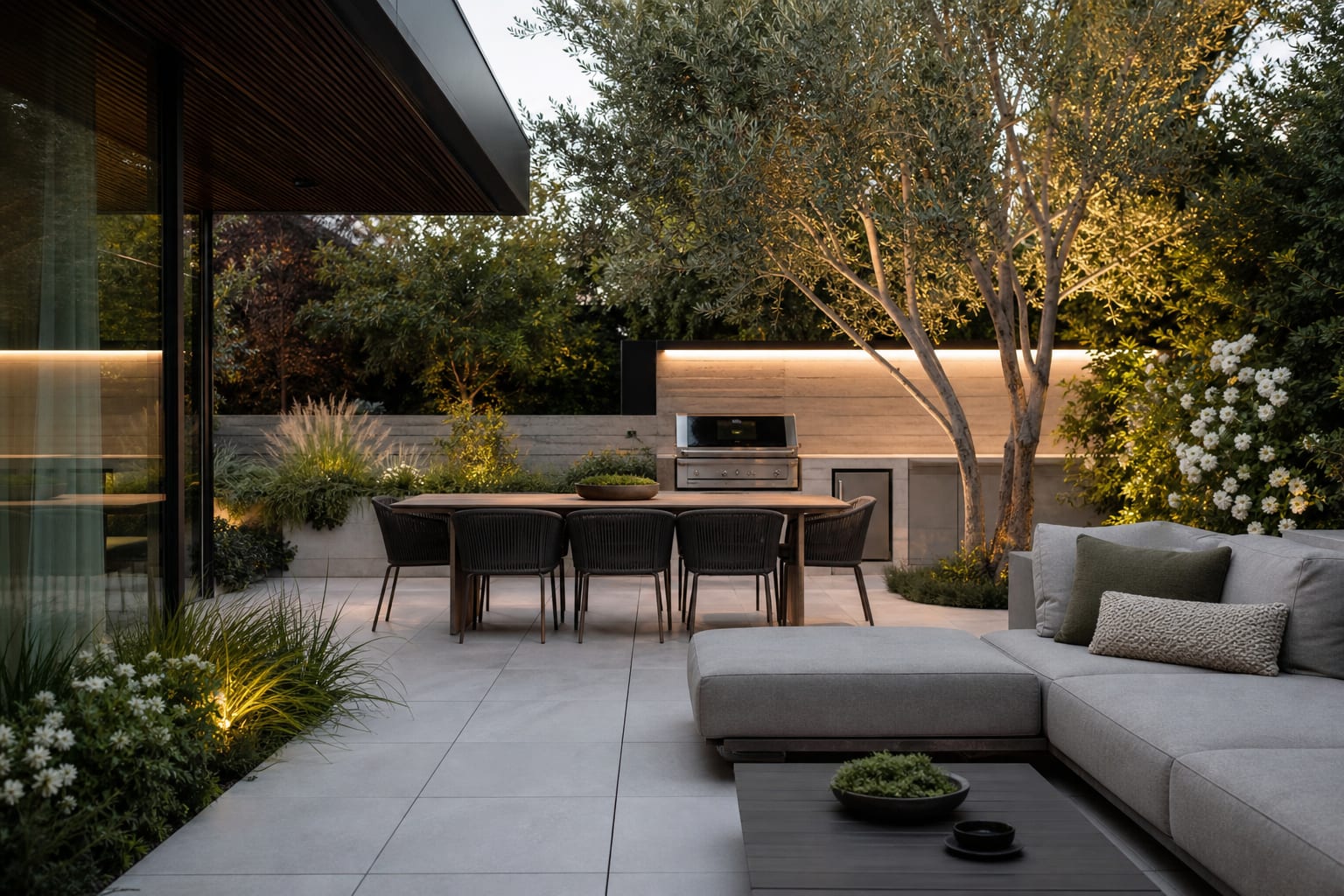
Can I use porcelain tile on an outdoor patio?
Yes, as long as it's a frost-rated exterior porcelain paver installed over the correct base, drainage slope, and movement-joint layout. Don't buy glossy interior tile and assume the word "porcelain" makes it outdoor-safe — look for exterior-rated pavers, a textured or grip-rated surface, and the right thickness for your installation method. Many dry-laid systems use 20mm pavers, while bonded installations depend on the setting bed and manufacturer specs.
Slope matters more than pattern: a patio should generally fall about 1/4 inch per foot away from the house, built into the base rather than corrected with mortar. Keep joints realistic too — narrow joints look best on rectified pavers, but outdoor assemblies still need room for thermal movement in full sun. If your patio meets a gravel zone, see gravel patio border and transition ideas before deciding where the porcelain should stop.
Should the patio read as one plane or a pattern?
The bigger decision isn't porcelain versus stone — it's whether the patio should feel like one quiet plane or a patterned surface. Large-format tile works best against strong architectural lines: sliding doors, black window frames, stucco, or a simple pergola. A 24x48in paver in a stacked grid reads architectural; a running-bond layout offset by no more than one-third of the tile length is more forgiving and hides curvature-related lippage.
Porcelain versus natural stone comes down to maintenance and character. Stone has depth and chipped-edge variation that porcelain imitates but rarely matches; porcelain counters with color consistency, low sealing needs, and strong resistance to wine, oil, and ash stains. Pair porcelain flooring with outdoor stone veneer accent walls to keep the floor calm while the walls carry texture.
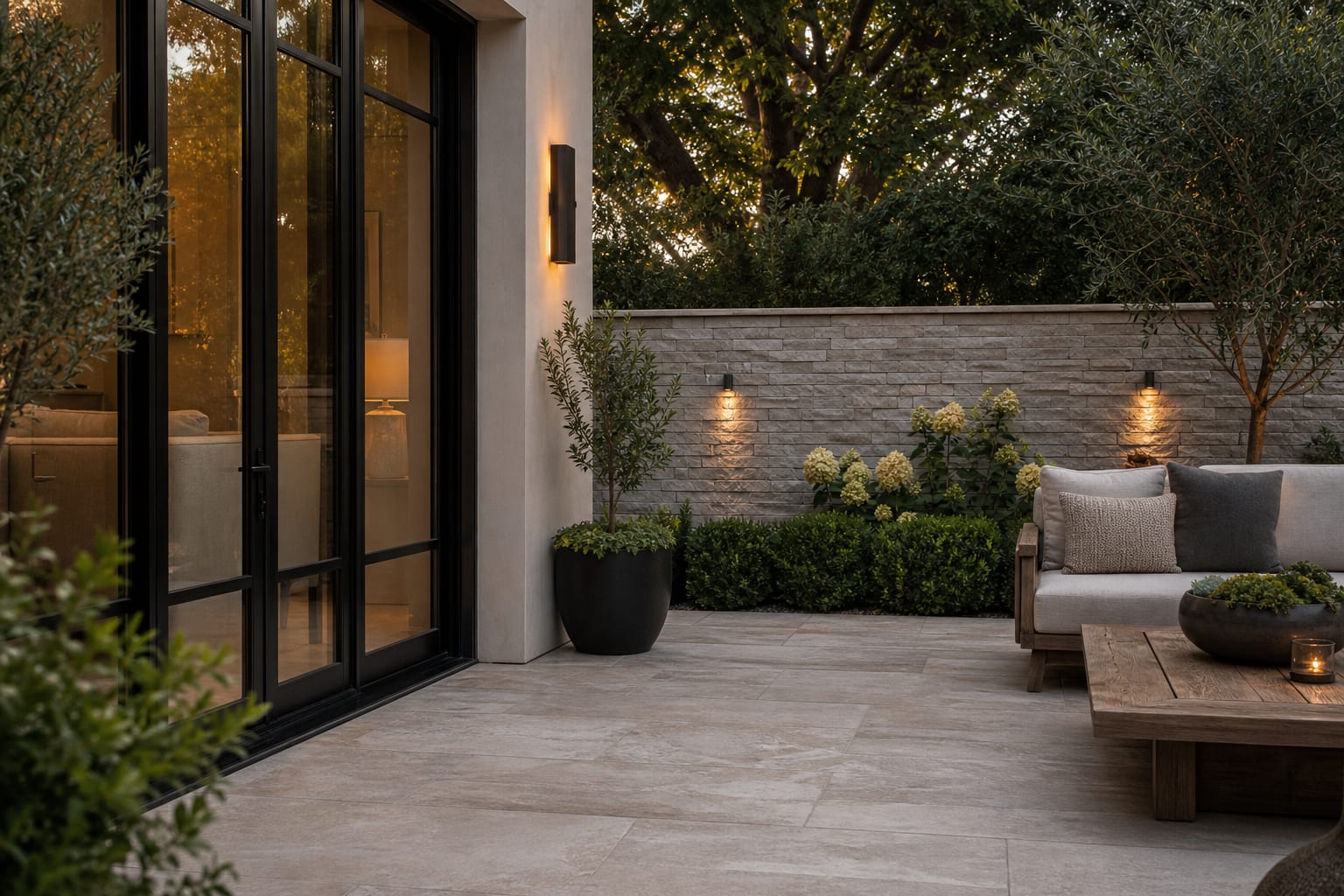
Test this on your own photo with ReDesign before committing — keep the house edge, horizon line, hardscape, planting beds, and main path visible so the preview reflects your actual space.
Which porcelain patio details make it look intentional?
- Run 24x48in pavers along the longest sightline to make a narrow patio feel wider; long joint lines pull the eye across the space.
- Add a soldier-course border where tile meets lawn or gravel — a 12-24in perimeter band gives a clean edge and keeps furniture legs off loose material.
- Choose warm gray, taupe, or greige near red brick; cool blue-gray porcelain can make older brick look orange.
- Leave 36 inches of clearance around dining tables — porcelain's crisp grid makes cramped chair movement obvious.
- Light steps and beds at 2700-3000K. Porcelain reflects pinpoints of light, so shielded downlighting beats exposed bulbs.
- Break up large fields with a 6-12in gravel reveal to absorb runoff and soften the geometry.
Mixed-material zones work well too: a porcelain dining pad near the kitchen door, paired with a decomposed-granite fire-pit circle for softer footing. See decomposed granite patio layouts for planning a secondary, more casual zone.
Common porcelain tile patio mistakes
- Using indoor porcelain outside — too slick, not freeze-thaw rated, and prone to glare. Buy exterior-rated pavers and check the manufacturer's outdoor guidance.
- Ignoring finished height — 20mm pavers, setting beds, and drainage layers can raise the patio above thresholds. Confirm clearances at doors and stairs before demolition.
- High-contrast grout joints make small alignment issues look like flaws. Match grout to the tile body unless the grid is the intended feature.
- Skipping movement joints causes cracking or tenting as the surface expands in heat. Follow industry guidance for perimeter gaps and soft joints.
- Assuming porcelain is maintenance-free — leaves, pollen, and grill grease still need cleaning, even though the material resists stains better than stone.
Porcelain isn't right for every yard. A rustic, shaded lot may suit honed stone or aggregate better, and pool patios should prioritize texture and drainage over a glossy showroom finish.
How can AI previewing help before I commit?
Porcelain samples are tiny and patios are large, so AI previewing catches scale and undertone problems before you order heavy material. Upload a straight-on photo of your existing slab, deck, or dirt pad and test specific directions — warm limestone-look 24x24in pavers, charcoal slate-look tile with matching grout, or pale travertine-look porcelain with a gravel border.
Include the house wall, thresholds, steps, fence color, and any furniture you're keeping so the preview reflects real constraints. Use the result to check whether the paver color fights your siding or the large format looks too commercial, then confirm technical details with your installer and manufacturer specs.
Frequently Asked Questions
Is porcelain tile durable outdoors?
Yes. 20mm outdoor-rated porcelain handles vehicle loads, resists frost and freeze-thaw cycling, absorbs almost no water (0.5% or less), and holds its color under years of UV exposure. Unlike natural stone, it needs no routine sealing, making it one of the lowest-maintenance patio surfaces available.
How thick should outdoor porcelain pavers be?
Use 20mm (3/4in) porcelain for foot traffic on pedestal systems or gravel bases — that thickness handles outdoor loads and freeze-thaw stress. The thinner 10mm porcelain used indoors belongs on walls and interior floors only, since it lacks the strength for exterior installation.
How are porcelain pavers installed?
There are three common systems: dry-set over compacted gravel for ground-level patios, pedestal-mounted over a flat drained substrate for rooftops and covered terraces, or mortar-set over an existing concrete slab. Each method requires a different paver thickness and base preparation, so confirm the system with your installer first.
Are porcelain pavers slippery?
Outdoor-rated porcelain with an R11 rating or higher offers strong wet traction, comparable to textured natural stone, making it suitable for pool decks and rainy climates. Smooth, glossy interior-rated tile installed outdoors will be a genuine slip hazard, especially near water.
Can porcelain match the indoor floor?
Yes. Many porcelain lines offer matched indoor (10mm) and outdoor (20mm) formats in the same color and finish, which is the cleanest way to extend an interior tile floor onto a patio. This creates a seamless indoor-outdoor transition at doorways without a visible material change.
> Try this: Ready to see this on your own outdoor space? Open ReDesign and run the preview before you buy materials, plant, drill, or move furniture.
Three transformations to try
1. Porcelain patio with indoor-outdoor flow 2. Pedestal-mounted porcelain rooftop terrace 3. Porcelain pool deck with non-slip finish