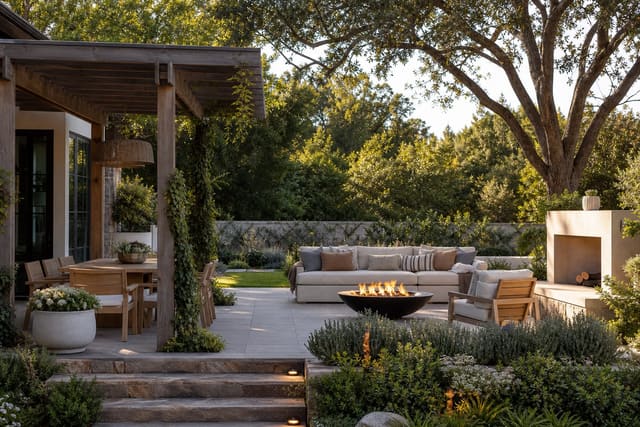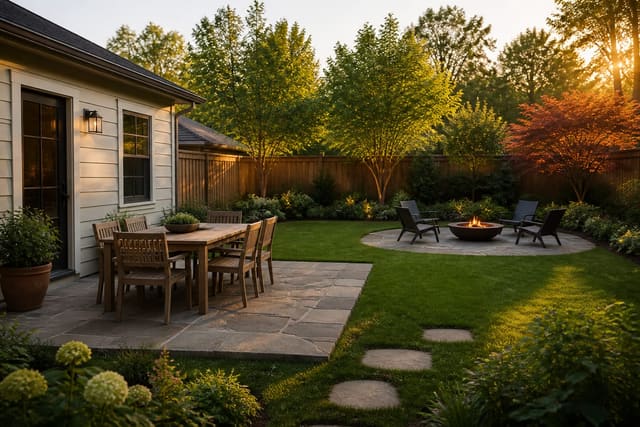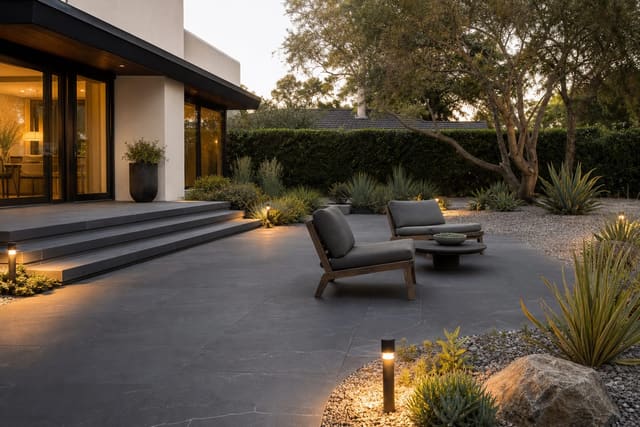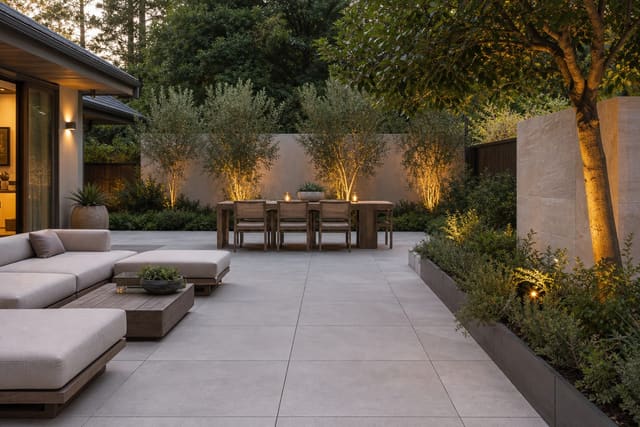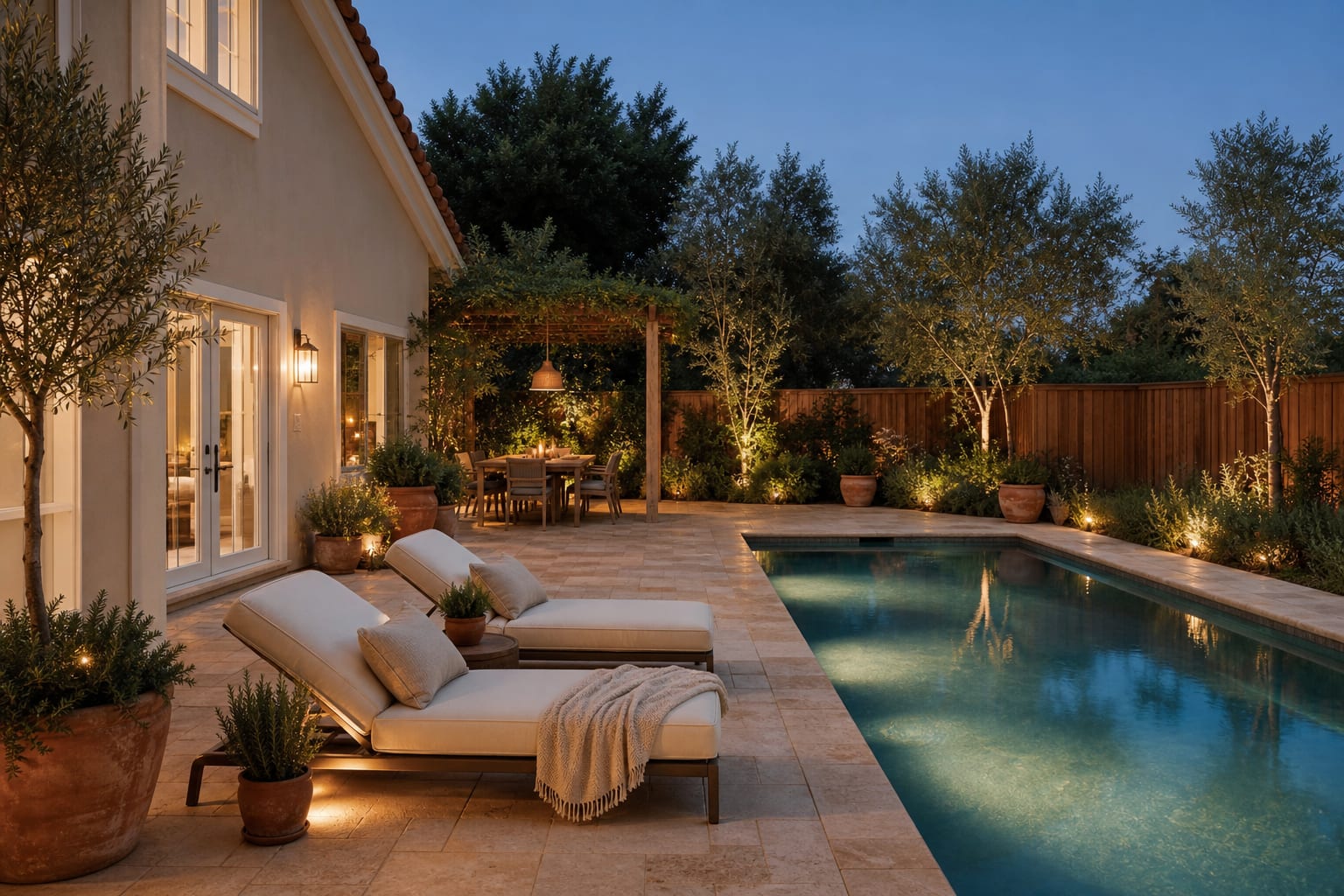
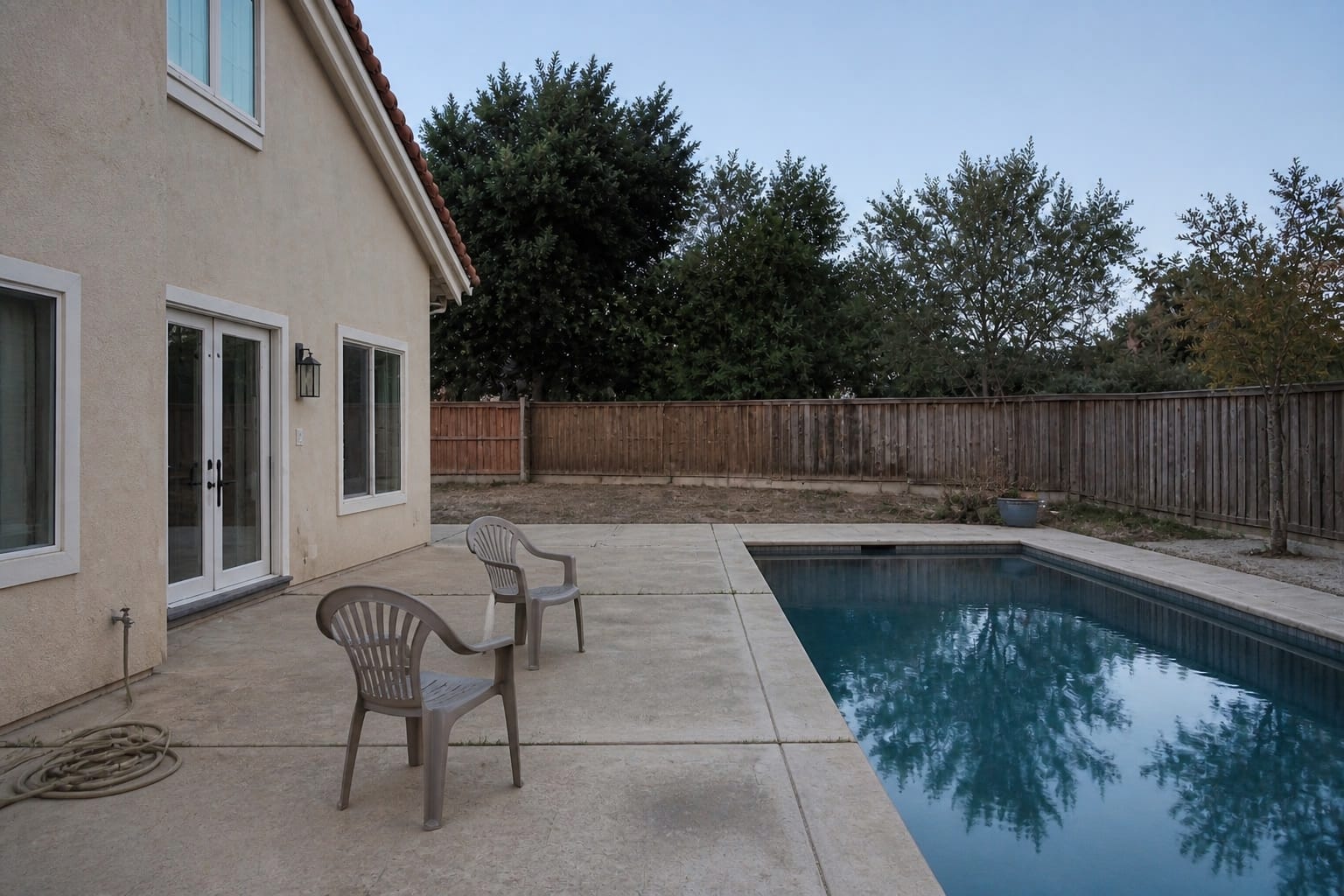
Travertine patio ideas work best when you treat the stone as a warm outdoor floor, not a beige backdrop: choose tumbled or brushed exterior-rated pavers, build a properly sloped base, add shade and warm-toned furniture, and seal the surface. Done right, travertine gives pools and dining terraces a sun-washed, Mediterranean feel instead of a flat resort look.
Is travertine a good choice for an outdoor patio?
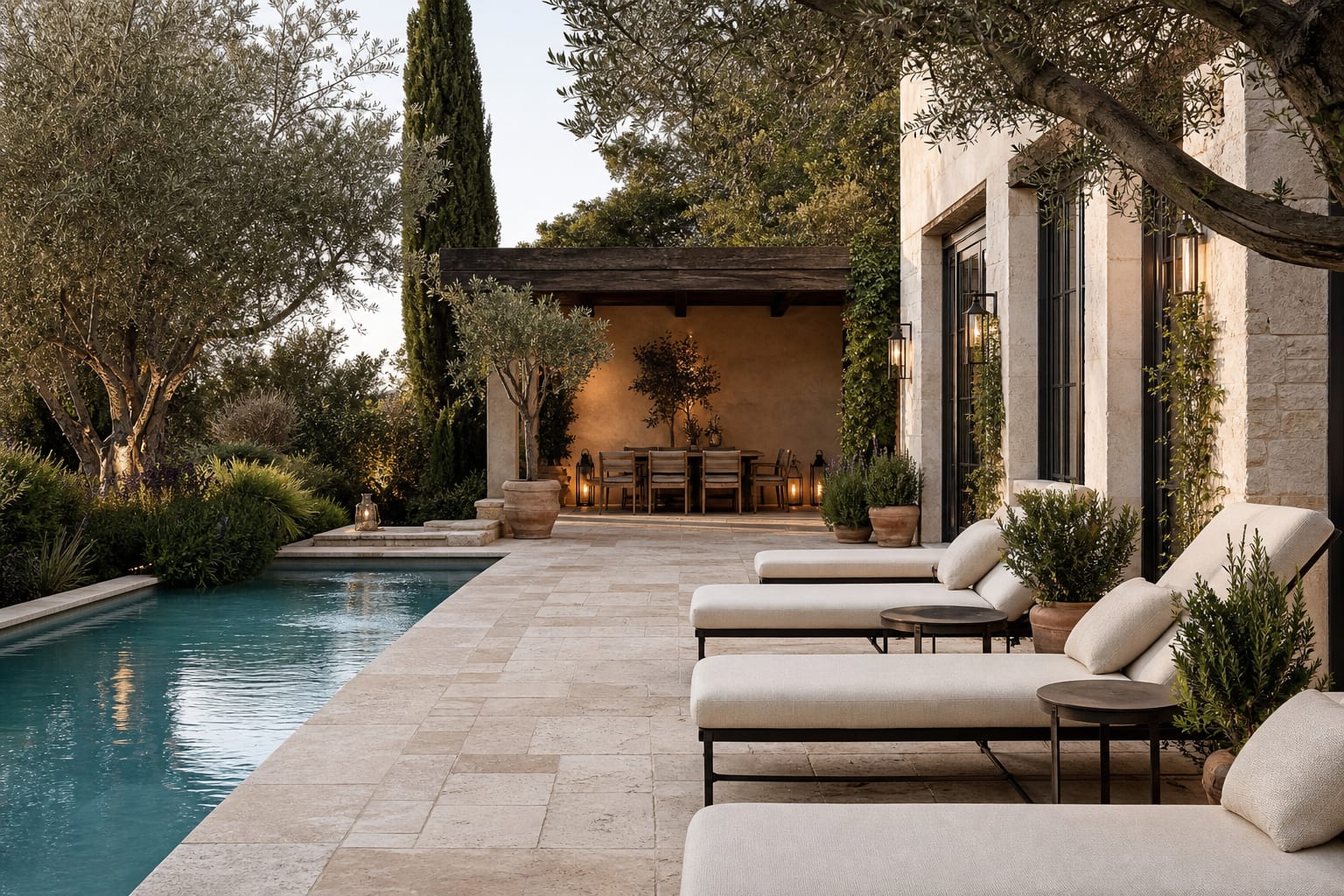
Yes — travertine works outdoors when you use exterior-rated tumbled or brushed stone, build the base for drainage, and accept that sealing and cleaning come with the territory. Its natural porosity is what keeps the surface visually soft, with pits and veining that stop a large patio from reading as one flat tan sheet.
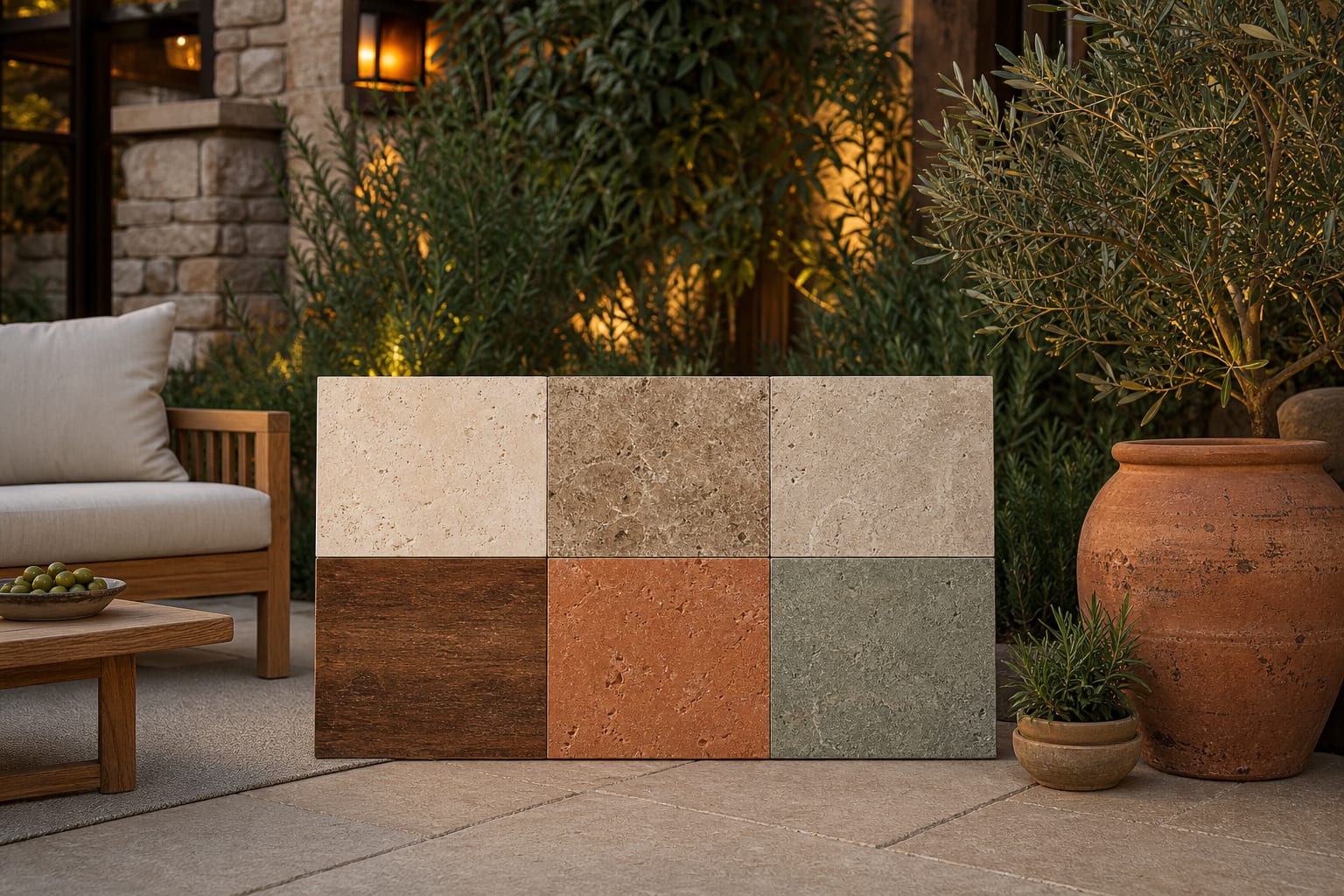
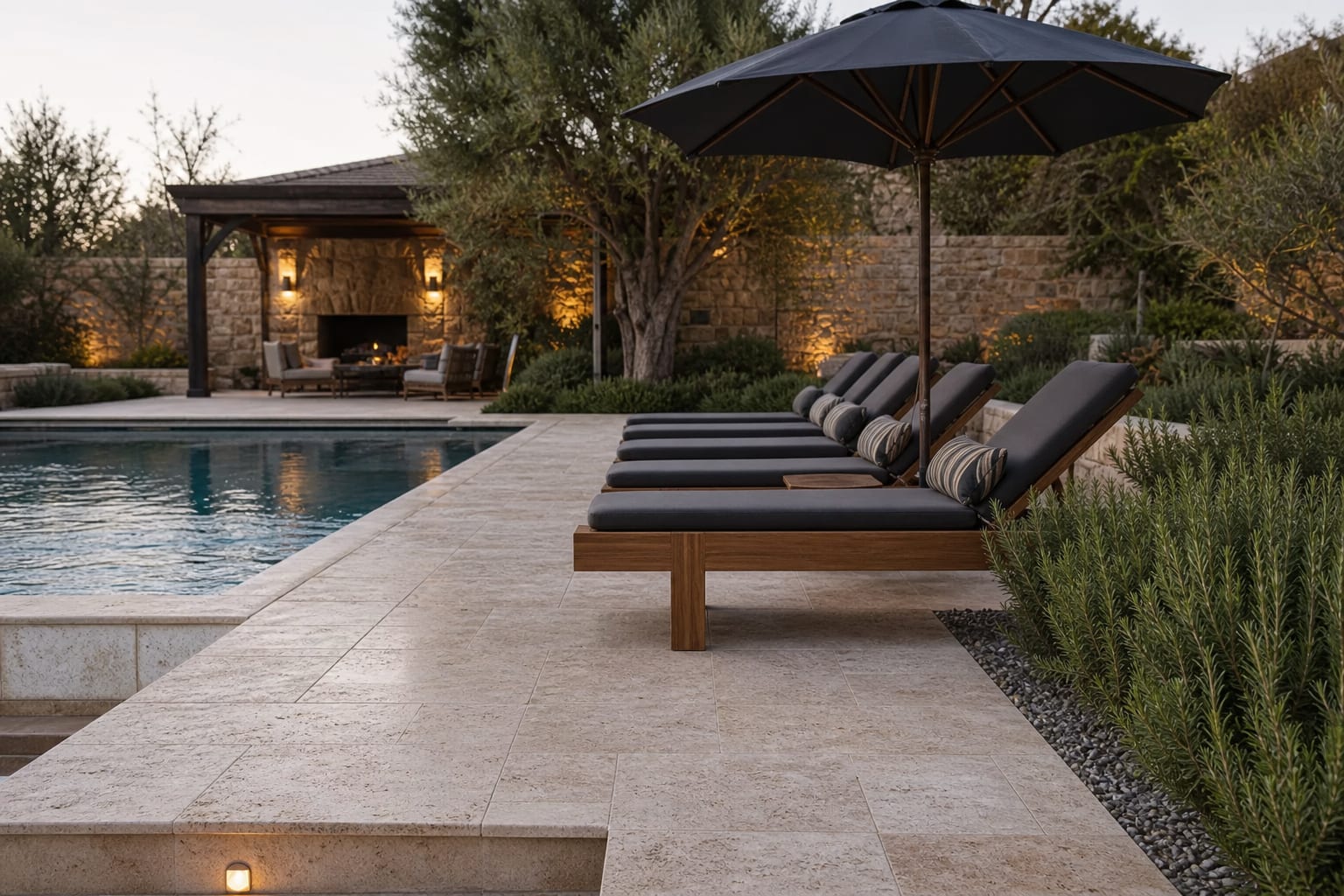
For pool decks, skip honed interior tile and use a textured finish instead. Tumbled travertine pavers typically run about 1.25 inches thick versus roughly 0.5 inches for tile, and the thicker paver holds up better outdoors and under furniture legs. Choose light ivory, walnut, or silver-beige blends for bare feet in summer sun, and avoid dark filled travertine on exposed paving.
Slope the patio 1/8 to 1/4 inch per foot away from the house or toward a drain, and keep mulch beds from spilling onto the stone. If you want a low-maintenance modern surface instead, compare porcelain tile patio ideas — porcelain and travertine solve different problems.
Which travertine finish works best outdoors?
Travertine vs. pavers isn't a fair fight until you pick a finish. Concrete pavers deliver uniformity and edge control; travertine delivers mineral variation and softened edges that make a new patio feel settled.
- Tumbled travertine is the most forgiving choice — rounded edges hide small chips, and sand-set installation simplifies future repairs. For pool coping, a bullnose or eased-edge profile around 12 inches wide keeps the rim from feeling sharp.
- Brushed travertine suits modern houses with black windows, flat stucco, or steel planters. It has texture without heavy rustic character — keep grout color close to the stone unless you want a visible grid.
- Filled travertine is riskier outside. Freeze-thaw movement, pool chemicals, and wear can expose pits over time, so save filled-and-honed pieces for covered loggias rather than open patios.
Test this on your own photo with ReDesign before finalizing a direction — keep the house edge, horizon, hardscape, planting beds, and main path visible so the preview reflects your actual space.
How do you lay out a travertine patio so it doesn't look like a hotel courtyard?
French pattern looks great but needs room to breathe; on an 8x10 patio, mixed sizes can feel busy fast. A running bond with 12x24 or 16x24 pavers usually reads cleaner in small spaces.
Build the paved area around chair pullback, not the tabletop. A six-person table needs at least 10x12 feet of clear surface. Loungers need about 30-36 inches of pass-through space behind them, and wet-traffic paths across the deck should stay at least 4 feet wide.
Edges matter with travertine more than people expect. A stone field that dies into lawn looks unfinished — a 4-6 inch gravel strip, clipped germander, steel edging, or a row of rosemary gives the patio a designed border. For softer, more informal transitions, see decomposed granite patio ideas.
For Mediterranean mood, restrain the clichés: one olive tree in a 24-30 inch terracotta pot beats six scattered small pots, and cream cushions with a simple plaster wall do more work than ironwork everywhere.
What mistakes make travertine patios look cheap?
- Skipping the on-site sample test. Travertine shifts dramatically in sun, shade, and rain — place four loose pieces outdoors for 48 hours next to the house color before approving a blend.
- Ignoring pool coping as its own decision. Choose coping profile, waterline tile, and paver field together so the pool edge speaks one language instead of three competing beiges.
- Matching furniture color to the stone. Add contrast with teak, bronze, olive-green cushions, or a wet-rated striped rug so the patio doesn't wash out.
- Adding shade as an afterthought. Place umbrella and pergola posts before finalizing the paving pattern so they don't land mid-cut on an expensive stone.
- Treating sealer as a cure-all. Use a penetrating sealer, reapply per product guidance, and still clean leaf tannins, grease, and wine spills promptly.
A blank exterior wall beside the patio can help or hurt the stone. Stacked stone, limewash, or plaster-look masonry connects paving to architecture — see outdoor stone veneer ideas when the patio needs a vertical anchor instead of more furniture.
How can AI design tools help before you buy travertine?
The real decision isn't one sample — it's the whole outdoor room: stone blend, pattern, shade, coping, pots, planting, and wall color. Upload a straight-on patio or pool photo and preview a few directions before ordering material: ivory tumbled travertine with teak loungers, walnut travertine with terracotta and olive trees, or silver travertine with black metal furniture against cool gray trim.
Keep prompts specific. Use the same camera angle, existing pool shape, realistic 36-inch paths, a visible umbrella or pergola, and planting that fits your actual bed depth. If a preview only looks good because it replaced the neighbor's fence or invented a bigger garden, discard it and tighten the prompt.
The goal isn't to make travertine look prettier than it is — it's to catch mismatches early: stone that clashes with the roof, furniture that disappears into the paving, a shadeless dining zone, or a pool surround with no contrast at dusk.
Frequently Asked Questions
What travertine finish is best for a patio?
Tumbled travertine offers the best slip resistance and the most casual texture for outdoor use. Honed-and-filled travertine reads more formal but turns slick near pools, so save it for covered or low-traffic areas.
How thick should travertine pavers be?
Standard residential patio pavers run 1.25 inches (3cm) and hold up under dining furniture. Thinner 0.75-inch pieces are meant for walls and shower floors, not walked-on patios.
Does travertine stay cool in summer?
Yes. Light cream travertine typically runs 10-20°F cooler underfoot than dark slate or charcoal porcelain, which is why it's a common choice for pool decks in hot climates.
How is travertine installed?
Sand-set travertine over a compacted aggregate base works for permeable patios, while mortar-set installation over a concrete slab suits poolside and high-traffic areas. Joint sand or polymeric sand fills the gaps between pavers.
Should travertine be sealed?
Yes. A penetrating sealer prevents staining from wine, oil, and pool chemicals, and it reduces moss growth in shaded patios. Reseal every 3-5 years to maintain protection.
> Try this: Ready to see this on your own outdoor space? Open ReDesign and run the preview before you buy materials, plant, drill, or move furniture.
Three transformations to try
1. Travertine pool deck with cream loungers 2. Travertine dining patio with olive trees 3. Travertine courtyard with terracotta