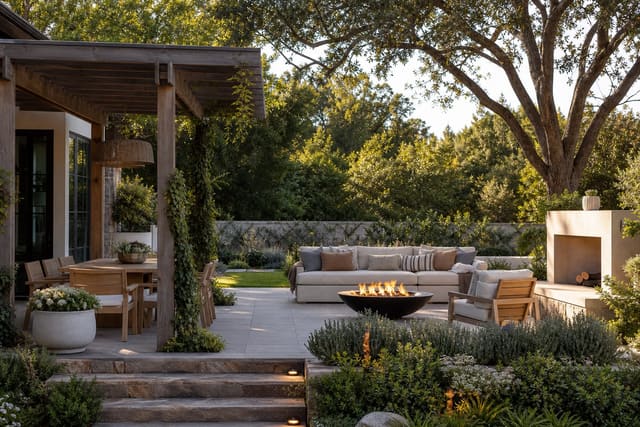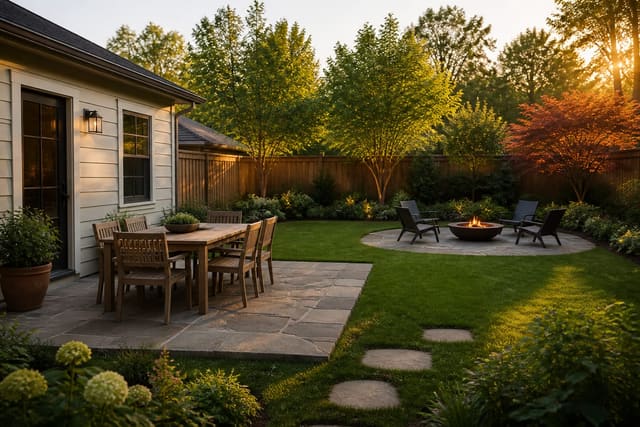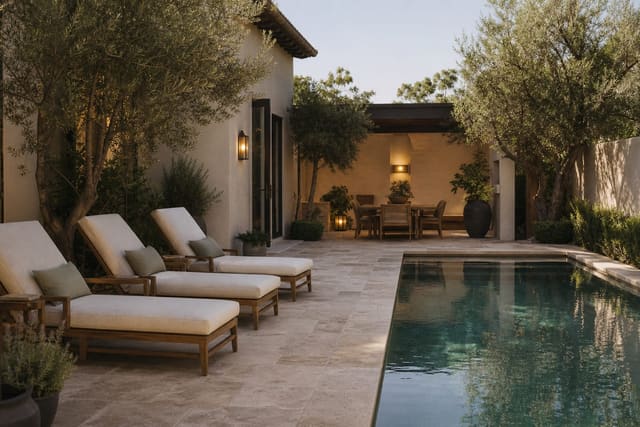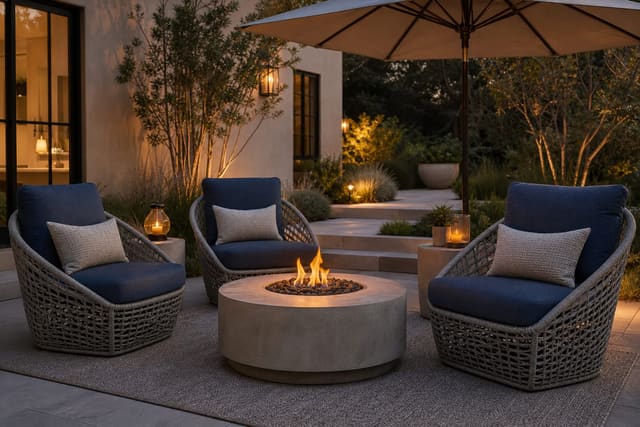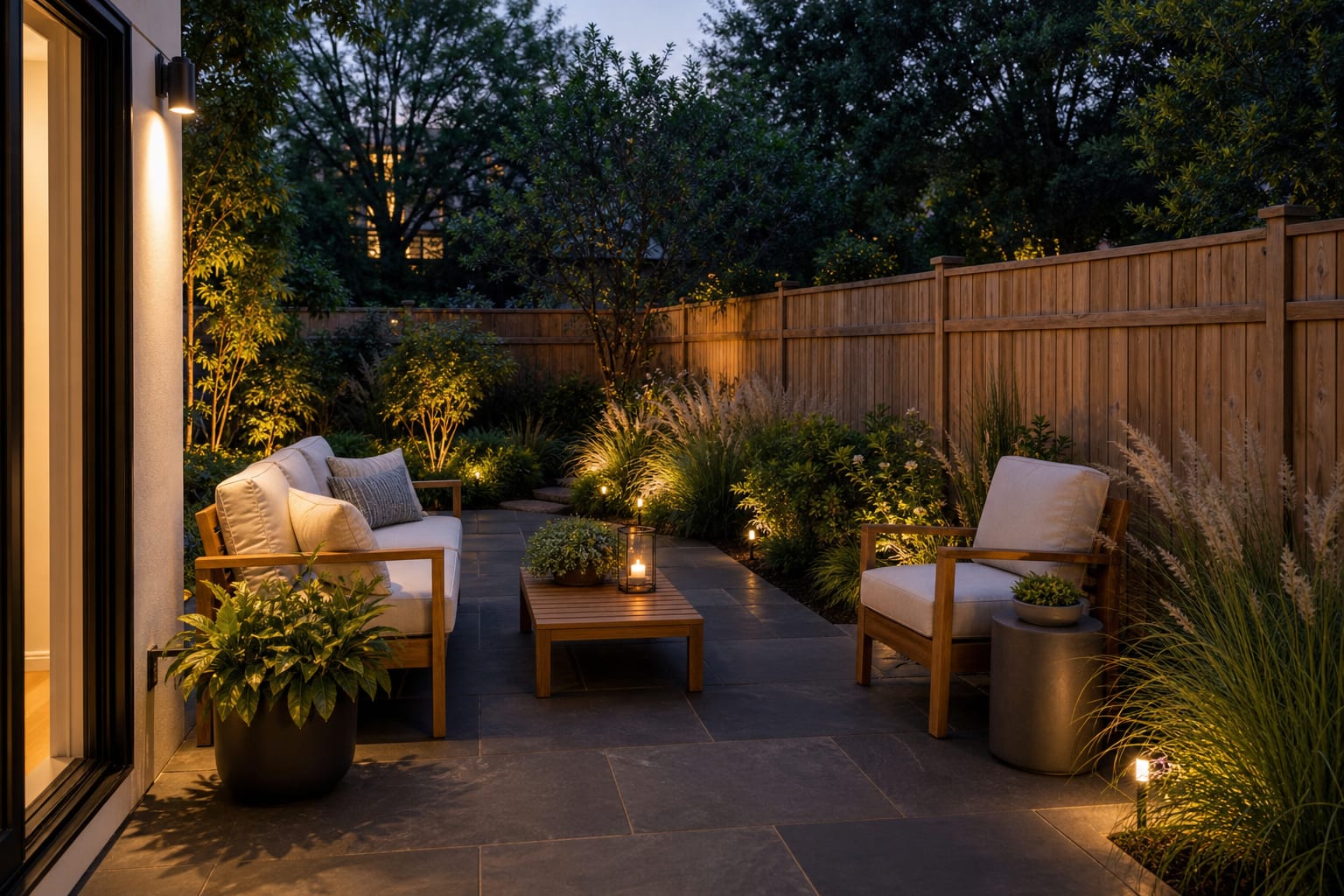
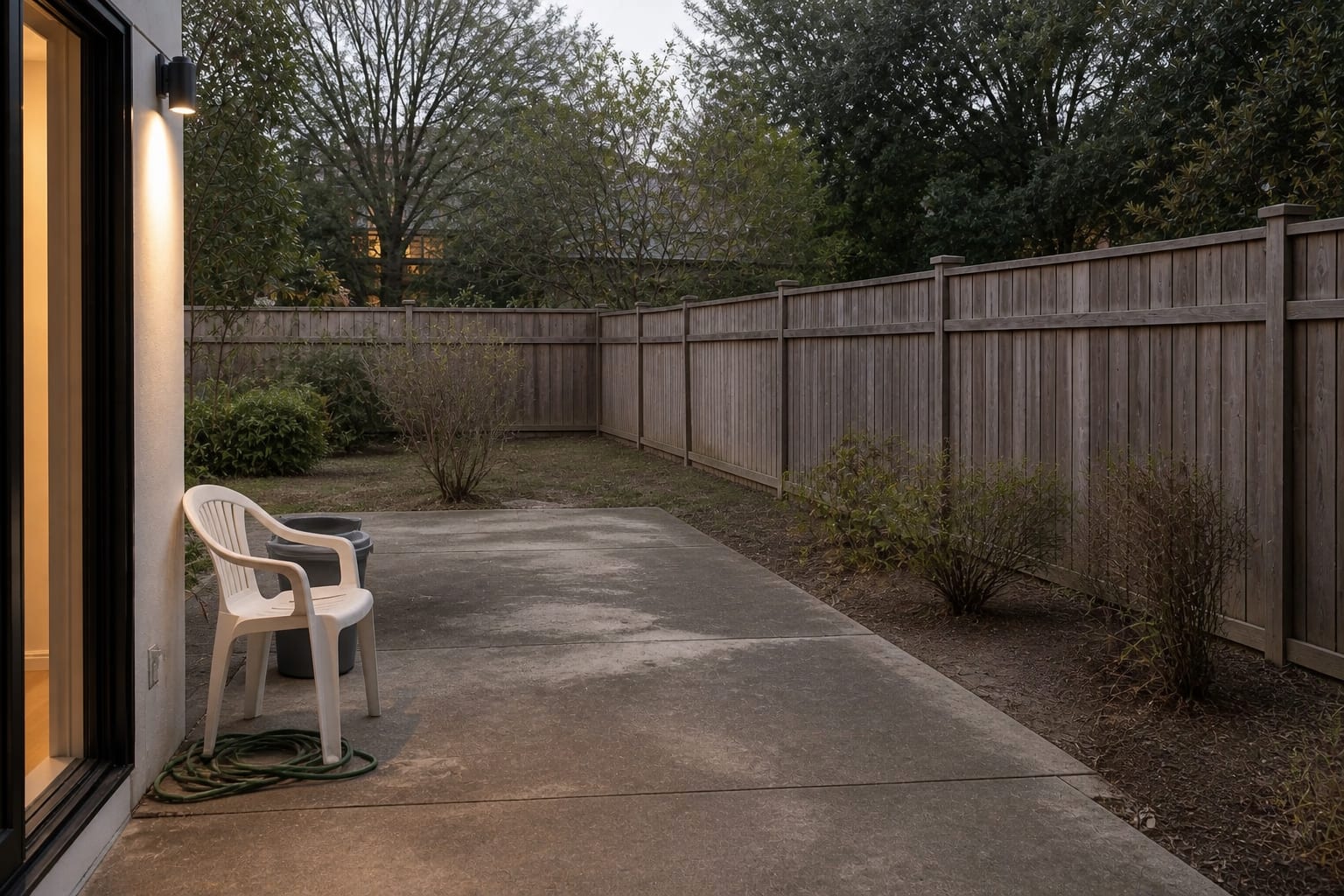
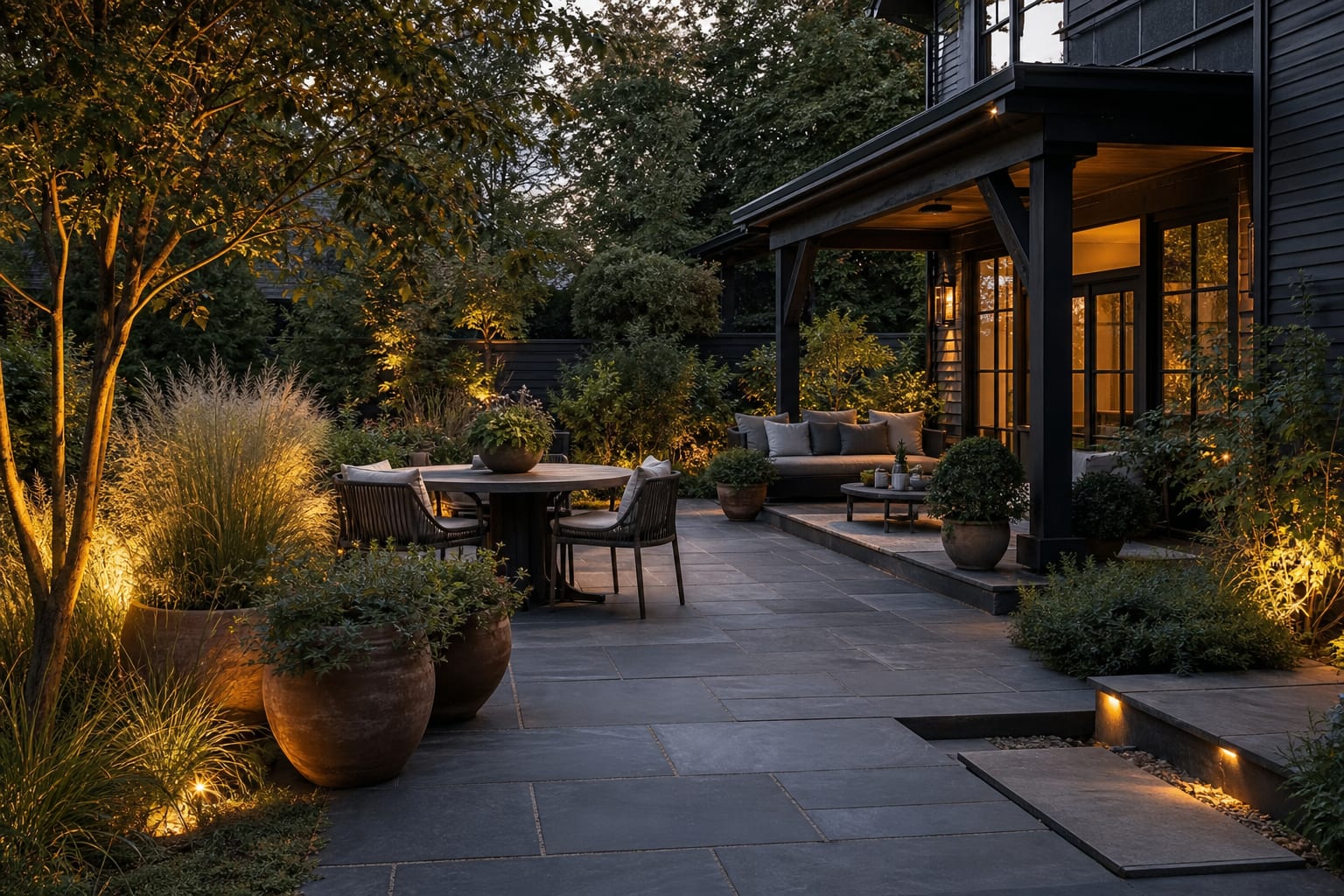
A slate patio works when 1-1.5in-thick natural slate is set on a mortar bed over a compacted base with sealed joints, oriented so long edges run perpendicular to the main view, and offset by pale teak or cream furniture so the dark stone reads warm rather than heavy. Slate rewards a deliberate plan more than any other paving stone.
Is slate a good patio material for outdoor use?
Yes, when you choose dense, outdoor-rated stone with a textured finish and install it over a well-drained base. Problems start when someone sees a gorgeous indoor slate tile and assumes it can survive freeze-thaw cycles and pooling water. Outdoor slate should feel substantial, have natural cleft or lightly textured traction, and be specified by the supplier for exterior paving.
Slate looks best when the design accepts its mood instead of apologizing for it. Charcoal, blue-black, green-black, and purple-gray pieces create a richer floor than concrete, but the darkness also exposes every weak decision: a narrow random pattern looks nervous, a glossy sealer looks like a wet basement, a too-white cushion glares.
Scale drives a reliable design. For a small townhouse patio, 16x24-inch pieces feel generous without overwhelming the footprint; for a larger dining terrace, 24x24-inch or 24x36-inch slabs feel architectural. Keep joints around 1/4 to 3/8 inch on dimensionally consistent stone, and give irregular pieces wider, honest joints rather than forced precision.
Rectangular slab or rustic flagstone?
The first fork is geometry, not color. Rectangular slate reads tailored; irregular flagstone reads looser and more garden-driven. Mixing both without a plan looks like leftover material from three jobs.
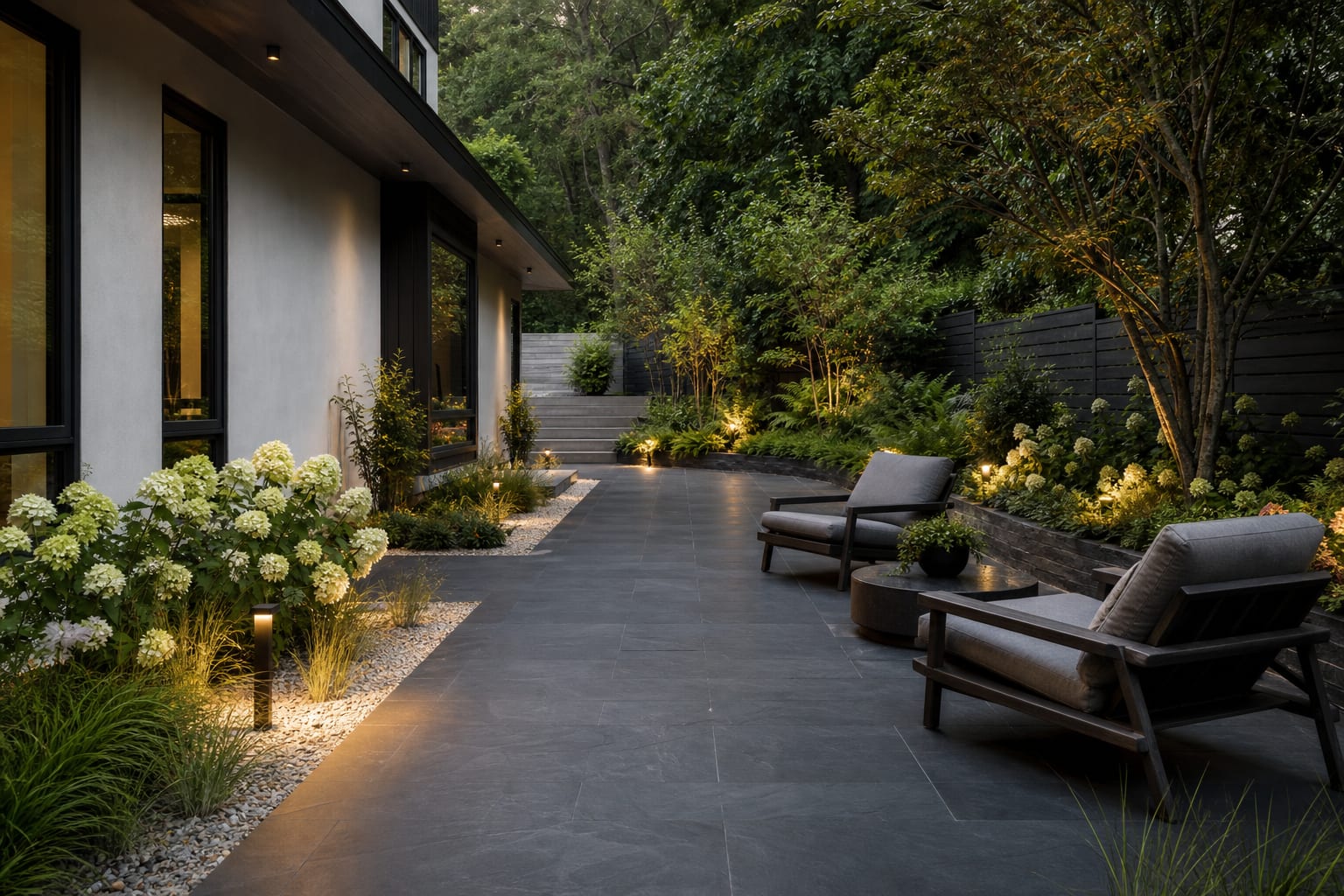
Use rectangular slate with straight-lined houses (black window frames, stucco, brick, simple siding). Align the long direction with the longest sightline from the door, and keep furniture disciplined: 36 inches minimum for a walking path, 10x12 feet for six-person dining, roughly 7 feet across for two lounge chairs with a shared table. Check the outdoor fabric guide before choosing pale cushions, since dark stone shows dirty water and pollen fast on weak textiles.
Use irregular slate where the patio touches lawn or planting beds. Give the shape an intentional edge, a steel strip, brick soldier course, or 4-to-6-inch gravel band, so it reads relaxed rather than unfinished. Plant soft borders with thyme, sedge, dwarf fountain grass, or catmint, keeping soil and mulch below the stone surface.
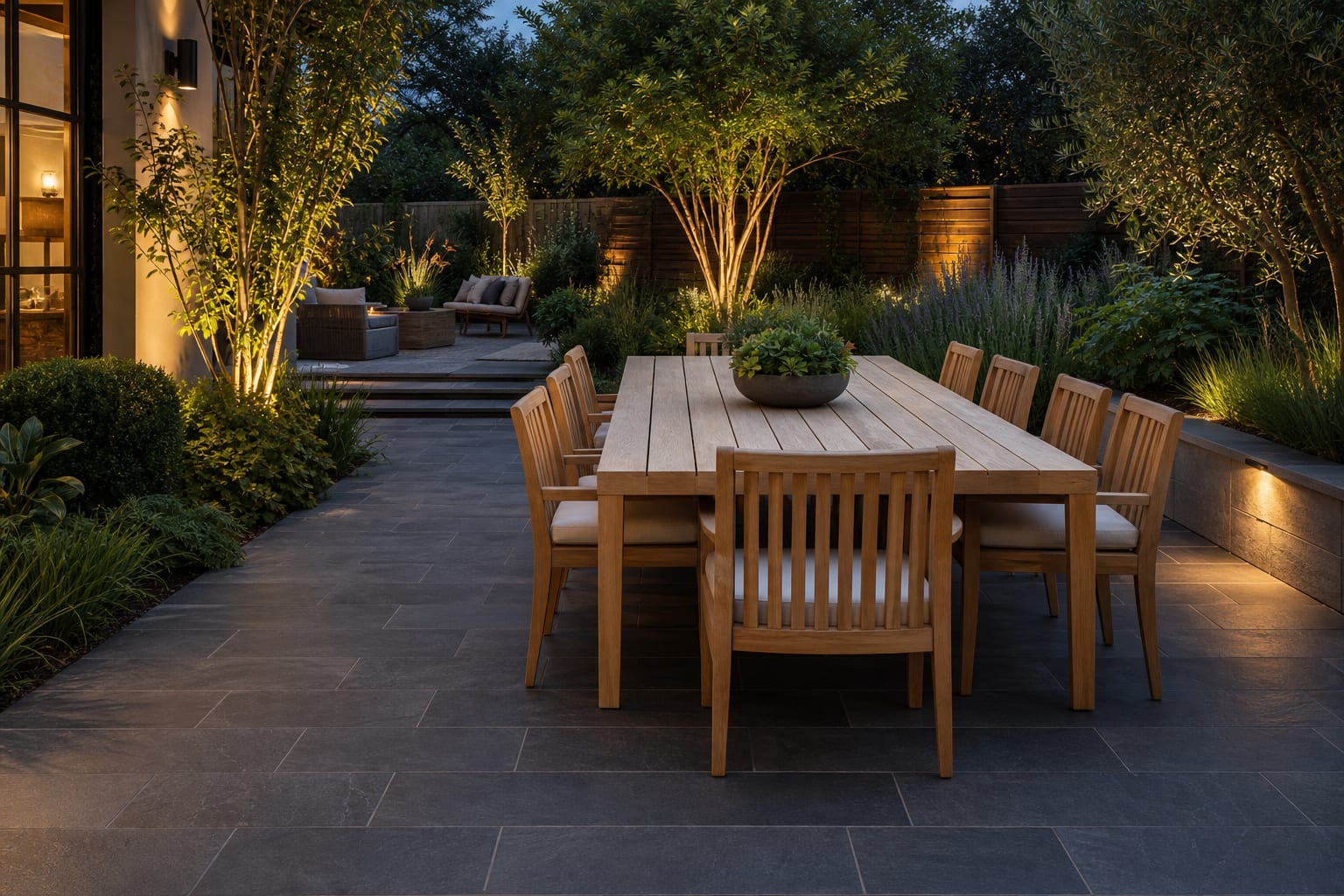
Test this on your own photo with ReDesign before committing; keep the house edge, horizon line, hardscape, planting beds, and main path visible so the preview solves your actual space.
Slate vs. bluestone: which one wins?
Both stones create a deep, cool-toned patio, but they behave differently. Slate is moodier and more layered; bluestone is steadier and easier to blend with traditional brick or colonial architecture.
| Decision point | Choose slate when... | Choose bluestone when... |
|---|---|---|
| Color mood | You want blue-black, charcoal, or purple undertones with visible cleft layers. | You want a calmer blue-gray or gray-brown surface that recedes quietly. |
| Patio style | The design leans modern, garden-room, mountain, or dramatic courtyard. | The design leans classic terrace, pool surround, or traditional back patio. |
| Surface feel | You accept tonal variation piece to piece. | You prefer a more uniform thermal or honed look. |
| Furniture pairing | Teak, black metal, clay, bronze, or warm neutral cushions. | White trim, navy cushions, brick walls, formal furniture. |
Dark slate absorbs heat, especially in full afternoon sun, so dining zones often need an umbrella, pergola, or tree canopy. A 9-foot umbrella usually covers a 42-to-48-inch round table; a 10x10-foot cantilever shade suits a lounge grouping. Compare outdoor umbrella ideas for dark patios before ordering stone, not after the first July lunch.
Common slate patio mistakes
- Choosing polished slate for walking surfaces creates a slip hazard. Use natural cleft, flamed, or brushed slate outdoors, and save polished pieces for sheltered walls or accents.
- Ignoring the house color disconnects the patio. Test a 12x12-inch sample outside at morning, noon, and dusk before approving the palette.
- Using tiny pieces on a large patio makes the floor look fussy. On areas larger than 12x16 feet, move up in slab size or simplify the pattern.
- Letting furniture disappear into the stone weakens the composition. Black metal chairs need contrast from wood arms, woven seats, pale cushions, or an exterior-rated rug.
- Skipping nighttime lighting turns slate into a black hole after dark. Use 2700K fixtures, space path lights 6 to 8 feet apart at route changes, and graze nearby planting instead of blasting the stone.
Maintenance shapes the design too. Choose slate from a supplier who understands your climate, since some stone can shed thin layers over time. A penetrating sealer helps with staining, but avoid shiny topical sealers on walking areas since they alter traction. Keep grill zones on a mat or separate pad, and use furniture glides under metal legs.
Preview a slate patio with AI before you order stone
Slate is hard to judge from a single sample because the decision touches siding color, fence tone, furniture, planting, shade, and the view from inside the house. Upload a straight-on photo and test a few directions: large rectangular charcoal slate with teak furniture, irregular green-gray flagstone with cottage planting, or blue-black slate with pale gravel borders.
This is especially useful when weighing slate against bluestone or judging how much shade the dark surface needs. Keep the camera angle, door and window locations, and circulation clearances consistent across previews. If the patio also needs cooling, layer in outdoor misting system ideas so the plan covers comfort, not just the floor.
Frequently Asked Questions
How thick should slate patio slabs be?
Use 1-1.5 inches for foot traffic. Thinner 0.5-0.75-inch slate is wall veneer, not patio paving, and it fractures under chairs and dining tables.
Does slate get too hot for bare feet?
Dark slate runs 15-25°F hotter than pale travertine in direct sun. Site dining and lounge zones on the shaded half of the patio, or choose softer grey-green slate instead of deep black.
Should slate be sealed?
Yes. A penetrating siloxane sealer prevents salt and freeze-thaw spalling without leaving a glossy film. Reseal every 2-3 years in cold climates.
What furniture works best on a slate patio?
Teak, cream powder-coated aluminum, and pale linen cushions counterweight the dark stone. Black metal frames tend to disappear into slate, making the patio read as a void.
Is slate slippery when wet?
Honed and cleft slate offers solid traction. Polished slate becomes a slip hazard near pools and should be limited to covered patios.
> Try this: Ready to see this on your own outdoor space? Open ReDesign and run the preview before you buy materials, plant, drill, or move furniture.
Three transformations to try
1. Slate dining patio with teak table 2. Slate courtyard with planted edge 3. Slate poolside patio with pale loungers