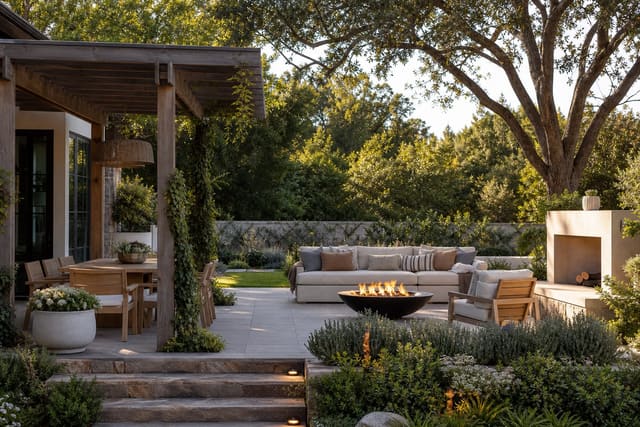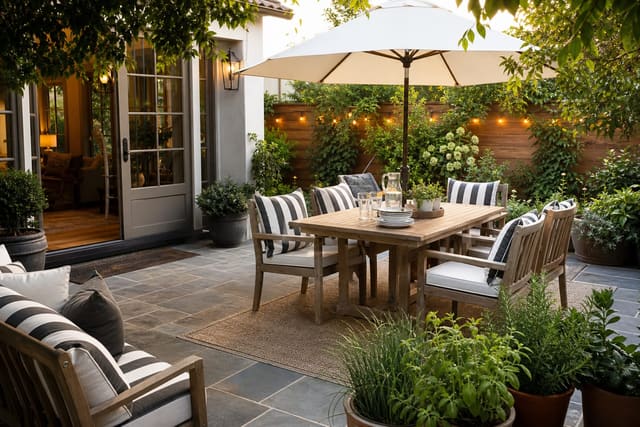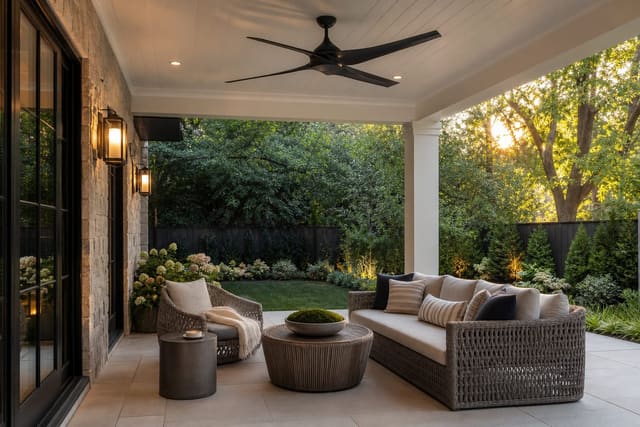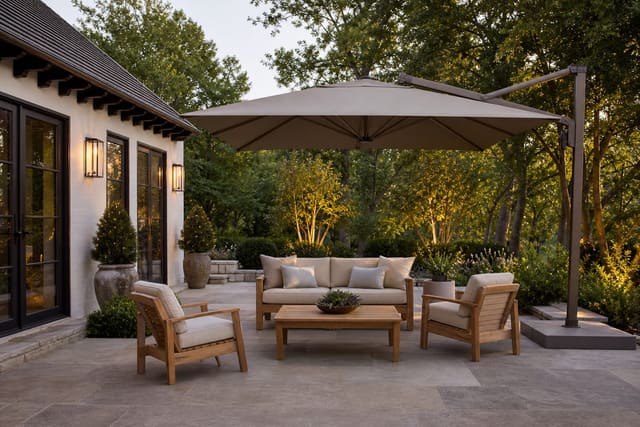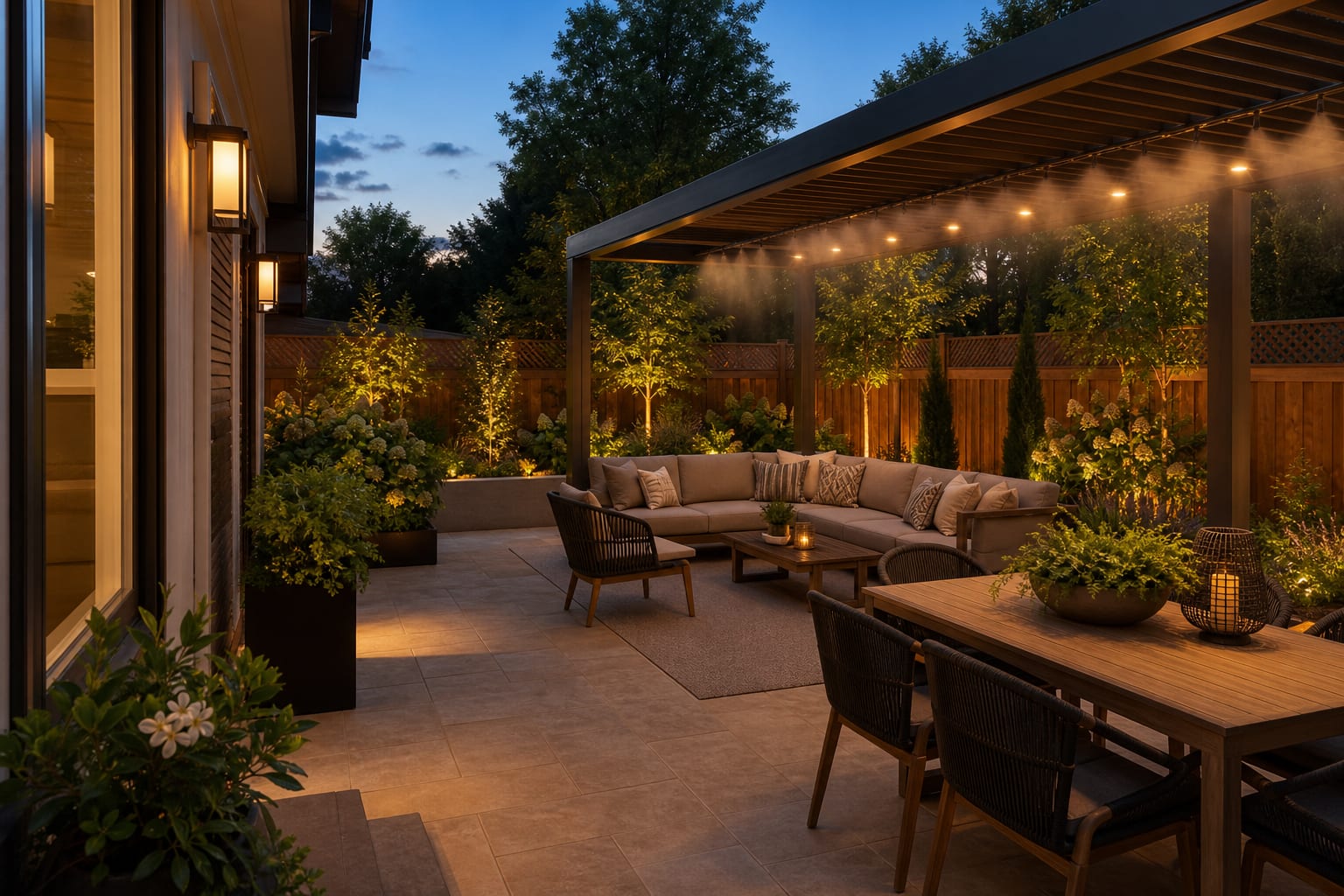
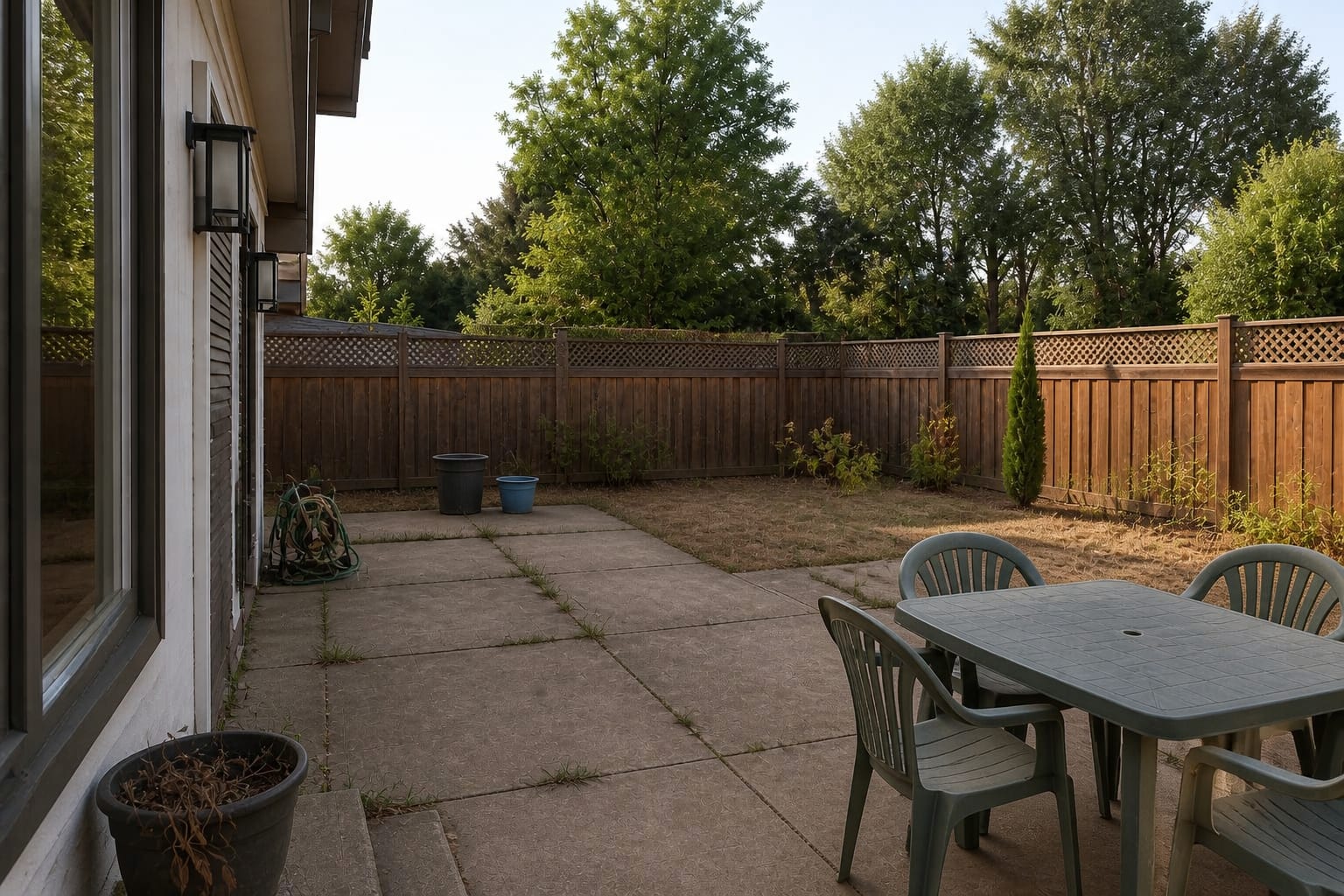
An outdoor misting system cools a patio by 15-25 degF when nozzles run at 800-1000 PSI on a high-pressure pump, sit 18-24 inches apart, mount at least 8 feet high, and discharge into open air rather than enclosed corners. A bad setup is worse than none: damp cushions and slippery pavers send people inside faster than the heat did.
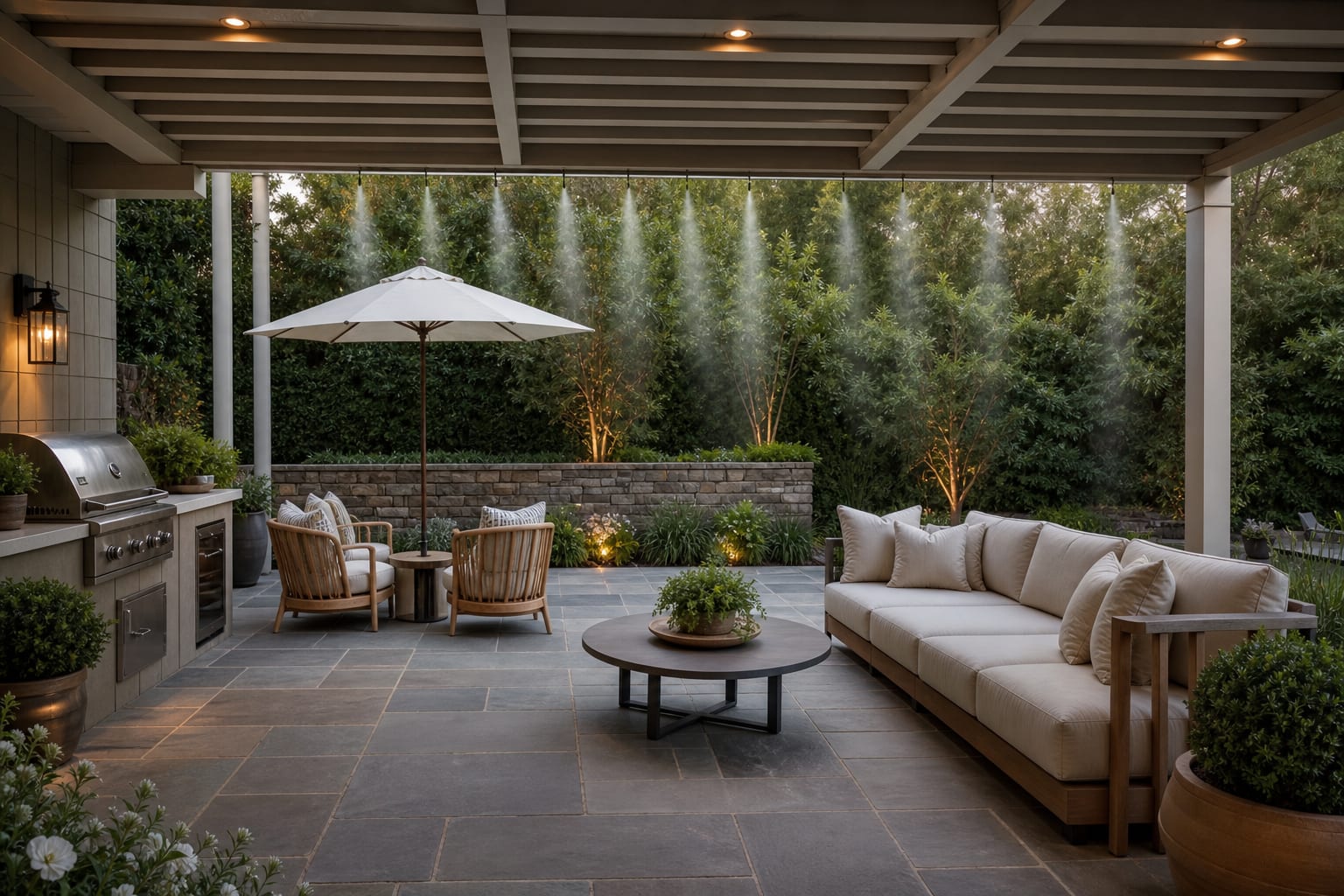
Do outdoor misting systems actually work on a patio?
Misting works when droplets evaporate before touching people or furniture. A dry, breezy patio feels dramatically better with mist; a humid, windless courtyard can turn clammy if the system is too aggressive. The real question isn't whether to buy a kit, it's where the water goes and whether the patio already has shade and airflow.
Treat mist as the last layer of a comfort plan: shade first, then airflow, then mist along the perimeter. If there's no shade yet, solve that with a canopy, pergola cover, or sail — see these outdoor umbrella ideas for patios. A 9-foot umbrella over a 48-inch table often cools a dining zone more reliably than mist fighting a sun-baked slab at 3 p.m.
Hardscape matters too. Dark concrete and black porcelain radiate heat back at ankles; lighter stone and textured pavers feel more forgiving. If you're redesigning the surface, check slate patio ideas for outdoor rooms first, since a misted patio still needs paving that drains and grips when wet.
Which misting setup fits the way you use the patio?
The best mist cooling setup matches how the space is actually used. A lounge corner, a dining terrace, and an outdoor kitchen don't want identical water placement.
| Setup | Best use | Design rule | Watch-out |
|---|---|---|---|
| Low-pressure misting kit | Renters, balconies, temporary frames | Space nozzles 24-36in along the shade line's outer edge | Droplets feel large if aimed at cushions or pressure is weak |
| Pump-assisted overhead line | Permanent patios, pergolas, pool lounges | Mount 8-10ft high, run parallel to seating | Pump noise needs a screened, serviceable spot |
| Misting fan setup | Kitchens, work zones, lounge corners | Place 6-8ft from people, angled across seating | Too close feels wet and scatters napkins or smoke |
| Umbrella-mounted mist ring | Dining tables, movable shade | Use only with a stable, size-rated base | Tubing looks messy without clips along the pole |
A low-pressure kit is fine on a rental patio if the hose route stays clean — keep tubing tight to the pergola beam and matched in color to the structure. For an owned home, tuck a perimeter line under a pergola beam or fascia board and aim nozzles at the air entering the seating area, not the center of the sofa. If a guest can point to the exact nozzle dampening their sleeve, it's too low or too close.
Test this on your own patio photo before finalizing anything — keep the house edge, hardscape, and main path visible so the preview solves the space you have.
Outdoor misting system ideas worth copying
- Slim overhead perimeter line: space nozzles 24-36in apart on the open side of a covered patio, cooling incoming air while keeping the table and pendant lights dry.
- Kitchen-paired misting fan: place 6-8ft from the cook, angled across the patio rather than at the grill, so smoke doesn't push toward guests.
- Hidden pergola tubing: route the line down behind a 24-inch-deep planter of grasses or rosemary to disguise the service run.
- Umbrella-mounted mist ring: only pair this with an umbrella already doing real shade work, like a 10-foot cantilever over a lounge pair.
- Entry threshold cooling: put two or three nozzles at the house-to-patio transition instead of misting the whole yard.
- Quick-dry cushions: choose open-weave or solution-dyed covers near mist zones — see this outdoor fabric guide — since cotton and mist invite mildew.
- Low planting buffer: keep leafy plants 12-18in from nozzles so they don't block spray or catch drip.
Mist belongs at the edge of comfort, not the center of the composition. Shade, seating, surfaces, and planting should carry the design before the water turns on.
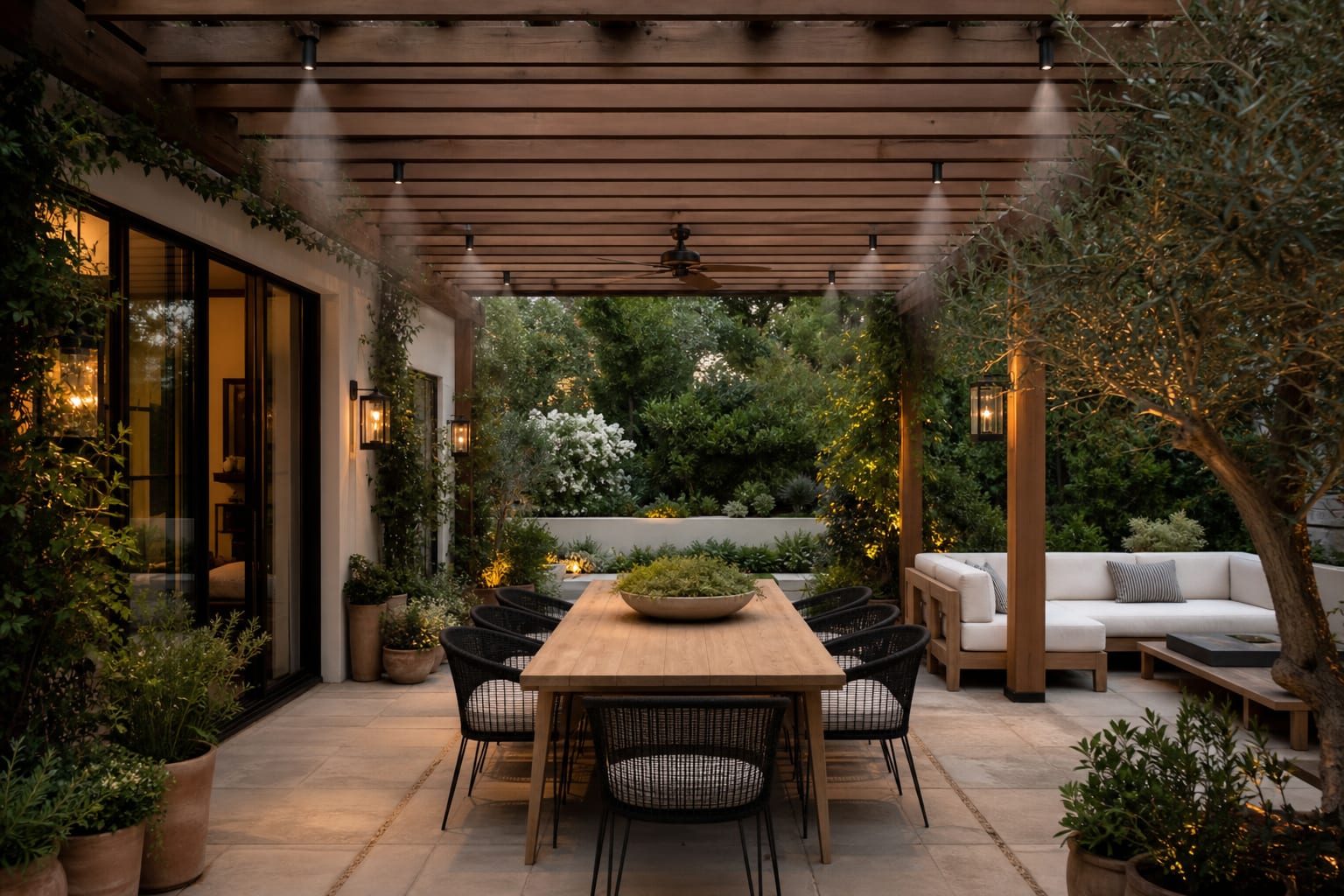
Design-check shorthand: depth before decoration, repetition before variety, maintenance before novelty.
Common misting mistakes that make a patio feel damp
- Mounting too low. A 6-foot line sprays shoulders instead of cooling air; push to 8 feet or higher and use fewer, finer nozzles under low ceilings.
- Cooling the wrong zone. Aim mist just outside the dining footprint, not at glassware and napkins, and leave 30 inches of dry walking clearance.
- Ignoring wind. A breezy side yard can push mist onto windows or fences — tape tubing temporarily and test before permanent installation.
- Choosing dry-only finishes. Polished stone, glossy tile, and untreated metal get worse with mist; pick textured paving, powder-coated hardware, and drain-through cushions.
- Exposing the equipment. Give pumps, filters, and hoses a serviceable hiding spot — a vented bench end or planting screen — without blocking access.
Use AI design to preview your patio before you commit
Misting systems are hard to judge from product photos alone. Upload a patio photo and preview the same angle with a pergola line, a misting fan, an umbrella ring, and a shade-first layout to spot clutter or blocked walkways before buying anything.
Keep prompts practical: ask for the mist line to follow the pergola beam, the dining path to stay 36 inches wide, and furniture in quick-dry fabric. If a preview looks busier, simplify the system. The best result looks quiet — shade overhead, clear circulation, and a cooling layer you feel rather than see.
Frequently Asked Questions
Do misting systems actually cool a patio?
High-pressure misters (800+ PSI) drop ambient air by 15-25 degF in dry climates. Low-pressure hose-bib misters only manage 5-10 degF and tend to leave the patio wet.
Will a misting system make my patio wet?
Properly tuned high-pressure mist evaporates before it falls; low pressure or oversized nozzles leave puddles. The test is whether nozzles produce a fog, not a stream.
Can I use a misting system in humid climates?
Effectiveness drops above 60 percent humidity. In the Southeast or Gulf Coast, expect 5-10 degF of cooling rather than the 20+ degF often advertised.
How much does outdoor misting cost?
A high-pressure 30-foot kit with pump and 12 nozzles runs $400-$700 in materials. Full professional installation runs $1,500-$3,000 depending on pump location and water tie-in.
Are misting systems good for plants?
Yes. Plants near misters benefit from elevated humidity and lower leaf temperature, especially ferns, hydrangeas, and hostas. Succulents and Mediterranean herbs do not benefit and can suffer from excess moisture.
> Try this: Ready to see this on your own outdoor space? Open ReDesign and run the preview before you buy materials, plant, drill, or move furniture.
Three transformations to try
1. Patio with overhead misting perimeter 2. Pergola with integrated mist line 3. Pool deck with cooling mist arc