Patios & Decks11 min readMay 25, 2026

Patio Ceiling Fan Ideas: Air Circulation for Covered Outdoor Spaces

Patio ceiling fan ideas start with the right rating: yes, you can use a ceiling fan on a covered patio if it is damp- or wet-rated and sized for the space.

The transformation · 11-minute read

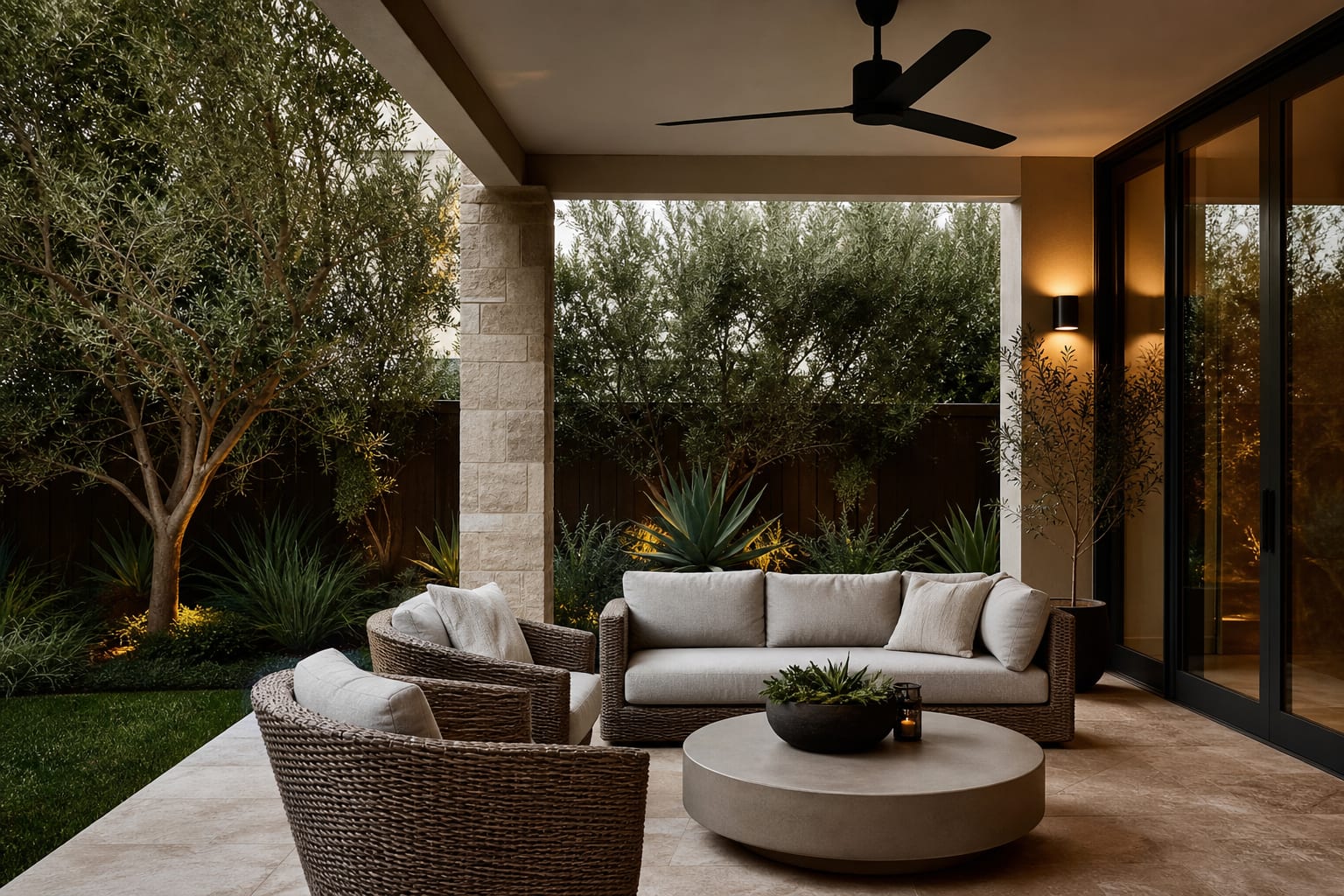
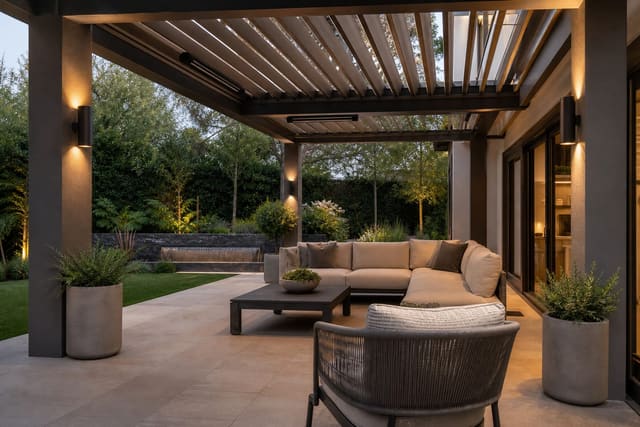
Same covered patio angle with a matte outdoor ceiling fan, organized lounge seating, pale patio flooring, and planting that softens the shaded edge.
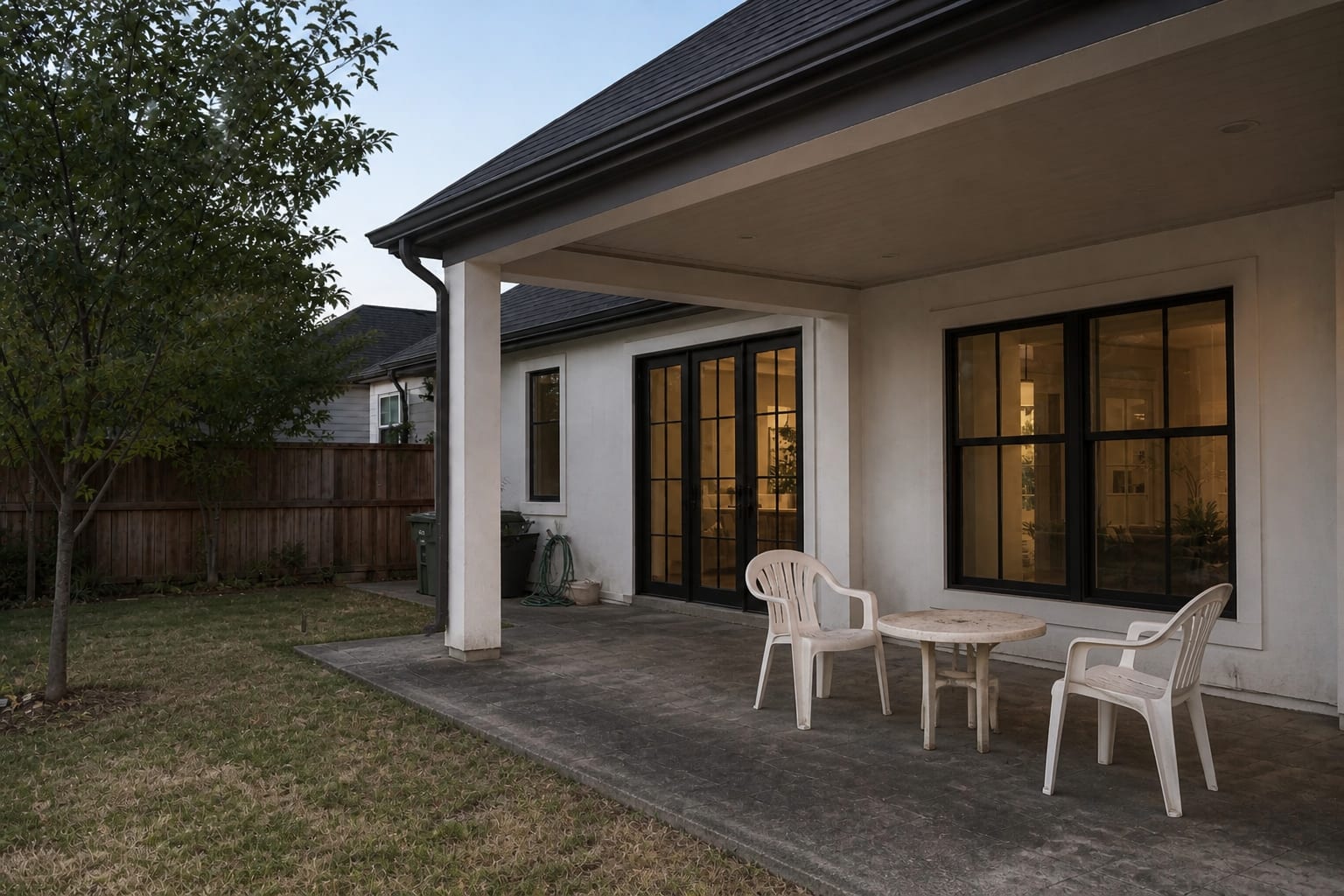
Under-designed covered patio with heavy still air, mismatched chairs, a bare ceiling, and dark paving that makes the seating area feel hot.
Before
After

A covered patio with trapped summer heat becomes a usable outdoor room after adding a correctly scaled wet-rated fan, clearer seating, and lighter heat-aware surfaces.

A patio ceiling fan works when it is rated wet (not damp), sized at 52-60in for a typical 100-200 sqft covered patio, mounted with at least 7ft of clearance from the floor and 18in from any wall, and powered through a code-rated outdoor box. A covered patio without air movement can feel stale even when the furniture, tile, and view are good. My firm take: a ceiling fan is not an accessory out here; it is comfort equipment, and it should be chosen as carefully as the dining table. The wrong fan looks undersized, rattles in weather, or pushes warm air around without helping anyone. The right one makes the patio feel usable on the sticky days when everyone would otherwise retreat indoors.

covered patio with a matte black outdoor ceiling fan above woven seating, pale tile flooring, and shaded planting beds

Can I put a ceiling fan on an outdoor patio?

Yes, you can put a ceiling fan on an outdoor patio if the fan is rated for the amount of moisture the location receives and the electrical box is approved for fan support. A covered patio that never gets direct rain can usually use a damp-rated outdoor ceiling fan; a porch edge, pergola, poolside roof, or wind-exposed patio needs a wet-rated ceiling fan outdoor fixture.

Do not treat “indoor/outdoor style” as a rating. The label you want is damp rated or wet rated, and the mounting hardware, blades, motor housing, and light kit all need to belong to that rating. An indoor fan hung outside may warp, corrode, or fail early even if the roof keeps most rain off it.

The ceiling box matters just as much as the fan. A fan-rated electrical box is designed to handle motion and weight; a standard light box is not. Many fan boxes are labeled for 35 to 70 pounds, but the printed rating on the actual box is what counts. If the patio ceiling is tongue-and-groove, beadboard, stucco soffit, or aluminum pan roofing, plan the support before you fall in love with a fixture.

Same covered patio angle with a matte outdoor ceiling fan, organized lounge seating, pale patio flooring, and planting that softens the shaded edge.
Under-designed covered patio with heavy still air, mismatched chairs, a bare ceiling, and dark paving that makes the seating area feel hot.
Before
After

A covered patio with trapped summer heat becomes a usable outdoor room after adding a correctly scaled wet-rated fan, clearer seating, and lighter heat-aware surfaces.

Which outdoor fan rating belongs over your patio?

The rating decision is the fork that prevents expensive regret. Damp-rated fans are built for humidity and covered exposure, but not direct water. Wet-rated fans can tolerate rain and hose spray when installed according to the manufacturer’s instructions. For an outdoor ceiling fan covered patio with a deep roof, sealed ceiling, and no blowing rain, damp rated may be enough; for an open-sided roof in a stormy climate, wet rated is the safer call.

| Patio condition | Better fan rating | Design note | | --- | --- | --- | | Deep covered porch with dry ceiling | Damp rated outdoor fan | Keep finishes rust resistant and avoid indoor wood blades. | | Pergola with partial cover | Wet rated ceiling fan | Use sealed motor housing and outdoor-rated controls. | | Pool-adjacent covered patio | Wet rated ceiling fan | Choose blades that can handle humidity and occasional splash. | | Screened porch | Damp or wet rated, depending on exposure | Watch wind-driven rain at corners and doors. |

A fan with a light can help, but only if the patio needs overhead illumination. I prefer separate wall lights, pendants, or low-voltage landscape lighting for atmosphere, then a plain fan for air. If you do choose a fan light, use warm bulbs around 2700K and avoid blue-white glare that makes food, skin, and stone look harsh after dark.

The finish should coordinate with the permanent materials outside. A black fan makes sense against black window frames, dark railings, or charcoal furniture. Bronze works with warm stone, tan brick, and stained wood. White disappears best against a white beadboard ceiling, but it can look cheap under natural cedar beams. If you are already rethinking the surface below, study porcelain tile patio flooring that stays cooler and cleaner before choosing a fan color; the floor and ceiling create the patio’s largest visual planes.

Test this on your own photo with ReDesign before you choose the final outdoor direction; keep the house edge, horizon line, hardscape, planting beds, and main path visible so the preview solves the space you actually have.

How should a covered patio fan be sized and placed?

Start with the exact place people sit, not the roof dimensions on a floor plan. A fan centered over unused paving will move air where nobody needs it. Over a dining table, center the fan on the table and keep the blade tips visually inside the dining zone. Over a lounge, center it between the main sofa and chairs so air reaches bodies rather than the coffee table alone.

For many covered porch fan ideas, the common blade spans break down like this:

  • Use a 44- to 48-inch outdoor fan for a compact bistro corner or small porch where the seating group is under 8 feet wide; the smaller diameter keeps the ceiling from feeling crowded.
  • Use a 52-inch fan over a typical four-chair conversation area or a 48-inch round dining table; this is the safe middle size for many suburban covered patios.
  • Use a 56- to 60-inch fan for a longer sectional, a six-person dining table, or a broad rectangular patio bay; the larger sweep looks intentional only when the ceiling has enough width around it.
  • Use two matching fans instead of one giant fan when the patio is long and narrow; place them on the centerline of each seating zone with at least 36 inches of walking clearance maintained below and around furniture.

Blade clearance is where many patio fans go wrong. Keep blade tips roughly 18 inches or more from walls, beams, curtains, and tall cabinet doors. If the ceiling is 8 feet high, a low-profile outdoor fan is usually cleaner than a long downrod. If the roof pitch is sloped, use a slope-compatible canopy and the shortest downrod that still lets the blades clear the ceiling plane.

Airflow also needs a route. Heavy outdoor curtains, tall storage cabinets, dense vines, and solid privacy walls can trap air around the fan. If the patio is enclosed on three sides, consider a fan near the open edge and another source of cross-breeze, such as a screened door or operable shutter. On looser patio edges, a pale gravel or decomposed stone border can reduce reflected heat; decomposed granite patio edges and paths are worth considering when the fan is part of a larger cooling plan.
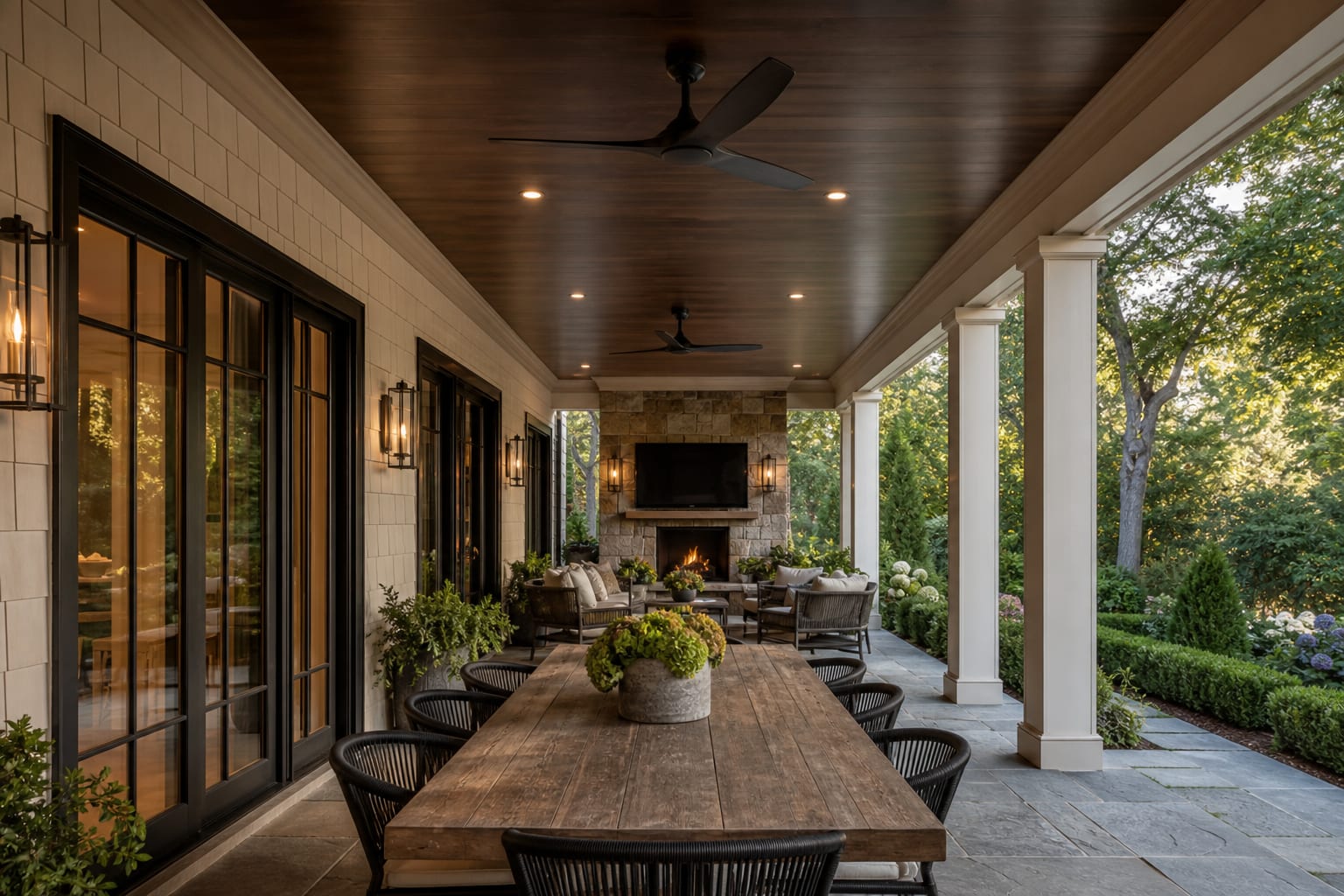
long covered porch with two matching outdoor fans aligned over separate dining and lounge zones

Design-check shorthand: - Depth before decoration. - Repetition before variety. - Maintenance before novelty.

Common patio ceiling fan mistakes that make summer worse

The first mistake is buying by looks before checking the rating. A pretty fan with indoor blades is not a bargain when the blades sag or the housing spots after one wet season. Choose the outdoor rating first, then narrow by finish and blade shape.

The second mistake is hanging one small fan in the middle of a large covered slab. A 52-inch fan floating over a 20-foot patio often looks lonely and performs unevenly. Divide the patio into zones: dining, lounging, cooking, and walking. If two zones need air, two properly scaled fans usually beat one oversized compromise.

The third mistake is ignoring the view from indoors. Patio ceilings are often visible from kitchen sinks, living rooms, and sliding doors. A fan that fights the window trim, stone veneer, or ceiling stain will bother you even when it is off. When the patio has a fireplace or feature wall, coordinate the fan finish with the masonry or cladding; outdoor stone veneer design around patios can make a dark bronze or matte black fan feel connected instead of random.

The fourth mistake is choosing a fan light as the only patio lighting. Overhead light flattens an outdoor room and attracts attention to bugs near the ceiling. Use the fan for air, then layer light at eye level and low level: sconces near doors, step lights on stairs, path lights at planting, and a small lamp on a protected side table if the outlet is outdoor-rated.

The fifth mistake is forgetting controls. Pull chains are awkward over a dining table and annoying when the ceiling is tall. Wall controls are clean for covered porches attached to the house; remote controls are convenient for lounge patios, but they need a predictable storage spot. Smart controls can be useful if the fan is under a deep roof, but the switch, receiver, and any app-connected device still need to be compatible with the outdoor installation.

Use AI design to preview the fan before you commit

AI design helps with patio ceiling fans because scale is difficult to judge from a product page. Upload a straight-on photo of the covered patio, then preview a 52-inch fan, a 60-inch fan, and a two-fan layout from the same camera angle. Ask for the blade finish to match the beams, railings, or door hardware, and keep the seating exactly where it normally lives.

The useful test is not whether the fan looks impressive. The useful test is whether the patio looks calmer, cooler, and more organized with the fan in place. If the preview makes the ceiling feel busy, simplify the fan shape. If the fan disappears too much, adjust finish rather than size. If the furniture still looks stranded, the airflow plan is probably exposing a layout problem, not solving one.

Frequently Asked Questions

Do I need a wet-rated or damp-rated patio fan?

Wet-rated for any open or partially open patio that can take direct rain; damp-rated only for fully covered porches with no horizontal rain exposure. Use the outdoor photo to compare the visible layout and fixed constraints before committing, because slope, shade, drainage, doors, utilities, and traffic paths decide whether the idea survives daily use.

What size patio fan do I need?

52in covers up to 225 sqft of seating, 60in covers up to 350 sqft, and 72in covers up to 450 sqft — undersized fans move air locally without flushing humidity from the full patio. Keep the preview honest by leaving the problem area visible in the frame, then compare one conservative version against one bolder version before you buy plants, materials, or furniture.

How high should a patio ceiling fan be mounted?

Mount the blades at least 7ft above the floor and at least 10in below the ceiling for proper airflow; on low pergolas use a low-profile flush mount instead of a downrod. Check the result against ordinary movement first: chair pullout, walkway width, gate swing, glare, storage reach, and evening light matter more than a perfect catalog angle.

Can I install a fan under an open pergola?

Yes if the pergola has a solid or louvered overhead member to which the fan can mount with a wet-rated box; open-slat pergolas need a structural beam upgrade before installation. Use the image to narrow priorities and measurements before ordering anything custom; final purchases still need real dimensions, code checks, utility locations, and product clearances.

Does a patio fan keep mosquitoes away?

Yes within the column of moving air — a 52in fan on medium speed displaces enough airflow under itself to disrupt mosquito flight in the seating zone. If the preview invents architecture or hides the awkward feature you need solved, rerun it with stricter instructions so the result remains tied to your actual outdoor space.

Three transformations to try

  1. Covered patio with 60in wet-rated fan

  1. Pergola with downrod ceiling fan
  1. Modern patio fan with integrated LED
patio ceiling fan ideasoutdoor ceiling fan covered patiowet rated ceiling fan outdoorcovered porch fan ideaspatiogeneral

Ready to preview this in your space?

Use Re-Design to test the outdoor direction before you buy materials, plant, drill, or move furniture.

Try Re-Design Free

Related Articles

Back to all articles