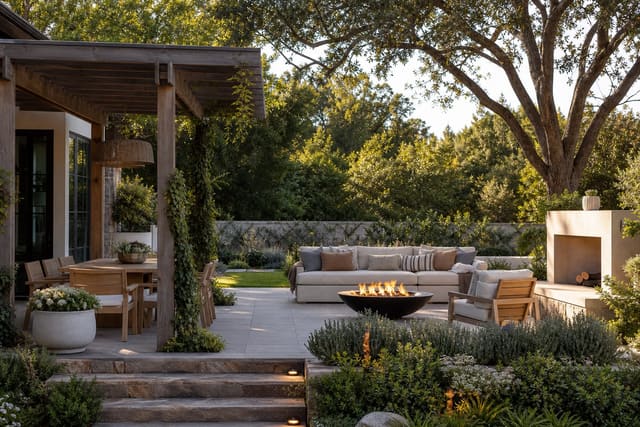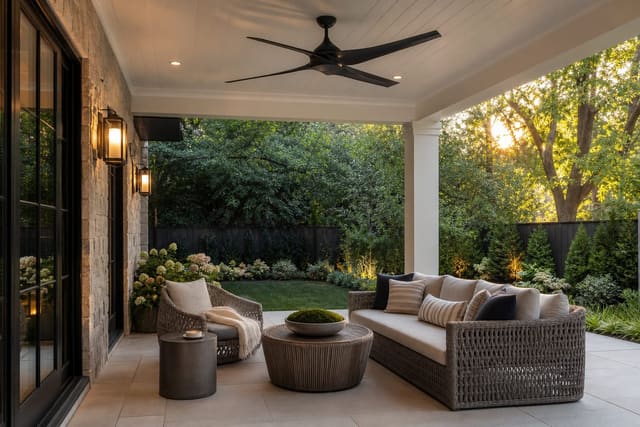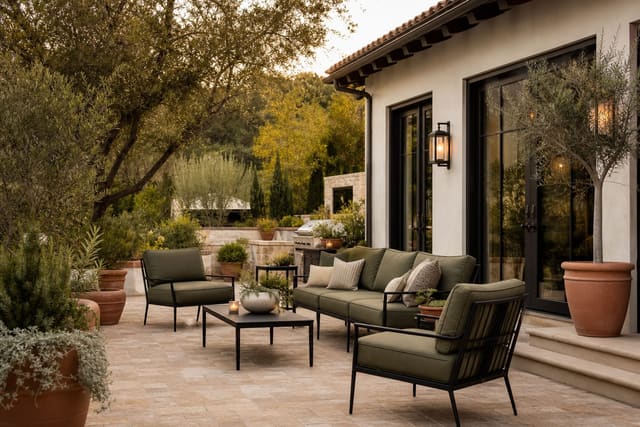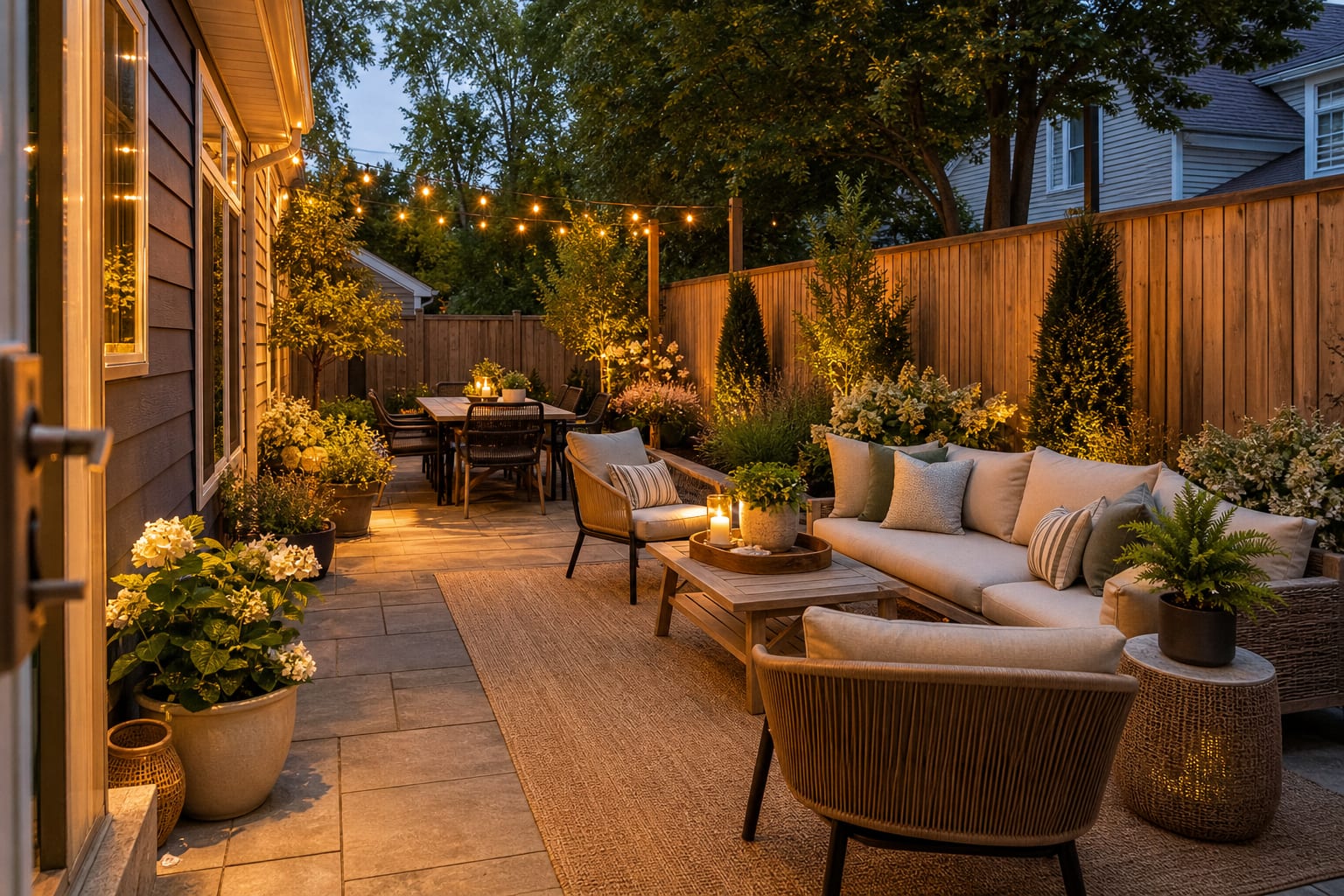
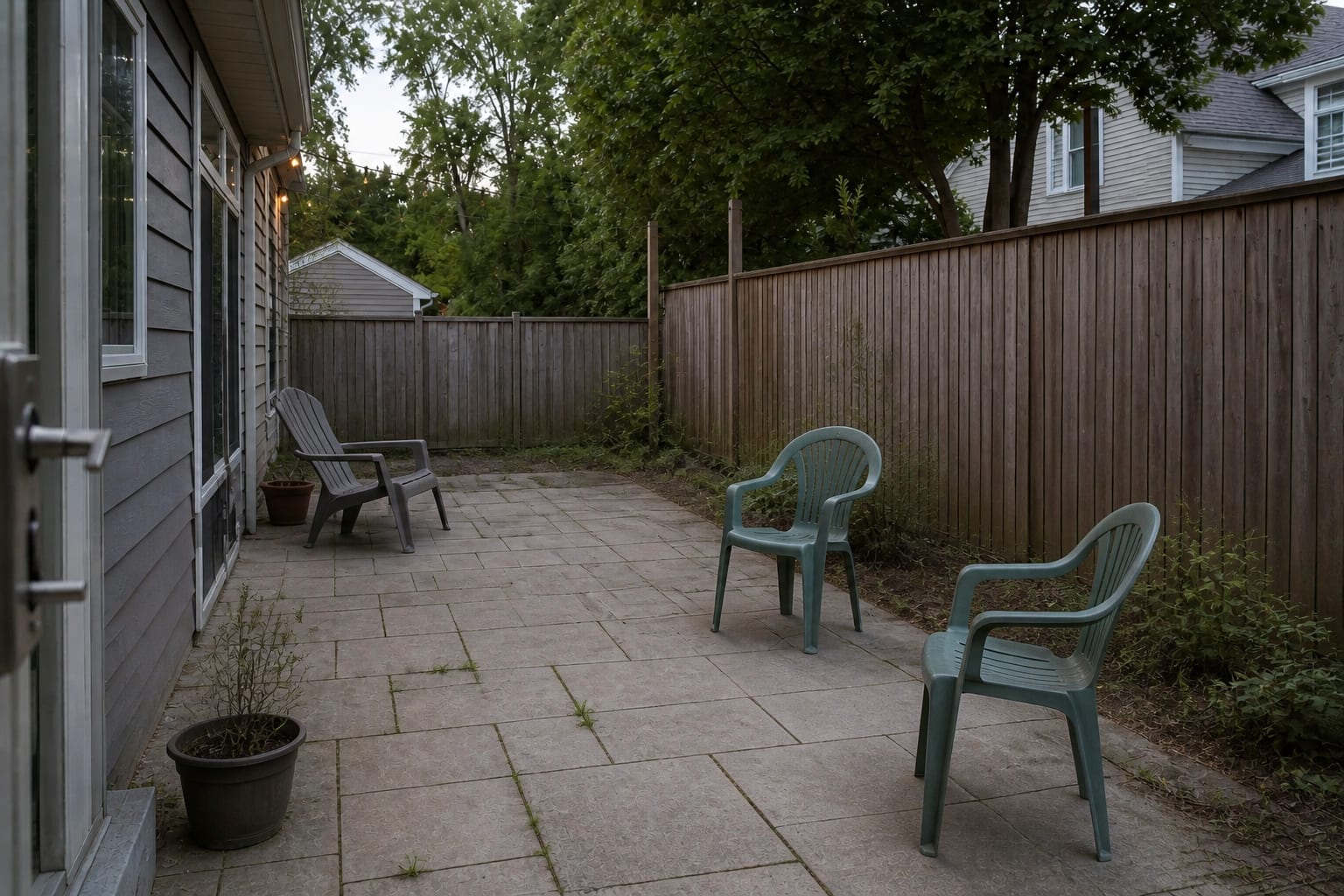
Set up your patio for summer by treating it like a small outdoor room: shade first, furniture second, color third, lighting last. A patio covered in cute accessories but missing shade and a real place to set a drink isn't decorated — it's staged. These summer patio setup ideas make the space work at 2 p.m., 7 p.m., and after the cushions get rained on.
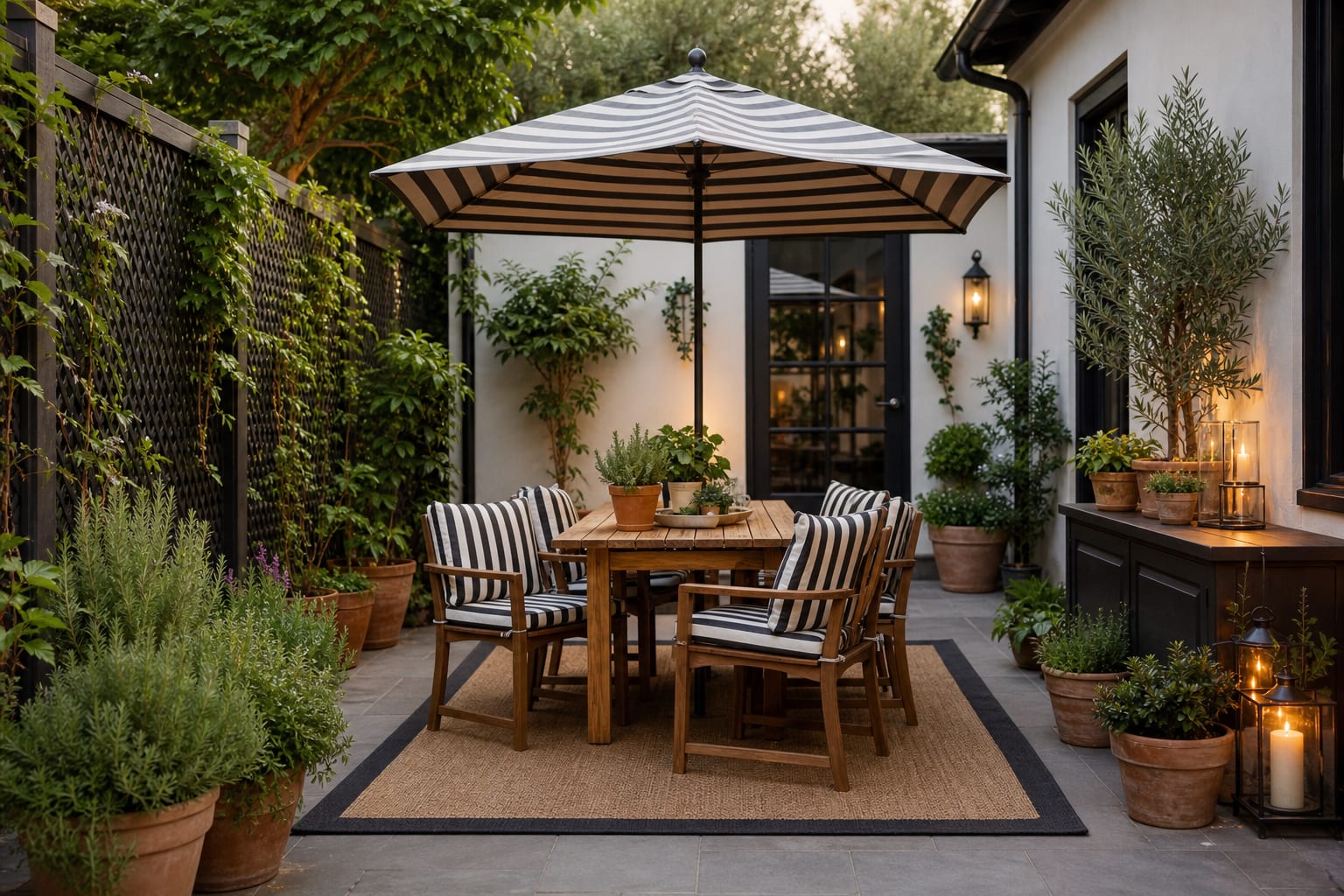
What makes a summer patio feel like an outdoor room?
A finished patio has shade, a defined furniture plan, a usable surface, resilient texture, and lighting that holds the space after sunset. Borrow room logic from indoors: a ceiling, a floor, edges, a focal point, and a reason to sit down.
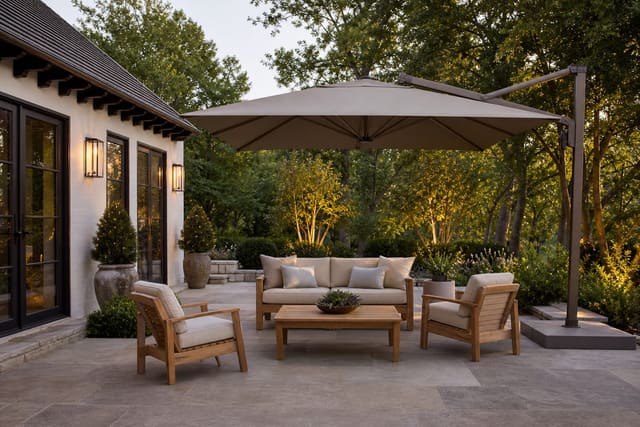
Start with the ceiling — an umbrella, fabric canopy, pergola, or the roofline itself. A 10-foot cantilever umbrella protects a lounge pair without a pole through the middle of conversation; a 6x10-foot shade sail can rescue a narrow side patio if the attachment points are solid and drain water.
Then define the floor. An outdoor rug should reach the front legs of the furniture, not float under the coffee table alone — an 8x10-foot rug suits a love seat and two chairs better than a lonely 5x7. If the surface is already strong, use corner planters instead of forcing a rug that traps leaves.
Color should read from the kitchen door. Match the palette to permanent materials like siding, stone, or fencing — see patio color scheme ideas for that indoor-view approach.
Which zones should you set before buying decor?
Choose the use that happens most often, then let smaller uses borrow space around it. A family eating outside four nights a week needs a dining-first layout; someone who mostly reads with coffee needs shade, a side table, and one great chair.
| Patio priority | Best layout move | Concrete setup rule |
|---|---|---|
| Dinner outside | Center a table near the door or grill path | Leave 36 inches behind chairs for foot traffic |
| Lounge after work | Face seating toward the view or shade | Keep the coffee table 14–18 inches from the sofa |
| Small balcony | Use folding or stackable pieces | Choose chairs under 24 inches wide if depth is under 6 feet |
| Entertaining | Create two landing surfaces | Add one 18–24 inch side table per two seats |
| Outdoor cooking | Protect the cook's path | Keep the grill several feet from soft seating per the maker's clearances |
If the patio includes a grill, sink, or prep counter, plan traffic and heat before style — see outdoor kitchen and pergola ideas for planning the pergola, counter, seating, and walkway as one arrangement.
Give a small patio one anchor piece — a 48-inch round table, a two-seat sofa, or lounge chairs with a shared table — then let everything else earn its footprint around it.
Test this on your own photo with ReDesign before committing; keep the house edge, horizon line, hardscape, and main path visible so the preview solves the space you actually have.
Five summer patio setup ideas worth trying
- Build a shade-and-sit corner: one generous umbrella, two lounge chairs, and a shared table at 18–22 inches high so drinks are reachable without leaning.
- Use planters as soft walls: three 20–24 inch pots frame a blank fence, while herbs in 10–12 inch pots belong near the dining table or kitchen door.
- Replace tiny lanterns with a real lighting plan: mount string lights at 8 feet or higher, and use warm ~2700K bulbs so food and faces look good.
- Choose one washable rug that stops short of the grill and rain-heavy edges — flatweave dries faster and shakes out easier than plush styles.
- Add one summer accent color — coastal blue, tomato red, citrus, or sage — repeated at least three times to look chosen, not accidental. See coastal outdoor living ideas for restrained references.
- Add a narrow console or bar cart (12–16 inches deep) near the door for drinks, sunscreen, and a speaker without blocking the walking path.
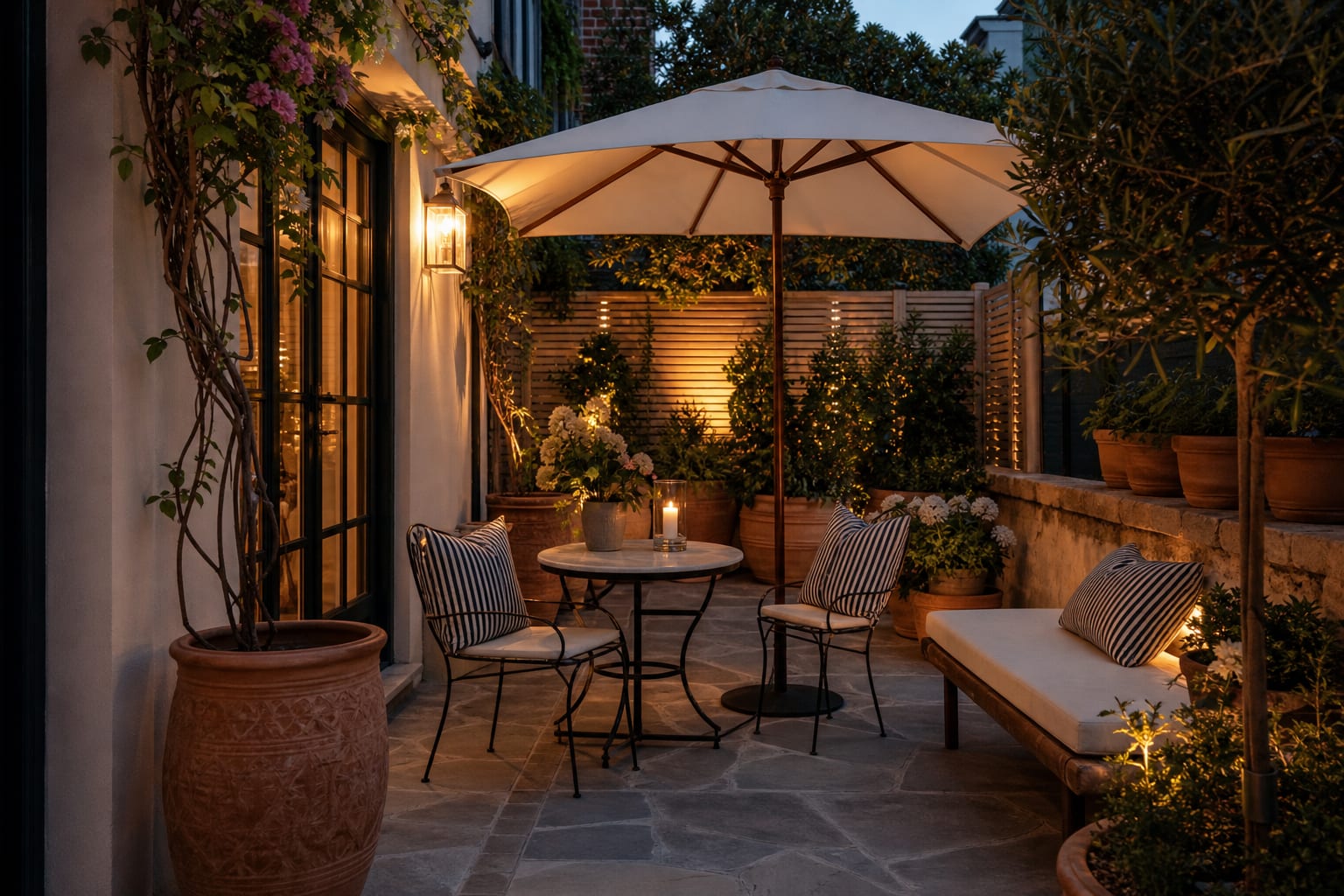
Design-check shorthand: depth before decoration, repetition before variety, maintenance before novelty.
What are the most common summer patio mistakes?
- Decorating before solving heat. Dark cushions and uncovered concrete look great in April and hostile in July; add shade and keep metal seating out of peak sun exposure.
- Buying furniture too large for the slab. Tape the footprint on the ground first, including chair pullout and side-table space, before ordering a deep sectional.
- Treating plants as decor only. Match container size and sun exposure to the plant — rosemary, grasses, lavender, and dwarf citrus handle hot, bright corners better than ferns against west-facing brick.
- Using indoor habits outside. White cotton pillows and delicate baskets become chores after one storm; outdoor decor needs to survive wet swimsuits, sunscreen, and pollen.
- Stopping at daytime. Add low-glare lighting and enough surfaces that people can linger after sunset instead of balancing plates on their laps.
How can AI design help preview a summer patio?
AI design is useful because outdoor mistakes are usually about scale, shade, and clutter, not taste. Upload a straight-on photo and preview a dining-first layout, a lounge-first layout, a larger umbrella, a different rug size, and two or three palettes. Ask for specifics: a 36-inch walking path, an 8x10-foot rug under lounge seating, warm 2700K lighting, and planters along the hottest edge.
The useful test is whether the preview looks easier to use. Crowded furniture means fewer chairs, not better pillows. A busy palette from the kitchen means one accent color and more texture. Shade landing beside the seating instead of over it means fixing the umbrella position while it's still cheap.
Frequently Asked Questions
What is the most important summer patio upgrade?
Shade over the seating zone. A 10-foot cantilever umbrella, retractable awning, or shade sail lowers surface temperatures by 15–25°F and delivers the highest return of any summer patio purchase.
Which patio materials stay coolest in summer sun?
Light-colored porcelain pavers and limestone reflect heat well, while dark composite decking and bluestone in full sun can reach surface temperatures above 140°F by mid-afternoon. Choose lighter finishes for exposed areas.
How do I keep summer patio cushions from fading?
Buy solution-dyed acrylic fabric like Sunbrella and store cushions in a deck box overnight. UV exposure, not rain, is what actually destroys cushion color over a single summer season.
What plants thrive on a hot summer patio?
Lavender, rosemary, salvia, and lantana handle drought well and support pollinators. Cluster three of the same species in one pot rather than mixing several species together for a cleaner, hardier look.
Do summer patio rugs work?
Yes, if you choose polypropylene flatweave with a slip pad underneath. Lift the rug after each storm so the patio surface can dry, since long-term trapped moisture stains pavers and rots wood decking.
> Try this: Ready to see this on your own outdoor space? Open ReDesign and run the preview before you buy materials, plant, drill, or move furniture.
Three transformations to try
1. Summer patio with cantilever umbrella 2. Summer patio with shade sail and fan 3. Summer patio with planter screens