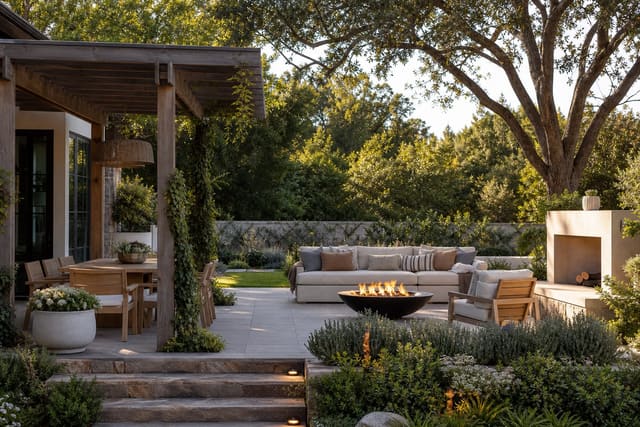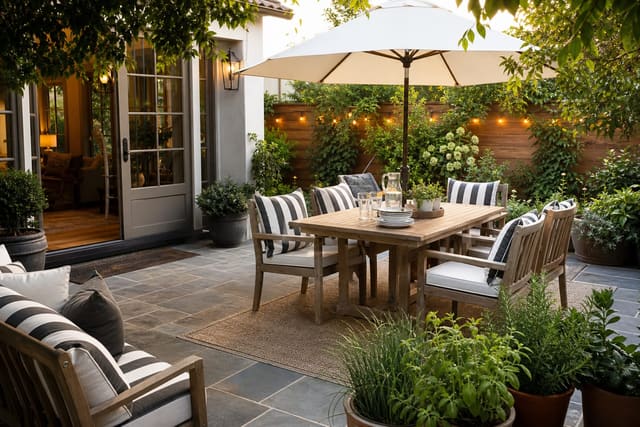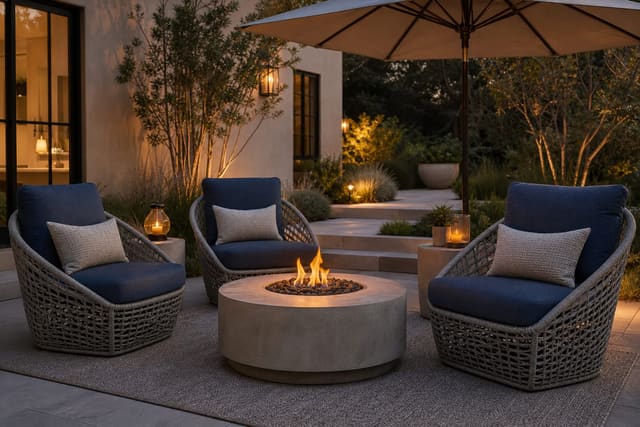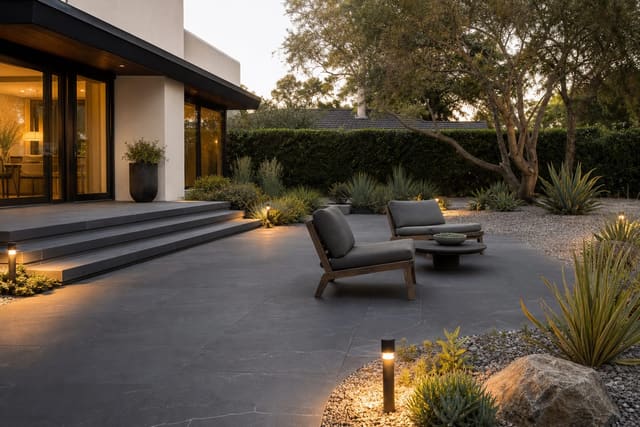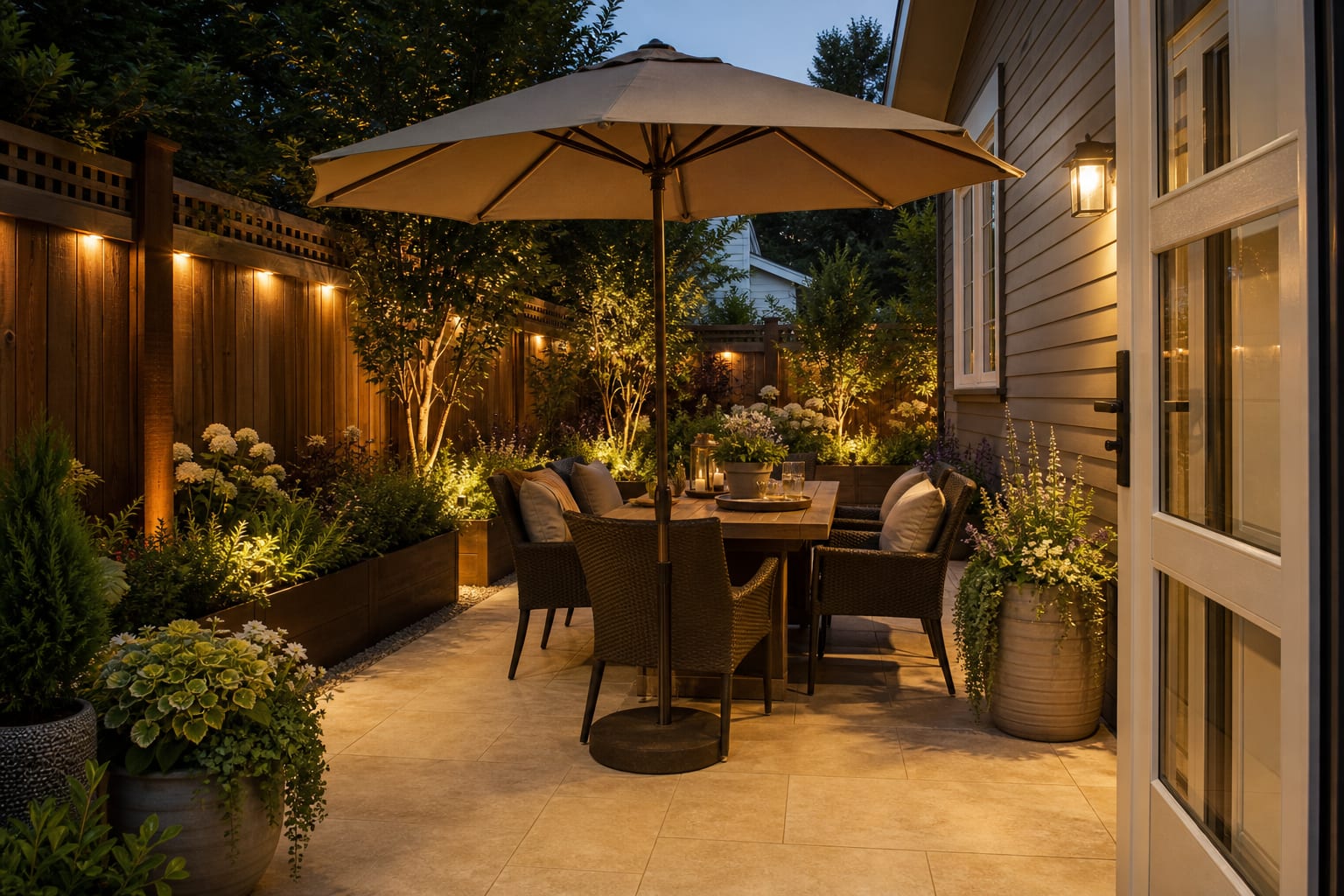
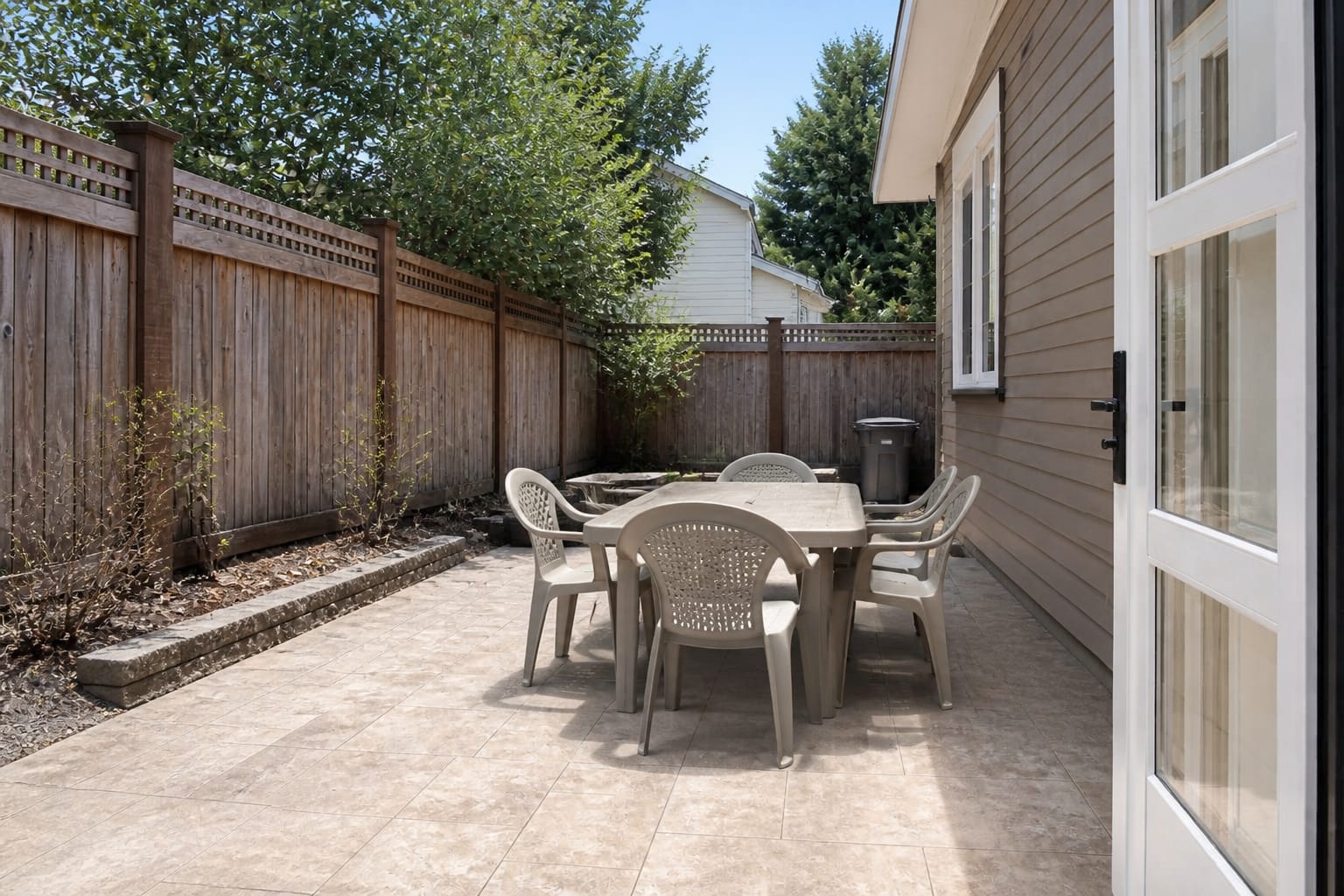
An outdoor umbrella works when the canopy overhangs the seating zone by 18-24in per side, the frame handles at least 30 mph wind, the base hits 50+ lbs (freestanding) or 100+ lbs (cantilever), and the fabric is solution-dyed acrylic. Get those four right and the shade stays usable through lunch, cocktails, and the hottest part of the day.
What makes a patio umbrella feel designed instead of dropped in?
Match canopy diameter, pole position, base weight, fabric, and clearance to how the patio is actually used — the umbrella should shade the activity, not just occupy the slab's center. Pull the chairs out and measure the live footprint: a 48in table can become an 8ft occupied zone once elbows and chair backs are included. For lounging, shade the seated heads and drink surfaces rather than every inch of paving.
The cleanest layouts repeat a finish already on the patio: a black aluminum mast echoes dark window frames or furniture legs, while a teak-toned pole pairs with warm wood arms or clay planters. On cool stone patios, check slate patio shade and seating ideas before choosing canopy color, since gray paving can make stark white fabric read colder than expected.
Keep the canopy edge clear of swinging doors, grill lids, and low eaves, and check clearance at the outer rib ends. Most people need about 80in to walk under comfortably, but a tilted umbrella's edge can drop lower than the center-pole height suggests.
Test this on your own photo with ReDesign before committing — keep the house edge, horizon, hardscape, planting beds, and main path visible so the preview reflects your actual space.
Cantilever umbrella vs. center pole: which one belongs here?
A center-pole umbrella is simpler, cheaper, and visually calm rising through a dining table or between matching chaises — it works when the furniture already has a center point and the base can sit directly under the shade.
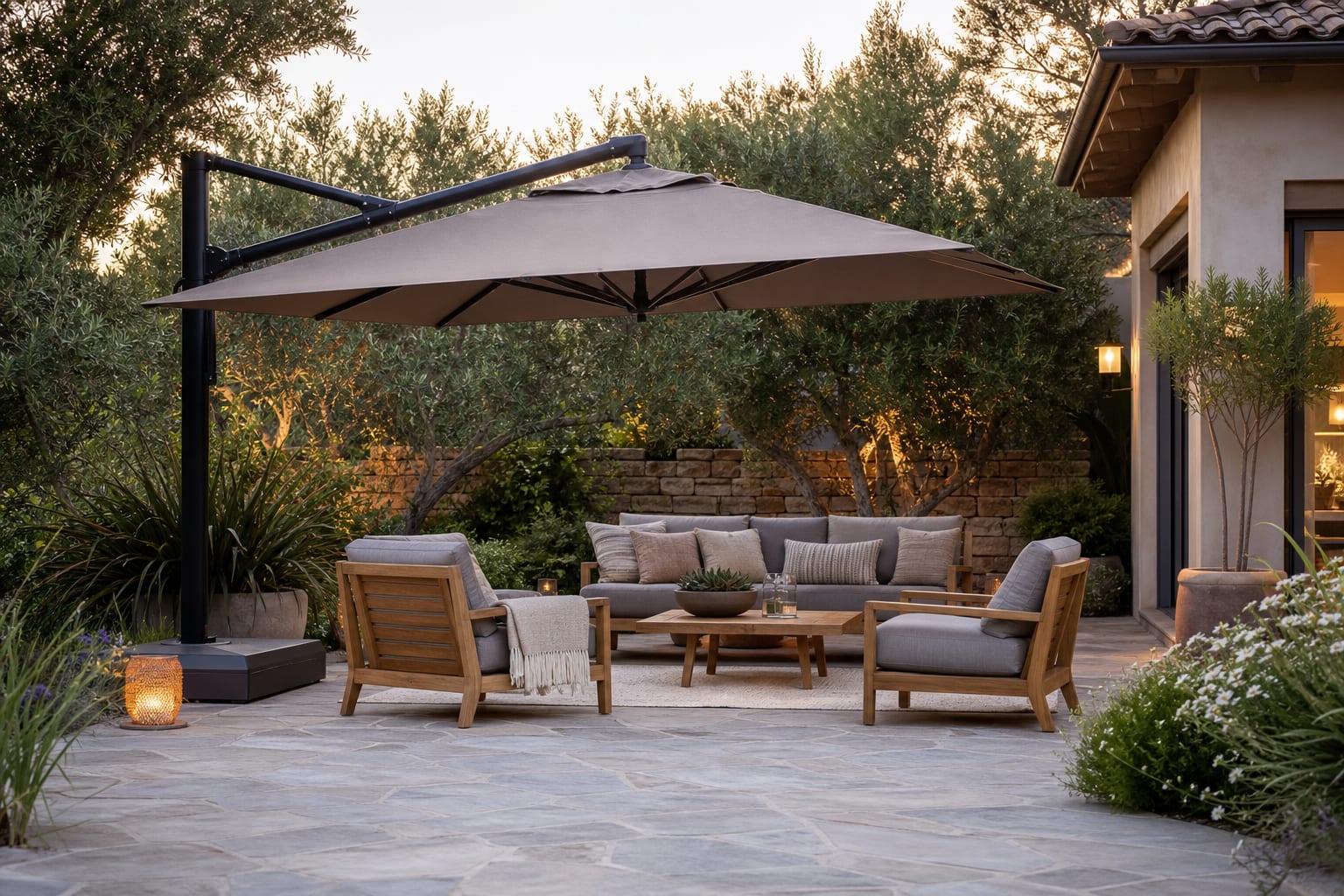
A cantilever earns its footprint when shade needs to float over a sectional, fire table, or spa edge without a pole through the middle of the seating. The tradeoff is bulk: the side mast and base need their own parked corner of the patio.
| Umbrella type | Best patio use | Size to consider | Watch the mistake |
|---|---|---|---|
| Center pole | Dining table with umbrella hole, bistro zone, paired loungers | 7.5-9ft for 2-4 seats; 10ft for larger tables | Freestanding with too-light a base |
| Half umbrella | Narrow balcony or wall-side café table | 6-9ft along the flat side | Expecting it to shade a full lounge group |
| Cantilever | Sectional, pool chaise pair, hot tub, flexible seating | 10-13ft depending on mast reach | Forgetting the base needs its own floor area |
| Rectangular market | Long dining table or narrow patio | 6x10ft or 8x10ft | Letting the canopy block a door or grill path |
Decide base placement before color. Tape off the base spot and pull every chair out as if dinner is happening; if a chair leg hits the base each time someone stands, choose a table-supported umbrella, a slimmer base, or a different shade type.
Which umbrella idea solves my patio problem?
- Small round table: a 7.5-8ft market umbrella keeps a balcony from feeling top-heavy. Tuck the base under the table and leave 24in between chairs and railing.
- 48in dining table: a 9ft umbrella with tilt handles low east/west sun that slips under a flat canopy.
- Sectional off-center from the slab: float a 10-11ft cantilever with the mast behind the least-used sofa corner, keeping the crank out of the walking lane.
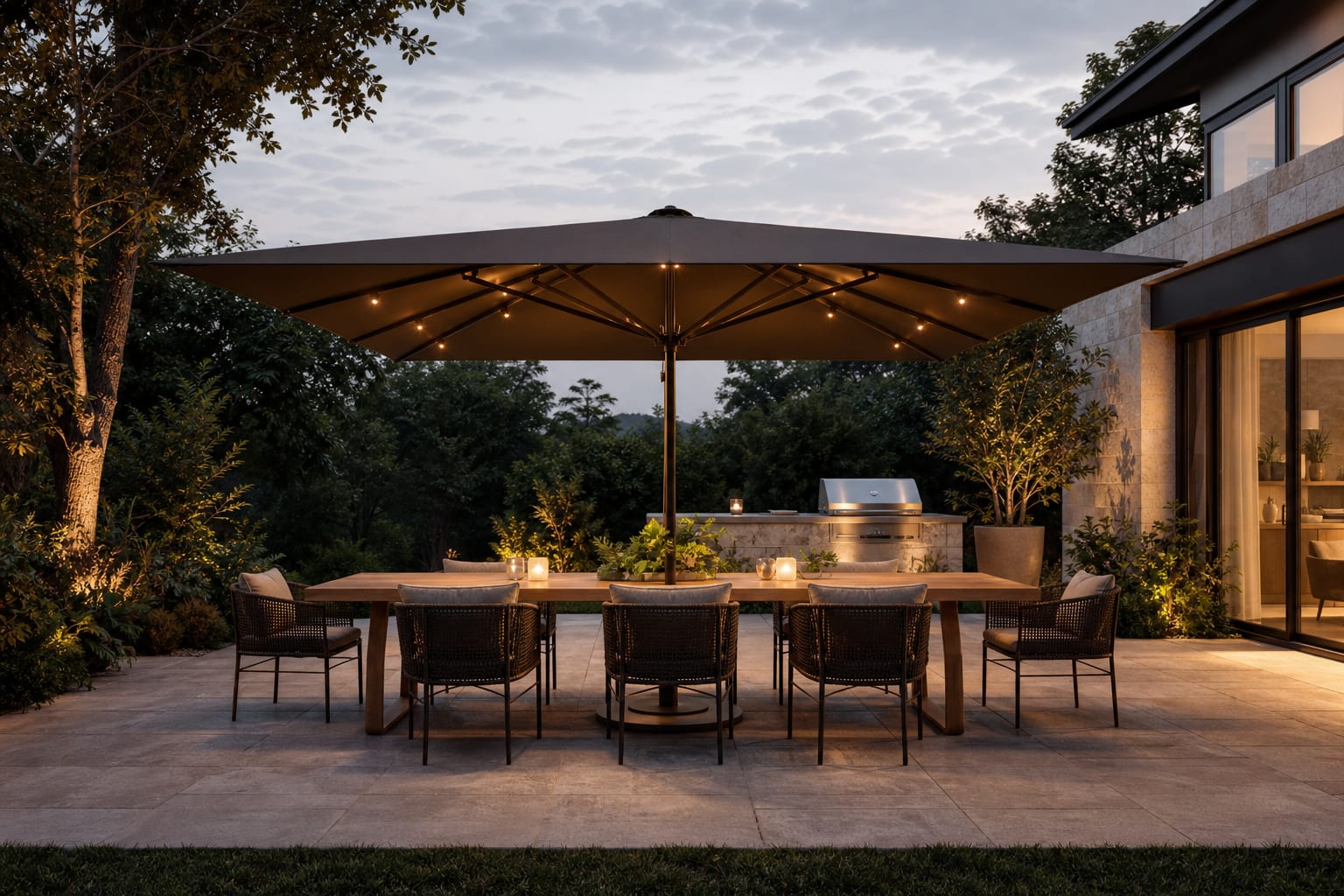
- Long dining table: a 6x10ft rectangular canopy echoes the table shape better than a round one that leaves end seats exposed.
- Breezy patios: vented canopy fabric lets air escape instead of catching wind like a kite — it won't storm-proof the umbrella, but it calms normal gusty afternoons.
- High-mess exposure (trees, pollen, sunscreen): pick a mid-tone canopy that hides dust between cleanings; see the outdoor fabric durability guide.
- Dry, hot climates: treat shade and cooling separately. An umbrella blocks direct sun; a mist line cools nearby air — compare outdoor misting system placement ideas before assuming a bigger canopy fixes the heat.
What common patio umbrella mistakes should I avoid?
Buying before measuring the sun wastes the most money — stand on the patio at the actual use time and check where the shadow lands, since a noon layout can fail completely by 5 p.m. Choosing a base on looks alone is the next costly error; a slim decorative base is fine under a table, but a large freestanding umbrella needs real weight or a paver-weighted cross stand.
Ignoring crank and tilt hardware placement makes daily use annoying — test the umbrella open, closed, tilted, and rotated, since the closed canopy still needs its own room. Letting the umbrella clash with furniture style can make the whole patio feel improvised; repeat the canopy color once or twice in cushions or a rug so the shade looks chosen, not added.
Leaving the canopy open in strong wind is avoidable wear, not a design choice. Close it, use the tie strap, and store removable umbrellas off-season.
Should I preview patio shade with AI before buying?
Yes — shade scale is hard to judge from a product page. Upload a straight photo of the patio into Re-Design and test one variable at a time: 9ft center pole, 11ft cantilever, rectangular canopy, warm beige fabric, charcoal frame, or a different furniture orientation under the same shade.
Frequently Asked Questions
How big should a patio umbrella be?
Pick a canopy 18-24in larger than the table or seating zone on each side. A 6ft round table needs a 9-10ft umbrella; a 6-seat sectional needs 11-13ft from a cantilever.
What is the difference between a market umbrella and a cantilever?
A market umbrella has a center pole and uses a table or weighted base; a cantilever has an offset arm so the canopy floats over seating without a center obstruction. Cantilevers typically cost 2-3x more.
How much base weight do I need?
Free-standing market umbrellas need 50 lbs minimum, 75+ lbs in windy regions. Cantilever umbrellas need 150-220 lbs of base or fillable plate weight depending on canopy size.
Can a patio umbrella stay open in wind?
Close any umbrella when sustained winds exceed 25 mph. Most consumer-grade umbrellas fail at 30-35 mph even when weighted, since the ribs and canopy bear the load first.
Which umbrella fabric lasts longest?
Solution-dyed acrylic (Sunbrella, Outdura) carries 5-year fade warranties, while polyester canopies fade noticeably within 18 months in full sun.
> Try this: Ready to see this on your own outdoor space? Open ReDesign and run the preview before you buy materials, plant, drill, or move furniture.
Three transformations to try
1. Cantilever umbrella over patio sectional 2. Market umbrella with dining table 3. Two umbrellas spanning long table