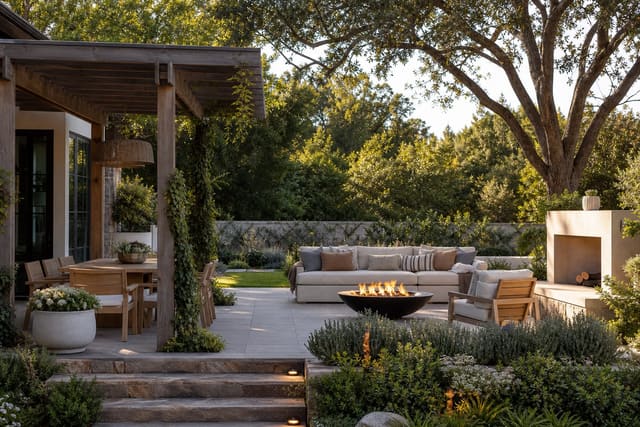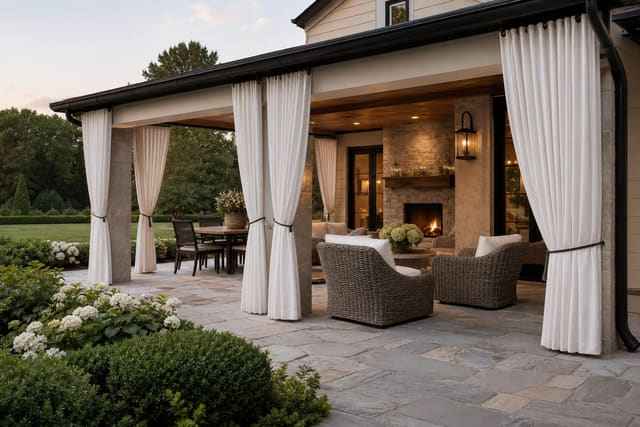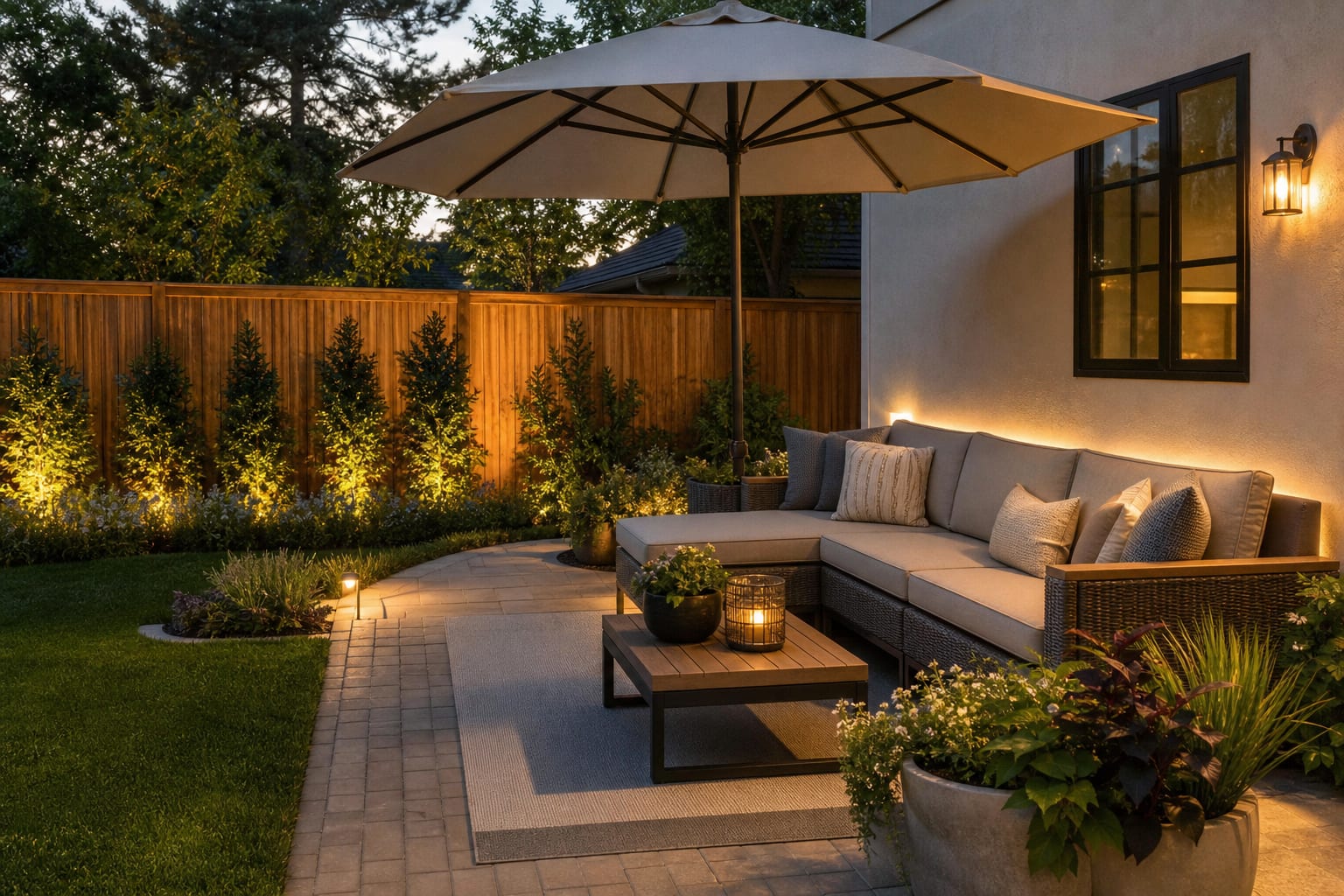
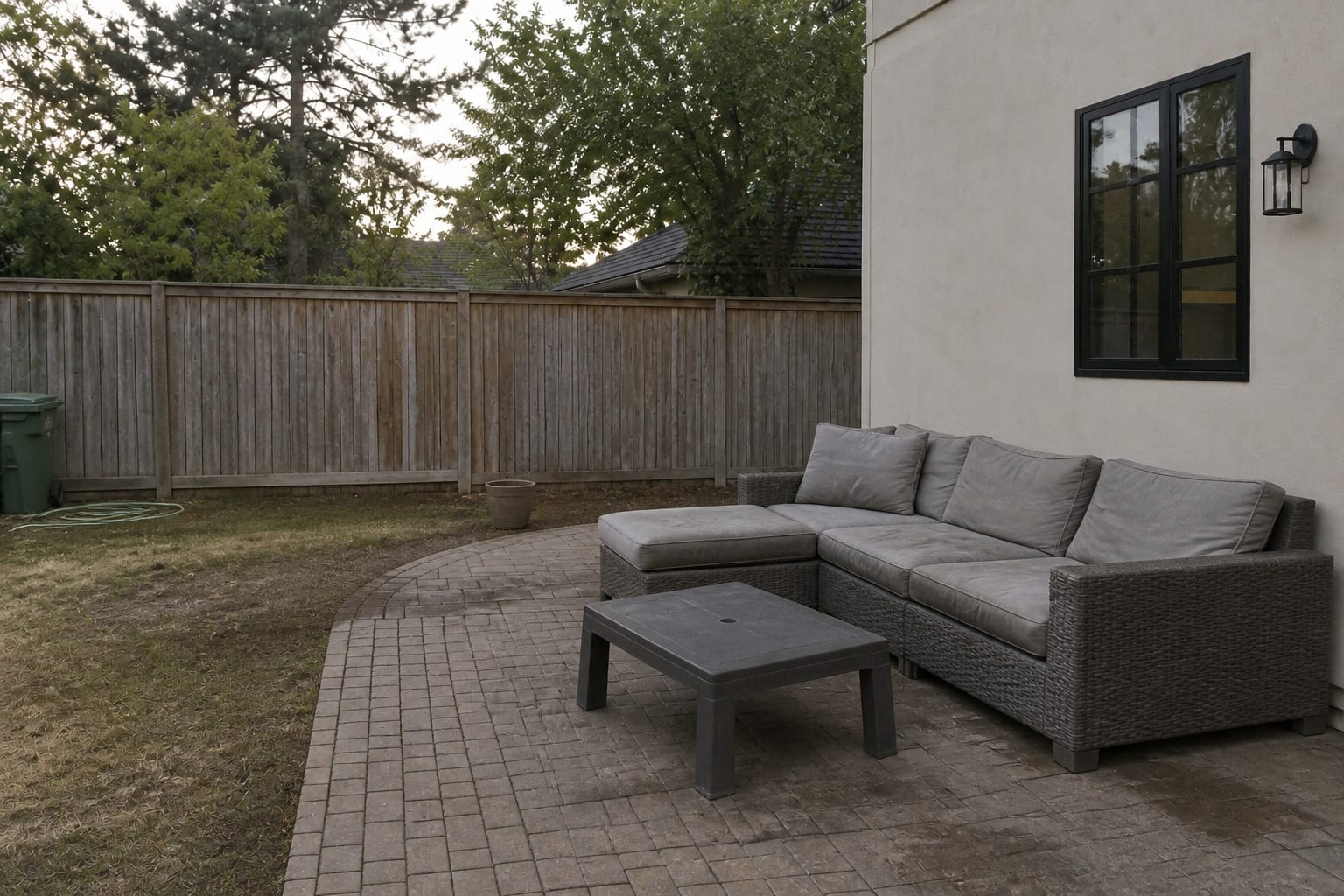
Solution-dyed acrylic is the outdoor fabric that lasts longest in sun and rain, especially when the cushion insert drains instead of holding water. Most cushions fail not because of the wrong color, but because homeowners bought indoor-grade fabric dressed up as outdoor décor. This guide sorts materials by real patio behavior, not showroom optimism.
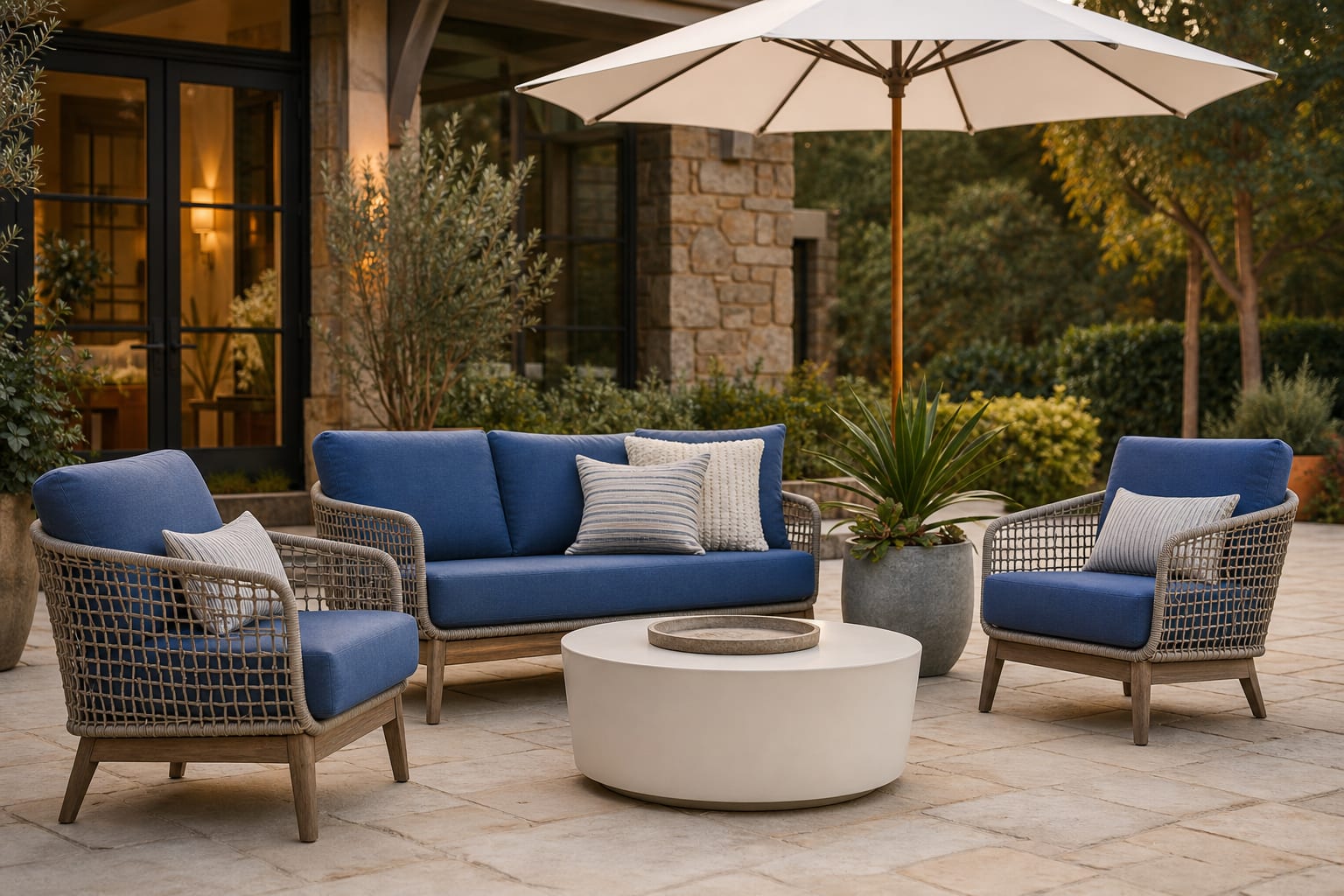
Which outdoor fabric lasts longest in sun and rain?
Solution-dyed acrylic lasts longest because the pigment runs through the yarn instead of sitting on the surface. That's why Sunbrella, Perennials, and similar furniture-grade acrylics hold color better than printed polyester or cotton canvas after hard sun. If your patio faces west, has no roof, or sits beside pale stone, this is where to spend the money.
"Weather resistant" covers several different jobs: water resistance, mildew resistance, UV resistance, and abrasion resistance aren't the same thing. A cushion can shrug off a light shower and still fade badly, or hold color beautifully while mildewing if the insert stays damp. Buy for the harshest condition your patio actually has.
| Material | Best use | Watch-out |
|---|---|---|
| Solution-dyed acrylic, 7–9 oz/sq yd | Exposed sofas, lounge cushions, umbrellas, long-term seating | Costs more; cheap inserts can still trap water |
| Olefin, 6–8 oz/sq yd | Covered patios, dining pads, family-friendly cushions | Can feel less refined than acrylic |
| Polyester with outdoor finish | Accent pillows, seasonal color, protected balconies | Fades faster in direct sun and at seams |
| PVC-coated polyester mesh | Sling chairs, pool seating, quick-dry chaises | Not plush; dark colors get hot |
| Cotton canvas blends | Screened porches, pillows brought inside | Absorbs moisture; least forgiving in rain |
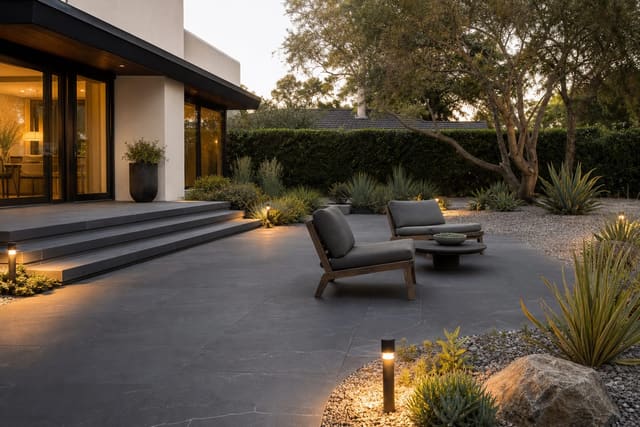
Fabric heat matters on dark stone or concrete. Black or charcoal cushions on a south-facing terrace can turn unpleasant even when durable; medium blues, clay, olive, sand, and heathered gray hide pollen and dust better than white without absorbing as much heat as deep black. On stone seating areas, coordinate fabric with the hardscape — the best slate patio ideas for shaded seating pair cool paving with warmer textile tones.
Test this on your own photo with ReDesign before choosing a final direction; keep the house edge, horizon line, hardscape, planting beds, and main path visible so the preview solves the space you actually have.
Sunbrella vs. olefin: which fits your patio?
Sunbrella is a brand tied to solution-dyed acrylic; olefin is a fiber category used across many brands. Acrylic is the premium choice for long sun exposure, while olefin is the sensible pick for seating under a pergola, roof overhang, or large umbrella.
Choose acrylic when the furniture is expensive, cushions are custom, or replacement would be a hassle. A 24-inch-deep lounge chair with a 5-inch boxed cushion deserves fabric that won't look old by Labor Day. Acrylic also has a nicer hand for tailored sofas, closer to indoor upholstery.
Choose olefin when the patio is covered, kids eat popsicles on the cushions, or washable practicality beats a high-end feel. It dries quickly and suits dining chairs with 2-inch pads or modular sectionals with covers that get handled often. The savings can fund better inserts or more shade.
Shade changes the math. A 9-foot umbrella over a 48-inch dining table protects fabric during the harshest hours, which can make olefin perfectly reasonable. Compare outdoor umbrella ideas for hot patios before spending the whole budget on premium covers — fabric survives longer with relief from direct sun.
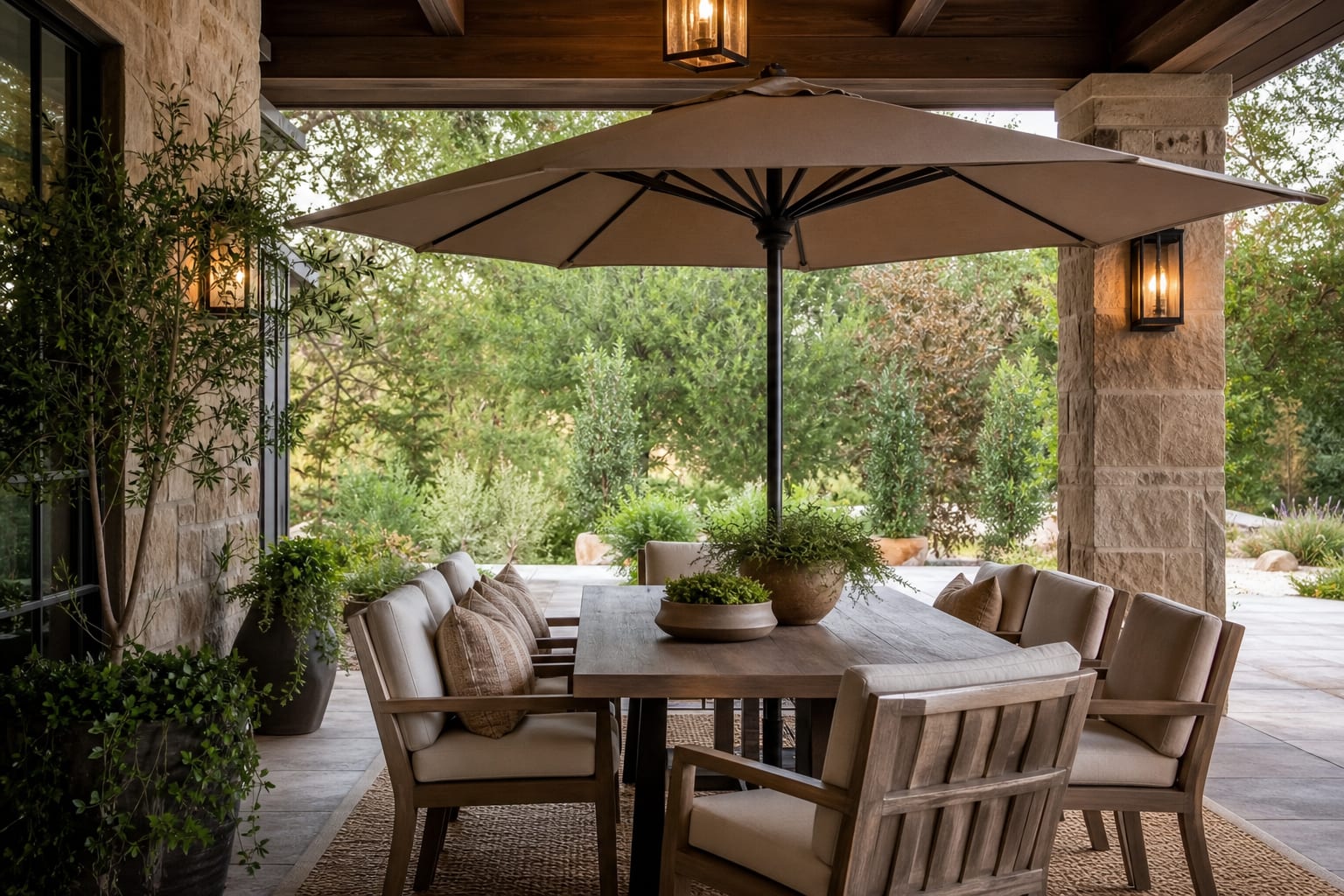
What mistakes shorten outdoor fabric's lifespan?
- Buying by pattern first. Pick fiber, backing, insert, and cleaning method before falling for a stripe — a beautiful print on weak polyester still bleaches out on a west-facing deck.
- Ignoring the cushion core. A 4-6 inch seat cushion needs quick-dry foam, a vented wrap, or drainable fill; trapped water turns seams and corners into mildew spots.
- Choosing white with no cleaning plan. White acrylic looks great only if you'll rinse pollen, tannins, and sunscreen marks regularly; mid-tone texture is more forgiving.
- Pushing cushions tight against masonry. Leave about 1/2 inch behind back cushions on stucco, brick, or retaining walls, and stand them upright after heavy rain.
- Treating pillows and seat cushions as equal spend. Invest in the seat and back cushions used daily; use cheaper seasonal pillows for color you can swap out.
Microclimate matters too. A covered balcony with morning sun is gentle compared to a pool deck hit by chlorine splash, glare, and afternoon heat. If your patio uses misters in a dry climate, favor breathable fabric and fill over sealed options — see outdoor misting system ideas for dry heat for setups that let textiles dry between cycles.
How can AI previews help you pick cushion fabric?
Fabric samples lie when separated from the patio. Upload a straight photo of the seating area in Re-Design and test one variable at a time: sand acrylic versus charcoal acrylic, striped versus solid olefin, a larger umbrella, or mesh chairs instead of cushioned lounges. The goal is to see whether color, scale, and shade make the room feel calmer, not to identify the fiber from a rendering.
Shoot from standing height, including furniture legs, flooring, and the nearest wall or railing. Photograph during the harshest light of the day so the preview reflects real glare and shadow. A 20-inch throw pillow that looks lively online can look fussy on a compact balcony chair, while a 6-inch cushion can overwhelm a delicate metal frame — test proportion before ordering custom covers.
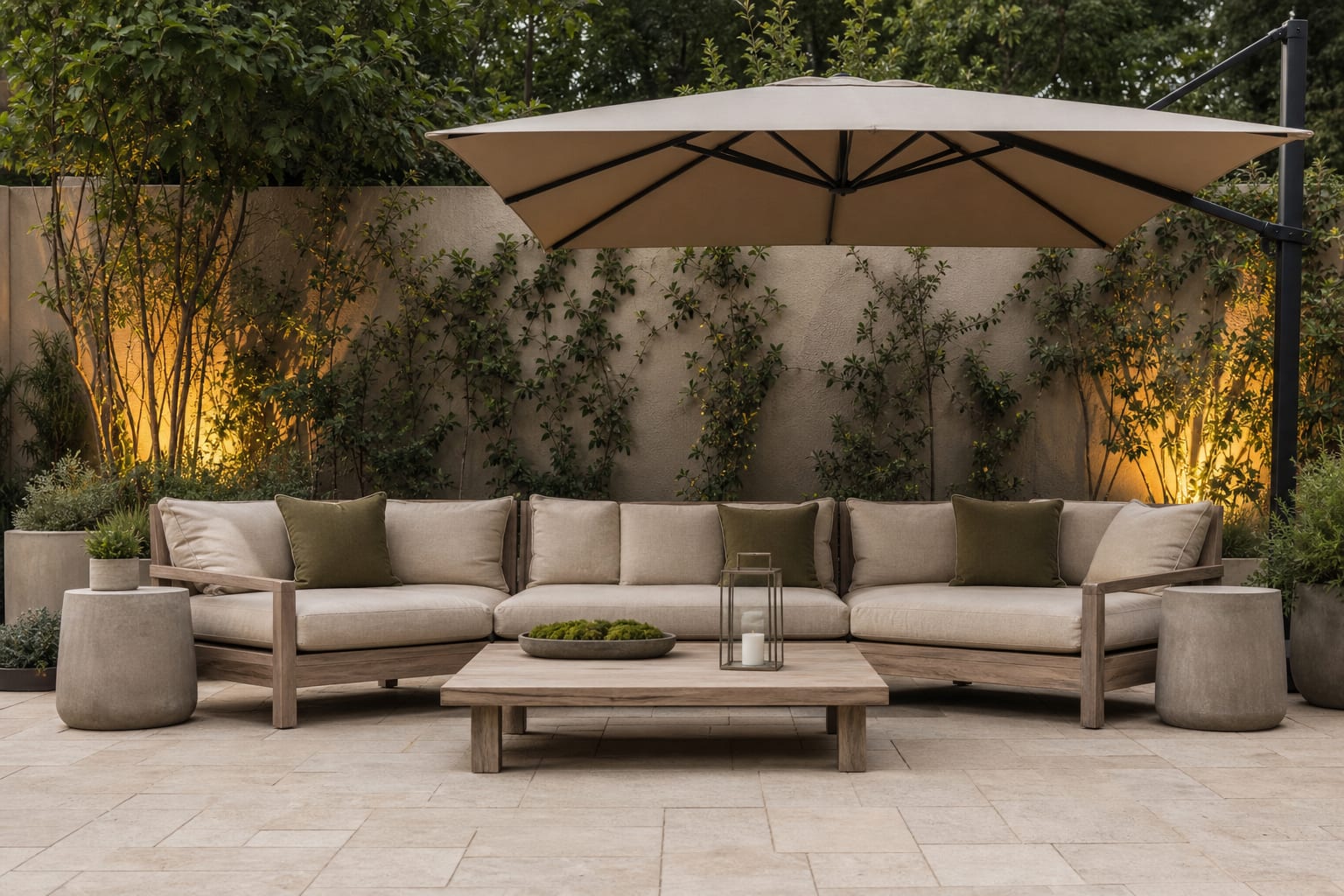
Put premium acrylic where sun and replacement cost are high, use olefin where cover and cleaning matter most, save polyester for low-stakes accents, and make every cushion dry faster than the weather can punish it.
Frequently Asked Questions
What is the best outdoor fabric for cushions?
Solution-dyed acrylic (Sunbrella, Outdura) is the standard for cushions — UV-stable for 1,500-3,000 sun hours, breathable, and machine-washable. Cotton and printed polyester fade within one season by comparison.
Is Sunbrella worth the cost?
For high-sun exposure, yes: solution-dyed acrylic lasts 5-7 years where cheaper printed fabric lasts 1-2. For fully shaded covered porches, lower-cost polyester olefin performs nearly as well at half the price.
Are outdoor rugs really weatherproof?
Polypropylene (PP) outdoor rugs handle rain and UV well but trap moisture against decking, so lift them after heavy rain. Polyester outdoor rugs hold color longer but cost more.
Can I leave outdoor fabric out year-round?
Solution-dyed acrylic and marine vinyl can stay out in mild climates. In freeze-thaw climates, bring cushions, pillows, and rugs into a dry deck box or indoor storage for winter.
How do I clean outdoor fabric?
Vacuum or brush off debris first, then spot-clean with mild soap and water. For mildew on Sunbrella, use a 1:10 bleach-water solution and verify on a hidden swatch first.
> Try this: Ready to see this on your own outdoor space? Open ReDesign and run the preview before you buy materials, plant, drill, or move furniture.
Three transformations to try
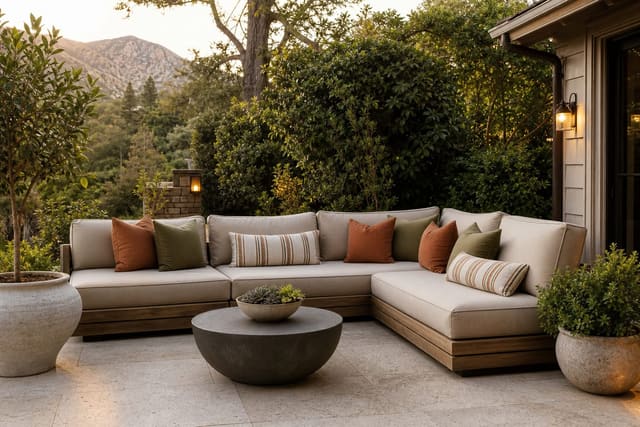
1. Patio with Sunbrella cushion palette