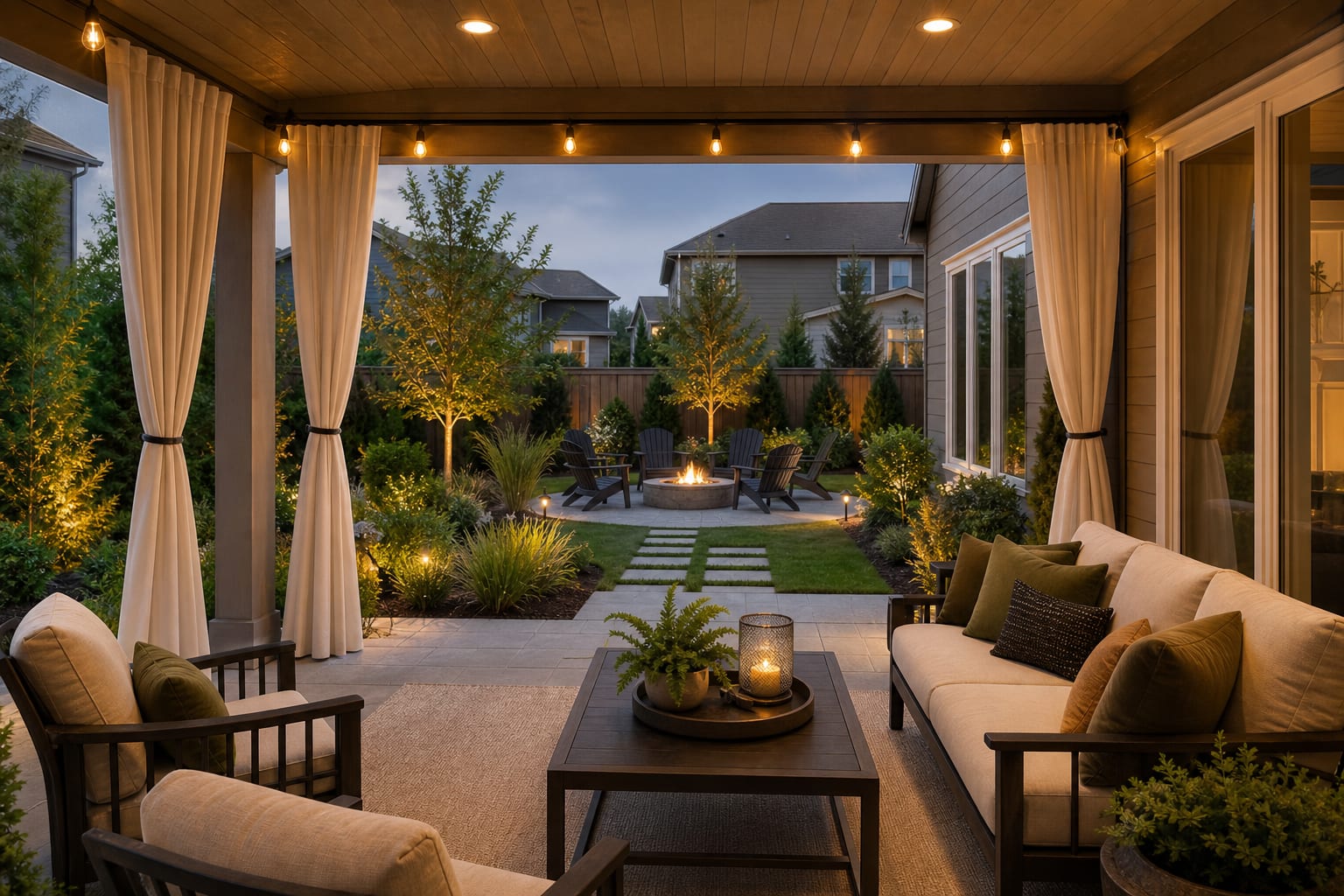
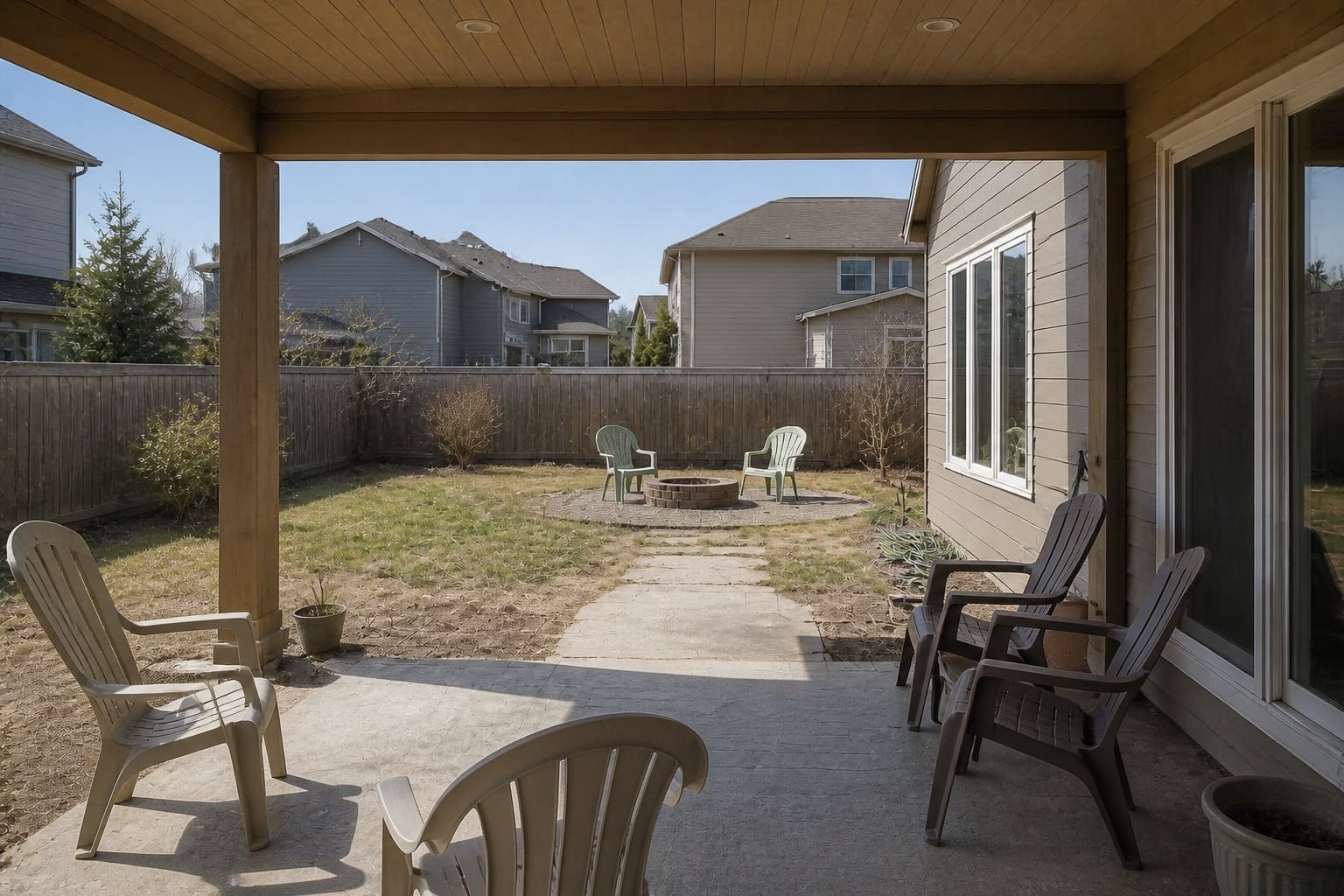
Outdoor curtains hang from mounted rods, ceiling tracks, or tensioned cable using weather-safe fabric like solution-dyed acrylic, sized at 1.5-2x the opening width with panels held 1-2 inches off the floor. Choosing hardware and fabric weight before buying pretty panels is what keeps a pergola or patio private and shaded through wind, rain, and daily use.
How do you hang outdoor curtains on a pergola or patio?
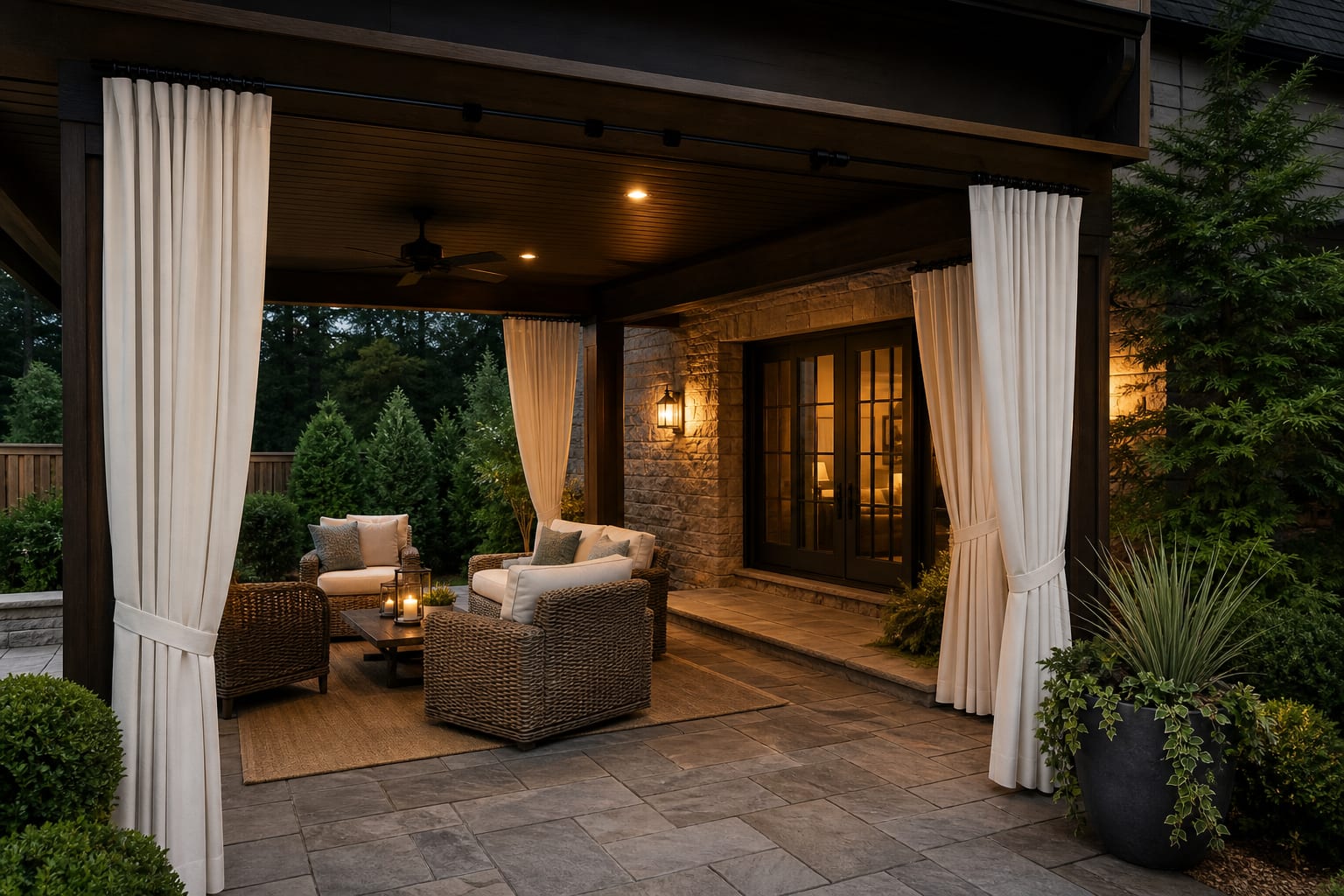
Mount outdoor-rated rods, ceiling tracks, or tensioned cable to the structure itself, not to thin trim or the roof's overhanging fabric edge. On a wood pergola, screw brackets into the inside faces of the beams or rafters. On a metal patio cover, use manufacturer-approved clamps or predrilled mounting points.
For most covered patios, use a 1-inch to 1 1/4-inch powder-coated aluminum or stainless-steel rod with a center support every 6-8 feet. Openings wider than 10 feet need two rods or an exterior-rated ceiling track. Keep the bottom hem just off the ground; fabric dragging on wet tile or decking stains and wicks moisture.
If the patio floor is part of the redesign, pair the curtain plan with durable surfacing like porcelain tile patio ideas for outdoor rooms — curtains look sharper when the floor plane is intentional.
Which outdoor curtain system fits your patio structure?
The right system depends on how the patio is built. A pergola with exposed beams usually takes side-mounted brackets; a flat-roof patio cover often looks better with a ceiling track tucked under the fascia; a freestanding cabana needs corner elbows so fabric stacks neatly at the posts.
| System | Best for | Install notes |
|---|---|---|
| Rod | Pergolas, easy removal for cleaning | Exterior screws 1.5in+ into solid wood; bracket within 4in of each end, support every 72in |
| Ceiling track | Corners, roofline-mounted looks | Aluminum with drainage-friendly carriers; mount 2-3in back from the front beam |
| Tensioned cable | Lightweight shade panels only | Stainless cable; add a turnbuckle or eye screw past 8ft spans to stop sag |
Cable telegraphs every ripple in the fabric, so use grommet or tab-top panels only if a casual look fits the space.
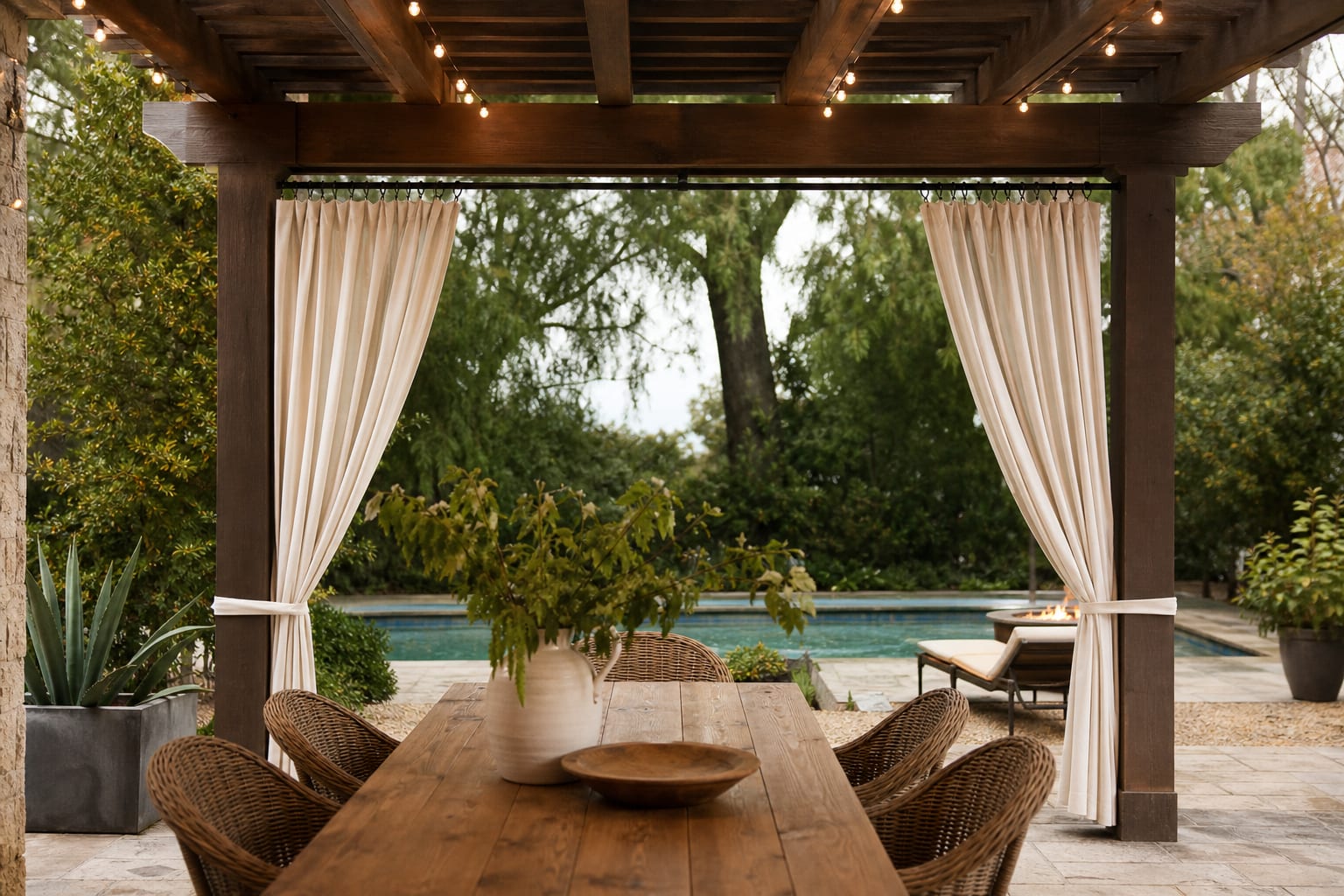
Five outdoor curtain ideas that solve real patio problems
- Frame only the exposed side. If three sides already have privacy, one 8-10 foot run can block a neighbor's second-story window without boxing in the patio.
- Use double-width panels at outside corners. Extra fullness lets fabric overlap 6-12 inches and stops the bright slit that shows between narrow panels in low afternoon sun.
- Pair natural-colored curtains with gravel or pavers. A warm canvas panel softens the edge nicely beside decomposed granite patio ideas for casual outdoor rooms.
- Add fixed holdbacks 36-42 inches up on posts near a walkway. Tied-back fabric should clear shoulders and strollers, not spill into the path.
- Contrast pale curtains against heavy masonry. Light drapes make a stone fireplace or retaining wall feel lighter; see outdoor stone veneer ideas for patios and kitchens.
Fabric decides whether the design still looks good in month three:
| Fabric | Durability | Best fit |
|---|---|---|
| Solution-dyed acrylic | Color is part of the fiber; holds up longest | Premium pick, high-sun climates |
| Olefin | Resists moisture, cleans easily | Practical midrange choice for families |
| Exterior polyester | Needs more shade protection, shorter lifespan | Budget pick for lower-exposure spots |
Measure from the rod or track to the patio surface, then subtract 1-2 inches for clearance. Order panels at 1.5x the opening width for a tailored look, or closer to 2x for a fuller resort look. Skip puddling — pollen, overspray, and muddy paws belong in a yard, not on trailing fabric.
Common mistakes to avoid
- Buying indoor fabric for the color. Cotton and linen absorb moisture, fade fast, and can smell musty after one wet season.
- Mounting hardware too low. Keep rods within 2-4 inches of the beam or ceiling line so curtains lengthen the posts instead of chopping them.
- Ignoring wind. Add bottom weights, side ties, or post-mounted holdbacks near dining chairs, fire features, grills, or glass doors.
- Covering every opening. Curtain the problem sightlines first and leave at least one major view open so the patio still connects to the yard.
- Skipping stack width. Most panels need 8-14 inches of stacking space per pair — keep that bulk clear of door swings and steps.
Maintenance matters too: white curtains look sharp under a clean roof but show dirt fast near mulch beds or grills, while oatmeal, stone, taupe, and pale gray hide more between washes. Removable clips or rings make seasonal cleaning easier than panels threaded directly onto a rod.
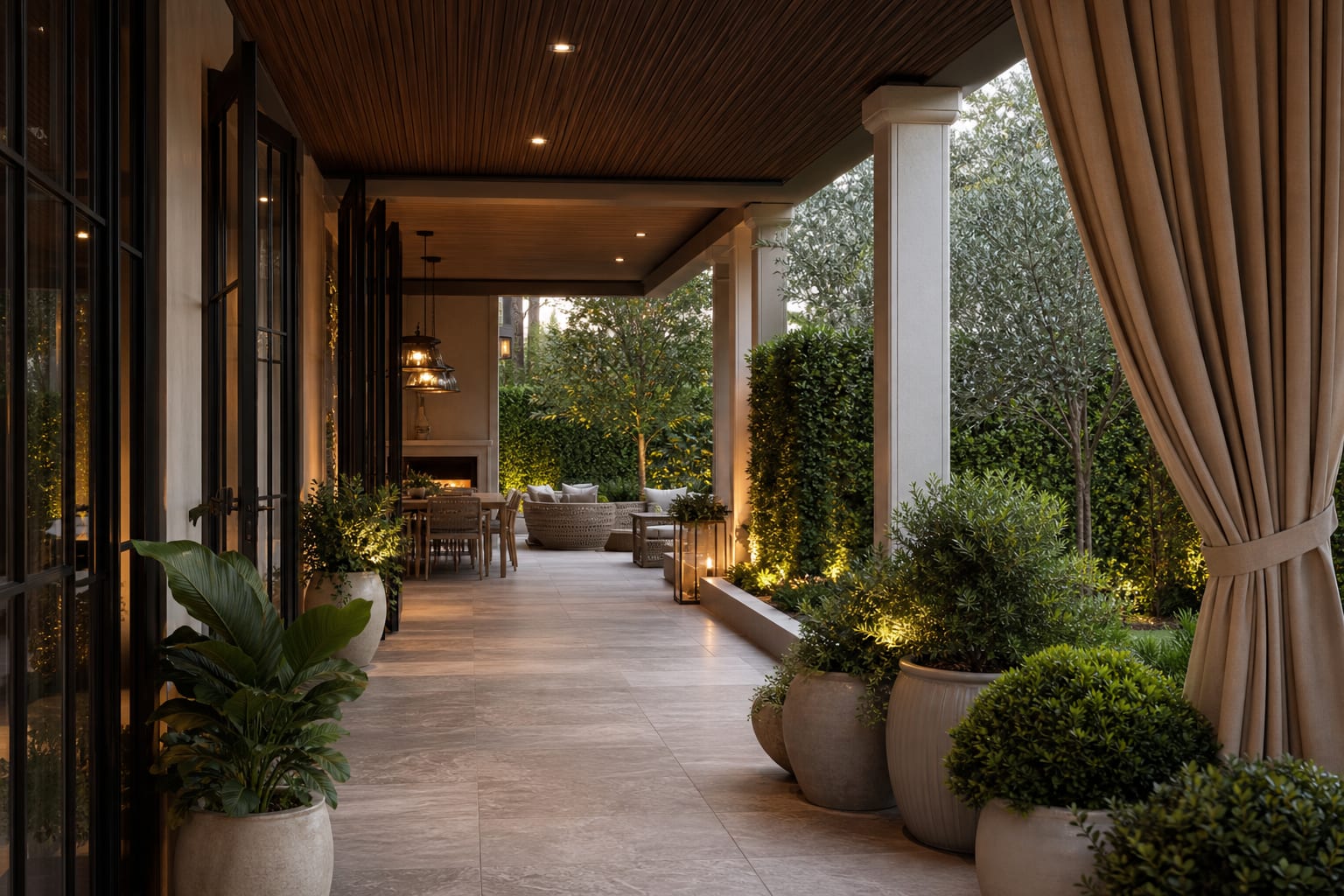
Use AI design to preview your curtain plan before you drill
A fabric swatch can't show how much of the patio a curtain will visually close. Upload a straight-on photo of the covered area to Re-Design and test off-white panels, darker privacy drapes, corner-only curtains, or a full track system before brackets go into the beams. Keep the house edge, roofline, and main path visible so the preview solves the space you actually have.
Use the preview for the expensive-to-undo decisions — panel color, fullness, and which openings to cover. Then verify rod length, bracket depth, floor clearance, and stacking width with a tape measure before you drill.
Frequently Asked Questions
Do outdoor curtains hold up to weather?
Solution-dyed acrylic and marine canvas hold up for 3-5 seasons through normal weather. Cotton, sheers, and unrated fabrics typically fail within one season from UV exposure and mildew.
How do I hang outdoor curtains from a pergola?
Mount stainless cable or a powder-coated rod inside the pergola beams, not on the outer fabric edge. Hang grommet-top panels and add a tie-back hook on the post at chair-back height.
Are outdoor curtains private at night?
Solid weave canvas blocks direct sightlines, but sheers only filter light and view. Pair sheers with a solid opaque panel if you want full privacy after dark with interior lights on.
How wide should each outdoor curtain panel be?
Order panels at 1.5-2x the opening width for proper fullness. A 60-inch opening needs 90-120 inches of panel; anything narrower looks flat, like a flag rather than a curtain.
How do I keep outdoor curtains from blowing around?
Add a bottom hem weight, use a magnetic tie-back at the post, and pull panels closed against a corner pin in high wind. In storm-prone areas, take panels down rather than fight them.
> Try this: Ready to see this on your own outdoor space? Open ReDesign and run the preview before you buy materials, plant, drill, or move furniture.
Three transformations to try
1. Pergola with white outdoor curtains 2. Patio with navy stripe curtains 3. Cabana-style curtain enclosure