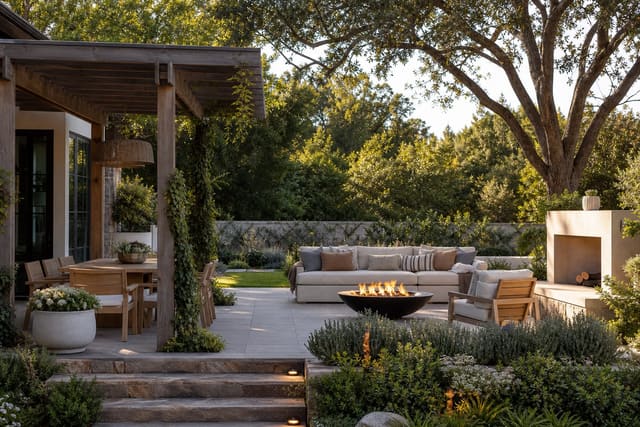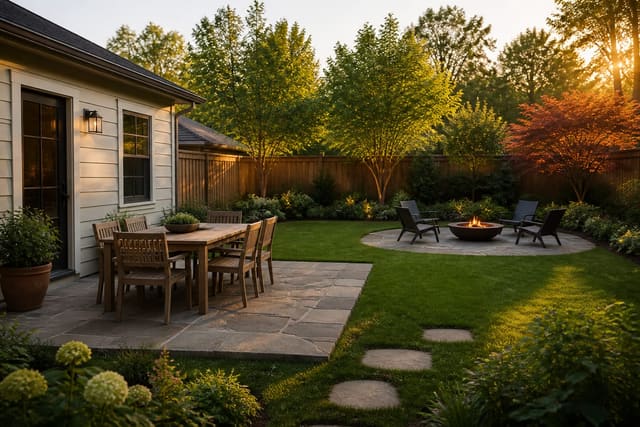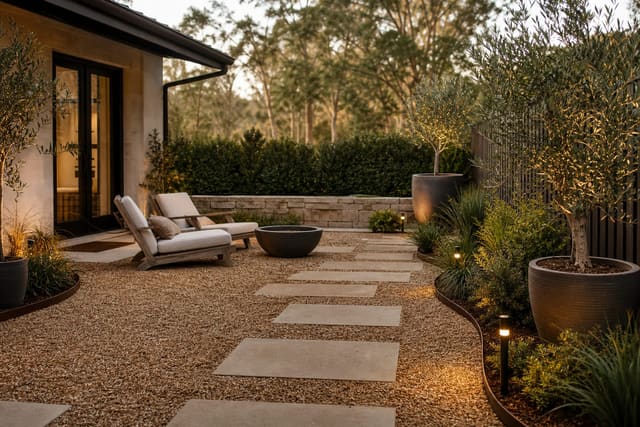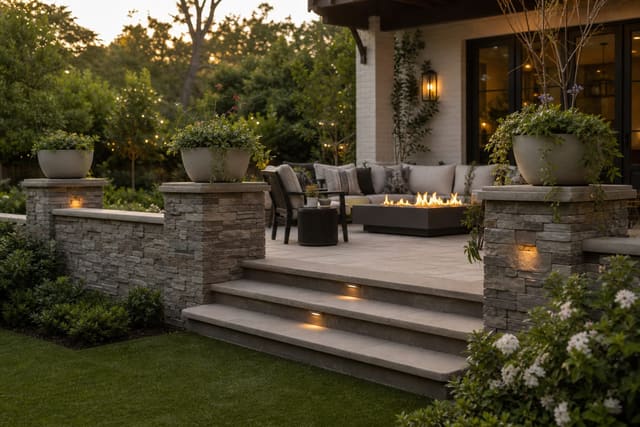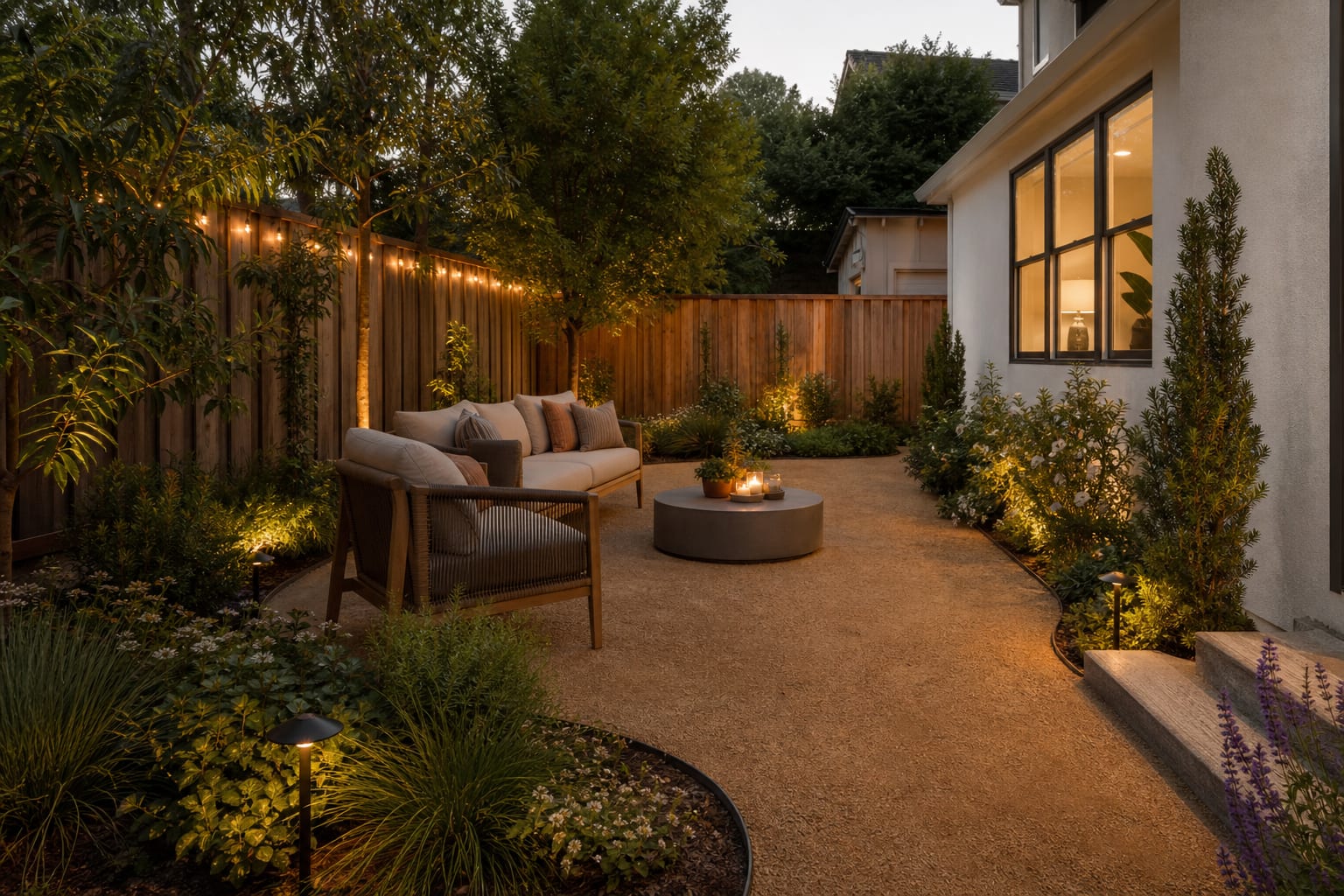
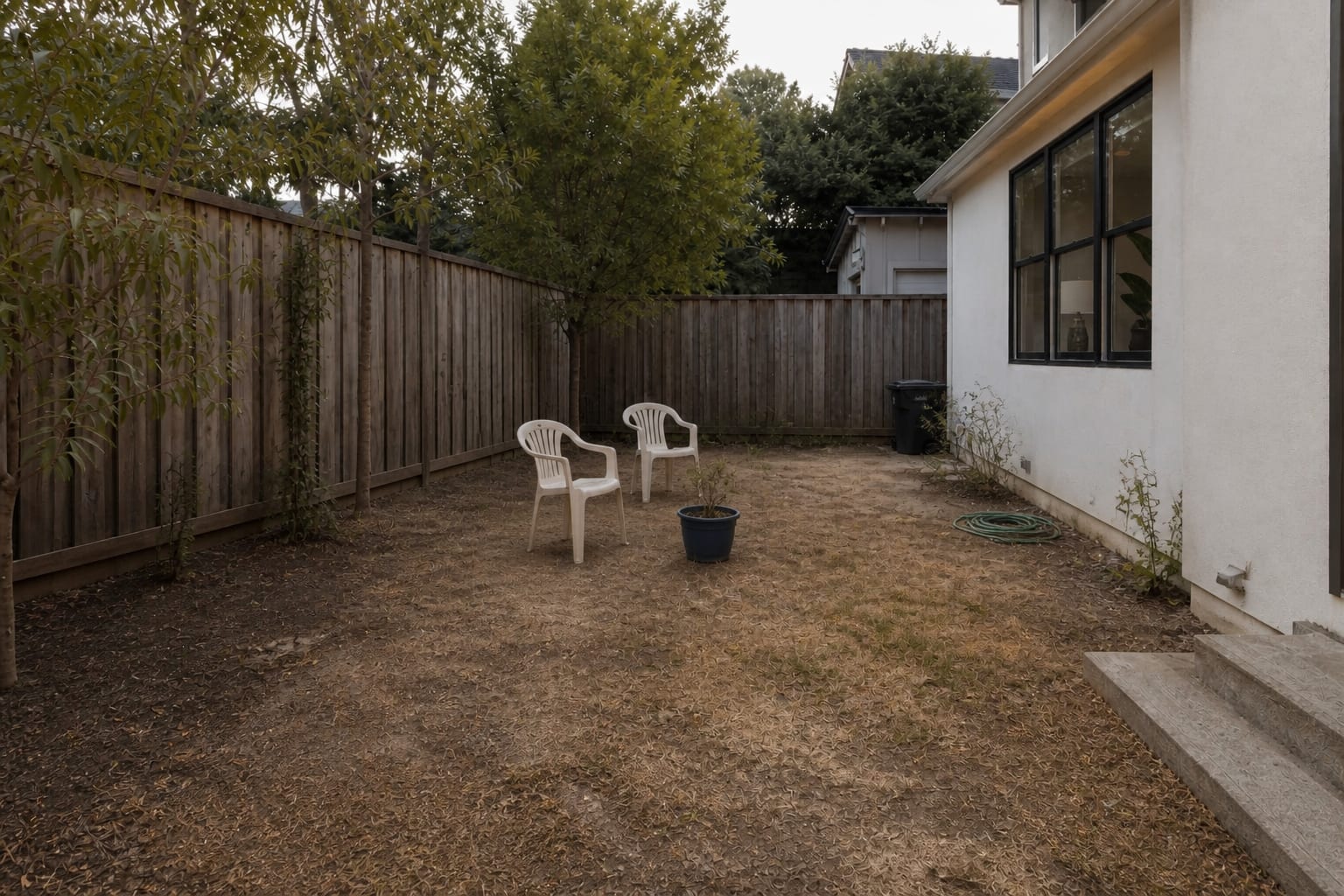
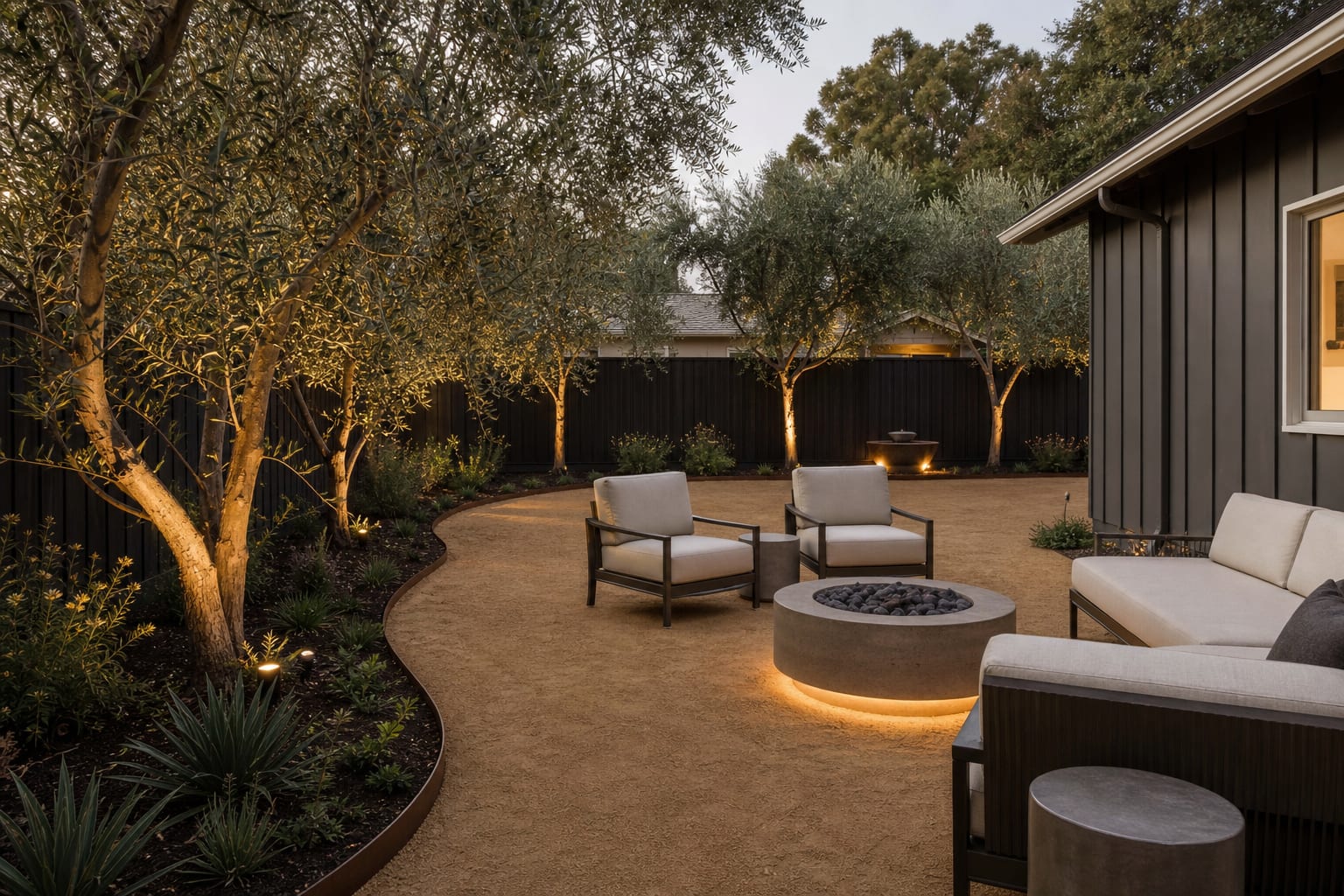
Decomposed granite patio ideas work best when the surface sits on a compacted base, gets firm edging, and pairs with drought-tolerant planting so it reads as a designed courtyard rather than a parking pad. DG suits dining nooks, garden paths, and fire-pit circles, but only with proper base prep, edging, slope, and furniture planning in place.
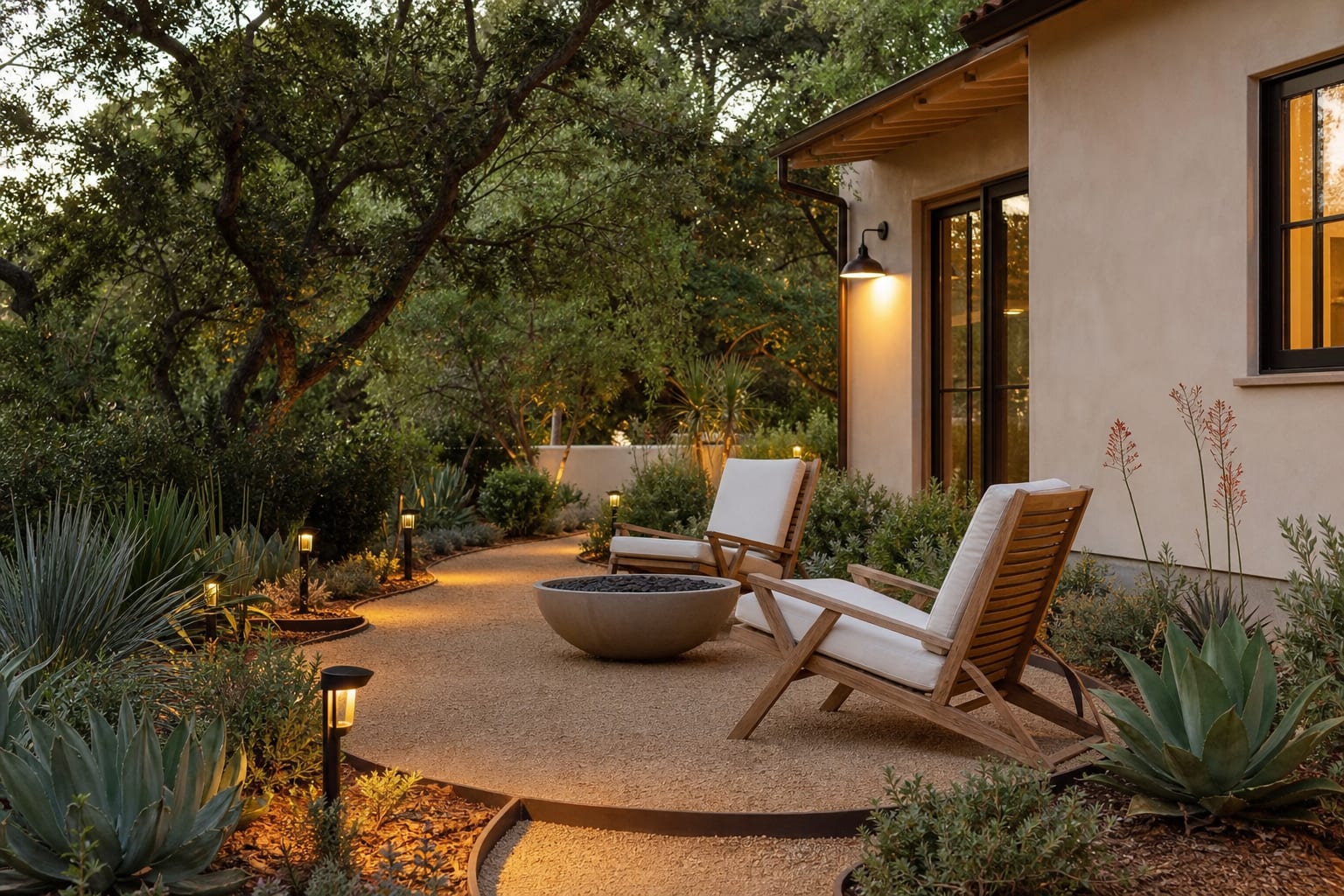
Is decomposed granite good for a patio or garden path?
DG works well as a natural, permeable surface for patios and paths, though it won't match the chair stability of concrete or the crisp joints of pavers. It's crushed granite screened into fine particles that compact into a firm, slightly textured plane.
A typical build uses 3-4in of compacted aggregate base topped with about 2in of DG, installed in thin lifts and compacted between passes. Pitch the finished surface away from the house at 1/8-1/4in per foot. Edge it firmly with steel, mortared stone, concrete curbs, brick, or pressure-treated wood to stop it from creeping into lawn, beds, and shoe treads.
Stabilized or loose: which decomposed granite should you use?
The main decision is stabilized versus loose DG, and daily use should decide it before color does. Stabilized DG has a binder mixed in or applied per the supplier's system, creating a firmer surface that resists dust and displacement. Loose DG feels more casual but shifts under furniture and needs more raking or topping up.
| DG choice | Best use | Watch the detail |
|---|---|---|
| Stabilized decomposed granite | Dining patios, lounge areas, cleaner side yards | Follow supplier instructions for moisture, compaction, curing, and layer depth |
| Loose decomposed granite | Garden paths, informal fire-pit zones, secondary seating | Expect more tracking, soft spots, and edge maintenance |
| Resin-bound aggregate | Firmer contemporary patios that still need permeability | Check local drainage rules, UV behavior, installer experience |
Color is the second decision. Gold DG warms up stucco, cedar, and drought-tolerant planting; gray DG feels calmer beside concrete and modern siding. Pink or rusty granite suits desert landscapes but can read hot in a small yard. Bring samples home and wet them before choosing, since DG deepens noticeably when damp.
Comparing DG with looser stone? See gravel patio ideas for casual outdoor rooms: gravel reads crunchier and rustic, compacted DG reads smoother and more courtyard-like.
Test this on your own photo with ReDesign before choosing a final direction; keep the house edge, horizon line, hardscape, planting beds, and main path visible so the preview solves the space you actually have.
Which decomposed granite patio ideas make the surface feel finished?
The strongest DG patios use it as a calm field and let the border, planting, furniture, and lighting do the shaping.
- Frame a DG dining patio with steel edging for a clean modern line. Use 4-6in tall edging and keep at least 36in behind dining chairs so guests don't scrape into planting beds.
- Pair tan DG with a stone seat wall for a courtyard mood. An 18-20in high wall adds overflow seating and stops aggregate spread; see outdoor stone veneer accent ideas for a matching vertical surface.
- Use DG for a secondary lounge zone beside a harder main patio. Porcelain or concrete near the kitchen door handles rolling carts, while DG works well around a fire bowl or low coffee table.
- Cut a curved garden path through planting with compacted DG instead of a rigid rectangle. A comfortable walking path is 36in wide; a quiet side path can narrow to about 30in.
- Add large stepping pads through DG on heavy-use routes. Set 24x24in concrete or stone pads flush with the surface so shoes land clean and DG becomes the joint material.
- Light the edge, not the middle. Low path lights or shielded step lights at 2700-3000K make DG glow softly; exposed bulbs turn pale granite into glare.
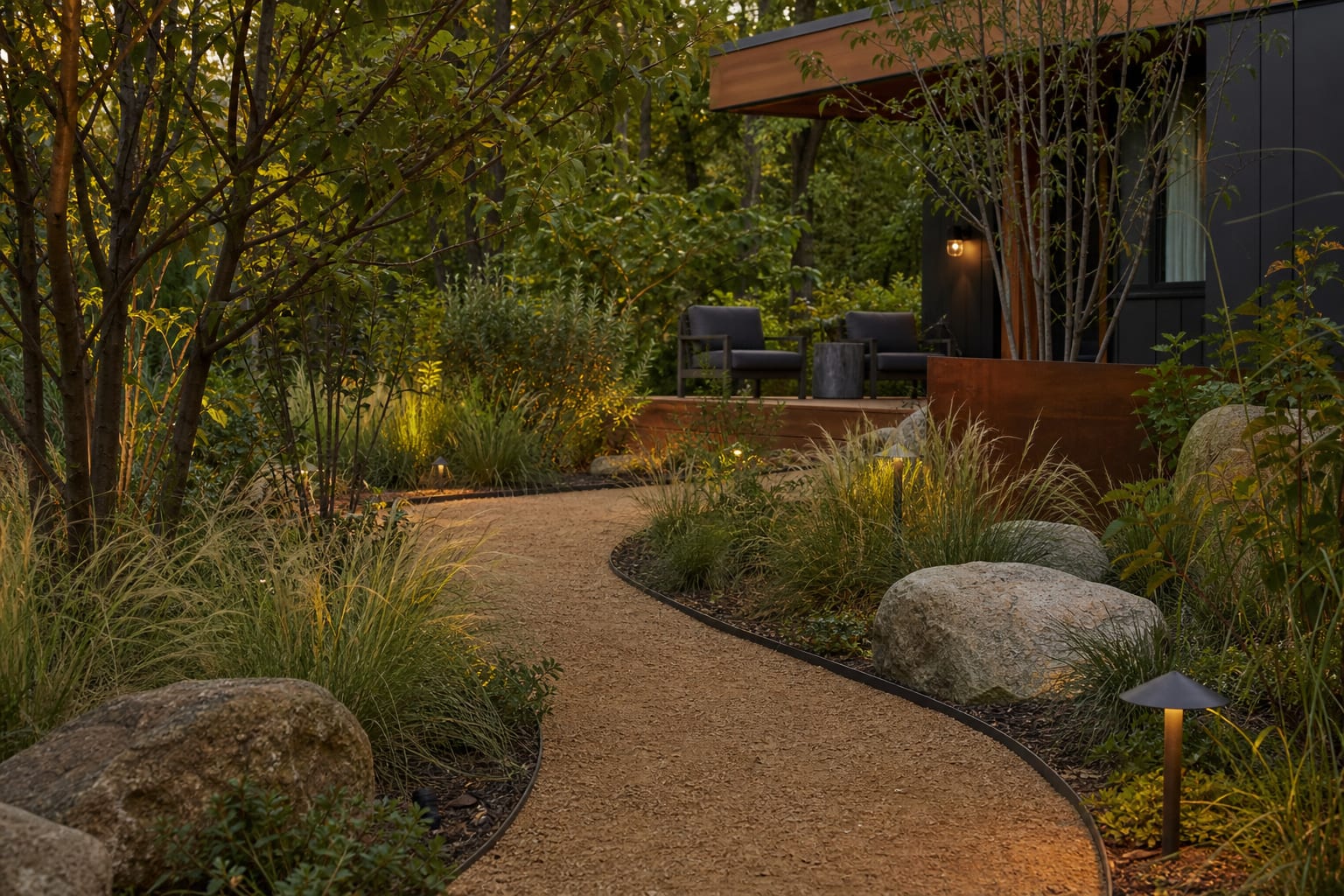
DG also mixes well with large-format pavers when furniture needs a firmer zone. If the main patio must support a dining table or planters on casters, compare porcelain tile patio surfaces; a hard dining pad with DG paths around it often beats asking one material to do every job.
What mistakes ruin a decomposed granite patio?
- Skipping the base. Thin DG spread over bare soil ruts and turns to mud within weeks. Excavate for a compacted aggregate base, install DG in lifts, and compact each layer.
- Skipping edging. "Natural" doesn't mean shapeless. DG needs restraint at lawn, mulch, and steps, or the edge feathers out and furniture feels stranded.
- Choosing loose DG for primary dining. Chair legs dig in and tables wobble. Use stabilized DG, broad-footed furniture, or reserve loose DG for surrounding paths.
- Ignoring roof and slope runoff. DG handles some water, but concentrated flow carves channels. Redirect downspouts and add a drain inlet where needed.
- Treating maintenance as failure. Occasional raking, recompaction, and edge weed control are part of the material's character, just as sealing is for stone and joint cleaning is for pavers.
How can I preview a DG patio before I commit?
A hand sample rarely shows how much tan, gold, gray, or pink aggregate will cover a whole yard, which is where AI previewing helps. Upload a straight-on photo of the bare area and test prompts like stabilized tan DG with black steel edging, gray DG path with drought-tolerant planting, or a DG fire-pit circle with boulders and low chairs.
Include the house wall, door threshold, fence, planting beds, slope, and any furniture you're keeping. The image should show whether the DG color fights the siding, whether the shape feels too thin, and whether a border or planting strip is needed. Once the visual direction works, confirm layer depth, stabilizer requirements, and drainage with your installer.
Frequently Asked Questions
Is decomposed granite the same as crushed granite?
No. DG is the finer, gold-toned product (fines under 1/4in) that compacts into a stable surface, while coarser crushed granite is a base material that stays loose underfoot.
Does decomposed granite need a stabilizer?
Yes, for patios. A polymer or organic resin binder prevents tracking, washouts, and dust. Unstabilized DG suits informal paths and dry creek beds only.
How long does a DG patio last?
Stabilized DG typically lasts 5-10 years before needing a top-up. Unstabilized installations need annual raking and replenishing to stay solid and even.
Can chairs and dining tables sit on DG?
Yes. Heavier wood, steel, and concrete furniture works well on compacted DG. Lightweight aluminum chairs may need a stone paver under each leg to prevent sinking.
Is DG good for hot climates?
Yes. Its pale gold surface stays 15-25°F cooler than dark stone and drains rather than holding heat overnight. Pair it with shade and drought-tolerant planting for best results.
> Try this: Ready to see this on your own outdoor space? Open ReDesign and run the preview before you buy materials, plant, drill, or move furniture.
Three transformations to try
1. DG patio with steel edge and drought planting 2. DG courtyard with olive trees and pots 3. DG dining patio with shade structure