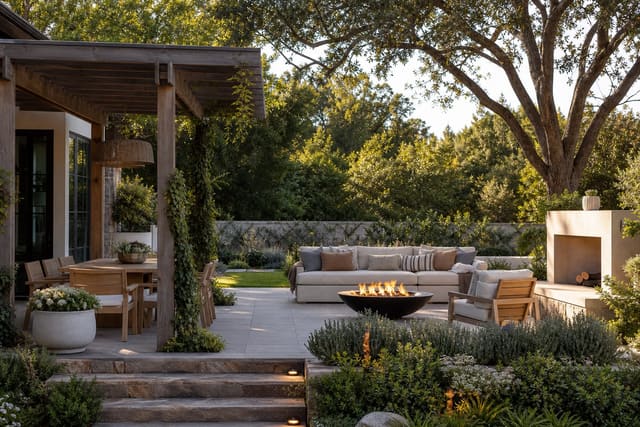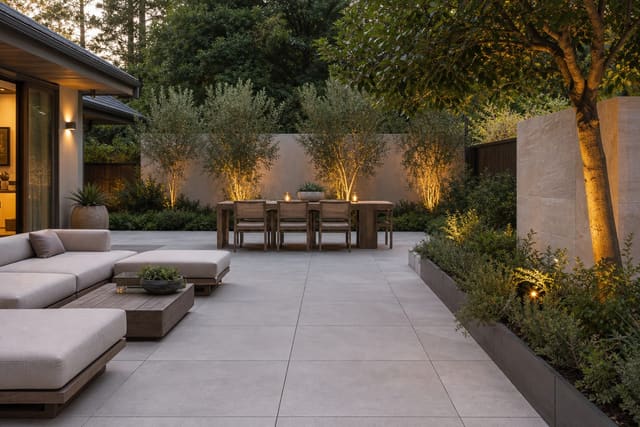
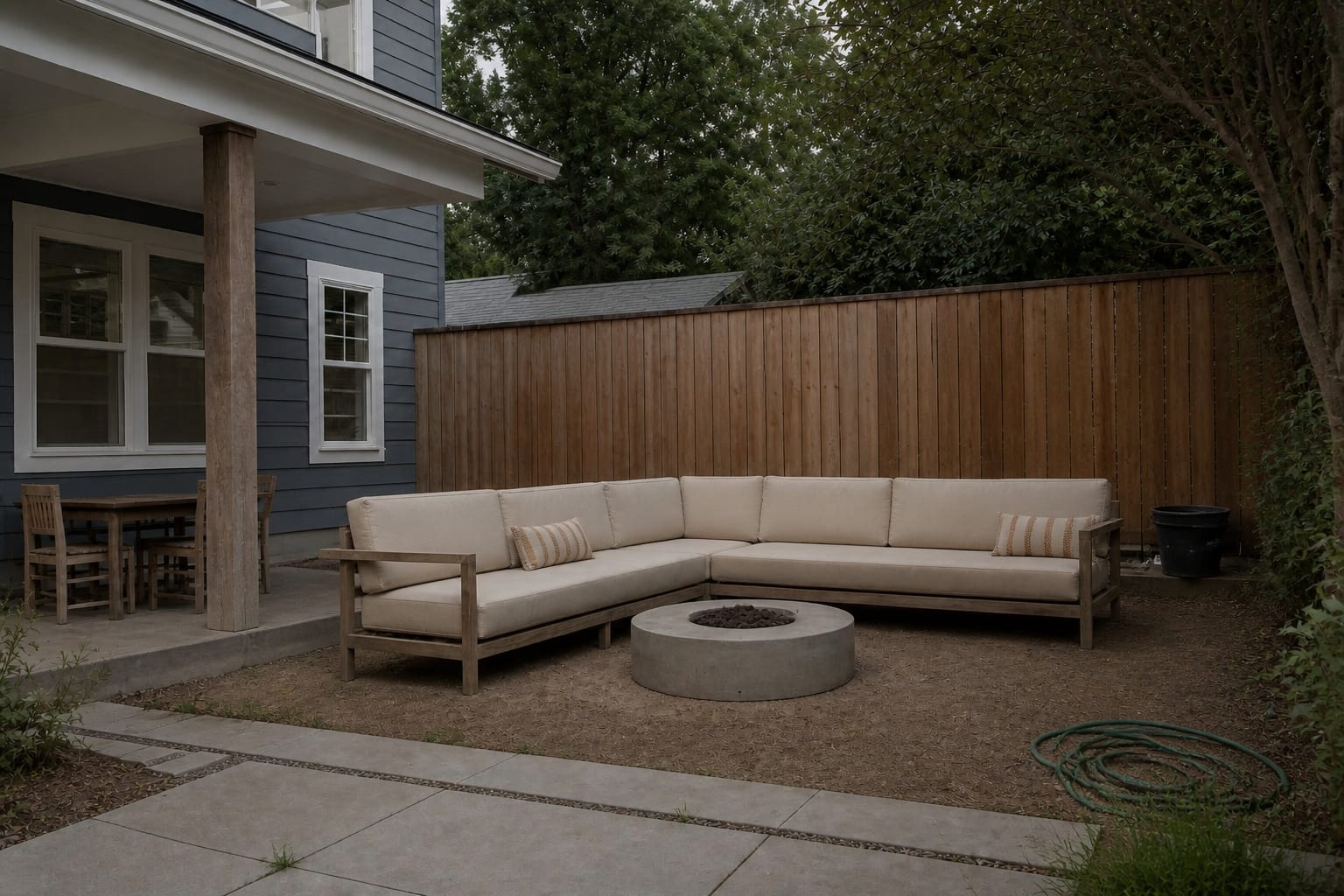
The best outdoor throw pillow ideas start with your patio's fixed colors: pull two hues from pavers or siding, size pillows to the seat depth (20-22in for a deep sofa), choose solution-dyed or olefin fabric, and layer one solid, one pattern, and one texture per seating zone for a finished, weather-ready look.
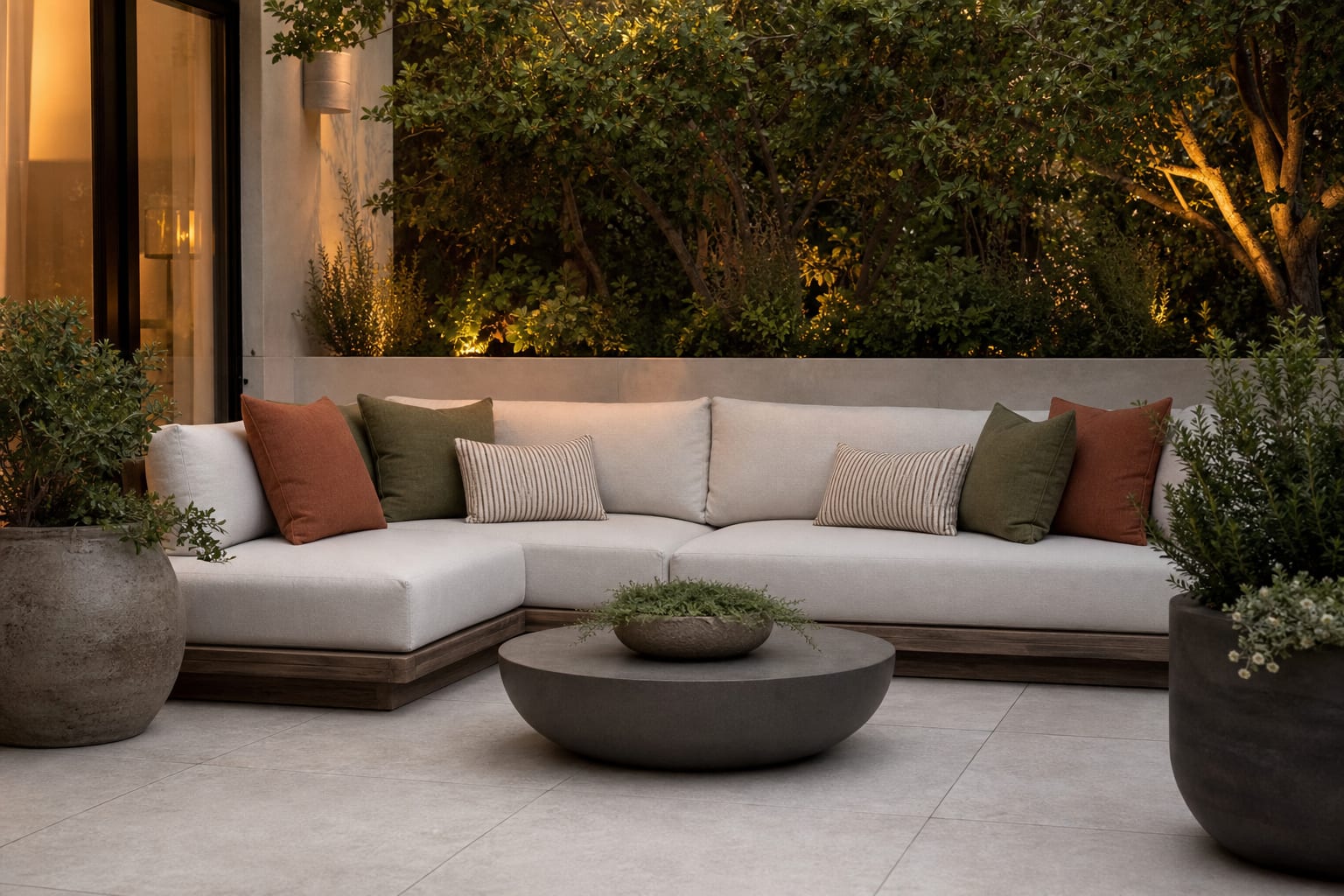
What Makes Patio Pillows Look Intentional Instead of Scattered?
Intentional pillow styling connects the furniture to the patio surface, the house, and the planting instead of floating as unrelated color spots. Name the permanent colors in daylight first: porcelain, concrete, brick, charcoal railing, cedar fence, sage planting, or black window frames. If the ground plane is still undecided, check porcelain tile patio ideas before buying textiles, since a creamy paver and a gray paver want very different palettes.
A reliable formula is two large anchors, two medium supports, one small accent. On a standard sofa, use 22in pillows in the corners, 20in toward center, and a 12x20in lumbar if the seat looks flat. On a loveseat, stop at two 20in squares plus one lumbar; five pillows on a 52in bench turns sitting down into a negotiation.
| Patio seating type | Pillow mix that works | Why |
|---|---|---|
| Deep outdoor sofa | Two 22in squares, two 20in squares, one 12x20 lumbar | Large corners fill depth; lumbar breaks up a long cushion line |
| Compact bistro chair | One 12x18 or 12x20 lumbar | A square pillow steals usable seat depth |
| Chaise lounge | One 20in square plus a neck roll or small lumbar | Supports lounging without blocking the adjustable back |
| Built-in bench | Repeating 20-22in squares every 24-30in | Rhythm matters more than variety on a long run |
Fabric needs the same discipline as color. Solution-dyed acrylic and outdoor olefin outperform cotton canvas in sun and dampness. A pillow labeled "outdoor" can still fail if the insert holds water, so squeeze the fill, check for a removable cover, and skip dense indoor inserts on uncovered seating.
Test this on your own patio photo before committing to a direction; keep the house edge, horizon line, hardscape, planting beds, and main path visible so the preview solves the space you actually have.
Five Outdoor Throw Pillow Ideas That Work in Real Weather
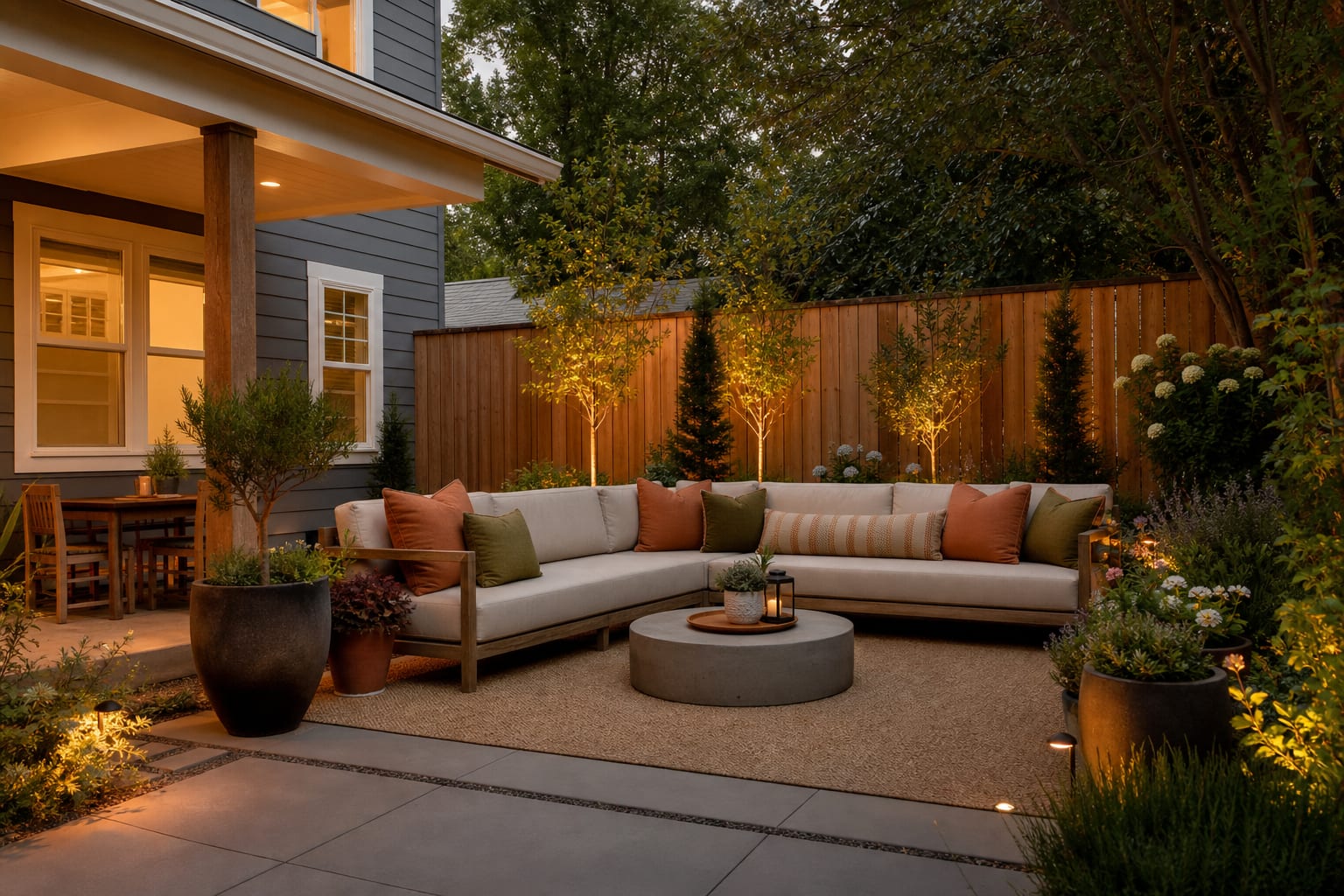
- Build a warm neutral set from the patio floor. Sand, oatmeal, clay, and muted olive read as connected on beige tile, brick, or cedar. If your seating sits on gravel or fines, compare decomposed granite patio ideas and let the palette follow that undertone.
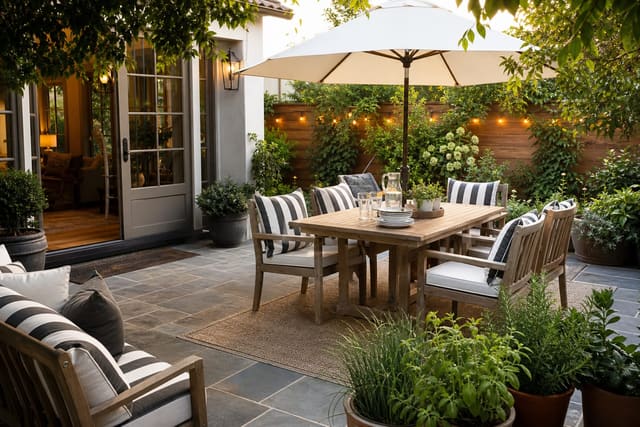
- Use one bold stripe as the pattern leader. A 3-5in cabana stripe reads from the kitchen door; tiny indoor-style prints disappear outside. Keep it on two pillows or one bench cushion and support it with solids.
- Put the darkest color on the smallest pillow. Charcoal, navy, and black look sharp but absorb heat in bulk. Use dark tones on a 12x20in lumbar or piping detail, then balance with mid-tone solids.
- Match texture to nearby hardscape. Stone veneer or stacked masonry can carry nubby weaves and thicker seams. If seating backs up to masonry, see outdoor stone veneer ideas for whether pillows should warm or sharpen the contrast.
- Create a pool-safe group with fewer seams. Around splash zones, choose smooth outdoor fabric, removable covers, and quick-drying inserts, and limit the palette to two colors. One 20in square on a chaise plus a lumbar at the head is usually enough.
Common Outdoor Pillow Styling Mistakes to Avoid
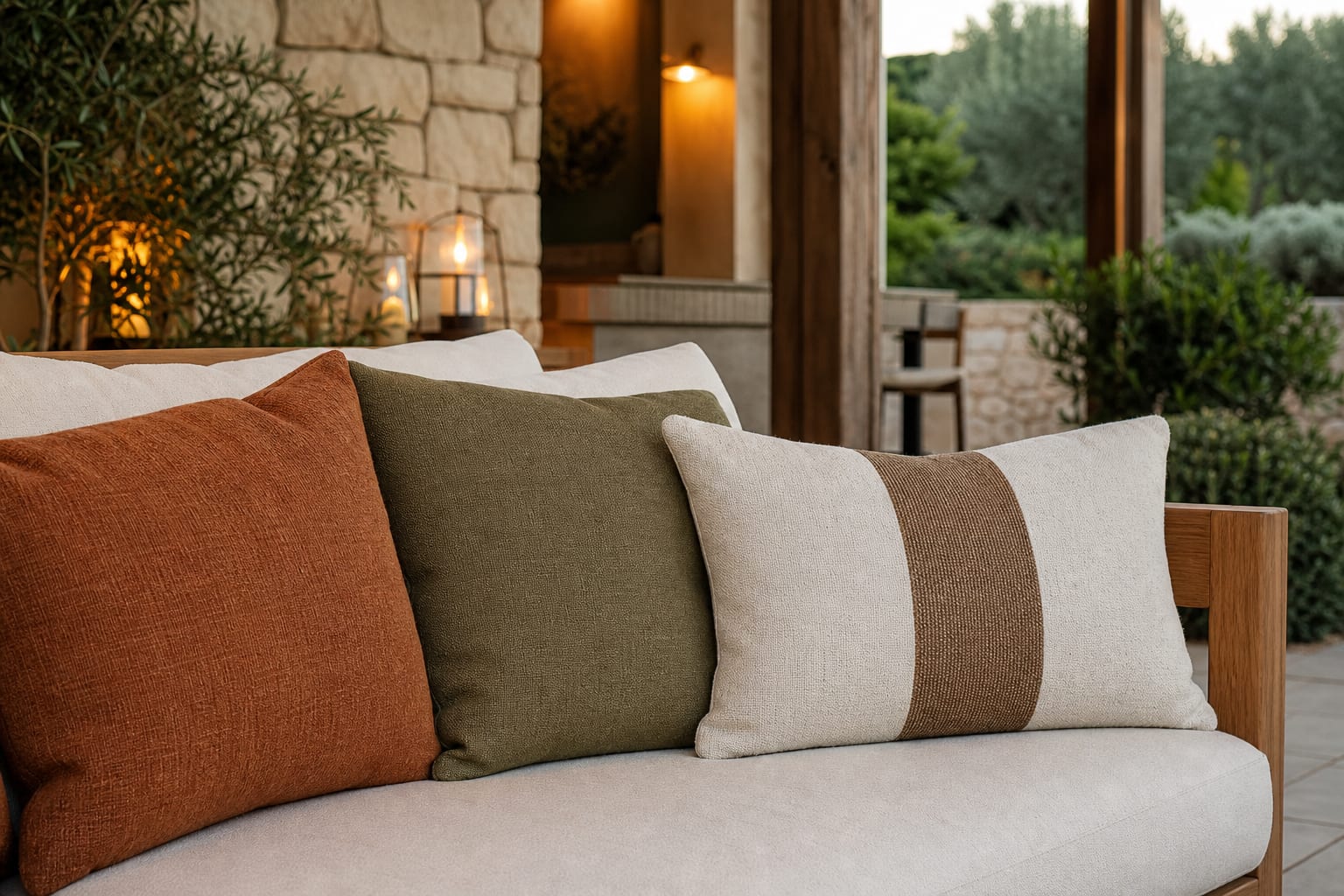
Buying before measuring the furniture is the fastest way to make a set look awkward — a pillow that looks generous in a product photo may be only 16in square. Measure seat depth, back height, and sitting width first, then choose count for comfort, not a styled image.
Too many unrelated patterns shrink the patio visually. Pick one pattern family as lead, one texture as backup, and leave at least half the pillows solid. Also check the reverse side: patio pillows are seen from the yard, grill, and kitchen window, so a plain back should still be a color you want visible.
Pure white fabric asks too much of an uncovered patio — pollen, tannins, and wet pets turn it into a maintenance project. Cream, flax, and heathered gray give similar lightness with more forgiveness. Finally, plan storage: a deck box or covered bench keeps the full pillow stack dry, and standing pillows upright after rain helps seams dry before mildew sets in.
How Do I Use AI Design to Preview Pillow Color and Pattern?
AI previewing helps because scale and color shift once pillows sit beside paving, planting, and shade. Upload a straight photo of the seating area and test one change at a time: larger corner pillows, striped lumbars, clay instead of blue, or fewer pillows with stronger repetition.
Shoot from standing height, including furniture arms, floor material, the nearest wall or fence, and a planting bed. Photograph during harsh afternoon sun if that is when the patio gets used, since a set that looks rich in evening light can look too sharp at 2 p.m. on pale concrete. Use the preview to check whether the sofa looks finished, the pillows repeat existing colors, and someone can still sit down without rearranging everything.
Frequently Asked Questions
How many pillows should I put on a patio sofa?
Use 3-5 pillows on a standard 3-seat outdoor sofa, 2-3 on a loveseat, and 1-2 on a single lounge chair. More than that starts to read as a furniture-store display rather than a lived-in patio.
What sizes work for outdoor pillows?
Use 20-22in for the back layer, 18in for the middle, and one 12x20 or 14x20in lumbar in front. Mixing three sizes reads more designed than five matching squares of the same dimension.
What fabric should outdoor pillows be?
Choose solution-dyed acrylic for full sun or polyester olefin for covered porches. Avoid indoor cotton or velvet outside, since both can mildew within one humid week of exposure.
How do I store outdoor pillows in the off-season?
Vacuum-seal pillows in flat storage bags and keep them in a dry indoor closet. Outdoor deck boxes work for short-term storage but leak humidity over winter unless sealed with a gasket.
How do I keep outdoor pillows looking fresh?
Bring them inside nightly if your patio is uncovered, brush off pollen and dust weekly, and spot-clean spills with mild soap. UV exposure fades fabric faster than dirt does, so shade matters more than cleaning frequency.
> Try this: Ready to see this on your own outdoor space? Open ReDesign and run the preview before you buy materials, plant, drill, or move furniture.
Three transformations to try
1. Modern patio sofa with three-pillow palette