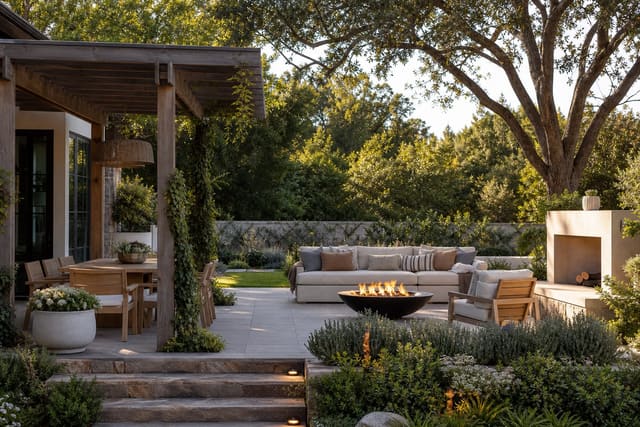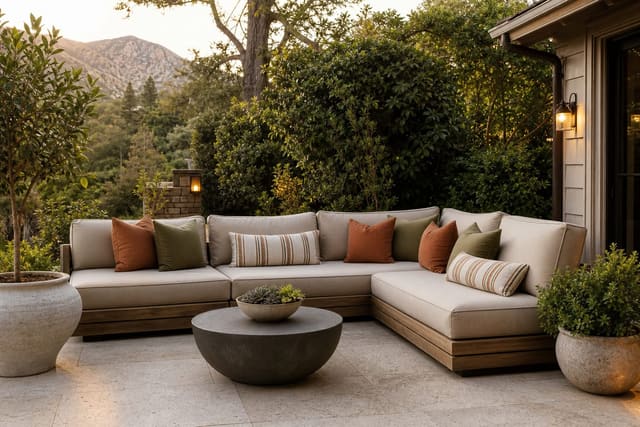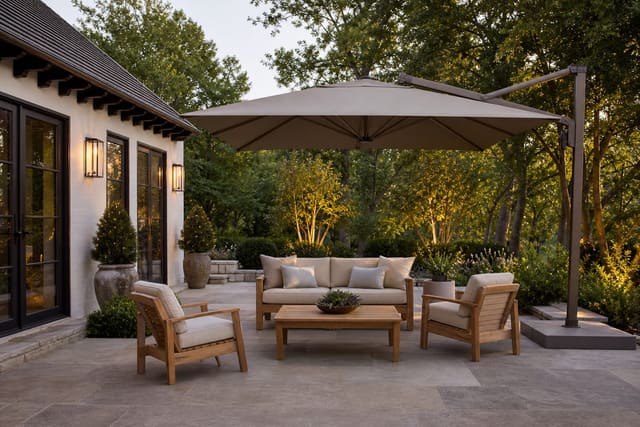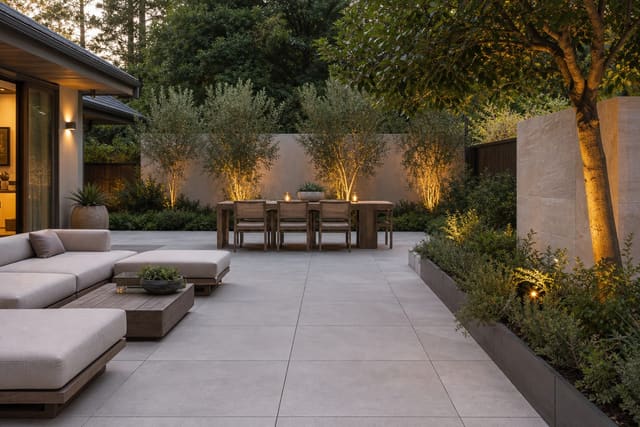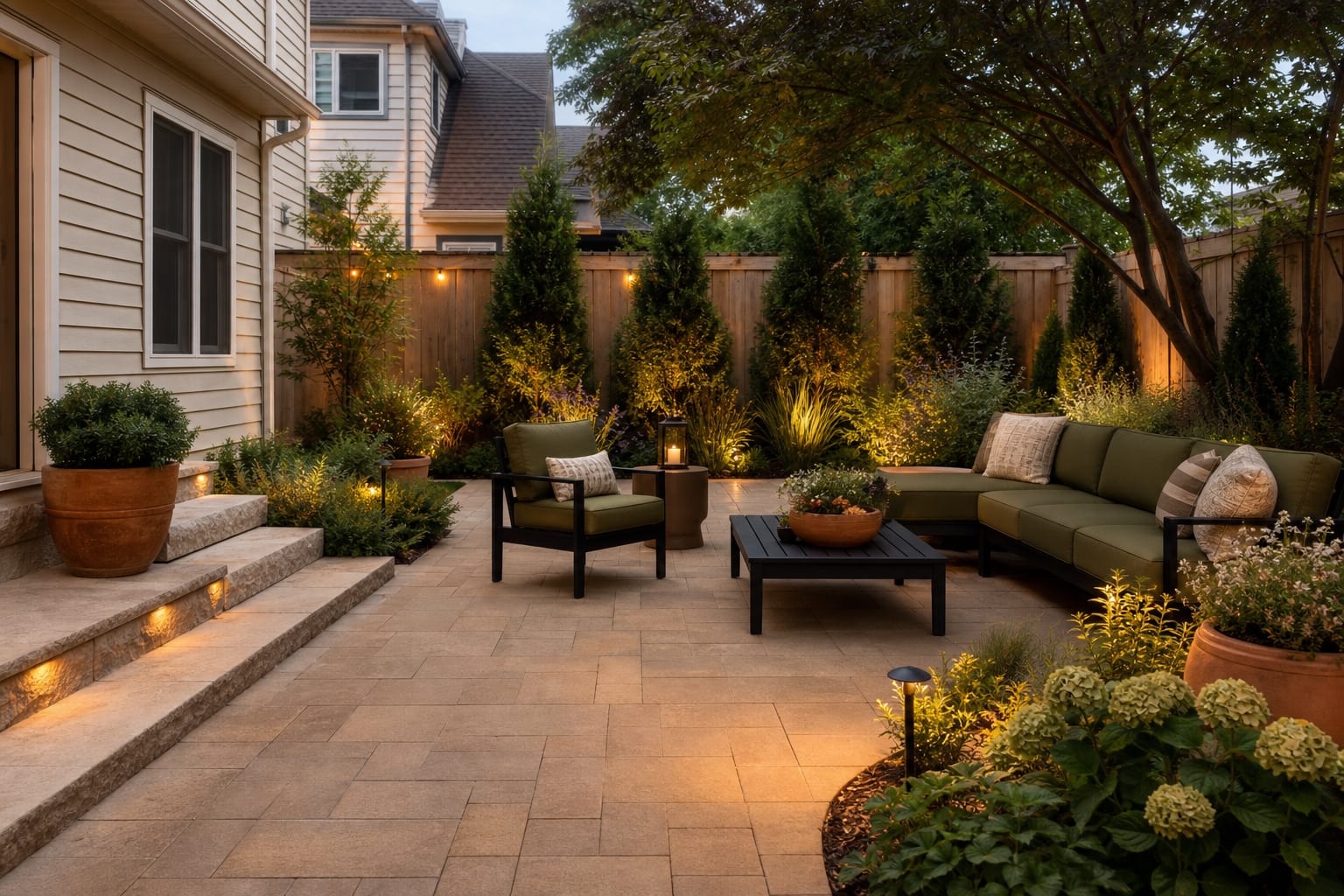
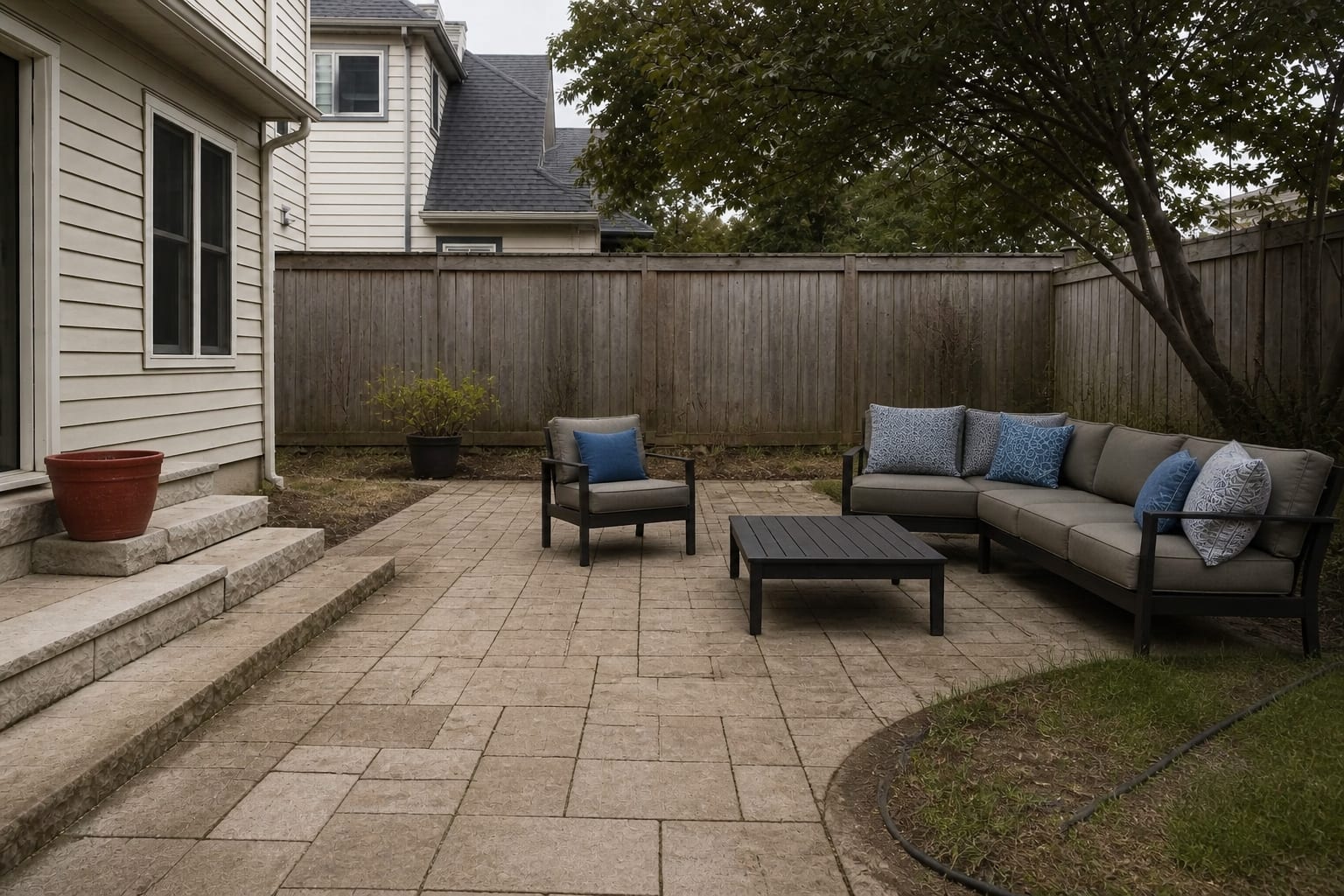
A cohesive patio color scheme starts with the surfaces you can't easily change — pavers, siding, brick — then adds one earth tone and one accent color, repeated across cushions, pots, and rugs in a 60-30-10 ratio. Fewer colors, used deliberately, beat a cart full of mismatched throw pillows every time.
Which Surfaces Should Drive the Palette?
Stand at the door and name the fixed colors in plain terms: warm beige tile, cool gray concrete, red brick, taupe stucco, black railing, cedar fence. Don't call everything "neutral" — warm and cool neutrals fight each other in harsh sunlight.
A busy floor needs calm furniture. Patterned tile or mixed brick calls for solid cushions and fewer accent colors; a quiet floor like large-format porcelain or smooth concrete leaves room for stripes or a bolder umbrella. If the paving is still undecided, choose it first — these porcelain tile patio ideas for outdoor floors show how much floor tone controls the rest of the palette.
View samples outside at 10 a.m., 2 p.m., and dusk. Warm beige can turn yellow by afternoon, cool gray can look blue beside grass, and black metal can dominate a small patio fast. Keep furniture frames within one metal family — mixing black, bronze, chrome, and white aluminum in a 10 by 12 foot zone looks accidental.
Test this on your own photo with ReDesign before committing; keep the house edge, horizon line, hardscape, planting beds, and main path visible so the preview solves the space you actually have.
Warm, Cool, or High-Contrast: Which Direction Fits?
The decision that fixes most patio color problems is choosing a warm, cool, or high-contrast direction before shopping.
| Palette direction | Best fixed surfaces | Strong color moves | Watch out for |
|---|---|---|---|
| Warm natural | Beige pavers, brick, cedar, tan stucco | Cream cushions, rust pots, olive planting, teak or acacia | Too much orange can look dusty instead of relaxed |
| Cool coastal | Gray stone, white siding, pale concrete | Slate cushions, blue-gray umbrella, white planters, silver foliage | Bright navy and pure white can feel harsh in full sun |
| Garden dark | Charcoal pavers, black trim, deep fencing | Graphite frames, moss green cushions, cream flowers, aged metal | Dark seating can overheat on south- or west-facing patios |
| Desert soft | Decomposed granite, stucco, pale stone | Sand fabric, clay planters, sage plants, woven shades | Too much beige needs texture or it looks flat |
Desert-soft works especially well over gravel or decomposed granite. If that's your direction, see decomposed granite patio ideas for warm yards before picking cushions — tan aggregate makes cool blue furniture look sharper than it did in the store.
What Patio Color Combinations Actually Work?
These combinations respect sunlight, dirt, and the fact that plants are already part of the palette:
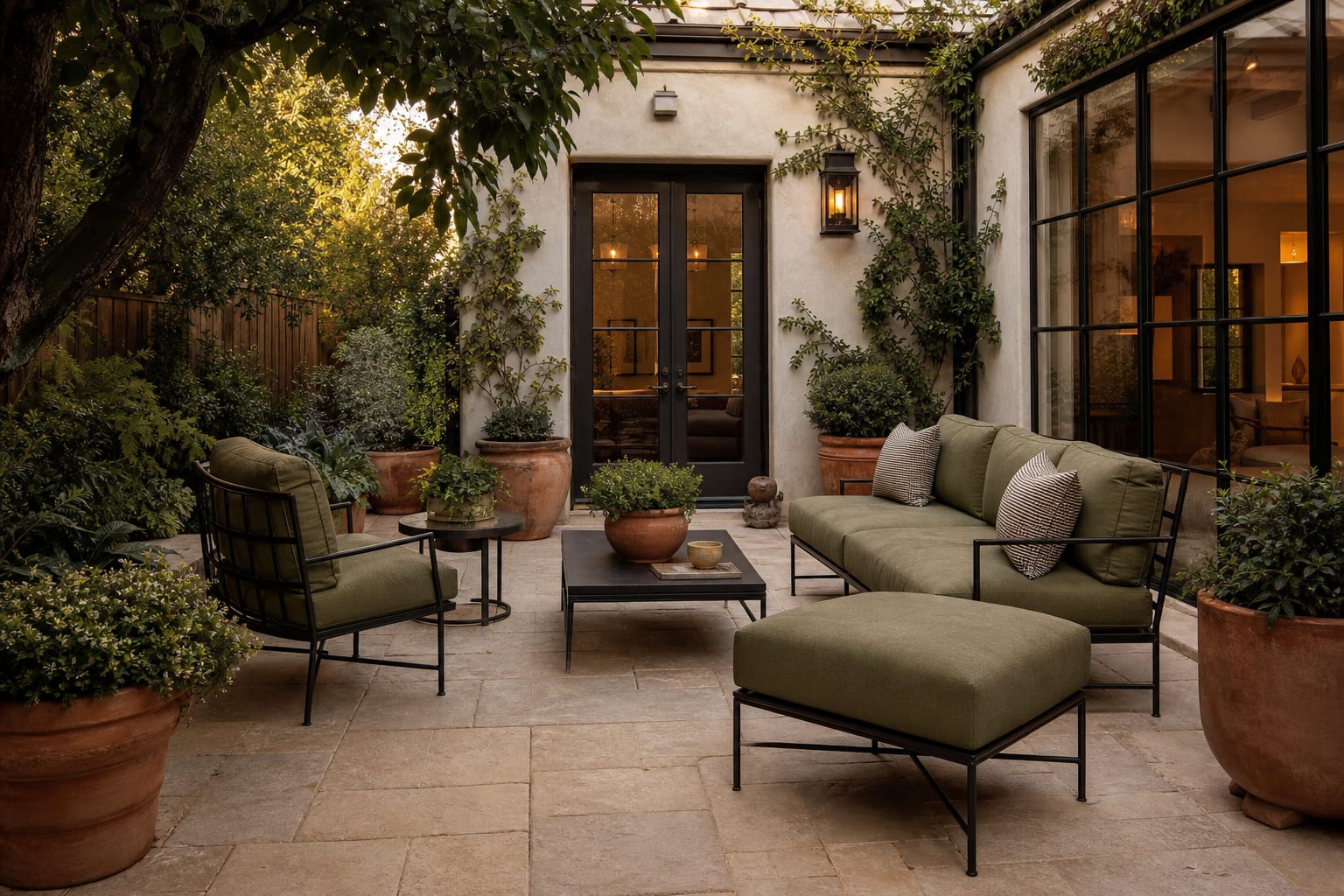
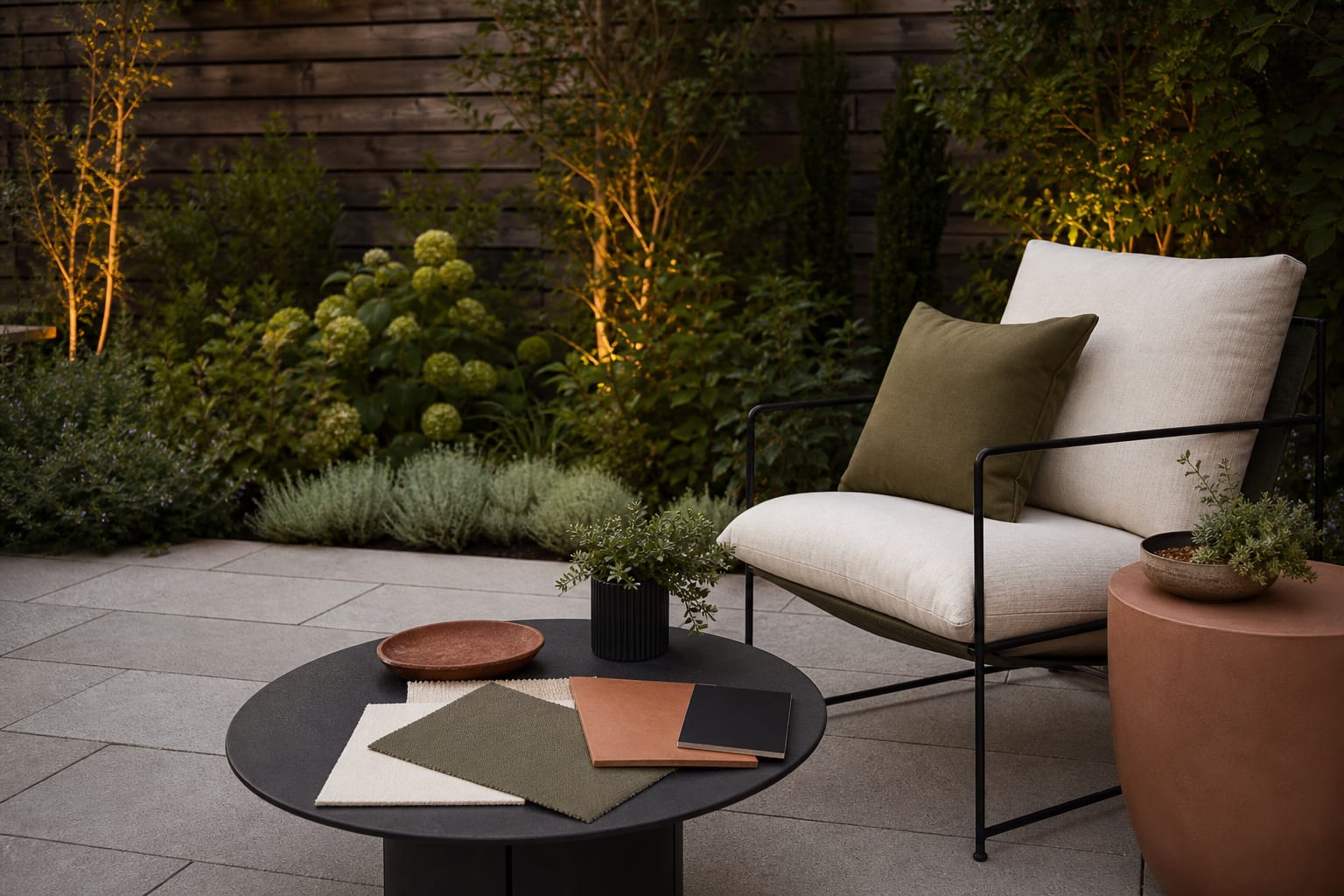
- Cream, olive, black, terracotta — for warm siding, brick, or beige pavers. Cream on washable covers, olive on larger fabric, black on frames, terracotta repeated in pots 14–20 inches wide.
- Charcoal, teak, ivory, rosemary green — modern but livable. Charcoal on metal or rug, teak on arms or table, ivory kept slightly warm, green from cushions or clipped shrubs.
- Sand, clay, sage, bone — dry-climate patios with gravel or stucco. Needs texture: woven shades, ribbed planters, nubby fabric, grasses 18–36 inches tall.
- Slate blue, warm white, weathered gray, pale yellow — shaded, cool-toned patios. Keep yellow to the 10% accent slot; a full yellow cushion set overpowers gray stone.
- Black, white, cedar, deep green — crisp architecture. Soften contrast with wood or wicker; avoid pure white upholstery under trees unless covers are removable.
- Brick red, cream, aged bronze, lavender — older homes with red masonry. Lavender cools the brick; aged bronze hardware reads gentler than shiny black.
An outdoor kitchen has to absorb appliances and cabinetry into the scheme too. The best outdoor kitchen layout ideas for patios keep stainless steel from becoming the only cool tone by repeating gray, black, or stone elsewhere in the seating zone.
What Patio Color Mistakes Should You Avoid?
- Buying cushions first. A 5-inch cushion can't overrule 250 square feet of pavers, fence, and brick — choose the ground and architecture palette first.
- Too many small accents. One blue pot, two red pillows, a yellow umbrella, and a striped rug scatter the eye; pick one main accent and one minor accent, then repeat with discipline.
- Ignoring plant color. Green isn't neutral outside — blue-green agave, dark boxwood, and silver lavender all change how nearby fabric reads.
- Undersized rugs. For a lounge group, size the rug so at least the front legs of the sofa and chairs sit on it, often 8 by 10 feet; a 5 by 7 floating under a coffee table isolates the color.
- Forgetting night color. Use warm white bulbs around 2700K and shield glare — a black-and-white patio can feel stark under cold light but inviting under warm light and wood.
How Do You Preview a Patio Palette Before Committing?
Upload a straight photo of the patio to Re-Design and test one change at a time: olive cushions instead of gray, terracotta pots instead of blue, a striped umbrella instead of solid canvas, black frames instead of mixed metal. Shoot from standing height and include the floor, furniture, house wall, fence, and planting.
Photograph during the brightest part of the day rather than golden hour, since flattering light can hide the contrast problem you need to solve. For a covered patio, include the ceiling or pergola, since shade changes how saturated a cushion or rug will appear. The best preview is the one where fixed surfaces, furniture, pots, and plants finally seem to be having the same conversation.

Frequently Asked Questions
How many colors should a patio palette have?
Three — one hardscape neutral, one earth tone, one accent — applied in a roughly 60-30-10 ratio across surfaces, soft goods, and planters.
What patio color goes with everything?
Charcoal gray and warm white anchor any earth-tone or jewel-tone accent; terracotta, sage, and navy each work with both — pick the accent to match your house exterior, not in isolation.
Should patio cushions match the house siding?
Pull from the house palette rather than match it exactly — siding-color cushions disappear, while complementary or analogous tones lift the patio without competing with the architecture.
Can I use bold colors on a patio?
Yes, when bold appears in one piece per zone — a single accent cushion fabric, planter, or pillow palette. Bold across every surface flattens the space and dates quickly.
How do I keep a small patio from feeling busy?
Lock the hardscape and furniture to two tonal neutrals, allow only one pattern in the cushions, and repeat the accent across three small touches like a planter, lantern, and pillow. Small spaces tolerate less variation than large ones.
> Try this: Ready to see this on your own outdoor space? Open ReDesign and run the preview before you buy materials, plant, drill, or move furniture.
Three transformations to try
1. Neutral patio with terracotta accents 2. Charcoal patio with sage and brass 3. White patio with navy and natural wood