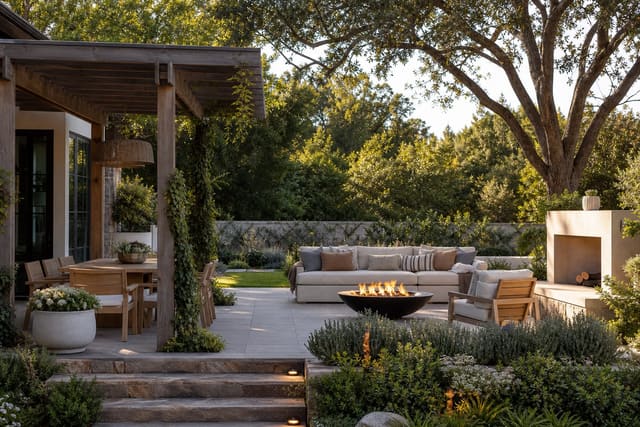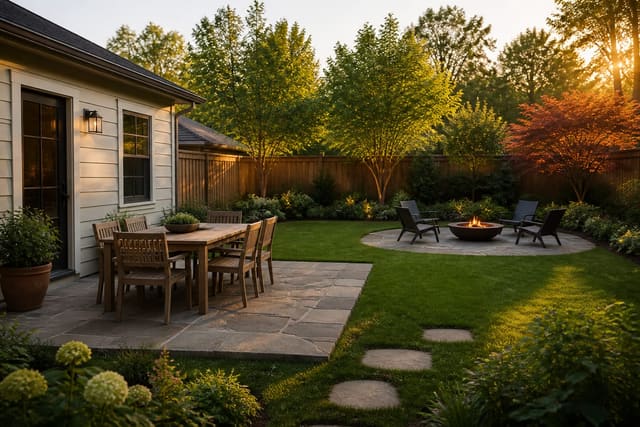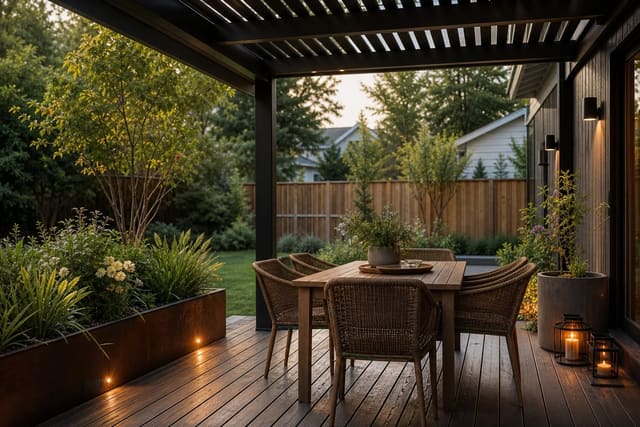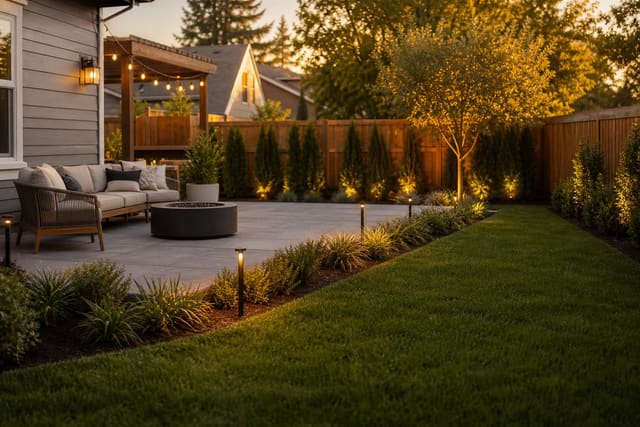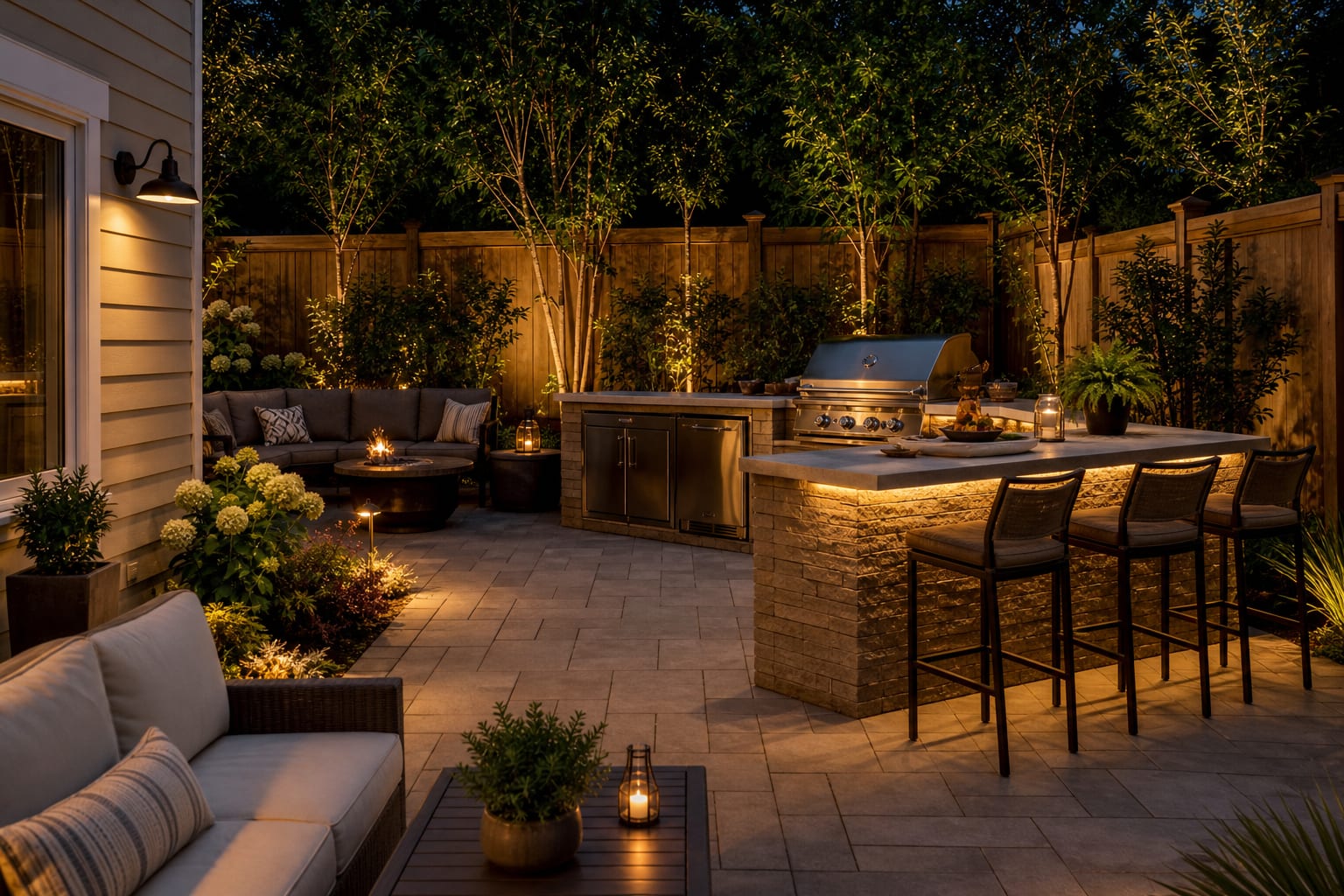
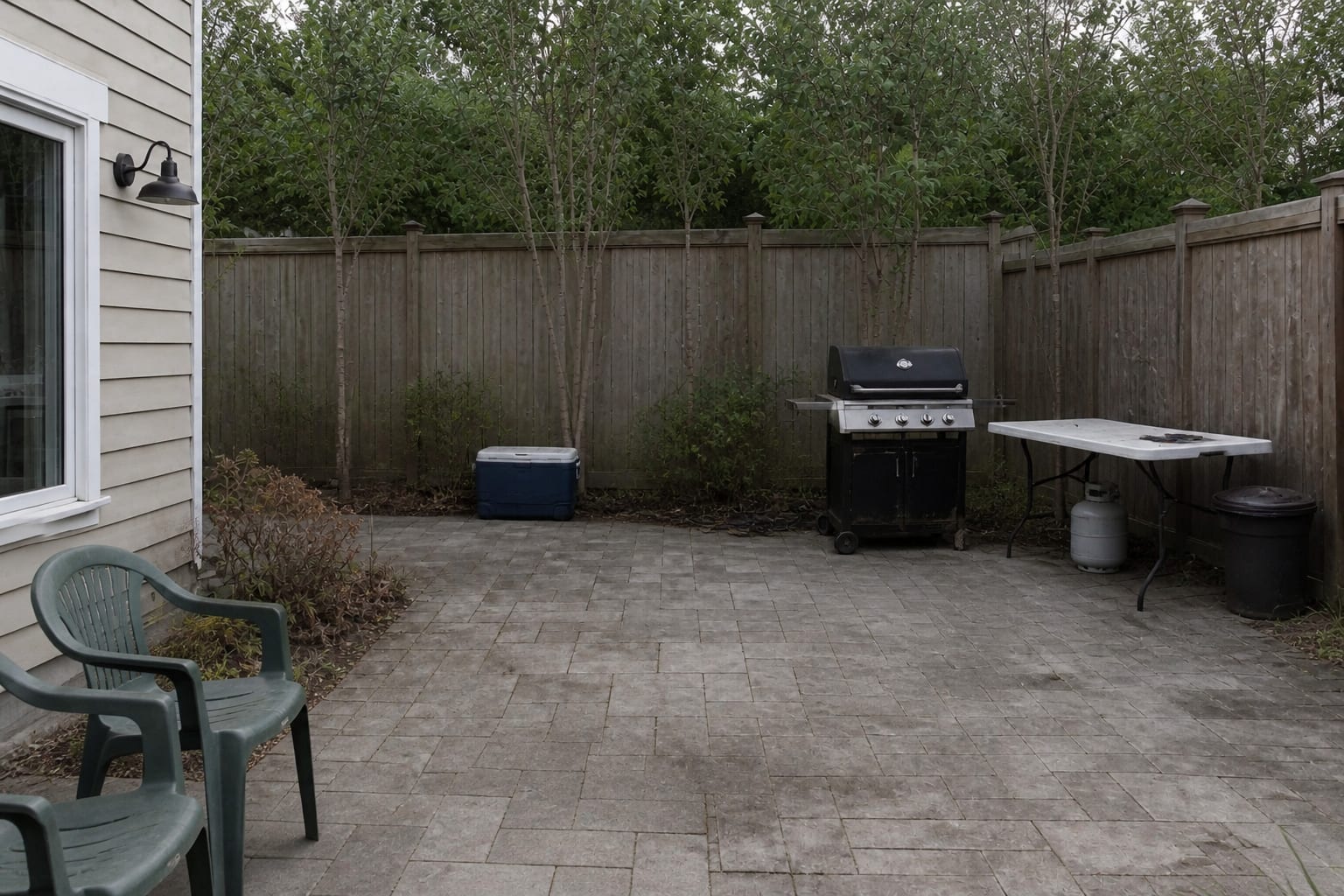
The best outdoor kitchen layout puts the grill, prep counter, and storage in a 10-14ft work triangle, with a 24-36in landing zone on each side of the grill, 30-36in at any fridge door, and dining within 6-8ft so the cook stays in the conversation. Plan movement first, appliances second, finishes last — that order is what makes a modest patio kitchen cook like it was designed on purpose.
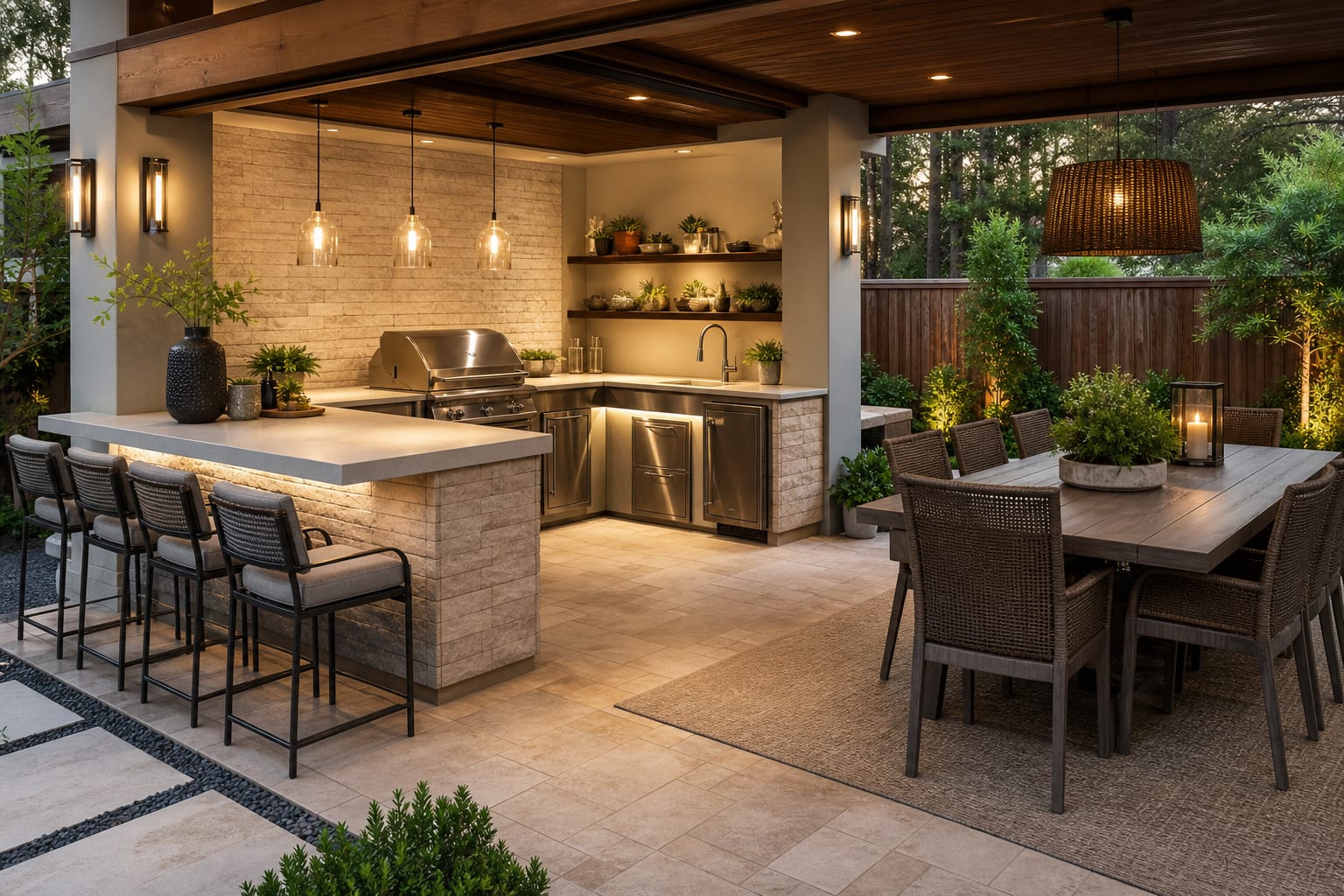
What is the best outdoor kitchen layout for real cooking?
A compact station plan where grill, prep, sink or cooler, and serving surface form a short triangle with 42-48in aisles and landing space on both sides of the hot zone. Outdoor cooking is a hands-full, wet-tray job, so nobody wants a relay race across the patio.
Think stations, not a row of appliances. The grill needs at least 24in of landing on one side, ideally 36in on the other, for platters, tongs, and cooked food. A sink or cooler belongs a few steps from prep, not stranded at the far end, and trash should sit near prep and serving since outdoor kitchens generate packaging fast.
Keep the cooking aisle out of the main house-to-table route. Where the kitchen meets planting or turf, a clean threshold helps — see these patio to lawn transition ideas for finishing that edge.
- Hold 42-48in aisles where guests pass behind the cook.
- Keep at least 24in of landing counter beside the grill, 36in on the main prep side.
- Keep bar stools off the hot zone's edge.
Which stations belong in the work triangle?
Every outdoor kitchen needs prep, cook, serve, clean, and store. Skip one and it reappears as a cooler in the walkway or dirty platters on the dining table.
- Prep beside the grill: raw food should move straight to heat. A 30-42in counter fits a cutting board and seasoning tray; a 12in ledge is decorative.
- Cold storage near the entry side: drinks and condiments get used by non-cooks, so a fridge or cooler should be reachable without crossing behind the grill.
- Cleaning with a narrow, deliberate home: if plumbing isn't realistic, plan a trash pull-out and a 24in landing zone for a bus tub.
- Serving on the social side: a bar ledge 12-15in deep holds plates and drinks; a buffet counter wants 18-24in of depth.
Shade is part of the station plan, not decoration. A west-facing grill gets brutal at 5 p.m., and a dark countertop can become too hot to touch. For year-round comfort, borrow from four-season outdoor space planning: cover, wind protection, task lighting, and storage matter more than another appliance.
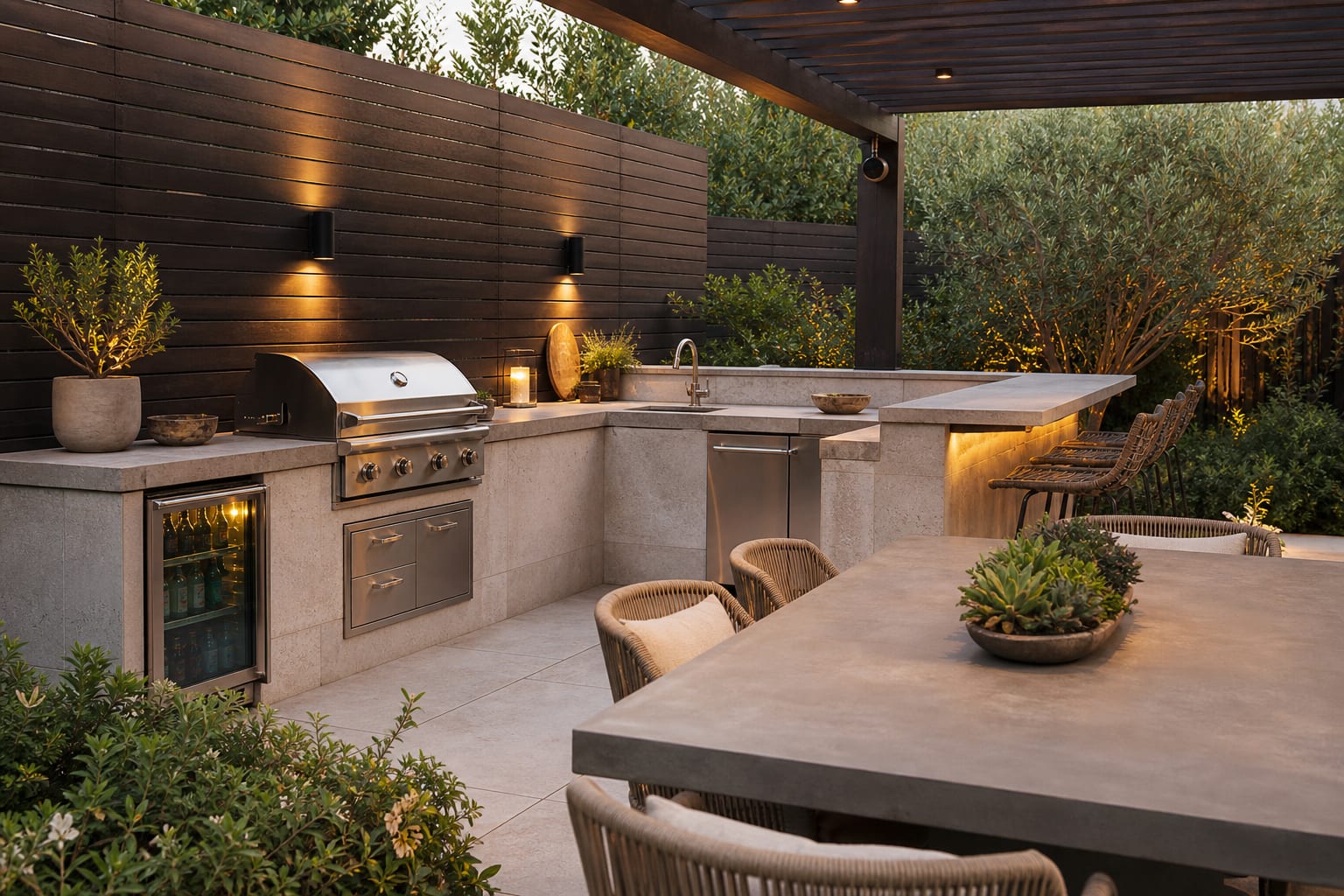
Test this on your own photo with ReDesign before committing to a direction; keep the house edge, hardscape, planting beds, and main path visible so the preview solves the space you actually have.
How do straight, L-shaped, and U-shaped layouts compare?
The right shape preserves circulation once doors open, stools pull out, and someone's carrying a tray from the grill.
| Layout | Best fit | Spec that keeps it workable |
|---|---|---|
| Straight run | Narrow patios, decks, side yards, small balconies | Keep 48in clear in front; cook and traffic share one lane. |
| L-shaped | Patio corners, pool edges, cooking plus serving | Grill on one leg, prep/serving on the other, 42in minimum in the corner. |
| Galley | Covered patios with a wall run opposite an island/bar | Leave 48in between opposing counters so doors don't collide. |
| U-shaped | Large patios needing a protected command center | Only when interior aisle stays near 48in with a separate exterior route. |
An L-shape is often the safest upgrade: it creates a corner without swallowing the whole outdoor room. Put the grill on the longer leg if smoke can vent away from seating, and use the shorter leg for serving or a sink. Allow 24in of width per bar stool plus 36in behind them for passing traffic.
A straight run works well on slim patios if you resist cramming in every appliance. Grill, landing counter, trash, and a small fridge often beats six appliances with nowhere to set a platter.
What are the most common outdoor kitchen layout mistakes?
- Centering the design on the biggest appliance. A 42in grill looks impressive but can steal the counter space that makes cooking comfortable — size the grill after measuring the counter run.
- Letting bar seating invade the work aisle. Stools need knee room and pull-back space; under 12ft of patio depth, prioritize a nearby dining table instead.
- Ignoring wind direction. Smoke and grease should move away from seating and windows; shift seating or add a screen if the only grill spot sends smoke into the dining zone.
- Forgetting off-season storage. Cushions, covers, tools, and tanks need a dry home — see winter patio storage ideas for realistic solutions.
- Lighting only the dining table. The grill needs focused task light and counters need visibility for knives; warm 2700K-3000K fixtures feel better around food than cold blue-white light.
How can AI design help preview an outdoor kitchen layout?
AI previews work best while the layout is still flexible, before anything is poured, plumbed, or wired. Upload a straight photo from the patio door, then test a straight run, an L-shape, and a galley plan from the same angle.
Ask for versions that keep grill landing zones visible, preserve a 42in aisle, and show the relationship between cooking, dining, shade, and lawn. Judge the preview by whether the cook can move and the patio still feels open — not by how glossy the countertop looks. If one version shows a clearer house-to-table path and better shade over prep, that's the layout worth pricing with a contractor.
Frequently Asked Questions
What's the minimum size for an outdoor kitchen?
10ft of linear counter with a grill, 30-36in prep zone on each side, and a small fridge or cooler counts as a working outdoor kitchen; under 8ft it becomes a grill station.
Straight, L-shaped, or U-shaped outdoor kitchen?
L-shaped delivers the strongest work triangle and a natural seating ledge; straight runs work on covered patios with limited depth; U-shaped suits larger footprints with three-cook setups.
How much landing space does the grill need?
24-36in of heat-tolerant counter on each side of the grill — granite, concrete, or stainless steel — never wood butting up against the grill.
Where should the sink go in an outdoor kitchen?
Between the grill and the refrigerator if both are present; if only one accessory is included, place the sink farthest from the grill so cleanup doesn't collide with active cooking.
Do outdoor kitchens need shelter?
Yes for serious use — a pergola, partial roof, or covered patio extends the season, protects appliances from rain, and keeps grills off the sun's UV damage; full-sun grills last half as long.
> Try this: Ready to see this on your own outdoor space? Open ReDesign and run the preview before you buy materials, plant, drill, or move furniture.
Three transformations to try
1. L-shaped outdoor kitchen with bar seating