
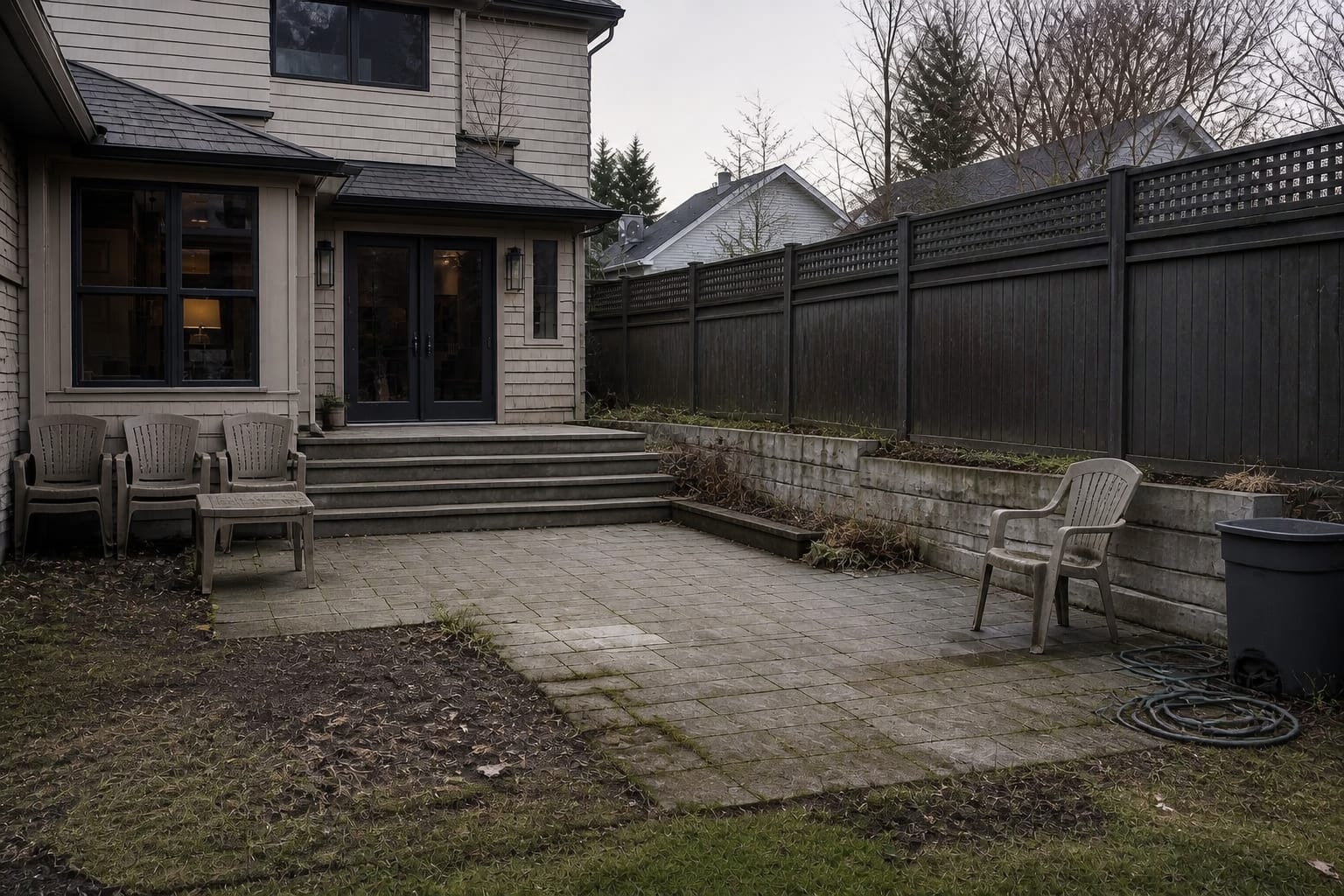
Winter patio furniture storage works best when you clean and fully dry every piece, move cushions and umbrellas indoors, cover or lift hardgoods off wet paving, and keep one small vignette outside so the patio still reads as a designed room. Skipping the drying step is what turns a cheap cover into a mildew trap.
How do I store patio furniture for winter?
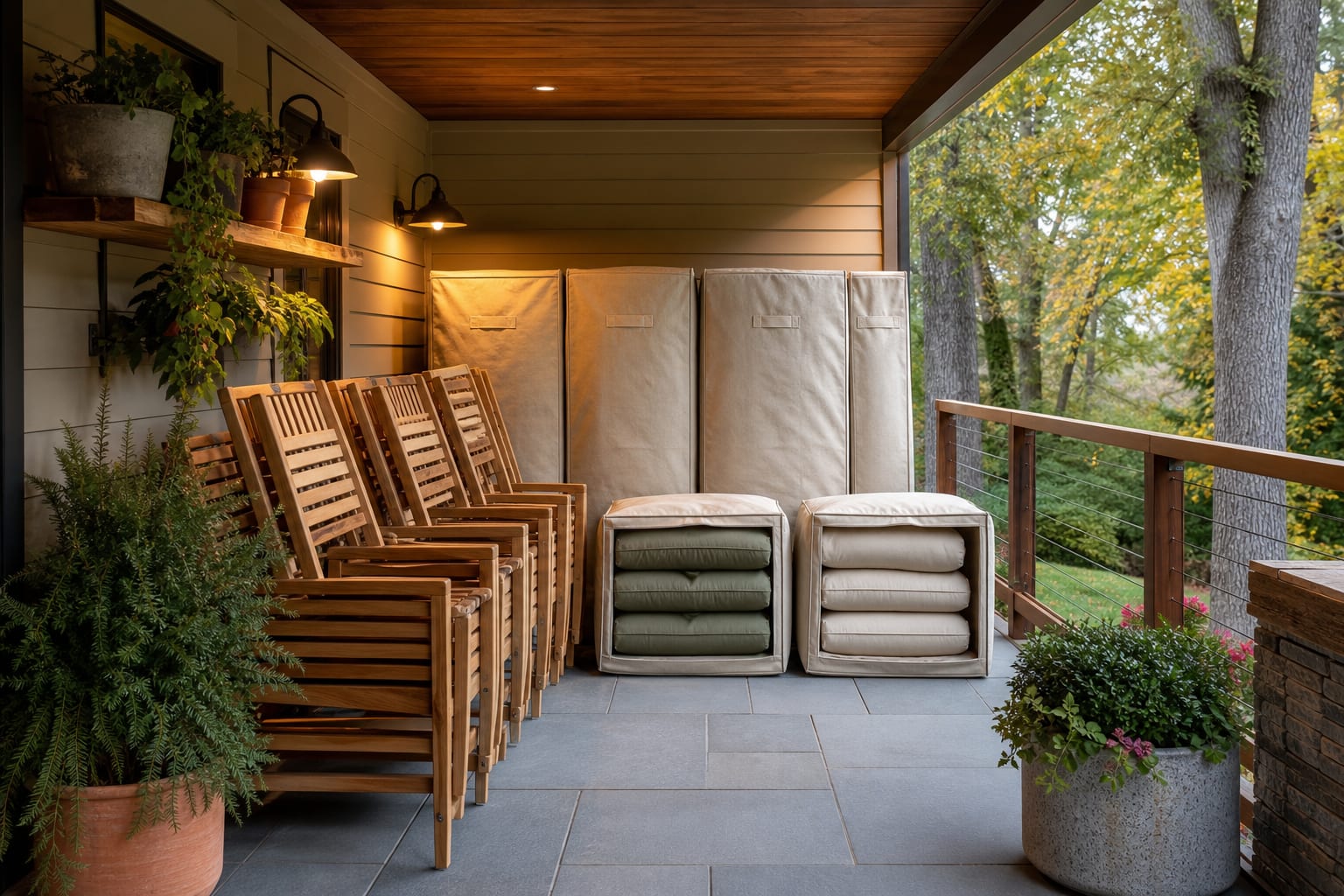
Clean it, dry it completely, repair weak spots, lift it off wet ground, and use breathable covers or a dry storage zone. A covered dirty chair is just a sealed container for mildew, rust, and stains, so order matters. Work on a dry day above freezing, then give every piece time to air out before it goes into a shed, garage, basement corner, or covered deck.
Treat the patio like a room closing for the season, not a pile of objects to hide. Pull chairs from the table, open umbrella canopies, remove all cushions, and check the underside of frames. Tighten loose bolts, replace missing glides, and sand splintered wood before storage — small failures grow worse after a freeze-thaw cycle.
Use mild soap and water on aluminum, resin wicker, teak, powder-coated steel, and outdoor fabrics unless the manufacturer says otherwise, and skip the pressure washer on woven furniture since the jet can loosen strands. Let cushions stand on edge for a full dry afternoon, then store them in a lidded bin or breathable bag — never a sealed trash bag. If the patio connects to a lawn or path, keep roughly 36 inches of walking room clear, which also matters for a patio-to-lawn transition that stays usable in winter.
Which patio storage solution fits the space you actually have?
The best solution protects furniture without swallowing the patio, garage, or shed. A balcony, a suburban deck, and a full dining terrace each need a different move.
| Storage option | Best for | Design rule | Watch out |
|---|---|---|---|
| Indoor garage wall | Cushions, umbrellas, folding chairs | Shelves 12-18 inches deep for bins and narrow pieces | Don't park damp cushions against drywall |
| Covered patio stack | Aluminum chairs, resin wicker, teak benches | Stack matching chairs; cover top to below the seat rail | Heavy covers can rub finishes in wind |
| Deck box or bench box | Small cushions, pillows, covers | Choose a box with a raised base and vents | A sealed box turns musty if cushions aren't fully dry |
| Shed bay | Tables, loungers, umbrellas | Leave a 24-inch aisle for removal without scraping | Sheds leak at doors and low walls first |
| Under-deck zone | Weather-tolerant frames | Add gravel or pavers, not bare soil | Dripping deck boards keep covers wet |
A few ideas worth copying:
- Hang folded sling chairs from stud-mounted wall hooks with the lowest chair 6+ inches off the floor, clear of salt slush and puddles.
- Store a dining table on glides or blocks with the top covered and legs exposed, since fully wrapped legs trap moisture around bolts.
- Label cushion bins near the patio door (seats, pillows, covers, clips) so spring setup isn't a scavenger hunt.
- Keep one winter-safe chair accessible if the patio gets cold-day sun — protecting every seat while erasing the outdoors for five months is overkill.
For a larger cold-weather setup, borrow from four-season outdoor space ideas that balance comfort and storage. Test this on your own photo with ReDesign before committing, keeping the house edge, hardscape, and main path visible so the preview solves the space you actually have.
How should wood, metal, wicker, fabric, and umbrellas be prepped?
Each material fails differently, so one blanket cover strategy is lazy design. Teak wants cleaning and full airflow, not a sealed tarp over a puddle; oil it only after it's dry, since oiling damp wood locks in discoloration. Powder-coated aluminum is forgiving but still needs salt and food residue rinsed off, with joints towel-dried before storage.
Steel needs closer inspection — touch up any chipped coating now, since exposed steel under a damp cover is exactly where rust starts. Brush and gently wash synthetic wicker, check for cracked strands, and let the frame carry its own weight instead of stacking chairs upside down in a shed corner.
Fabric needs the most discipline: dry cushions through the foam, not just the cover, standing them vertically in sun and breeze. Umbrellas should be opened, cleaned, dried, closed loosely, and stored in a sleeve — a closed wet umbrella is one of the fastest ways to create mildew stripes. If furniture surrounds a cooking area, keep the storage plan clear of the outdoor kitchen layout choices that still need winter access.
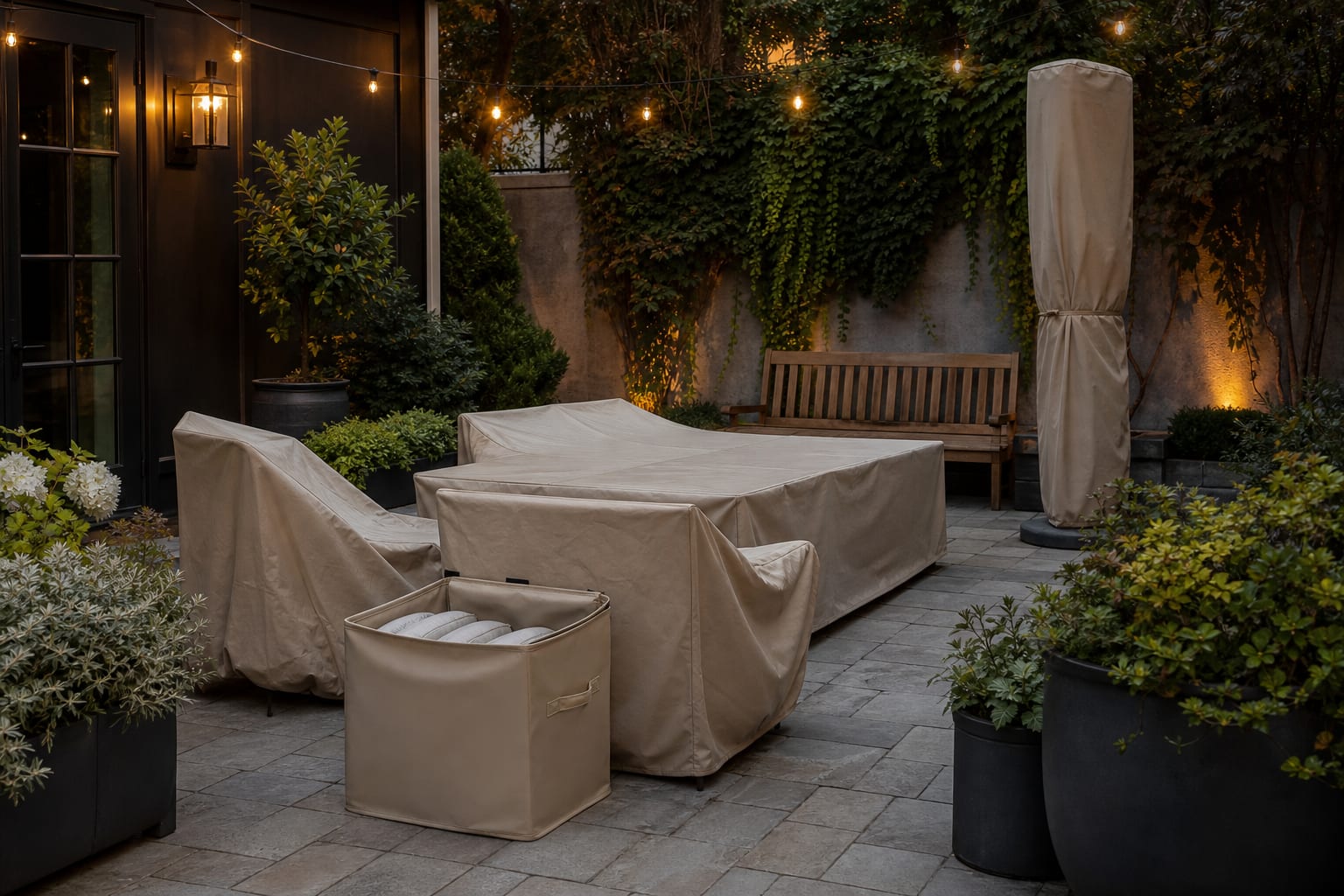
Design-check shorthand: depth before decoration, repetition before variety, maintenance before novelty.
Common winter storage mistakes that damage patio furniture
The biggest mistake is covering furniture while it's still damp — a cover blocks rain from above but can't remove moisture already in seams, screw holes, or wood grain. Dry first, cover second, and pick a cover with vents if furniture stays outside. A close second is using a plastic tarp as if thickness equals protection; tarps flap, abrade corners, sag into puddles, and seal in humidity, while a fitted cover with straps stays calmer in wind.
Storing cushions on a basement floor is a quiet failure, since concrete passes moisture into fabric even in a dry-looking room — raise bins a few inches and keep them away from drains and odor sources. Furniture feet take the worst abuse because they sit where water collects, so use risers or a dry base instead of letting legs sit on wet pavers all winter. Finally, don't turn the patio into a dead zone visible from the house; align stacks, keep covers taut, and leave one clear view to a planter or clean table shape.
Use AI design to preview your patio before you commit
AI design helps answer the visual question: where will everything sit without making the yard look neglected? Upload a straight-on photo and preview a few versions from the same angle — furniture against the house, chairs stacked under the roofline, cushions moved to a garage wall.
Ask for specific constraints: a 36-inch walkway from the door, a breathable cover over stacked chairs, cushion bins on shelving, and clear access to the grill or gate. The preview won't confirm whether a cover fits a specific chair model, but it will show whether the plan blocks circulation or buries the best view behind winter clutter.
Frequently Asked Questions
Can patio furniture stay outside in winter?
Powder-coated aluminum, teak, and HDPE poly furniture can stay outside year-round. Wicker, untreated wood, and steel-frame pieces need a breathable cover or indoor storage to avoid rust, splitting, or a ruined finish.
Do I need to bring umbrellas inside?
Yes. Even fully closed umbrellas trap moisture inside the canopy that freezes and tears the fabric over winter, so dry them fully in a garage and store flat or upright inside a sleeve.
How do I store outdoor cushions over winter?
Vacuum-seal them in flat storage bags, stack in a dry interior closet, and never compress damp cushions. Mildew can set in within 48 hours of trapped moisture in foam.
Are patio storage boxes really weatherproof?
HDPE deck boxes with rubber gaskets stay dry through normal winter weather. Resin and wicker-look boxes tend to leak at the seams within two winters, so don't trust them with textiles.
Should I leave the patio empty over winter?
No. Keep one weather-rated vignette — a planter with evergreen branches, a sculptural metal piece, or a winter-rated lantern — so the patio still reads as designed from the kitchen window.
> Try this: Ready to see this on your own outdoor space? Open ReDesign and run the preview before you buy materials, plant, drill, or move furniture.
Three transformations to try
1. Patio with winter cover and evergreen vignette 2. Deck with HDPE storage box and lantern 3. Patio cleared with seasonal planter group