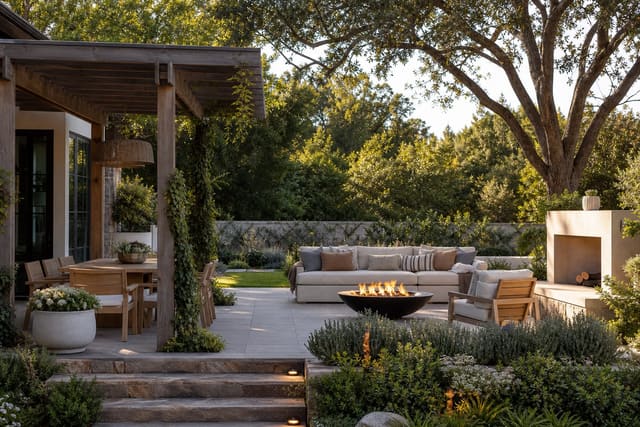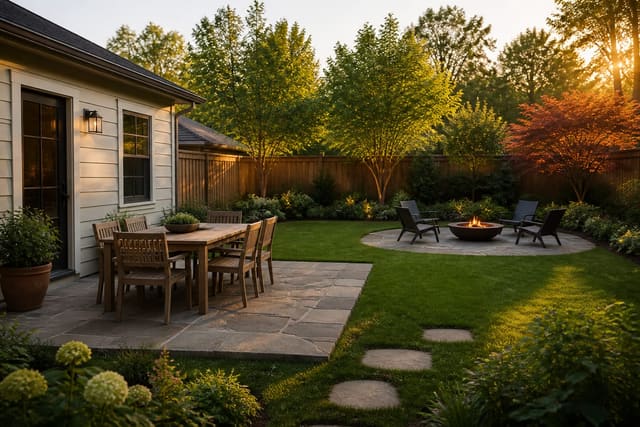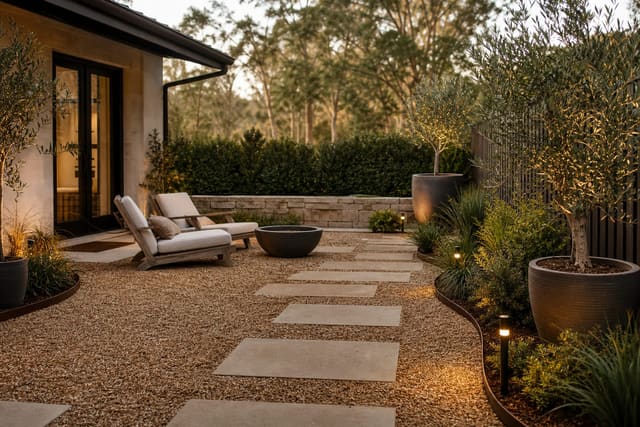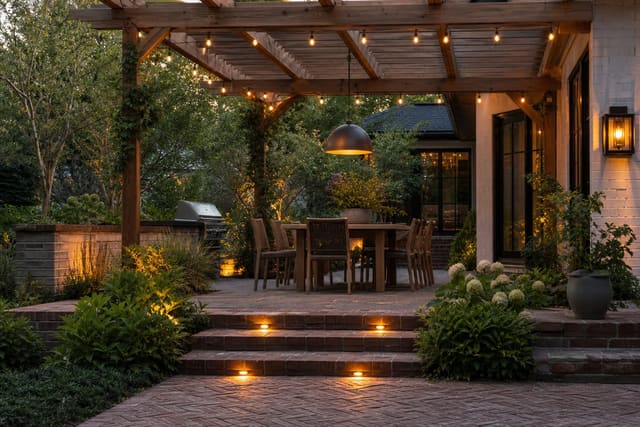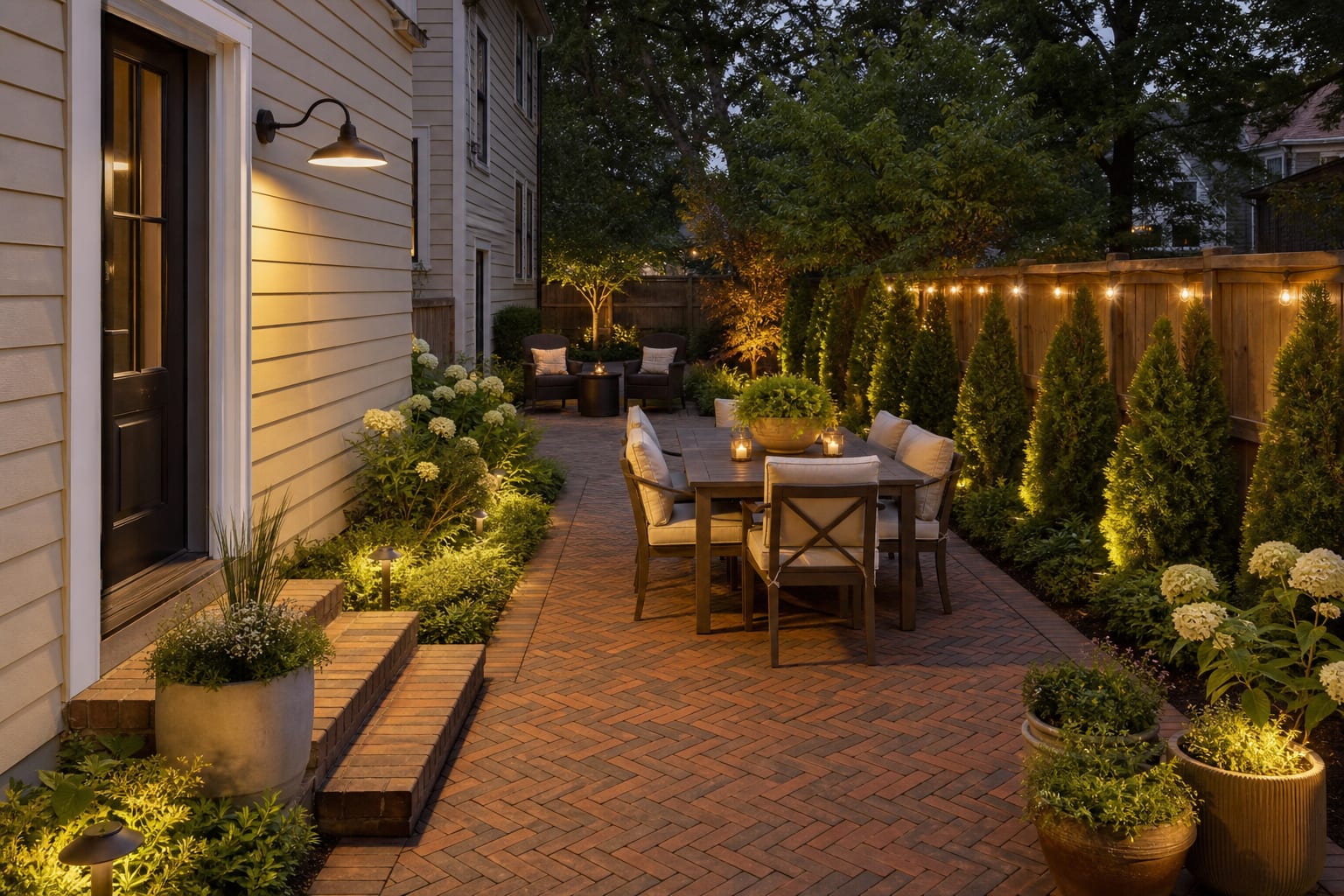
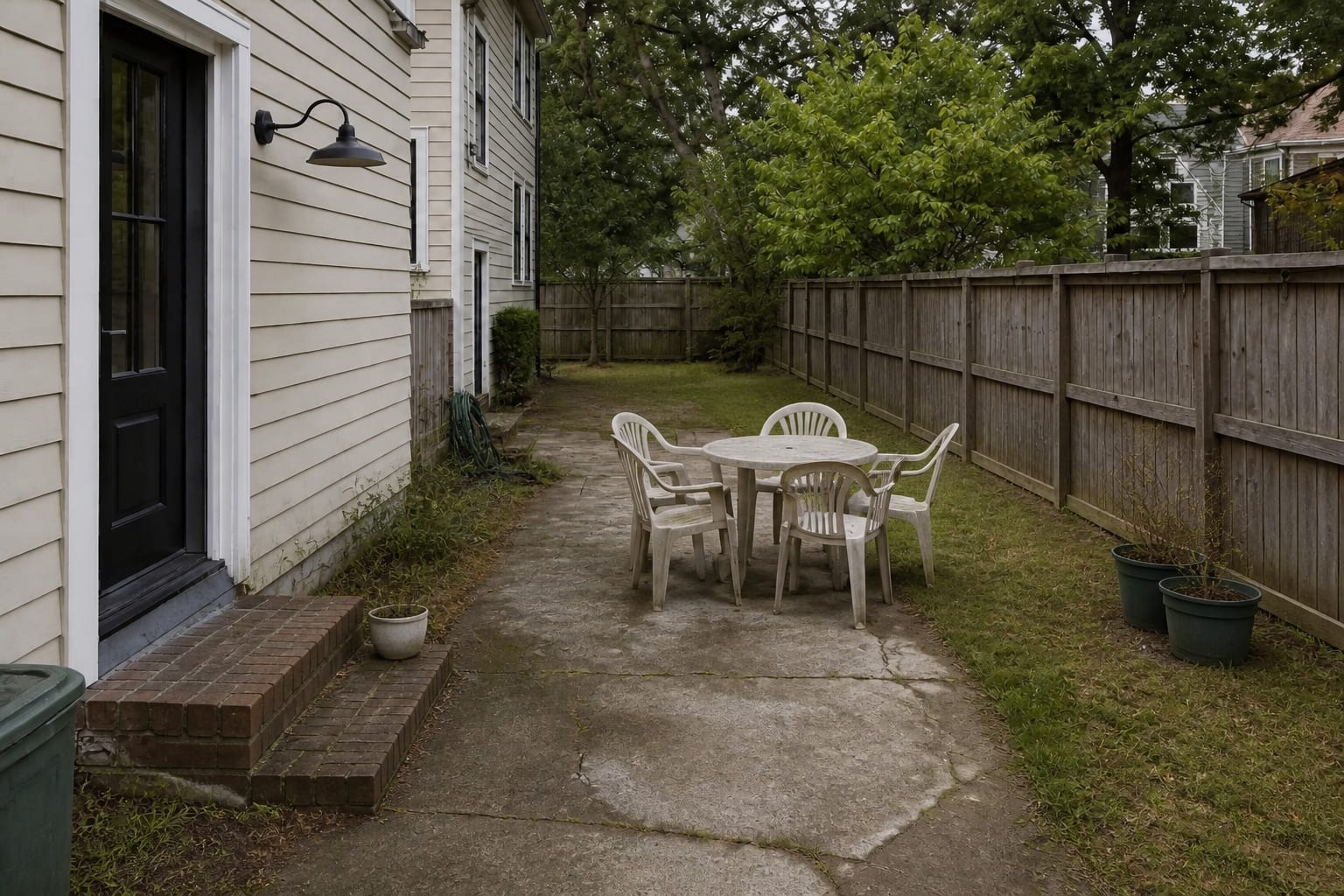
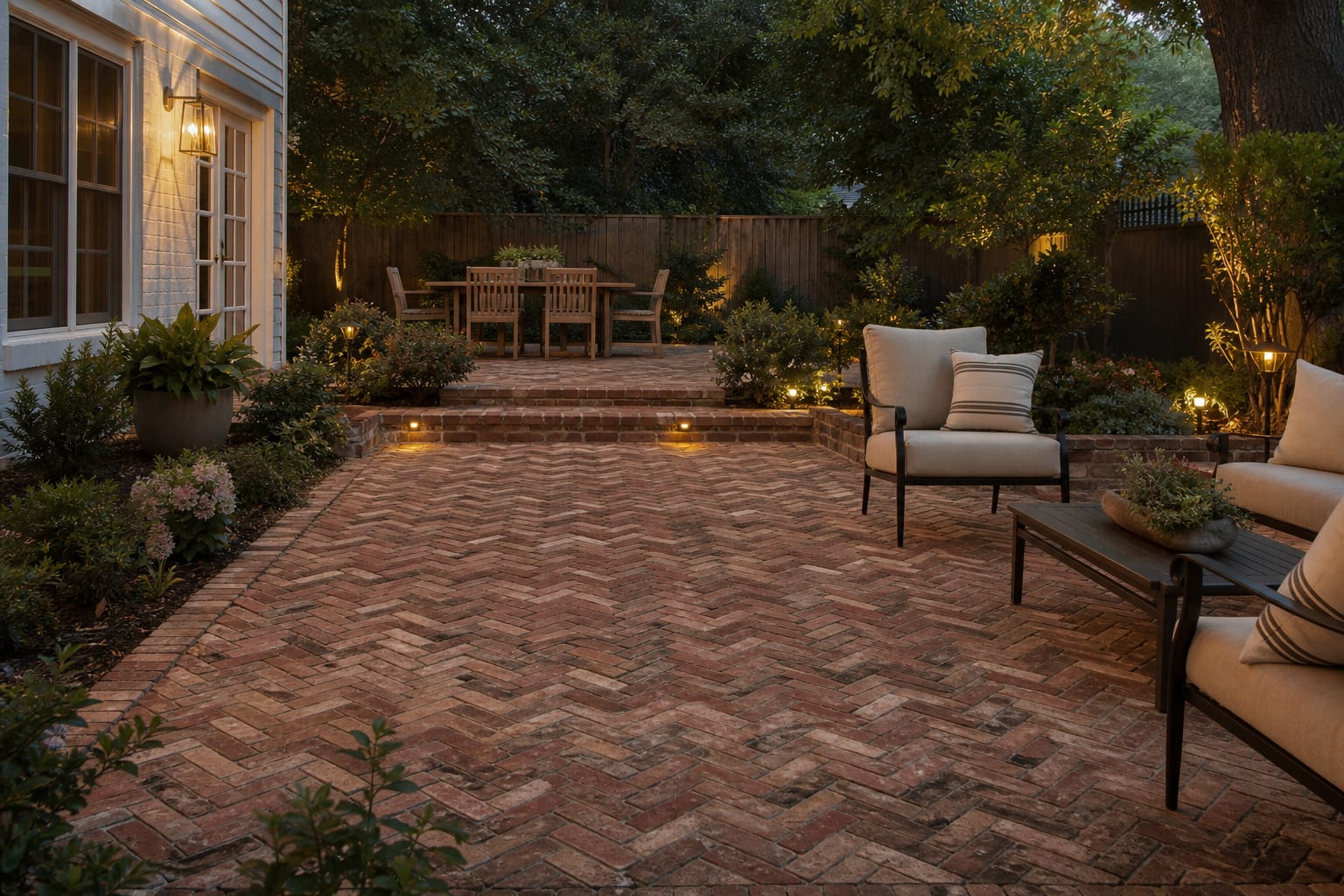
A brick patio ranks classic when 2.25in clay pavers are laid in herringbone or running bond over a 4-6in compacted base, edged with steel or a soldier course, and softened by a planted border. The difference between soulful and fake brick patio ideas is rarely the brick itself — it's whether the design ties to the house instead of dropping a red rectangle into the yard.
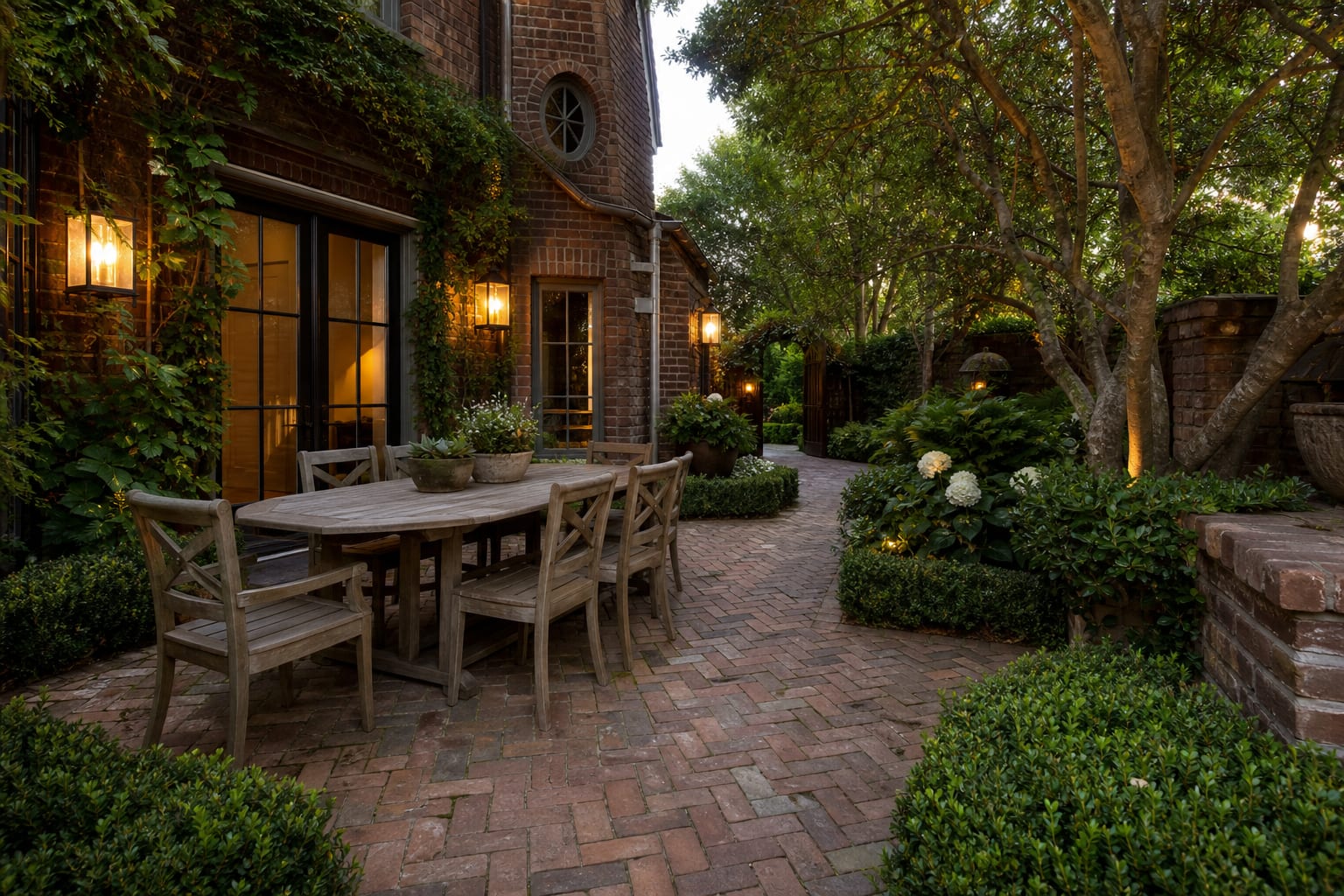
What makes a brick patio feel established instead of old-fashioned?
A brick patio feels established when the pattern, color range, border, and planting edges look native to the house's architecture. Older homes tolerate variation well, so a blend of red, russet, plum, buff, and soot-dark brick usually reads more convincing than one flat tomato-red paver. Keep the surface pitched away from the house at 1/8 to 1/4in per foot; don't let a pretty pattern distract from water movement.
Scale matters as much as patina. A bistro patio can work at 8x10 feet, but a real dining table for six wants at least 12x14 feet once chairs are pulled out. Leave 36in behind dining chairs for passage and 3 feet of working clearance beside a grill.
Herringbone is the most forgiving classic pattern because its interlocking zigzag hides small cuts and reads well under foot traffic. Running bond feels quieter and more cottage-like against clapboard or stucco. Basketweave suits a small garden court but can look busy on large rectangles.
Test this on your own photo with ReDesign before committing to a direction — keep the house edge, horizon line, hardscape, planting beds, and main path visible so the preview solves the space you actually have.
Which brick patio ideas suit older homes best?
The best ideas for older homes pair a calm field pattern with a deliberate border, softening planting, and furniture scaled to the real footprint. Brick already carries visual weight, so avoid piling on competing details.
- Herringbone field inside a soldier-course border gives a 10x16-foot rectangle movement while keeping cuts clean at lawn and bed edges.
- Reclaimed brick for a courtyard mood works when the house has age or textured masonry; expect joint and color variation, but the base still needs compaction and drainage.
- A low brick seat wall (18-20in high) can double as overflow seating if the patio has depth to spare beyond the 36in chair zone.
- A simple pergola helps a sun-baked patio; check pergola lighting ideas before wiring, since brick looks best under shielded 2700K-3000K light, not exposed glare.
- Planting pockets (12-24in beds) break up a large brick field better than switching patterns every few feet — thyme, boxwood, catmint, or ferns depending on sun.
- Outdoor cooking zones should stay practical; see outdoor kitchen pergola layouts to separate heat, smoke, dining, and circulation before the masonry is fixed.
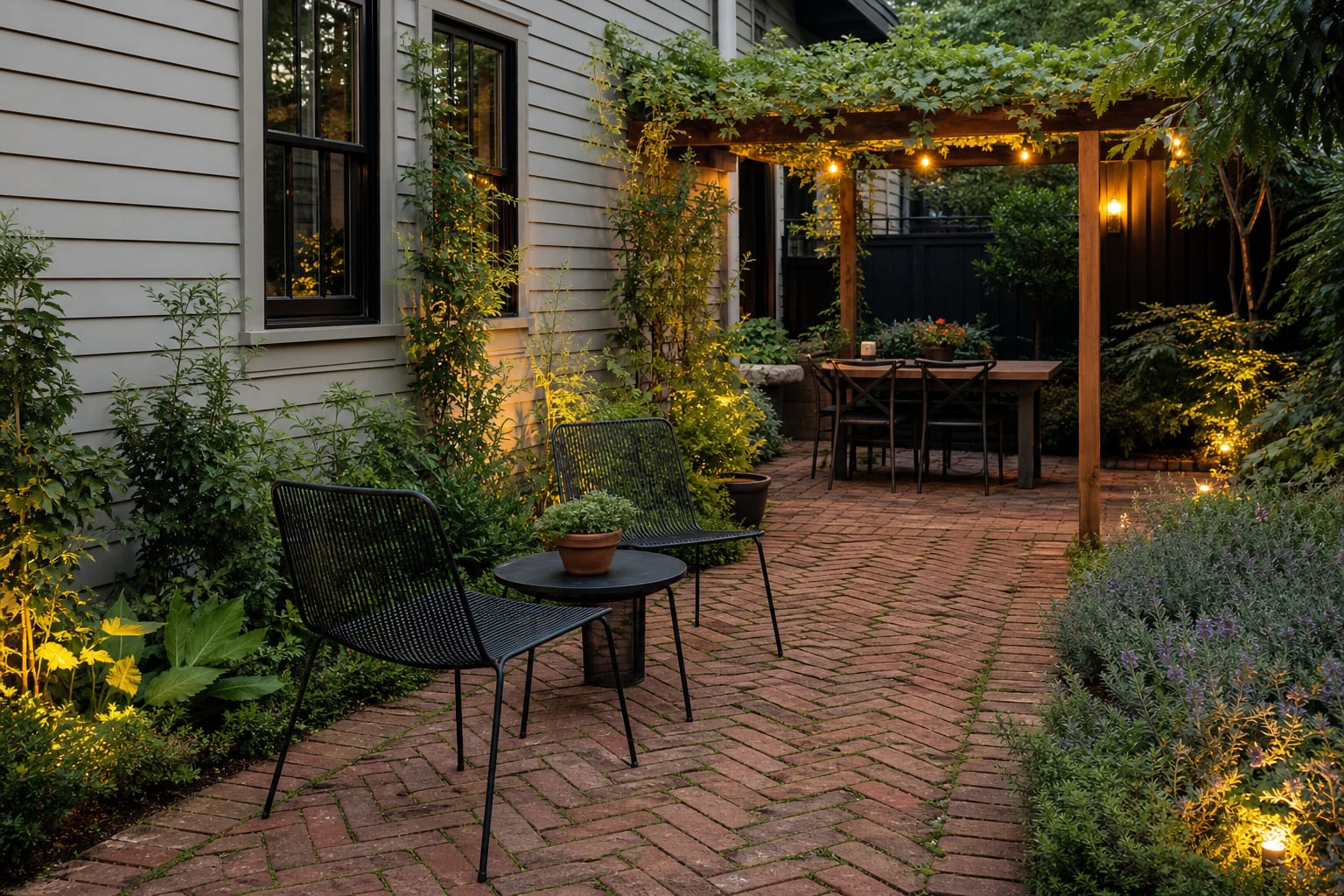
Crisp and new, or aged and worn — which direction fits?
The hardest call is whether the patio should look tailored or garden-worn. Mixing both halfway is where brick patios go flat. A crisp charcoal-edged herringbone wants disciplined furniture and clean planting masses; a reclaimed brick patio wants looser pots and softer joints.
| Choice | Best use | Watch the detail |
|---|---|---|
| New brick pavers | Clean patios near additions or formal dining areas | Blend colors; avoid one artificial red tone |
| Reclaimed brick patio | Older homes, garden courtyards, cottage yards | Confirm thickness and freeze-thaw suitability |
| Herringbone brick patio | High-traffic paths, dining patios, entry courts | Border the edge so small cut triangles don't crumble |
| Running bond | Narrow side yards, casual paths, small patios | Align the long direction with the desired view |
Color is the other trap — two almost-matching reds can clash more than a deliberate contrast. Bring samples home and view them in morning light, full sun, and shade. Near coastal grays or pale siding, a softer buff or rose-mix brick feels calmer; see coastal outdoor living ideas for a breezier direction.
Common brick patio mistakes
- Lazy base prep causes puddles, dips, and rocking furniture; excavate, compact aggregate, and set a proper bedding layer with edge restraint.
- Choosing the pattern before the furniture wastes a gorgeous centerline if the table lands on the border — tape the furniture footprint first.
- Skipping edge restraint lets brick creep outward under chair legs and freeze-thaw cycles; use metal, concrete, stone, or mortared brick edging.
- Using too many brick colors looks blotchy, not aged; keep one dominant tone with two or three supporting tones.
How can AI previewing help before you commit?
Small samples can't show how a pattern behaves across 150 or 300 square feet, so AI previewing fills that gap. Upload a straight-on photo of the yard or bare patch and test specific prompts: herringbone red clay brick with a soldier-course border, reclaimed brick with planted edges, or running-bond brick beside a painted white house.
Check whether the brick undertone fights the siding, whether the patio fits the table, and whether the border reads intentional. Include the house wall, door threshold, steps, fence, and mature trees in the photo, since brick depends on context more than a freestanding deck does. Once the direction feels right, confirm drainage, base depth, and freeze-thaw specs with a qualified installer.
Frequently Asked Questions
What pattern works best for a brick patio?
Herringbone interlocks under furniture and resists rotation, running bond reads quieter, and basketweave suits cottage gardens. Avoid stack bond outdoors, since its straight gridlines emphasize every bit of settlement.
What's the difference between clay pavers and concrete brick?
Clay pavers fire at 2000°F and keep their color for life while resisting freeze-thaw cycles. Concrete brick fades within 5 years and spalls in cold climates, making clay the more durable long-term choice.
Do brick patios need edging?
Yes. Steel or aluminum edge restraint, or a mortared soldier course, prevents lateral spread; without it, the brick field migrates outward 1-2in per year under traffic and frost movement.
How thick should the base be under brick?
Use 4in of compacted aggregate for sandy soils and 6in for clay soils, plus 1in of bedding sand. Deeper bases suit driveways and reduce frost heave in cold climates.
Are brick patios slippery?
Clay pavers offer better wet traction than smooth concrete or porcelain. The only real slip risk is moss buildup in deep shade, which an annual pressure-wash easily manages.
> Try this: Ready to see this on your own outdoor space? Open ReDesign and run the preview before you buy materials, plant, drill, or move furniture.
Three transformations to try
1. Brick herringbone dining patio