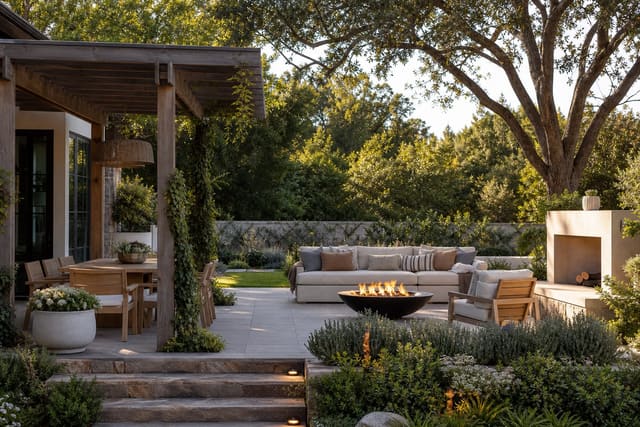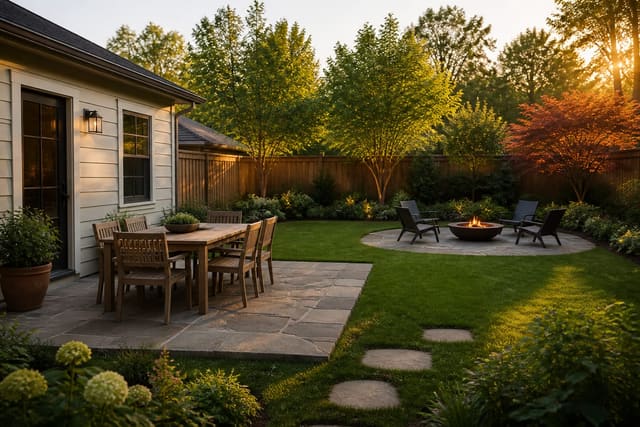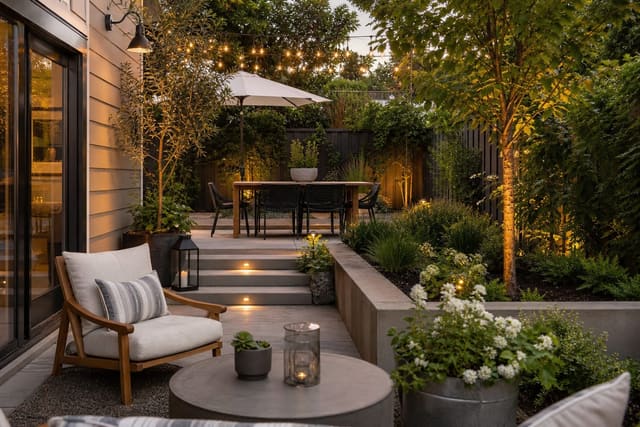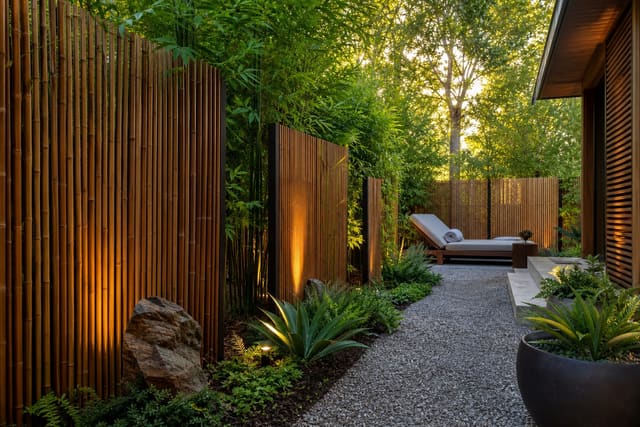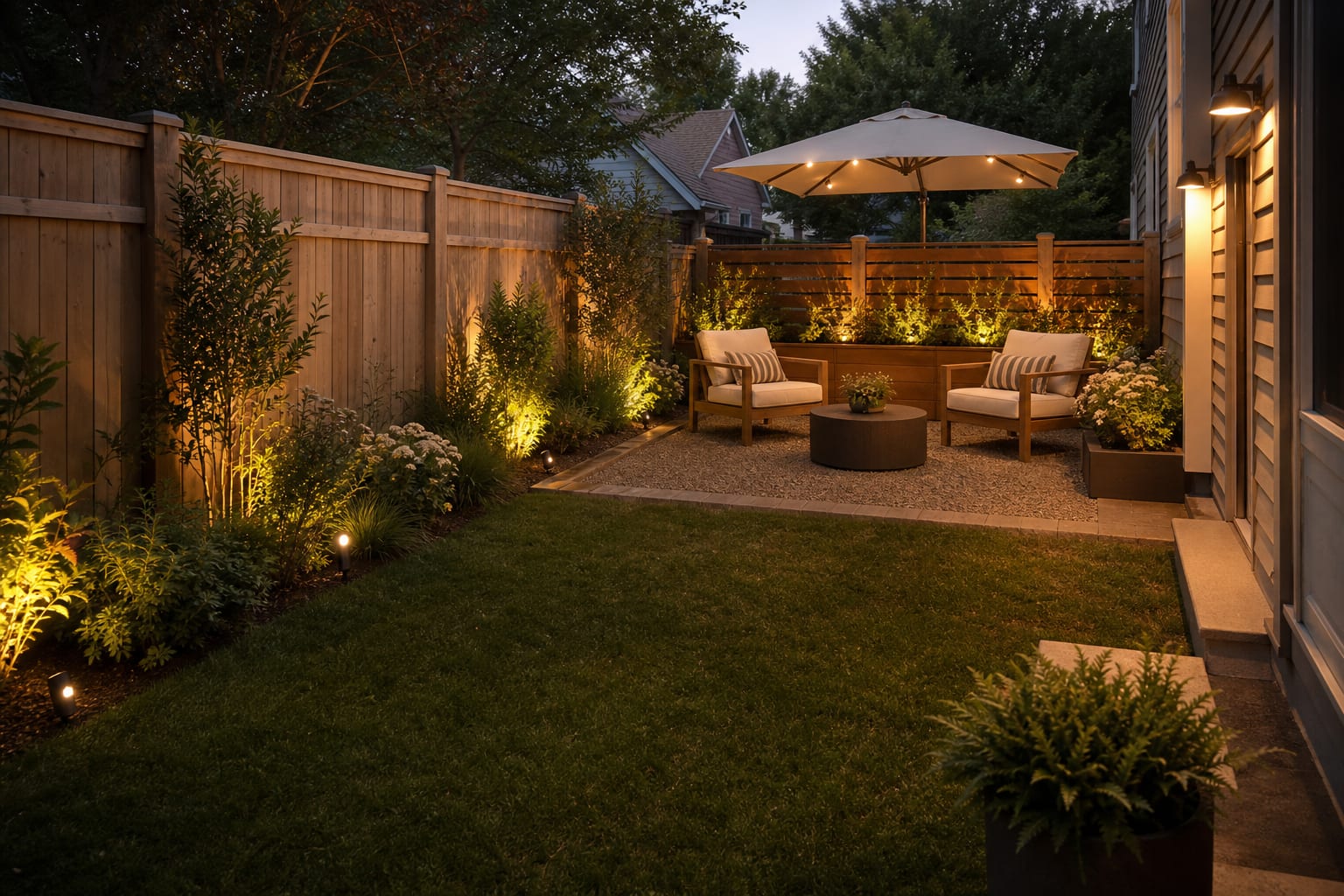
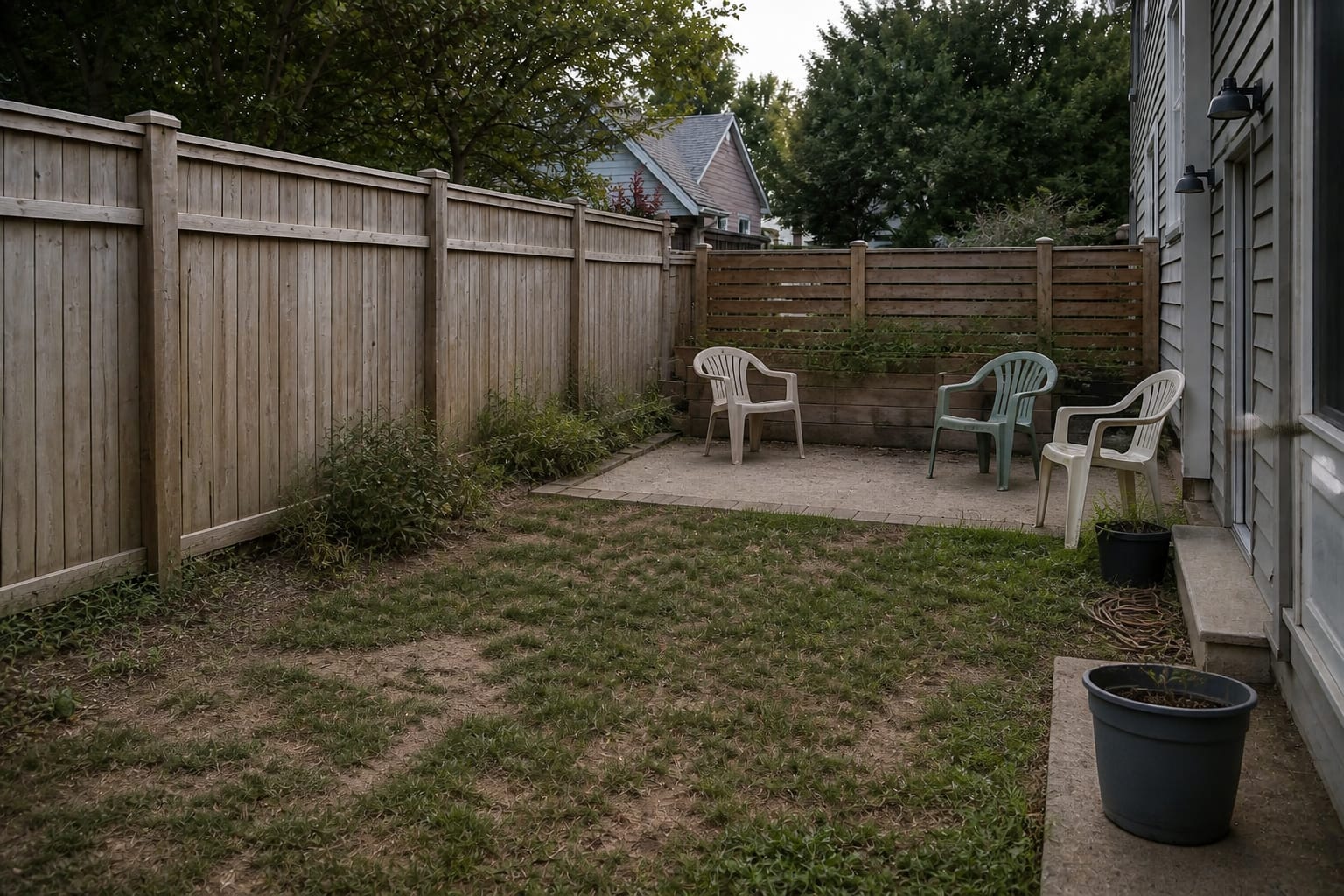
Improve a backyard on a budget by spending first on layout, shade, and lighting: a defined gravel seating pad, an umbrella or pergola, and warm string lights deliver the biggest visual gain per dollar. Furniture, planting, and water features come later. Design the space like a small outdoor room and buy fewer, better-scaled pieces rather than scattering money across novelty items.
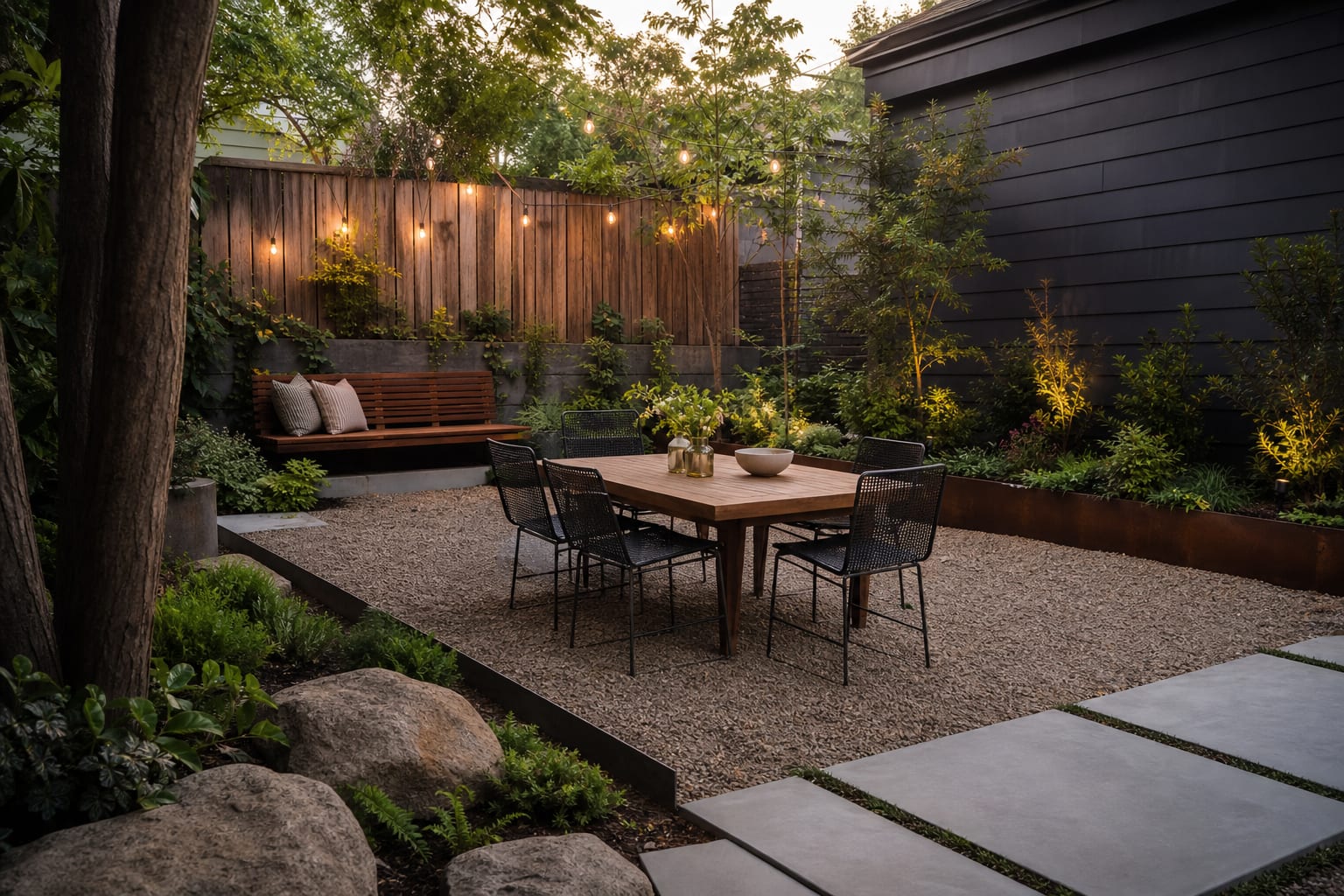
How do I improve my backyard on a tight budget?
Choose one main use for the yard, then make that single zone comfortable, shaded, lit, and easy to reach before touching anything else. A $1,000 budget rarely covers a new patio, fence, kitchen, and mature planting all at once, but it easily supports one strong 100 to 140 square foot destination.
Start with an 8 by 10, 10 by 10, or 10 by 12 foot footprint — enough for two lounge chairs and a small table, a four-person bistro set, or a bench with movable chairs. Leave at least 30 inches of walking clearance, and 36 inches anywhere someone carries food or a laundry basket.
Fix the ground plane before decorating around patchy grass. Define the zone with compacted decomposed granite, pea gravel held by edging, large pavers, or fresh mulch, installed 2 to 3 inches deep over a weed barrier with metal or stone edging keeping the shape crisp.
If only one upgrade is possible after the floor, make it shade. A 9 foot market umbrella, a properly rated shade sail, or a small pergola kit determines how long the space stays usable — a great chair sitting in full afternoon sun is just storage.
Which cheap backyard upgrades actually change how the yard works?
Upgrades that improve comfort, circulation, or boundaries earn their cost; purely decorative ones don't. Start with these five under $1,000:
- Build a gravel sitting pad instead of buying more furniture. Mark an 8 by 10 foot rectangle, remove weeds and soft soil, add edging, and spread 2 to 3 inches of pea gravel or decomposed granite.
- Create a privacy pocket behind the best seat. A 6 foot wide screen, three tall planters, or a narrow trellis blocks a neighbor's window without boxing in the yard; see bamboo privacy screen ideas for warmer options.
- Replace one weak seating group with two comfortable chairs and a table. Seats around 17-18 inches high with arms near 24 inches are easier to use than ultra-low lounge pieces.
- Add a simple dining edge near the house. A 30 by 48 inch table seats four but needs about 36 inches of clearance behind the main chair side; if that's impossible, use a bench against the wall instead.
- Put warm light where feet and faces need it. Two plug-in string light runs, a pair of shielded sconces, or path lights spaced 6 to 8 feet apart do more for mood than another round of plants; smart outdoor lighting ideas covers timers and dimming without rewiring.
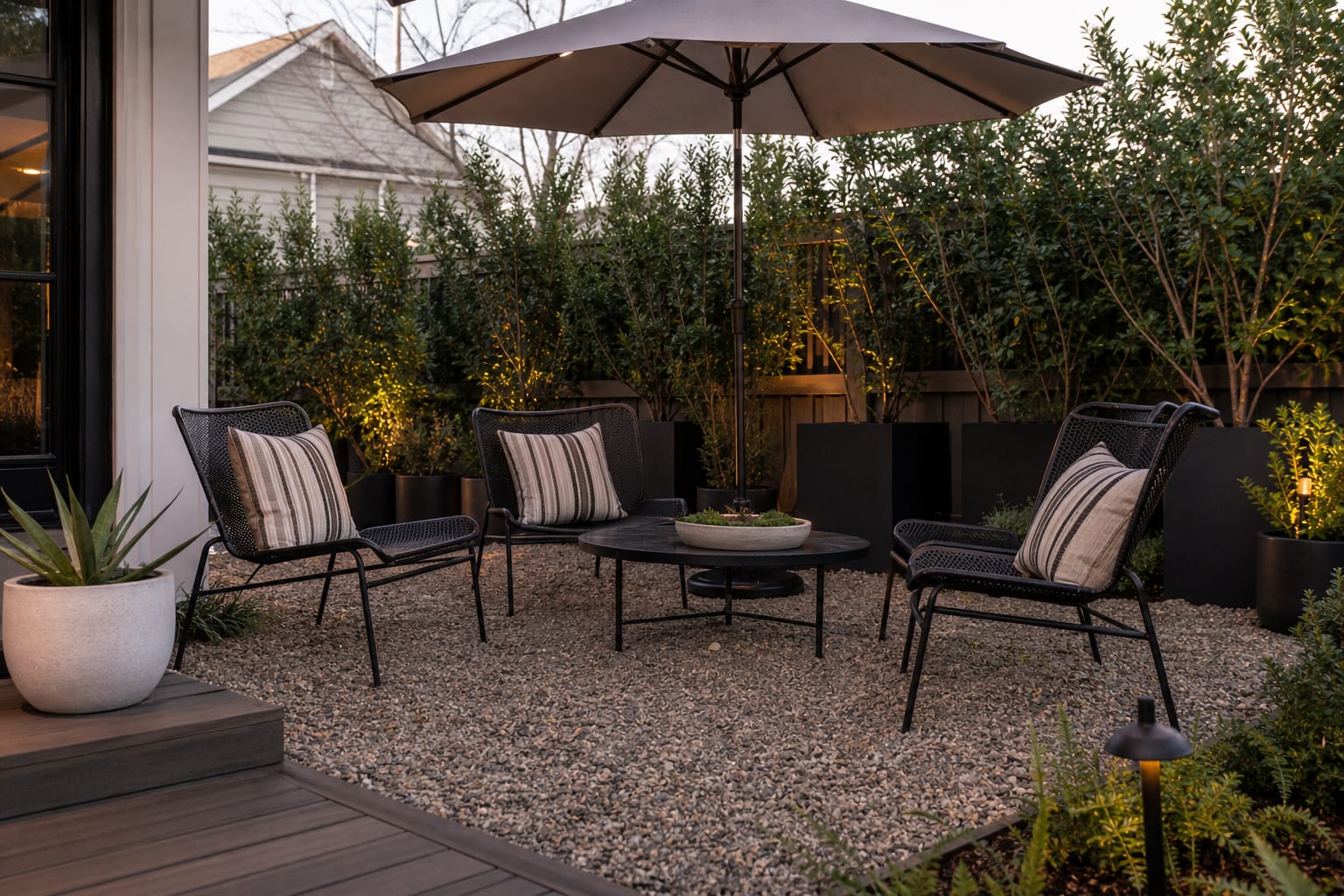
Test this on your own photo with ReDesign before committing — keep the house edge, horizon line, hardscape, planting beds, and main path visible so the preview solves the space you actually have.
What should you spend on, and where can you save?
Protect comfort and weather exposure first. Save on anything easy to swap later.
| Backyard choice | Spend here | Save here |
|---|---|---|
| Seating | Powder-coated metal, teak, cedar, or sturdy resin frames | Trendy cushions replaceable next season |
| Surface | Edging, base prep, pavers at doorways, drainage | Decorative gravel color if local stone is cheaper |
| Privacy | The 6-10 feet directly behind the sitting zone | Screening every fence line at once |
| Lighting | Outdoor-rated cords, shielded fixtures, timers, 2700K bulbs | Fragile novelty lights that can't handle weather |
| Planting | Fewer larger shrubs in 5 gallon containers | Dozens of tiny annuals lost from across the yard |
Fences drain budgets fast. If the fence is sound but ugly, stain or cover just the view behind the seating zone; if boards are failing or posts leaning, check cedar fence design ideas before deciding on a partial repair or full replacement.
Container soil volume can't be faked — use pots at least 16-20 inches wide, and go bigger in hot climates where small pots dry out fast. Three matching large containers beat nine tiny ones; repetition reads calmer and needs less watering.
Common budget backyard mistakes to avoid
- Buying a full furniture set before measuring. A sofa, two chairs, and a coffee table often need a 10 by 12 foot rectangle once people sit down — tape the layout on the ground first.
- Treating mulch as design by itself. Pair fresh mulch with a defined edge, plants in three heights, and one clear seating destination.
- Using bright white light outdoors. Cool bulbs make small yards feel like parking lots; stick to warm 2700K, shielded and aimed down toward paths and tables.
- Spreading the budget evenly across the whole yard. A thin improvement everywhere reads as no improvement anywhere — finish one 100 square foot zone first.
- Ignoring water flow. Slope hard surfaces away from the house, keep soil off siding and fence boards, and leave drains, hose bibs, and gates accessible.
Use AI design to check the budget plan before you commit
AI design earns its keep by testing proportion before money leaves your account. Upload a straight photo from the back door, then preview the yard with a gravel pad, umbrella, planter screen, compact dining set, and warm lighting — the goal is catching a too-deep chair or a screen that boxes in the space, not generating a fantasy image.
Shoot from chest height, include the fence corners, and clear clutter from the frame. Renters should test removable choices first — freestanding screens, plug-in lighting, folding furniture, planters on saucers — while owners can compare permanent steps like a new gate or paver landing using the same preview.
Reject any version that hides the walkway behind plants or fills the frame with oversized furniture. Good affordable backyard design leaves room for people to move, doors to swing, and plants to grow into the plan.
Frequently Asked Questions
What's the cheapest way to make a backyard look designed?
Define a seating zone with a gravel pad and steel edge, add shade with an umbrella or pergola, and run one line of warm string lights. That combination costs under $500 and reads as a finished outdoor room.
Should I spend on furniture or planting first?
Furniture first. Empty patios stay unused even with great planting, and a basic outdoor sofa or bench with cushions earns its cost back in daily hours of use.
What's the highest-impact budget upgrade?
A gravel seating pad with a built-in timber bench and overhead string lights. Under $800 in materials and one weekend of labor deliver a transformation comparable to a $5,000 patio.
Can mulch alone fix a tired-looking yard?
Mulch refresh plus crisp edge-cutting on every bed gives about a 50% visual upgrade for under $200 in materials, making existing planting read intentional instead of neglected.
Are big-box outdoor furniture sets worth it?
The frames typically last 3-5 seasons. Spend on cushions and plan to replace frames later, or buy secondhand teak or aluminum and refinish it yourself for better longevity.
> Try this: Ready to see this on your own outdoor space? Open ReDesign and run the preview before you buy materials, plant, drill, or move furniture.
Three transformations to try
1. Gravel seating pad with timber bench 2. Umbrella shade with string lights 3. Budget planter screen with mulch refresh