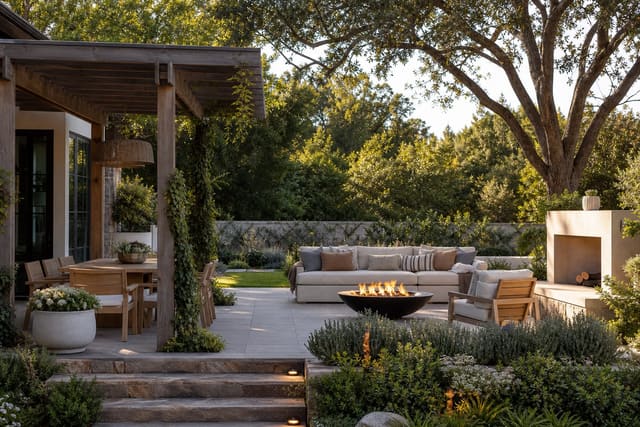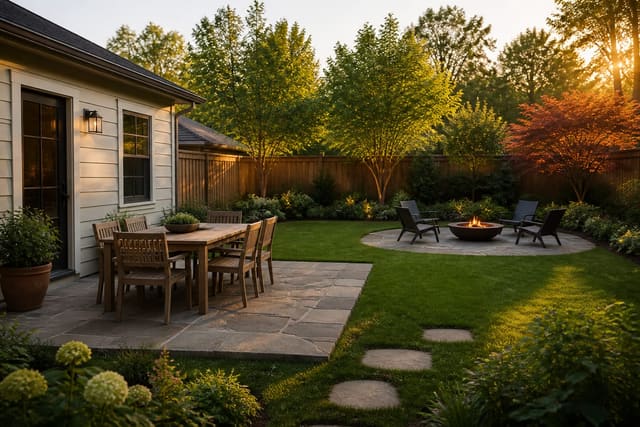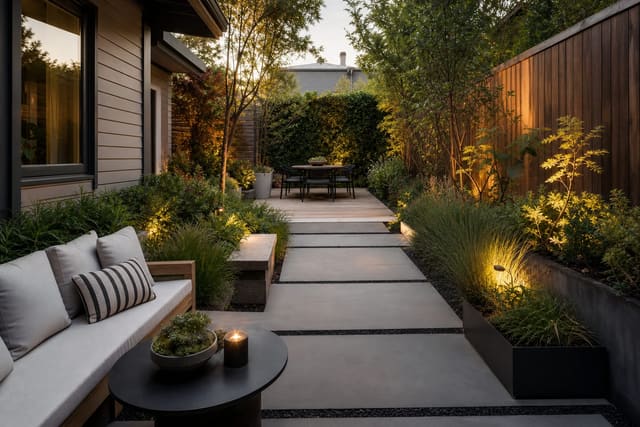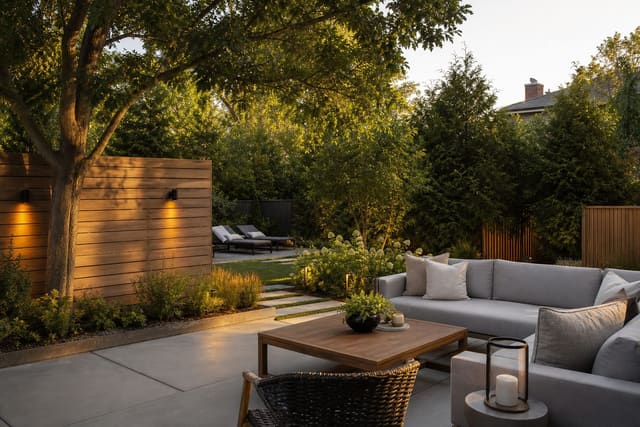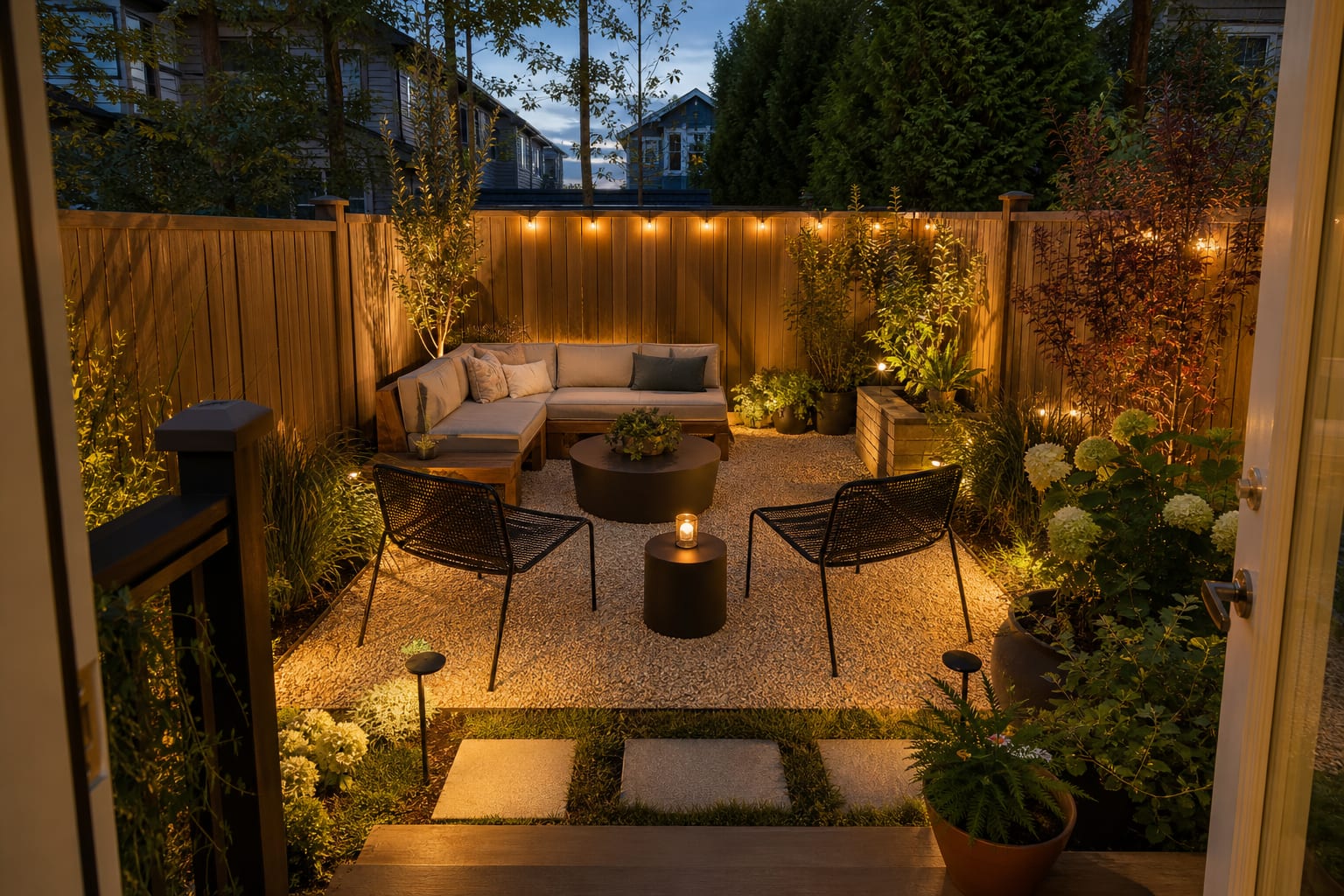
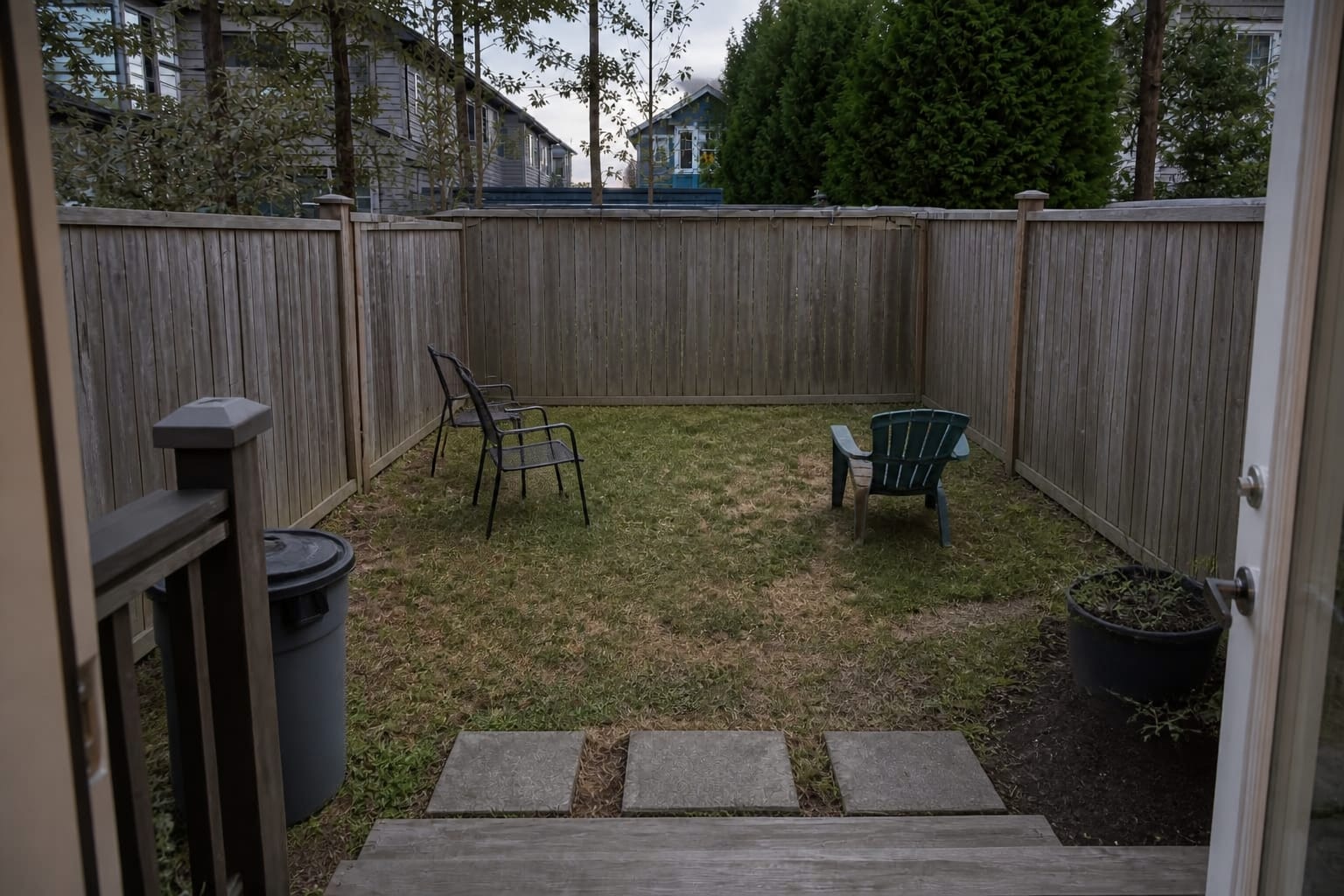
A small backyard feels generous when one seating zone anchors it, the floor is paved or graveled instead of half-lawn, planting climbs the fences instead of spreading flat, and a single lighting layer implies a ceiling overhead. Stop trying to cram a patio, lawn, dining area, fire pit, and garden into one rectangle — choose one primary use, size everything honestly, and layer the edges.
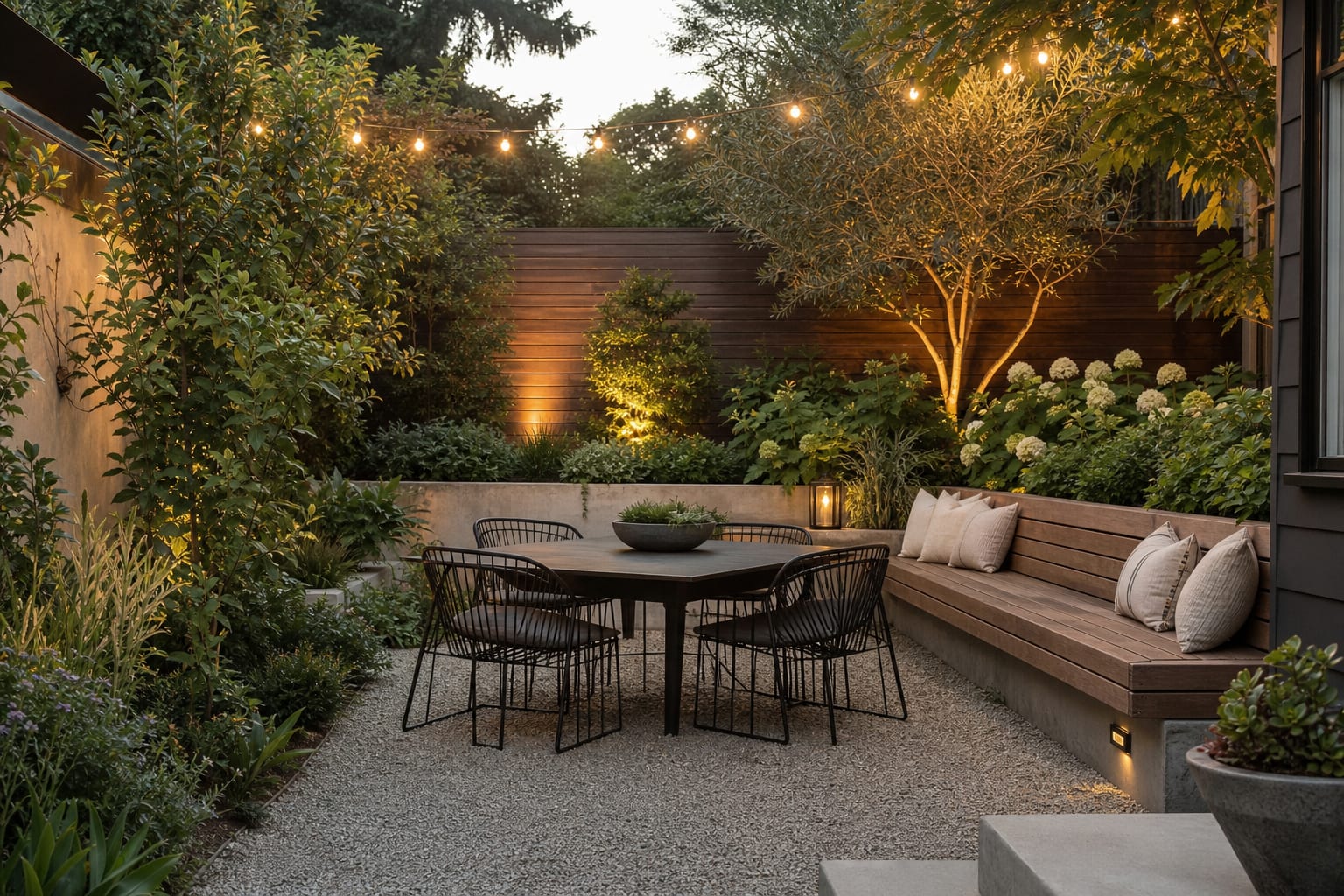
What makes a small backyard feel like an outdoor room?
A small backyard reads as a room when the floor, edges, ceiling, and focal point are all handled deliberately. The ground plane — gravel, pavers, decking, turf, or decomposed granite — needs a clear shape. A defined 9 by 12 foot rectangle furnishes more easily than a vague blob of mulch and stepping stones.
Start with the floor because it tells furniture where to land. Allow about 36 inches behind dining chairs so people can pull out without stepping into a bed. Keep a coffee table 14-18 inches from a sofa or chairs, just as indoors. If the back door opens straight into the yard, reserve a 42 inch landing zone before the first chair or planter.
The edges should hide what's ugly and frame what's useful. A fence only 8 feet from your face shouldn't be treated as background — add a 24-30 inch planting bed, a narrow bench, or a trellis panel for depth. If privacy is the real problem, see backyard privacy landscaping ideas and solve the worst sightline from the seat first, not the whole property line.
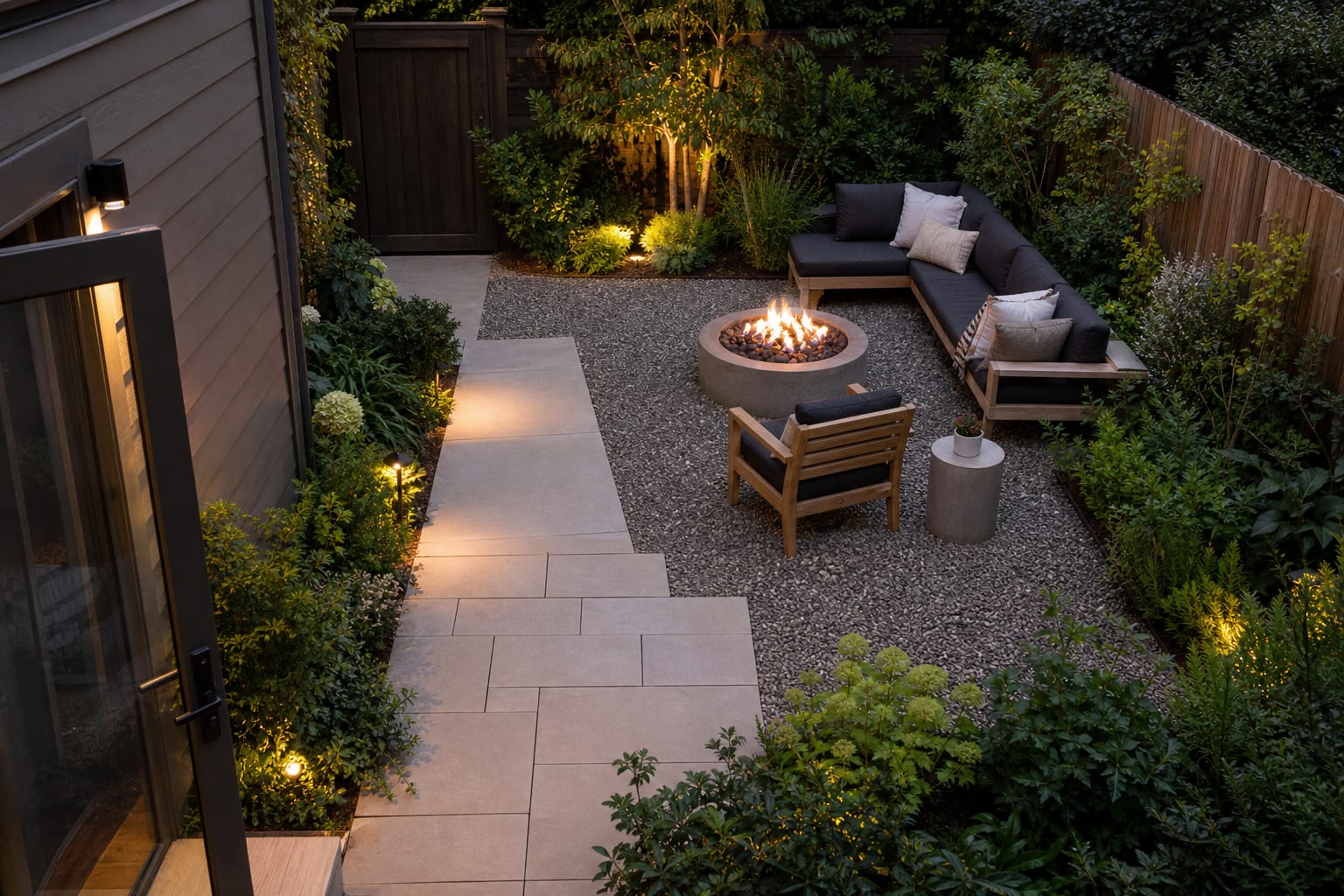
Test this on your own photo with ReDesign before choosing a final direction; keep the house edge, horizon line, hardscape, beds, and main path visible so the preview solves the space you actually have.
Which small backyard ideas earn their footprint?
The best moves perform more than one job: a bench stores cushions and defines the edge, a planter screens the neighbor and softens the fence, a pergola makes shade and anchors the lounge.
| Small-yard move | Works better than | Spec to copy |
|---|---|---|
| Built-in bench along a fence | Four loose chairs in a corner | Seat depth 18-22 inches, leave 30 inches for knees |
| Gravel or large-format pavers | Thin strips of struggling lawn | 10 by 12 foot pad fits two chairs, a loveseat, small table |
| Tall narrow planters | A hedge that swallows the yard | 18-24 inch deep planters, drainage, repeated in a run |
| Wall-mounted lighting | Floor lamps or lantern clutter | Mount sconces 60-66 inches above finished paving |
- Build a bench where a hard edge already exists. An 18 inch seat height feels familiar; add a 3 inch outdoor cushion for long dinners.
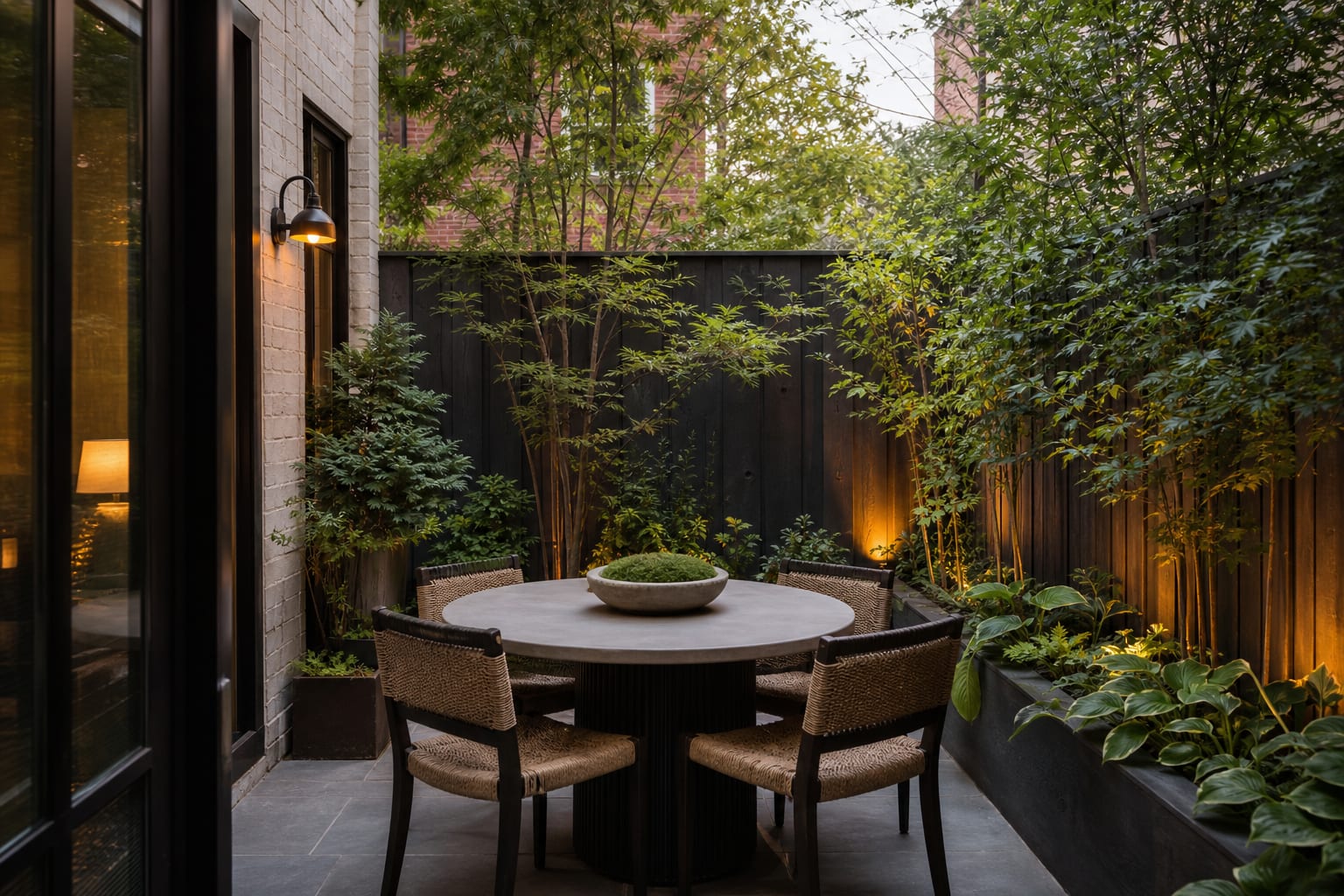
- Use a round table in tight circulation. A 36-42 inch round table seats two to four with no sharp corners near a busy back door.
- Match the surface to the light. Grass rarely thrives in heavy shade or pet traffic; compare gravel, pavers, and artificial grass ideas for small yards for heat, drainage, and upkeep differences.
- Layer planting even in narrow beds. A 12 inch groundcover band, a 24 inch shrub band, and one small ornamental tree push the fence visually farther away.
- Light at human height. Shielded path lights every 8-12 feet plus warm 2700K lamps make the ground safer and planting more dimensional than string lights alone.
- Treat shade as architecture. A 7-8 foot umbrella, narrow pergola, or sail shade with head clearance makes noon usable, especially against west sun.
Common small backyard mistakes to avoid
- Full-size patio furniture. Deep sofas run 36-40 inches front to back — choose apartment-scale lounge chairs or a built-in bench when the yard is under 18 feet deep.
- A token lawn. A struggling 6 foot grass strip isn't a play yard or garden; replace it with a defined pad, a dog-friendly surface, or shade-appropriate planting.
- Pots lined against the fence. Pull a few 12-18 inches forward and vary heights from 10 to 30 inches so one tree or trellis creates foreground depth.
- No storage. Cushions, tools, and toys need a sealed bench or slim deck box; for work storage, see backyard office shed ideas before sacrificing the only lounge corner.
- Too many small materials. Tiny pavers, pots, lights, and furniture together create visual static — one larger paving field and fewer repeated pieces feel calmer.
Use AI design to preview your small backyard before you commit
Upload a photo from the exact doorway, chair, or window that controls your daily view. Test one version as a dining courtyard, one as a lounge, one as a planted retreat, keeping the camera angle consistent so you can judge whether a 42 inch table blocks the path or the bench feels too heavy.
Don't ask AI to pick final plant species — climate, soil, and irrigation matter too much for that. Use it to compare massing instead: gravel versus pavers, bench versus chairs, umbrella versus pergola. Once the concept works, translate it into materials suited to your region and maintenance tolerance.
A good preview makes one thing obvious: the yard can't be everything. Copy the strongest version's structure, repeat the edge treatment, simplify materials, and buy only what fits the measured plan.
Frequently Asked Questions
Should a small backyard have grass?
Usually no. Small lawns require disproportionate mowing equipment for the area they return, and the visual gain rarely beats a paved or graveled patio with planted edges.
How do I make a small backyard feel bigger?
Borrow views past the fence with low planting at the back, lay paving in larger formats with slim joints to read as fewer pieces, and run lighting overhead to imply a ceiling without enclosing the sky.
What seating works in a small backyard?
A built-in bench against the longest wall paired with a small bistro or coffee table. Built-in seating delivers more pullback than a stand-alone sofa-and-chair set, and the storage underneath earns its footprint.
How do I plant a small backyard?
Go vertical: climbers and tall narrow shrubs on fences, layered planting against the longest wall, and one focal anchor like a small tree or sculptural plant at the back. Flat, ground-level planting reads as wasted floor space.
Where should a small backyard's focal point go?
Two-thirds of the way back from the patio door, off-center to break symmetry. A wall sconce, planted urn, or sculptural shrub all qualify; centered or front-placed focal points collapse the yard's sense of depth.
> Try this: Ready to see this on your own outdoor space? Open ReDesign and run the preview before you buy materials, plant, drill, or move furniture.
Three transformations to try
1. Small backyard with built-in bench and climbers 2. Compact paved courtyard with string lights 3. Small backyard with focal planted urn