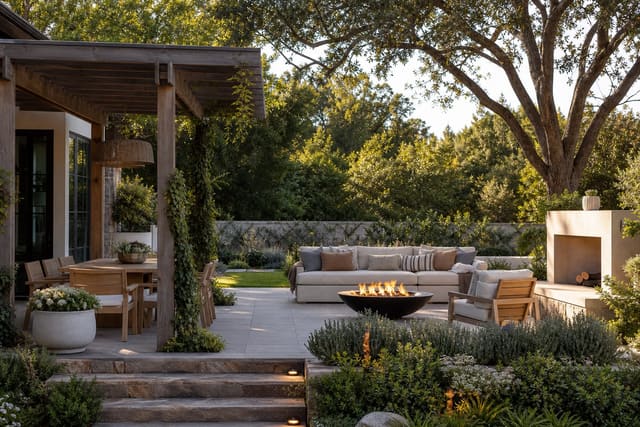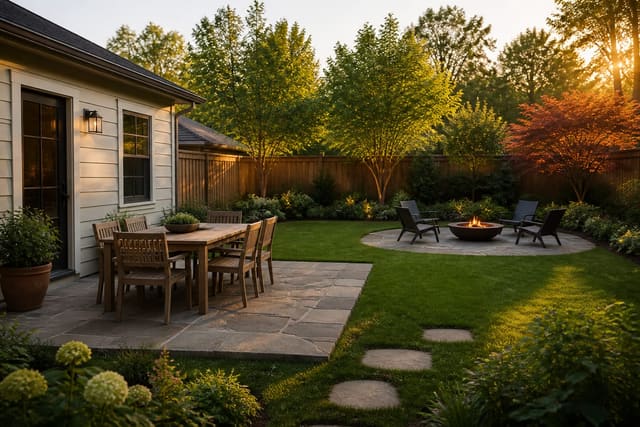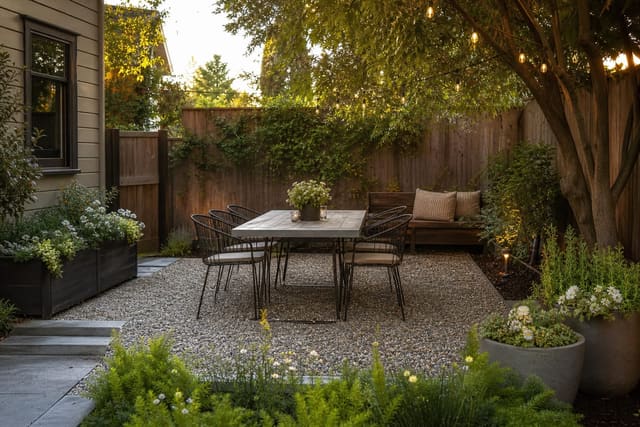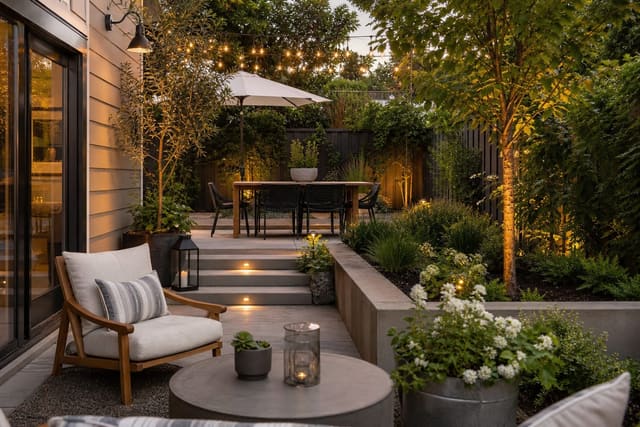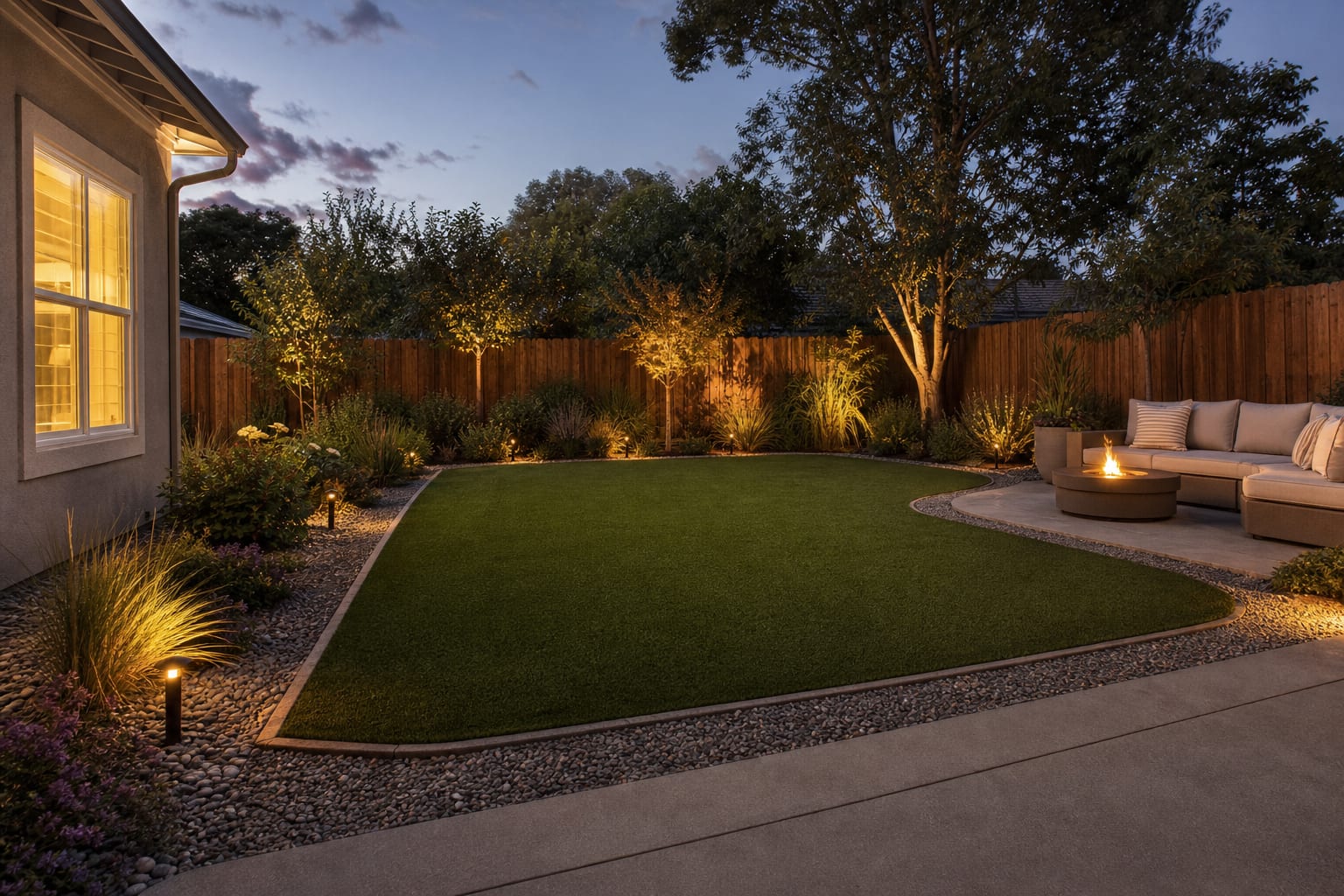
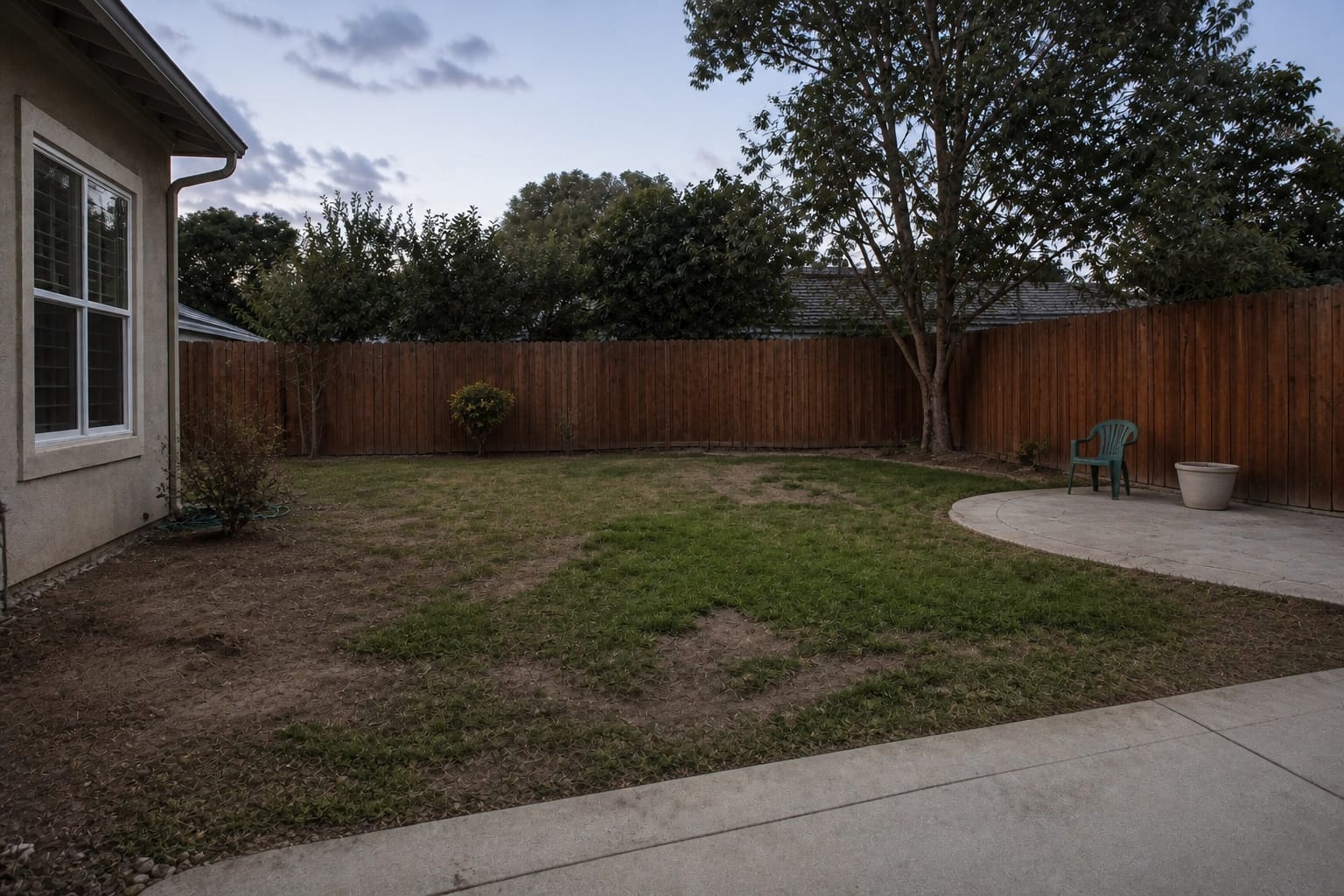
Artificial grass ideas work best when synthetic turf replaces real lawn in spots where grass genuinely can't survive - heavy traffic, deep shade, drought, or rooftops - and it's installed like hardscape: proper base, drainage, edging, and shade, not just rolled onto dirt.
Where does synthetic turf actually belong?
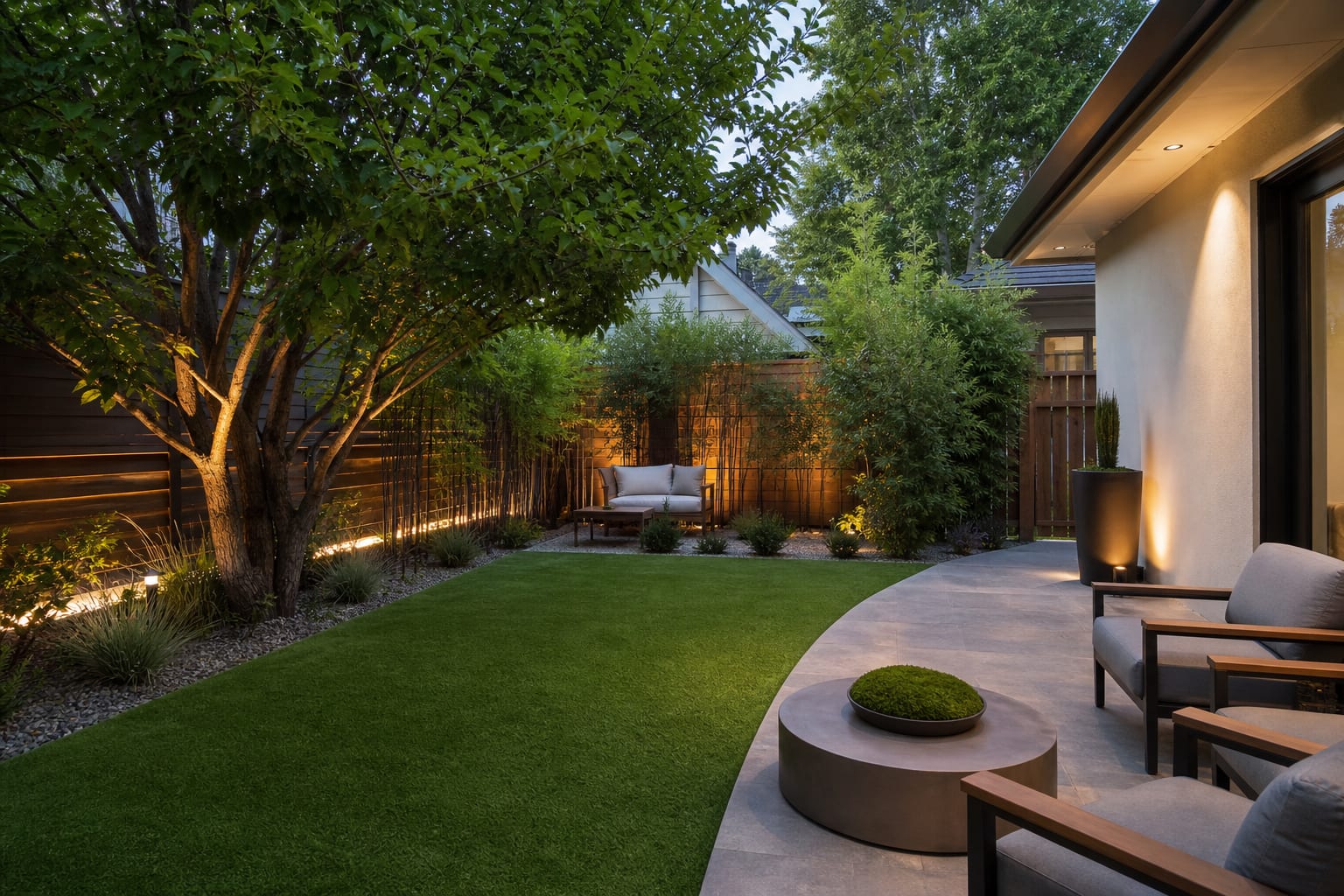
Turf belongs where living grass keeps failing for a specific reason, not where the yard just needs better soil or patience. Strong uses include compact backyards, side yards, dog relief zones, shaded play areas, roof terraces with proper engineering, and small lawns beside pools where mud is a constant problem. If you're weighing small backyard design ideas, turf can be one working surface among several rather than the whole plan.
The worst use is the blank green rectangle stretching fence to fence, which removes the texture that grounds a space: planting, shadow, gravel, wood, and seasonal change. If the yard is larger than about 400 square feet, shape the turf into a purposeful zone and spend the rest on beds, trees, or a patio.
| Turf use | Best fit | Spec to copy | Watch out |
|---|---|---|---|
| Kids' play lawn | Small flat backyard | 10 x 12 ft minimum patch | Needs shade and soft edges |
| Dog run | Side yard or fenced strip | Hose bib nearby, permeable base | Odor if base drains poorly |
| Pool edge | Mud control near loungers | Pavers/stone coping between pool and turf | Heat underfoot |
| Putting green | Hobby zone | Short pile, separate cup layout | Odd as the only lawn |
| Roof terrace | Urban outdoor room | Engineer-approved load and drainage | Wind lift at loose edges |
What specs separate good turf from plastic carpet?
Pile height sets the mood: 1 1/4-1 3/4 inches is the safe range for a general backyard. Shorter turf can look like sports matting; very long turf flattens and traps debris around chair legs. For pets, pick shorter, denser turf with strong drainage rather than the plushest sample in the store.
Face weight and backing control density - many premium residential products sit around 60-80 ounces - but still bend the sample and check for visible backing, since a grid you can see through will show once sunlight hits it. Infill (silica sand, coated sand, or pet-specific blends, roughly 1-2 lbs per square foot) helps blades stand upright; ask how it handles pets and heat before choosing the cheapest option.
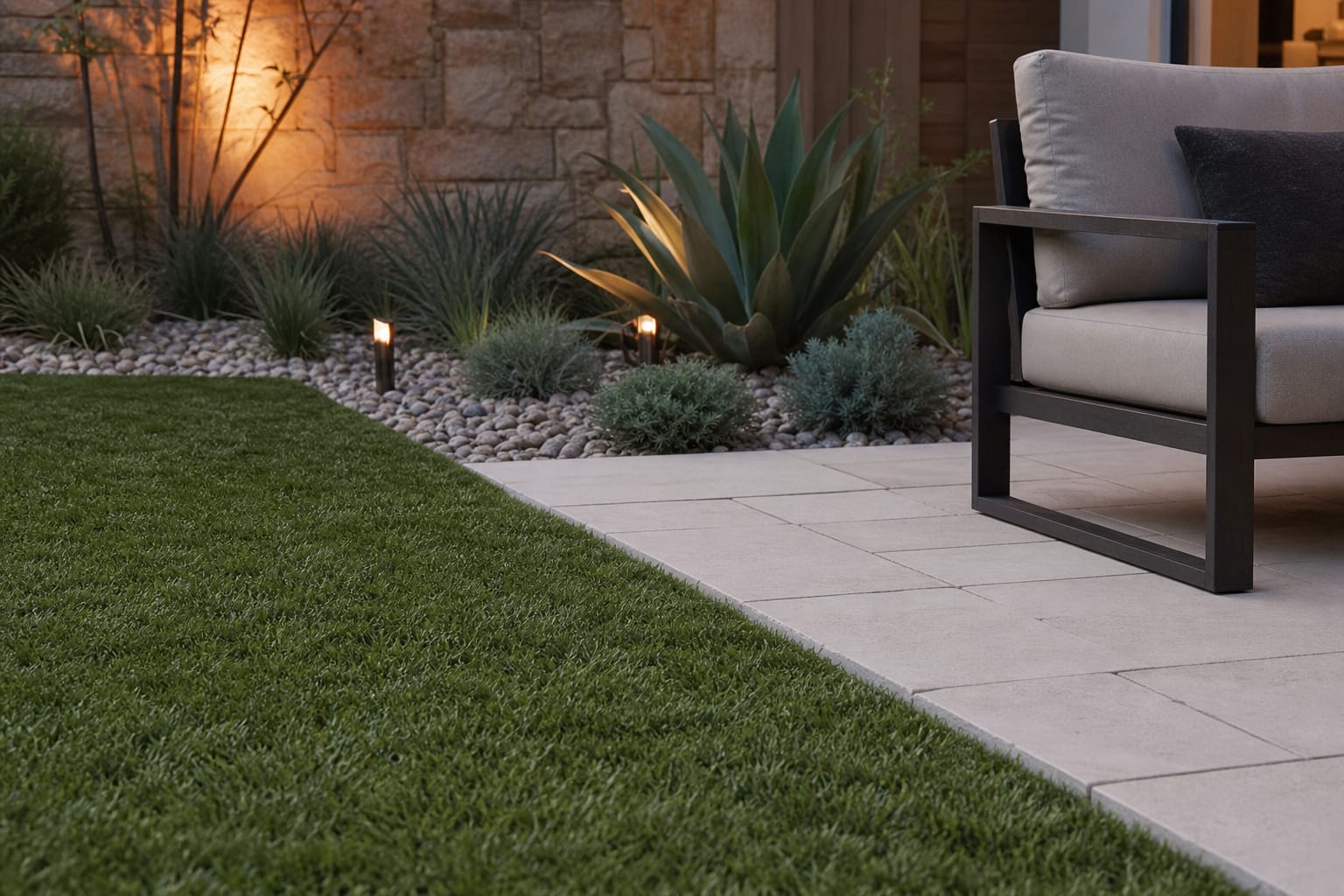
The base is where installations fail most often. Excavate for turf, base, and finish height, add 3-4 inches of compacted crushed rock, and keep the finished turf slightly below adjacent pavers so water and debris don't collect at the seam. Leave at least 30-36 inches of clear walking path around seating so turf doesn't become a narrow green strip nobody can use.
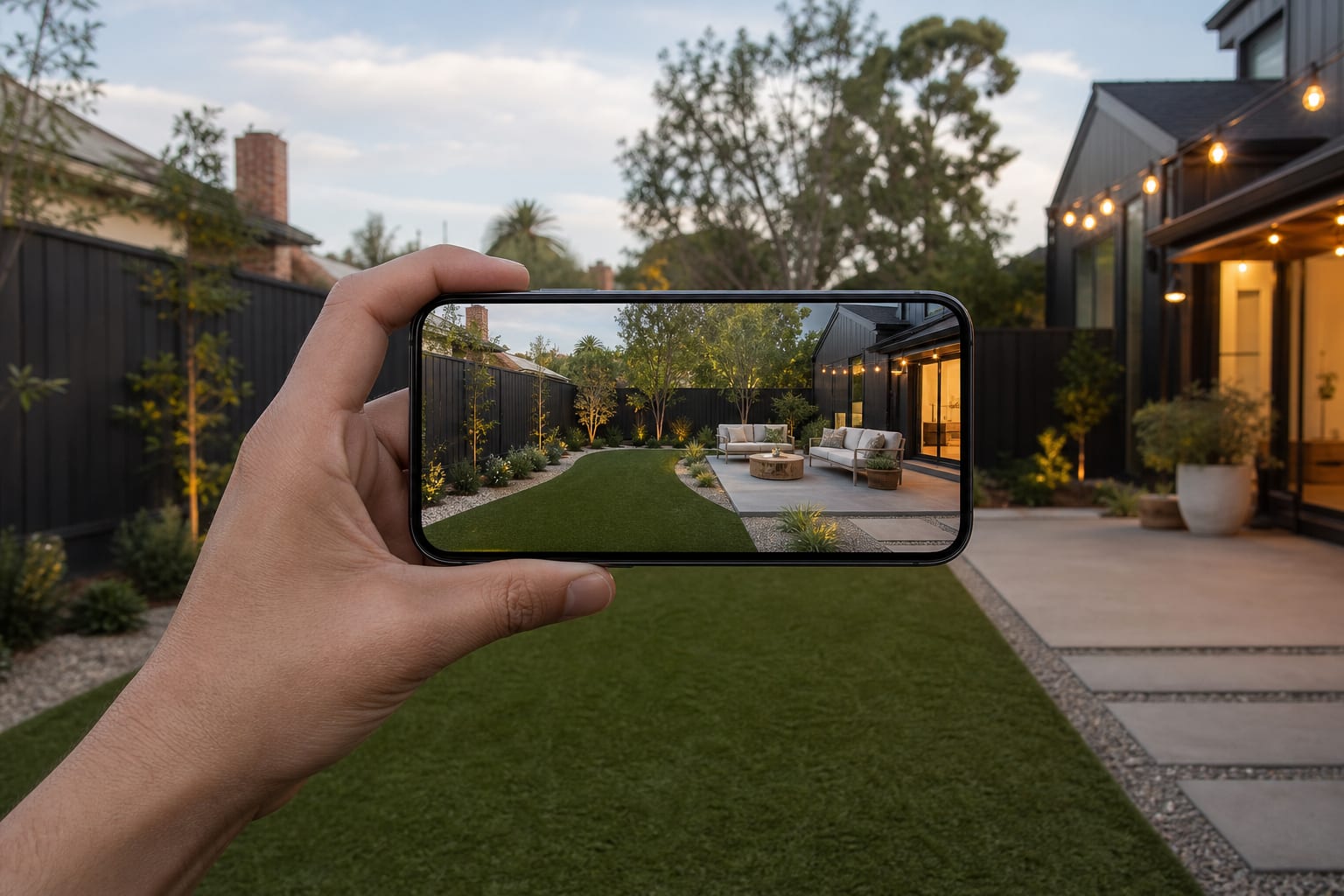
Test this on your own photo with ReDesign before choosing a direction - keep the house edge, horizon line, hardscape, planting beds, and main path visible so the preview solves the space you actually have.
Which artificial grass ideas look designed, not fake?
Turf looks convincing when it's part of a landscape composition, not a lawn substitute on its own.
- Frame it in gravel. A 6-12 inch gravel band gives water somewhere to go, keeps mulch off the blades, and makes the panel look deliberate.
- Add a paved seating pad instead of furniture on the turf. A 7 x 9 foot paver or concrete pad holds a sofa, two chairs, or a bistro table without denting the lawn.
- Soften the edge with planting. Low grasses, rosemary, liriope, dwarf pittosporum, sedge, or lavender set 12-24 inches deep keep the turf from slamming into a fence.
- Build in shade first. A pergola, umbrella, or 10 x 10 foot shade sail over the main sitting zone makes the lawn usable and protects nearby weather-ready outdoor cushions.
- Treat a dog zone as utility space. Keep it narrow but functional, add a rinse point if possible, use pet-rated infill, and avoid placing it under a bedroom window.
A small artificial lawn against bare fencing can look flat and exposed; layered shrubs, slatted screens, or vine panels add depth. If the real issue is a visible neighbor, solve that with backyard privacy landscaping ideas rather than expecting turf to finish the whole yard.
What mistakes ruin an artificial lawn?
- Skipping the base. Soil shifts, holds water, and grows weeds through weak seams; laying turf over old grass causes lumps and trapped smell.
- Choosing the brightest green sample. Real grass has olive, tan, and blue-green undertones. Pick mixed-tone turf with thatch near the backing and view it outdoors at noon and late afternoon before ordering.
- Ignoring seam placement. Seams should run with the main viewing direction, with blade direction consistent across pieces, or they'll catch the eye immediately.
- Forgetting maintenance. Turf still needs leaves blown off, high-traffic paths brushed, pet areas rinsed, edge weeds pulled, and infill topped up as blades flatten.
- Using turf where plants would work better. A shaded corner nobody walks through might want mondo grass, sedge, or gravel with planters instead of a synthetic lawn.
Should you preview a fake grass backyard with AI first?
Yes - the riskiest decision is proportion: how much green belongs in the yard and where it should stop. Upload a straight-on photo from the back door or patio, then test a turf rectangle, a curved play lawn, a gravel border, and a planted edge before paying for excavation.
Keep the preview honest with real dimensions - don't approve a design showing a generous lawn and walkway squeezed into a 5-foot-wide side yard. Test the turf alongside shade structures, planters, pavers, and furniture so you can see whether it supports the outdoor room or dominates it. A preview won't replace installer bids or product samples under real sun, but it catches the expensive mistakes early: too much turf, a harsh edge, the wrong green, or a leftover-mat layout.
Frequently Asked Questions
When does artificial grass make sense?
It makes sense for heavy dog or kid traffic real grass can't survive, deep shade where turf won't establish, restricted water budgets in drought regions, and rooftop or balcony spaces without soil access.
How long does artificial grass last?
Premium UV-stabilized turf on a proper compacted base lasts 15-20 years. Budget rolled turf laid straight on dirt typically fails within 2-3 years from blade tear-out and base settling.
Does artificial grass get hot in summer?
Yes. Turf surface temperatures can run 30-50°F hotter than real grass in direct sun, so reserve it for shaded zones or plan on misting it during peak summer heat.
Is artificial grass eco-friendly?
It's mixed: water savings are real, but turf is petroleum-based, doesn't support pollinators, sheds microplastics, and ends up in landfill eventually. Native, low-water planting is often the better fix when water is the only issue.
What's the right base under artificial grass?
Use 4 inches of compacted decomposed granite or crusher run with non-woven fabric, then turf with sand-and-rubber infill. Turf laid on bare soil or sand without a base ripples and bubbles within one season.
> Try this: Ready to see this on your own outdoor space? Open ReDesign and run the preview before you buy materials, plant, drill, or move furniture.
Three transformations to try
1. Artificial grass with gravel border 2. Shade-tolerant artificial turf with planters 3. Artificial grass dog run with drainage