Outdoor cushions fail two ways: they flatten into pancakes or fade into chalky versions of the color you bought. The fix is choosing solution-dyed acrylic or olefin fabric, quick-dry foam wrapped in a moisture barrier, double-stitched UV-resistant seams, and correct thickness for the frame, then storing cushions covered over winter to push life past 5-7 seasons.
What outdoor cushion fabric lasts longest?
Solution-dyed acrylic lasts longest because the color is built into the fiber before weaving, so sun and cleaning do less visible damage than on printed polyester or untreated cotton. Sunbrella is the familiar name, but the spec matters more than the brand: solution-dyed acrylic, outdoor-rated UV resistance, mildew-resistant construction, and removable covers with corrosion-resistant zippers.
| Cushion fabric | Best patio use | Spec to copy | Watch out |
|---|---|---|---|
| Solution-dyed acrylic | Full-sun sofas, loungers, dining chairs | Removable cover, outdoor thread, zipper flap | Costs more up front |
| Olefin | Covered patios, budget seating | Tight weave, water-resistant backing | Feels less soft than acrylic |
| Outdoor polyester | Occasional-use cushions | Printed pattern, quick-dry fill | Fades faster in harsh sun |
| Cotton canvas | Screened porch only | Washable slipcover | Not a true rain-and-sun fabric |
Good seat cushions need 3-5 inches of thickness for lounge seating and 2-3 inches for dining chairs, with a slight crown so water doesn't pool. A cushion with no zipper, no drainage path, and no stated outdoor fabric is a decoration masquerading as furniture.
Which cushion construction belongs on a real patio?
A patio cushion needs to shed water, dry evenly, and hold its shape through a whole meal. Firm outdoor foam wrapped in polyester batting gives support with softened edges; on uncovered patios, quick-dry foam's open structure lets water drain instead of pooling in the middle.
Thickness should follow the frame. A low-slung sofa with a 24-26 inch seat depth handles a 4-5 inch cushion and loose back pillow; a narrow bistro chair looks bulky with anything over 2 inches. Cushions overhanging the frame by more than 1 inch per side start to look borrowed from another set.
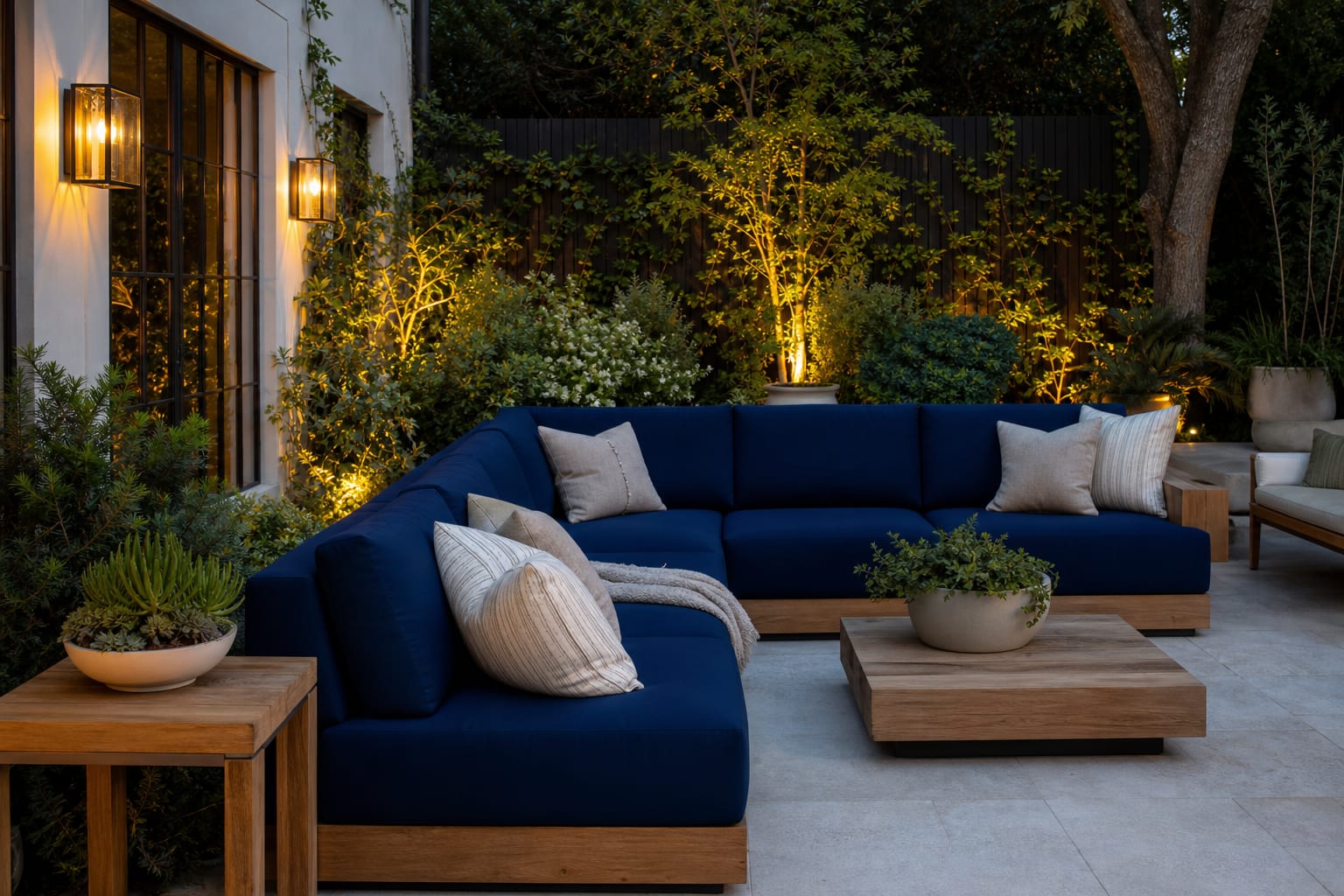
Piping should use outdoor-rated thread, sewn tight so water doesn't pool along the welt. Boxed cushions look cleanest on modern furniture; knife-edge cushions feel lighter on folding chairs or small balconies. On a covered porch, olefin or outdoor polyester can work fine; on an open south-facing patio, solution-dyed acrylic is safer, especially for navy, charcoal, forest green, terracotta, and black, colors that punish weak dyes.
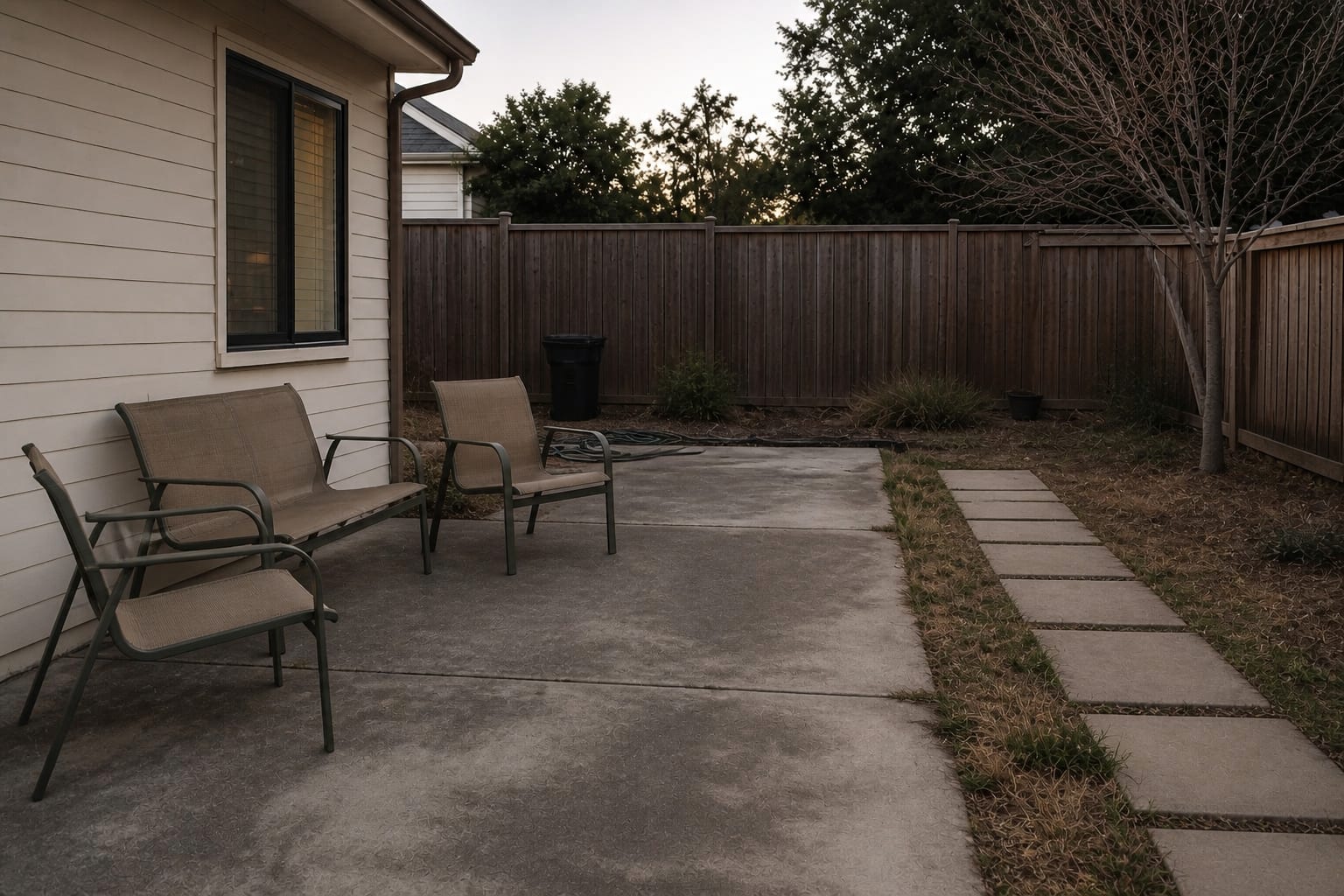
Test this on your own photo with ReDesign before committing, keeping the house edge, horizon line, hardscape, and main path visible so the preview solves your actual space.
How should cushions fit the furniture and space?
Measure the frame from inside arm to inside arm, then leave about a 1/2 inch allowance so the cushion drops in without buckling. For dining chairs, check finished seat height: 18-20 inches from floor to seat works for most setups, while an over-thick pad makes the table feel like a kids' desk. If the patio still lacks surfaces for drinks, pair the cushion plan with outdoor side table ideas, since comfort collapses when guests have nowhere to set a glass.
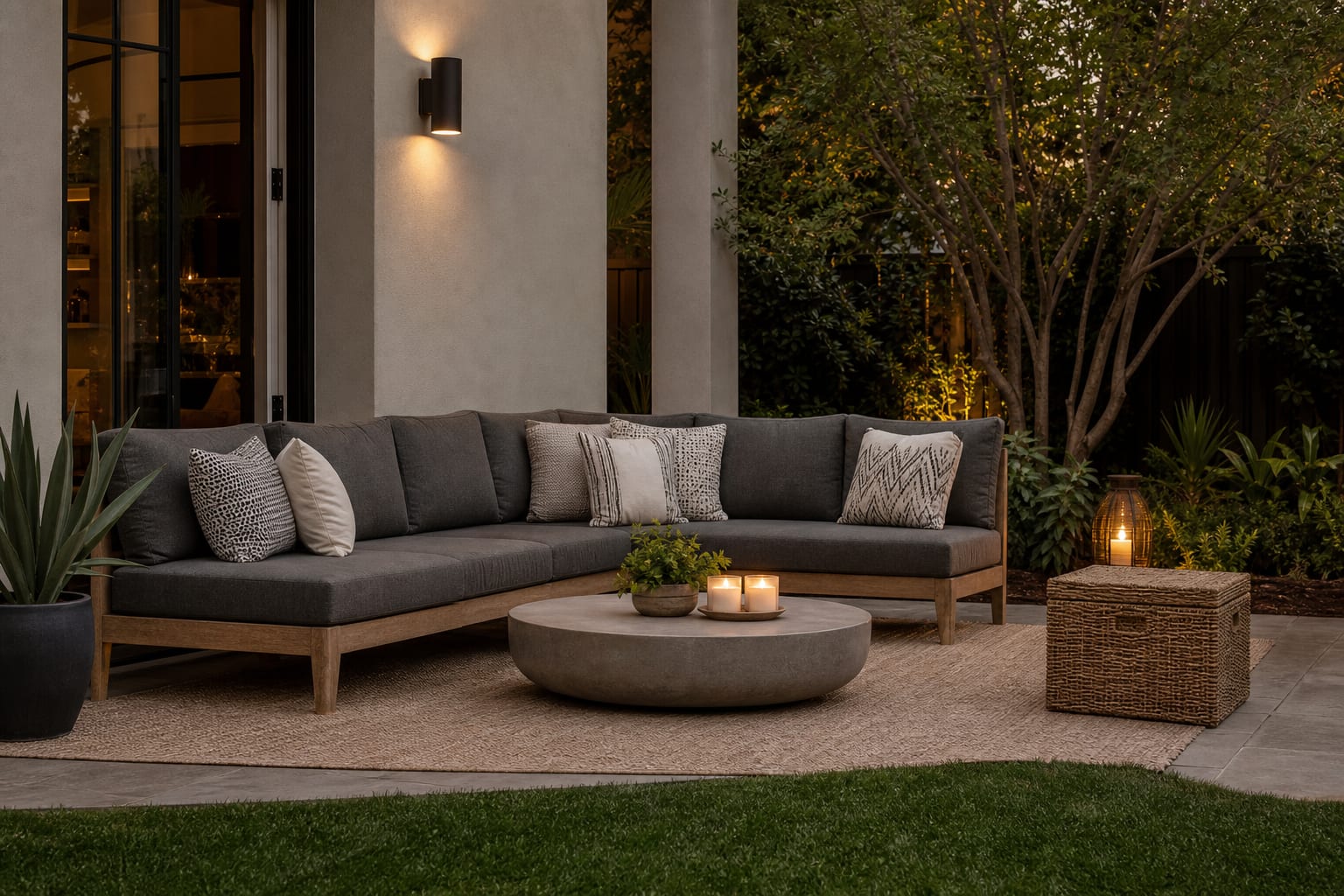
Five ways to keep the look polished: - Use one solid base fabric with one patterned accent pillow; on a 72 inch sofa, three seat cushions plus two 20x20 inch pillows is usually enough. - Choose seat cushions slightly darker than back pillows, since seats collect more dirt; charcoal, olive, camel, and deep blue forgive daily use. - Add 12x20 inch lumbar pillows on deep lounge chairs (24-26 inch seat depth) so shorter guests aren't swallowed by the seat. - Keep dining pads thinner (around 2 inches) than lounge cushions to preserve table clearance. - Repeat one cushion color near the dining zone; if choosing a table too, check the palette against outdoor dining table ideas before ordering swatches.
Don't fill every back with pillows if the patio already has patterned tile, busy railing, or colorful planting. Two restrained fabrics beat six unrelated prints, especially in a small courtyard or balcony.
Common outdoor cushion mistakes
- Buying indoor fabric for an outdoor problem. Linen, cotton, and indoor boucle absorb moisture and stain; use only where cushions come inside easily.
- Ignoring thickness until the furniture feels wrong. A 5 inch dining cushion raises the seat too high; a 1 inch lounge pad presses the frame into the sitter. Test finished seat height before ordering a full set.
- Choosing bright white for a busy patio. Kids, pets, grilling, and tree debris punish white fabric; off-white, sand, taupe, gray-green, denim, or rust hide daily life better. Save pale tones for back pillows.
- Forgetting ties, grip, or weight. Lightweight cushions slide on metal chairs and blow around on decks; look for rear ties or grippy undersides, especially on upper-floor balconies.
- Treating storage as optional. Weather-resistant doesn't mean weatherproof forever. Stand cushions upright after rain, brush off leaves, and store in a breathable bag or ventilated deck box during long wet stretches, never sealed in plastic while damp.
How can AI design help preview patio cushions?
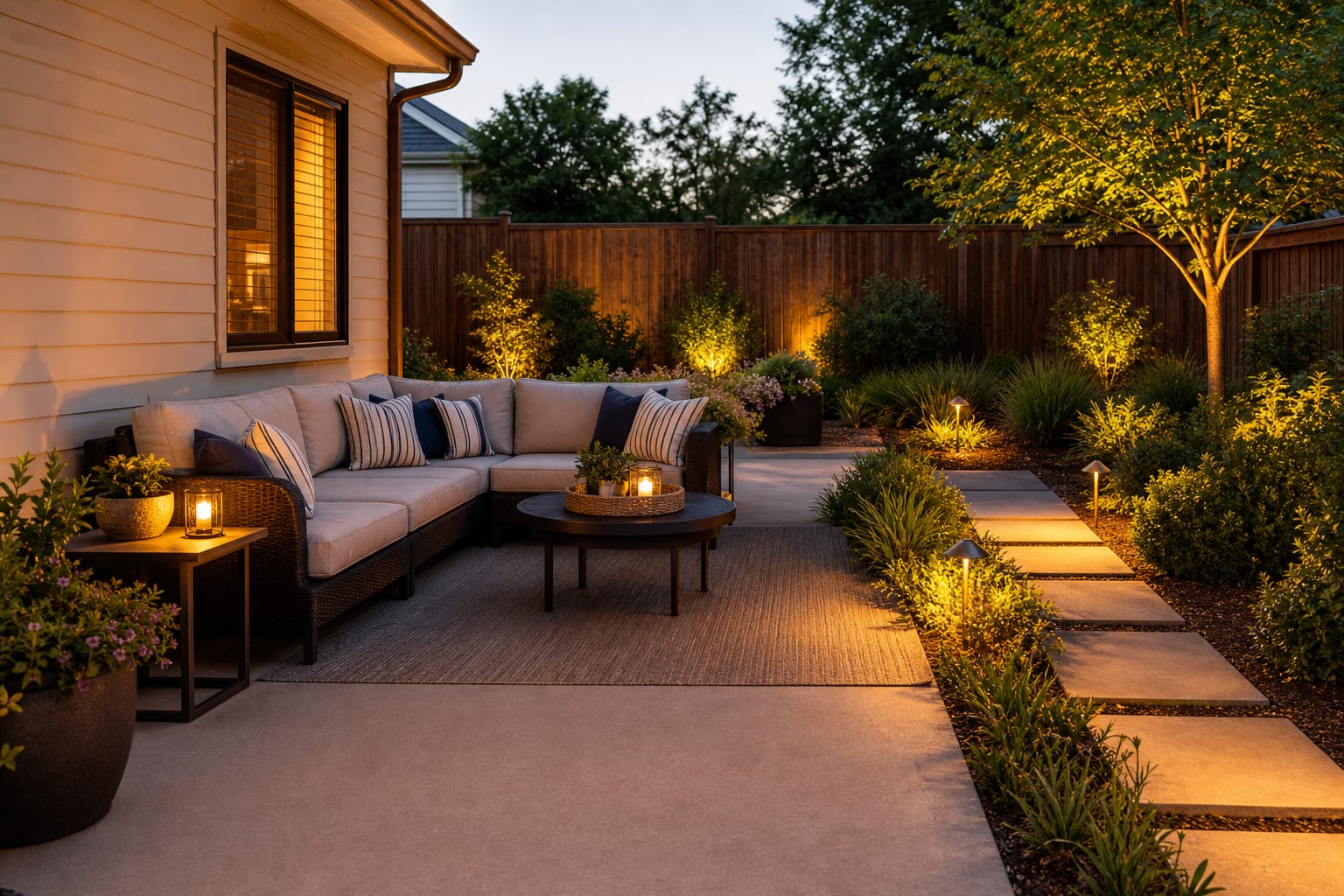
AI design shows the whole patio at once, something fabric swatches can't do. Upload a straight-on photo of the seating area and preview navy cushions, striped acrylic pillows, or a softer green palette before buying eight custom pieces. Keep the test specific to the angle you actually use from the back door or kitchen window.
The preview won't replace measuring the frame or checking zipper details, but it shows whether a dark cushion feels too heavy or the sofa needs a nearby table or better rug. If the layout itself is weak, preview cushions alongside outdoor sofa lounge ideas so fabric supports the whole arrangement instead of rescuing a bad one. Test color in the light that matters, since morning shade and late golden hour can shift the same beige from calm to yellow.
Frequently Asked Questions
What fabric works best for outdoor cushions?
Solution-dyed acrylic (Sunbrella) gives premium fade resistance for 5+ years of UV exposure; solution-dyed olefin offers value-priced durability. Avoid printed polyester and natural cotton, both of which fade within a year outdoors.
What fill is right for outdoor cushions?
Quick-dry reticulated foam wrapped in a moisture barrier is best. Standard polyurethane foam absorbs water, gets heavy, and grows mildew within a season.
Can outdoor cushions stay outside all the time?
Yes, premium quick-dry cushions can stay outside in covered or partially sheltered spots. In heavy rain regions, uncovered cushions last longer stored in a deck box between uses.
How do I clean outdoor cushions?
Use mild soap and water with a soft brush, then rinse with a hose and air dry. Pressure washers strip the fabric's UV finish and shorten cushion life.
How thick should outdoor cushions be?
Use 4-6 inches for chair seats, 5-7 inches for sofa seats and backs, and 14-18 inches deep for lounge cushions. Thinner cushions wear through faster and read as throwaways.
> Try this: Ready to see this on your own outdoor space? Open ReDesign and run the preview before you buy materials, plant, drill, or move furniture.
Three transformations to try
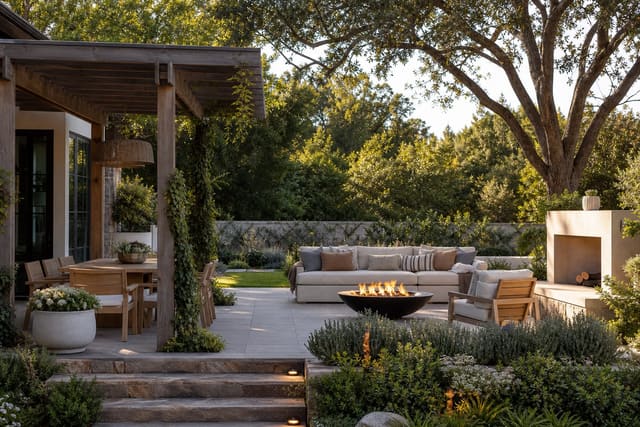
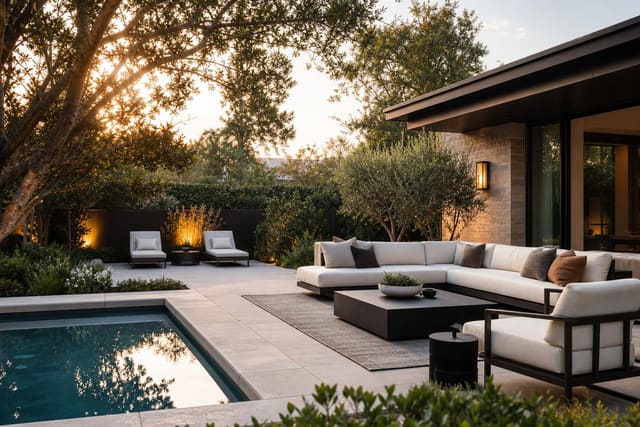
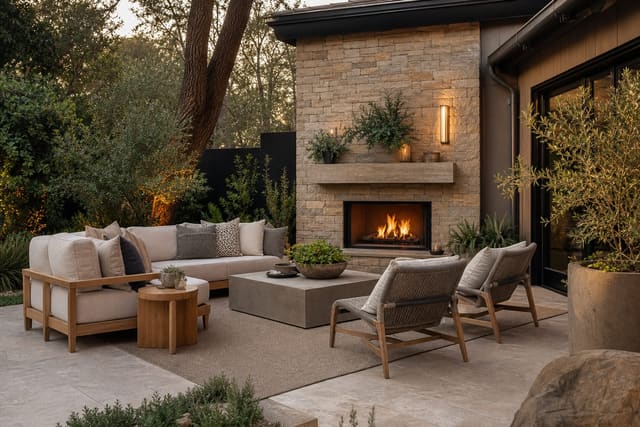
1. Outdoor sofa with Sunbrella cushions and pillows