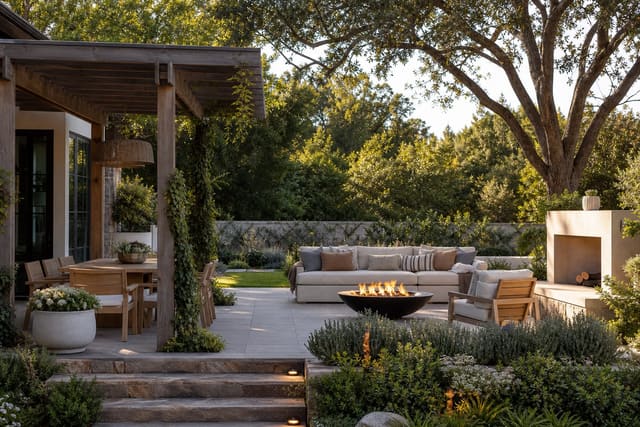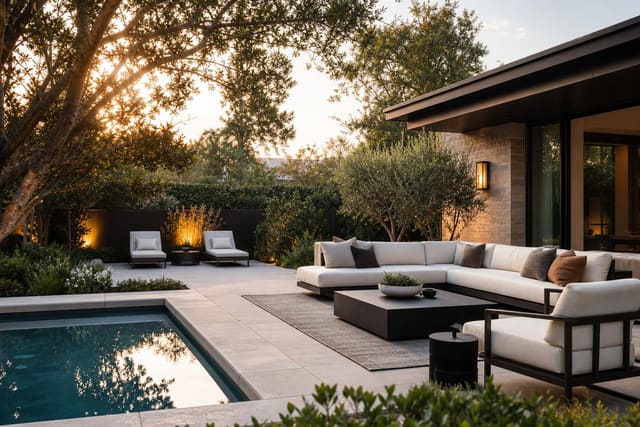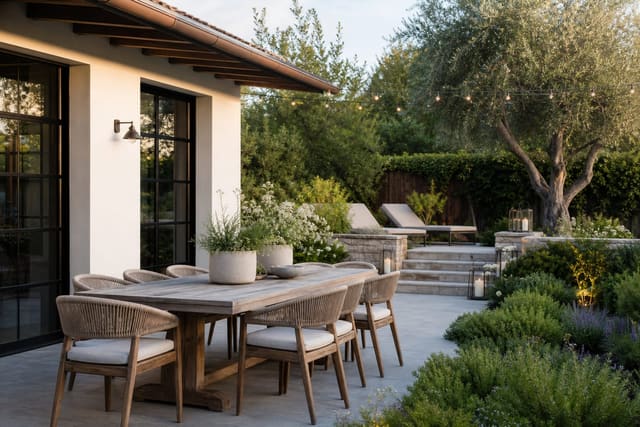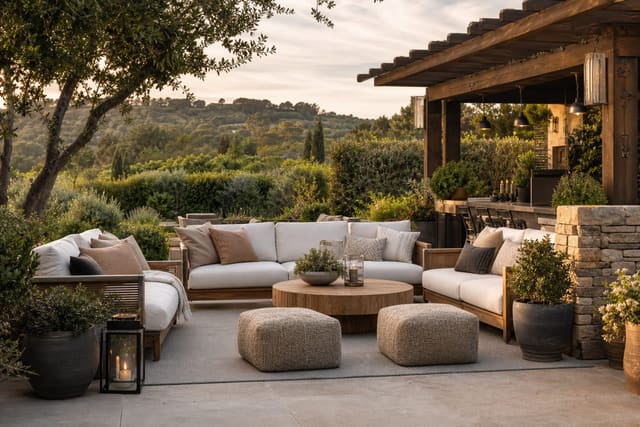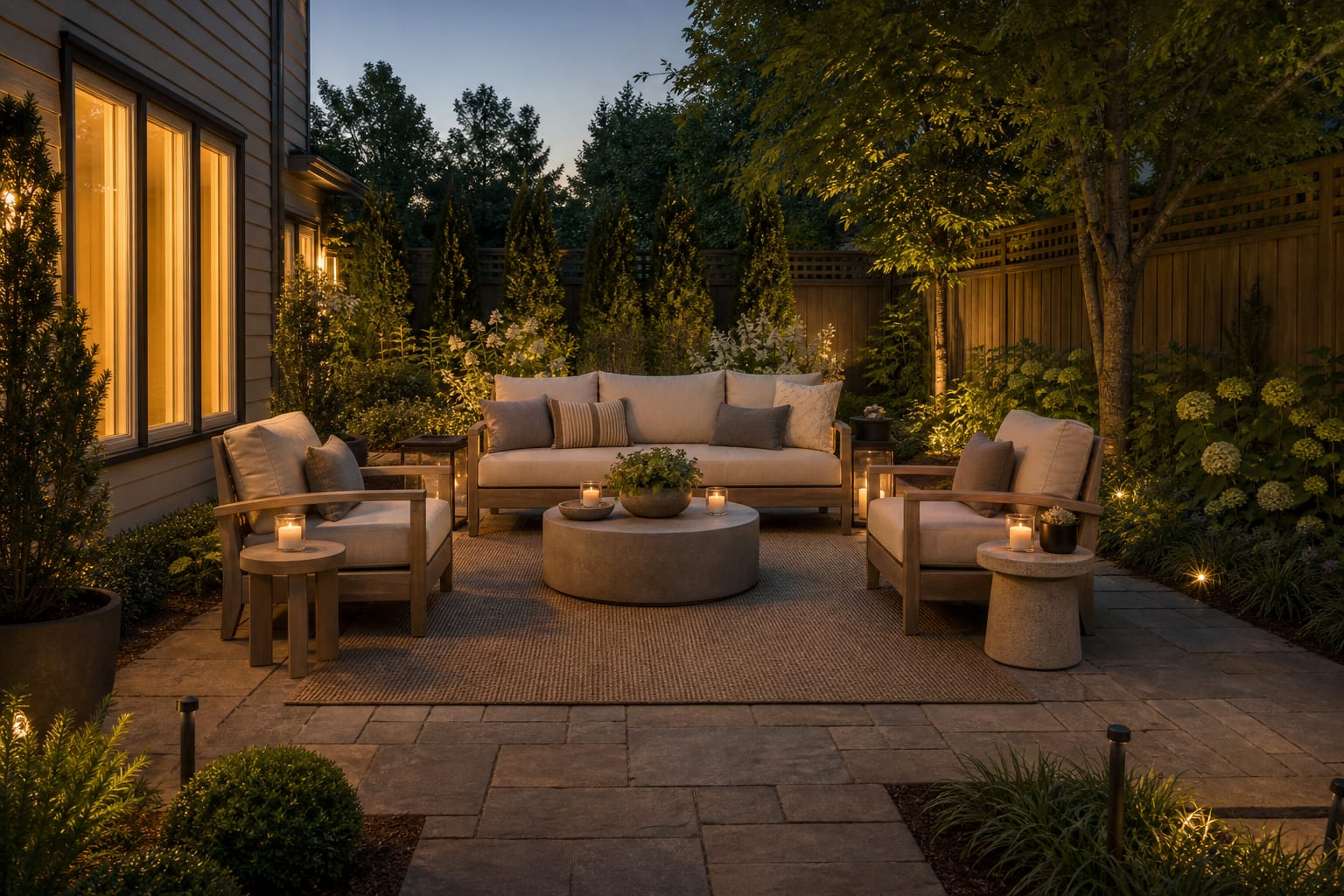
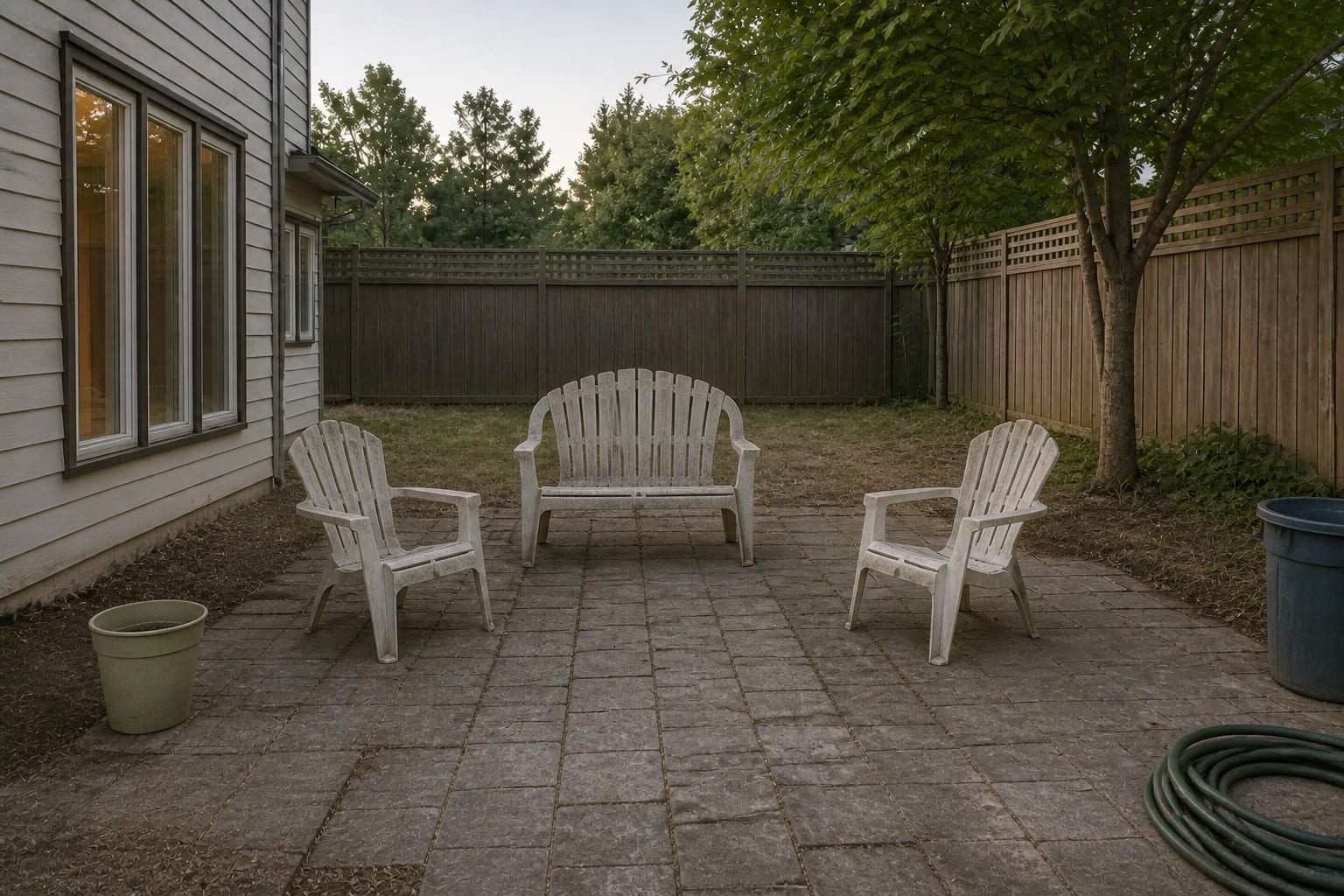
Good outdoor side table ideas put a surface within reach of every seat: 22-26in tall, made from teak, powder-coated aluminum, glazed ceramic, or concrete, and sized 14-20in across so it doesn't crowd the walkway. A patio without side tables feels unfinished no matter how nice the seating is — the table is what makes the layout usable.
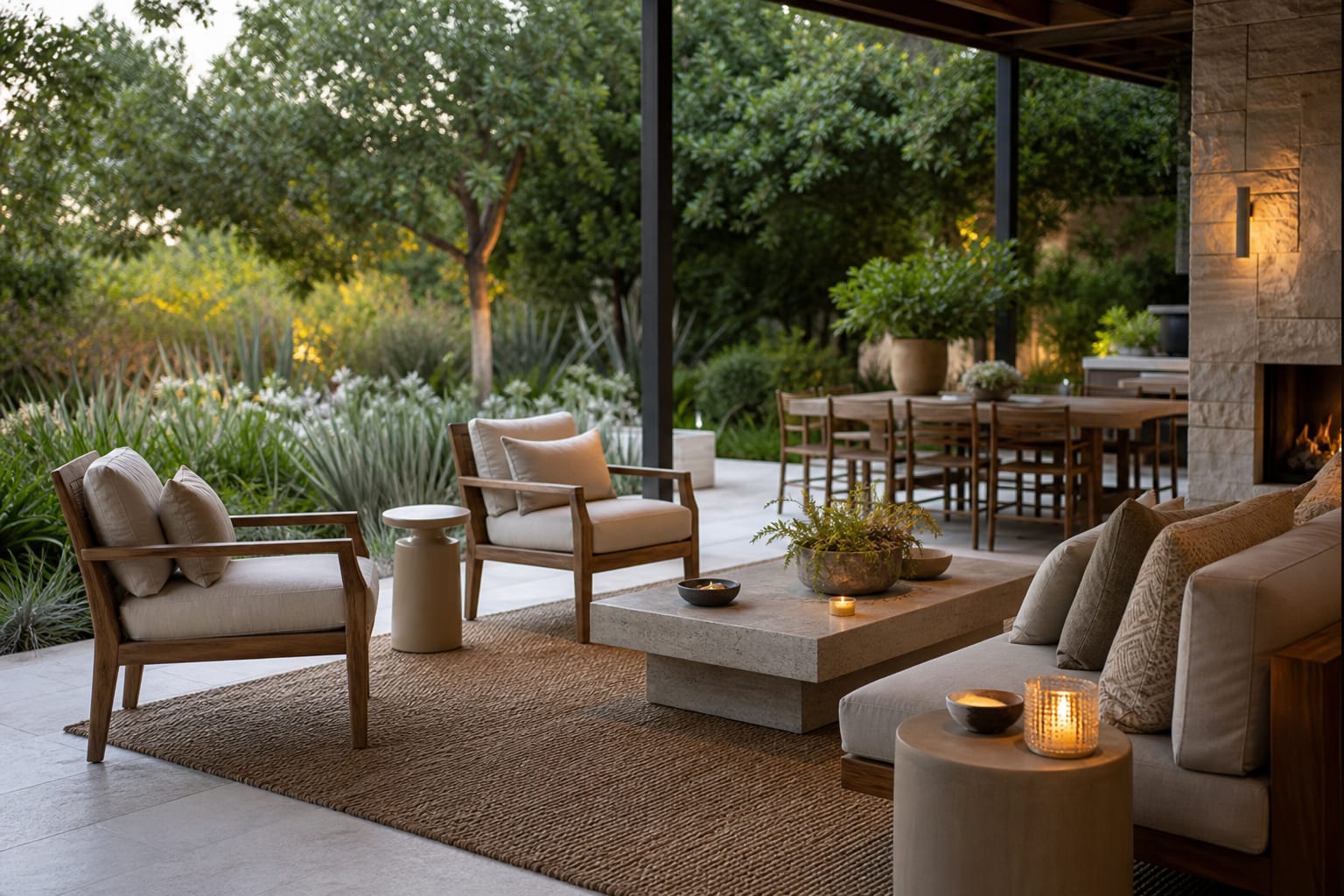
What is a good outdoor side table material?
Teak, powder-coated aluminum, glazed ceramic, and fiber-reinforced concrete hold up outdoors because they resist moisture, sun, and repeated cleaning better than indoor wood, raw steel, or veneer. Teak's natural oils resist damp and weather to a soft gray if left unfinished. Powder-coated aluminum is lighter and easy to shift when a chair needs to move a few inches for a better conversation angle. Ceramic stools and concrete cubes add color or heft but need at least a 12in flat top to actually hold two glasses.
Height should land within 2 inches of the chair or sofa arm — around 22-26in beside a 24in arm. Diameter matters too: 14-18in works beside one chair, while 20-24in suits two chairs sharing a surface. A 10in table looks nice in photos but can't hold a book, a phone, and a candle at once.
| material | best patio use | spec to copy | watch out |
|---|---|---|---|
| teak | warm lounge seating, covered patios | 18-22in round top | grays unless oiled |
| powder-coated aluminum | exposed decks, pool areas | 15-20 lb if wind is common | thin legs wobble on pavers |
| glazed ceramic | accent color near chairs | 16-18in diameter | chips if dragged across stone |
| fiber-reinforced concrete | modern or windy patios | 40 lb or less if moved often | stains without sealing |
| recycled plastic lumber | family patios, rentals | UV-rated material, stainless hardware | bulky profiles need careful scale |
If cushions are setting the color story, let the table material stay quiet; see durable outdoor cushion ideas for fabric pairings that won't compete with a bold table finish.
How should a patio side table fit the seating layout?
Leave 2-4in between the table and the chair frame, and keep the main walkway at least 30-36in wide. A small balcony may need one C-shaped table that slides partly over a chair base; a larger patio can frame a 72-84in sofa with a matching pair, the way nightstands frame a bed.
Match surface count to how the patio gets used: one table per reading chair, a shared 20-24in round table for two club chairs, and two tables for a sectional since the corner seat sits far from the coffee table. Contrast finishes between dining and lounge zones — pair a teak dining table with ceramic accents, or a metal bistro set with a chunkier concrete side table. Check finishes against outdoor dining table ideas for patio meals so both zones relate without looking like a matched showroom set.
Near a pool, pick a table heavy enough not to tip when someone grabs a towel, with a surface that tolerates sunscreen and wet glass. Around a fire pit, keep tables 18-24in from chair legs so knees and blankets have room. Glass tops show water spots fast outdoors; slatted teak or textured ceramic hides wear better.
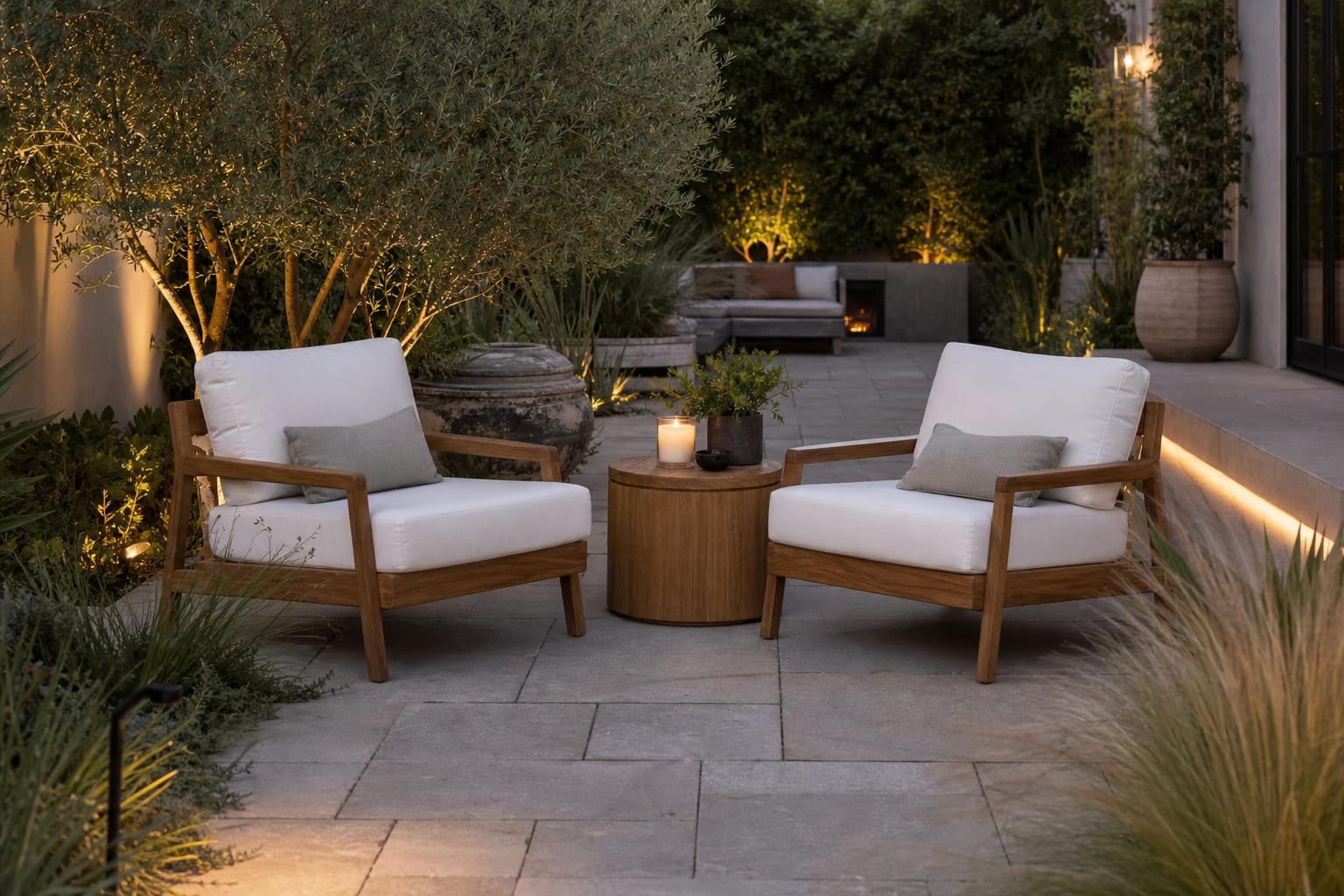
Test this on your own photo with ReDesign — keep the house edge, horizon, hardscape, and main path visible so the preview solves the space you actually have.
Five outdoor side table ideas worth the footprint
- Ceramic garden stool. Choose one around 17-19in tall with a mostly flat top and place it beside a low lounge chair rather than a tall dining chair so the height feels intentional.
- Rectangular teak table. A 16x24in top between two club chairs set 30-34in apart gives more usable surface than a tiny round table for coffee or cards.
- Powder-coated aluminum C-table. Look for a base that slides at least 8in under the chair, since a shallow base can tip when a laptop or heavy glass sits near the outer edge.
- Low concrete cube. A 16-18in cube can act as a drink surface or extra perch beside a sectional, but keep it under 40 lb if you move furniture for parties.
- Narrow drink table. Add one beside an outdoor sofa when the coffee table sits too far from the end seats, a common gap in outdoor sofa lounge ideas.
What mistakes ruin an outdoor side table setup?
- Buying indoor furniture for a covered patio. Veneer, untreated pine, and MDF cores don't like damp air or condensation; use true outdoor construction and stainless or coated hardware.
- Choosing a table too light for the site. A skinny metal table can rattle in wind on an exposed deck; choose a broader base, rubber feet, or a heavier material near open railings.
- Ignoring the floor surface. Three thin legs sink into gravel or wobble on uneven flagstone; four legs, a sled base, or a drum shape is steadier.
- Matching every table to every chair. Three identical tiny tables can feel stiff; one primary material plus one accent — teak plus ceramic, black aluminum plus concrete — reads better.
- Forgetting nighttime use. At least one table needs room for an 8-12in rechargeable lamp; a lantern on the ground creates glare and gets kicked.
How can AI design help pick a side table?
AI design helps with the hardest part of shopping for outdoor side tables: judging scale before the boxes arrive. Upload a straight-on photo of the seating area and preview a teak drum, black aluminum C-table, glazed ceramic stool, or concrete cube in the exact spot it will live, checking the preview against real measurements like a 25in chair arm. Use one photo from the approach to the patio and one from the seat you use most — the first shows whether tables clutter circulation, the second shows whether the surface is close enough to reach. The preview won't replace checking product weight and material labels, but it can save you from ordering a piece that's too small, too shiny, or too busy for the furniture already outside.
Frequently Asked Questions
How tall should an outdoor side table be?
22-26in tall, at chair-arm height, so you can set a glass down without leaning. Ottoman-height tables (16-18in) work only for lounging, not for regular seating.
What material lasts outdoors?
Teak, glazed ceramic, concrete, and powder-coated steel survive rain and UV exposure. Thin wicker and untreated softwood typically fail within 2-3 seasons of regular weather.
How many side tables does a patio need?
One per seat, including each lounge chair, plus at least one between the sofa and adjacent chair. A single shared coffee table doesn't solve drink and book placement for a 4-seat lounge.
Should side tables match?
No. Mixed materials read as more designed than matched sets — pair a teak table with a ceramic stool and a concrete cube to give a patio visual depth.
What's the right side table footprint?
14-20in for a round table, or 16x16in for a square. Bigger tables crowd seat clearance, while smaller tables only hold a single glass.
> Try this: Ready to see this on your own outdoor space? Open ReDesign and run the preview before you buy materials, plant, drill, or move furniture.
Three transformations to try
1. Mixed-material side tables beside outdoor sofa