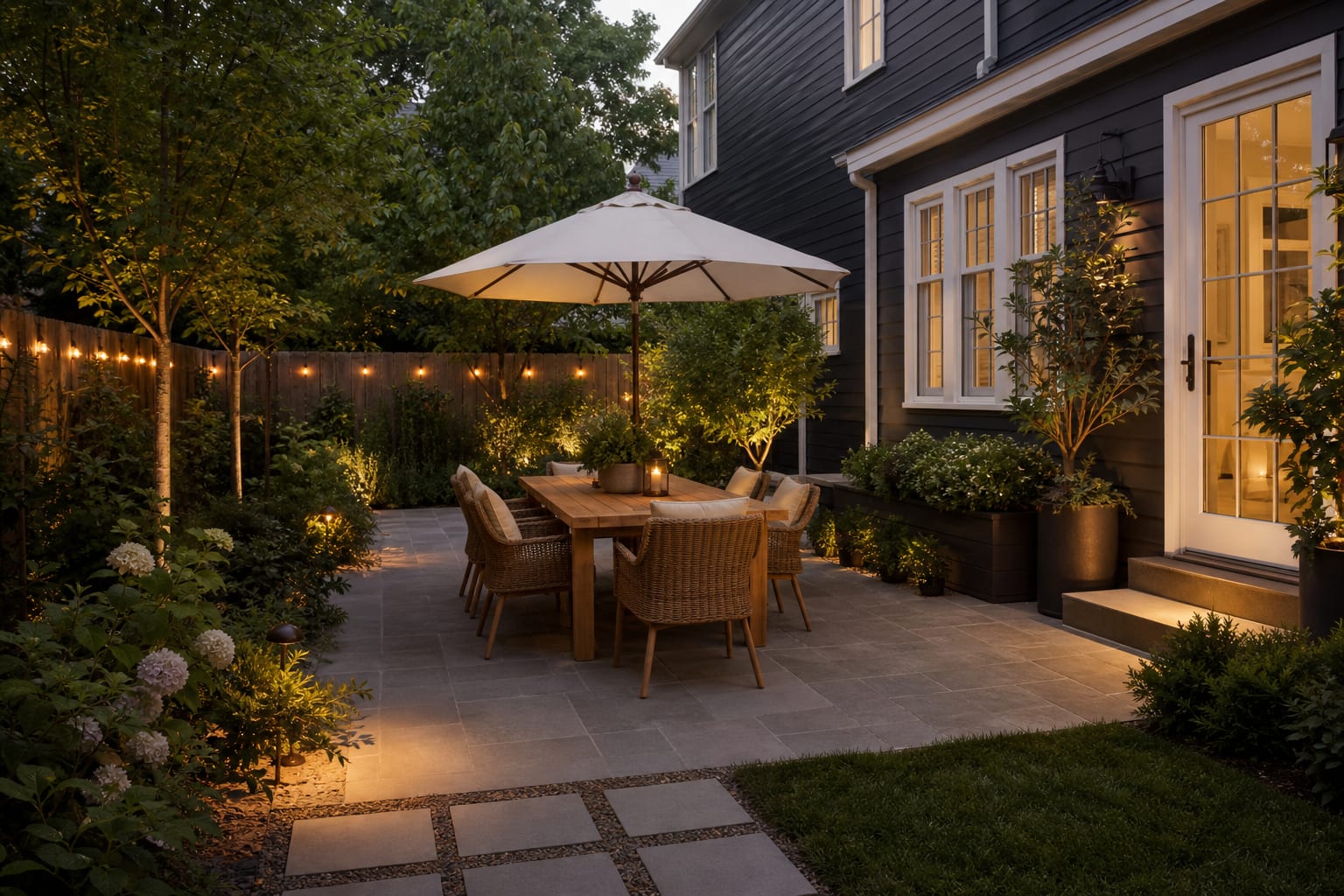
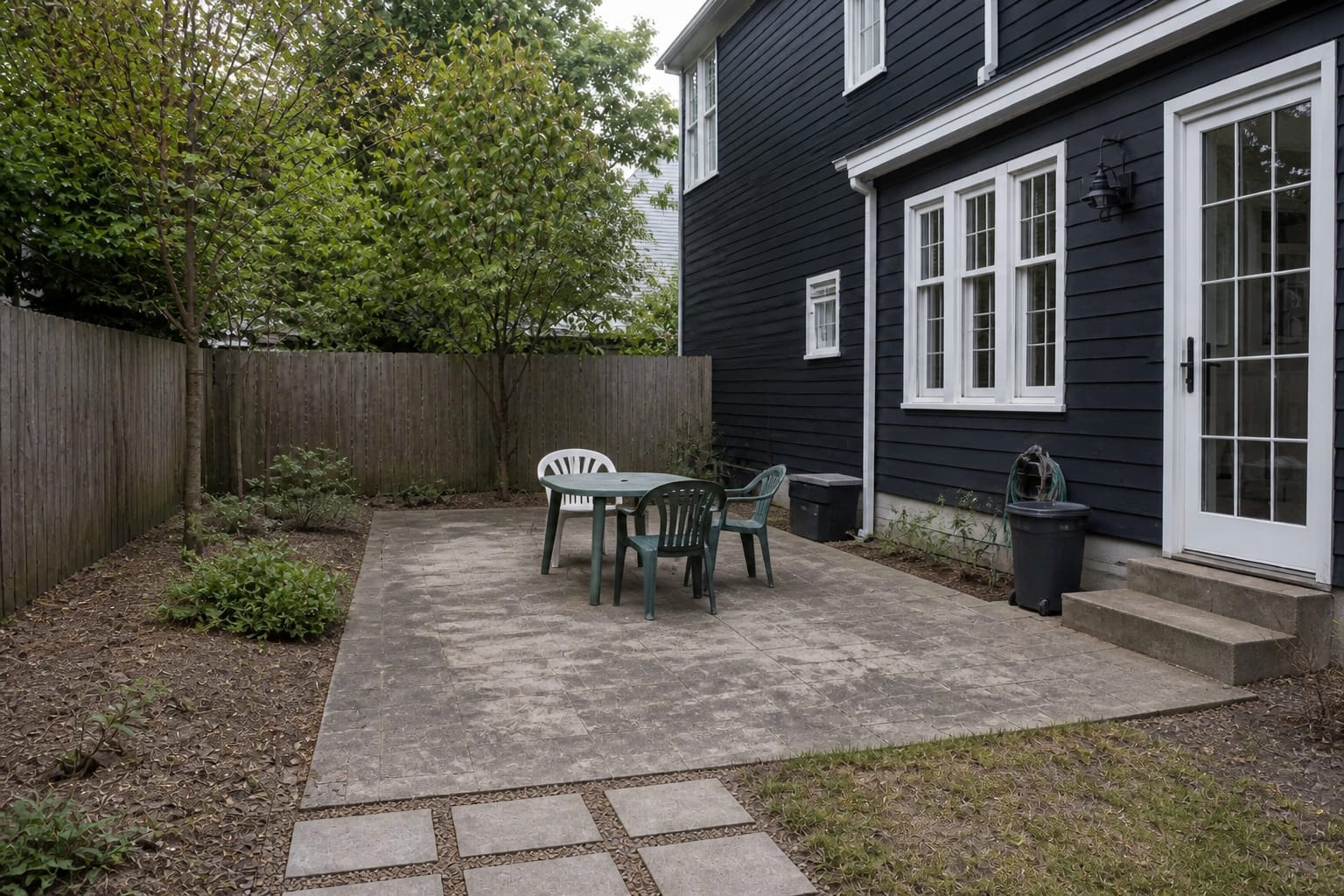
The best outdoor dining table seats two more than your typical dinner count, runs 36-42in wide, and is built from teak, powder-coated aluminum, or sealed concrete. Teak is the strongest all-around choice for durability and warmth; aluminum wins when the table needs to move often or sit near a pool.
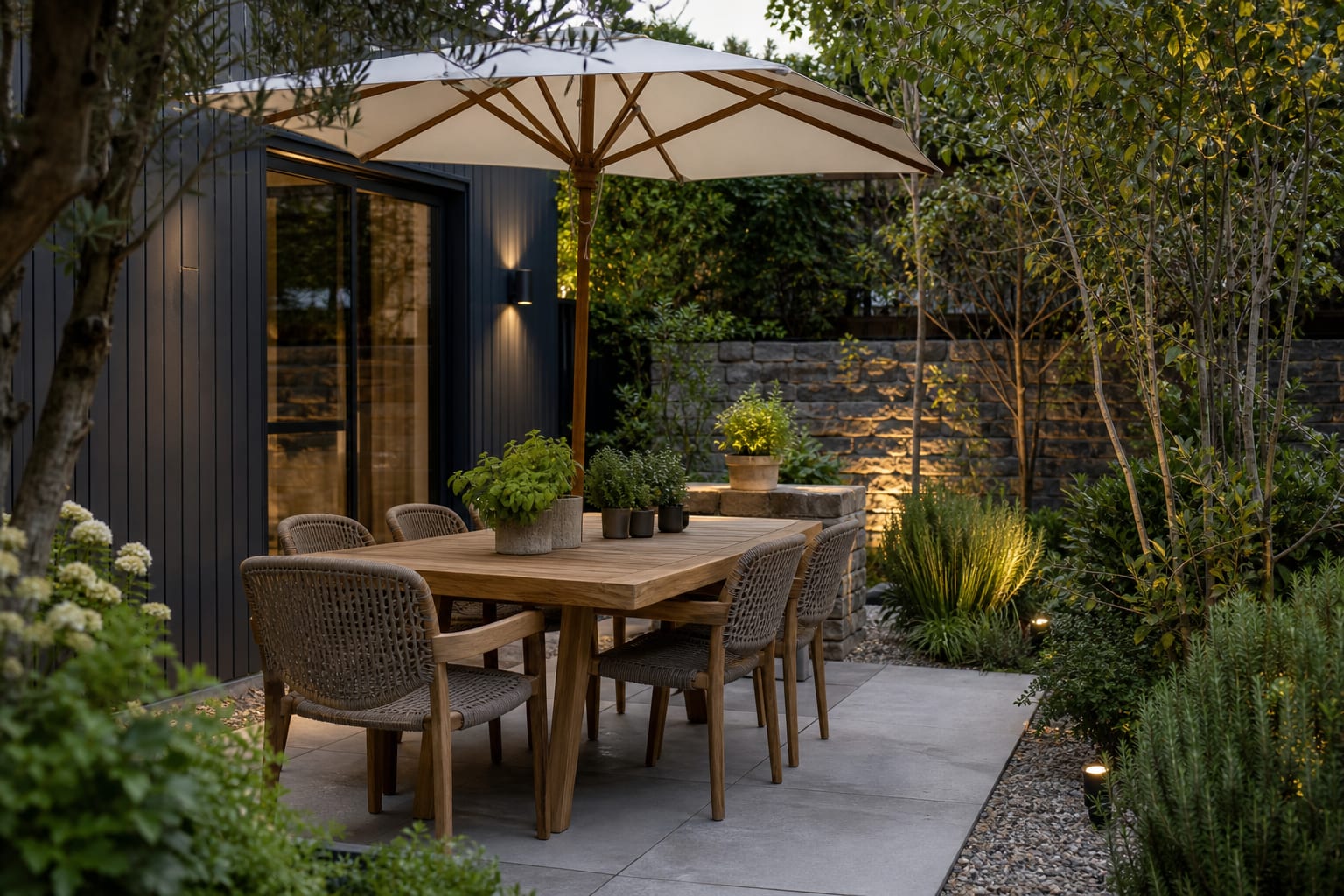
Which material actually survives outdoor weather?
Teak is the best all-around material because it resists moisture, develops a handsome gray patina, and feels substantial without a fragile finish. It pairs especially well with planting, brick, stone, and older homes. Left untreated it weathers to silver-gray; oiled periodically it stays honey-brown.
| Material | Best patio use | Spec to copy | Watch out |
|---|---|---|---|
| Teak | Long-term dining, mixed garden patios | 1.5-2in thick top or substantial slats | Turns gray unless maintained |
| Powder-coated aluminum | Pool decks, coastal air, movable furniture | Welded frame, adjustable feet | Thin frames can feel cheap |
| Stainless steel | Modern patios, salty locations | Marine-grade hardware where possible | Shows fingerprints and heat |
| Concrete/fiber cement | Windy terraces, contemporary spaces | Sealed top, manageable section weight | Stains if left unsealed |
| Acacia/eucalyptus | Lower-budget covered patios | Covered storage in winter | Shorter life in harsh exposure |
Hardware matters as much as the tabletop: stainless or coated screws prevent rust streaks on pale stone and concrete paving. If the table sits near cushioned seating, check tones against durable outdoor cushion ideas first, since fabric undertones can shift how warm or cold teak, black metal, or gray concrete looks.
How big should the table be before chairs ruin the layout?
Size from the occupied chair, not the tabletop. A 36 x 72in rectangle can swell to a 9 x 11ft footprint once six chairs slide back. Budget 24in of edge per person minimum, 28-30in for elbows and serving platters.
Round tables suit small patios since there are no corners in the walking path:
- 48in round seats four.
- 54in round seats four generously.
- 60in round seats six with slim chairs.
- 36 x 84in rectangle seats six comfortably, eight with narrow chairs.
Leave 30-36in behind each chair for simple pullback, and widen to 42in if that side doubles as the path to a grill, door, or steps. Coordinate the table footprint with outdoor sofa lounge ideas so dining and lounge zones don't crowd each other.
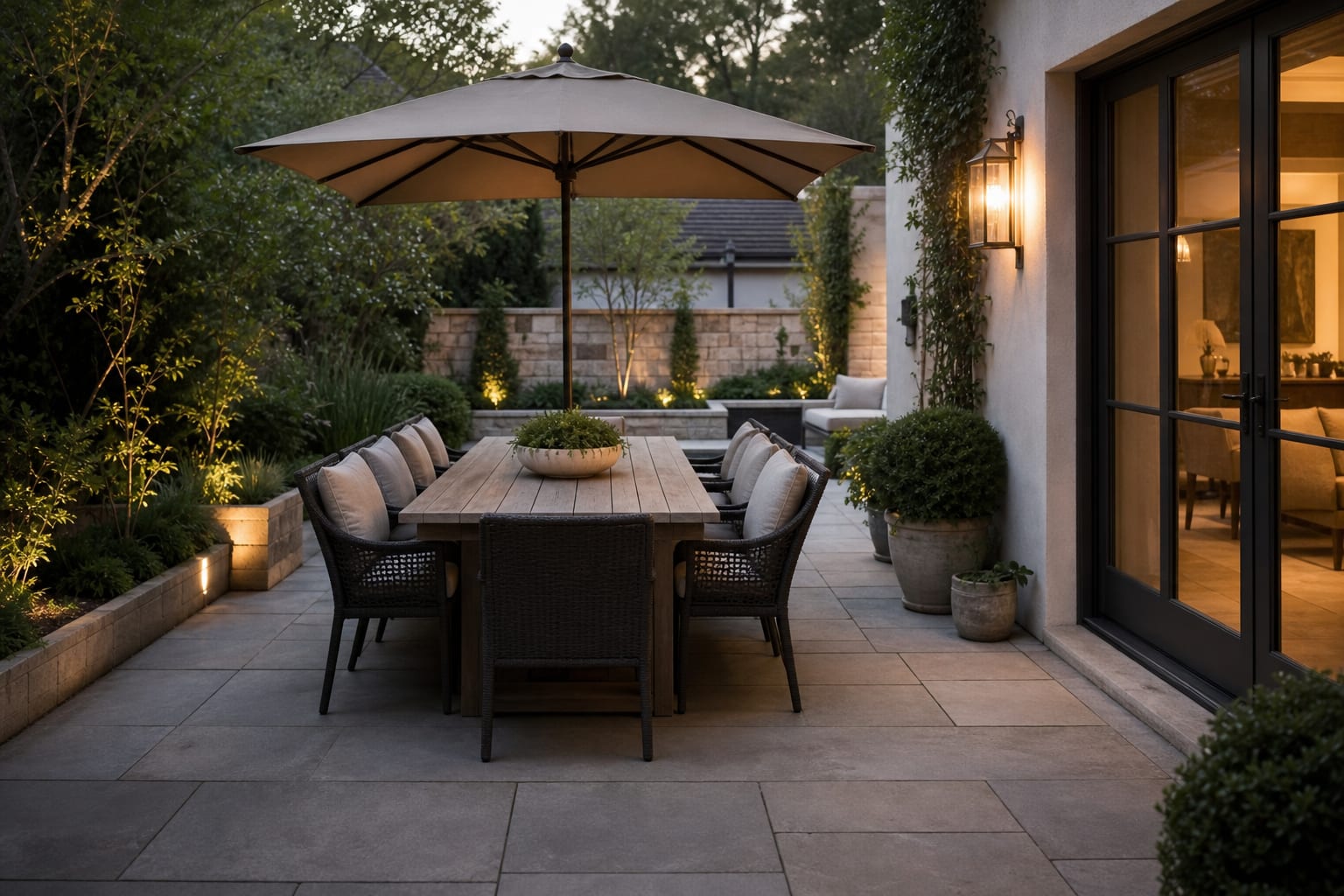
Test this on your own patio photo with ReDesign before ordering — keep the house edge, horizon line, hardscape, planting beds, and main path visible so the preview reflects your real space.
Which shape and style fits your house and patio?
The right table looks connected to the architecture and paving, not dropped in. Black metal reads crisp against white stucco but severe beside red brick; teak softens concrete, stone, and dark siding.
- Round teak on a square patio: A 54-60in diameter keeps traffic wrapping around all four sides without corner collisions.
- Narrow rectangle on a linear deck: A 32-36in wide, 84in long table seats six without blocking the railing view.
- Pedestal base for tight chair spacing: Four-legged tables trap chairs at the corners; a pedestal lets six chairs tuck around a 60in round top freely.
- Stone or sealed concrete top for daily use: Choose rounded edges and avoid glossy finishes that glare in afternoon sun.
- Simple table, harder-working surfaces: Add an outdoor side table for serving bowls and lanterns instead of overloading the main top.
Shade drives the style choice too. A center umbrella hole suits compact patios; a long rectangle usually looks better under an offset umbrella, pergola, or shade sail. Size the canopy for diners, not just the tabletop — a 9ft umbrella covers a four-person round table, while larger rectangular settings need a 10 x 13ft structure.
What mistakes ruin an outdoor dining setup?
- Buying before measuring chair movement. Mark the full pullback zone with tape or chalk before purchasing anything.
- Choosing indoor-grade material. Raw wood, painted veneer, and lacquered finishes fail outdoors; stick to teak, aluminum, outdoor-rated steel, sealed concrete, or exterior composite.
- Ignoring heat. Dark metal and dark stone get unpleasant under direct sun, especially near pools and pale paving. Prioritize shade or lighter finishes on western exposures.
- Oversizing the chairs. Deep woven chairs can need 26-28in each, turning a six-seat plan into a four-seat plan.
- Treating the table as an isolated purchase. Without lighting, planters, shade, and a landing spot for serving pieces, the space rarely becomes where people actually eat.
How can AI design help before you buy?
Scale is hard to judge from a product page. Upload a straight-on photo from the kitchen door or garden path, then preview a round teak table, a black aluminum rectangle, a concrete top, different chair widths, and an umbrella before ordering freight furniture. Confirm the preview against real measurements with tape before you commit.
Frequently Asked Questions
How big should an outdoor dining table be?
Plan 24-26in of edge per seat: a 72in table seats six comfortably, an 84in seats eight, and a round 60in seats six. Below 60in long, the table feels cramped at four seats.
What material lasts outdoors?
Teak ages to silver but holds its geometry for 25+ years. Powder-coated aluminum stays lightweight and stable, concrete reads modern but needs sealing, and stainless steel withstands coastal salt. Finished pine and untreated softwood fail within a season.
How much pullback space does an outdoor dining table need?
Leave 36in clear on every side for chair pullback. If foot traffic passes on one side, widen that clearance to 48in so a seated diner doesn't block circulation.
Should the table take an umbrella?
Yes, if the dining zone gets midday sun. An offset or center-pole umbrella shades 8-9ft of table; without shade, midday meals get abandoned by midsummer.
Round, rectangle, or square table?
Rectangles maximize seating on linear patios, round tables suit conversation and tight square patios, and square tables only work at four seats before the layout dead-ends.
> Try this: Ready to see this on your own outdoor space? Open ReDesign and run the preview before you buy materials, plant, drill, or move furniture.
Three transformations to try
1. Teak rectangle table with umbrella 2. Round outdoor table with woven chairs 3. Concrete dining table on covered patio