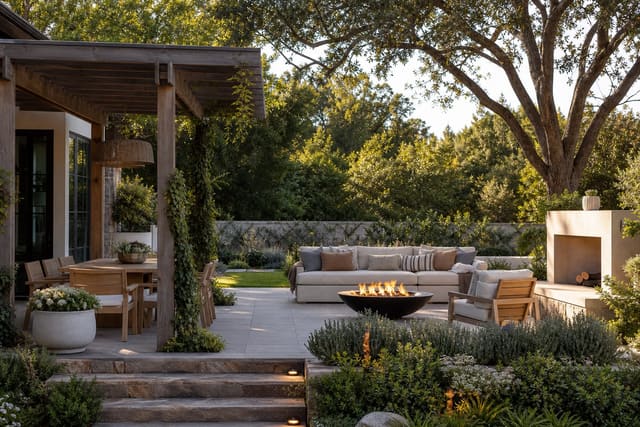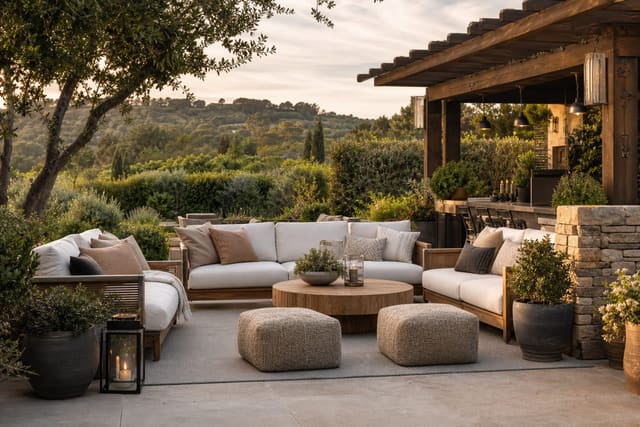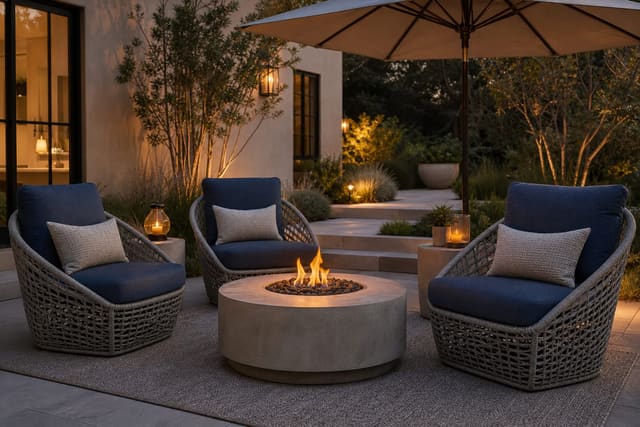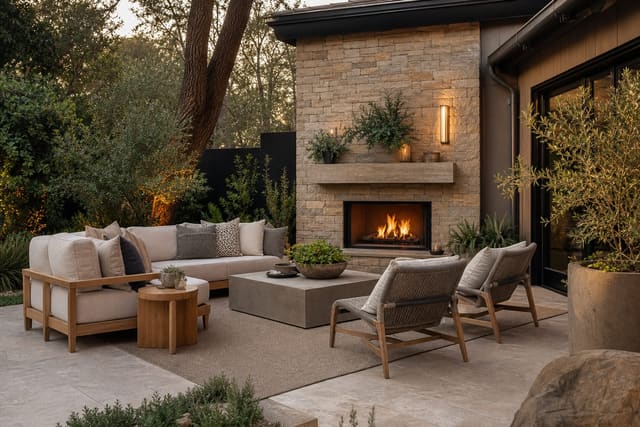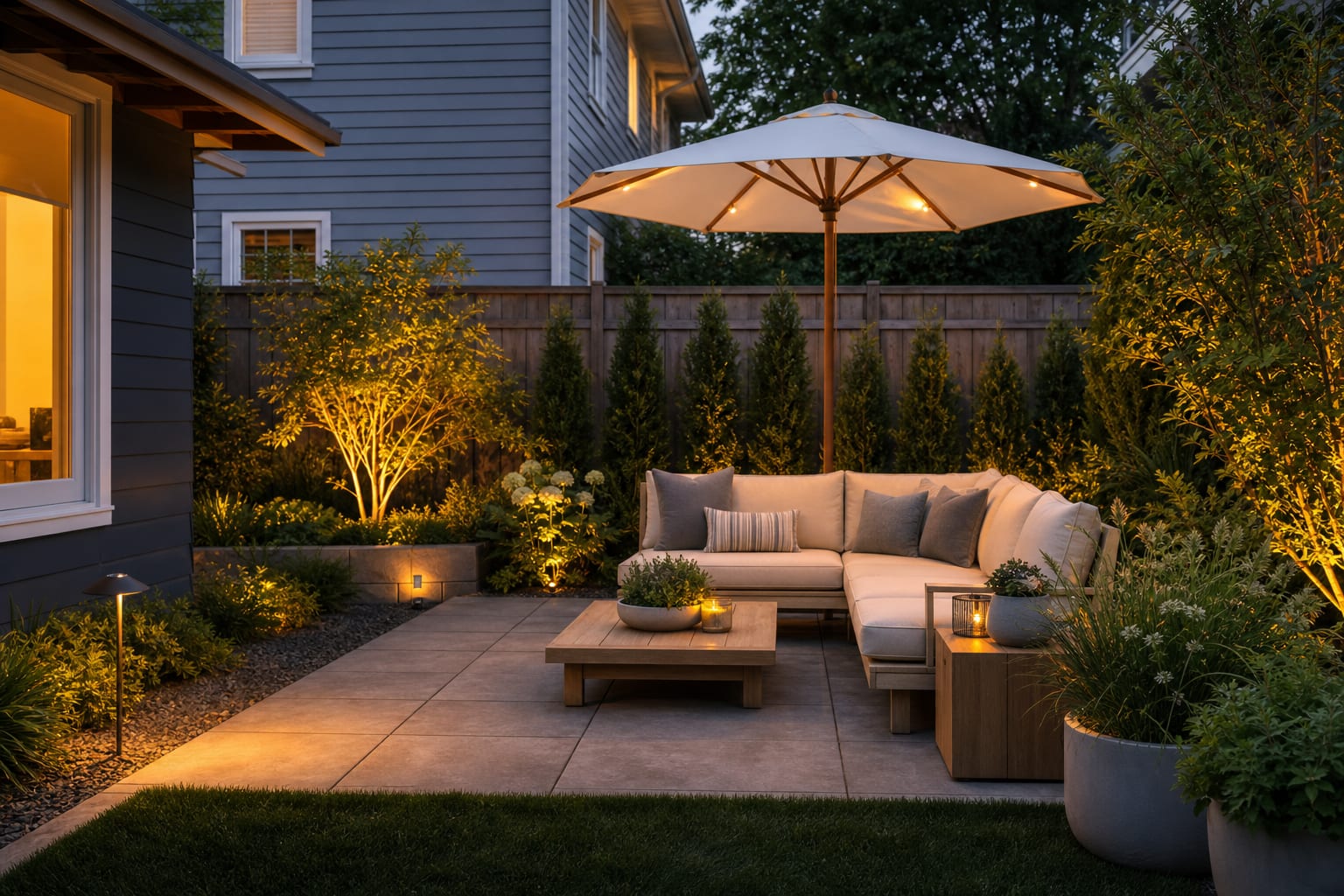
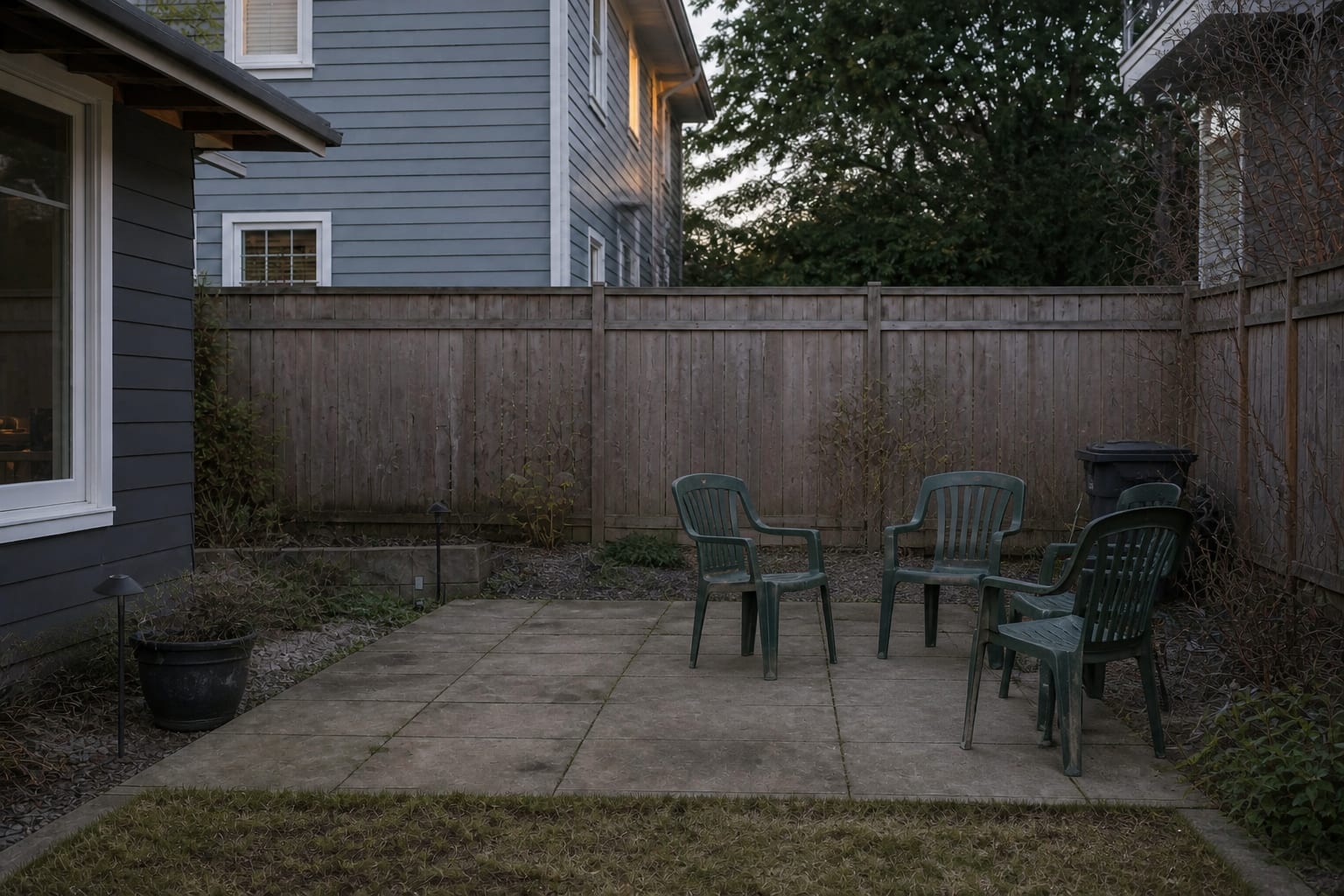
The best outdoor sofa ideas start with frame material, not shape: powder-coated aluminum with quick-dry cushions is the most durable low-maintenance choice, while weathered teak suits gardens where you don't mind occasional cleaning. Anchor the sofa on the longest wall, angle two lounge chairs at 90°, add a low coffee table, and cover the seating with a 6ft umbrella or pergola for real comfort.
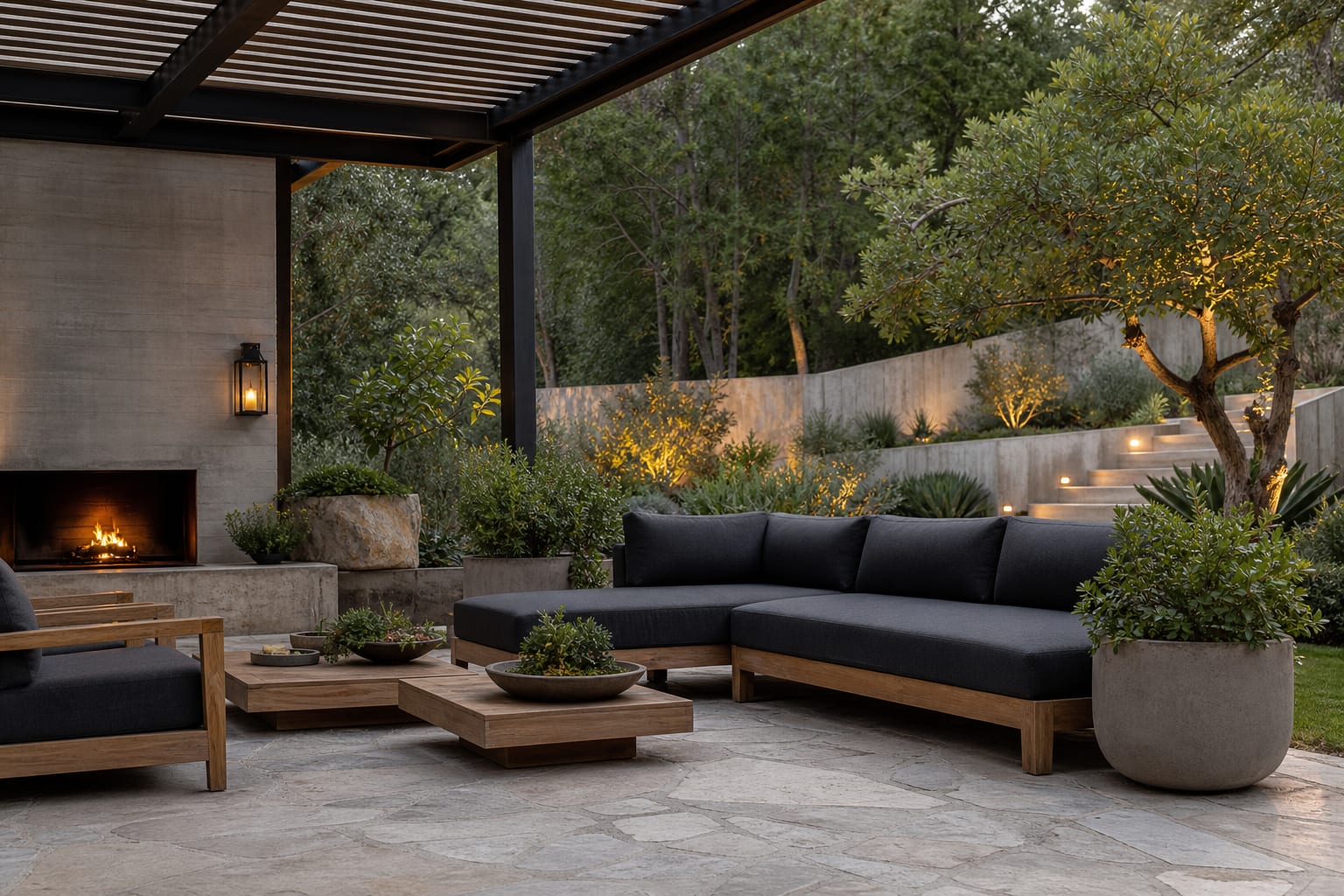
Which outdoor sofa material is most durable?
Powder-coated aluminum is the most durable frame for most patios: it resists rust, moves easily, and skips the maintenance routine wood demands. Teak is the strongest natural-looking option, especially against stone, brick, or older architecture. Stainless steel suits modern spaces but needs outdoor-rated hardware near salt air, and wicker-style resin should be high-density polyethylene over metal, never brittle plastic.
| Outdoor sofa material | Best patio use | Spec to copy | Watch out |
|---|---|---|---|
| Powder-coated aluminum | Pool decks, exposed patios, renters | Welded frame, adjustable feet, outdoor coating | Very light frames can blow or feel flimsy |
| Teak | Warm garden lounges, long-term patios | Substantial legs, slatted drainage, stainless hardware | Turns silver gray unless cleaned/oiled |
| HDPE wicker over aluminum | Family patios, covered porches | Tight weave, aluminum frame, replaceable cushions | Cheap resin cracks in harsh sun |
| Stainless steel | Contemporary terraces | Exterior-grade hardware, non-rusting fasteners | Can feel hot, shows marks |
| Concrete/masonry base | Built-in lounges, windy sites | Integrated drainage, removable cushions | Hard to move or reconfigure |
The frame also has to shed water. Slatted teak, perforated aluminum, and open bases dry faster than solid trays that trap rain. Adjustable feet matter more than expected on pavers or decking; a 1/4in wobble becomes annoying once three adults share a sectional. Pair the frame with durable outdoor cushion ideas, since solution-dyed fabric and quick-dry fill can make a good frame feel expensive for years longer.
How should an outdoor sofa fit the patio layout?
An outdoor sofa should shape a room, not just fill the longest wall. Start with the view from the back door, since a bulky sectional can either invite people outside or block the patio entirely. A straight 72-84in sofa works against a house wall or railing when there's still 30in of path in front. An L-shaped sectional needs its return pointed toward the view, fire table, or pool, not a corner.
Seat height should sit near 16-18in, matching indoor lounge furniture; very low modular pieces can strand older guests. Keep a coffee table 14-18in from the sofa's front edge, within about 2in of cushion height for drink service. End seats need support too: outdoor side table ideas matter because a beautiful sofa gets annoying when the nearest drink surface is six feet away.
A dining zone nearby changes the plan. Leave 42in where dining chairs pull back into a walkway, and don't crowd the lounge sofa against the table so both zones feel undersized. If meals and lounging share one slab, coordinate footprints with outdoor dining table ideas before ordering either piece.
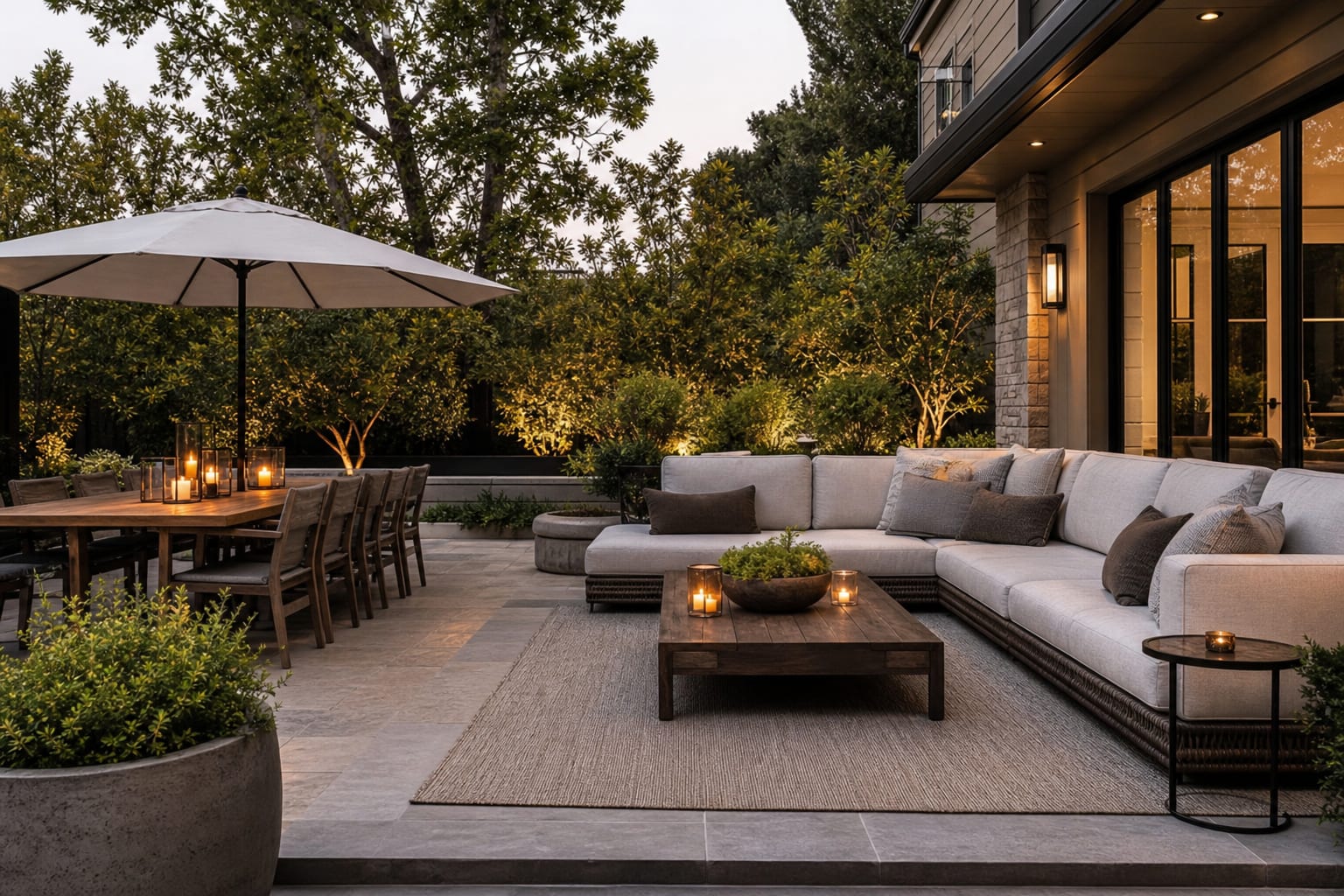
Test this on your own photo with ReDesign before choosing a final direction; keep the house edge, horizon line, hardscape, planting beds, and main path visible so the preview solves the space you actually have.
Five outdoor sofa ideas that stay comfortable, not bulky
- Straight teak sofa for narrow patios: 72-78in length, slim arms, two lounge chairs opposite to keep the walkway open.
- Aluminum sectional for pool patios: simple frame, forgiving medium-tone cushions, 36in minimum from chaise end to gate or path.
- Low masonry bench for windy sites: 17-18in seat height with a 4in removable cushion; the built-in base stays put during storms.
- Loveseat and two chairs for small spaces: a 52-60in loveseat plus two compact chairs often seats four more flexibly than a corner sectional blocking a door swing.
- Rug-anchored sofa and chairs: an 8x10ft rug is the starting point for a sofa and two chairs; a rug sized only for the coffee table makes furniture look scattered.
Color should come from a controlled palette. Charcoal, olive, sand, rust, denim, and warm gray hide ordinary dirt better than white on exposed patios. Camel and olive suit red brick or warm stone; teak with charcoal or flax suits white stucco or black siding.
Common outdoor sofa mistakes to avoid
- Buying an indoor-looking sofa. Soft boucle shapes and thick non-draining platforms trap dirt and moisture outside. Choose open bases, outdoor fabric, and a frame you can hose off.
- Oversizing the sectional. Empty paving exaggerates scale, so tape the full footprint, including chaise and 30-36in circulation path, before ordering freight delivery.
- Forgetting shade. Dark cushions in western sun get uncomfortable and age faster. Plan an umbrella, pergola, shade sail, or tree canopy before defaulting to black fabric.
- Choosing unserviceable cushions. If covers don't unzip or zippers face rain, the sofa looks old while the frame is fine. Look for drainage paths, outdoor thread, and enough crown to shed water.
- Arranging like a waiting room. Lounge furniture should face conversation, a view, or a fire feature, not sit in a stiff row against one wall.
Use AI design to preview your patio sofa before you order
The expensive risk with outdoor sofas is proportion. Upload a straight-on photo from the back door, kitchen window, or pool gate, then preview a teak sofa, aluminum sectional, loveseat pair, deeper cushions, shade, and side tables in the actual patio. Keep the test honest with real measurements; if the slab is 11ft wide, don't approve an image showing a giant chaise, two chairs, and planters all crammed into that strip.
Use the preview to compare layout and visual weight before shopping final dimensions. It can reveal whether the sofa blocks the view, the cushion color fights the paving, or the lounge needs one larger table instead of more chairs. Product specs still matter, but seeing the idea on your own patio first makes buying far less abstract.
Frequently Asked Questions
What outdoor sofa material lasts outside?
Powder-coated aluminum frames with quick-dry foam and solution-dyed acrylic covers survive 8-10 seasons; teak survives longer but weighs 2-3x more; synthetic wicker on a steel frame is the budget option, lasting 3-5 seasons.
How big should an outdoor sofa be?
Aim for 72-84in for a true three-seat sofa with 28-32in deep cushions. Deeper cushions (34-38in) read more lounge-like but limit upright posture for dining or laptop use.
How many lounge chairs go around the sofa?
Two lounge chairs at 90° to the sofa, facing each other rather than the sofa head-on. The L-shape opens conversation without forcing eye contact across the table.
Do outdoor cushions need to come inside?
Quick-dry cushions in acrylic or olefin can stay out all season if covered between rains. Bring covers in over winter, or use a storage box to extend cushion life.
What table works with an outdoor sofa?
A low coffee table 14-18in tall and 36-48in long in teak, concrete, or powder-coated metal works best. Round tables suit cleaner sight lines; rectangles maximize tray and drink surface.
> Try this: Ready to see this on your own outdoor space? Open ReDesign and run the preview before you buy materials, plant, drill, or move furniture.
Three transformations to try
1. Outdoor sofa with L-shape lounge chairs 2. Lounge area under pergola shade 3. Modular outdoor sectional with planters