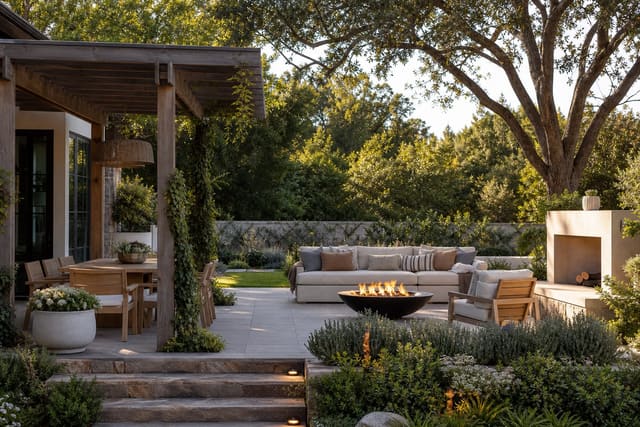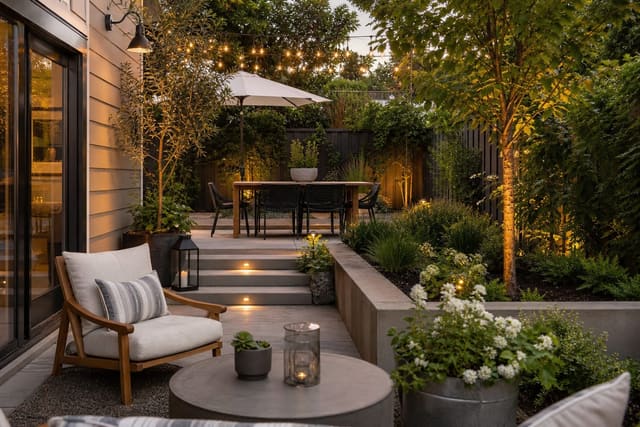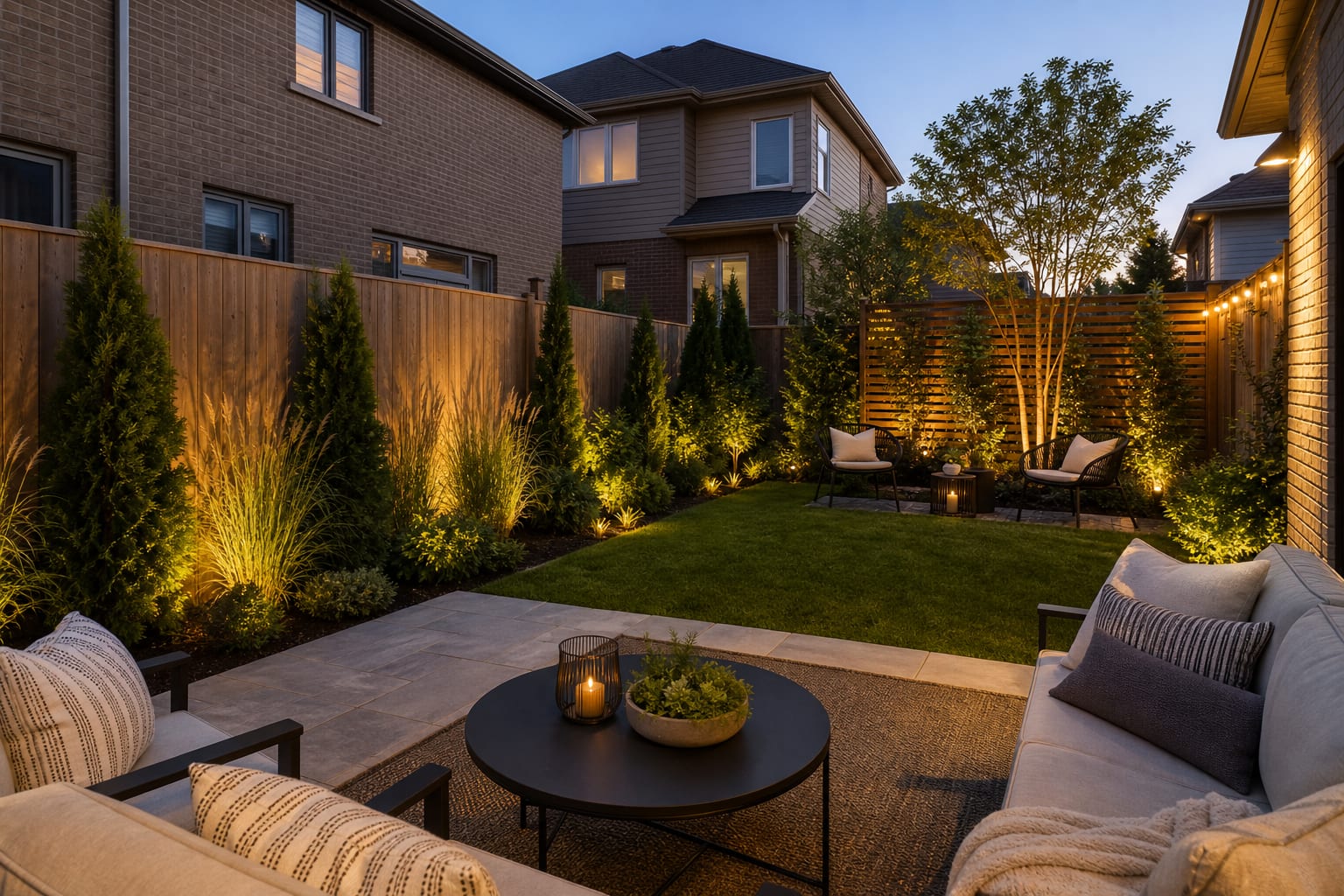
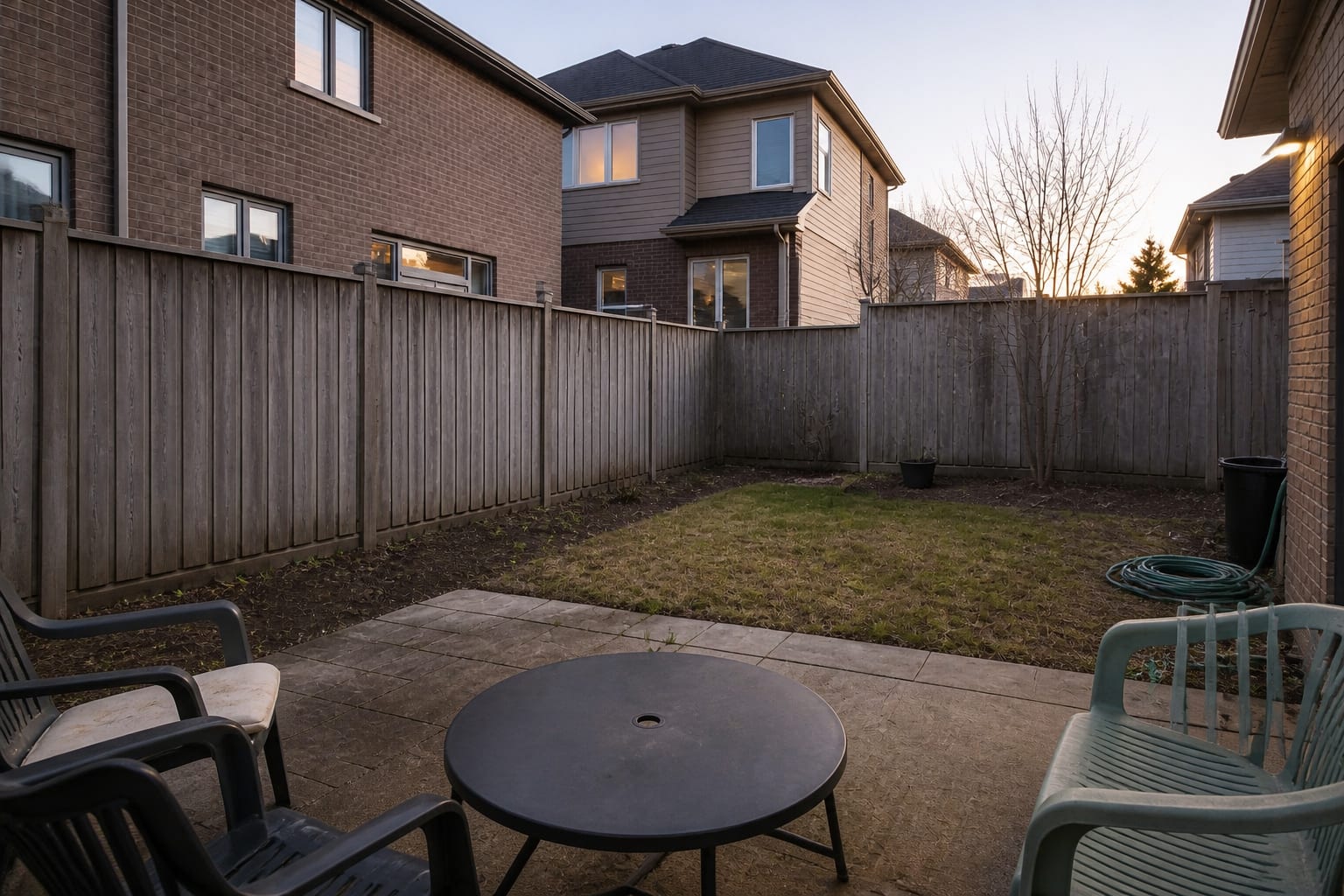
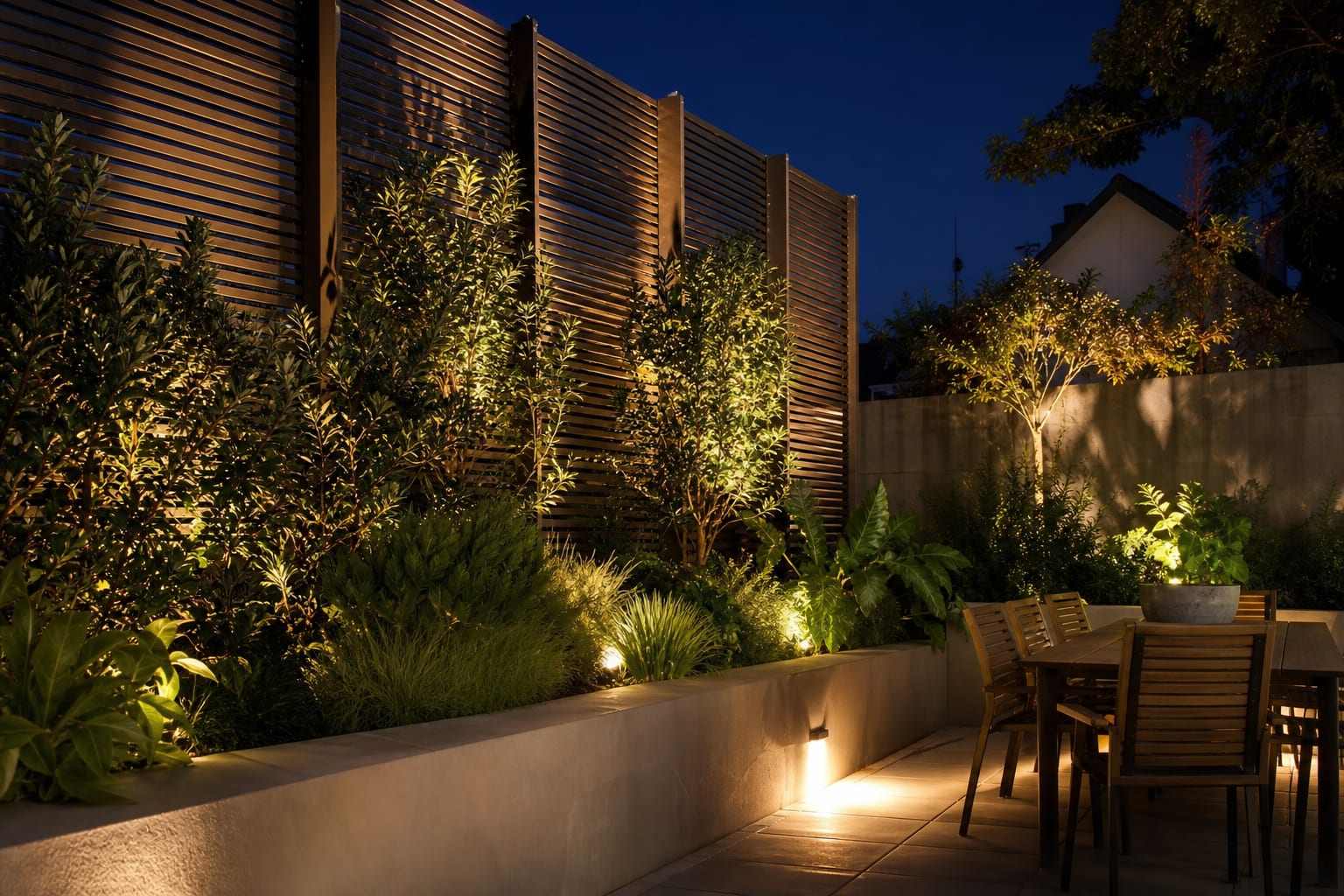
Layered evergreen hedges, upright grasses, small ornamental trees, and vine-covered trellises solve backyard privacy landscaping best when combined with a slatted screen or pergola at the seating zone. Structures give instant coverage while plants fill in over three to five seasons. A single fence rarely fixes an exposed yard — the fix is targeting the exact sightline that makes the space feel watched, then layering plants and structures to close it.
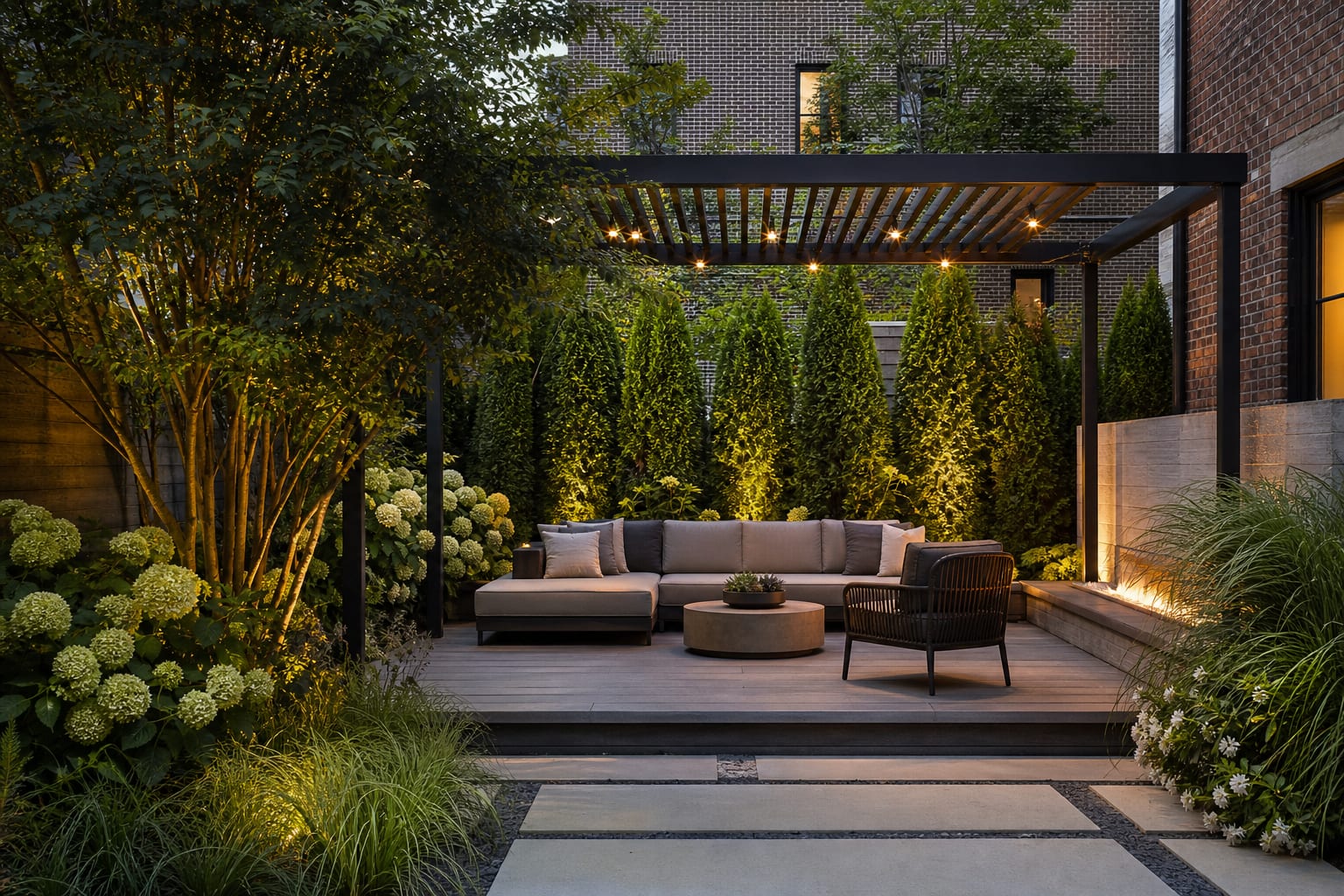
Which sightlines should the landscape block first?
Stand where you actually sit — dining table, grill, lounge chair, hot tub — and trace what's visible from that spot. Eye-level views usually need only 5–6 feet of screening; a second-floor window needs 10–15 feet, but not across the whole property line. One small tree with a high canopy can block an upstairs view better than a hedge that swallows the yard.
Leave at least 36 inches for the main garden path and 30 inches for secondary routes to bins or hose bibs. In a compact backyard, protect one primary outdoor room first and let the less-used edges stay lighter — see small backyard layout ideas for that logic.
Which privacy plants belong in a backyard screen?
Choose by mature size first, then texture and light needs. A shrub that matures at 8 feet wide planted 2 feet from a fence is deferred pruning, not clever spacing.
| Layer | Plant options | Notes |
|---|---|---|
| Evergreen backbone | Arborvitae, yew, holly, podocarpus, pittosporum, laurel, wax myrtle, clumping bamboo | Space roughly 3–5 ft on center; tighter spacing speeds coverage but limits airflow |
| Soft/seasonal filter | Switchgrass, feather reed grass, miscanthus, clumping ornamental grasses | Need a 3-ft-deep bed; pair with evergreens so winter isn't bare |
| Small trees | Multi-stem serviceberry, crape myrtle, Japanese maple, olive, pleached hornbeam | Keep trunks 3+ ft from paving; check mature canopy spread near eaves |
| Containers | Bamboo, columnar evergreens, bay laurel, tall grasses | 24–30 in. wide planters work on patios and for renters |
Containers solve privacy on paved yards without digging — see container gardening ideas for a movable screen.
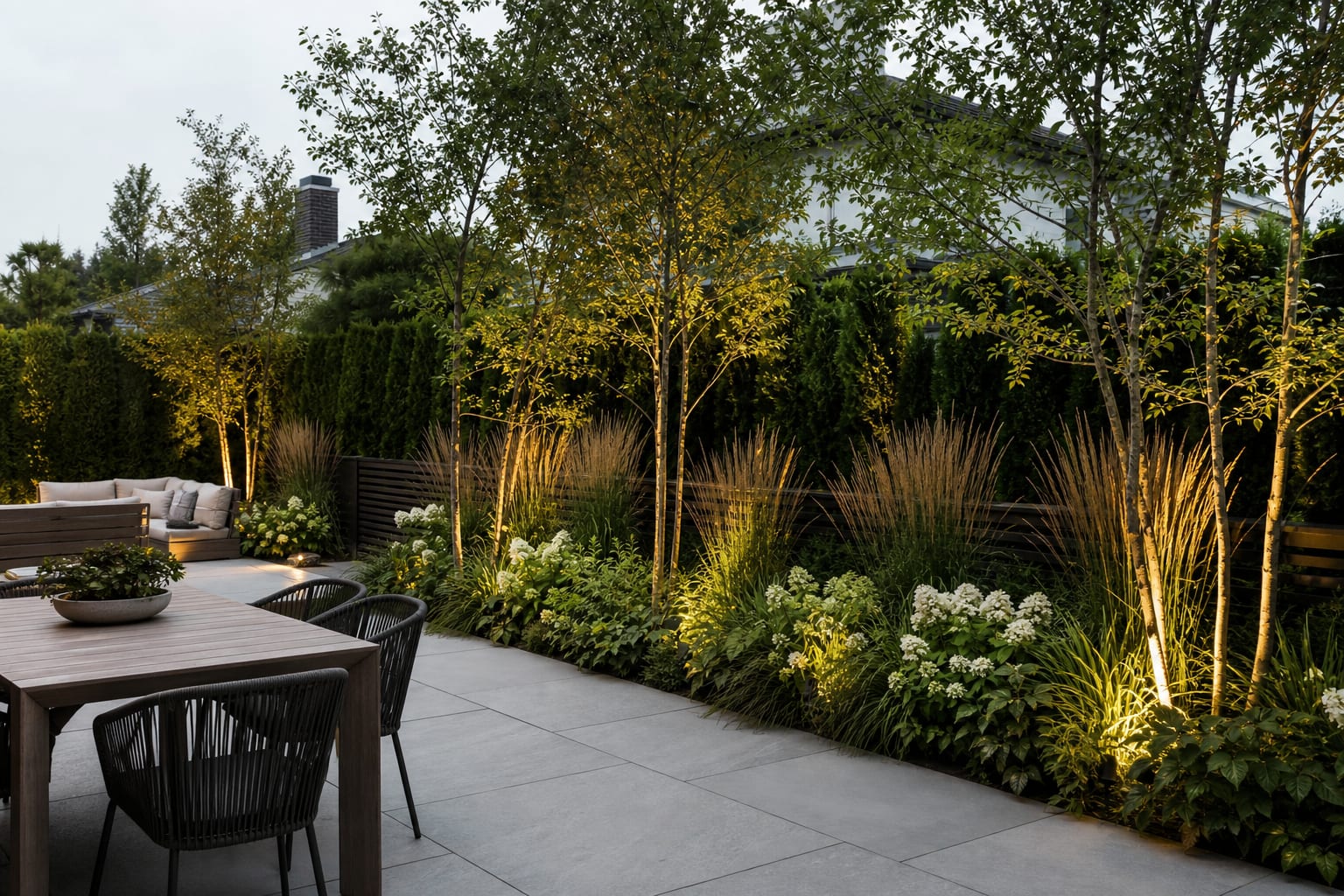
Test this on your own photo with ReDesign — keep the house edge, horizon, hardscape, beds, and main path visible so the preview solves the space you actually have.
When should structures do the screening instead of plants?
Structures work where the problem is immediate, narrow, overhead, or too close to hardscape for healthy roots. The best yards combine a structure for instant coverage with planting to soften its edges.
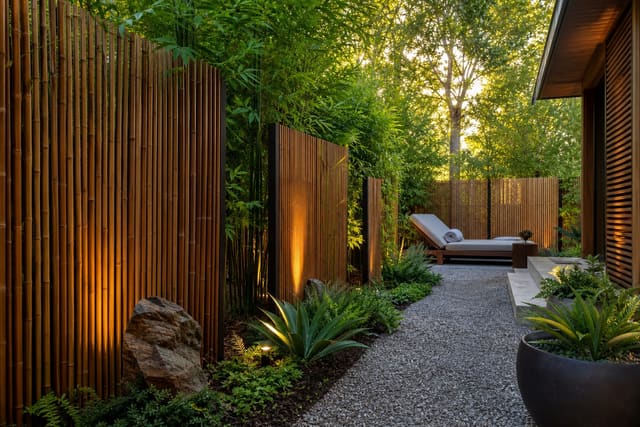
- Slatted screen: beside a dining table or lounge chair. Slats with 1/2–1 in. gaps block direct views while letting wind through; 6 ft feels enclosed without looking like a stockade.
- Trellis: for narrow side yards. A 12–18 in.-deep trellis with star jasmine, clematis, or climbing hydrangea screens without stealing the path.
- Pergola or shade frame: for views from above. Battens, outdoor fabric, or trained vines interrupt upper windows near the house.
- Raised planter: where paving covers the root zone. 18–24 in. depth supports many shrubs or grasses, but larger woody plants need more soil volume.
Plants suit long-term ownership and habitat; structures suit yards that need screening now or can't wait three growing seasons. If the ground plane looks patchy under shade or pet traffic, compare turf and gravel options in artificial grass ideas for backyards before installing the privacy bed.
Common backyard privacy landscaping mistakes
- One fast-growing species in a straight line becomes a shearing chore twice a season and can overwhelm a narrow yard — mix an evergreen backbone with slower companions.
- Ignoring mature width shrinks small backyards over time; use columnar evergreens, trellises, or pleached trees where the screen must stay narrow.
- Blocking every edge makes a yard feel boxed in — protect the seating zone and worst views, and leave open corners for light and breeze.
- Skipping winter structure leaves cold-climate yards exposed for half the year; back up deciduous plants with evergreens, fencing, or a trellis.
- Adding lighting after planting often causes glare — space low-voltage path lights 10–15 ft apart, aim shielded accents into planting, and use warm 2700K bulbs.
Use AI design to preview the screen before you plant
Upload a photo from the seat or doorway where exposure bothers you, then test a layered hedge, slatted screen, pergola, or container trees from that same angle. This checks scale, not cultivar — does an 8-foot green mass feel graceful or oppressive before you buy plants you can't return in three years?
If a preview shows a hedge swallowing a narrow path, reduce bed depth or switch to a trellis. If a pergola fixes the upper-window view but darkens the patio, try spaced battens instead of a solid canopy. Renters should preview freestanding planters and screens first since they travel and avoid permanent posts.
The strongest plan layers a hard or evergreen backbone, a softer middle layer, and one focal tree or vine for the awkward angle. Adjust species for climate, soil, and local rules, but keep that three-layer structure — privacy means protecting the places you use, not hiding the whole yard.
Frequently Asked Questions
What's the fastest privacy hedge?
Privet, Leyland cypress, and arborvitae add 2–3 ft per year toward 8–15 ft mature height. Slower options like yew and boxwood take 5–7 years to reach screening height but live 50–100+ years.
How tall should a privacy planting be?
Use 6–8 ft to screen a standing adult at 15–25 ft of distance, and 10–12 ft to screen a second-story window. A 4–5 ft planting only screens a seated patio and implies separation rather than blocking sightlines.
Plants or fence for privacy?
Both work together — a 5–6 ft fence gives immediate screening, and layered planting in front softens it visually. Plant-only privacy takes 3–5 seasons to fill in and offers no winter screening with deciduous species.
What evergreens work for privacy in shade?
Yew, hemlock, and rhododendron tolerate 3–5 hours of sun and hold year-round density. Arborvitae and Leyland cypress need 6+ hours of sun to stay full, so they thin out in shady beds.
How do I add privacy without blocking sky?
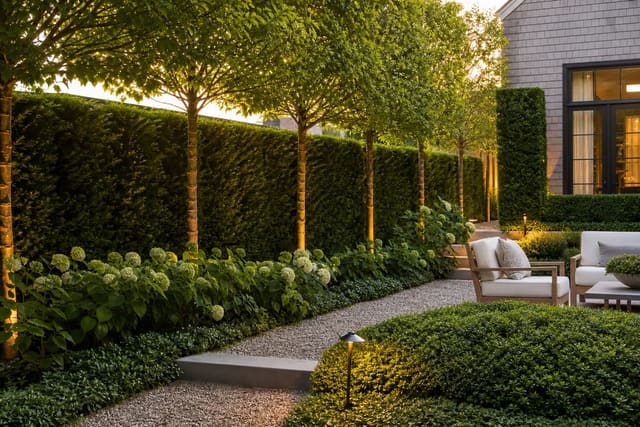
A pleached or limbed-up tree row keeps trunks bare with the canopy set at second-story height, screening overlooking windows while leaving the sky view open below. This approach is common in courtyard gardens that need a screen without a solid wall.
> Try this: Ready to see this on your own outdoor space? Open ReDesign and run the preview before you buy materials, plant, drill, or move furniture.
Three transformations to try
1. Layered evergreen privacy planting 2. Slatted screen with climbers and hedge 3. Pleached tree row over low hedge