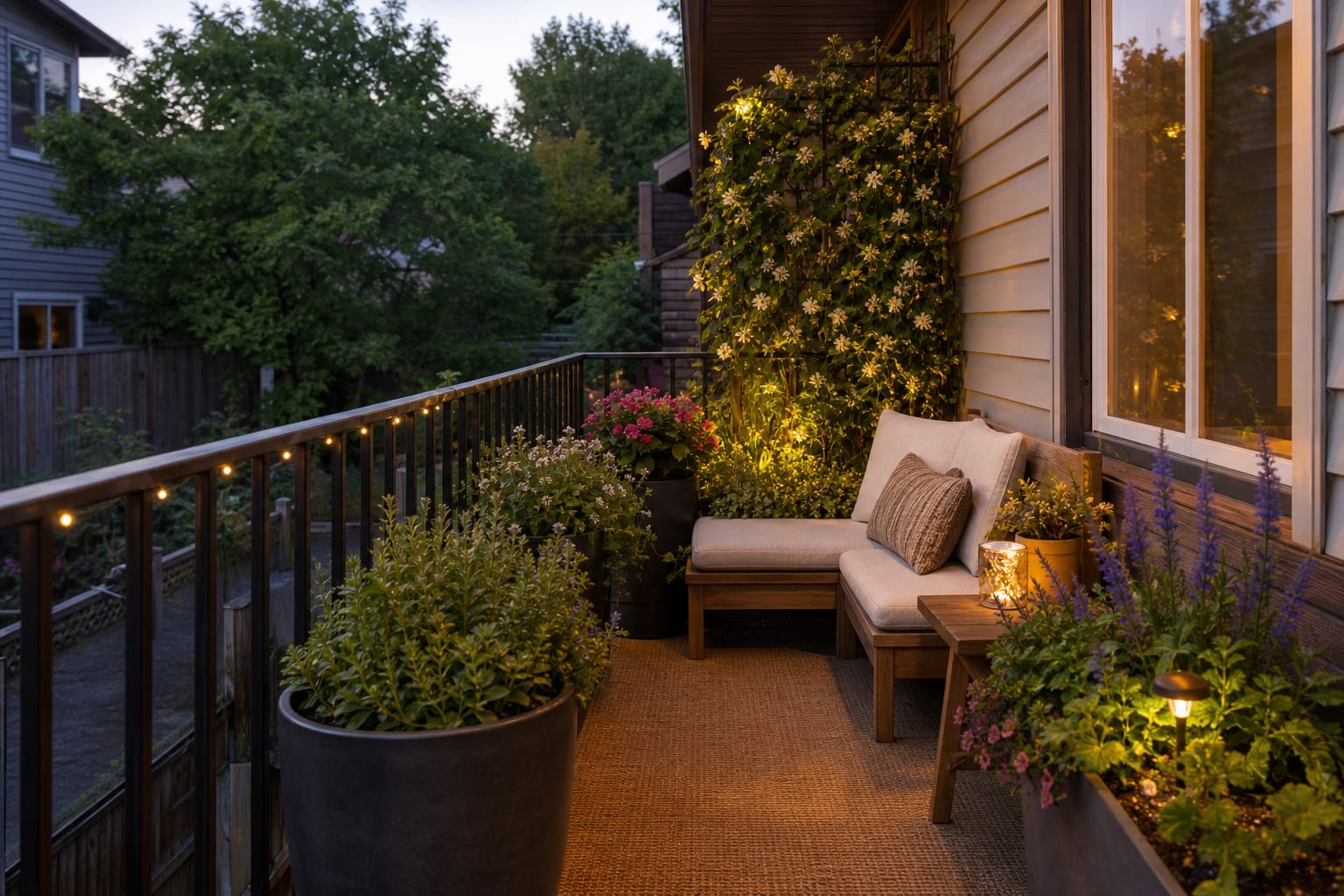
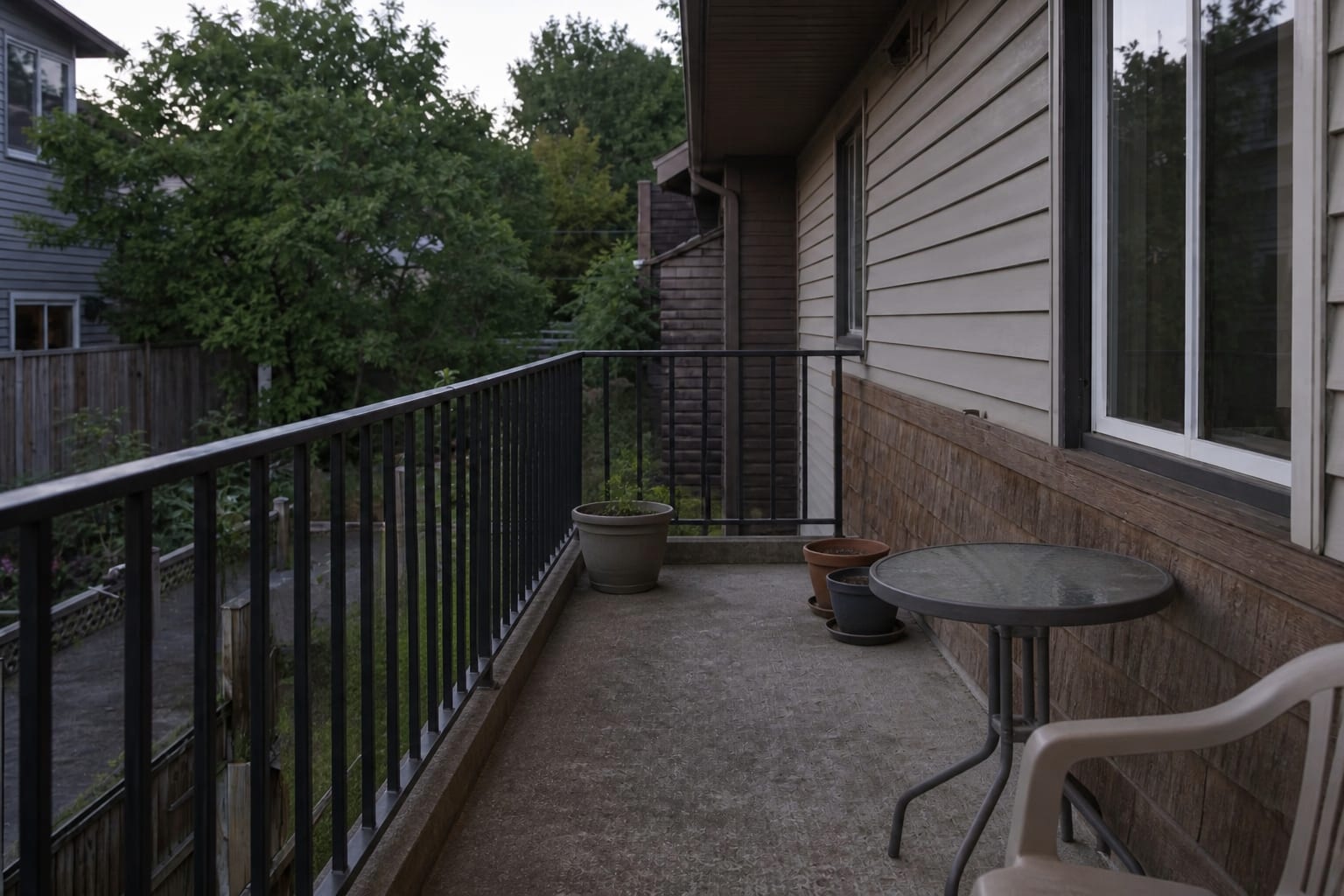
Container gardening ideas work best when pot size, soil, drainage, height, and walking clearance are planned as one system rather than bought piece by piece. Start with fewer, larger containers (16-24in for shrubs, 14-18in for perennials, 10-12in for herbs), fill them with potting mix, water on a heat-matched schedule, and group them in odd numbers around one tall anchor plant.
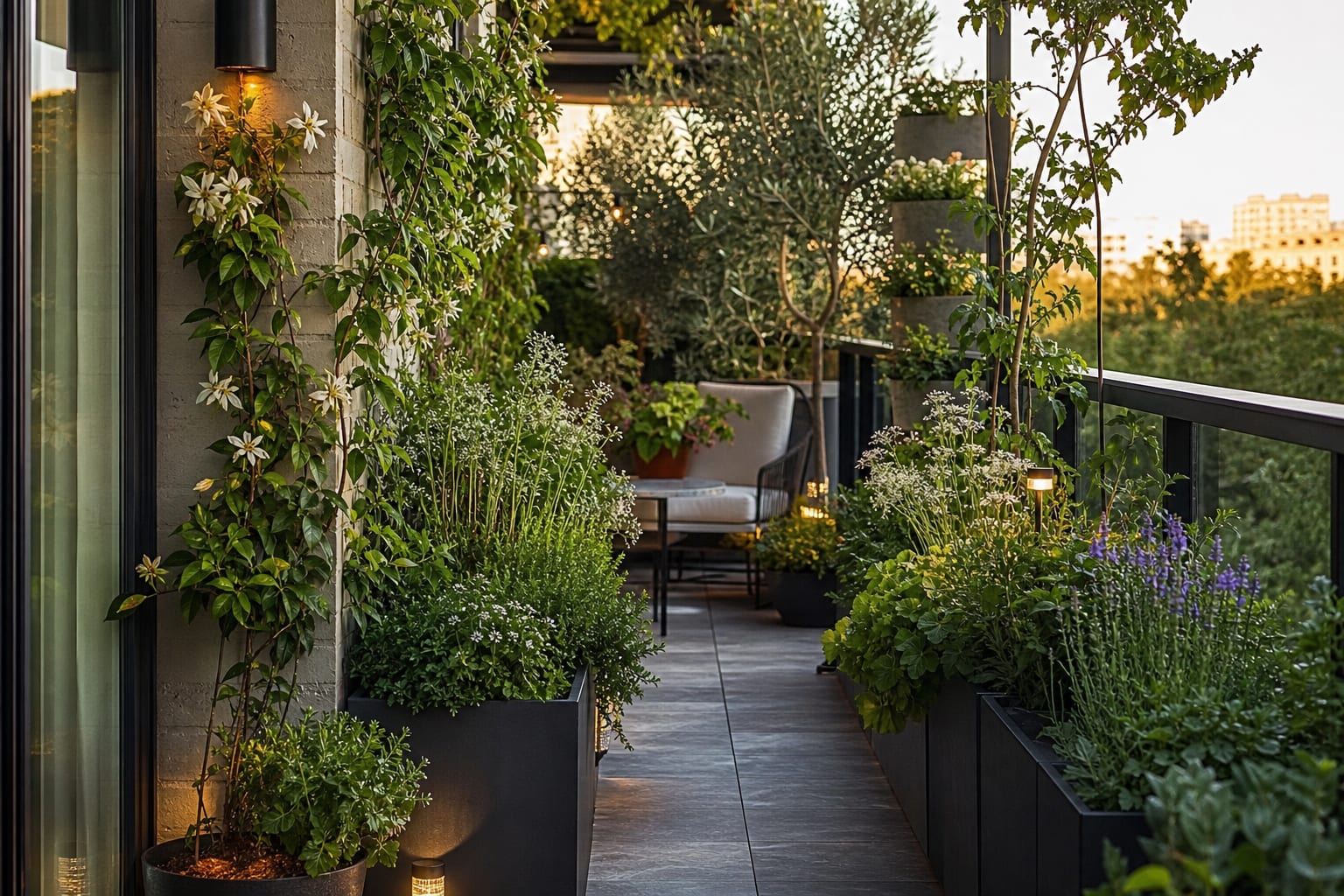
Which containers actually make a balcony garden work?
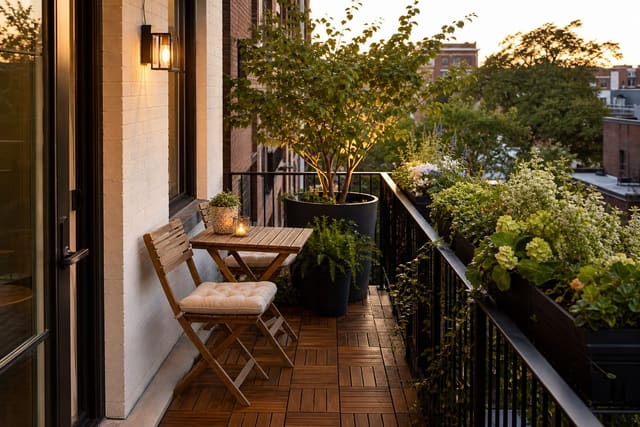
The best containers hold moisture, resist wind, and stay plain enough to let the planting be the feature. A patio can handle a 24in terracotta pot; a narrow balcony may need a 10-12in deep railing planter plus one tall corner pot. Spreading a budget across ten small pots backfires, since small soil volume dries out fast and needs watering twice a day in summer heat.
Use outdoor potting mix, not garden soil, since container roots need air as much as moisture. Add drainage holes if a planter lacks them, or use it as a cachepot with a nursery pot set inside, leaving a 1in gap. On exposed balconies, choose heavier fiberstone, terracotta, or wood boxes with a broad base; tall narrow planters tip once wind catches a trellis or tomato cage.
| container type | best use | spec to copy | watch out |
|---|---|---|---|
| large round pot | citrus, shrubs, dahlias, mixed annuals | 18-24 inch diameter | heavy when wet |
| rectangular trough | herbs, grasses, low perennials | 30-48in long, 10-14in deep | shallow models dry fast |
| railing planter | tiny balconies and herbs | secure brackets, 8-10in soil depth | wind and building rules |
| tall planter | corner height and screening | broad base, 20in or more tall | can become top-heavy |
| fabric grow bag | vegetables and renters | 5-10 gallon size | dries quickly in sun |
For a looser, meadow-style look rather than stiff annual bowls, borrow ideas from naturalistic planting design: repeat three or four plant shapes, vary heights, and let some stems move in the wind.
Test a container cluster on your own balcony photo before committing to a layout. Keep the house edge, horizon, hardscape, and main path visible so the preview reflects the space you actually have.
What container gardening ideas give the most impact?
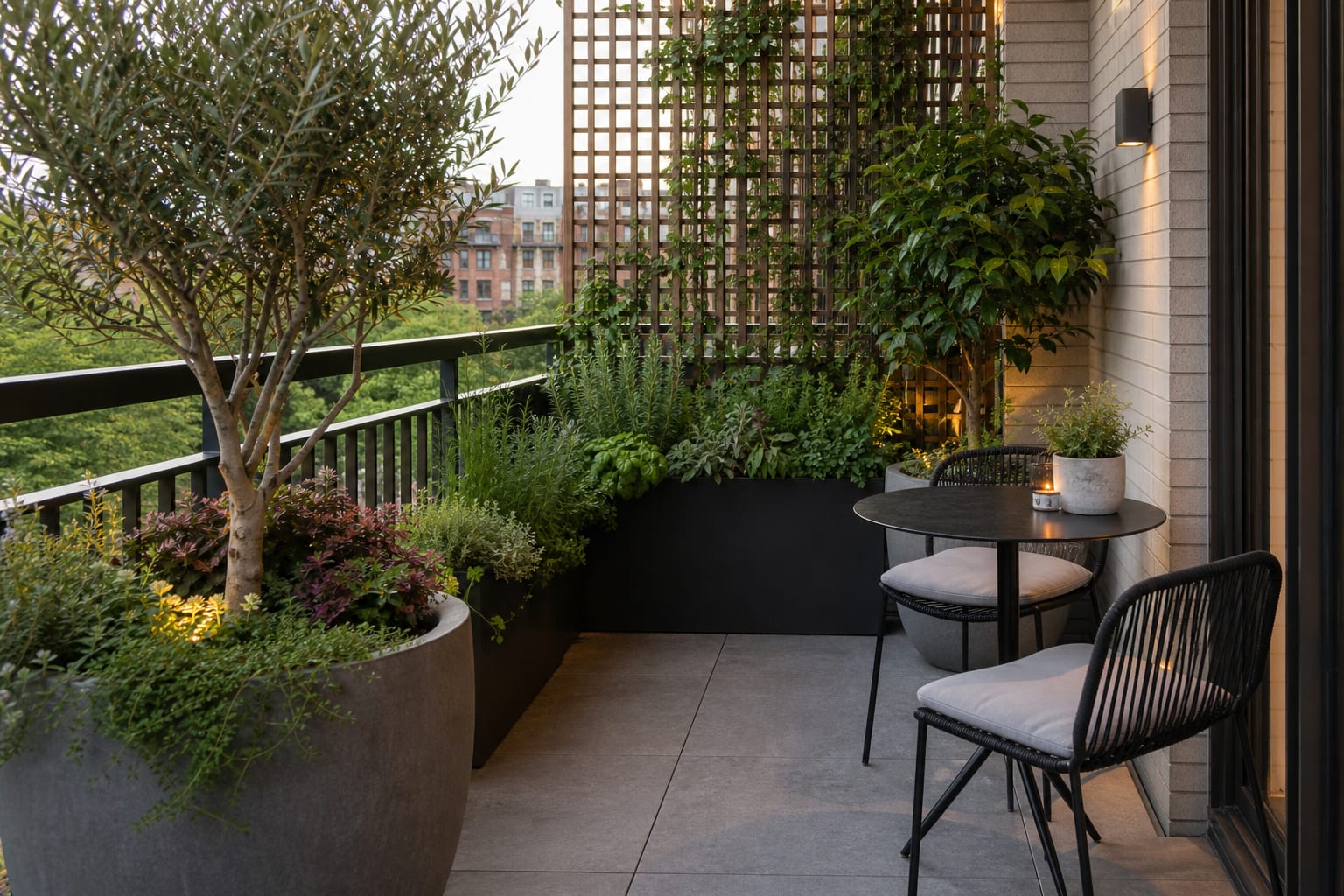
- Plant one anchor pot. A 20-24in container with a compact olive, dwarf citrus, hydrangea, or tall ornamental grass gives the balcony a center of gravity that scattered small pots can't.
- Build a kitchen-door herb trough. In a 30-36in planter with 5-6 hours of sun, group thyme and oregano at the dry end, basil and parsley where watering is easier, and keep mint separate so it doesn't take over.
- Use vertical planting for privacy. A 12-16in deep trough with a slim trellis can carry star jasmine, clematis, or climbing nasturtium, useful alongside backyard privacy landscaping ideas when a balcony faces another window.
- Build seasonal displays around one permanent plant. Keep a dwarf conifer, bay, or boxwood at the center, then rotate bulbs in spring, heat-tolerant annuals in summer, and pansies or kale in cool months.
- Save room to sit. Leave space for one chair and a 14-18in side table with weather-ready textiles, like durable outdoor cushions, so the balcony stays an outdoor room, not a plant nursery.
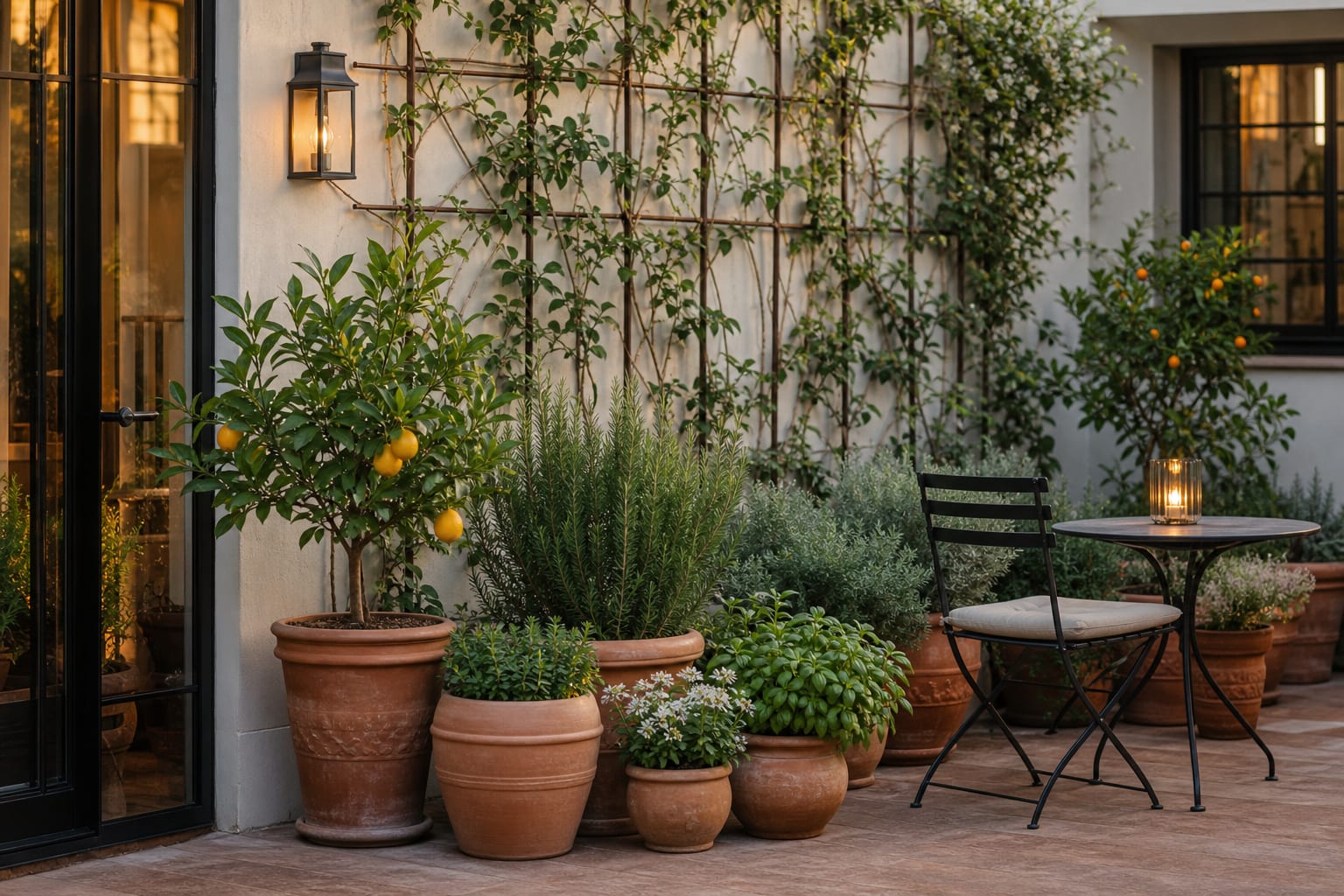
Watering plans matter as much as layout. A 20in pot topped with 1-2in of mulch holds moisture longer and keeps roots cooler than a small pot in full sun. If you travel often, favor fewer large pots, self-watering planters, or drip irrigation on a timer instead of relying on a neighbor.
What container gardening mistakes should I avoid?
- Choosing pots by color, not scale. A 9in pot suits thyme or violas but is too small for a tomato, shrub, or any plant tagged to reach 24-36in tall.
- Blocking the door or the only chair. A 12in nursery plant can become a 30in mound by late summer; keep pots 2-4in from walls and leave the main path open.
- Mixing sun and shade plants in one bowl. Lavender, rosemary, and sedum need sharp drainage and bright light, while ferns and begonias want steadier moisture and softer shade. Group by conditions, not color.
- Ignoring weight. Wet soil is heavy, so check building rules before loading railing planters and use lightweight mixes or fiberglass where limits are unclear.
- Forgetting winter. A balcony of only summer annuals looks bare for six months; keep one evergreen, grass, or clipped woody herb in the mix for year-round shape.
How can AI design help plan a container garden?
Scale is hard to judge at a garden center. Upload a straight-on photo of the balcony or patio and test a large corner planter, railing boxes, a trellis trough, and a seating zone before buying soil or pots. Use the angle you see most often, such as the kitchen door or the coffee chair, and keep the preview honest: if the space is 5ft wide, don't approve a layout that leaves only 12in of walking room.
An AI preview won't check drainage holes, wind exposure, or a building's weight limits, but it catches expensive visual errors early, including undersized pots, a bulky trellis, a palette that fights the cushions, or a layout that eats the only usable floor space.
Frequently Asked Questions
What size container does each plant need?
Use 16-24in diameter for shrubs and small trees, 14-18in for perennials and flowering plants, and 10-12in for herbs. Undersized pots dry out daily and stunt growth, so match the container to the plant's mature size, not its nursery size.
Should I use garden soil or potting mix?
Use potting mix. A blend of peat or coir and perlite drains correctly in a container, while garden soil compacts, drowns roots, and often carries weed seeds and pests into the pot.
How often do container plants need watering?
Water daily for 12in pots in full summer sun, every 2-3 days for larger 24in pots, and weekly for shaded containers in spring and fall. Finger-test the top 2 inches of soil before adding more water.
Do balcony containers need drainage holes?
Yes. Every container needs drainage holes plus a saucer to protect the surface below. Without drainage, water pools at the roots and can drown a plant within two waterings.
How do I cluster containers for visual impact?
Group pots in odd numbers, such as 3, 5, or 7, with one tall vertical anchor, mid-height filler plants, and a trailing spiller at the edge. This thriller-filler-spiller formula works at any cluster size.
> Try this: Ready to see this on your own outdoor space? Open ReDesign and run the preview before you buy materials, plant, drill, or move furniture.
Three transformations to try
1. Balcony with three-pot cluster and herbs 2. Patio container garden with tall anchor 3. Vertical wall container garden